

How Subcultures Shape Fashion: Identity and Goth Influence
TL;DR:
- Subcultures drive fashion innovation through symbolic resistance, DIY, bricolage, and community codes.
- Mainstream appropriation often strips away subcultural meaning, politics, and community values.
- Goth culture sustains identity, community, and political roots despite commercialization and aesthetic trends.
Today’s most striking runway looks didn’t begin in the offices of luxury fashion houses. They began in basement clubs, on street corners, and in the bedrooms of young people who refused to dress the way the world expected. Mainstream fashion borrows relentlessly from underground subcultures, yet the borrowed pieces arrive stripped of their original meaning, politics, and community. Understanding how subcultures actually shape fashion, and why goth in particular keeps its hold on personal identity, gives you a richer, more intentional relationship with the clothes you wear and the culture you build.
Table of Contents
- Subcultures as engines of fashion innovation
- The meaning of subcultural style: Hebdige’s lens and goth expression
- From underground to runway: How subculture trends go mainstream
- Fragmentation, identity, and the enduring power of goth
- The politics and boundaries of goth fashion today
- Why mainstream fashion needs subcultures—and why ‘goth’ stays vital
- Discover authentic goth fashion and join a true subculture
- Frequently asked questions
Key Takeaways
| Point | Details |
|---|---|
| Subcultures drive innovation | Underground movements deliver unique styles that challenge and refresh mainstream fashion. |
| Symbolism creates meaning | Goth and other subcultural fashions use symbols, bricolage, and story to express personal identity. |
| Mainstream adoption dilutes | When subcultural styles hit the big brands, original intent can be lost or commodified. |
| Goth offers true community | For many, goth fashion provides lifelong belonging, mental health benefits, and a safe creative space. |
| Authenticity requires intent | Staying true to subcultural roots means choosing style with meaning, not just trends or aesthetics. |
Subcultures as engines of fashion innovation
Fashion didn’t evolve in a straight line from one designer collection to the next. The boldest shifts came from outside the establishment entirely. A subculture, in the context of fashion, is a group that deliberately adopts a distinct visual identity that separates it from the dominant culture. That separation is never accidental. It carries social weight, political meaning, and a shared sense of belonging that commercial fashion rarely replicates.
The concept of symbolic rebellion explains this precisely. When working class youth in 1970s Britain assembled safety pins into jewelry, ripped their clothing, and spiked their hair, they weren’t simply being provocative for its own sake. They were communicating frustration with economic inequality, political conservatism, and the polished sterility of mainstream pop culture. Style became a language, and that language was legible to anyone who shared the frustration. As subcultural fashion research confirms, “subcultures serve as incubators for fashion innovation through symbolic resistance, where style acts as a form of protest against mainstream norms and class structures.”
“Fashion from below has always been more honest than fashion from above. It has something real to say.”
The mechanisms through which subcultures challenge and innovate mainstream style include several distinct approaches:
- DIY construction: Hand-sewn patches, painted jackets, and self-modified garments that resist mass production
- Bricolage: Repurposing objects from outside fashion, like medical equipment, religious icons, or hardware, into clothing and accessories
- Anti-fashion: Deliberately ugly, uncomfortable, or transgressive choices that reject beauty standards entirely
- Symbolic saturation: Loading a single outfit with multiple layers of cultural reference, making style a form of dense personal communication
- Community gatekeeping: Maintaining visual codes that only insiders recognize, preserving the group’s integrity
Punk and goth stand as the clearest historical examples of this dynamic at work. Both emerged in the late 1970s, both used dark aesthetics to resist dominant culture, and both generated visual languages that the mainstream would eventually pillage. Understanding the gothic subculture explained through this lens reveals that goth was never just a look. It was a worldview expressed through clothing.
The meaning of subcultural style: Hebdige’s lens and goth expression
If subcultures fuel innovation, how do their styles actually communicate deeper messages? The most useful framework for answering this comes from cultural theorist Dick Hebdige, whose 1979 book Subculture: The Meaning of Style remains essential reading for anyone serious about fashion and identity.
Hebdige drew on semiotics, the study of signs and symbols, to argue that subcultural style works through bricolage and homology. Bricolage describes the practice of borrowing objects from their original context and redeploying them with entirely new meaning. Homology describes the coherence between a group’s values, music, lifestyle, and style. When all those elements align, the style feels authentic and whole rather than borrowed or decorative. As Hebdige’s methodology demonstrates, subcultural fashion uses “semiotics and bricolage, where everyday objects are repurposed (e.g., safety pins as earrings) to create new meanings of rebellion.”
The contrast with commercial appropriation is stark. When a fast fashion brand produces a “gothic-inspired” collection, it takes the visual signifiers (black clothing, lace trim, silver hardware) and reproduces them without the homology. There’s no underlying worldview, no community, no shared music or literature or values. The result looks like goth but functions as decoration.
Goth fashion symbolism is genuinely rich when you know how to read it. Exploring goth fashion symbolism reveals layers that casual observers completely miss:
| Goth element | Surface reading | Deeper meaning |
|---|---|---|
| All-black clothing | Morbid aesthetic | Rejection of forced positivity and social conformity |
| Crosses and religious icons | Gothic decoration | Interrogation of organized religion and mortality |
| Lace and Victorian silhouettes | Romanticized past | Critique of modernity and nostalgia for craft |
| Combat boots | Aggression | Working class roots and physical readiness |
| Layered silver jewelry | Maximalist style | Accumulation of personal narrative and symbolism |
The key features that define goth clothing features aren’t arbitrary aesthetic choices. They’re a coherent visual language built over decades of shared culture.
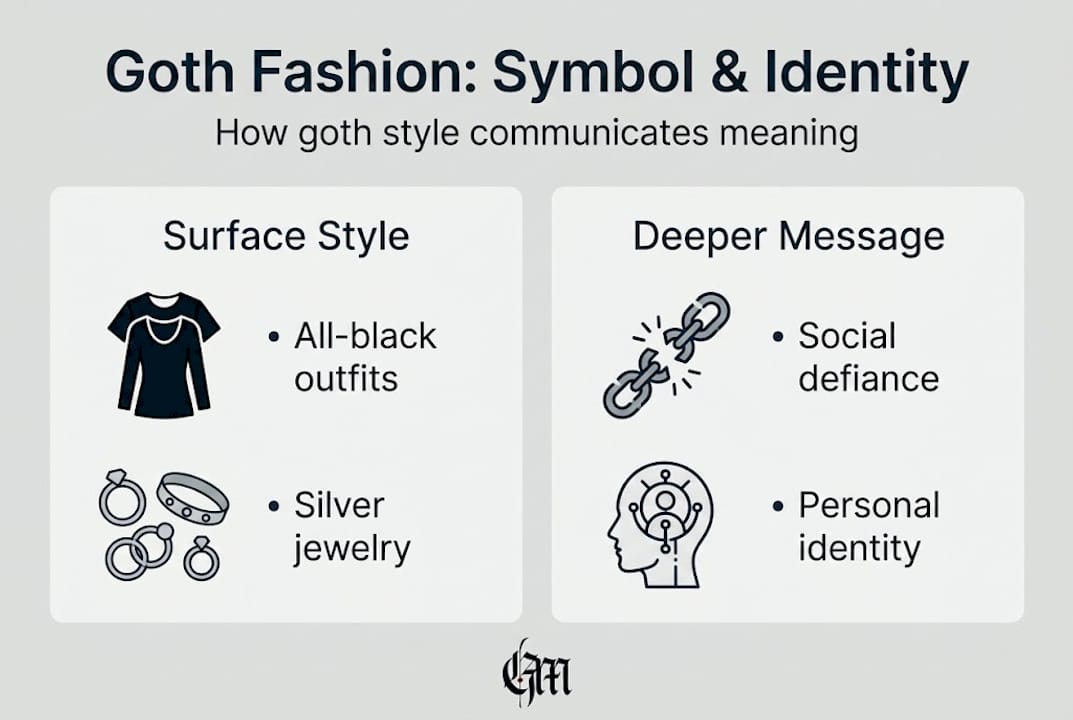
Pro Tip: When you browse gothic accessories, pause on each piece and ask what tradition or symbol it draws from. A cross pendant means something different from a pentagram choker, and understanding that difference transforms shopping from consumption into curation.
From underground to runway: How subculture trends go mainstream
With a grasp on meaning, let’s see how those meanings are challenged when subcultures collide with mass market trends. The journey from underground to runway follows a recognizable pattern, and knowing it helps you understand why authenticity erodes so predictably.
The cycle moves through clear stages. First, a subculture develops its visual language internally, often unknown to outsiders. Then media, whether music journalism, street photography, or now social media, begins documenting it. That visibility attracts commercial interest. Designers and brands begin sampling the aesthetic. Finally, the look reaches mass retail, the original community pushes back, and the cycle begins again with a new underground. Fashion’s trend cycle follows this path from “emergence, media visibility, and commercial incorporation, diluting original subversive intent (e.g., punk to high fashion).”
The co-optation process works in specific steps:
- Mainstream media frames the subculture as exotic or edgy, creating desire among outsiders
- High-end designers reference the aesthetic in runway collections, signaling cultural legitimacy
- Mid-range brands produce accessible interpretations, stripping out complexity and politics
- Fast fashion giants like Shein and H&M mass-produce the most recognizable visual elements at the lowest cost
- The original community either goes deeper underground, fragments, or moves on to new visual territory
Goth has experienced this cycle multiple times. Victorian goth elements appeared in Alexander McQueen collections. Pastel goth became a TikTok trend with no connection to goth music, literature, or community. Mall goth exploded and then became a nostalgic reference point entirely divorced from its subcultural origins. The co-optation challenges this creates for actual communities are significant and documented.
| Subcultural element | Retained in mainstream | Lost in mainstream |
|---|---|---|
| Visual aesthetic | Often well-preserved | Meaning and symbolism |
| Music and literature | Rarely referenced | Completely absent |
| Community values | Never included | Always stripped away |
| Political stance | Occasionally acknowledged | Consistently erased |
Understanding the genuine goth fashion’s influence on contemporary design requires distinguishing between authentic inspiration and surface extraction. The diversity of types of gothic fashion that exist within the subculture, from traditional deathrock to romantic goth to nu-goth, demonstrates how internally rich and varied the scene actually is, something mass-market imitations never capture.
Fragmentation, identity, and the enduring power of goth
While mass-market trends may dilute meaning, these same forces let specific subcultures, like goth, remain havens for personal identity. The post-1980s proliferation of subcultures actually strengthened goth’s endurance in a counterintuitive way.
When mass media could no longer define a single dominant youth culture, dozens of smaller niches filled the space. Goth found its permanent home in that fragmented landscape. Rather than being absorbed entirely, it became a refuge that was stable enough to offer real belonging. Fashion trend cycles “repeat every ~20 years due to conformity-differentiation tension, with increasing fragmentation post-1980s allowing subcultural niches to persist.” Goth’s persistence is part of a larger structural pattern in how fashion and identity actually evolve.
The personal stakes are high. As one powerful account demonstrates, goth subculture “provides personal identity and community for outsiders, aiding mental health and lifelong participation.” This isn’t marginal. For many people, finding goth is the moment they stop feeling invisible.
Goth fashion specifically supports identity and well-being in several concrete ways:
- Visibility: Dressing in a recognizable subcultural style immediately signals to other members of the community, reducing social isolation
- Autonomy: Choosing every element of your appearance based on personal meaning rather than trend cycles builds genuine self-determination
- Creativity: The DIY ethic within goth encourages ongoing creative practice, whether through sewing, jewelry-making, or styling
- Historical connection: Goth’s literary and musical roots connect wearers to a rich tradition of dark romanticism, horror, and gothic literature
- Community ritual: Events, markets, and online spaces organized around goth style create consistent social touchpoints for people who might otherwise feel excluded
- Mental health grounding: Having a stable identity framework and social group provides meaningful protection against anxiety and depression
The role that goth community impact plays in individual lives is often underestimated by outsiders. Likewise, the question of belonging in goth community is one that matters deeply to people navigating identity in a world that rarely makes space for them.
Modern challenges are real though. Digital fragmentation has created a new threat: the rise of aesthetic-only participation. Platforms like TikTok promote “dark academia” or “goblincore” or “goth” as visual aesthetics entirely detached from community, history, or ethos. The goth identity challenges this creates are worth taking seriously, because aesthetic-only participation often leads to hollow fashion choices that don’t actually deliver the belonging and identity benefits real subcultural participation provides.
Pro Tip: When online trends pull you toward a “goth-adjacent” aesthetic, ask yourself whether you’re drawn to the look alone or to the community, the music, the literature, and the values underneath it. The latter is where the real richness lives.
The politics and boundaries of goth fashion today
Personal identity aside, upholding the deeper politics of goth is crucial in an era of mass-market imitation and ideological infiltration. Goth was never politically neutral. From its origins in post-punk Britain, it carried a distinctly leftist orientation, anti-conservative and welcoming to queer people at a time when mainstream culture was openly hostile.
Gothic subculture’s political roots are clear: “Gothic enthusiasts note political leftist roots (anti-conservative, pro-LGBTQ+), rejecting far-right infiltration as antithetical to origins.” This is not a contemporary revision of history. It’s an accurate account of what goth actually was and is.
The modern challenge comes from attempts to appropriate the aesthetic while erasing or inverting those politics. Far-right groups have periodically attempted to co-opt dark aesthetics, and the goth community has consistently and actively rejected those attempts. Cultural gatekeeping, often treated as elitism by outsiders, serves a real protective function here.
“Gatekeeping in subcultures isn’t about exclusion for its own sake. It’s about protecting the meaning, safety, and integrity of a community that outsiders want to consume without contributing to.”
Goths use several specific tactics to defend subcultural boundaries today:
- Publicly naming and rejecting far-right figures who claim affiliation with goth aesthetics
- Centering goth’s LGBTQ+ history and present in community spaces and media
- Educating newcomers about the music, literature, and political values, not just the wardrobe
- Supporting independent goth creators and vendors rather than feeding the fast fashion companies that appropriate the aesthetic
- Maintaining physical community spaces like clubs, markets, and events where shared values, not just shared aesthetics, govern participation
Understanding goth subculture importance in this fuller sense changes how you think about every purchasing decision and every style choice within the scene.
Why mainstream fashion needs subcultures—and why ‘goth’ stays vital
Here’s the uncomfortable truth that mainstream fashion consistently avoids: without subcultures, the fashion industry would have very little genuinely new to say. Trend forecasters don’t invent the future. They observe what’s already alive in communities that don’t care about mainstream approval and extract it for commercial use.
Goth’s endurance proves something important about authenticity. The subculture has been declared dead approximately every five years since the mid-1980s, and it keeps thriving. The reason isn’t nostalgia. It’s that goth addresses something real: the need to process darkness, mortality, and social alienation through beauty and community. That need doesn’t go away because trends shift.
The lesson we take from this is that authenticity in fashion isn’t about rigid gatekeeping or proving credentials. It’s about intention. When you engage with goth fashion, or any subcultural style, from a place of genuine curiosity about what it means and why it exists, you participate in something much larger than a wardrobe choice. The role of goth aesthetics in building community and meaning is something that fast fashion can never replicate, no matter how accurately it copies the visual surface.
Embrace your subcultural inspiration fully. Learn the music. Read the literature. Support the independent creators. The look is the entry point, not the destination.
Discover authentic goth fashion and join a true subculture
Inspired to go beyond trends and find your community? Supporting authentic goth creators means choosing pieces made with genuine knowledge of what the aesthetic represents, not fast fashion knockoffs that strip away the meaning.
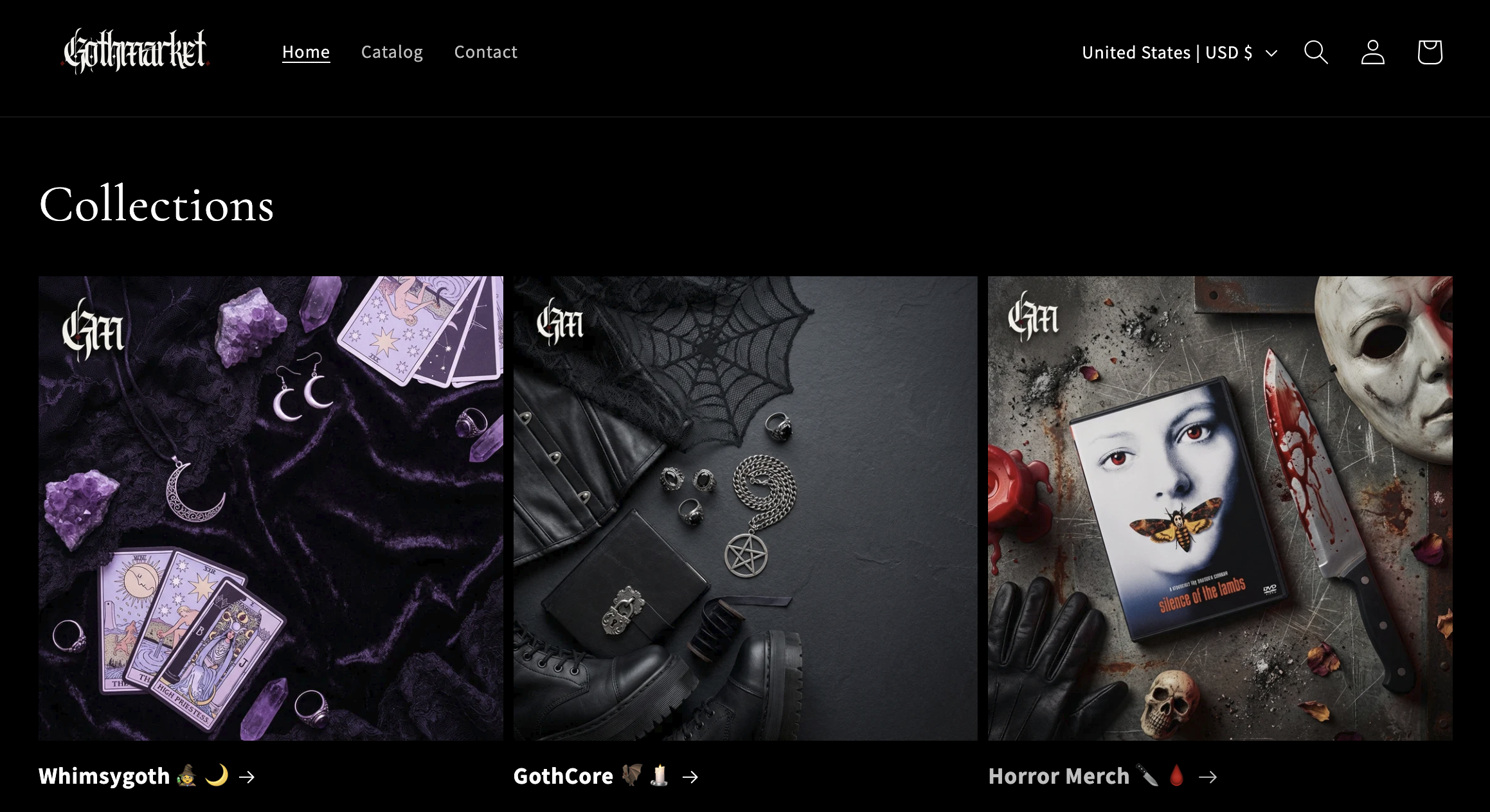
At Goth.Market, every product comes from independent creators who live and breathe the subculture. Explore our curated goth jewelry collections, where every piece carries real symbolic weight, from occult pendants to hand-crafted chokers built for someone who understands what they’re wearing. If you’re looking for a starting point, the celestial chain choker captures the intersection of dark romanticism and personal symbolism beautifully. This is where aesthetic intention and community meet.
Frequently asked questions
How do subcultures start fashion trends?
Subcultures launch trends by using fashion as symbolic resistance, creating bold styles that challenge mainstream norms through deliberate visual protest rather than commercial design cycles.
What does bricolage mean in subcultural fashion?
Bricolage is when subcultures repurpose everyday items to create new meanings. As Hebdige documented, safety pins became earrings and religious objects became fashion statements, all signaling rebellion through unexpected recontextualization.
How do mainstream brands affect subcultural authenticity?
When mainstream brands adopt subculture styles, original meaning is diluted, turning deliberate rebellion into mass consumerism stripped of its community values and political context.
Why is the goth subculture important for personal identity?
Goth communities offer belonging, creative expression, and documented mental health benefits. As one longtime participant described it, the subculture saved their life by providing stable identity and genuine community.
How does goth fashion maintain political roots?
Goth keeps its political edge by actively upholding anti-conservative, pro-LGBTQ+ values and publicly rejecting far-right attempts to appropriate its aesthetic while abandoning its foundational ethics.