

How community shapes the goth market experience
Goth markets aren’t just places to buy dark clothing and occult jewelry. They’re living cultural ecosystems where authenticity matters more than profit margins. While mainstream retail chases trends, community-driven goth markets prioritize handmade craftsmanship, shared values, and genuine connections between creators and collectors. This community foundation transforms simple transactions into meaningful exchanges that preserve subcultural identity. Understanding how community shapes these spaces reveals why goth markets remain vital hubs for alternative lifestyle enthusiasts seeking belonging alongside unique aesthetic products.
Table of Contents
- Key takeaways
- Understanding the community foundation of goth markets
- Goth markets as social and cultural hubs beyond commerce
- Balancing online and physical goth market dynamics
- Navigating commercialization and authenticity tensions in goth markets
- Discover authentic goth styles and artisan gems
- Frequently asked questions
Key Takeaways
| Point | Details |
|---|---|
| Community driven authenticity | Goth markets prioritize handmade craftsmanship and direct creator involvement over corporate trends to reflect subcultural values. |
| Belonging through markets | Markets function as social hubs where members affirm identity, share experiences, and build belonging beyond transactions. |
| Global online engagement | Online platforms extend the goth market community beyond local scenes, linking creators and collectors around the world. |
| Insider curation preserves authenticity | Curated vendor selections by insiders protect authenticity, emphasize small batch production, and reduce exploitation. |
Understanding the community foundation of goth markets
The goth market ecosystem thrives because community members actively shape what gets sold and how commerce happens. Unlike conventional retail where corporations dictate trends, community-driven goth markets emphasize DIY ethos and artisan creators who participate directly in the scene they serve. This hands-on involvement ensures products reflect genuine subcultural values rather than corporate interpretations of what goth should look like.
Artisan creators form the backbone of authentic goth markets. These makers don’t just produce items for profit. They live the aesthetic, understand the symbolism, and craft pieces that resonate with subcultural meaning. A handmade pentagram necklace from a practicing witch carries different energy than mass-produced jewelry from a factory. Community members recognize this distinction immediately. The role of aesthetics in goth markets extends beyond surface appearance to encompass the intention and knowledge embedded in each creation.
Curation by community insiders maintains quality and relevance. Goth market organizers typically come from within the subculture, bringing years of scene participation to their vendor selection process. They know which creators honor the DIY tradition and which ones simply slap skulls on generic products. This gatekeeping serves a protective function, filtering out exploitation while welcoming genuine contributions. When you browse a curated goth market, you’re experiencing the collective judgment of people who’ve spent decades distinguishing authentic expression from superficial imitation.
Key elements that define community-driven goth markets include:
- Handmade items created by active scene participants who understand subcultural symbolism
- Direct creator involvement at events, allowing face-to-face connections with buyers
- Curated vendor selection by community insiders who prioritize authenticity over profit
- Emphasis on small-batch production that preserves uniqueness and artistic integrity
- Shared values around anti-commercialism, individuality, and aesthetic depth
Pro Tip: When shopping at goth markets, ask creators about their inspiration and process. Genuine artisans love discussing their work and the subcultural references embedded in their designs. This conversation reveals authenticity better than any product description.
The DIY ethos creates natural barriers against mass commercialization. Community members value the imperfections and variations that come with handcrafted goods. A slightly asymmetrical hand-stitched patch or a ritual candle with unique herb blends tells a story that factory precision can’t replicate. This appreciation for artisan craftsmanship keeps goth markets focused on quality and meaning rather than volume and profit margins.
Goth markets as social and cultural hubs beyond commerce
Physical goth markets create irreplaceable spaces for community gathering and identity affirmation. These events function as modern tribal meetings where subcultural members recognize each other, share experiences, and strengthen collective bonds. Goth markets serve as physical and social hubs where belonging and identity expression matter as much as the merchandise changing hands. Walking through vendor aisles becomes a ritual of recognition, where your aesthetic choices receive validation from people who truly understand them.
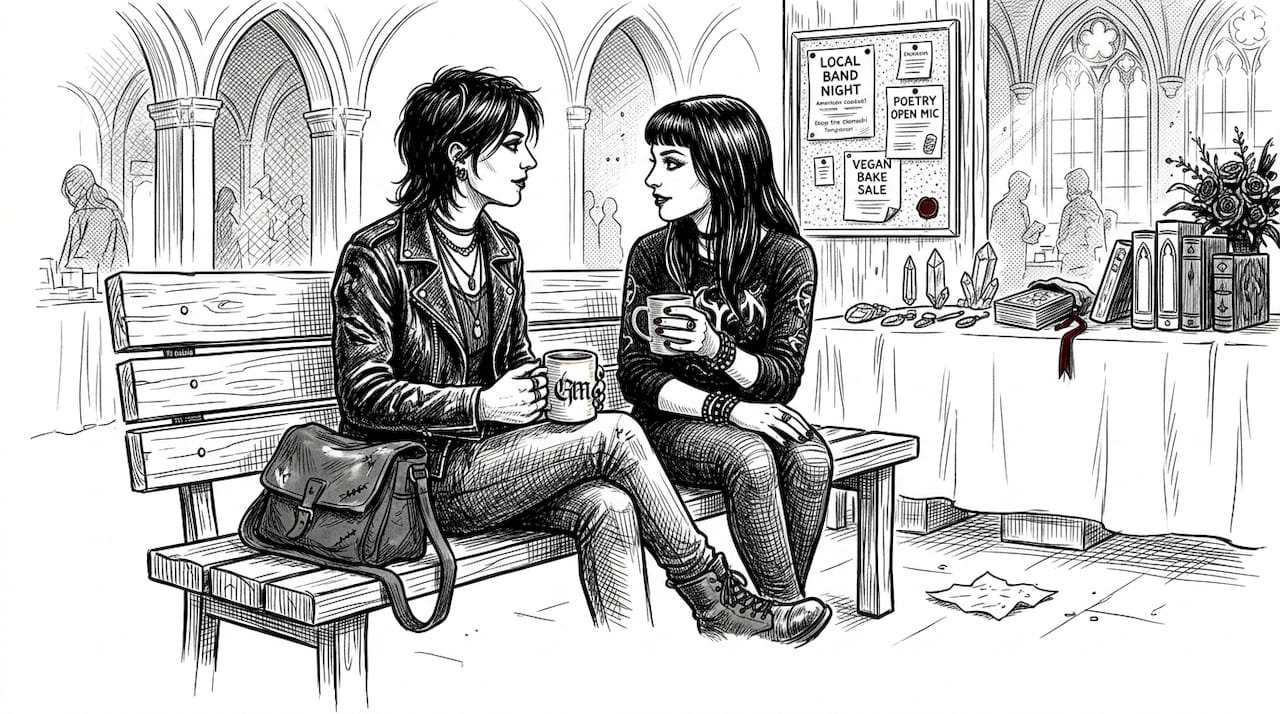
The social dimension transforms shopping into meaningful interaction. You don’t just buy a tarot deck at a goth market. You discuss divination practices with the creator, learn about the deck’s unique symbolism, and perhaps discover a new approach to your spiritual practice. These conversations build networks that extend beyond the event itself. Many lasting friendships and creative collaborations begin at vendor tables where shared interests spark genuine connections.
Cultural practices find physical expression at these gatherings:
- Ritual demonstrations and workshops that teach occult practices within community context
- Fashion showcases where attendees display their most elaborate outfits for appreciation
- Music performances that reinforce the sonic foundations of goth culture
- Art exhibitions featuring dark romanticism, horror themes, and mystical imagery
- Networking opportunities connecting creators, collectors, and subcultural organizers
These markets counterbalance the isolation many alternative individuals experience in mainstream environments. Spending your daily life as the only goth in your workplace or neighborhood creates subtle but persistent alienation. Goth markets offer temporary sanctuary where your aesthetic isn’t weird or shocking but completely normal and even celebrated. This validation holds profound psychological importance for maintaining subcultural identity against constant mainstream pressure to conform.
“The physical presence at markets preserves embodied traditions that online spaces can’t fully replicate. Seeing someone’s complete outfit, feeling fabric textures, and experiencing the sensory atmosphere of incense and music creates immersive cultural transmission that screens simply cannot match.”
Witchcraft and occult practitioners particularly value these gathering spaces. Goth markets frequently feature vendors selling ritual supplies, divination tools, and metaphysical items alongside fashion and accessories. This integration reflects the overlap between goth aesthetics and spiritual practices within the community. Discussing spellwork or tarot interpretations becomes natural conversation rather than something hidden from judgmental outsiders. The belonging and expression in goth community extends to spiritual dimensions that mainstream culture often dismisses or misunderstands.
Balancing online and physical goth market dynamics
Digital platforms extend goth community reach far beyond local event schedules. Online platforms supplement physical markets by enabling information sharing, etiquette discussions, and commerce that maintains global connections. Someone living in a rural area with no nearby goth scene can still participate through online marketplaces, forums, and social media groups. This accessibility prevents geographic isolation from cutting people off from subcultural participation entirely.
Online spaces serve distinct functions that complement rather than replace physical markets. Digital platforms excel at knowledge sharing, where community members post DIY tutorials, discuss historical references, and debate aesthetic interpretations. These conversations create collective understanding that newcomers can access anytime. Forums and groups also coordinate physical meetups, share event information, and maintain community continuity between in-person gatherings.
The role of community in goth markets manifests differently across digital and physical spaces:
- Online communities enable 24/7 access to subcultural knowledge and creator connections
- Digital marketplaces showcase artisan work to global audiences beyond local event attendance
- Social media preserves event memories through photos and videos that reinforce shared experiences
- Forums facilitate detailed discussions about authenticity, ethics, and subcultural evolution
- Virtual spaces reduce barriers for people with mobility issues or social anxiety
How community members typically engage across both realms:
- Discover creators and products through online platforms and social media
- Research subcultural history and aesthetic principles via digital resources
- Connect with local community members through online groups and event pages
- Attend physical markets to experience embodied culture and make purchases
- Share experiences online afterward, strengthening digital community bonds
- Maintain ongoing creator relationships through both channels
Pro Tip: Follow your favorite goth market vendors on social media before events. Many creators offer online-exclusive previews, take custom orders, and share behind-the-scenes content that deepens your appreciation for their work and builds anticipation for in-person meetings.
Physical interaction remains essential despite digital convenience. Trying on clothing, examining jewelry craftsmanship up close, and feeling the weight of ritual tools provides sensory information that photos can’t convey. The atmospheric experience of walking through a goth market with its music, incense, and visual richness creates memories that purely transactional online shopping never generates. Digital platforms work best when they enhance rather than attempt to replace these irreplaceable embodied experiences.
Online commerce does expand artisan sustainability. Creators can maintain year-round sales through digital storefronts rather than depending entirely on periodic market events. This steady income allows more community members to pursue artisan work full-time, increasing the diversity and quality of available products. The combination of online accessibility and physical event participation creates a robust ecosystem supporting both creator livelihoods and community cultural preservation.
Navigating commercialization and authenticity tensions in goth markets
Commercial expansion brings inevitable friction to community-driven spaces. Commercialization via brands like Hot Topic democratizes access but risks diluting DIY ethos through mass production and trend chasing. When mainstream retailers adopt goth aesthetics, they strip away the subcultural context and meaning that make these styles significant to community members. A mass-produced band t-shirt from someone who’s never heard the music feels fundamentally different from merchandise bought at an actual concert or from the band directly.
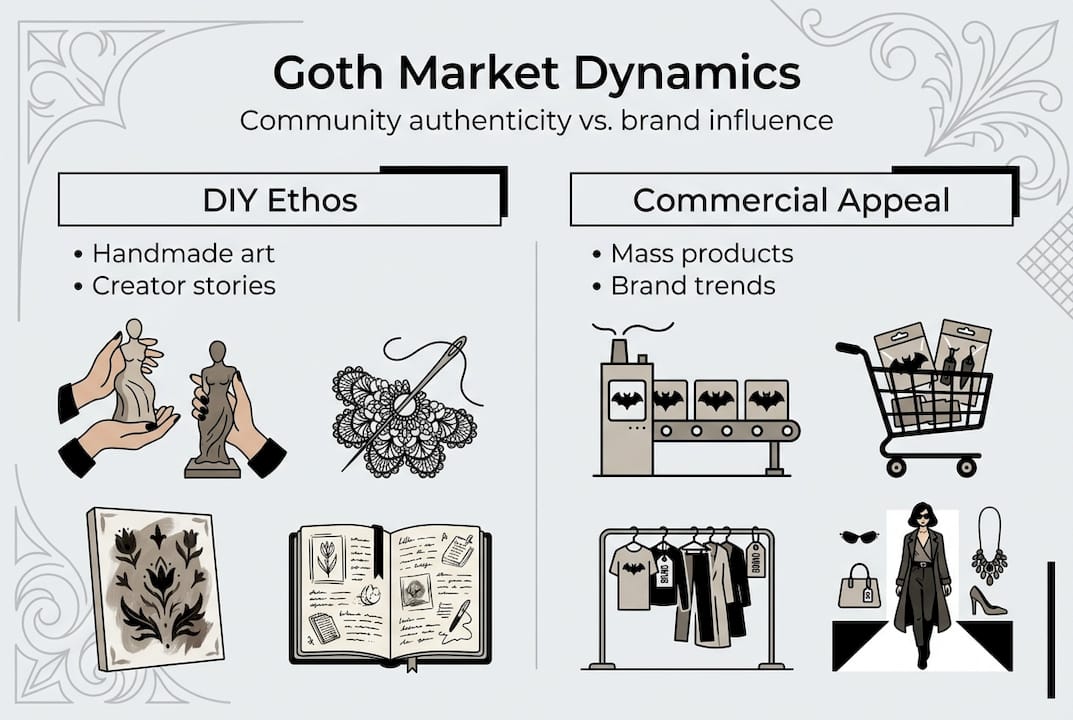
The authenticity debate splits along several fault lines. Purists emphasize original music knowledge, DIY participation, and historical understanding as authenticity markers. They view commercial adoption as cultural appropriation that commodifies their identity for profit. Others argue that gatekeeping excludes potential community members and that subcultures naturally evolve. This tension plays out in vendor selection, event policies, and community discussions about who belongs and what counts as genuine participation.
| Aspect | DIY Community Ethos | Commercial Brand Influence |
|---|---|---|
| Production | Handmade, small-batch, artisan-created | Mass-produced, factory-made, trend-driven |
| Creator Connection | Direct relationship, face-to-face interaction | Anonymous corporate production, retail intermediaries |
| Authenticity Markers | Scene participation, subcultural knowledge | Market research, demographic targeting |
| Pricing | Reflects artisan labor and materials | Optimized for volume sales and profit margins |
| Cultural Impact | Preserves traditions, supports community | Increases accessibility, risks dilution |
| Design Process | Emerges from lived experience | Interprets trends from outside perspective |
Community gatekeeping attempts to maintain standards without becoming exclusionary. Thoughtful market organizers balance welcoming newcomers with preserving authentic representation. They might require vendors to demonstrate scene involvement or understanding rather than simply producing gothic-looking products. This middle path acknowledges that subcultures need new members to survive while recognizing that unlimited commercialization destroys what makes the culture valuable in the first place.
Key tensions in commercialization debates:
- Accessibility versus exclusivity in determining who can participate and sell
- Profit motives versus community service in market organization and vendor selection
- Aesthetic appreciation versus deep cultural understanding as participation criteria
- Growth and visibility versus underground authenticity and subcultural integrity
- Welcoming newcomers versus protecting against exploitative appropriation
The goth role in modern fashion trends complicates these dynamics further. When high fashion adopts dark romanticism or occult symbolism, it brings visibility but often misses the point entirely. Runway shows featuring “goth-inspired” looks rarely credit the subculture or understand the decades of cultural development behind those aesthetics. This appropriation without attribution frustrates community members who see their carefully cultivated identity reduced to a seasonal trend.
Some community members embrace strategic commercialization. They recognize that broader visibility can attract people who develop genuine interest and eventually become active participants. A teenager who buys their first band t-shirt at a mall store might later discover underground music, attend local shows, and become a committed scene member. This pathway from commercial entry point to authentic participation suggests that gatekeeping should focus on behavior and respect rather than how someone first encountered the subculture.
The ongoing negotiation between growth and authenticity defines contemporary goth markets. Community members continuously debate where to draw lines, how to welcome newcomers, and what standards preserve meaningful cultural participation. These conversations themselves constitute community building, as members collectively determine their values and boundaries through respectful disagreement and compromise.
Discover authentic goth styles and artisan gems
Experiencing community-driven goth culture firsthand means supporting creators who live the aesthetic they craft. You’ve learned how authentic markets prioritize artisan craftsmanship and subcultural knowledge over mass production. Now you can directly participate in this ecosystem by exploring curated collections that embody these values.
Goth.Market connects you with independent creators offering handmade jewelry, occult accessories, and unique fashion pieces that reflect genuine subcultural artistry. Browse the goth jewelry collection to discover pieces crafted by artisans who understand the symbolism and meaning behind every design element. Each item represents the DIY ethos and community values explored throughout this article. The celestial chain choker moon pendant exemplifies how authentic creators blend aesthetic beauty with mystical significance, creating wearable art that expresses your identity. Explore the whimsygoth collection for pieces that merge darker aesthetics with enchanting details, supporting artisans while expressing your authentic self.
Frequently asked questions
What defines a community-driven goth market?
A community-driven goth market prioritizes authenticity through DIY ethos, artisan creators, and direct interpersonal connections between makers and buyers. These markets emphasize handmade goods, subcultural knowledge, and shared values over profit maximization. Community members curate vendors and maintain standards that preserve genuine cultural expression rather than commercial exploitation.
How do goth markets support witchcraft and occult practitioners?
Goth markets offer specialized ritual supplies, divination tools, and metaphysical items that mainstream retailers rarely stock. Vendors often practice the spiritual traditions they serve, providing knowledgeable guidance alongside products. These spaces normalize discussions about spellwork, tarot, and magical practices within a community that respects and understands these paths. The integration of occult offerings with fashion and art reflects the natural overlap between goth aesthetics and spiritual exploration.
What impact has commercialization had on goth market communities?
Commercialization democratizes access by making goth aesthetics more widely available but risks diluting authentic subcultural meaning through mass production. Community members debate whether mainstream adoption represents cultural appropriation or natural evolution. Gatekeeping efforts attempt to preserve DIY integrity and genuine participation while remaining welcoming to sincere newcomers. The tension between growth and authenticity continues shaping how goth markets balance accessibility with cultural preservation.
Why do physical goth markets remain important despite online shopping?
Physical markets provide irreplaceable embodied experiences that digital platforms cannot replicate. Seeing complete outfits, feeling fabric textures, examining craftsmanship details, and experiencing atmospheric elements like music and incense create immersive cultural transmission. These gatherings offer face-to-face social interaction that strengthens subcultural bonds and validates alternative identities. The sensory richness and community recognition at physical events complement online convenience rather than competing with it.
How can newcomers participate authentically in goth market communities?
Newcomers should approach with genuine curiosity and respect for the culture’s history and values. Learn about foundational music, read subcultural history, and engage with community members through questions rather than assumptions. Support artisan creators, attend events with openness to learning, and avoid treating goth aesthetics as costumes or trends. Authentic participation develops through consistent engagement, subcultural education, and contributing positively to community spaces rather than simply consuming products.