

Symbolism in goth fashion: what your dark attire reveals
Goth fashion speaks volumes before you say a word. The symbols you wear—from ankhs to pentagrams—aren’t random aesthetic choices but deliberate statements of identity, values, and belonging. Each piece carries centuries of meaning, reshaped by subcultures to communicate resistance, spirituality, and connection. Understanding these symbols transforms how you express yourself and engage with the gothic community, revealing layers of cultural significance that separate authentic representation from surface-level imitation.
Table of Contents
- Origins Of Goth Symbolism And Its Cultural Roots
- Common Symbols In Goth Fashion And Their Meanings
- Symbolism’s Role In Goth Identity And Community Dynamics
- Evolving Symbolism: New Interpretations And Contemporary Trends
- Explore Goth Fashion Symbolism With Authentic Accessories
Key takeaways
| Point | Details |
|---|---|
| Symbols communicate identity | Gothic symbols express values, beliefs, and subcultural affiliation beyond mere fashion statements. |
| Historical roots matter | Origins trace to Victorian mourning, Dark Romanticism, and 1970s punk rebellion. |
| Common symbols carry weight | Ankhs represent eternal life, pentagrams signify elements, skulls signal mortality awareness. |
| Cultural sensitivity required | Appropriation debates and misinterpretation risks demand thoughtful symbol selection. |
| Symbolism evolves constantly | Modern goth incorporates technology, environmentalism, and social justice themes into traditional imagery. |
Origins of goth symbolism and its cultural roots
The gothic subculture origins emerged in late 1970s Britain as punk’s darker, more introspective cousin. Bands like Bauhaus and Siouxsie and the Banshees created soundscapes that matched the visual language of Victorian death culture and Romantic poetry. This wasn’t arbitrary aesthetic borrowing but a deliberate connection to historical movements that challenged mainstream optimism with beauty in darkness.
Black color symbolizes mourning, tracing directly to Queen Victoria’s decades-long mourning period after Prince Albert’s death in 1861. Victorian society transformed grief into elaborate ritual, with strict dress codes signaling loss and remembrance. Goths adopted this somber palette not from morbidity but as rejection of forced cheerfulness and acknowledgment of life’s darker truths.
Dark Romanticism’s influence runs deeper than clothing choices. Writers like Edgar Allan Poe and Mary Shelley explored themes of death, isolation, and supernatural horror that became foundational to goth philosophy. Their work celebrated melancholy as authentic emotional experience rather than weakness to overcome. This literary tradition gave goths intellectual framework for their aesthetic rebellion.
Key historical influences shaping modern goth symbolism include:
- Victorian mourning jewelry featuring hair art and memento mori imagery
- Medieval religious iconography reinterpreted through secular lens
- 19th century occult revival introducing esoteric symbols to broader culture
- Punk’s DIY ethos allowing personal symbol reinterpretation
- Gothic literature’s fascination with death, decay, and transcendence
“Goth subculture emerged not as fashion trend but as philosophical stance, using symbols to communicate resistance to mainstream values and embrace of life’s shadow aspects.”
These foundations created visual language that goths continue refining. Understanding this history prevents shallow appropriation and enables authentic expression through symbolic choices that honor their complex origins.
Common symbols in goth fashion and their meanings
Gothic symbols like ankhs and pentagrams appear across jewelry, clothing, and accessories, each carrying layered significance. The ankh, ancient Egypt’s symbol for life and immortality, gained popularity in 1980s goth circles through bands and films exploring death’s mysteries. Wearing an ankh signals interest in life’s eternal nature and spiritual dimensions beyond material existence.
The pentagram represents earth, air, fire, water, and spirit in harmony. Right-side up, it symbolizes spiritual ascension and elemental balance. Inverted, it takes darker connotations, sometimes associated with Satanism or rebellion against religious orthodoxy. Goths use both orientations, choosing based on personal philosophy rather than shock value alone.
Skulls and skeletal imagery dominate goth aesthetics, functioning as memento mori reminders of mortality. Rather than celebrating death, they acknowledge its inevitability and encourage living authentically. Crosses, both upright and inverted, explore spiritual themes, question religious authority, or simply appreciate Gothic architectural beauty divorced from doctrine.
| Symbol | Original Meaning | Goth Interpretation |
|---|---|---|
| Ankh | Egyptian eternal life symbol | Spiritual connection, interest in ancient wisdom |
| Pentagram | Five elements in balance | Occult interest, nature connection, spiritual protection |
| Skull | Death reminder (memento mori) | Mortality acceptance, authentic living, dark beauty |
| Cross/Crucifix | Christian faith symbol | Spiritual exploration, religious questioning, Gothic architecture appreciation |
| Raven | Death omen, intelligence | Mystery, transformation, connection to Edgar Allan Poe |
| Moon phases | Lunar cycles, feminine power | Change, intuition, connection to night and shadow |
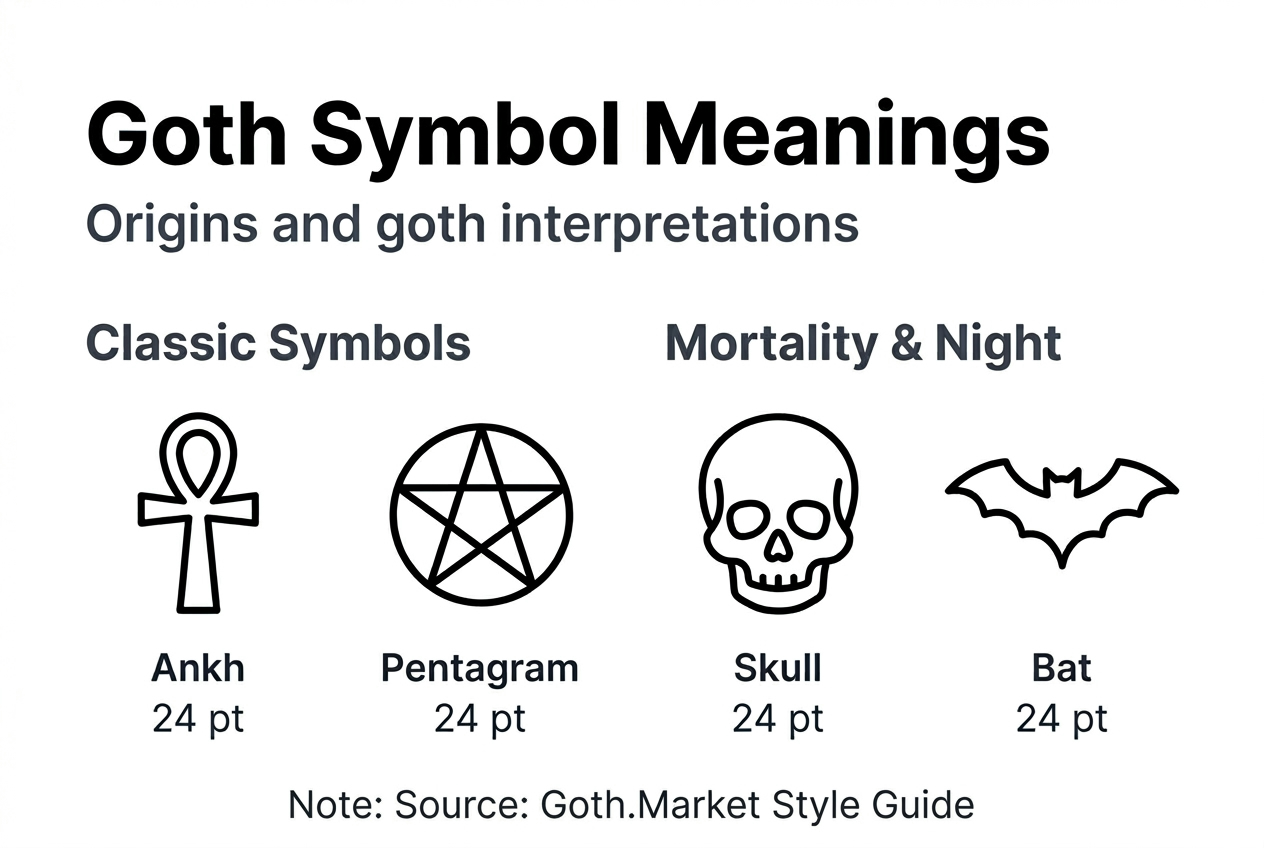
Bats, spiders, and ravens appear frequently, connecting goths to creatures associated with night, transformation, and mystery. These animals represent misunderstood beauty, thriving in darkness while serving vital ecological roles. Their symbolic adoption challenges negative stereotypes and celebrates alternative ways of existing.
Pro Tip: Research symbol origins before wearing them to avoid misrepresenting cultural meanings or appropriating sacred imagery. Understanding deepens your connection to symbols and prevents uncomfortable conversations about unintended messages your fashion sends.
Symbolism’s role in goth identity and community dynamics
Symbolism communicates identity and values within goth spaces more efficiently than words. When you spot someone wearing a pentagram choker and Ankh earrings, you recognize shared interests in spirituality, occult philosophy, or ancient symbolism. These visual cues build instant community recognition, signaling you’re among people who understand your aesthetic and philosophical choices.
Symbols also broadcast political and philosophical stances. Inverted crosses challenge religious authority, feminist symbols combined with gothic imagery signal progressive values, and environmental motifs show ecological consciousness. Your symbol choices become walking manifesto, attracting like-minded individuals while potentially repelling those uncomfortable with your beliefs.
Debates around symbolic appropriation create tension within goth communities. Key controversies include:
- Using Native American or other indigenous symbols without cultural connection or permission
- Wearing religious symbols from closed practices as mere aesthetic choices
- Adopting symbols with racist or extremist associations without understanding their loaded history
- Commercializing sacred imagery for profit without respecting original cultural contexts
- Misrepresenting occult symbols through ignorance, perpetuating harmful stereotypes
Inverted crosses particularly spark discussion. Some view them as legitimate satanic or anti-religious symbols, while others argue they represent St. Peter’s humility (requesting crucifixion upside down). This interpretive flexibility creates misunderstandings, with wearers intending artistic expression while observers perceive blasphemy or edginess without substance.
“Goth symbolism functions as complex visual language where each element contributes to narrative about wearer’s beliefs, values, and subcultural affiliations, demanding thoughtful curation rather than random accumulation.”
Authenticity debates center on whether symbols require genuine belief or can function purely aesthetically. Purists argue wearing pentacles without pagan practice trivializes spiritual traditions, while others maintain personal meaning matters more than orthodox interpretation. This tension reflects broader questions about cultural ownership and symbolic evolution.
Evolving symbolism: new interpretations and contemporary trends
Goth fashion’s symbolism evolves continuously, incorporating contemporary concerns while maintaining historical connections. Modern goths blend traditional Victorian mourning aesthetics with cyberpunk circuits, environmental activism symbols, and social justice imagery. This evolution keeps the subculture relevant, allowing new generations to express current struggles through gothic visual language.
Key developments reshaping goth symbolism in 2026:
-
Tech integration brings circuit board patterns, glitch aesthetics, and digital decay imagery into gothic fashion, reflecting technology’s increasing role in identity and alienation.
-
Environmental themes incorporate dying plants, pollution imagery, and extinct species representations, expressing climate anxiety through gothic sensibilities.
-
Social justice symbols merge with traditional goth iconography, creating intersectional statements about multiple marginalized identities.
-
Gender fluidity manifests through androgynous symbols, breaking Victorian gender codes while maintaining dark aesthetic foundations.
-
Mental health awareness uses symbolism acknowledging depression, anxiety, and trauma without romanticizing suffering, validating authentic emotional experiences.
Contemporary goths reimagine classic symbols through modern lenses. Skulls now appear with rainbow colors signaling LGBTQ+ pride, ankhs combine with feminist symbols, and pentagrams incorporate environmental elements. These hybrid symbols honor tradition while speaking to present realities, demonstrating goth culture’s adaptability.
Gothic fashion styling trends increasingly emphasize personal symbol curation over adherence to established codes. Younger goths mix cultural references freely, creating individualized symbolic languages that communicate their specific identities rather than conforming to rigid subcultural rules. This democratization allows broader participation while sometimes frustrating traditionalists seeking clear boundaries.
Pro Tip: Follow contemporary goth artists and designers on social media to track evolving symbolic trends, ensuring your fashion choices remain current and thoughtfully connected to subcultural conversations rather than frozen in outdated interpretations.
Digital platforms accelerate symbolic evolution, with TikTok and Instagram spreading new interpretations globally within days. A symbol reinterpretation in Tokyo can influence London goths immediately, creating unprecedented cross-cultural symbolic dialogue. This connectivity enriches goth symbolism while raising questions about cultural appropriation and authentic representation across vastly different contexts.
Explore goth fashion symbolism with authentic accessories
Deepen your symbolic expression through gothic jewelry that honors traditional meanings while supporting your unique identity. Thoughtfully curated accessories transform abstract symbolism into tangible statements worn against your skin, creating daily connection to values and aesthetics that define your gothic identity.
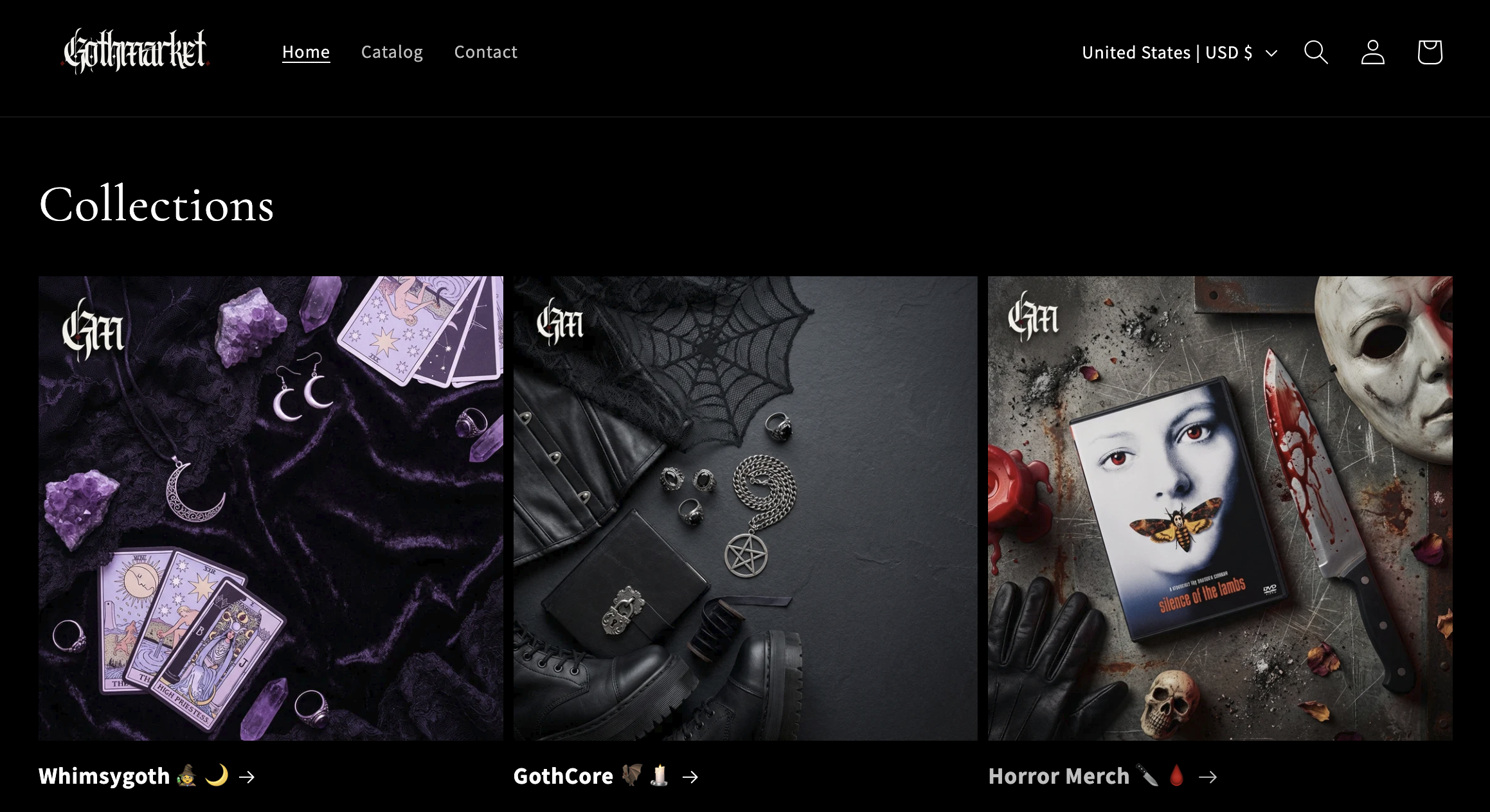
Consider pieces like the celestial chain choker with moon pendant that connects you to lunar cycles and night’s mysteries, or dark aesthetic ring sets featuring symbolic engravings that communicate your philosophical stance through subtle hand gestures. Each piece becomes conversation starter and personal talisman, bridging historical symbolism with contemporary expression.
Goth.Market’s curated collections feature independent creators who understand symbolic weight, ensuring your accessories carry authentic meaning rather than mass-produced approximations. Selecting jewelry becomes intentional practice of building visual vocabulary that accurately represents your evolving gothic identity while respecting symbols’ cultural and historical significance.
FAQ
What does the ankh symbolize in goth fashion?
The ankh represents eternal life, originating as ancient Egyptian symbol for immortality and spiritual transcendence. It gained prominence in 1980s goth culture through bands and films exploring death’s mysteries. Wearing an ankh signals interest in life beyond physical existence and connection to ancient wisdom traditions.
Why is black such a dominant color in goth fashion?
Black symbolizes mourning and melancholy, rooted in Victorian mourning traditions following Queen Victoria’s extended grief period. Dark Romanticism associated black with mystery, depth, and authentic emotional experience. Goths embrace this color as rejection of forced optimism and acknowledgment of life’s shadow aspects, creating visual language of solemnity and resistance to mainstream cheerfulness.
Are all goth symbols connected to the occult?
While many symbols have occult associations, goth fashion incorporates diverse meanings beyond supernatural beliefs. Pentagrams might represent elemental balance rather than witchcraft practice, skulls signal mortality acceptance instead of dark magic, and crosses can appreciate Gothic architecture divorced from religious doctrine. Symbol interpretation varies individually, with some goths practicing occultism while others appreciate aesthetic or cultural dimensions without spiritual investment.
How do I avoid cultural appropriation with goth symbols?
Research symbol origins before wearing them, particularly those from closed religious or indigenous practices. Avoid sacred imagery from cultures you’re not part of, prioritize symbols with open interpretations or historical public use, and listen when community members express concerns about appropriation. Choose symbols aligned with your genuine interests and beliefs rather than collecting imagery for shock value, showing respect for cultural contexts while building authentic personal symbolic vocabulary.
Can modern symbols be considered truly gothic?
Goth symbolism evolves constantly, incorporating contemporary themes while maintaining core aesthetics of darkness, mystery, and resistance. Circuit patterns expressing digital alienation, environmental decay imagery, and social justice symbols merged with traditional gothic elements all qualify as authentically goth. The subculture’s strength lies in adapting to current realities while honoring historical foundations, making modern interpretations legitimate expressions rather than dilutions of gothic identity.