

How Aesthetics Shape Subculture Identity and Expression
TL;DR:
- Aesthetics in subcultures serve as a language signaling identity, values, and resistance.
- Gothic style incorporates Victorian mourning, romantic themes, and dark symbolism with layered historical influences.
- Commercialization dilutes authenticity by turning subcultural fashion into mainstream trends, risking loss of deeper meaning.
What you wear to a goth night is never just an outfit. Every stitch of velvet, every silver ankh, every smear of black lipstick speaks a language that outsiders miss entirely. Aesthetic choices in gothic and alternative subcultures carry weight far beyond appearance — they signal tribe membership, communicate core values, and quietly push back against a mainstream culture that demands conformity. This article breaks down how subcultural aesthetics actually work, what symbols mean and where they come from, and why the pressure of commercialization makes authentic expression more important now than ever.
Table of Contents
- Why aesthetics matter in subculture identity
- The gothic aesthetic: symbols, influences, and meanings
- Bricolage and resistance: How subcultures rework everyday items
- Commodification and authenticity: When aesthetics go mainstream
- Aesthetic depth versus surface: Is subculture more than a look?
- Express your aesthetic: Next steps for goth and alternative style
- Frequently asked questions
Key Takeaways
| Point | Details |
|---|---|
| Aesthetic signals identity | Visual style in subcultures expresses belonging and communicates values instantly. |
| Bricolage fuels resistance | Everyday items gain new meaning as creative statements against the mainstream. |
| Commodification dilutes meaning | Mainstream adoption and social media risk turning rich symbols into mere trends. |
| Authenticity can endure | When aesthetics reflect true values and lived experiences, subcultures survive surface-level trends. |
Why aesthetics matter in subculture identity
Most people assume fashion is decoration. In subcultures, it is vocabulary. What you put on your body communicates your alliances, your politics, your emotional world, and your relationship to the dominant culture around you. This is not metaphor — it is a studied, observable function.
Aesthetics in subcultures serve as a primary mechanism for identity formation, resistance, and communication. This means the visual layer of a subculture is load-bearing. Strip it away and you strip away how members recognize each other, how they signal dissent, and how they maintain cohesion without formal rules or institutions.
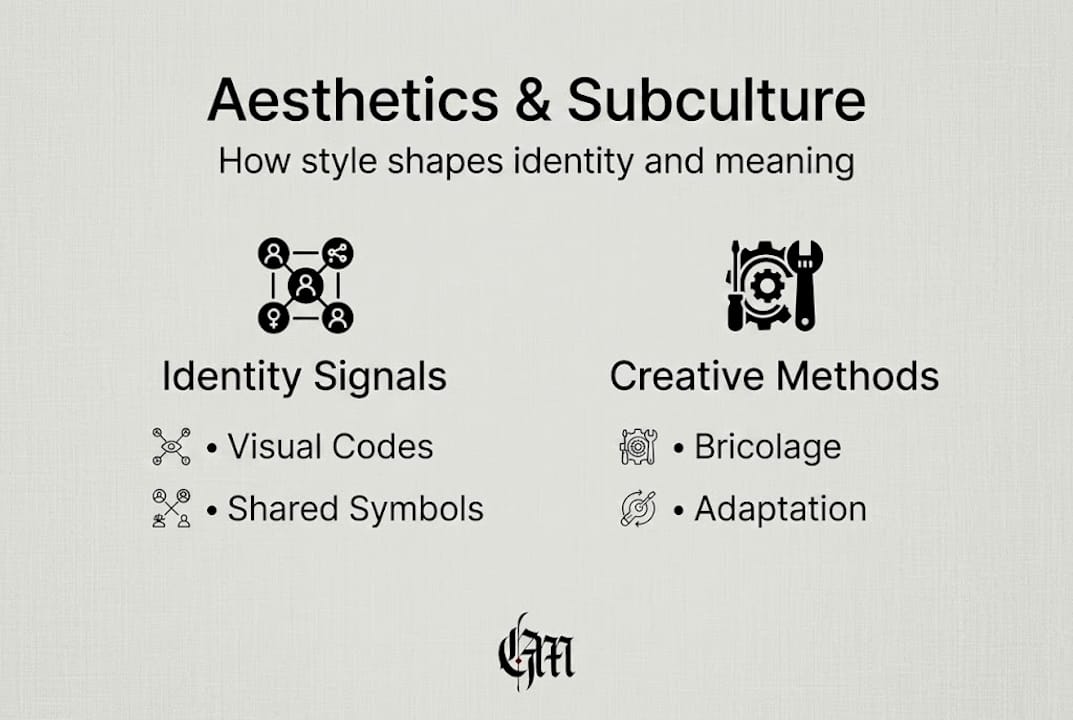
The mechanism here is semiotic bricolage, a concept from cultural theory that describes how subcultures take ordinary or borrowed objects and reassign their meaning. A safety pin becomes a punk earring. A Victorian mourning veil becomes a goth statement piece. These objects retain a ghost of their original meaning while gaining new subcultural significance — creating a layered symbol that rewards those who understand the code.
Aesthetics in goth subcultures and identity do several things at once:
- Mark membership: Visual cues tell other community members you belong
- Signal values: Dark imagery and non-conformist dress communicate rejection of mainstream norms
- Create boundaries: The aesthetic distinguishes insiders from outsiders without a single word spoken
- Perform resistance: Dressing in ways that make mainstream spaces uncomfortable is itself an act of defiance
“Style is not neutral. In subcultures, it is the primary text — the first and sometimes only statement a person makes before they open their mouth.”
This is why dismissing subcultural fashion as superficial misses the point completely. The visual register is where subcultures do their most visible political and social work. When commodification in subcultures occurs, it is not just a style being borrowed — it is a language being stripped of grammar.
The gothic aesthetic: symbols, influences, and meanings
Goth is one of the richest examples of how subculture aesthetics build layered meaning over decades. The look did not arrive fully formed. It evolved through collisions between Victorian England, 1970s post-punk, dark romanticism, and contemporary reinvention.
Gothic subculture draws from Victorian mourning attire, post-punk music, and dark romanticism — and you can see all three layers in any well-composed goth outfit. The floor-length black dress echoes funeral dress codes. The band tee references post-punk lineage. The dramatic eye makeup channels theatrical, romantic excess.
Key visual motifs and what they carry:
- Black clothing: Mourning, mystery, rejection of cheerful mainstream color palettes
- Lace and velvet: Victorian elegance, tactile richness, femininity reclaimed on goth terms
- Ankhs: Egyptian symbolism of life and death, borrowed and repurposed as a goth touchstone
- Bats and moons: Nocturnal identity, affinity for the liminal and the hidden
- Dramatic makeup: Theatricality, artifice as honesty, the mask as true face
Here is how the major influences map onto modern goth style:
| Influence | Key elements borrowed | Modern goth expression |
|---|---|---|
| Victorian mourning | Black attire, veils, jet jewelry | Floor-length gowns, mourning brooches |
| Post-punk | DIY ethos, band imagery, leather | Graphic tees, studded accessories |
| Dark romanticism | Melancholy themes, ornate detail | Lace overlays, poetic motifs |
| Gothic horror literature | Bats, coffins, moon imagery | Statement jewelry, printed fabrics |
Pro Tip: When building your aesthetic, trace each element back to its source. Knowing why an ankh appears in goth culture versus its Egyptian origin gives your look intellectual depth and makes it genuinely yours rather than imitation.
Modern variants like cybergoth, pastel goth, and whimsigoth show that the core visual language adapts without dying. You can find full breakdowns in gothic style guides and a look at why gothic fashion endures across decades. If you are building or expanding your wardrobe, a goth wardrobe checklist can help you prioritize foundational pieces over trend-chasing.
Bricolage and resistance: How subcultures rework everyday items
Bricolage sounds academic, but the practice is intensely physical and creative. It means taking objects that mainstream culture assigns a fixed, ordinary meaning and reassigning that meaning through context, combination, and attitude.
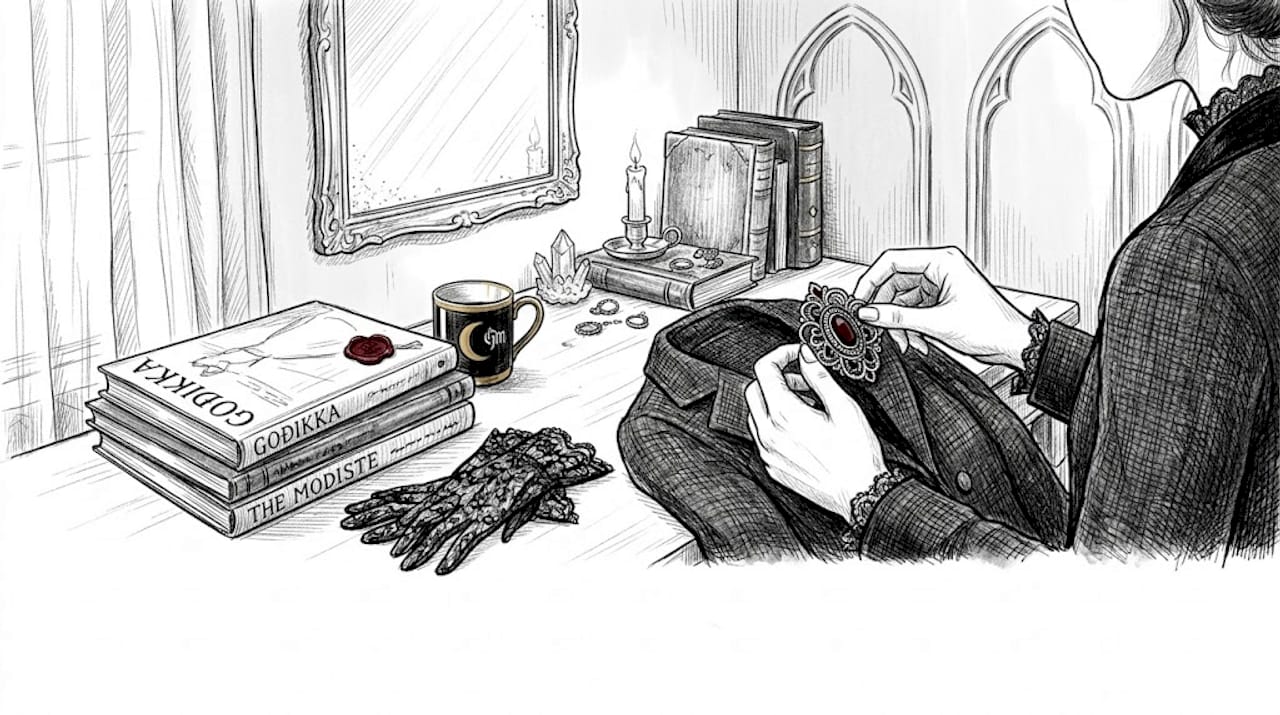
Subcultures signify resistance by subverting everyday objects through bricolage. This is the methodology behind the most iconic subcultural fashion moments. When punk artists pinned safety pins through their ears in the 1970s, they were not being random — they were taking a symbol of domestic utility and mending, and turning it into something confrontational and strange.
Here is how bricolage works in practice versus mainstream fashion consumption:
| Approach | Mainstream fashion | Subcultural bricolage |
|---|---|---|
| Source of meaning | Brand authority, trend cycles | Community re-assignment |
| Relationship to object | Consumer/product | Transformer/symbol |
| Goal | Social acceptance | Differentiation, resistance |
| Outcome | Conformity | Counter-narrative |
Specific examples across goth and punk contexts:
- Safety pins as jewelry: Originally a sewing tool, repurposed as punk body adornment, signaling working-class DIY defiance
- Mourning veils as goth accessories: Removed from their funeral context, transformed into aesthetic statements about mortality and beauty
- Crosses and religious imagery: Stripped of devotional meaning, used as dark aesthetic motifs or ironic commentary
- Medical and bondage imagery: Taken from clinical or kink contexts and reframed as goth fashion within specific subcultural scenes
Pro Tip: The most powerful bricolage is specific and intentional. Sourcing a Victorian brooch from an estate sale and wearing it to a goth event creates a richer statement than buying a mass-produced “goth” piece. The provenance adds meaning.
The symbolism in goth fashion runs deeper than most outsiders realize, and gothic accessories symbolism explains why specific pieces carry the weight they do. Understanding subcultural semiotics gives you the framework to make intentional choices rather than just accumulating dark-looking things.
Commodification and authenticity: When aesthetics go mainstream
Here is the uncomfortable part. The same visual power that makes subcultural aesthetics meaningful also makes them attractive to mainstream markets. When a look is distinctive enough to signal rebellion, it is distinctive enough to sell.
Mainstream brands market subcultural aesthetics, diluting their authenticity, and social media collapses distinctions into vague “alt” trends. This happens in a predictable cycle: subculture develops a look, mainstream brands spot it, the look appears on fast fashion websites at low price points, and within two seasons it has been separated entirely from the community and values that created it.
The effects on authentic members are real and documented. Commodification in punk, goth, and emo subcultures leads directly to authenticity loss and the social stigma around “posers.” That stigma is not petty gatekeeping — it reflects genuine grief over a shared visual language being borrowed without any of the values, history, or community commitment that gave it meaning.
What this looks like in practice:
- Hot Topic evolving from a genuine alternative retailer into a pop-culture merch shop
- “E-girl” and “alt” aesthetics on TikTok that cherry-pick goth visual elements with no subcultural grounding
- Fast fashion brands selling “goth” collections with none of the craftsmanship or intentionality
- Instagram aesthetics that flatten goth, witchy, and dark cottagecore into a single undifferentiated vibe
“When your aesthetic becomes someone else’s Halloween costume, the signal breaks down. What once said I belong to something real now just says this was trending.”
The alternative fashion’s impact on subcultures is documented and ongoing. For a closer look at how this plays out in market spaces, aesthetic commodification in goth traces the specific pressures on the goth community. It also connects to how goth’s influence on modern trends spreads outward in ways the community does not always control.
Aesthetic depth versus surface: Is subculture more than a look?
Here is the perspective worth holding: commodification is real and damaging, but it cannot actually destroy a subculture that is doing its full job. The problem only becomes fatal when a community mistakes the look for the whole thing.
Aesthetics distribute power and ideology before words — in goth specifically, they aestheticize rejection and counter-culturalism. That is a sophisticated function. But aesthetics are still a tool, not the totality. What actually sustains a subculture is the music, the gatherings, the friendships, the literature, the shared emotional landscape of people who genuinely feel alienated by mainstream culture and find each other in the dark.
When a teenager buys a goth necklace on a fast fashion site, they are not joining a subculture. They are wearing a symbol without the syntax. That is fine — they might find their way in eventually. But for those of us who have been here, who understand youth and goth identity as something lived rather than styled, the task is to keep deepening the substance behind the look. Innovate aesthetically, push into new subgenres and visual experiments, but hold onto the values, the community, and the actual experiences that make the aesthetic mean something in the first place.
Express your aesthetic: Next steps for goth and alternative style
Understanding the history and meaning behind your aesthetic choices transforms how you build and wear them. Every piece becomes a decision, not just a purchase.
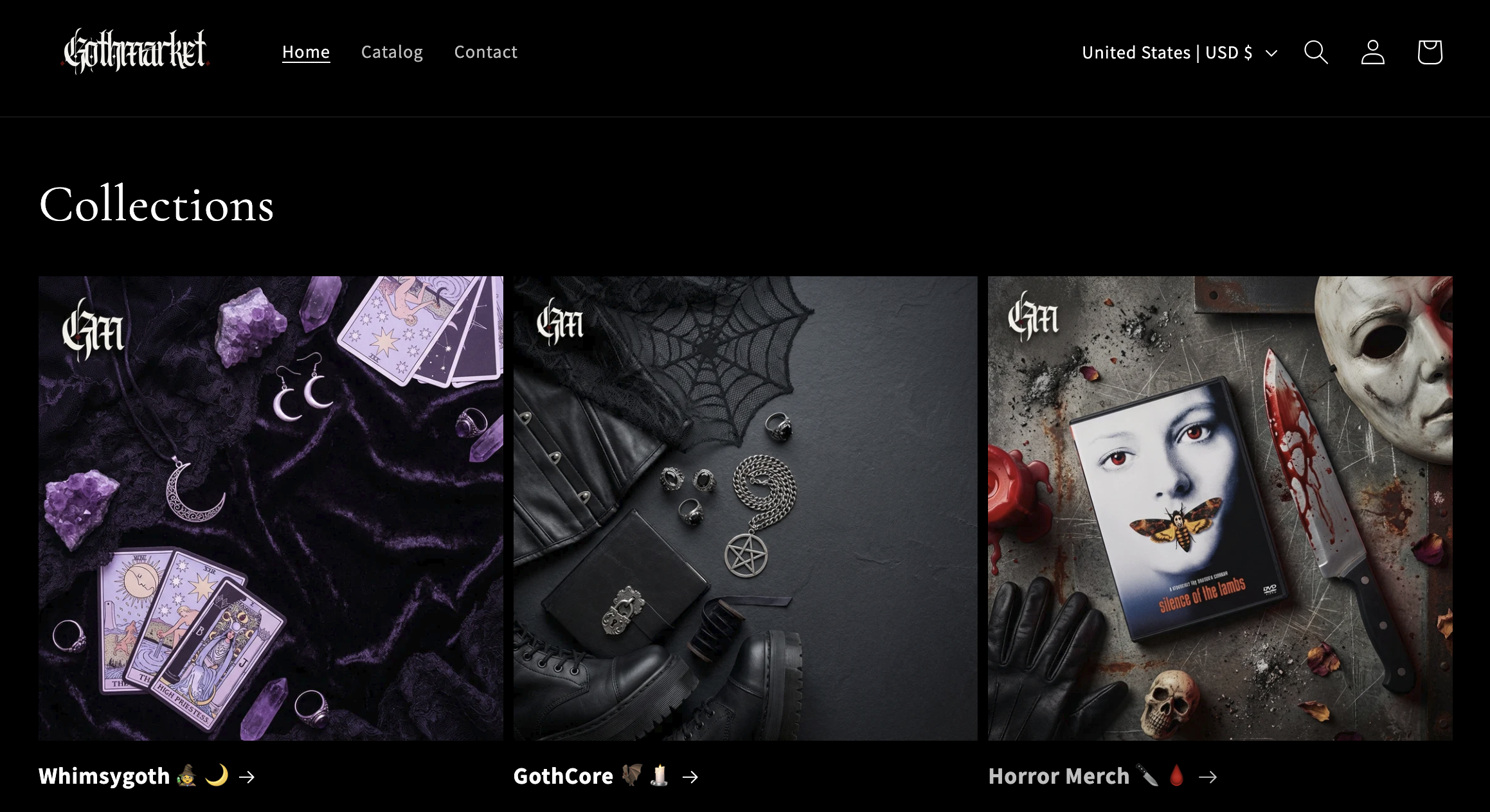
At Goth.Market, we connect you with independent creators and curated pieces that carry genuine subcultural weight. Whether you are looking for gothic jewelry that references real symbolism, pieces from the whimsigoth collection that expand the aesthetic in fresh directions, or you want to find more goth and alt pieces from independent makers who understand the culture, the marketplace is built for exactly this. Shop with the context you now carry.
Frequently asked questions
What is semiotic bricolage in subcultures?
Semiotic bricolage is the creative re-use of everyday objects as symbols of resistance and identity in subcultures. Subcultures signify resistance by taking ordinary items and reassigning their cultural meaning through placement and context.
How does commodification affect goth and alternative aesthetics?
Commodification turns subcultural styles into consumer products, often diluting their original meaning and authenticity. When fast fashion mass-produces goth looks, the visual language separates from the values and community that created it.
Are alternative aesthetics just fashion trends now?
While some trends lose depth online, authentic subcultures maintain rich meaning through shared values, symbols, and real experiences. Social media collapses subcultural styles into vague “alt” trends, but belonging runs deeper than a visual feed.
Why are gothic aesthetics so tied to Victorian and romantic influences?
Gothic aesthetics draw on Victorian mourning attire and themes of melancholy and individualism, creating a distinctive visual language with historical roots. The goth subculture formalized these influences through post-punk music and continues to reinterpret them across new substyles.