

What defines goth clothing: key features and style in 2026
You’ve seen the black outfits, the dramatic makeup, the mysterious allure. But goth clothing is far more nuanced than simply wearing all black. True goth fashion weaves together specific colors, textures, silhouettes, and cultural values that create a distinctive aesthetic rooted in historical influences and subcultural authenticity. This article explores what genuinely defines goth clothing in 2026, from the color palettes and fabrics that create depth to the philosophical approach that separates authentic goth style from fleeting trends. Whether you’re new to the subculture or refining your wardrobe, understanding these core elements will help you build outfits that honor goth fashion’s rich heritage.
Table of Contents
- The Color Palette That Defines Goth Fashion
- Textures And Fabrics That Create Goth Style’s Signature Drama
- Silhouettes And Clothing Items That Embody Goth Aesthetics
- The Ethos Behind Goth Clothing: Sincerity, Craftsmanship, And Personal Expression
- Explore Authentic Goth Accessories At GothMarket
- What Defines Goth Clothing? Frequently Asked Questions
Key takeaways
| Point | Details |
|---|---|
| Core color palette | Goth clothing is defined by a monochromatic palette dominated by black, accented with deep colors like burgundy, purple, and crimson. |
| Signature textures | Core fabrics include velvet, lace, leather, fishnet, mesh, silk, and satin, emphasizing drama, texture, and historical elegance. |
| Dramatic silhouettes | Key items feature corsets, long coats, layered skirts, fitted tops, platform or combat boots, and punk influenced elements like ripped clothing. |
| Cultural authenticity | True goth prioritizes sincerity, craftsmanship, texture contrast, and intentional layering over trends or excess. |
| Personal expression | Modern goth styles vary widely but maintain the dark, expressive core that honors subcultural roots and individual creativity. |
The color palette that defines goth fashion
Black forms the foundation of goth clothing, but reducing the aesthetic to a single color misses the sophisticated palette that brings depth and emotion to goth style. The dominant use of black creates a canvas where texture, silhouette, and carefully chosen accent colors can shine. Deep reds, burgundies, purples, and crimsons appear strategically to evoke passion, mysticism, and drama without compromising the dark aesthetic.
These accent colors serve specific purposes within goth fashion. Crimson and burgundy suggest Victorian romance and Gothic literature’s blood imagery. Deep purples connect to occult symbolism and royal elegance. These hues appear in accessories, makeup, hair accents, or as secondary garment colors that complement black bases. The key is restraint, using color to enhance rather than dominate.
The monochromatic black foundation allows texture and layering to become focal points. When you wear primarily black, differences in fabric sheen, weight, and pattern become more visible. Matte black cotton against glossy black leather creates visual interest without introducing new colors. This approach demonstrates sophistication and understanding of goth fashion’s core principles.
Not every goth outfit needs color accents, but incorporating them thoughtfully shows awareness of the aesthetic’s range. A black velvet dress with burgundy lace trim honors tradition while adding visual complexity. Black platform boots with purple laces inject personality without breaking the dark palette. Understanding this balance separates authentic goth style from simply wearing dark clothes.
Pro Tip: Start with an all black base and introduce one accent color through a single accessory like a crimson choker or purple ring to test how color enhances your personal goth aesthetic.
Key color applications in goth fashion:
- Black as the primary color for garments, creating unity and drama
- Deep reds and burgundies for romantic, Victorian inspired accents
- Purples and plums for mystical, occult themed elements
- Occasional dark greens or navy blues in some goth substyles
- Strategic color placement in accessories, makeup, or layering pieces
For practical guidance on building a predominantly black wardrobe while maintaining visual interest, explore gothic style tips for a 70 percent black wardrobe to understand how color ratios work in authentic goth fashion.
Textures and fabrics that create goth style’s signature drama
Fabric choice transforms simple black clothing into distinctly goth fashion. The textures you select communicate different aspects of the aesthetic, from Victorian elegance to punk rebellion. Velvet brings softness and historical richness, its light absorbing quality creating depth in monochromatic outfits. Satin and silk add sheen and fluidity, evoking romantic and decadent themes that connect to goth’s literary roots.
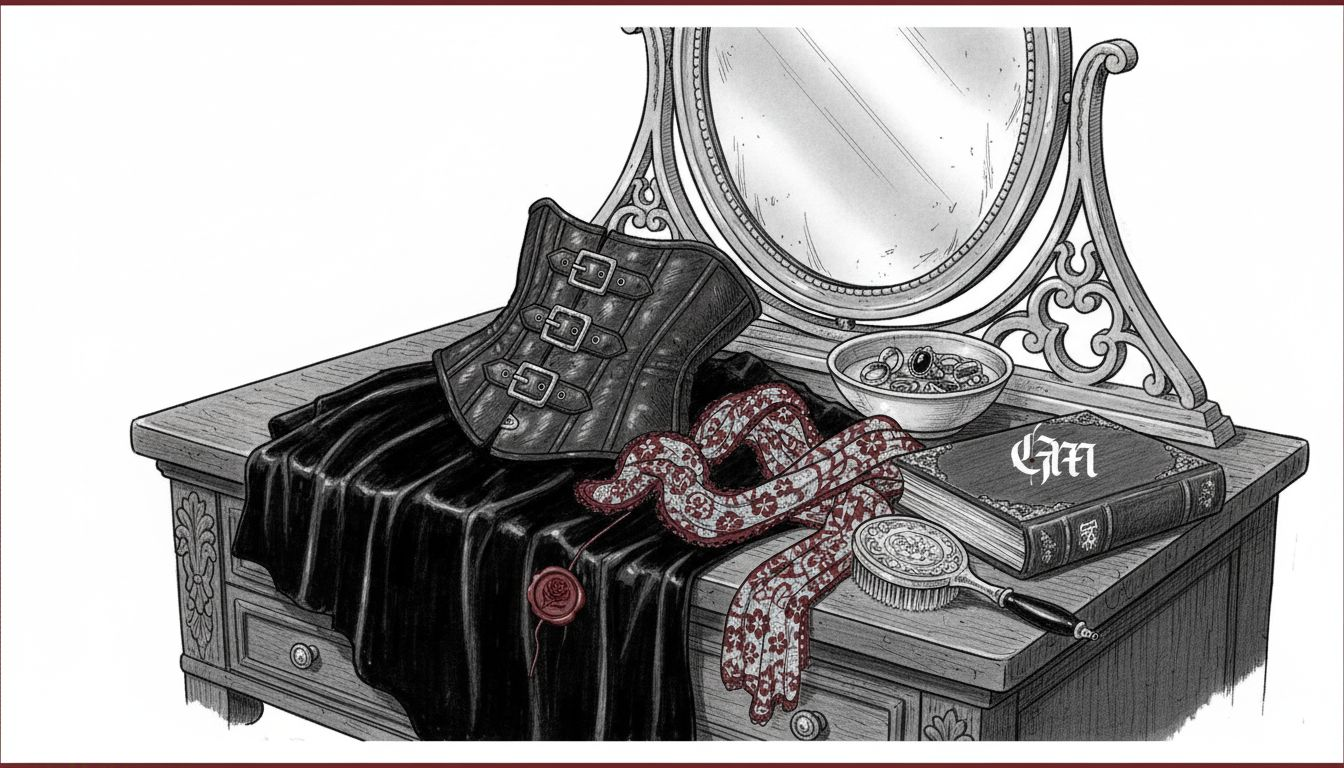
Leather introduces edge and durability, bridging goth fashion with punk influences. Whether in jackets, pants, corsets, or accessories, leather adds structure and toughness that balances softer fabrics. Its versatility allows it to appear refined in polished finishes or rebellious in distressed treatments. This dual nature makes leather essential across goth substyles.
Lace and fishnet provide delicate contrast and visual texture. Lace connects to Victorian mourning dress and Gothic romance, appearing in overlays, sleeves, gloves, and trim. Fishnet adds punk energy and reveals skin strategically, creating negative space that enhances layering. Mesh fabrics serve similar purposes, offering transparency and geometric patterns that add complexity without color.
The magic happens when you combine these textures intentionally. A velvet skirt paired with a leather corset and lace sleeves creates tactile interest while maintaining color cohesion. This layering approach demonstrates craftsmanship and understanding of how fabrics interact. Expert goth fashion prioritizes these texture contrasts over chasing trends, focusing on timeless combinations that honor the aesthetic’s roots.
Pro Tip: Layer a lace overlay garment over leather or velvet base pieces to achieve maximum texture contrast and create the dimensional, dramatic look central to authentic goth fashion.
Essential goth fabric characteristics:
- Velvet for richness, depth, and Victorian elegance
- Leather for structure, edge, and punk crossover appeal
- Lace for delicate romance and historical reference
- Fishnet and mesh for texture, transparency, and layering
- Satin and silk for fluidity, sheen, and decadent touches
- Cotton and jersey for comfortable base layers beneath dramatic pieces
Understanding how to combine these fabrics authentically requires knowledge of goth fashion’s broader context. Learn more about styling gothic outfits authentically to see how fabric choices integrate with silhouette and accessorizing.
Silhouettes and clothing items that embody goth aesthetics
Goth clothing silhouettes emphasize drama, structure, and historical influences while allowing personal interpretation. Corsets create the structured, sculpted shapes that reference Victorian fashion and add formality to outfits. Whether overbust or underbust, worn as outerwear or layering pieces, corsets define the waist and create the dramatic proportions central to many goth looks.
Layered skirts and long coats provide fluidity and movement that contrast with structured tops. Floor length skirts, tiered designs, and flowing fabrics create romantic silhouettes. Long coats, whether Victorian inspired frock coats or modern trench styles, add verticality and drama while serving practical purposes. These pieces allow you to play with proportion and create visual interest through layering.
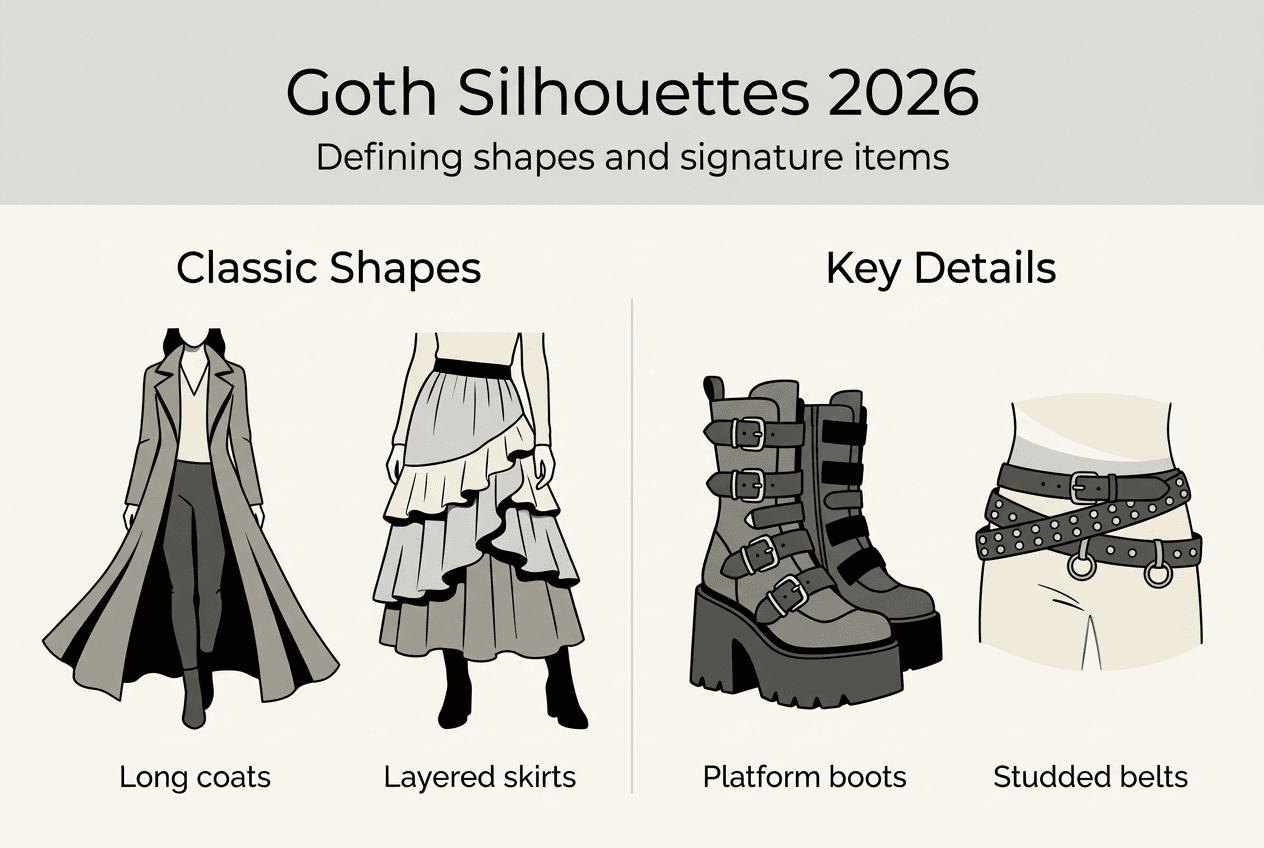
Footwear significantly impacts goth silhouettes. Platform boots and combat boots add height and toughness, grounding dramatic outfits with substantial foundations. The chunky soles create visual weight that balances flowing upper garments. Combat boots specifically bring punk influences into goth fashion, connecting the aesthetic to its rebellious subcultural roots.
Punk elements like ripped clothing, safety pins, studs, and chains appear across goth substyles, particularly in styles that blend goth with punk or industrial influences. These details add texture and attitude without requiring bright colors. The key is intentional placement rather than random destruction, using distressing to enhance rather than dominate the overall look.
| Silhouette Element | Soft Goth Approach | Traditional Goth Approach |
|---|---|---|
| Structure | Relaxed, flowing, oversized | Fitted, corseted, structured |
| Layering | Minimal, simple combinations | Complex, multiple texture layers |
| Footwear | Platform sneakers, Mary Janes | Platform or combat boots |
| Punk influences | Subtle, occasional chain details | Prominent studs, rips, hardware |
| Overall drama | Understated, approachable | Bold, theatrical, maximalist |
Building a layered goth outfit:
- Start with a fitted base layer in black cotton or jersey for comfort
- Add a structured middle piece like a corset, vest, or fitted jacket
- Incorporate a flowing outer layer such as a long coat or layered skirt
- Include textural details through lace sleeves, fishnet layers, or mesh panels
- Ground the outfit with substantial footwear like platform or combat boots
- Balance proportions by pairing voluminous pieces with fitted elements
Exploring different types of gothic fashion helps you understand how these silhouette principles adapt across substyles from romantic goth to cyber goth. For footwear that anchors dramatic silhouettes, consider options like white platform lace up combat boots that provide height and edge while offering versatility.
The ethos behind goth clothing: sincerity, craftsmanship, and personal expression
What separates authentic goth fashion from simply wearing dark clothes is the underlying philosophy of intentionality and respect for subcultural roots. Goth clothing values craftsmanship in how pieces are constructed, layered, and combined. This means choosing quality fabrics that drape properly, selecting garments with thoughtful details, and assembling outfits that demonstrate understanding rather than costume.
Texture contrast serves as a hallmark of sincere goth fashion. The deliberate pairing of soft velvet with hard leather, delicate lace with sturdy denim, or flowing silk with structured corsetry shows engagement with the aesthetic’s core principles. These combinations require thought and experimentation, rewarding those who invest time in understanding how materials interact visually and physically.
Authenticity in goth fashion means avoiding trend driven excess while remaining open to personal interpretation. The subculture values individual expression within respectful boundaries. You can adapt goth principles to your body type, lifestyle, and personal tastes without abandoning the aesthetic’s foundations. This flexibility has allowed goth fashion to evolve across decades while maintaining recognizable core elements.
The emphasis on sincerity over superficiality creates a fashion approach that resists fast fashion’s disposability. Goth clothing encourages building a curated wardrobe of meaningful pieces rather than chasing every trend. This aligns with the subculture’s broader values of depth, authenticity, and resistance to mainstream consumer culture.
Goth fashion is not about wearing the most black or the most expensive pieces. It’s about understanding texture, honoring historical influences, and expressing your relationship with darkness, beauty, and alternative culture through thoughtful clothing choices.
This philosophical approach influences practical decisions. It means investing in a quality velvet jacket that will last years rather than buying disposable fast fashion. It means learning to layer effectively rather than relying on single statement pieces. It means recognizing that goth fashion is a practice you develop over time, not a costume you purchase complete.
Personal expression within goth fashion allows for creativity while maintaining subcultural integrity. You might emphasize Victorian elements, punk influences, romantic themes, or occult symbolism based on your interests. The key is doing so with awareness of these elements’ origins and meanings within goth culture. This respectful approach to personal style demonstrates genuine engagement with the aesthetic.
Understanding goth’s role in modern fashion trends for 2026 provides context for how these values persist even as mainstream fashion periodically adopts dark aesthetics without the underlying cultural awareness.
Explore authentic goth accessories at GothMarket
Accessories transform good goth outfits into exceptional ones by adding personal touches and finishing details that complete your aesthetic. Jewelry becomes particularly powerful in goth fashion, where silver, black metals, occult symbols, and Victorian inspired designs enhance the dark romantic atmosphere. Layering multiple pieces creates visual richness without introducing color.

Chokers, in particular, define goth accessorizing with their close fitting drama and historical connections to both Victorian fashion and punk rebellion. Pairing a celestial chain choker with moon pendant with stacked rings creates the layered jewelry aesthetic central to goth style. Rings allow you to incorporate symbolism and texture at a smaller scale, perfect for those building their goth wardrobe gradually.
Browse the curated goth jewelry collection at GothMarket to discover pieces that enhance your personal interpretation of goth fashion. From delicate silver details to bold statement pieces, quality accessories help you express the craftsmanship and intentionality that define authentic goth style. Consider starting with versatile pieces like a silvertone dark aesthetic ring set that layers beautifully and complements various outfits.
What defines goth clothing? Frequently asked questions
What makes goth clothing different from other dark fashion styles?
Goth clothing specifically emphasizes texture contrast, historical influences (particularly Victorian and medieval), and subcultural authenticity rather than just dark colors. While emo or punk styles may also use black, goth fashion prioritizes craftsmanship, layering techniques, and romantic or occult symbolism that connect to Gothic literature and subculture history.
Do I need to wear all black to dress goth?
No, authentic goth fashion uses black as a foundation but incorporates deep accent colors like burgundy, purple, and crimson strategically. The focus is on maintaining a dark overall palette while using color to add depth and express personal style. Texture and silhouette matter more than strict color uniformity.
What is the difference between soft goth and traditional goth clothing?
Soft goth features more relaxed, accessible silhouettes with minimal layering and subtle punk elements, often incorporating platform sneakers and oversized pieces. Traditional goth emphasizes structured garments like corsets, complex layering, dramatic silhouettes, and prominent Victorian or punk influences with platform or combat boots.
How important is layering in goth fashion?
Layering is essential to authentic goth style because it creates texture contrast, adds visual complexity, and allows you to combine different fabric types for dramatic effect. Effective layering demonstrates understanding of goth fashion’s craftsmanship values and helps you build outfits that honor the aesthetic’s depth.
Where can I learn about different goth fashion substyles?
Explore comprehensive guides on types of gothic fashion to understand how core goth principles adapt across substyles like romantic goth, cyber goth, Victorian goth, and nu goth. Each variation maintains the dark aesthetic while emphasizing different historical periods, cultural influences, or modern interpretations.
How do I start building an authentic goth wardrobe?
Begin with quality black basics in various textures, then add one structured piece like a corset or fitted jacket, one flowing piece like a long skirt or coat, and substantial footwear. Focus on learning to layer these pieces effectively while gradually incorporating accessories that reflect your personal connection to goth aesthetics and symbolism.