

Discover alternative art: Meaning, methods, and dark aesthetics
TL;DR:
- Alternative art operates outside mainstream institutions, emphasizing DIY, experimentation, and social engagement.
- Techniques like automatism, sigil creation, and generative code are central to dark aesthetic practices.
- Supporting independent creators through community channels preserves authenticity and resists market co-optation.
Art doesn’t live only in white-walled galleries or auction houses with velvet ropes. It thrives in hand-stapled zines passed between strangers, in sigil-covered canvases hung in underground spaces, in generative code that breathes and shifts on a screen. Alternative art has always occupied the margins, and for collectors and enthusiasts drawn to gothic, occult, and dark aesthetics, those margins are exactly where the most electrifying creative work happens. This guide breaks down what alternative art actually is, how it’s made, why it matters, and how you can find and collect it with intention.
Table of Contents
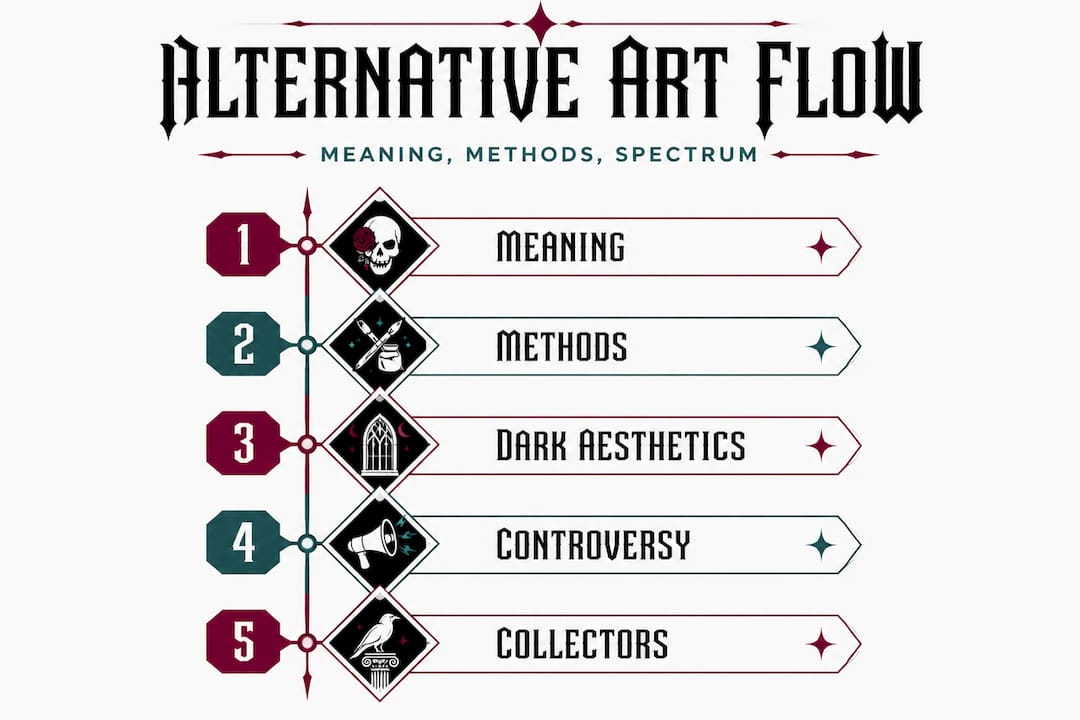
- Defining alternative art: Beyond the mainstream
- Key methods and tools in alternative art
- Alternative art and dark aesthetics: Gothic, occult, and mystical influences
- The spectrum and controversies of alternative art
- How to engage with and collect alternative art today
- Why the lines between alternative and mainstream art keep shifting
- Where to find and support alternative art and dark aesthetic creators
- Frequently asked questions
Key Takeaways
| Point | Details |
|---|---|
| Alternative art is decentralized | It thrives outside mainstream galleries, propelled by DIY and subcultural creativity. |
| Innovation in tools and technology | Artists use everything from zines to open-source algorithms and NFTs to express outside conventional channels. |
| Dark aesthetics have unique methods | Gothic and occult influences employ mystical techniques like automatism and sigil-making. |
| Boundaries are fluid | Alternative art often gets absorbed into the mainstream, making authenticity a constant negotiation. |
| Support matters | Collectors and fans can champion alternative art by engaging with creators and buying from niche or community-driven markets. |
Defining alternative art: Beyond the mainstream
With mainstream myths dispelled, let’s clarify exactly what defines art as “alternative” and why it matters for enthusiasts and collectors.
Alternative art is artistic expression operating outside mainstream institutions, galleries, and commercial pressures, emphasizing DIY ethics, experimentation, and socio-political engagement. That definition sounds clean, but the reality is messier and far more interesting. Alternative art isn’t just art that didn’t get into a museum. It’s art that often refuses to try.
The distinction matters because it shifts the entire framework of value. In mainstream art, value is often determined by critics, auction results, and institutional endorsement. In alternative art, value comes from community resonance, subcultural authenticity, and the integrity of the creative process itself.
Key characteristics that define alternative art include:
- Anti-capitalist stance: Work is created and distributed outside profit-driven systems, often priced accessibly or given away entirely
- Subcultural roots: Subcultural ties to punk and goth movements, along with open-source principles aligning with hacker ethics, are central to its identity
- DIY production: Artists self-produce and self-distribute, cutting out intermediaries entirely
- Experimentation over polish: Process matters more than a finished, marketable product
- Sociopolitical engagement: Alternative art often responds directly to power structures, inequality, and cultural norms
“The most radical thing an artist can do is refuse the terms the market sets for them. Alternative art doesn’t just make different work. It operates by different rules entirely.”
For collectors drawn to self-expression through gothic products, this philosophy feels familiar. Gothic subculture has always prioritized authenticity over trend cycles, and that shared DNA with alternative art is no coincidence.
Key methods and tools in alternative art
Once we understand what alternative art is, it’s important to see how these ideals play out in the way the art is actually made and shared.
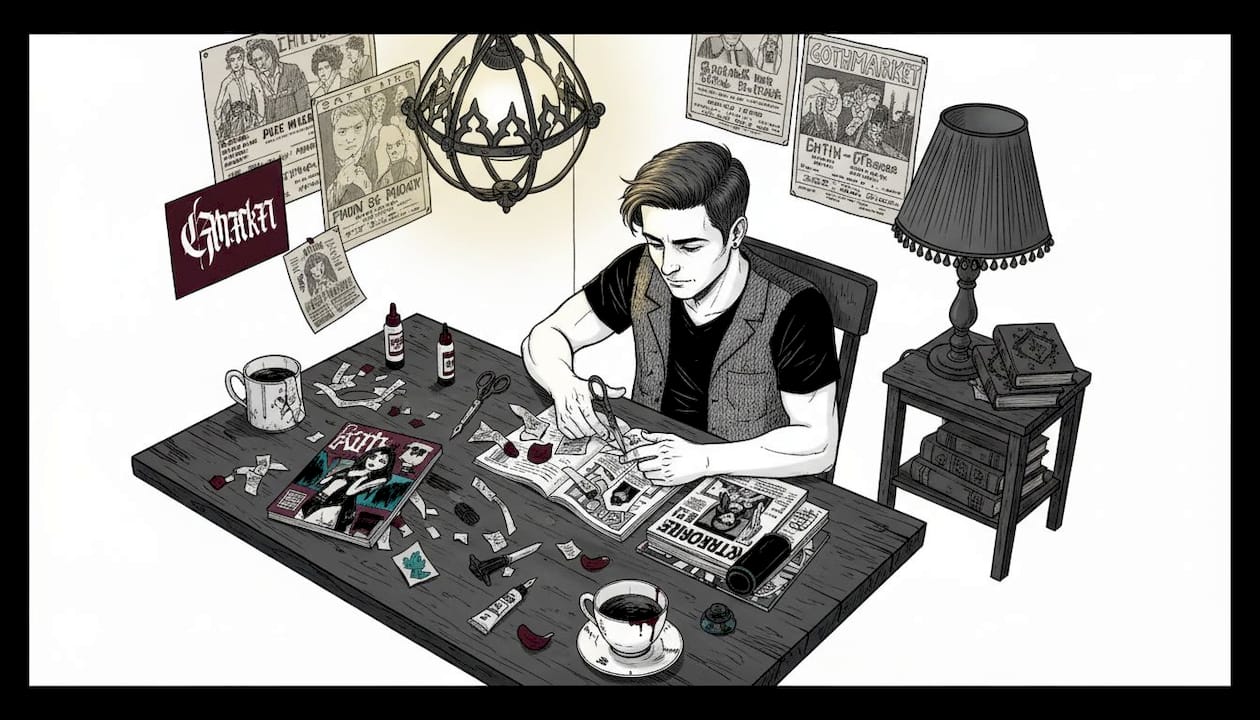
Key methodologies include DIY self-production and distribution, non-mainstream channels like zines, guerrilla spaces, and technological appropriation such as generative algorithms, interactive installations, blockchain for NFTs, and physical computing with Arduino. Each of these methods carries its own philosophy and community.
Here’s a comparison of traditional versus alternative art production:
| Dimension | Traditional/mainstream art | Alternative art |
|---|---|---|
| Production | Studio with institutional support | DIY, home studio, open-source tools |
| Distribution | Galleries, auction houses | Zines, pop-ups, online communities |
| Valuation | Critic and market driven | Community and intent driven |
| Technology | Conventional media | Generative code, Arduino, NFTs |
| Access | Gatekept by institutions | Open, participatory, grassroots |
The methods used in alternative art are as varied as the communities producing it:
- Zines: Self-published, photocopied, and distributed by hand or mail. Zines have been the backbone of punk, goth, and queer alternative art scenes for decades.
- Guerrilla galleries: Temporary, unauthorized, or pop-up exhibitions in unexpected spaces, from abandoned buildings to public walls
- Generative algorithms: Code-based art that produces visuals through mathematical processes, often open-source and freely shared
- Physical computing: Using tools like Arduino to create interactive installations that respond to the environment or viewer
- Blockchain and NFTs: A newer channel that allows artists to sell directly to collectors without gallery intermediaries, though this space is evolving rapidly
Pro Tip: If you’re interested in collecting alternative art, look for artists who distribute through multiple unconventional channels simultaneously. An artist selling through a zine, an online community, and a pop-up market is far more likely to be operating from genuine alternative principles than one using a single polished platform.
For creators interested in handmade gothic art in niche markets, these methods offer real pathways to reach audiences who care deeply about authenticity. And for those curious about selling art in gothic marketplaces, understanding these distribution channels is the first practical step.
Alternative art and dark aesthetics: Gothic, occult, and mystical influences
Beyond tools and spaces, alternative art’s identity is often shaped by the dark, mystical, and subcultural influences that set it apart.
The overlap between alternative art and gothic or occult subcultures isn’t superficial. It runs through the history of surrealism, chaos magick, and underground publishing. Alternative art overlaps with subcultures using automatism techniques like fumage, decalcomania, and parsemage for mystical access, as seen in Ithell Colquhoun’s surrealist-occult fusion, and sigil creation in chaos magick functions as a visual abstraction methodology.
Let’s break down some of the most significant dark aesthetic techniques used in alternative art:
| Technique | Description | Occult/dark connection |
|---|---|---|
| Automatism | Creating art without conscious control, allowing the subconscious to direct the hand | Used in surrealism and spirit communication |
| Fumage | Drawing with smoke from a candle or flame on paper or canvas | Evokes fire, transformation, and the liminal |
| Decalcomania | Pressing paint between surfaces to create unpredictable textures | Used to access random, “otherworldly” imagery |
| Parsemage | Scattering powder or pigment on a wet surface | Creates organic, chaotic forms linked to divination |
| Sigil creation | Designing abstract symbols charged with intention | Central to chaos magick and occult practice |
Ithell Colquhoun is one of the most important figures connecting these worlds. A British surrealist and practicing occultist, she used automatism not as a psychological tool (as Freud-influenced surrealists did) but as a literal method of occult divination. Her work is a perfect example of how subcultural ties to punk and goth aesthetics, along with anti-capitalist and open-source principles, can manifest in deeply personal, spiritually charged art.
For collectors, recognizing these techniques in contemporary work is a valuable skill. An artist using fumage in their process is drawing on a lineage that connects to occult practice, surrealism, and radical experimentation simultaneously.
- Look for visible process marks: drips, burns, layered textures that suggest non-traditional tools
- Research the artist’s stated influences and community affiliations
- Seek work that references mysticism, divination, or symbolic systems explicitly
- Prioritize pieces that feel genuinely charged rather than aesthetically dark for trend reasons
Pro Tip: When evaluating dark alternative art, ask whether the darkness is decorative or functional. Work that uses occult techniques as part of its actual creation process carries a very different energy than work that simply depicts dark imagery for visual appeal.
For those building a space that reflects these aesthetics, dark style in home decor and understanding gothic aesthetics in markets can help you contextualize where alternative art fits within a broader dark aesthetic environment.
The spectrum and controversies of alternative art
Understanding alternative art also means grappling with its tensions: where the boundaries lie, and who gets to decide what is truly alternative.
One of the most persistent challenges in alternative art is co-optation. Alternative practices are often co-opted into the mainstream, as initially radical spaces become institutionalized over time. The Artists Space in New York, founded in 1972 as a genuinely alternative venue, became embroiled in one of the most significant controversies in alternative art history in 1979 when it exhibited a work titled “Nigger Drawings,” sparking a fierce debate about institutional critique, racism, and who alternative spaces actually serve.
That controversy revealed something important: alternative spaces are not automatically progressive or inclusive. They carry their own power dynamics and blind spots.
Alternative art can be viewed as the “childhood of mainstream”, starting experimental but eventually absorbed by the market, while others argue that sustained resistance is possible through technological democratization. This tension plays out in a few key ways:
- Institutional absorption: A radical artist gains attention, gets picked up by a gallery, and their work becomes collectible in the traditional sense. The work doesn’t change, but its context does.
- Aesthetic dilution: A subcultural visual style (think goth or punk) gets adopted by mainstream fashion and loses its original meaning and community ties.
- Market co-optation: NFTs began as a way to bypass galleries but quickly attracted speculative investors, transforming the space from alternative to highly commercial.
- Technological democratization as resistance: Open-source tools, community platforms, and decentralized distribution allow alternative artists to maintain independence longer than ever before.
“The question isn’t whether alternative art gets absorbed by the mainstream. It always does, eventually. The question is what gets created in the space before that happens.”
For collectors interested in gothic-themed merchandise and dark aesthetic art, this spectrum matters practically. Buying work early, directly from independent creators, before institutional absorption occurs, is both more authentic and often more financially interesting over time.
How to engage with and collect alternative art today
Having explored controversies and subcultures, here’s how to become an engaged participant, whether as a collector or supporter of alternative art.
Over 130 alternative spaces existed in New York between 1960 and 2010, documenting the enormous scale of this ecosystem even in a single city. Today, that ecosystem has gone global and digital, making it more accessible than ever for collectors outside major art centers.
Here’s how to engage authentically:
- Follow zine fairs and indie markets: Events like zine fests and underground art markets are where genuinely alternative work circulates. Many cities host these regularly, and they’re increasingly documented online.
- Buy directly from artists: Skip the intermediary whenever possible. Direct purchases support creators financially and give you direct insight into their process and intent.
- Join subcultural communities: Discord servers, forums, and social platforms built around gothic, occult, and experimental art communities are where alternative artists share work before it reaches any marketplace.
- Research provenance and process: For dark aesthetic work especially, understanding how a piece was made matters as much as the finished result.
- Support open-source and DIY creators: Artists who share their tools, processes, and resources freely are operating from genuinely alternative principles.
- Look for limited runs and handmade editions: Mass production is antithetical to alternative art. Handmade, limited, or one-of-a-kind works carry more authenticity.
Pro Tip: Build relationships, not just a collection. Alternative art communities are tight-knit, and being a genuine participant (attending events, engaging with artists online, supporting through shares and reviews) gives you access to work that never reaches public listings.
For practical inspiration on integrating these works into your space, exploring handmade gothic decor and tips for gothic decor can help you think about how alternative art pieces function within a curated dark aesthetic environment.
Why the lines between alternative and mainstream art keep shifting
With strategies for supporting and collecting in mind, a frank discussion of the evolving nature of “alternative” is in order.
Here’s what most guides won’t tell you: the category of “alternative art” is inherently unstable, and that instability is a feature, not a bug. Mechanics of alternative art prioritize process and ephemerality over commodification, and in dark aesthetics, techniques like automatism bridge art and occult divination. That prioritization of process over product is exactly what makes alternative art so hard to pin down and so easy to lose when it gets absorbed into commercial systems.
The speed of absorption has accelerated dramatically. In the 1970s, it might take a decade for an underground movement to reach mainstream galleries. Today, a visual aesthetic can go from subcultural to trend-cycle to oversaturated in under two years. TikTok and Instagram have compressed the timeline of co-optation to a degree that would have been unimaginable to the founders of Artists Space.
This creates a real challenge for serious collectors and enthusiasts. If you’re waiting for critical consensus before buying, you’re almost certainly too late. The work that carries genuine alternative energy is the work you find before the algorithm does.
Our perspective is that the most useful framework isn’t “is this alternative or mainstream?” but rather “what is this artist’s relationship to their process, their community, and their distribution?” An artist who self-publishes, uses experimental techniques, engages with subcultural communities, and resists commodification is operating from alternative principles regardless of whether their work eventually gets picked up by a gallery.
For collectors drawn to aesthetics in goth markets, this means trusting your instincts and your community knowledge over institutional signals. The dark aesthetic world has always been good at recognizing authentic work. That skill is more valuable than ever.
Where to find and support alternative art and dark aesthetic creators
The concepts and strategies explored here point toward one clear next step: active participation. Supporting alternative art means putting resources directly into the hands of independent creators working outside commercial systems.
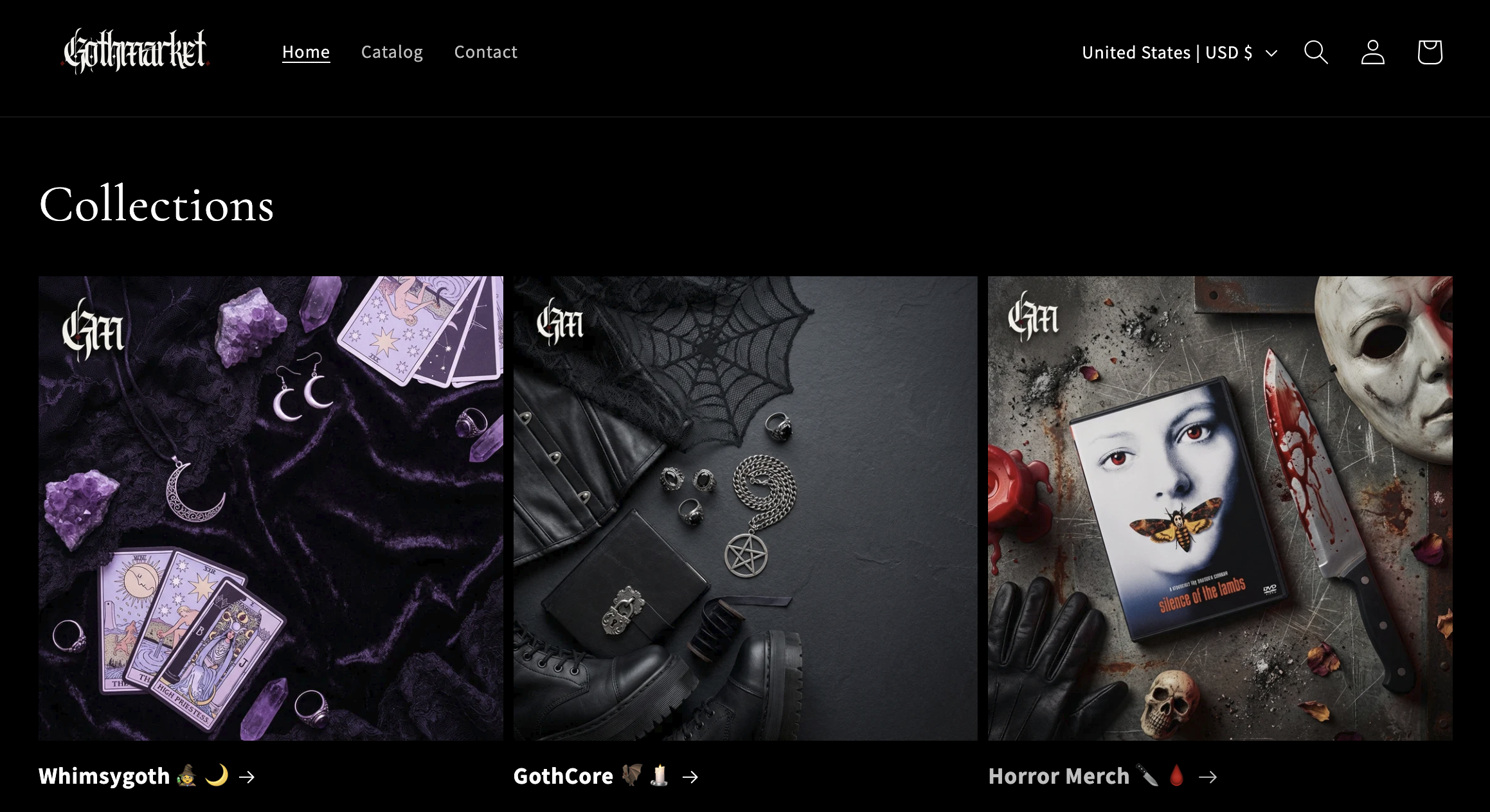
At Goth.Market, we curate work from independent creators who operate from exactly the principles this guide describes: handmade production, subcultural authenticity, and genuine dark aesthetic intent. Whether you’re looking for gothic-inspired jewelry that carries real occult symbolism, a specific piece like the moon pendant choker that bridges wearable art and dark aesthetic, or a broader exploration of our horror merch collection, every item connects you to creators who are living the alternative art ethos. Buying here is a direct act of support for the independent, subcultural creative ecosystem.
Frequently asked questions
How does alternative art differ from outsider art?
Alternative art may overlap with outsider art but is defined more by its rejection of mainstream systems and embrace of subcultures, DIY ethics, and anti-capitalist values, rather than by the artist’s social isolation or lack of formal training. Alternative art emphasizes socio-political engagement and experimentation as core principles, which outsider art does not require.
Are NFTs considered alternative art?
NFTs can be part of alternative art when used to bypass galleries and engage with emerging tech, though they are increasingly absorbed by the mainstream market. Blockchain for NFTs was initially a genuinely alternative distribution method, but speculative investment has shifted much of that space toward commercial dynamics.
What are some key techniques in dark alternative art?
Techniques like automatism, fumage, and sigil creation from occult practices often distinguish dark alternative art from work that is simply dark in appearance. Automatism techniques including fumage and sigil creation in chaos magick connect the creative process directly to occult methodology.
How can you tell if an artwork is truly alternative?
Look for independent production, subcultural influences, anti-commercial aims, and use of experimental or open-source tools as the clearest signals. Anti-capitalist stance and subcultural ties to punk and goth movements, along with open-source principles, are the defining characteristics that separate genuinely alternative work from mainstream art with an edgy surface.
Recommended
- Explaining dark aesthetic art: Origins, styles, symbolism – GothMarket
- Dark subculture art: origins, themes, and collector appeal – GothMarket
- What are dark aesthetics? Origins, styles, and meaning – GothMarket
- What Is Alternative Subculture? Meaning, Styles & Community – GothMarket
- Tattoo-inspired art: Styles and meaning for mindful design – Memento Vivere Co