

3 Gothic Home Decor Styles: Tips for Dark Elegance
TL;DR:
- Gothic interior design offers romantic, elegant, and livable spaces beyond the spooky stereotype.
- Style choices include traditional medieval, ornate Victorian, or minimal modern gothic, depending on preference and space.
- Mixing elements from different gothic sub-styles and layering lighting creates authentic, personalized atmospheres.
Gothic home decor is one of the most misunderstood design categories out there. Many people picture cobwebs and plastic skeletons, but the reality is far more refined. Gothic interiors can be deeply romantic, architecturally stunning, and surprisingly livable. Whether you rent a studio apartment or own a Victorian townhouse, there is a gothic aesthetic that fits your space and your personality. The challenge is knowing which direction to take. Traditional, Victorian, and Modern Gothic each bring a distinct mood and set of requirements. This guide walks you through all three, helps you compare them side by side, and gives you practical tips to start building your dark sanctuary.
Table of Contents
- How to choose your perfect gothic style
- Traditional gothic: The medieval foundation
- Victorian gothic: Opulence and ornate detail
- Modern gothic: Minimal meets dramatic
- Quick comparison: Which gothic style is right for you?
- Our take: Stop trying to pick just one
- Find your dark aesthetic at Goth.Market
- Frequently asked questions
Key Takeaways
| Point | Details |
|---|---|
| Gothic decor styles differ | Traditional, Victorian, and Modern gothic each offer a unique balance between drama, elegance, and practicality. |
| Blending eras works | Mixing features from multiple gothic types creates a personalized and comfortable atmosphere. |
| Renters have options | Removable wallpaper, temporary accessories, and thrifted finds can deliver gothic style without permanent changes. |
| Layering is key | Combining rich fabrics, moody lighting, and metallic details adds depth and comfort no matter the room size. |
How to choose your perfect gothic style
Before you buy a single candelabra or roll of dark wallpaper, take a moment to define what you actually want to feel in your space. Do you want cozy and mysterious, like a candlelit library? Or dramatic and theatrical, like a grand Victorian parlor? Your answer shapes every decision that follows.
Start by assessing your space honestly. Small rooms with limited natural light can actually work beautifully with gothic decor. Gothic decor creates coziness in small spaces through dark colors and dramatic accessories, as long as you balance the drama with plush textures, layered lighting, and metallic accents to avoid making the room feel oppressive. Large, open rooms give you more freedom to go bold with architectural elements.
Renters face a different set of constraints than homeowners. You likely cannot paint walls, install built-ins, or hang heavy fixtures. That is actually fine. Gothic style is highly adaptable. Removable wallpaper, freestanding furniture, and portable lighting can carry the entire aesthetic without touching a single wall permanently. Owners have more freedom to commit to permanent changes like dark paint, crown molding, or custom ironwork.
When it comes to mixing styles, gothic interior design fundamentals remind us that this aesthetic is not about being spooky or haunted. It is elegant, romantic, and rooted in history. You can modernize it by mixing eras, using light neutrals and metallics for balance, or layering vintage pieces with contemporary furniture. Tips for decorating gothic rooms often emphasize that contrast is your best tool.
Here are the key questions to ask before choosing a style:
- What is your budget? Traditional gothic requires investment in antiques and architectural detail. Modern gothic can be done affordably.
- Do you rent or own? Renters need flexibility. Owners can go permanent.
- How much natural light does your space get? More light means you can go darker without losing warmth.
- What rooms are you decorating? Bedrooms, libraries, and dining rooms suit different gothic sub-styles.
- What is your comfort threshold? Some people love maximalist layering; others prefer a cleaner, moodier look.
Pro Tip: Start small with a velvet throw pillow, a thrifted iron candlestick, or a dark framed mirror before committing to a full room transformation. This lets you test the mood without a major investment.
Traditional gothic: The medieval foundation
Traditional gothic decor pulls directly from the architecture of medieval Europe. Think soaring cathedrals, heavy stone, and intricate carved wood. This is the most historically grounded of the three styles, and it makes the biggest visual statement.
Traditional gothic decor draws from medieval architecture with pointed arches, detailed moldings, ribbed vaults, stone elements, and vintage architectural features. These are not just decorative choices. They are structural references that give a room genuine historical weight.
“Pointed arches and carved moldings do more than add ornament. They create a sense of vertical drama that draws the eye upward and makes even modest rooms feel cathedral-like.” This is the core principle behind traditional gothic interiors.
This style works best in period homes, formal entries, and dining rooms where the architecture already hints at grandeur. It can feel overwhelming in small, modern apartments unless you apply it selectively. A single stone mantelpiece or a set of gothic revival chairs can anchor the look without taking over the room.
For dark elegance in a traditional gothic space, focus on these signature elements:
- Gargoyles and grotesques as bookends or garden accents
- Candelabras in wrought iron or aged brass
- Stained glass windows or panels that filter light dramatically
- Antique tapestries with heraldic or nature-based motifs
- Gothic revival chairs with high backs and carved wood frames
- Stone or faux-stone mantlepieces as a room’s focal point
Balancing authenticity with comfort is the main challenge here. Heavy stone and dark wood can make a room feel cold. Counter this with layered textiles, warm candlelight, and the occasional plush rug. You can also explore gothic houses inspiration to see how others have made traditional elements feel genuinely livable.
Victorian gothic: Opulence and ornate detail
Victorian gothic is where historical gothic architecture meets 19th-century excess. This style is lush, romantic, and deeply layered. It is also the most recognizable version of gothic decor in popular culture.
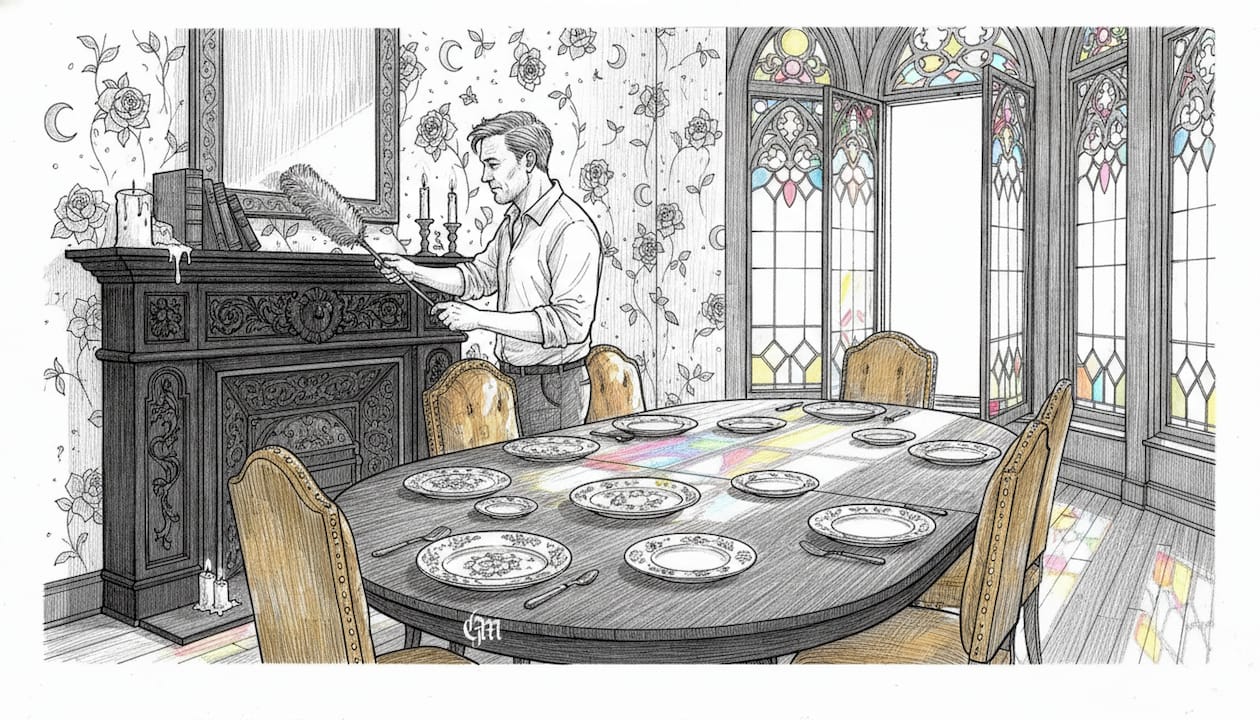
Victorian gothic decor features ornate detailing, dramatic sophistication, dark floral wallpaper, luxurious drapes, high-back chairs, canopy beds, and clawfoot tables. The color palette leans into deep jewel tones: burgundy, forest green, midnight purple, and inky navy. Textures are equally rich, with velvet, brocade, and damask appearing on everything from upholstery to curtains.
Furniture in this style is never minimal. Carved wood frames, gilded mirrors, and canopy beds are the stars of the room. Layering is essential. You pile a brocade bedspread over velvet pillows, hang heavy drapes over lace curtains, and place a patterned rug over dark hardwood. The goal is visual richness without chaos.
For expressing dark style in a Victorian gothic space, here are the must-have elements:
- Dark floral or damask wallpaper as a statement wall or full-room treatment
- Canopy or four-poster beds with draped fabric
- Gilded picture frames holding vintage portraits or dark art
- Clawfoot furniture including tables and bathtubs
- Heavy velvet drapes in deep jewel tones
| Feature | Victorian gothic | Traditional gothic |
|---|---|---|
| Color palette | Burgundy, purple, navy | Stone gray, deep brown, black |
| Primary texture | Velvet, brocade, lace | Stone, carved wood, iron |
| Key furniture | Canopy beds, gilded frames | Gothic revival chairs, stone mantels |
| Mood | Romantic, opulent | Dramatic, historical |
| Best rooms | Bedrooms, libraries | Entries, dining rooms |
You can recreate Victorian drama with modern materials. Velvet upholstery fabric is widely available and affordable. Reproduction gilded frames are easy to find at thrift stores. Explore Victorian gothic style references for color matching and furniture sourcing ideas.
Modern gothic: Minimal meets dramatic
Modern gothic strips away the historical references and keeps only the mood. It is dark, intentional, and surprisingly versatile. This is the style most likely to appeal to renters, minimalists, and anyone who wants gothic atmosphere without a full commitment to antiques.
Modern gothic decor blends sleek contemporary furniture, matte black elements, and minimalist accents with dark tones, clean lines, and contrasts antique with modern pieces. The result feels curated rather than cluttered. A single dramatic piece, like a matte black shelving unit or an oversized dark mirror, can define the entire room.
Here is how to build a modern gothic living room from scratch:
- Start with a neutral base. Off-white or warm gray walls give you contrast without going full dark.
- Add a dramatic focal point. A matte black accent wall, a large dark mirror, or a statement sofa in charcoal or deep green.
- Layer in texture. Faux fur throws, velvet cushions, and woven rugs add warmth and depth.
- Choose lighting carefully. Edison bulbs, dimmable sconces, and floor lamps with dark shades create a moody, layered glow.
- Mix old and new. One antique piece, like a vintage candlestick or a thrifted dark frame, adds authenticity to the modern base.
- Use mirrors strategically. Large mirrors amplify light and make small spaces feel more expansive without losing the moody feel.
Pro Tip: Pair a neutral backdrop with one bold piece of furniture in black, deep green, or burgundy. This creates instant gothic drama without committing the entire room to darkness. For more ideas on how to modernize gothic style, look at how designers use contrast as the primary tool.
Quick comparison: Which gothic style is right for you?
Now that you know the three main styles, here is a side-by-side view to help you decide. A Houzz 2023 report found that 38% of homeowners succeeded by blending architectural elements with color palettes, and adjustable lighting ranked 22% higher in comfort ratings according to NAHB research. Both findings point toward the same truth: flexibility and layering are what make gothic decor actually work in real homes.
| Style | Mood | Best rooms | Best for | Must-have feature |
|---|---|---|---|---|
| Traditional gothic | Dramatic, historical | Entries, dining rooms | Period homes, owners | Pointed arches, stone elements |
| Victorian gothic | Romantic, opulent | Bedrooms, libraries | Maximalists, owners | Canopy beds, velvet drapes |
| Modern gothic | Moody, minimal | Living rooms, studios | Renters, minimalists | Matte black accents, mirrors |
For renters, modern gothic is the clear winner. It relies on furniture and lighting rather than permanent changes. For small rooms, layered lighting and plush accents keep the space from feeling closed in. For open layouts and period homes, traditional or Victorian gothic can fill the space with genuine drama.
If you are still unsure, a detailed gothic comparison can help you match specific architectural features to each sub-style. You can also look at how to create a dramatic gothic living space for room-specific guidance.
Our take: Stop trying to pick just one
Here is something most gothic decor guides will not tell you: the best gothic interiors almost never belong to a single category. The rooms that feel genuinely alive are the ones where someone mixed a Victorian canopy bed with modern matte black shelving, or placed a traditional gargoyle on a minimalist concrete mantel.
The obsession with staying “on-brand” within one sub-style is actually what makes so many gothic rooms feel flat and staged. Real gothic atmosphere comes from personal history layered into a space. A thrifted tapestry you found at a flea market will always feel more authentic than a perfectly matched set from a catalog.
We also think people underestimate how much lighting does the heavy lifting in gothic decor. You could have the most dramatic furniture in the world, but if the lighting is wrong, the room will feel like a furniture showroom. Dimmable, warm, and directional light is the single most powerful tool you have. Invest there before you spend money on anything else.
Finally, do not wait until you have the “perfect” space. Start with what you have. One velvet pillow, one dark mirror, one candle in an iron holder. Gothic decor rewards patience and accumulation. The rooms that feel most compelling are the ones built slowly, with intention.
Find your dark aesthetic at Goth.Market
Building a gothic interior is easier when you have access to pieces that actually fit the aesthetic, not mass-market approximations. At Goth.Market, we connect you with independent creators and vendors who specialize in exactly the kind of dark, curated decor that makes a space feel genuinely gothic.

From dark decor and art to occult-inspired accents and handcrafted ironwork, the marketplace is built for people who take their aesthetic seriously. Whether you are furnishing a Victorian gothic bedroom or building a modern gothic studio, you will find pieces that carry real character. Browse the collection and let independent makers help you shape a space that feels entirely your own.
Frequently asked questions
Can I create a gothic look without painting my walls black?
Absolutely. Use dark textiles, moody lighting, and removable wallpaper to evoke gothic moods without any permanent paint. The atmosphere comes from layering, not just wall color.
What’s the most affordable way to introduce gothic style?
Start with thrifted accents like velvet pillows, wrought iron candlesticks, and DIY framed art. Starting small with one accent wall or a few key pieces lets you build the look gradually without overspending.
Which gothic style is best for small apartments?
Modern gothic works best in small spaces because it relies on contrast and lighting rather than heavy furniture. Plush textures and layered lighting keep the space cozy without making it feel cramped.
Are there temporary options for gothic decor in rentals?
Yes. Renters can use peel-and-stick wallpaper, temporary stained glass films, and portable lighting to add gothic flair without any permanent changes to the space.
Recommended
- Gothic home decorating guide: create dark mystical space – GothMarket
- What is gothic home decor? A 2026 guide to dark elegance – GothMarket
- Goth Home Decor: Expressing Identity Through Dark Style – GothMarket
- Guide to gothic wall art: decorate with dark elegance – GothMarket
- 7 Stilrichtungen im Gartenmöbeldesign für Ihr Zuhause - AFUERA – outdoor steel design
- ElysianGlow - Artisan Sisters Tafellamp voor een Stijlvol Interieur - Beiermode.de – Breuermode.de