

Why alternative art matters: Power, identity, and cultural impact
TL;DR:
- Alternative art resists mainstream commercialization by fostering community-centered, meaning-driven creativity rooted in subcultures. It serves as a vital cultural mutation, expressing deep emotional and spiritual truths while providing resilience during societal crises. Its core purpose extends beyond aesthetics, functioning as resistance, identity formation, and a space for honest self-expression.
Alternative art is often dismissed as a phase, a costume, or a rebellion without cause. But that reading is wrong. From the shadowed halls of gothic cathedrals to the occult-laden canvases of contemporary independent artists, dark and alternative aesthetics have always carried something deeper: a language for the unspeakable, a community for the displaced, and a form of resistance that outlasts every trend cycle. This guide unpacks why alternative art is one of the most culturally significant forces shaping identity, community, and creative innovation today.
Table of Contents
- Setting the stage: What is alternative art?
- A force for diversity: Cultural and emotional impact
- Symbols of resistance: Gothic, occult, and dark themes
- Real-world impact: Alternative art in society and identity
- Transgression isn’t a trend: What most people miss about alternative art
- Express your identity with gothic and alternative art
- Frequently asked questions
Key Takeaways
| Point | Details |
|---|---|
| Defines subcultural identity | Alternative art offers a way for communities to express unique values and resist mainstream conformity. |
| Preserves diversity | It maintains cultural and aesthetic variation critical for emotional and social resilience. |
| Challenges norms | Through gothic, occult, and dark motifs, it provides vital critique and innovation outside commercial culture. |
| Adapts to the times | Alternative art remains relevant by addressing modern anxieties and social change. |
| Empowers expression | It invites individuals to connect, rebel, and find community through creativity. |
Setting the stage: What is alternative art?
Alternative art is not just edgy imagery on a black canvas. It is a whole ecosystem of creative practice defined by its position outside mainstream institutions and its rejection of commercial gatekeeping. As documented in what is alternative art, alternative art operates outside mainstream institutions and is deeply connected to subcultures like goth and punk, driven by DIY ethics and a firmly anti-commercial stance.
This positioning matters. When art exists outside galleries, auction houses, and corporate funding, it answers to a different audience entirely. It answers to lived experience.
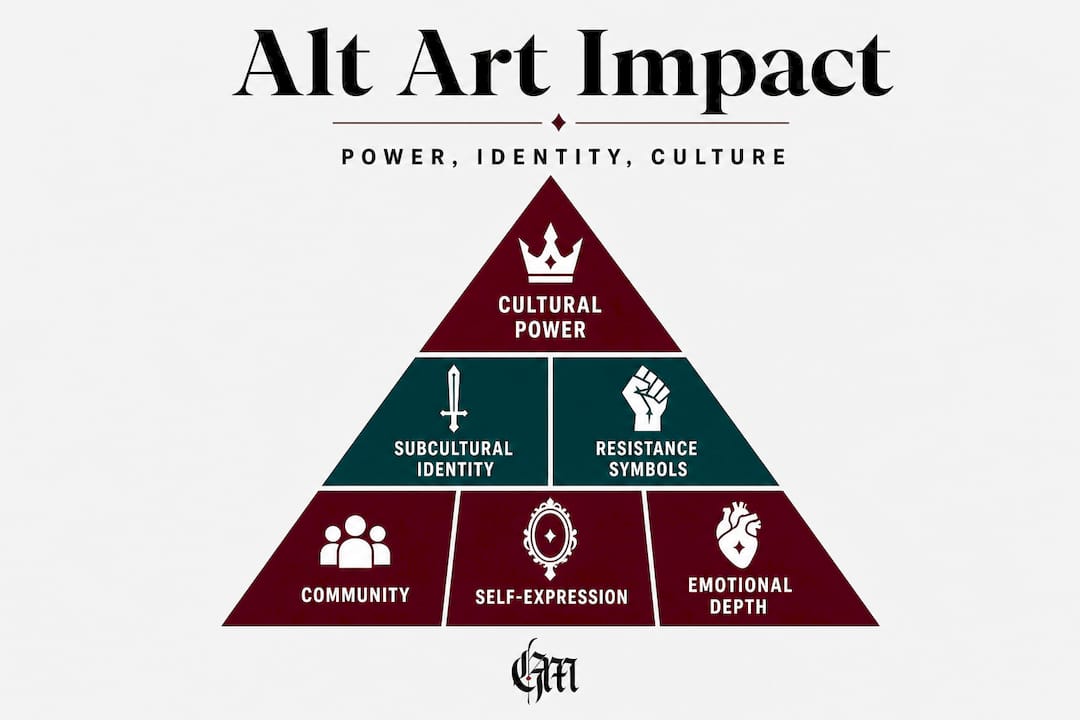
The recurring themes in alternative art are not random. Gothic imagery, occult symbolism, and dark aesthetics keep appearing because they speak to emotional and philosophical territories that mainstream culture routinely ignores: death, the uncanny, transgression, and the sacred. These are not niche interests. They are fundamental human preoccupations.
Here is what defines the alternative art ethos:
- DIY production: Artists create without institutional permission or commercial backing
- Subcultural roots: Work is embedded in communities like goth, punk, metal, and witchcraft cultures
- Anti-commercial stance: Rejection of art as a commodity optimized for mass appeal
- Emphasis on meaning over marketability: Symbolism, emotion, and critique drive the work
- Community circulation: Art spreads through zines, independent markets, and online spaces rather than traditional galleries
“Alternative art is not defined by what it looks like. It is defined by where it stands, who it speaks to, and what it refuses to become.”
Exploring unique alternative aesthetics reveals just how wide this territory stretches, from gothic glitch art to dark cottagecore. And understanding subculture identity and expression shows how deeply visual language shapes who people become within these communities.
A force for diversity: Cultural and emotional impact
With a framework for understanding, let’s uncover the cultural significance that gives alternative art its staying power.
Alternative art functions as what researchers and critics have called a “cultural mutation.” According to the argument laid out in why experimental art matters, experimental and alternative art preserves cultural diversity against commercial monocultures, introducing variation and what might seem like uselessness but is actually deeply valuable in a commodified world.
Think about what commercial culture optimizes for: broad appeal, frictionless consumption, and emotional safety. Alternative art does the opposite. It introduces friction. It forces confrontation. It refuses to smooth down its edges for palatability.
This is not a flaw. It is the entire point.
Here is why alternative art’s cultural and emotional functions matter:
- Emotional processing: Dark aesthetics create space for grief, anger, and existential dread that mainstream entertainment often sanitizes
- Spiritual exploration: Occult and mystical imagery provides language for spiritual experiences outside organized religion
- Identity scaffolding: Subcultures built around alternative art give individuals frameworks for understanding who they are
- Collective memory: Alternative communities archive cultural experiences that dominant narratives erase
- Counter-narrative: Alternative art challenges who gets to define beauty, value, and meaning
“In a world where every creative act is evaluated by its potential for monetization, the deliberate uselessness of alternative art is a radical political gesture.”
The power of true self-expression becomes especially visible here. For many people, alternative art is not decoration. It is survival. It is the first time they see themselves reflected in something honest. Understanding why gothic subcultures matter reinforces how these communities offer belonging and emotional safety that mainstream spaces withhold.
Symbols of resistance: Gothic, occult, and dark themes
To see this impact in action, we can examine the motifs and strategies that alternative art employs to critique and transcend the mainstream.
Gothic and occult art do not just look dark. They function darkly, meaning they operate through specific aesthetic and conceptual strategies designed to provoke, destabilize, and awe. According to research on gothic art’s methods, gothic art emphasizes naturalism, light, emotional expression, and overwhelming scale to evoke awe, directly influencing modern dark aesthetics and literature.
Scale matters in gothic work because it humbles the viewer. Darkness matters because it refuses comfortable resolution. And symbolism matters because it encodes meaning that those outside the community cannot easily commodify or co-opt.
Occult themes take this further. Research into esoteric transgression in art shows that occult themes in art transgress conventions, draw inspiration from spiritual beings, and connect to esotericism driving innovation in modern and contemporary art. The occult in art is not superstition. It is a deliberate strategy for accessing knowledge and experience that rationalist, commercial culture refuses to validate.
| Gothic and occult art feature | What it does culturally |
|---|---|
| Overwhelming scale and darkness | Evokes awe, resists reduction to comfort |
| Symbolic iconography | Encodes subculture identity and knowledge |
| Occult spiritual reference | Transgresses religious and rational norms |
| Emotional naturalism | Validates intense, difficult emotional experience |
| DIY circulation | Escapes gatekeeping and commodification |
Understanding occult-inspired design gives you a clear view of how these strategies manifest in wearable and decorative art today. The origins and styles of dark aesthetics trace how these visual languages evolved across centuries, and gothic style’s influence on contemporary design proves the lineage is unbroken.
Pro Tip: When exploring alternative art, look beyond surface symbolism. A pentagram, a skull, or a moon phase motif is not just decoration. Each carries layers of subcultural meaning, personal history, and philosophical provocation that reward close attention.
Real-world impact: Alternative art in society and identity
The tangible effects of alternative art become clearest when examining its influence on communities and individuals facing real-world challenges.
Alternative art is not produced in a vacuum. It responds to specific pressures: political instability, climate anxiety, identity crisis, and cultural erasure. According to an analysis of gothic recurrence in culture, gothic and dark art explores inner contradictions, societal anxieties, climate change, and identity politics, maintaining vital transformation potential across every era it appears in.
This is why gothic aesthetics resurge during social crises. The imagery matches the emotional reality of the moment. It is not trend chasing. It is accurate emotional reporting.
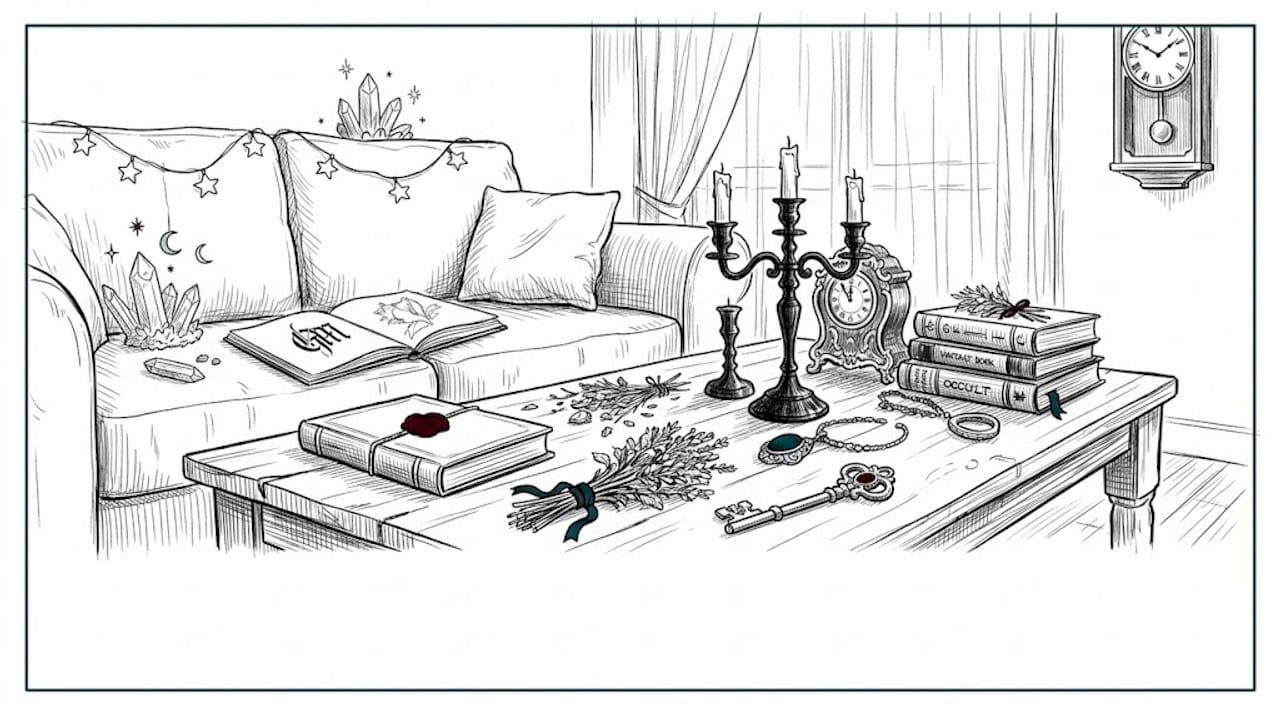
The most powerful example of alternative art’s social function comes from geopolitical crisis zones. Research into Cairo’s alternative art scene after the Arab Spring shows how alternative art scenes balance renewal and repression, providing discursive spaces in politically challenging climates. When state institutions collapse or become oppressive, alternative art communities fill the gap. They become the spaces where identity, grief, and resistance are worked out together.
Here is how alternative art creates real-world impact across different social contexts:
- Identity formation in adolescence: Young people navigating difference find mirrors in alternative aesthetics before they find language for their experience
- Political resistance during repression: Alternative spaces become sites of cultural survival and dissent when mainstream channels close
- Mental health and emotional processing: Dark art validates emotional realities that optimistic mainstream culture pathologizes
- Community resilience: Subcultural bonds forged around alternative art sustain communities through collective challenge
- Innovation and cultural evolution: The creative risk-taking in alternative spaces consistently feeds into broader cultural renewal
| Context | How alternative art responds | Long-term impact |
|---|---|---|
| Political crisis | Creates safe discursive spaces | Sustains cultural identity under pressure |
| Personal identity crisis | Provides aesthetic language for difference | Builds lasting self-understanding |
| Mainstream cultural stagnation | Introduces radical creative variation | Drives broader cultural innovation |
| Social marginalization | Builds subcultural community | Creates belonging and resilience |
Exploring goth aesthetics in modern markets reveals how this real-world cultural power now intersects with creative economies that finally take alternative culture seriously on its own terms.
Transgression isn’t a trend: What most people miss about alternative art
All these layers make one thing clear. Alternative art’s mission goes far beyond visual style.
Here is the uncomfortable observation: the greatest threat to alternative art is not mainstream rejection. It is mainstream acceptance without understanding. When fashion corporations release “goth-inspired” collections stripped of the subcultural critique, or when occult symbols appear on fast fashion tote bags with no connection to their meaning, the surface is borrowed but the substance is discarded.
This is why genuine alternative art communities have always maintained something essential: the insistence on meaning over aesthetics alone. The black clothing, the sigil jewelry, the dark imagery are not ends in themselves. They are entry points into a whole world of philosophical questioning, community belonging, and resistance to the relentless pressure to be commercially legible.
What often gets missed is the communal dimension of alternative art. It was never meant to be solo consumption. Zine culture, independent market spaces, online communities built around shared aesthetic sensibilities, these structures are as much a part of the art as the objects themselves. You are not just buying an aesthetic. You are joining a conversation that has been running for decades.
This also means that real alternative art resists becoming just another segment of the market. It exists in tension with commercialization, even as independent creators need sustainable economies to survive. The best alternative art spaces hold that tension consciously, supporting creators while refusing to flatten subcultural meaning into a brand identity.
Understanding what a guide to gothic merchandise actually means in this context helps distinguish between authentic subcultural expression and trend appropriation. The difference matters, not just culturally, but personally. When you engage with alternative art as a living tradition rather than a visual style, you engage with something that can genuinely change how you see the world.
Express your identity with gothic and alternative art
If you’re ready to channel what alternative art represents, there’s a world of dark creativity waiting.
At Goth.Market, every item in the catalog connects to the living tradition of alternative and gothic creativity you’ve been reading about. This is not mass production dressed in dark colors. It is a curated space where independent creators bring authentic subcultural craft directly to people who understand what it means.
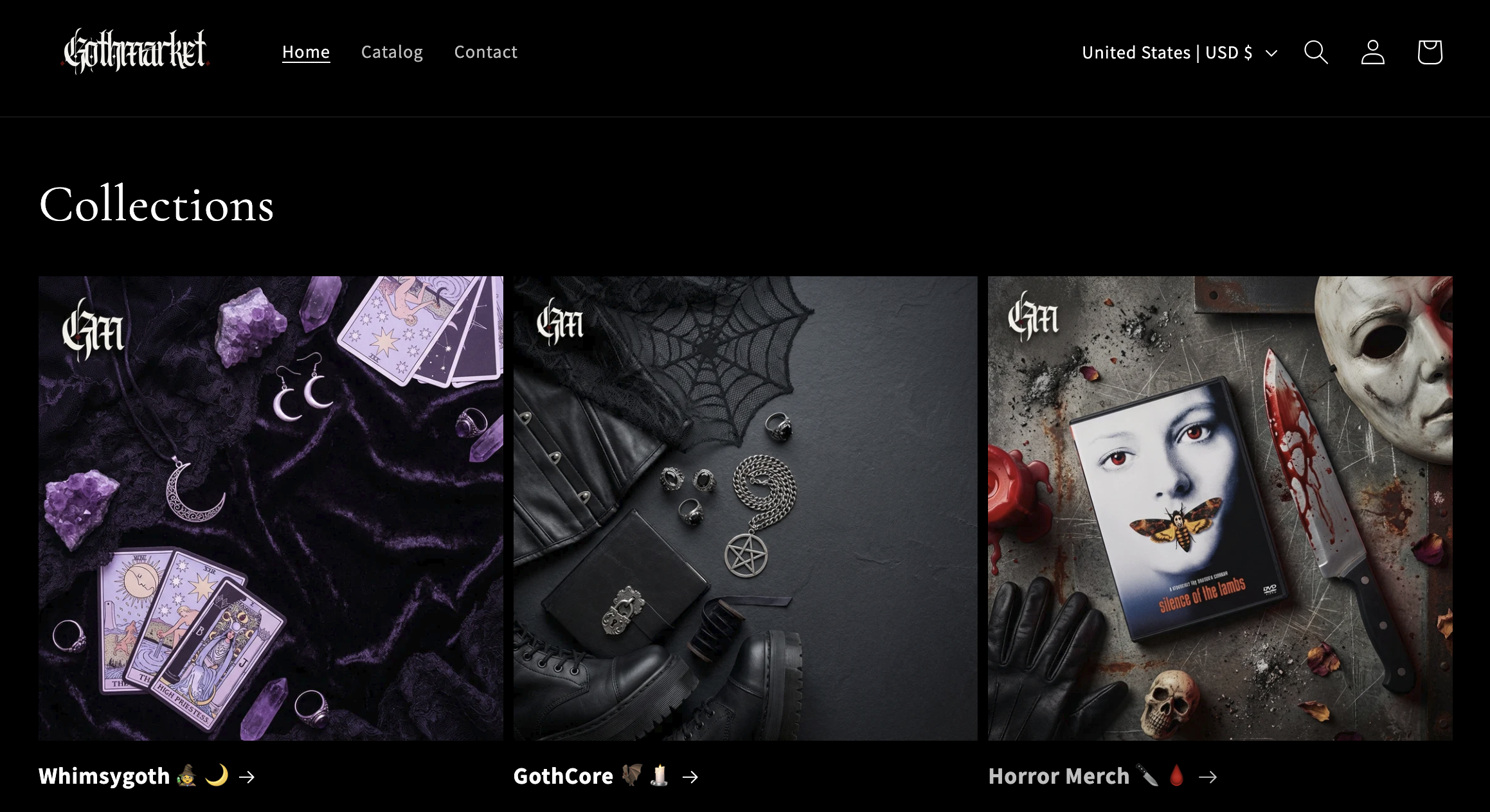
Browse the gothic jewelry collection for pieces that carry real symbolic weight, or explore the Whimsygoth collection for dark aesthetics with an unexpected, playful edge. For a starting point, the celestial chain choker captures exactly the kind of layered cosmic symbolism that makes alternative art so enduring. Your aesthetic is a statement. Make it count with something made by people who share your world.
Frequently asked questions
What makes alternative art different from mainstream art?
Alternative art typically operates outside mainstream institutions and is connected to subcultures driven by DIY and anti-commercial values, which means it answers to community meaning rather than market appeal.
Why do gothic and dark aesthetics keep returning in art and pop culture?
They provide powerful symbols for expressing anxiety, rebellion, and identity, with dark aesthetics persisting across fashion, music, and art for centuries precisely because these emotional territories never disappear.
How does alternative art create social change?
It provides safe spaces for critique and expression during political or cultural challenges, as demonstrated by how alternative art scenes sustained community and dissent in politically repressive climates like post-Arab Spring Cairo.
Why is ‘uselessness’ considered valuable in alternative art?
Uselessness preserves variation and creativity by resisting optimization for profit, and as research shows, experimental art’s uselessness acts as cultural mutation that keeps creative ecosystems from collapsing into monoculture.
Is alternative art always political?
Not always, but it consistently questions norms and empowers marginalized voices, offering tools for both deeply personal transformation and broader societal critique depending on context and community.