

Explore unique alternative aesthetics: Gothic, glitch, and more
TL;DR:
- Alternative aesthetics use visual codes like colors, symbols, and materials to signify community and identity. Goth, as an example, combines monochrome palettes with occult iconography and rich textures derived from history, architecture, and symbolism. Embracing the meaning behind visual symbols and intentional layering allows for authentic self-expression within these unique subcultures.
The search for a visual language that feels truly yours is one of the most meaningful pursuits in alternative communities. Mainstream fashion cycles through trends at a pace that leaves little room for the layered, symbol-rich, deeply personal aesthetics that gothic and occult subcultures have cultivated for decades. Whether you’re new to the scene or a seasoned practitioner looking to sharpen your identity, understanding the full spectrum of alternative aesthetics, from classic goth to the boundary-pushing glitch goth movement, gives you a richer vocabulary for self-expression.
Table of Contents
- What makes an aesthetic ‘alternative’?
- Gothic aesthetics: Iconography, materials, and symbolism
- Glitch goth: Embracing imperfection in post-AI culture
- Other alternative aesthetics: Punk, cyber, and whimsygoth
- Comparing alternative aesthetics: Visual traits and core influences
- Why accuracy matters: The real meaning behind visual codes
- Find your alternative aesthetic with Goth.Market
- Frequently asked questions
Key Takeaways
| Point | Details |
|---|---|
| Visual codes matter | Every alternative aesthetic has distinct visual language that conveys identity and values. |
| Symbolism is nuanced | Iconography in styles like goth serves as symbolic rhetoric, not literal statements. |
| New aesthetics emerge | Trends like glitch goth show how flaws and process can become central to alternative expression. |
| Comparison aids selection | Side-by-side comparisons help fashion practitioners identify the aesthetic best suited for their self-expression. |
What makes an aesthetic ‘alternative’?
Before you can choose an aesthetic, it helps to understand what actually separates an alternative look from a mainstream one. It’s not just about wearing black or adding a pentagram to an outfit. Alternative aesthetics are built on visual codes: a recognizable set of colors, materials, silhouettes, symbols, and references that immediately signal membership in a particular community or philosophy.
Think of it like a visual dialect. Just as regional speech patterns communicate where you’re from, your aesthetic choices communicate who you are and what you value. Subcultural groups develop these aesthetics deliberately to express identity, communicate belonging, and mark distance from subculture identity through aesthetics that feel hollow or performative.
The key criteria that define any alternative aesthetic include:
- Iconography: Recurring symbols and motifs (crosses, skulls, sigils, circuit boards, moons)
- Palette: Signature color ranges (monochrome black, neon cyberpunk hues, dusty pastels)
- Materials: Fabric and texture choices (leather, velvet, PVC, mesh, distressed denim)
- Symbolism: The deeper meaning or cultural reference behind visual choices
- History: The subculture or movement that originated the look
Goth is a prime example, built around a monochrome clothing palette and materials like leather, velvet, lace, and PVC, alongside occult-referencing iconography that carries real symbolic weight.
Pro Tip: When building your alternative aesthetic, start with materials and palette before adding iconography. A cohesive texture and color story will anchor your look even before you layer in symbolic pieces.
Gothic aesthetics: Iconography, materials, and symbolism
Goth is often treated as the blueprint for subcultural visual language, and for good reason. It’s one of the most historically layered and symbolically rich alternative aesthetics in existence. As goth aesthetic research shows, it’s built around a monochrome clothing palette and materials like leather, velvet, lace, and PVC, and commonly incorporates occult-referencing iconography.
But there’s much more texture to goth than the standard “all black everything” summary. The aesthetic draws from a striking range of influences:
- Victorian mourning dress: High collars, corseted silhouettes, heavy draped fabrics, and jet-black accessories all trace back to 19th century mourning customs
- BDSM-influenced styling: Harnesses, buckles, chokers, and PVC elements nod to leather subculture aesthetics
- Gothic architecture: Pointed arches, gargoyle motifs, stained glass color insertions, and ornate silver metalwork
- Occult symbolism: Pentagrams, ankhs, moon phases, inverted crosses, and alchemical symbols appear frequently in symbolism in goth fashion
“Goth is not a monolith. Within the umbrella, you’ll find Victorian goth, romantic goth, pastel goth, and nu-goth, each with its own material palette and symbolic vocabulary. The unifying thread is intentionality: every piece means something.”
The occult dimension of goth fashion is frequently misread by outsiders. Wearing an inverted cross or a pentagram is not necessarily a religious declaration. As explored in occult jewelry meaning, these symbols function as visual rhetoric: they communicate a relationship with mystery, shadow, and things outside conventional social norms. That’s very different from a literal theological commitment.
This distinction matters enormously for community integrity. When mainstream culture flattens goth iconography into “devil worship” or conflates it with violence, it erases the actual philosophical and artistic intent behind these choices. A well-curated gothic accessories guide can help newcomers understand the actual history and meaning behind the pieces they’re drawn to, rather than picking them up surface-level and missing the depth entirely.
Layering is perhaps the most technically interesting aspect of gothic styling. Successful goth looks combine multiple textures (lace over leather, velvet against mesh), multiple lengths (floor-grazing skirts with cropped structured jackets), and multiple time periods (Edwardian blouses under modern harnesses). The result is visually complex without being chaotic, because the underlying palette and symbolic consistency holds it together.
Glitch goth: Embracing imperfection in post-AI culture
Classical goth has centuries of tradition behind it. Glitch goth has maybe a few years of cultural momentum, and that’s exactly the point. It emerged as a direct reaction to the hyper-polished, algorithmically optimized aesthetic environment that AI tools and social media perfection culture have created.
Glitch Goth is a post-AI anti-aesthetic direction in which imperfections and process become part of the aesthetic language itself. Think laser cutting that leaves intentional scorch marks, handwork that deliberately preserves small irregularities, and digital manipulation that foregrounds glitches rather than hiding them. The “flaw” is the feature.
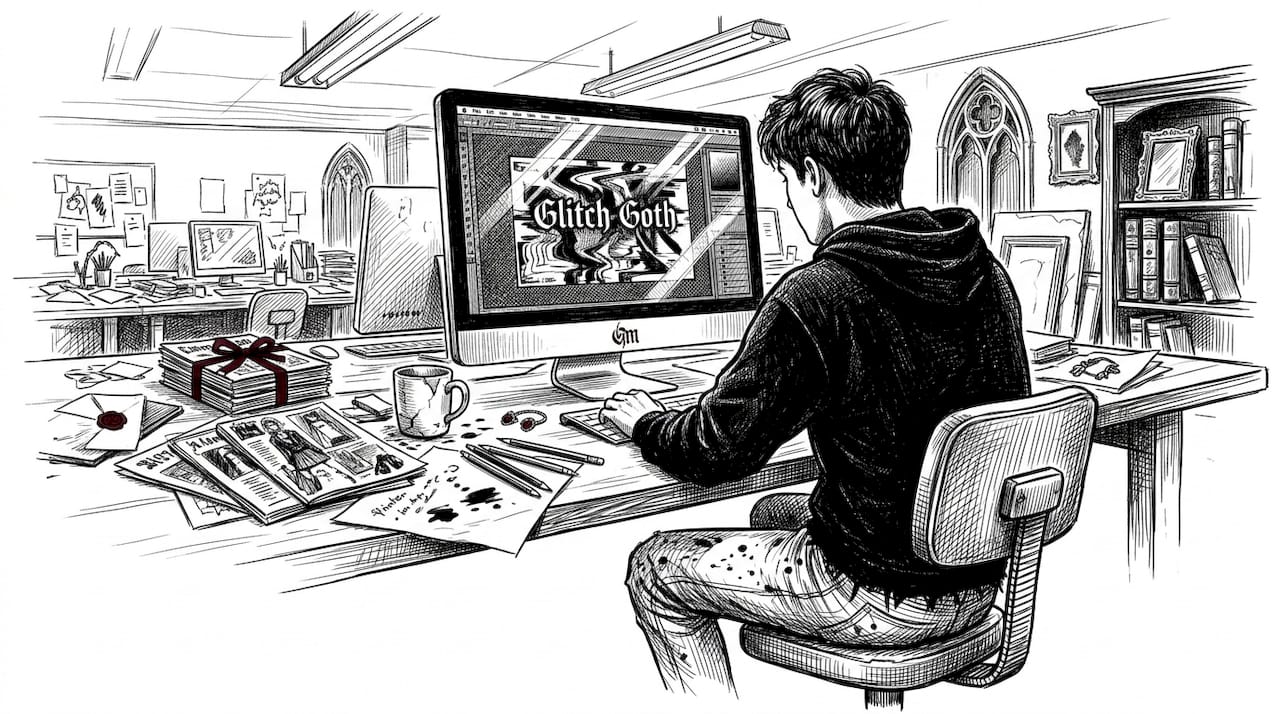
What makes this subgenre fascinating is its philosophical backbone. In a world where AI can generate a flawless gothic outfit concept in seconds, glitch goth insists on the human mark: the uneven stitch, the slightly-off dye batch, the print that didn’t quite register. These are the elements that prove a human made this, and that proof carries enormous value.
Key visual traits of glitch goth include:
- Corrupted digital motifs: Pixelation, static textures, error-code typography, and “broken screen” patterns applied to fabric and accessories
- Visible handwork: Exposed seams, intentional mismatches, and deliberate asymmetry
- Mixed materials: Combining synthetic materials (clear vinyl, metallic mesh) with natural, aged fabrics
- Monochrome with data corruption color: Primarily dark palette with sudden intrusions of electric blue, signal red, or acid yellow where “errors” would appear
- Process-forward design: Items that show how they were made, including laser cut edges, 3D-printed structural elements, or screen-printed layers that don’t fully align
The defining features of goth clothing have always involved intentionality, and glitch goth simply relocates that intentionality from historical symbolism to process symbolism. Instead of asking “what does this symbol mean culturally?” it asks “what does this imperfection reveal about how this object came to exist?”
Pro Tip: If you want to experiment with glitch goth without committing to a full wardrobe overhaul, start with accessories. A corrupted-motif ring, a deliberately asymmetric choker, or a laser-cut bag with visible scorch detailing gives you the flavor of the aesthetic without overhauling your whole look.
Glitch goth also resonates deeply with goth in modern fashion conversations happening right now, particularly around authenticity and the question of what “handmade” means when machines are doing more and more creative work. It’s a powerful statement, not just a visual one.
For those interested in the accessory side of this aesthetic, there are interesting parallels with vintage frame style comparisons in eyewear, where imperfect manufacturing marks and aged acetate actually increase perceived authenticity. Glitch goth thinking applies across every category of personal style. A bold dark styling guide can help you integrate these elements with confidence.
Other alternative aesthetics: Punk, cyber, and whimsygoth
Goth may be the best-documented alternative aesthetic, but it’s far from the only game in town. Understanding how punk, cyber, and whimsygoth operate alongside it gives you a much wider toolkit for personal expression, and helps you see how alternative styles in goth markets intersect and influence each other.
Punk is built on rebellion and the DIY (do-it-yourself) ethic. Its visual markers are aggressive and intentional: safety pins used decoratively, heavily studded leather jackets, distressed and ripped fabrics, band patches sewn on at odd angles, and mohawks or aggressively colored hair. Punk fashion refuses finish. It wants you to see the edges, the repairs, the improvisation. The message is that you don’t need money or mainstream approval to look powerful.
Cyber aesthetics (also called cybergoth or cyberpunk-adjacent styling) move in the opposite direction from punk’s raw textures. Cyber looks embrace synthetic materials: UV-reactive fabrics, PVC, neon-dyed dreadlock falls, goggles, and circuitry-inspired jewelry. The palette explodes into neon greens, electric blues, and hot pinks against a black base. It’s the aesthetic of a dystopian future that looks kind of amazing to inhabit.
Whimsygoth is perhaps the most accessible entry point for newcomers to alternative aesthetics. It blends dark romanticism with playful, mystical elements: think mushrooms, moon phases, celestial motifs, flowing fairy-tale silhouettes, and a color palette that ventures beyond all-black into dusty purples, deep forest greens, and warm burgundies. The community impact on alternative fashion has been significant here, with whimsygoth growing substantially through online communities that celebrate its accessible, imaginative energy.
| Aesthetic | Core palette | Key materials | Dominant symbols | Origin era |
|---|---|---|---|---|
| Goth | Black, deep red, silver | Velvet, lace, PVC, leather | Skulls, pentagrams, ankhs | 1980s UK |
| Punk | Black, primary colors | Distressed denim, studs, leather | Safety pins, band logos | 1970s UK/US |
| Cyber | Black + neon | PVC, mesh, synthetic fiber | Circuit boards, goggles | 1990s |
| Whimsygoth | Black, purple, green | Flowing chiffon, velvet, cotton | Mushrooms, moons, stars | 2010s online |
| Glitch goth | Black + error colors | Mixed synthetic/organic, vinyl | Glitch patterns, laser marks | 2020s |
Comparing alternative aesthetics: Visual traits and core influences
With so many alternative aesthetics available, having a clear reference point is genuinely useful. Alternative aesthetics are defined by visual codes, iconography, materials, and a sense of otherness from mainstream trends, and that otherness takes very different forms depending on which community you’re exploring.
The comparison table above captures the major variables, but the most important takeaway is about intention. Every alternative aesthetic has a reason for its choices. Punk distresses its fabrics because it rejects the idea that clothing should look new and expensive. Cyber uses synthetic materials because it’s imagining a world transformed by technology. Goth layers velvet and lace because it’s honoring the weight of history and mortality. Glitch goth leaves in the imperfections because it insists on human presence in an increasingly automated creative world.
When you’re deciding which aesthetic (or combination of aesthetics) resonates with you, the question to ask isn’t “which looks coolest?” It’s “which philosophy do I actually want to carry on my body?”
Why accuracy matters: The real meaning behind visual codes
Here’s something we feel strongly about: the alternative community has a problem with surface-level adoption, and it usually starts with misunderstanding symbolism.
Occult iconography in goth aesthetics is frequently used as symbolic visual rhetoric rather than a literal religious endorsement. That distinction is not just academic. When someone slaps a pentagram on a t-shirt because “it looks edgy” without understanding that this symbol has been used in Wiccan and ceremonial magic traditions for centuries, they’re not engaging with the aesthetic. They’re consuming a shortcut.
This matters for two reasons. First, it dilutes the meaning of the symbols for people who use them intentionally, as explored through occult symbols and meaning. Second, it creates the exact mainstream conflation that makes gothic and occult communities get misrepresented in media: people see the symbol without understanding the context and assume the worst.
We believe that the most powerful alternative aesthetics are built on knowledge. You don’t have to be a scholar of occult history to wear an ankh, but knowing that the ankh symbolizes eternal life in ancient Egyptian cosmology transforms the piece from decoration into statement. That’s the difference between wearing an aesthetic and living one.
The same principle applies to glitch goth’s rejection of AI polish, punk’s DIY ethos, and cyber’s technofuturist imagination. Each of these aesthetics has a reason behind it. Learning that reason doesn’t make your style less authentic. It makes it more so.
Find your alternative aesthetic with Goth.Market
You’ve got the theory. Now comes the genuinely fun part.
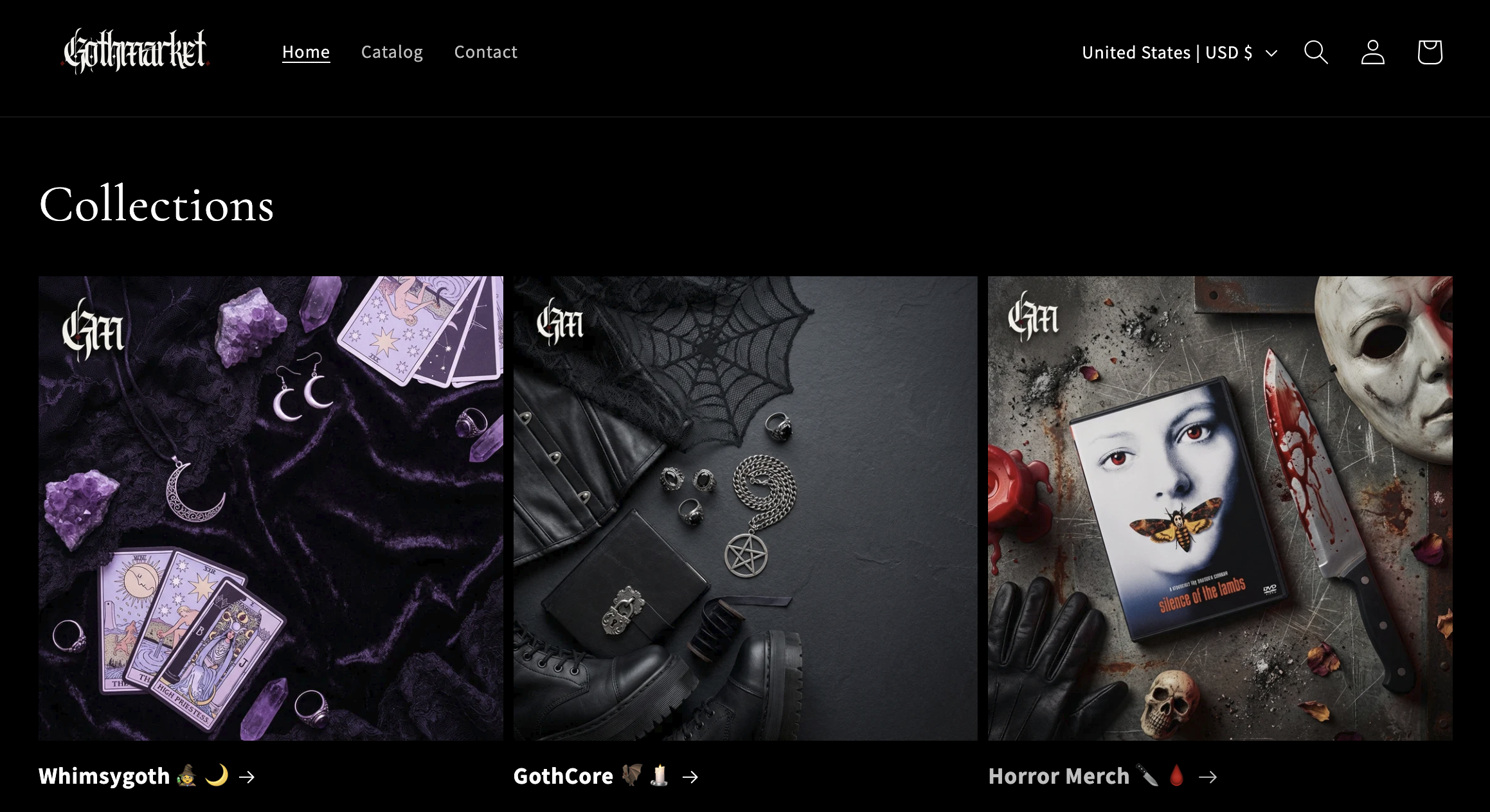
At Goth.Market, we’ve built a curated marketplace specifically for alternative community members who are serious about their aesthetics. Whether you’re refining a classic gothic wardrobe with pieces that carry real symbolic weight, picking up whimsygoth accessories that hit the exact right balance between dark and playful, or hunting for gothic accessories that anchor a new styling direction, our independent creators bring intention to every item. Browse occult jewelry, horror-themed collectibles, dark decor, witchcraft supplies, and fashion pieces sourced from people who understand exactly what these aesthetics mean and why they matter. This isn’t mass-market goth. This is the real thing.
Frequently asked questions
How do I choose an alternative aesthetic that fits my personality?
Start by identifying which visual codes and iconography genuinely excite you, then experiment with small accessory choices before committing to full outfits. The aesthetic that fits is the one whose underlying philosophy feels true to how you actually see the world.
Is occult imagery in goth fashion meant to be religious?
No. Occult iconography in goth aesthetics is typically used as symbolic visual rhetoric rather than a literal religious endorsement. The symbols communicate a relationship with mystery and the unconventional, not a specific theological belief.
What is ‘glitch goth’ and how does it differ from traditional goth?
Glitch goth prioritizes imperfections and the manufacturing process as aesthetic features, while traditional goth centers on dark monochrome palettes and historically rooted symbolism. The core difference is temporal: goth looks back, glitch goth responds to right now.
How can I incorporate more than one alternative aesthetic in my style?
Layer fabrics, textures, and iconography from different aesthetics deliberately, choosing pieces from each that share a common material or color thread to keep the look cohesive. Accessories are the easiest point of entry for blending aesthetics without creating visual conflict.