

Your guide to alternative lifestyle fashion styles
TL;DR:
- Alternative fashion encompasses diverse substyles like goth, punk, grunge, emo, and cyberpunk, each with unique visual languages and cultural roots. It challenges mainstream norms through creative expression and community identity, emphasizing personal storytelling over trends. Building an accessory-focused wardrobe rooted in intention and authenticity allows for sustainable self-expression across a lifetime.
Most people assume alternative fashion is one look: all black, chains, maybe a skull or two. That assumption misses most of the picture. Alt fashion isn’t one fixed look; goth, punk, grunge, emo, and cyberpunk are often described as sub-styles within the broader alternative fashion umbrella, each carrying its own visual language, cultural roots, and emotional tone. This guide breaks down what alternative lifestyle fashion actually means, traces where it came from, maps the major substyles, and gives you practical steps to start building a wardrobe that reflects who you truly are.
Table of Contents
- What is alternative lifestyle fashion?
- The origins and evolution of alternative fashion
- Major substyles within alternative lifestyle fashion
- Defining details: Symbols, colors, and materials
- How to build your alternative wardrobe
- A fresh take: Why alternative fashion is more relevant than ever
- Find your look: Curated dark fashion, jewelry, and more
- Frequently asked questions
Key Takeaways
| Point | Details |
|---|---|
| Not just one style | Alternative lifestyle fashion is a broad category including goth, punk, grunge, emo, and cyberpunk. |
| Creative self-expression | It encourages mixing influences, breaking norms, and showing personal identity through clothing. |
| Practical entry paths | Anyone can start exploring alternative fashion with thrifted basics, statement accessories, and DIY customization. |
| Signature symbols and colors | Most substyles use dark or bold colors, unique materials, and symbolic accessories for distinctive looks. |
| No strict rules | Alternative fashion rewards experimentation, rather than following mainstream trends or set formulas. |
What is alternative lifestyle fashion?
Alternative lifestyle fashion is an umbrella term covering a wide collection of non-mainstream clothing styles united by one common thread: they exist outside the commercial, trend-driven mainstream. They challenge what “normal” dressing looks like and prioritize personal expression over fitting in.
A lot of people hear “alternative fashion” and immediately picture a single, specific aesthetic, usually goth. That’s a reasonable first association, but it’s only a fraction of the full picture. As one overview of the topic notes, alt fashion covers multiple sub-styles, from goth and punk to grunge, emo, and cyberpunk. Each has distinct values, visual codes, and community ties.
“Alternative fashion is not a costume or a phase. It’s a deliberate, ongoing act of self-definition through dress.”
The core characteristics that run through nearly all alternative fashion subcultures include:
- Challenging norms: Pushing back against mainstream beauty standards, dress codes, and consumer trends
- Creative expression: Prioritizing individuality, artistic freedom, and personal storytelling through clothing
- Blending influences: Drawing from music, film, literature, horror, the occult, and countercultural history
- Community identity: Using shared visual language to signal belonging within a specific subculture
The major categories under the alternative fashion umbrella include:
- Gothic fashion: Dark, romantic, and often theatrical; deeply connected to the goth music scene and Victorian aesthetics. Explore more in our gothic merchandise guide.
- Punk fashion: Rebellious, DIY, and political; safety pins, leather jackets, and anti-establishment messaging
- Grunge: Slouchy, distressed, and deliberately unkempt; flannel, ripped denim, and thrifted layers
- Emo: Emotionally expressive; skinny jeans, band tees, dark eyeliner, and personal symbolism
- Cyberpunk: Futuristic and dystopian; neon accents, techwear, reflective fabrics, and sci-fi references
These categories are not rigid boxes. Many people mix elements freely, and the blurring between substyles is part of what makes alternative fashion so dynamic and alive.
The origins and evolution of alternative fashion
Having established the definition and scope, it’s essential to see where these alternative styles originated and why they’re constantly changing. Alternative fashion does not have a single birthplace. It grew from multiple social and musical movements across decades, with each era producing its own visual rebellion.
Here’s a quick timeline of key eras and their defining characteristics:
| Era | Decade | Key influences | Defining aesthetic |
|---|---|---|---|
| Punk | 1970s | Anti-establishment politics, UK working class | Leather, safety pins, mohawks, DIY patches |
| Goth | 1980s | Post-punk music, Victorian romanticism | Black lace, velvet, dramatic makeup, silver jewelry |
| Grunge | 1990s | Pacific Northwest indie rock, economic anxiety | Flannel, thrift store layering, combat boots |
| Emo | 2000s | Emotional hardcore music, teen identity culture | Dark eyeliner, band merch, tight silhouettes |
| Cyberpunk | 2010s | Tech dystopia, anime, gaming culture | Neon, techwear, reflective and industrial materials |
Each of these movements emerged during periods of social tension or cultural shift. Punk was born from economic frustration and anti-government anger in 1970s Britain. Goth grew from the dark, theatrical end of post-punk music as a response to the overly polished mainstream pop scene. Grunge was the sound of disillusionment, and its fashion reflected that: deliberately unglamorous, affordable, and real. Emo gave a generation of young people a way to wear their emotions literally on their sleeves.
Punk, goth, grunge, emo, and cyberpunk overlap as alternative fashion categories more than many realize, constantly borrowing and cross-pollinating ideas. You can see goth influence in emo, punk DNA in grunge, and cyberpunk pulling from both punk’s rebellion and goth’s dramatic color palette.
Understanding this evolution also helps explain why goth plays such a significant role in modern fashion trends. Dark aesthetics repeatedly resurface in mainstream runway collections, often without credit to their alternative origins.
Pro Tip: When a fashion trend feels fresh and new in mainstream retail, check alternative subcultures from 20 or 30 years prior. You’ll almost always find the original version already existed there, developed with far more intention and cultural depth.
Major substyles within alternative lifestyle fashion
Understanding the evolution leads naturally into a closer look at what sets the major alternative substyles apart, and how they connect under the same umbrella. While all of these styles share an alternative spirit, each has a distinct personality and visual signature.
Here’s a direct comparison across the five most recognized substyles:
| Substyle | Core color palette | Typical accessories | Key influence | Mood |
|---|---|---|---|---|
| Gothic | Black, deep red, purple | Chokers, crosses, silver rings | Victorian literature, death rock | Dark, romantic, theatrical |
| Punk | Black, red, plaid | Spikes, chains, safety pins | Anti-establishment music | Angry, rebellious, confrontational |
| Grunge | Gray, brown, olive, denim | Beanies, layered flannels | Pacific Northwest rock | Raw, disaffected, slouchy |
| Emo | Black, white, red | Band pins, wristbands, eyeliner | Emotional hardcore, pop punk | Melancholic, expressive, intimate |
| Cyberpunk | Neon green, black, chrome | Goggles, harnesses, LED accents | Sci-fi, anime, tech dystopia | Futuristic, gritty, defiant |
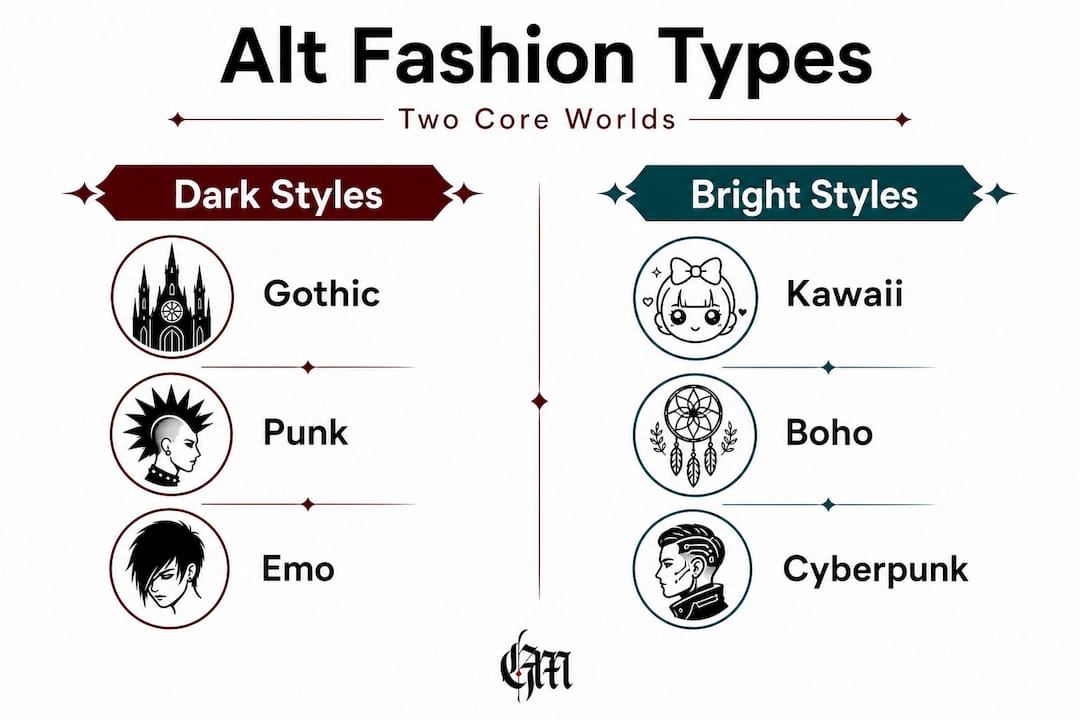
As noted by those who study these substyles closely, goth, punk, grunge, emo, and cyberpunk are all sub-styles within the broader alternative fashion umbrella, which means there is no hierarchy and no “correct” way to engage with any of them.
Here’s how to recognize and blend elements from different substyles to create your own aesthetic mix:
- Identify your emotional center. Ask yourself what mood your fashion should project. Drama and mystery lean toward goth. Anger and energy point toward punk. Melancholy and raw feeling suggest emo or grunge. Futuristic edge goes cyberpunk.
- Pick one anchor piece per substyle you love. A velvet blazer from goth, a studded belt from punk, a distressed denim jacket from grunge. Anchors give your outfit a clear foundation.
- Blend accessories intentionally. Spikes from punk work with black lace from goth. Grunge flannels pair with emo band pins. The combination becomes your own.
- Study each substyle’s original community. Looking at the original music scenes, zines, and art connected to each subculture will give you context that makes your personal style feel informed, not just copied.
- Wear what makes you feel powerful. The best alternative fashion is always the version that makes you feel most like yourself, not the version that perfectly matches a mood board.
For a deeper look at the spectrum within one major category, our guide on types of gothic fashion shows just how much variety exists even within a single substyle.
Defining details: Symbols, colors, and materials
After comparing the major substyles, let’s zero in on the details. What makes alternative fashion visually powerful and immediately recognizable are the specific design choices repeated across garments and accessories.
Color palettes in alternative fashion often revolve around a core set of tones:
- Black: The most universal alternative color, used across every substyle for its associations with mystery, power, and nonconformity
- Deep reds and burgundy: Common in goth and emo for their romantic and gothic associations
- Purple and violet: Strongly tied to gothic and witchy aesthetics, suggesting mysticism and depth
- Neon accents: Primarily cyberpunk, used to create visual tension against dark base tones
- Plaid and earthy tones: Grunge staples that suggest authenticity and working-class roots
Symbols and motifs carry significant meaning in alternative fashion. Because alt fashion isn’t one fixed look, the symbols shift by substyle, but some recurring icons include moons and stars (associated with witchy and gothic aesthetics), skulls (used across punk, goth, and metal-influenced styles), occult sigils and pentagrams (strongly tied to gothic and dark witchcraft communities), and spikes and studs (punk rebellion, translated across multiple alternative styles over decades).
Understanding the deeper meaning behind these motifs adds real intention to how you wear them. Our guide on symbolism in goth fashion goes deep into what specific icons communicate and where they come from.
Materials matter as much as silhouette in alternative fashion:
- Velvet: Rich, theatrical, and deeply associated with gothic and Victorian-influenced styles
- Lace: Delicate and dark simultaneously; common in gothic and romantic styles
- Leather and faux leather: Punk’s signature material, also used in cyberpunk and edgy goth looks
- Mesh: Used for layering, creating visual texture and an edgy undercurrent
- Distressed denim: Central to grunge, conveying wear, authenticity, and anti-fashion sensibility
For a thorough breakdown of what makes a piece genuinely gothic in construction and design, see our overview of gothic clothing key features.
Pro Tip: If you’re new to alternative fashion, start with accessories before committing to full outfits. A quality choker, a pair of silver rings with dark stone settings, or a spike-studded cuff can instantly shift the energy of an otherwise plain outfit. Accessories are the lowest-risk, highest-impact entry point.
How to build your alternative wardrobe
With a clear grasp of styles and details, it’s time to turn inspiration into action by curating your own alternative wardrobe. Building an alternative wardrobe is not about buying everything at once. It’s a deliberate, evolving process.
As the broader alternative fashion community recognizes, alt fashion isn’t one fixed look, which means your wardrobe should reflect your own evolving identity rather than any single “correct” version of a substyle.
Follow these steps to build intentionally:
- Set your aesthetic direction. Spend time looking at imagery, music, film, and art that resonates emotionally. Pinterest boards, social platforms, and community spaces like Goth.Market’s blog can help you identify patterns in what you’re drawn to.
- Invest in key foundational pieces first. A quality black coat, sturdy boots, and one or two versatile dark layering pieces are more valuable than ten cheap trend items.
- Mix vintage and new. Thrift stores are some of the best sources for authentic grunge and emo pieces. Vintage shops often carry genuine Victorian and goth-adjacent items at accessible prices. Combine these with new pieces from independent creators for a wardrobe that has real character.
- Accessorize with intention. Choose accessories that have personal meaning or visual impact. Jewelry, belts, bags, and hair pieces each contribute to the overall read of your look.
- Connect with the community. Alternative fashion is not just clothing. It’s a social and cultural experience. Engaging with other enthusiasts, attending events, and following independent artists will continuously inspire your style evolution.
Affordable entry points matter. DIY customization, thrifting, and supporting independent creators are all part of alternative fashion culture’s DNA. You do not need a massive budget to dress with genuine alternative energy.
Our gothic wardrobe checklist is a useful companion resource if you’re specifically drawn to the darker end of alternative fashion and want a structured approach to building your collection.
A fresh take: Why alternative fashion is more relevant than ever
Equipped with practical tips, let’s step back and consider why alternative lifestyle fashion matters so deeply, and why it is far from just a fleeting trend.
Here’s the uncomfortable truth most mainstream fashion coverage misses: alternative fashion has never been more culturally significant than it is right now. Digital communities have made subcultures globally accessible in ways that were simply impossible during their original decades. Someone in rural Tennessee can connect with goth communities in Tokyo, get inspired by a Berlin cyberpunk collective, and find punk zines from 1980s London, all before lunch.
This access is transforming alternative fashion in real time. It’s not diluting it. It’s expanding it. Goth aesthetics continue to shape the broader market in ways that go far beyond what any single subculture’s founders imagined.
Another thing worth saying directly: the idea that alternative fashion is “for teenagers” is simply wrong. Adults who practice alternative aesthetics are not stuck in their youth. They are using a sophisticated visual language to communicate identity, values, and worldview in ways that conventional fashion simply cannot provide. Alt fashion isn’t one fixed look, and that flexibility makes it sustainable across a lifetime, not just a phase.
The most interesting truth is this: what the mainstream calls “edgy new trends” is almost always something alternative communities developed years, sometimes decades, earlier. Dark florals, harness accessories, platform boots, dramatic layering. These came from the alternative world first. Fashion outside the mainstream doesn’t follow trends. It sets them.
Find your look: Curated dark fashion, jewelry, and more
After exploring what makes alternative style unique and dynamic, here’s where you can discover the pieces that will set your look apart.
Goth.Market brings together independent creators and curated collections designed specifically for people who take their alternative aesthetic seriously. Whether you’re building your first dark wardrobe or looking for statement pieces to sharpen an established look, the platform has you covered.
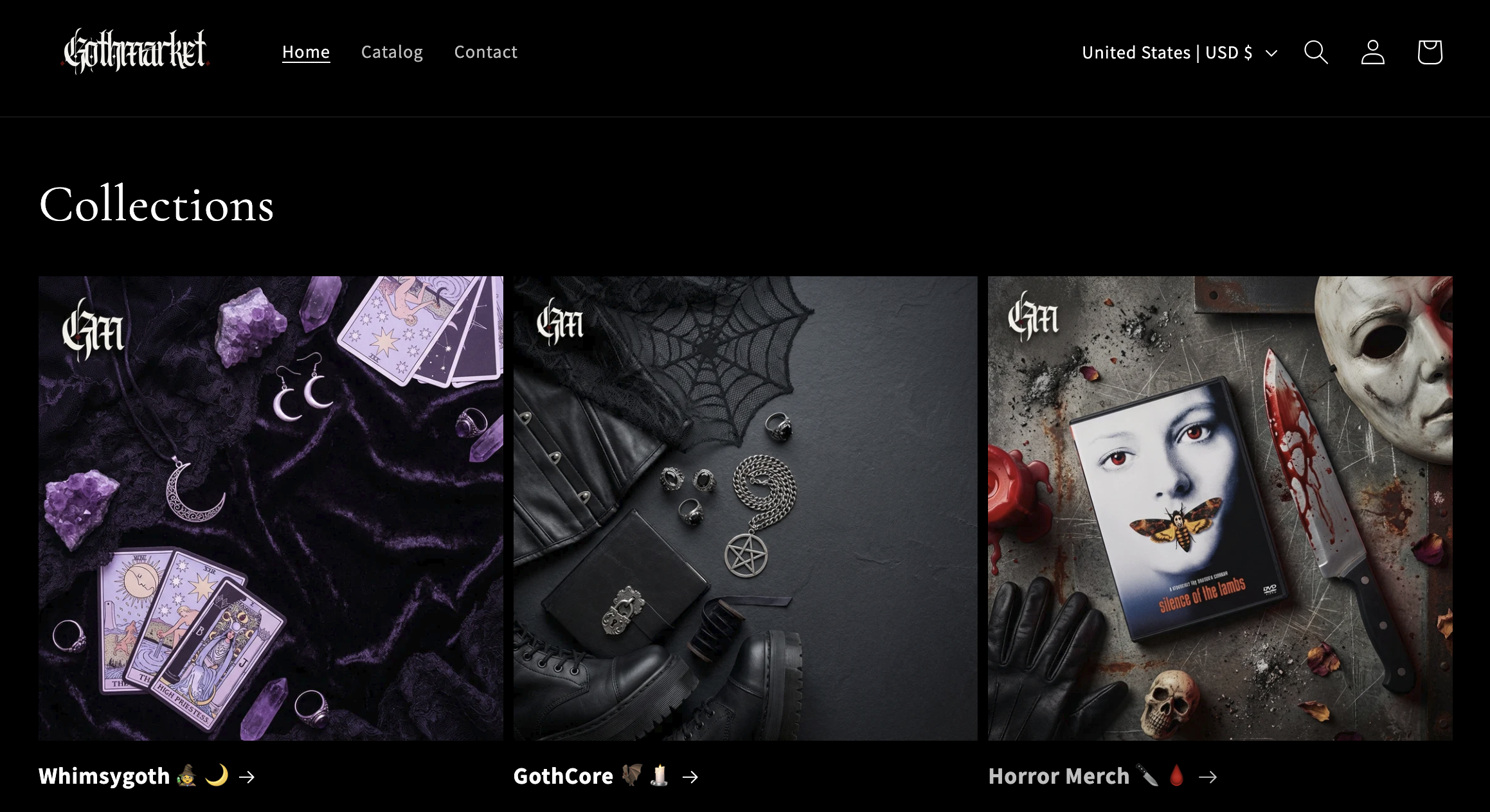
Browse the alternative jewelry collection for rings, chokers, pendants, and earrings with genuine occult and gothic character. If your taste runs toward the softer, whimsical side of dark aesthetics, the whimsygoth collection offers pieces that blend gothic romance with a lighter touch. For those drawn to horror aesthetics and darker pop culture references, the horror merch selection features merchandise and accessories with serious edge. Every piece on Goth.Market comes from independent creators who live and breathe these aesthetics, so what you find here won’t show up on a fast-fashion rack.
Frequently asked questions
Is alternative lifestyle fashion only about gothic clothing?
No, alternative fashion covers multiple styles like punk, grunge, emo, cyberpunk, and more. Gothic is just one well-known substyle within a much broader collection of alternative sub-styles.
How can I start dressing in an alternative style affordably?
Start with thrifted basics, DIY customizations, and statement accessories that reflect your preferred substyle. Alternative fashion’s DIY roots mean that creativity and resourcefulness are more valued than spending power.
Are there rules I need to follow for alternative fashion?
There are no strict rules. Blending looks, experimenting across substyles, and personalizing details is actively encouraged throughout alternative fashion communities.
What accessories define alternative lifestyle fashion?
Common accessories include chokers, statement rings, spikes, chains, and items featuring occult or symbolic motifs. These appear consistently across goth, punk, emo, and cyberpunk substyles with slight variations in execution.
Can alternative fashion be worn professionally?
With thoughtful styling choices, yes. Subtle dark accessories, structural black pieces, and understated gothic jewelry can translate into workwear without sacrificing your personal aesthetic identity.