

Horror-inspired fashion: Your guide to dark style
TL;DR:
- Horror-inspired fashion translates cinematic horror elements into wearable, layered garments emphasizing mood and meaning.
- Designers and streetwear collaborations incorporate horror film references through silhouettes, textures, and set design, blending art and fashion.
- Ethical considerations include avoiding cultural appropriation, respecting origins, and prioritizing craftsmanship for authentic, sustainable style.
Horror-inspired fashion is not a Halloween gimmick. It’s a legitimate, growing force in both designer collections and everyday street style, reshaping how we think about self-expression through clothing. CR Fashion Book describes it as a direct translation of cinematic elements from horror films into wearable garments, pulling from costumes, atmospheres, and storytelling motifs to create pieces that feel charged with meaning. This guide breaks down what horror-inspired fashion actually is, who’s driving it, how to wear it authentically, and where the ethical boundaries lie.
Table of Contents
- What is horror-inspired fashion?
- How horror films shape fashion: From runway to streetwear
- Key elements and mechanics of horror-inspired style
- How to adopt horror-inspired fashion in daily style
- Controversies and edge cases: Body horror, culture, and ethics
- A fresh perspective: Why horror-inspired fashion resonates now
- Find your own horror-inspired pieces at Goth.Market
- Frequently asked questions
Key Takeaways
| Point | Details |
|---|---|
| Cinema meets fashion | Horror-inspired fashion adapts film imagery and motifs into everyday clothing and accessories. |
| Authenticity over costume | Balancing structured and flowing pieces creates wearable style without looking theatrical. |
| Grows with trends | Major designers and streetwear brands incorporate horror aesthetics, signaling mainstream acceptance. |
| Ethics matter | Respecting source cultures and avoiding appropriation keeps horror fashion creative and responsible. |
| Start with statements | Begin with a single, iconic horror element—like a choker or corset—and layer for a personalized look. |
What is horror-inspired fashion?
Horror-inspired fashion is exactly what it sounds like, but far more nuanced than the name implies. It takes the visual language of horror films, their lighting, costumes, creature designs, and emotional atmosphere, and translates that into wearable clothing. The origins of horror aesthetics run deep, connecting back to Victorian mourning dress, Gothic literature, and theatrical costume design. That rich history gives this style real texture and staying power.
The key distinction between horror-inspired fashion and a Halloween costume is intentionality and craftsmanship. A costume is designed to immediately communicate a character. Horror-inspired fashion, on the other hand, uses motifs as building blocks for layered, original looks. It borrows the feeling of horror rather than replicating a specific outfit.
The core visual vocabulary includes:
- Dark palettes: Shadow black, blood red, deep crimson, ashen gray, and bruised purple form the foundation.
- Distressed textures: Ripped gauze, cracked leather, weathered velvet, and raw-edged fabrics suggest decay or ritual.
- Eerie motifs: Occult symbols, antique religious iconography, anatomical prints, and abstract silhouettes referencing monsters or death.
- Exaggerated silhouettes: Dramatic shoulders, floor-length hems, and cinched waists that reference both vintage horror and theatrical costume design.
As gothic fashion’s evolution shows, dark aesthetics have long absorbed and reinterpreted cultural fear into beautiful clothing. Horror-inspired fashion is the most direct expression of that ongoing conversation.
“Horror fashion is not about dressing as a monster. It’s about wearing the mood, the tension, and the visual memory of fear in a way that feels personal and intentional.”
Pro Tip: When building a horror-inspired look, always prioritize fabric quality. A distressed silk or structured leather piece instantly reads as fashion. The same silhouette in cheap polyester reads as a costume. The material choice is what separates the two.
How horror films shape fashion: From runway to streetwear
The connection between horror cinema and high fashion is older than most people realize. Designers including Alexander McQueen have built entire runway collections around specific horror films, referencing works like The Shining, Eyes Wide Shut, and Rosemary’s Baby through immersive set design, film still prints, and character-inspired garment forms. These aren’t subtle nods. They’re full commitments to a cinematic visual language.
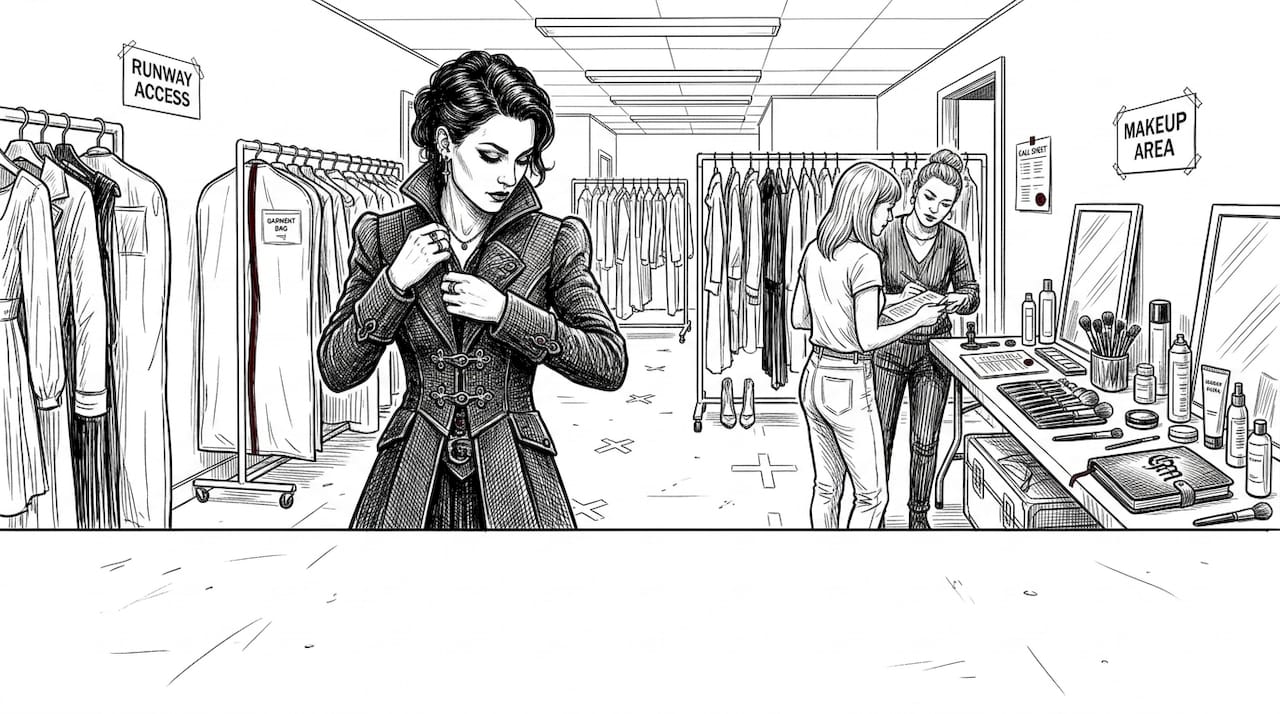
Here’s a snapshot of how major designers have interpreted horror on the runway:
| Designer | Horror Reference | Key Elements Used |
|---|---|---|
| Alexander McQueen | The Shining | Distorted silhouettes, blood-red accents, asylum aesthetics |
| Jonathan Anderson | Eyes Wide Shut | Ritual masks, velvet, ceremonial structure |
| Joseph Altuzarra | Rosemary’s Baby | Dark florals, sinister domesticity, muted tones |
| Rick Owens | Gothic horror broadly | Draped black fabric, sculptural forms, brutalist shapes |
| John Galliano | Classic monster films | Theatrical collars, dramatic excess, macabre embroidery |
What’s particularly interesting is how designers extract from horror films. Some focus on atmosphere, replicating the color grading or lighting of a specific scene. Others lift direct visual cues, a certain silhouette, a prop’s shape, a character’s signature piece, and rebuild them as high-fashion garments. This methodology gives each collection a layered storytelling quality that pure aesthetic design often lacks.
At the streetwear level, collaborations like Terrifier x WACKO MARIA demonstrate real commercial viability for horror-inspired apparel. These drops sell out fast, attract mainstream attention, and bridge the gap between horror fandom and fashion culture. They prove that horror motifs aren’t niche curiosities but genuine market drivers.
The top ways horror films shape fashion in practice:
- Runway sets as film scenes: Designers stage shows inside abandoned hospitals, fog-filled forests, or candlelit crypts to immerse buyers and press in the film’s atmosphere.
- Print and textile sourcing: Film stills, character portraits, or abstract scene imagery are printed directly onto fabric, making the garment a literal piece of the film.
- Silhouette translation: Character body shapes (the hunched creature, the towering figure, the ritualist in robes) inform cut, drape, and structure decisions.
- Accessory as prop: A ring modeled after a talisman in a film, or a choker referencing a vampire’s favored neckline, adds narrative weight without costume territory.
Styling gothic and horror looks requires understanding which of these methods you’re drawing from, because each one calls for different execution.
Key elements and mechanics of horror-inspired style
Understanding the mechanics of horror-inspired fashion means learning to see clothing the way a costume designer sees it: as visual storytelling tools. According to dark fashion analysis, the core process involves extracting specific visual elements from films, such as silhouettes, textures, and palettes, and then adapting them for real-world wearability.
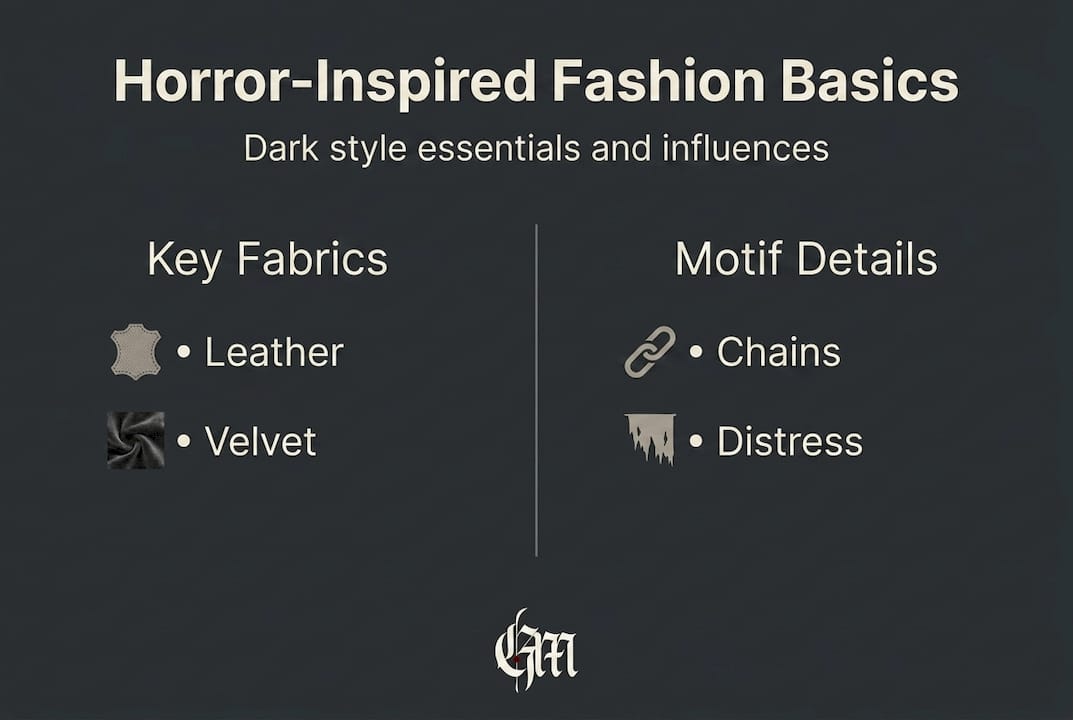
Here’s a direct comparison to help clarify the line between authentic horror fashion and costume territory:
| Element | Costume Territory | Horror-Inspired Fashion |
|---|---|---|
| Fabric | Synthetic, thin, printed | Natural fibers, distressed, structured |
| Silhouette | Literal character recreation | Abstracted, modernized forms |
| Color | Bright, exact character palette | Moody, muted, or deeply saturated |
| Accessories | Plastic or foam props | Handcrafted, metal, or artisan pieces |
| Fit | Generic sizing, over-the-top | Tailored to body, considered proportion |
The essential dark fashion pieces that anchor horror-inspired looks share a common trait: they carry weight both literally and conceptually. A well-made leather corset feels like armor. A gauze overlay suggests a shroud. These associations are what make the style communicate without words.
Core elements to build around include:
- Exaggerated shoulders: Wide, structured, or dramatically peaked shoulder lines evoke monster silhouettes and old horror architecture.
- Cinched waists: Corsetry and belt detailing pull from both Victorian horror and classic film monster design.
- Occult and ritual motifs: Pentagrams, serpents, anatomical hearts, and runic script are recurring symbols that carry cultural weight when used thoughtfully.
- Distressed surfaces: Deliberate wear, fraying, staining effects, and rawness suggest survival, age, or contact with something dark.
- Layered textures: Combining leather with gauze, or silk with rough tweed, creates visual and tactile complexity that reads as sophisticated rather than theatrical.
Pro Tip: The most effective horror-inspired outfits pair something structurally hard with something visually soft. A stiff leather jacket over a sheer black slip dress. A rigid metal collar against a fluid velvet skirt. That tension between materials is where the horror film reference lives, in the contrast between threat and vulnerability.
How to adopt horror-inspired fashion in daily style
The biggest barrier most people face isn’t access to the pieces. It’s confidence in building a look that feels authentic rather than overdone. The good news is that dark wardrobe building follows clear principles, and horror-inspired fashion adapts well to a stepwise approach.
According to current dark fashion trend analysis, 2026 favors wearable rituals over shock value, aligning the style with sustainable and intentional aesthetics rather than maximalist displays. That shift is great news for newcomers because it means restraint is rewarded.
Follow this framework for practical daily adoption:
- Start with one anchor piece. A statement choker, a high-collar blouse, a structured corset, or a heavily textured jacket. This piece sets the tone of the whole look.
- Build neutrally around it. Pair your anchor with simpler pieces in black, deep gray, or muted earth tones. Let the anchor do the work without competition.
- Add texture through layering. Introduce a second fabric layer that contrasts the anchor. Sheer over opaque, rough over smooth, fluid over structured.
- Limit your color palette. Two or three colors maximum keeps the look intentional. Horror-inspired style is about depth, not variety.
- Choose accessories with specificity. One meaningful ring, one unusual necklace, or one distinctive bag carries more impact than a collection of random dark pieces stacked together.
- Consider comfort as part of the design. If you can’t move naturally in an outfit, the visual effect breaks down immediately. Authentic horror fashion always has a functional logic beneath the theatricality.
Styling tips for gothic looks reinforce the same principle: the most powerful looks are built on genuine wearability, not just visual impact.
Pro Tip: When shopping for horror-inspired pieces, prioritize independent makers and artisan vendors over mass-produced fast fashion. A handcrafted piece with real material quality will always communicate the aesthetic more convincingly than a factory-made lookalike, and it will last long enough to become a wardrobe anchor rather than a single-season throwaway.
Common pitfalls to actively avoid include over-accessorizing (more than three statement pieces at once quickly becomes cluttered), ignoring fit (horror fashion’s power lives in silhouette), and chasing trend cycles rather than developing a personal visual language.
Controversies and edge cases: Body horror, culture, and ethics
Not all horror-inspired fashion is straightforward. The genre’s more extreme edges touch on body horror aesthetics, cultural ritual garments, and shock-value design that raises genuine ethical questions. Understanding these edges helps you navigate the space with both creativity and responsibility.
At the avant-garde extreme, body horror fashion uses prosthetics, hyper-realistic wound effects, and dramatized silhouettes that alter the perceived shape of the human body to challenge conventional beauty norms. This work is legitimate and often powerful as art. But it requires a level of craftsmanship, context, and intentionality that separates it from gratuitous shock tactics.
“Body horror fashion uses prosthetics and hyper-realistic pieces to challenge beauty norms, but carries a risk of cultural appropriation in ritual garments without research or proper attribution.”
The key risks to understand before drawing from horror-adjacent cultural traditions:
- Cultural appropriation: Many horror motifs originate in specific cultural or religious traditions, including Vodou, Dia de los Muertos, Indigenous spiritual practices, and others. Wearing these symbols as fashion without research or respect is harmful.
- Misinterpretation: A garment inspired by ritual dress without context may be read as mockery rather than homage, particularly by communities whose traditions are being referenced.
- Shock value without substance: Using gore effects, trauma imagery, or extremity purely for attention, without narrative or artistic intention, reduces horror fashion to spectacle and undercuts the aesthetic’s credibility.
- Erasing the source: Failing to credit or acknowledge the cultural or cinematic origins of specific motifs is both ethically questionable and intellectually shallow.
Understanding gothic merchandise includes understanding where the symbols you choose come from. The strongest horror-inspired looks are those where the wearer can articulate why each element is present and what tradition or reference it honors.
A fresh perspective: Why horror-inspired fashion resonates now
Here’s the uncomfortable truth that most fashion coverage sidesteps: horror-inspired fashion is not popular because people want to look scary. It’s popular because it gives wearers a way to externalize internal states that mainstream fashion has no language for.
The horror genre has always been about processing fear, grief, alienation, and mortality through narrative. When those same themes translate into clothing, the garment becomes a form of personal storytelling. Horror fashion’s blend of cinematic dread with luxury craftsmanship enables exactly that, creating adaptable, narrative-heavy garments that communicate identity in ways that a plain black t-shirt simply cannot.
For gothic and alternative audiences specifically, this is not new. These communities have always used clothing to signal values, community membership, and emotional depth. What’s changed is that goth’s influence on modern trends has finally breached the mainstream fashion barrier, meaning the visual language once reserved for subculture spaces now appears in Vogue editorials and luxury lookbooks.
What’s genuinely interesting about this moment is the cyclical nature of it. Horror fashion surges during periods of cultural anxiety. The 1970s horror film boom coincided with post-Vietnam cultural trauma. The 1990s gothic revival tracked with generational disillusionment. The current resurgence maps onto a wide-scale reassessment of identity, body politics, and institutional trust. Fashion responds to what culture is processing, and right now, culture is processing a lot.
The style also aligns with a broader movement toward intentional, sustainable, narrative-driven dressing that rejects fast fashion’s disposability. Horror-inspired pieces, when made well, are not trend items. They’re wardrobe anchors that grow more interesting with age and wear.
Find your own horror-inspired pieces at Goth.Market
Ready to put this into practice? Building a genuine horror-inspired wardrobe starts with finding pieces that carry real craftsmanship and dark intent, and that’s exactly what Goth.Market curates.
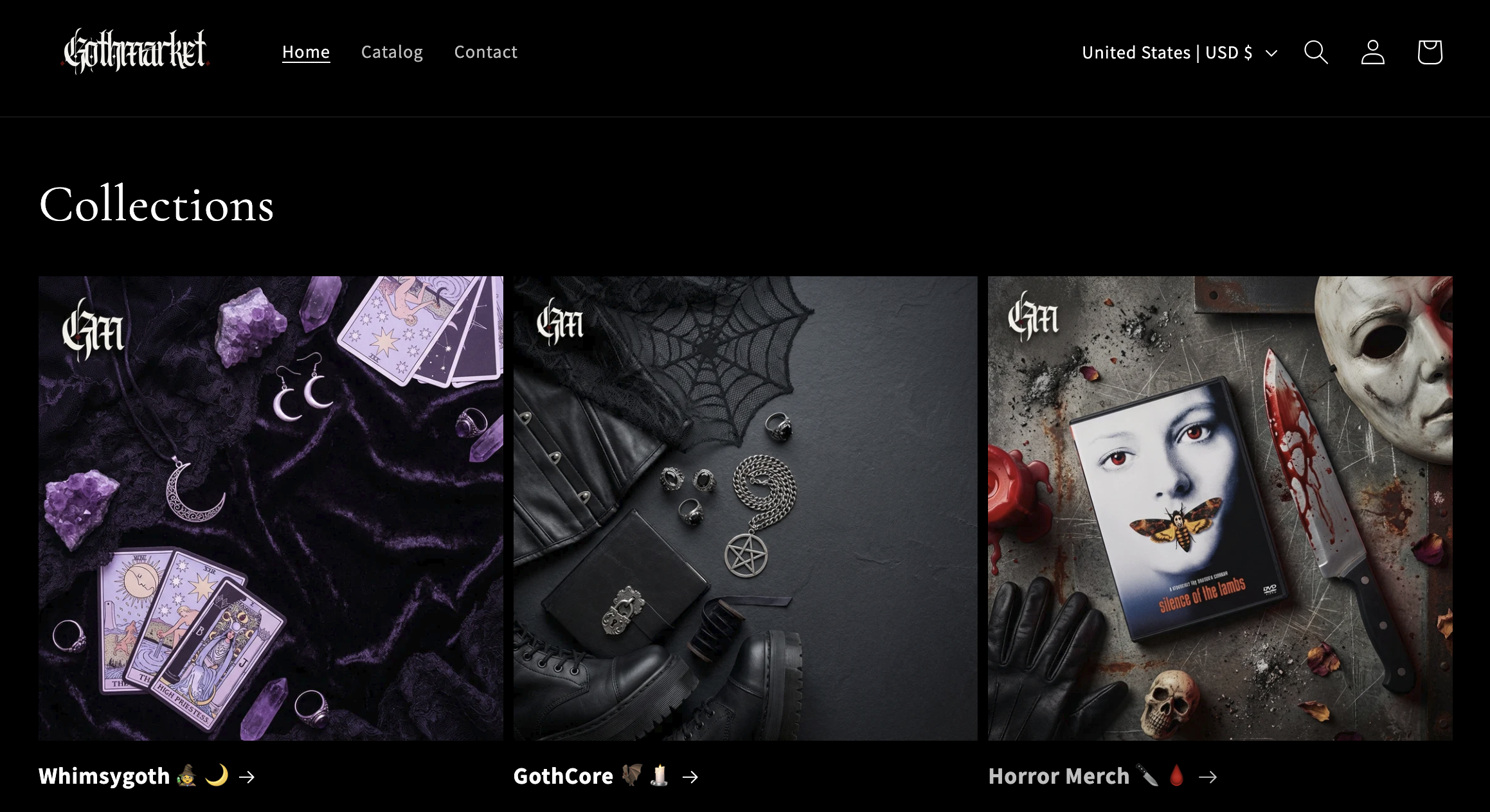
At Goth.Market, independent creators and artisan vendors bring horror motifs to life in pieces you won’t find in any mall. From statement chokers and ritual rings to structured corsets and occult-print apparel, every item in our horror-inspired merch collection is chosen for its authenticity, quality, and visual power. Whether you’re building your first dark look or expanding an established wardrobe, you’ll find pieces here that anchor your style in something real, made by people who genuinely inhabit this world.
Frequently asked questions
What makes horror-inspired fashion different from gothic style?
Horror-inspired fashion borrows directly from horror films and their specific storytelling motifs, while gothic style draws from a broader range of historical, literary, and alternative aesthetic traditions. The cinematic elements that define horror fashion, such as film references, character silhouettes, and scene-specific palettes, distinguish it from the wider gothic umbrella.
How can I wear horror-inspired elements without looking like I’m in costume?
Choose one statement piece and build the rest of your outfit with simple, high-quality basics in a restrained palette. The balance between structure and fluidity is what prevents a horror-inspired look from reading as theatrical rather than intentional.
Are horror-inspired fashion trends sustainable?
Yes, particularly in 2026, when the shift toward wearable, intentional dark aesthetics favors quality materials and small-batch collaborations over fast fashion volume. Choosing artisan-made pieces from independent vendors extends both the garment’s life and the style’s cultural credibility.
What are the risks or controversies in horror-inspired fashion?
The main risks involve borrowing cultural ritual motifs without proper research or attribution, which can cross into cultural appropriation, as well as using shock tactics without genuine artistic context. Doing the work to understand the origins of the symbols you wear keeps your style both powerful and respectful.