

How to start a gothic art collection: tips for new collectors
TL;DR:
- Authentic gothic art has symbolic motifs, craftsmanship, and emotional depth rooted in historical styles.
- Budgeting, sourcing from curated platforms, and clear goals help build a meaningful collection.
- True gothic collectors prioritize self-expression and authenticity over mainstream trends.
Finding authentic gothic art in a sea of mass-produced “dark aesthetic” decor is genuinely frustrating. Walk into any big-box home store and you’ll see skull candles and faux-vintage frames marketed as gothic, yet something feels hollow about them. Real gothic art carries weight, history, and a visual language that speaks directly to collectors who live this aesthetic. This guide walks you through everything you need to know: how to recognize authentic pieces, how to budget and source them, how to display and preserve what you find, and how to avoid the traps that catch most beginners off guard.
Table of Contents
- Understanding gothic art and its appeal
- Preparing to collect: budgeting, sourcing, and setting goals
- Selecting authentic gothic pieces for your collection
- Displaying, preserving, and expanding your gothic art collection
- The unconventional wisdom in gothic art collecting
- Explore gothic art and dark aesthetics with Goth.Market
- Frequently asked questions
Key Takeaways
| Point | Details |
|---|---|
| Know gothic art’s roots | Understanding the genre’s history and motifs helps you spot authentic pieces for your collection. |
| Set clear goals and budget | Effective gothic art collecting starts with good planning, including defining your taste and limits. |
| Evaluate authenticity | Look for signature motifs, craftsmanship, and avoid mass-produced imitations when choosing gothic art. |
| Display and preserve pieces | Proper care and presentation ensures gothic art retains its impact and value over time. |
| Collect for self-expression | The most rewarding collections reflect your unique personality, not just trends or status. |
Understanding gothic art and its appeal
Gothic art is not a single style frozen in time. It is a living tradition that draws from centuries of dark, spiritual, and emotionally charged visual culture. Gothic art is rooted in medieval, Victorian, and modern dark aesthetics, which means the tradition spans pointed arches and gargoyles, Victorian mourning portraits, and contemporary dark surrealism. Understanding this lineage helps you recognize what is authentic and what is simply borrowing the surface look.
Visually, gothic art tends to share a recognizable vocabulary. Look for these defining elements:
- Dark, saturated color palettes: Deep blacks, blood reds, midnight blues, and decayed greens
- Symbolic motifs: Skulls, ravens, thorns, moons, crosses, serpents, and occult geometry
- Architectural references: Pointed arches, cathedral windows, and crumbling stonework
- Emotional intensity: Melancholy, mystery, and spiritual tension expressed through composition
- Elaborate craftsmanship: Hand-carved frames, gilded details, layered textures
The mediums collectors encounter vary widely. Paintings and prints are the most common entry points, but gothic art also lives in sculpture, textile work, stained glass reproductions, and mixed-media assemblage. Each medium carries its own collecting considerations around authenticity, condition, and display.
Here is a quick reference for the major historical periods that shaped gothic art:
| Period | Key influences | Common mediums |
|---|---|---|
| Medieval (500–1400) | Church iconography, illuminated manuscripts | Fresco, stone carving, stained glass |
| Victorian (1837–1901) | Mourning culture, Gothic Revival architecture | Oil painting, photography, textile |
| Modern dark aesthetics (1980s–present) | Punk, occult revival, dark surrealism | Print, digital art, sculpture, mixed media |
Gothic art resonates with collectors because it is one of the few visual traditions that takes darkness seriously as a subject rather than treating it as shock value. For those interested in decorating with gothic wall art, understanding this depth makes the difference between a space that feels curated and one that feels costumed. The appeal is personal and subcultural, which is exactly why modern gothic aesthetics continue to attract serious collectors who want their spaces to reflect genuine identity.
With an understanding of what defines gothic art, the next step is to gather and prepare the right resources for starting your collection.
Preparing to collect: budgeting, sourcing, and setting goals
Starting a gothic art collection without a plan is how people end up with a living room full of mismatched pieces they don’t actually love. Before you spend a single dollar, spend time defining what you want your collection to do for you.
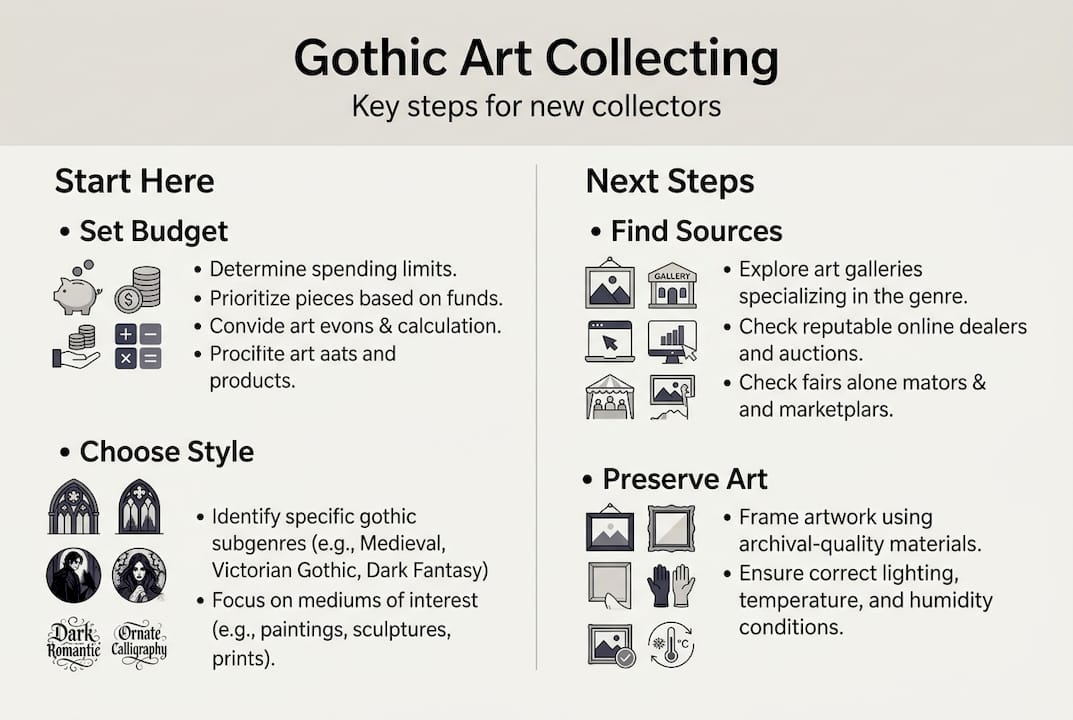
Begin with your budget. Gothic art spans an enormous price range, from affordable limited-edition prints under $30 to original paintings that run into the thousands. A realistic starting budget for a new collector is $200 to $600 for the first year, spread across a few carefully chosen pieces rather than many impulse purchases. Track every acquisition in a simple spreadsheet: what you paid, where you found it, the artist’s name, and any provenance details.
Pro Tip: Keep a running log of pieces you almost bought but passed on, along with their prices. Over time, this gives you a personal price index that sharpens your instincts for fair value.
Sourcing is where most beginners struggle. Here is a comparison of the most common routes:
| Source | Pros | Cons |
|---|---|---|
| Online gothic marketplaces | Curated, accessible, wide selection | Can’t inspect in person |
| Local galleries and art fairs | Tactile experience, meet artists | Limited gothic-specific inventory |
| Flea markets and estate sales | Unexpected finds, lower prices | Requires strong authentication skills |
| Social media and artist shops | Direct from creator, often affordable | Inconsistent quality control |
Online gothic art platforms have become the most reliable starting point for new collectors because they pre-filter for the aesthetic. As noted by curators familiar with the space, online gothic art platforms offer curated selections that reduce the guesswork for collectors who are still developing their eye.
Defining your collection goals matters just as much as your budget. Ask yourself these questions before purchasing:
- Am I collecting for visual impact in a specific room?
- Do I want a historically informed collection or a contemporary dark aesthetic focus?
- Is investment potential part of my motivation, or is this purely for self-expression through gothic art?
- Do I prefer original works or high-quality prints?
- What size constraints does my space impose?
Answering these honestly saves you from buyer’s remorse and helps you build a collection with internal coherence rather than a random assortment of dark things you liked in the moment.
Once your goals and resources are mapped out, it’s time to dive into the practical process of selecting gothic art for your collection.
Selecting authentic gothic pieces for your collection
Authenticity is the single biggest challenge in gothic art collecting. The mainstream home decor industry has absorbed gothic visual language and stripped it of meaning, producing millions of items that look gothic on the surface but carry none of the craft or intention that defines the real thing.
When you’re evaluating a piece, work through this checklist:
- Motif integrity: Are the symbols used with purpose, or are they decorative noise?
- Craftsmanship: Look for hand-finishing, layered detail, and material quality
- Artist background: Does the creator have a genuine connection to the gothic or alternative subculture?
- Edition and provenance: Is this an original, a limited print, or an open-edition reproduction?
- Emotional resonance: Does it feel like it was made with intention, or manufactured to a trend?
As experienced collectors know, signature motifs and craftsmanship are the clearest indicators of authenticity. Mass-produced items typically flatten these details: skulls look generic, linework lacks variation, and materials feel cheap under close inspection.
Here is a step-by-step process for evaluating any piece you’re considering:
- Research the artist first. A quick search should reveal their community presence, exhibition history, or portfolio. Anonymous mass-produced art rarely has this trail.
- Examine the physical piece closely. Look at brushwork, print resolution, material weight, and finishing details.
- Compare against known gothic art examples. Studying gothic art examples trains your eye faster than any other method.
- Ask about the piece’s history. Where was it made? Is it signed? Is there documentation?
- Consult the gothic art curation guide for deeper reference. Curated frameworks help you apply consistent standards across different mediums.
Pro Tip: Networking with other collectors and creators is one of the fastest ways to find rare pieces before they hit public listings. Join online communities, follow independent gothic artists on social media, and attend alternative art markets. The best finds often circulate through word of mouth long before they appear in any shop.
Having selected genuine gothic pieces, you’ll want to protect their value and integrate them visually. Let’s look at how to display and care for them.
Displaying, preserving, and expanding your gothic art collection
How you display gothic art shapes how it feels in your space. A powerful piece hung in the wrong spot with bad lighting loses half its impact. Think of arrangement as part of the art itself.
For dramatic effect, consider these display strategies:
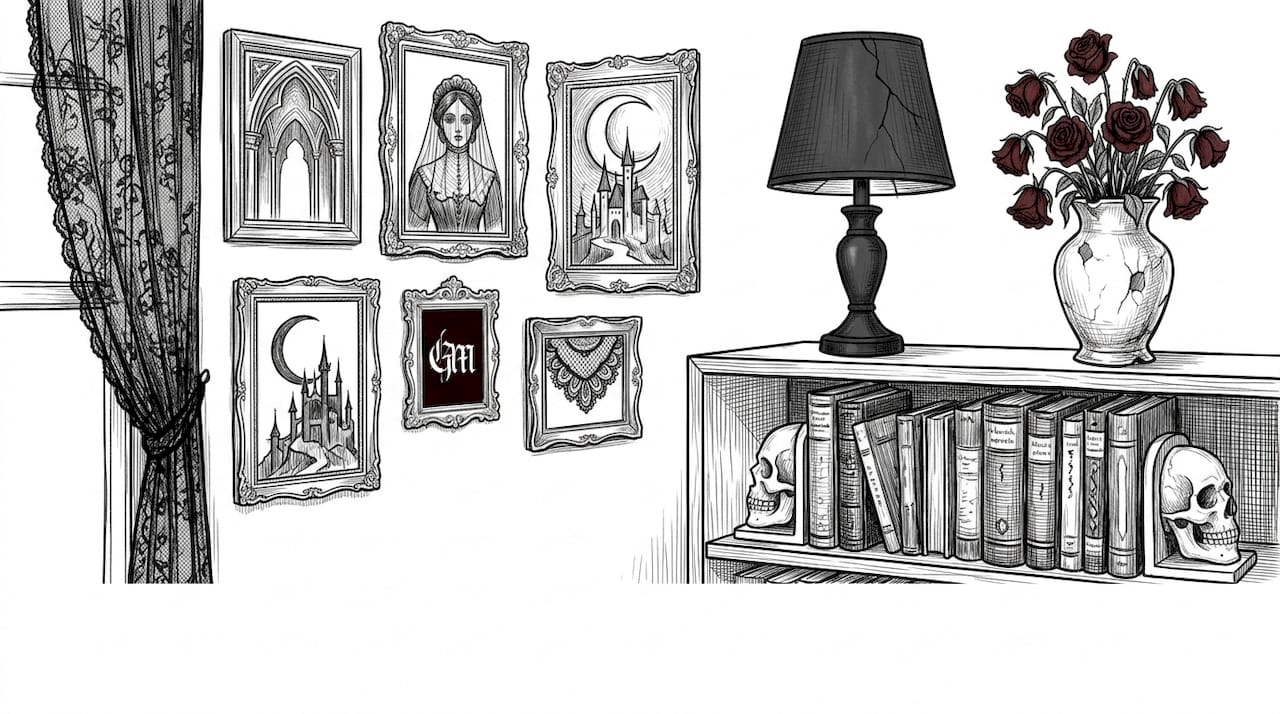
- Cluster smaller pieces into gallery walls with intentional asymmetry
- Use directional lighting (warm amber or cool blue tones) to deepen shadows and highlight texture
- Layer with complementary objects: candles, dried botanicals, dark textiles, and occult objects
- Let negative space work: gothic art often benefits from breathing room rather than crowding
- Vary frame styles between ornate gilded and raw dark wood for visual tension
Exploring gothic home decor styles gives you a broader framework for how art fits within a cohesive dark interior. The goal is an environment that feels inhabited and intentional, not staged.
Preservation is where many collectors fall short. Preserving gothic art requires attention to display environment and materials, especially for works on paper, textiles, and mixed media.
| Art type | Key preservation method | Avoid |
|---|---|---|
| Paper prints | UV-protective glass, acid-free matting | Direct sunlight, humidity |
| Oil paintings | Climate-controlled room, no direct heat | Moisture, temperature swings |
| Textiles | Archival storage, padded hanging | Folding, pest exposure |
| Sculpture | Stable surface, dust covers | Vibration, direct handling |
For those building a dark elegance decor environment, preservation and aesthetics work together. A well-framed, properly lit piece is both better protected and more visually striking.
Expanding your collection over time requires staying connected to the community. Attend alternative art markets, follow independent gothic creators online, and participate in collector groups where people share finds and discuss value. As many experienced collectors put it:
“The collection grows fastest when you stop shopping and start belonging. Community is where the real finds live.”
With your collection displayed and preserved, let’s reflect on what the mainstream overlooks about gothic art collecting.
The unconventional wisdom in gothic art collecting
Most collecting advice focuses on investment value, resale potential, and following trends. For gothic art, that framing misses the point almost entirely. The collectors who build the most compelling collections are the ones who treat art as an extension of identity, not a portfolio.
There is a real pressure, especially for new collectors, to buy what looks “correct” within the subculture. Certain artists get hot, certain motifs trend, and suddenly everyone’s collection starts looking the same. That is the trap. Gothic art’s power comes from its resistance to mainstream approval, and a collection that chases subcultural trends is just as hollow as one that chases mainstream ones.
The power of self-expression is what separates a meaningful collection from a decorative one. Buy the piece that unsettles you slightly. Buy the artist nobody in your circle has heard of. Break the unwritten rules about what gothic “should” look like.
Pro Tip: If a piece makes you feel something you can’t immediately name, that is usually a sign it belongs in your collection.
Explore gothic art and dark aesthetics with Goth.Market
Building an authentic gothic art collection starts with having access to pieces made by creators who genuinely live this aesthetic. Goth.Market connects collectors with independent artists and vendors who specialize in dark, alternative, and occult-inspired work, so you’re never sifting through mass-market imitations.

Browse curated gothic jewelry that pairs beautifully with dark art installations, explore the whimsygoth collection for pieces that blend dark whimsy with collector appeal, or find statement items in the horror merch selection. Every category is curated with the same intention you bring to your collection.
Frequently asked questions
What defines genuine gothic art versus gothic-inspired decor?
Genuine gothic art features historical motifs, elaborate craftsmanship, and intentional darkness that mass-produced decor rarely replicates. The difference shows up most clearly in material quality, symbolic depth, and the artist’s connection to the subculture.
Where can I find rare gothic art pieces?
Rare pieces surface through online gothic art shops, specialized alternative markets, and collector networks where word-of-mouth circulates finds before they go public. Community involvement is your best sourcing tool.
How should I display gothic art at home?
Display gothic art with controlled directional lighting, complementary dark decor, and secure mounting suited to the piece’s medium. Proper display environment and materials protect both the art’s condition and its visual impact.
What are common mistakes beginners make when collecting gothic art?
The most common mistake is buying mass-market pieces that mimic gothic surface aesthetics without genuine signature motifs and craftsmanship. Researching artists and engaging with collector communities before purchasing prevents most of these errors.