

What is gothic home decor? A 2026 guide to dark elegance
Most people think gothic home decor means drowning your space in black paint and cluttering every corner with skull figurines. That’s a myth. Authentic gothic interiors blend rich textures, elegant darkness, and historical influences from medieval and Victorian eras to create sophisticated, moody spaces. This guide reveals the true essence of gothic home decor, its cultural roots, visual elements, substyles, and practical styling strategies that let you craft an authentic gothic sanctuary.
Table of Contents
- Introduction To Gothic Home Decor
- Core Visual Elements Of Gothic Decor
- Gothic Decor Styles And Substyles
- Common Misconceptions About Gothic Home Decor
- Practical Styling Guidelines For Your Gothic Home
- Discover Gothic-Inspired Accessories To Enhance Your Home
- Frequently Asked Questions
Key takeaways
| Point | Details |
|---|---|
| Historical roots | Gothic decor draws from medieval architecture and Victorian dark romanticism, featuring dramatic arches and ornate details. |
| Core visual elements | Moody color palettes, rich textures like velvet and brocade, strategic lighting, and statement furniture define the style. |
| Style variations | Victorian ornate, modern minimalist gothic, and rustic natural substyles offer diverse interpretations. |
| Common misconception | Gothic doesn’t mean spooky clutter but emphasizes balance, elegance, and intentional dark aesthetics. |
| Practical approach | Start with cohesive palettes, layer textures thoughtfully, select signature furniture, and curate accessories carefully. |
Introduction to gothic home decor
Gothic home decor represents a design philosophy rooted in historical architectural movements and modern dark aesthetics. It’s not simply decorating with black objects. The style channels the drama and elegance of specific cultural eras into residential spaces that feel both moody and sophisticated.
The medieval Gothic architectural style originated between the 14th and 16th centuries, characterized by pointed arches, ribbed vaults, ornate stone carvings, and dramatic vertical lines. These structural elements inspired interior design choices that emphasize height, shadow play, and intricate detailing. Cathedrals and castles from this period featured elaborate woodwork, stained glass, and heavy textiles that created atmospheric, reverent spaces.
Over centuries, gothic home decor evolved through revivals inspired by historical design movements. The Victorian era saw renewed fascination with gothic elements, adding ornate furniture, rich fabrics, and romantic darkness to residential interiors. By the 20th and 21st centuries, gothic design split into various substyles, from traditionally ornate to starkly minimalist interpretations.
For alternative lifestyle communities, gothic interiors offer more than aesthetics. They provide a canvas for personal expression rooted in what the gothic aesthetic means culturally: embracing darkness not as negativity but as depth, mystery, and beauty. This connection between historical design and contemporary identity makes gothic home decor particularly meaningful for enthusiasts.
Understanding this foundation helps you move beyond surface-level decorating. Gothic interiors balance historical reverence with personal creativity, letting you craft spaces that feel authentic rather than costume-like.
Pro Tip: Study medieval cathedral interiors and Victorian parlor photography for authentic inspiration rather than relying solely on modern interpretations.
Core visual elements of gothic decor
Authentic gothic interiors depend on specific visual components working together to create their signature mood. Master these elements and you’ll achieve elegant darkness rather than accidental dreariness.
Color forms the foundation. Key colors include black, deep purple, burgundy, dark green, and metallic accents to establish a rich, moody palette. These hues create depth and drama without feeling oppressive when balanced properly. Metallic touches in gold, silver, or bronze add luminosity and prevent spaces from feeling flat or lifeless.
Texture provides tactile richness that photographs can’t fully capture but transforms how a room feels in person. Velvet upholstery, brocade curtains, lace tablecloths, and leather furniture introduce varied surfaces that catch light differently. These materials reference historical gothic interiors where wealthy households displayed luxury through textile quality. Mixing smooth metals with soft fabrics creates contrast that keeps spaces visually interesting.
Furniture selection requires intentionality. Look for pieces with medieval or Victorian motifs: high-backed chairs reminiscent of thrones, deeply tufted sofas with carved wooden frames, ornate mirrors with gothic arches, and heavy wooden tables with decorative legs. Furniture doesn’t need to be antique, but it should echo historical silhouettes and craftsmanship. Modern reproductions work perfectly if they capture the right proportions and details.
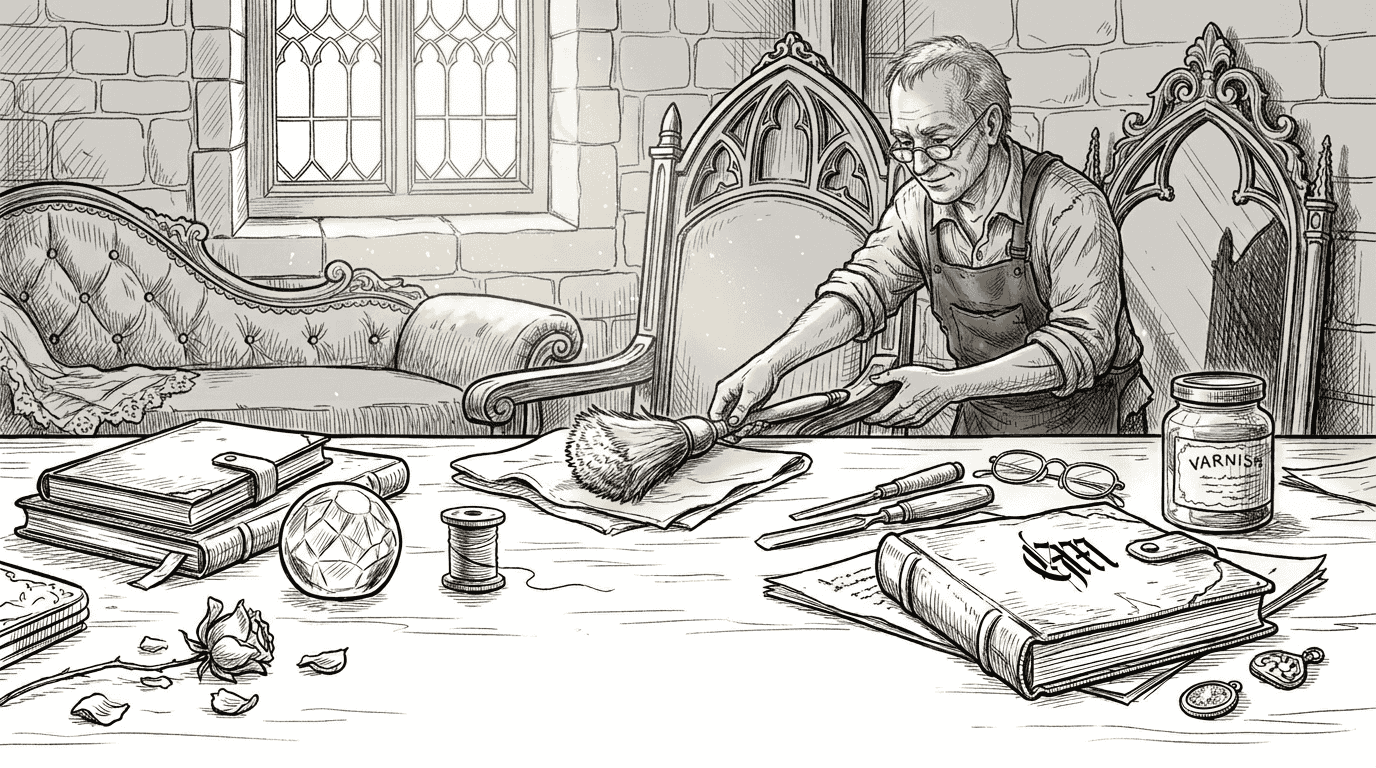
Layered lighting with candlelight, chandeliers, and sconces enhances the gothic mood more than any other element. Overhead ambient lighting should be dimmable. Add accent lighting through wall sconces, table lamps with dark shades, and candelabras to create pools of light and shadow. This layering mimics how historical spaces were illuminated before electricity, producing atmosphere impossible with single overhead fixtures.
Pro Tip: Mix textures and materials within each room to avoid flatness. Pair smooth leather with rough linen, glossy metals with matte wood, creating visual complexity that feels intentionally curated rather than matched.
Similar principles apply when building a gothic style wardrobe, where texture mixing and intentional curation matter as much as color choice.
Gothic decor styles and substyles
Gothic home decor isn’t monolithic. Three major substyles offer distinct interpretations, each appealing to different tastes and living situations.
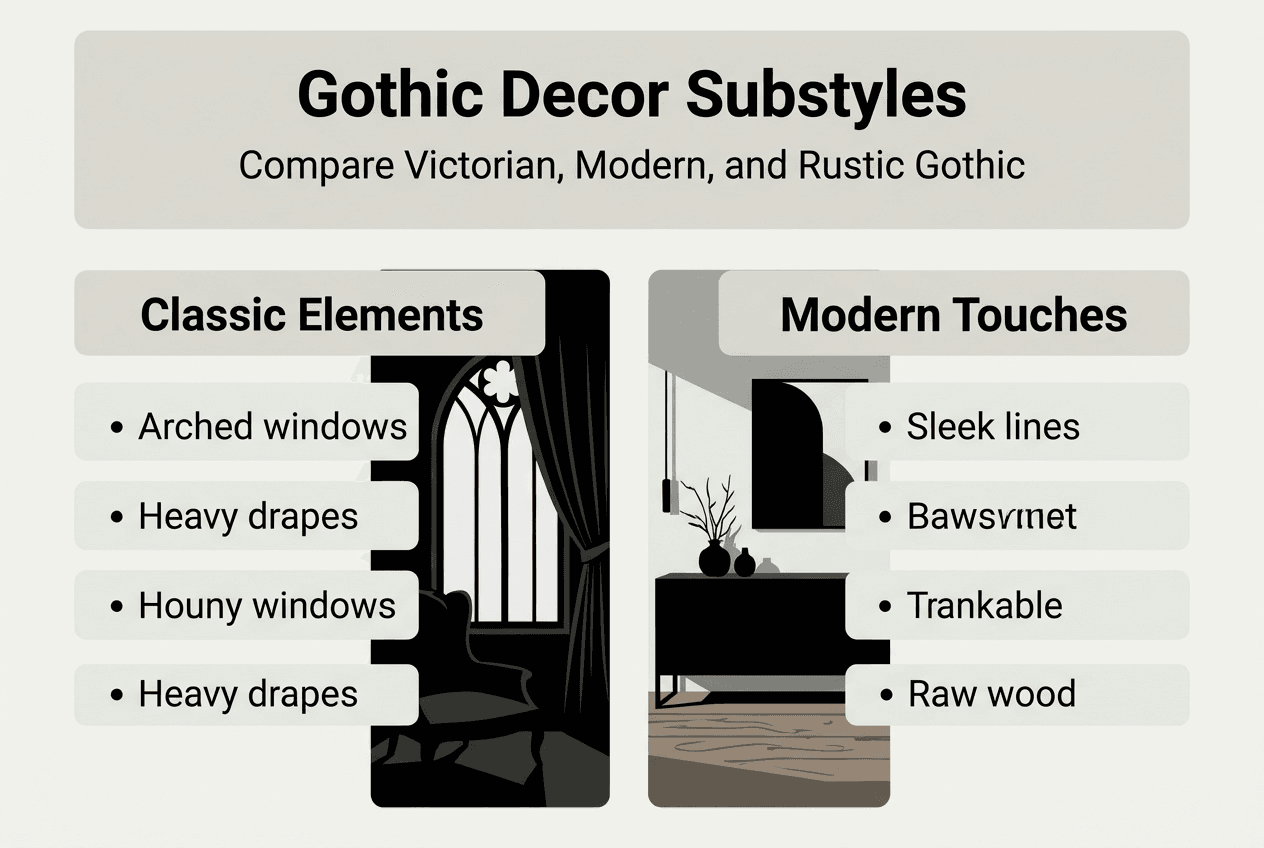
Victorian gothic uses ornate woodwork and heavy draperies with rich palettes. This traditional approach embraces maximalism: layered textiles, abundant decorative objects, carved furniture, and romantic darkness. Think parlors filled with tasseled curtains, oriental rugs, oil paintings in gilded frames, and clusters of candelabras. Victorian gothic suits those who love historical authenticity and don’t mind visual complexity.
Modern gothic strips away ornamentation while keeping the dark, dramatic core. This minimalist interpretation with dark tones features clean lines, monochromatic palettes, and carefully selected statement pieces. A modern gothic room might have black walls, a sleek leather sofa, one dramatic chandelier, and little else. The style suits contemporary homes and appeals to those wanting gothic mood without historical references.
Rustic gothic blends natural materials with gothic motifs, incorporating raw wood, exposed stone, and organic textures. Imagine a cabin interior with dark wood beams, a stone fireplace, wrought iron fixtures, and medieval-inspired textiles. This substyle works well in rural settings or homes with architectural features like exposed brick or timber frames. It creates gothic atmosphere while maintaining warmth and organic connection.
| Style | Key Traits | Color Palette | Furniture |
|---|---|---|---|
| Victorian Gothic | Ornate, layered, romantic | Deep reds, purples, golds | Carved wood, tufted velvet, antiques |
| Modern Gothic | Minimalist, sleek, dramatic | Black, charcoal, metallic | Clean lines, leather, statement pieces |
| Rustic Gothic | Natural, textured, organic | Browns, blacks, earth tones | Raw wood, wrought iron, stone |
Choosing your substyle depends on personal preference and space constraints. Victorian gothic requires more square footage to avoid feeling cramped. Modern gothic adapts easily to apartments and small homes. Rustic gothic needs appropriate architectural bones or significant renovation.
These gothic subculture styles parallel fashion movements, where different interpretations serve different lifestyles while sharing core aesthetic values.
Common misconceptions about gothic home decor
Several persistent myths prevent people from attempting gothic interiors or lead them toward inauthentic results. Let’s clear these up.
Myth one: Gothic means painting everything black and cramming rooms with dark furniture. Reality: Authentic gothic interiors use darkness strategically, often incorporating lighter accents, metallic highlights, and breathing room between pieces. A minimalist gothic room might have white walls with black trim, a single statement chandelier, and carefully curated dark furniture. Balance matters more than saturation.
Myth two: Gothic decor must be spooky, creepy, or Halloween-themed. Reality: While some gothic enthusiasts enjoy horror elements, the core style focuses on elegant darkness and historical romance rather than fright. Medieval cathedrals feel reverent and beautiful, not scary. Victorian gothic parlors evoked mystery and sophistication, not haunted houses. Conflating gothic with horror cheapens the aesthetic and limits its sophisticated potential.
Myth three: You must fill every surface with gothic accessories, skulls, candles, and dark objects. Reality: Intentional curation creates stronger impact than overwhelming abundance. A single ornate mirror makes a statement. Three clustered candelabras create atmosphere. Dozens of random gothic trinkets create clutter that dilutes visual impact. Quality and placement trump quantity.
Pro Tip: Balance dark elements with light or metallic contrast to avoid gloomy spaces. Use mirrors, metallic accents, and strategic lighting to reflect light and prevent oppressive darkness. Even deeply gothic rooms need luminosity.
Authentic gothic decor requires restraint and intentionality. It’s architectural and deliberate, not random accumulation of dark objects. Understanding this distinction separates enthusiasts who create beautiful gothic spaces from those who end up with cluttered approximations.
Practical styling guidelines for your gothic home
Ready to apply what you’ve learned? Follow this systematic approach to create an authentic gothic interior that reflects your personal style.
-
Define your gothic style vision first. Decide which substyle resonates: Victorian ornate, modern minimalist, or rustic natural. This choice guides every subsequent decision about color, furniture, and accessories. Create a mood board with reference images showing your preferred interpretation.
-
Choose cohesive dark and metallic color palettes. Select two to three primary dark colors (black, deep purple, burgundy, forest green) plus one metallic accent (gold, silver, bronze). Apply darker colors to walls or large furniture pieces. Use metallics in fixtures, frames, and decorative objects. Consistency creates sophistication.
-
Layer textures like velvet, lace, and brocade strategically. Don’t use every texture in every room. Choose two to three textural elements per space and repeat them. A living room might feature velvet sofas, lace curtains, and leather accent chairs. This repetition creates cohesion while maintaining tactile interest.
-
Select signature gothic furniture. Prioritize a few statement pieces: a high-backed chair, tufted sofa, ornate mirror, or carved wooden table. These anchor the room and establish gothic character. Fill remaining needs with simpler supporting pieces that don’t compete visually.
-
Use atmospheric lighting thoughtfully. Install dimmers on overhead fixtures. Add three to four light sources per room at different heights: a chandelier or pendant light, wall sconces, table lamps, and candles. This layering creates gothic mood through lighting that mimics pre-electric ambiance.
-
Add carefully curated gothic accessories and art. Choose items that enhance rather than overwhelm: a ornate clock, framed dark artwork, decorative candelabras, or antique books. Arrange accessories in intentional groupings rather than scattering them randomly. Leave empty space to let key pieces breathe.
For small spaces, focus on vertical elements like tall mirrors and wall sconces that draw the eye upward. Use darker colors on accent walls rather than all surfaces. Choose furniture with exposed legs to maintain visual lightness. One dramatic piece beats multiple medium-impact items.
Living rooms benefit from centering design around a focal point: a fireplace, large mirror, or statement sofa. Arrange seating to create intimate conversation areas. Use floor-length curtains to add height and drama. Layer lighting so you can adjust ambiance for different occasions.
This practical styling approach applies gothic principles systematically rather than randomly, ensuring cohesive results. Similar strategies work for developing a gothic wardrobe: intentional curation beats random accumulation.
Consider how art functions in gothic style when selecting wall decor. Gothic art often features religious iconography, nature motifs, portraiture, or abstract darkness that reinforces atmospheric mood.
Discover gothic-inspired accessories to enhance your home
Your gothic sanctuary deserves personal touches that extend the aesthetic beyond furniture and paint. Gothic-inspired accessories let you express your style through smaller, curated elements that complement your interior design.

GothMarket offers carefully curated collections of gothic jewelry, accessories, and decorative items that pair beautifully with gothic home decor. A celestial chain choker with moon pendant displayed on a vanity or mannequin becomes sculptural decor. A silver tone dark aesthetic ring set arranged in an ornate dish creates a vignette on a side table.
Explore the full gothic jewelry collection for pieces that blur the line between personal adornment and decorative art. These accessories connect your interior aesthetic with your personal style, creating continuity between environment and self-expression. Gothic decor extends beyond walls and furniture into the objects you choose to surround yourself with daily.
Frequently asked questions
What key furniture defines gothic home decor?
High-backed chairs reminiscent of thrones, deeply tufted sofas with carved wooden frames, ornate mirrors featuring gothic arches, and heavy wooden tables with decorative legs form the furniture foundation. These pieces reference medieval and Victorian design periods that inspired gothic interiors. Choose furniture with vertical emphasis, ornate detailing, and substantial visual weight.
How can I incorporate gothic style in small spaces?
Focus on vertical elements like tall mirrors and wall-mounted lighting to create height without consuming floor space. Use darker colors on single accent walls rather than entire rooms. Select furniture with exposed legs to maintain visual openness. One dramatic statement piece like an ornate mirror or chandelier establishes gothic character more effectively than multiple smaller items in tight quarters.
Is gothic decor always dark and intimidating?
No, authentic gothic decor emphasizes elegant darkness balanced with light, metallic accents, and breathing room. The style creates sophisticated, moody atmospheres rather than oppressive gloom. Strategic lighting, mirrors, and metallic elements reflect light and prevent spaces from feeling cave-like. Gothic interiors should feel dramatic and romantic, not depressing or scary.
What’s the difference between gothic home decor and gothic fashion?
Gothic home decor translates architectural and design history into residential spaces through furniture, color, and atmosphere. Gothic fashion expresses similar aesthetic values through clothing, focusing on silhouette, fabric, and personal adornment. Both share core principles like dark palettes, rich textures, and historical references, but apply them to different contexts: environment versus body.
How to balance gothic elements with livability?
Prioritize comfort alongside aesthetics by choosing furniture that looks dramatic but remains functional for daily use. Incorporate adequate lighting with dimmers so you can adjust brightness for practical tasks. Leave sufficient open floor space for movement. Select durable, cleanable fabrics for high-use items. Gothic style shouldn’t sacrifice practicality but rather enhance everyday living with beautiful atmosphere.