

Guide to gothic wall art: decorate with dark elegance
Choosing gothic wall art that truly embodies dark aesthetics and mystical themes can feel overwhelming. With countless styles ranging from Victorian ornate to modern surrealism, collectors often struggle to identify pieces that resonate with their alternative lifestyle while maintaining authenticity. This guide walks you through understanding gothic art styles, preparing your space with proper measurements and color palettes, executing effective hanging techniques, and verifying authenticity to avoid common pitfalls. Whether you’re drawn to derelict romanticism or whimsical dark botanicals, you’ll learn how to curate and display wall art that transforms your space into a sanctuary of dark elegance.
Table of Contents
- Key takeaways
- Understanding gothic wall art styles
- Preparing your space for gothic wall art display
- How to hang gothic wall art effectively
- Authenticating gothic wall art and avoiding common pitfalls
- Explore gothic accessories to complement your wall art
- What is gothic wall art?
Key Takeaways
| Point | Details |
|---|---|
| Gothic style variety | Understanding historical versus modern gothic substyles helps you pick pieces that fit your space and mood. |
| Hanging for impact | Position the focal pieces off center on the wall and maintain 2 to 3 inch gaps to maximize Gothic impact. |
| Color palette guidance | Choose dark hues with metallic contrasts to enhance drama and cohesion in the display. |
| Authentication matters | Verifying pieces helps protect collectors from fakes and preserves value over time. |
Understanding gothic wall art styles
Gothic wall art draws from a rich tradition spanning centuries, offering collectors diverse aesthetic choices. Historical gothic wall art originated in 12th-16th century European architecture, featuring pointed arches, ribbed vaults, and intricate stained glass motifs. These elements translate beautifully to wall pieces showcasing cathedral windows, gargoyles, and elaborate stonework patterns. The architectural precision and religious symbolism create a sense of grandeur that appeals to collectors seeking classical dark elegance.
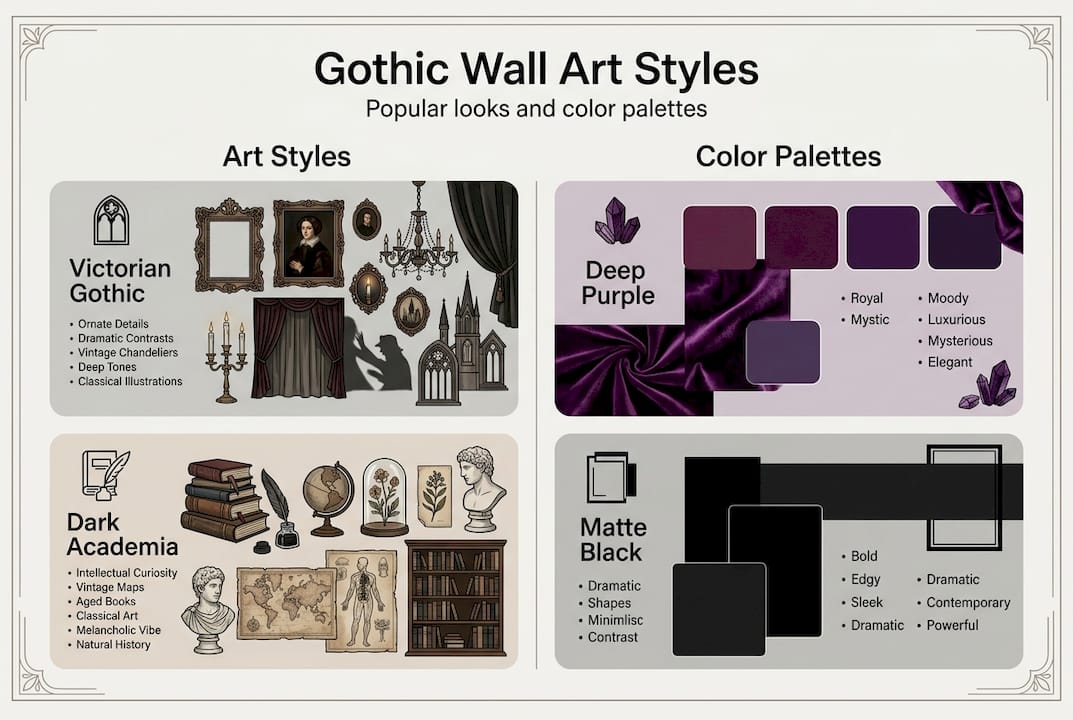
Victorian Gothic emerged during the 19th century, blending ornate decorative details with supernatural and macabre themes. This style emphasizes elaborate frames, portraiture with haunting expressions, and imagery featuring ravens, skulls, and moonlit landscapes. The role of art in gothic style became particularly pronounced during this era, as artists explored death, spirituality, and the occult through their work. Victorian Gothic pieces often incorporate rich textures and dramatic contrasts that make them focal points in any room.
Modern Gothic and its substyles offer contemporary interpretations of dark aesthetics. Key styles include Victorian Gothic, Modern Gothic, Dark Academia, and Whimsigoth, each bringing unique visual elements to your walls. Modern Gothic highlights derelict spaces, urban decay, and surrealism, creating an edgy atmosphere that resonates with alternative lifestyles. Dark Academia focuses on scholarly imagery, vintage books, classical statues, and muted earth tones that evoke intellectual mystique. Whimsigoth blends dark botanicals with fairy tale elements, featuring mushrooms, moths, and enchanted forest scenes that appeal to those seeking a softer gothic aesthetic.
When selecting your style, consider these defining characteristics:
- Historical Gothic: Architectural elements, religious iconography, stained glass patterns
- Victorian Gothic: Ornate frames, supernatural themes, portraiture with dark romanticism
- Modern Gothic: Derelict spaces, surrealism, urban decay aesthetics
- Dark Academia: Scholarly imagery, vintage aesthetics, classical references
- Whimsigoth: Dark botanicals, fairy tale elements, mystical nature scenes
Preparing your space for gothic wall art display
Successful gothic wall art display begins with thoughtful space planning. Start by identifying your focal wall, preferably one visible from the room’s entrance. Victorian Gothic aesthetics favor asymmetrical arrangements, so position your largest or most dramatic piece slightly off-center rather than perfectly centered. This creates visual interest and honors the historical preference for organic, unbalanced compositions that feel more authentic to the gothic tradition.
Measurements matter significantly when planning your layout. Use a wall sizing formula of wall height multiplied by 0.6-0.75 to determine appropriate art dimensions, and maintain 2-3 inch spacing between frames. Hang artwork at eye level, typically 57-60 inches from the floor to the piece’s center. For gallery walls featuring multiple pieces, map out your arrangement on the floor first, then transfer measurements to the wall using painter’s tape to visualize placement before making any holes.
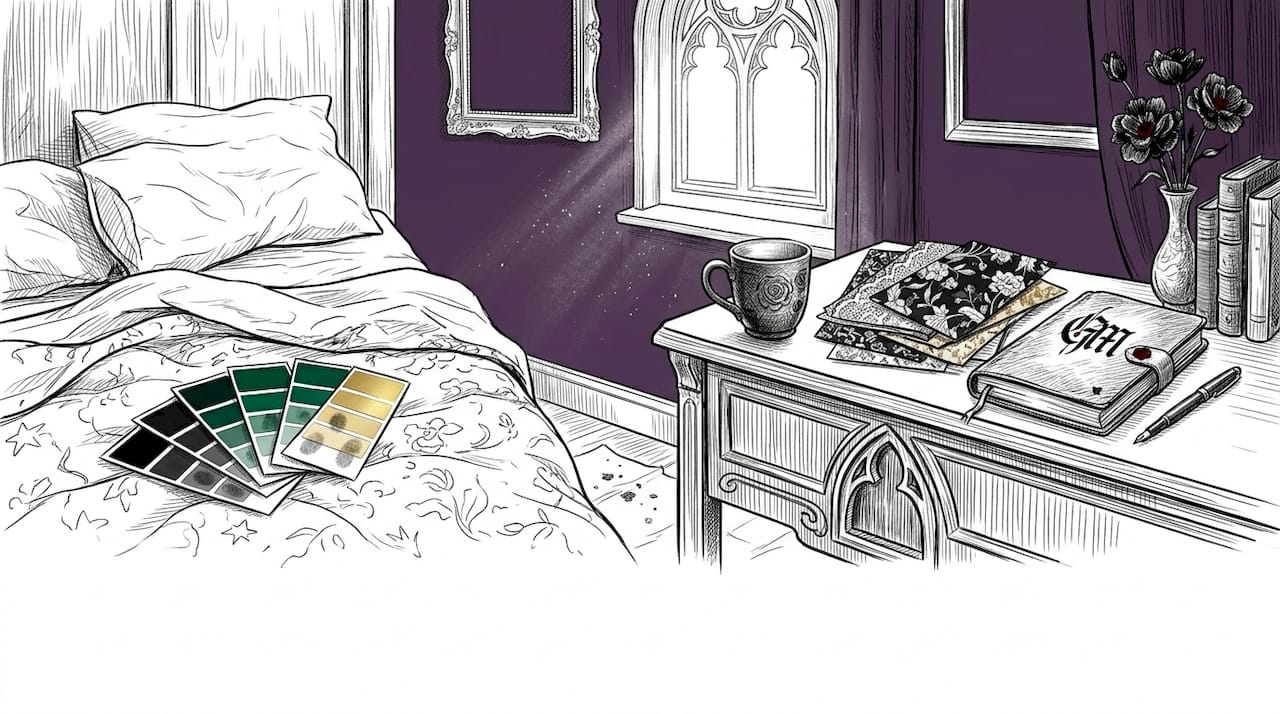
Color palettes form the foundation of gothic atmosphere. Deep purples evoke mystery and royalty, blacks create dramatic contrast, and dark greens suggest natural decay and forest mysticism. Metallic accents in gold or silver add dimension and reflect light, preventing your space from feeling too heavy. The gothic home decor guide emphasizes balancing dark walls with strategic metallic highlights to maintain visual interest. Consider painting one accent wall in charcoal or deep plum to make your art pop, while keeping other walls slightly lighter to avoid overwhelming the space.
Lighting transforms how gothic wall art appears and feels. Layer three types of lighting for optimal effect: ambient lighting provides overall illumination, task lighting focuses on specific areas, and accent lighting highlights individual artworks. Install picture lights above frames or use adjustable track lighting to direct beams at precise angles. Dimmer switches allow you to control mood and intensity, essential for creating the atmospheric quality that defines gothic spaces. Warm-toned bulbs work better than cool white, as they enhance the rich colors in gothic artwork without washing them out.
Pro Tip: Before hanging anything permanently, use a measuring tape and painter’s tape to outline your planned arrangement directly on the wall. Step back and observe from different angles throughout the day to see how natural light affects the display. This simple visualization technique prevents costly mistakes and ensures your gothic wall art achieves maximum dramatic impact. Following tips for gothic style helps maintain consistency across your entire aesthetic.
How to hang gothic wall art effectively
Executing your gothic wall art display requires a systematic approach that combines precision with aesthetic judgment. Follow these steps to achieve professional results that honor the dark elegance of your chosen pieces.
-
Measure and plan your layout with asymmetrical balance in mind. Arrange larger pieces as anchors, then build around them with smaller complementary works. Victorian Gothic favors organic groupings rather than rigid grids, so allow pieces to relate to each other through visual weight rather than perfect alignment.
-
Mark eye-level center points on your wall using a pencil and level. For a single statement piece, measure 57-60 inches from the floor to where the artwork’s center should sit. For gallery walls, establish your central piece first, then work outward maintaining consistent spacing.
-
Hang frames while maintaining 2-3 inch spacing between each piece. Use appropriate hardware for your wall type: standard picture hangers for drywall, anchors for plaster, or masonry hooks for brick or concrete. Check level frequently as you work to ensure frames don’t tilt, which disrupts the carefully planned visual flow.
-
Layer your lighting according to the three-tier system. Install ambient lighting first to establish baseline illumination, add task lighting near seating areas, then finish with accent lights directed at your artwork. Adjust angles so light hits frames without creating glare on glass surfaces.
Pro Tip: When hanging multiple pieces, work from the center outward rather than left to right. This approach maintains balance as you build your display and makes it easier to adjust spacing if needed. The gothic art curation guide offers additional insights on creating cohesive collections.
Different hanging approaches suit different gothic aesthetics:
| Approach | Best For | Key Features | Visual Effect |
|---|---|---|---|
| Victorian Asymmetry | Historical and Victorian Gothic pieces | Off-center focal points, organic groupings, varied frame sizes | Creates dramatic, romantic atmosphere with authentic period feel |
| Modern Symmetry | Contemporary Gothic and Dark Academia | Grid layouts, consistent spacing, uniform frame styles | Delivers clean, organized aesthetic with scholarly precision |
Authenticating gothic wall art and avoiding common pitfalls
Authenticating historical gothic pieces protects your investment and ensures you own genuine artifacts. Authentication involves checking watermarks, ink corrosion, paper texture, and provenance, with each element providing clues about a piece’s age and origin. Watermarks appear when holding paper to light and should match the claimed period. Iron-gall ink, common in historical drawings, shows characteristic brown corrosion halos around lines. Paper texture varies by era, with handmade papers displaying irregular edges and visible chain lines from manufacturing.
Advanced authentication uses scientific methods for high-value pieces. Multispectral imaging reveals underdrawings, alterations, and pigment compositions invisible to the naked eye. Portable X-ray fluorescence (pXRF) identifies elemental composition of inks and paints, confirming whether materials match the claimed period. These technologies have become increasingly accessible, with some authentication services offering remote analysis from submitted photographs.
Red flags signal potential forgeries or misattributed works:
- Modern pigments appearing in supposedly historical pieces
- Watermarks inconsistent with the claimed creation date
- Suspiciously pristine condition for the stated age
- Missing or vague provenance documentation
- Prices significantly below market value for similar authenticated works
Common display mistakes diminish gothic wall art’s impact. Overcrowding, poor lighting, and inconsistent hanging heights reduce visual effectiveness and make individual pieces compete rather than complement each other. Avoid hanging too many small pieces in one area, which creates visual clutter and prevents any single work from commanding attention. Maintain consistent heights across your display, as pieces hung at varying levels appear haphazard rather than intentionally curated.
Lighting failures represent another frequent pitfall. Insufficient illumination causes dark artwork to disappear into shadows, negating the careful composition and detail that make gothic pieces compelling. Conversely, harsh overhead lighting creates glare and washes out subtle color variations. The solution lies in layered lighting that provides both ambient illumination and focused accent lighting, allowing you to control intensity and direction.
Layered authentication combining visual inspection, provenance research, and scientific analysis provides the most reliable verification for collectors investing in historical gothic art. Never rely on a single authentication method for valuable pieces.
The curated gothic art examples showcase properly authenticated and displayed pieces that demonstrate these principles in action, offering inspiration for your own collection.
Explore gothic accessories to complement your wall art
Your gothic wall art sets the foundation, but complementary accessories complete the aesthetic transformation. Once you’ve mastered displaying dark elegance on your walls, consider how gothic-themed jewelry and decor items enhance your overall alternative lifestyle. The same attention to detail you apply to art curation extends to personal adornment and surrounding decor.
Our gothic jewelry collection features pieces that echo the themes in your wall art, from occult symbols to Victorian-inspired designs. Wearing jewelry that reflects your aesthetic creates cohesion between your personal style and living space. For those drawn to softer gothic elements, the whimsygoth accessories collection offers mystical and nature-inspired pieces that complement botanical and fairy tale wall art themes.
Expand your dark aesthetic beyond walls with carefully selected merchandise that reinforces your gothic sanctuary. The horror merchandise collection provides conversation pieces and functional items that maintain thematic consistency throughout your space, ensuring every element contributes to the atmospheric experience you’ve created.
What is gothic wall art?
What defines gothic wall art?
Gothic wall art encompasses decor inspired by gothic architectural elements, dark romantic themes, and alternative aesthetics spanning medieval through contemporary periods. It features imagery including cathedral architecture, supernatural subjects, macabre motifs, and mystical symbolism. The style emphasizes dramatic contrast, rich textures, and atmospheric mood that appeals to collectors seeking to express alternative lifestyles through their living spaces.
What are the most popular gothic wall art styles?
Victorian Gothic leads in popularity with ornate frames and supernatural themes, followed by Dark Academia featuring scholarly imagery and vintage aesthetics. Modern Gothic attracts those seeking urban decay and surrealism, while Whimsigoth appeals to collectors preferring dark botanicals and fairy tale elements. Each style offers distinct visual characteristics that suit different spaces and personal preferences within the broader gothic aesthetic.
How do I style gothic wall art in my home?
Style gothic wall art using dark color palettes featuring deep purples, blacks, and greens accented with metallic gold or silver highlights. Layer ambient, task, and accent lighting to prevent artwork from disappearing into shadows while maintaining atmospheric mood. Consider Victorian asymmetry when arranging multiple pieces, maintaining 2-3 inch spacing between frames and hanging at eye level for optimal visual impact.
How can I authenticate a gothic art piece?
Authenticate pieces by examining watermarks, ink corrosion patterns, paper texture, and provenance documentation. Historical pieces should show iron-gall ink corrosion and period-appropriate watermarks visible when backlit. For valuable works, employ multispectral imaging or portable X-ray fluorescence to verify pigment composition matches the claimed era. The gothic art curation guide provides additional authentication resources for serious collectors.
What are common mistakes to avoid when displaying gothic wall art?
Avoid overcrowding walls, using inconsistent hanging heights, and providing inadequate lighting. These mistakes create visual clutter and diminish individual pieces’ impact. Maintain 2-3 inch spacing between frames, hang at consistent eye-level heights, and layer lighting to ensure dark artwork remains visible. Never rely solely on overhead lighting, as it creates glare and washes out the rich colors essential to gothic aesthetics.
Recommended
- What is gothic home decor? A 2026 guide to dark elegance – GothMarket
- Role of Art in Gothic Style – Inspiring Modern Dark Aesthetics – GothMarket
- Guide to Gothic Art Curation for Collectors and Creators – GothMarket
- Goth Home Decor: Expressing Identity Through Dark Style – GothMarket
- Arts & Crafts Wall Art & Decorative Objects: Handcrafted Beauty