

Horror aesthetics explained: Art, fashion, and dark appeal
TL;DR:
- Horror aesthetics create a layered visual system that evokes both fear and fascination.
- It is rooted in historical influences like Gothic literature, Expressionism, and subcultures.
- The aesthetic fosters emotional engagement as a rebellious, philosophical stance acknowledging mortality.
There is something deeply human about being drawn to what unsettles us. Horror aesthetics tap into that pull, creating a visual language built not on fear alone but on the tension between beauty and dread. Whether you find yourself reaching for a skull ring, hanging dark art on your walls, or obsessing over the shadowed cinematography of a cult horror film, you are participating in a rich tradition that spans centuries. This article breaks down what horror aesthetics actually are, where they come from, how they work in film and art, and why they continue to shape gothic fashion, collecting, and alternative lifestyles in ways that go far beyond shock value.
Table of Contents
- Understanding horror aesthetics: Key elements and origins
- Visual mechanics: How horror films and art build atmosphere
- The fashion of fear: Gothic and horror style motifs
- Macabre collecting and alternative lifestyles: Art, jewelry, and interiors
- Why horror aesthetics matter: Beyond fear and into fascination
- Find your horror aesthetic essentials
- Frequently asked questions
Key Takeaways
| Point | Details |
|---|---|
| Core elements defined | Horror aesthetics mix visual style, symbolism, and atmosphere to create emotional impact beyond simple fear. |
| Fashion meets horror | Dark palettes and occult motifs transform horror aesthetics into wearable gothic and alternative fashion trends. |
| Atmosphere in media | Horror films and art use lighting, sound, and editing to build tension and immerse viewers in the macabre. |
| Macabre collecting | Victorian jewelry, taxidermy, and decor express gothic identity through beauty, symbolism, and memento mori. |
| More than shock | Horror aesthetics offer catharsis, personal expression, and fascination with the dark, not just fear. |
Understanding horror aesthetics: Key elements and origins
Horror aesthetics is not a single look or mood. It is a layered system of visual signals, emotional triggers, and cultural references that work together to evoke dread, awe, and fascination simultaneously. According to Horror Film Aesthetics by Thomas Fahy, core horror film elements refer to the visual, stylistic, and sensory elements used in horror media, fashion, and art to evoke fear, dread, unease, and fascination with the macabre.
The origins run deep. Gothic literature in the 18th and 19th centuries, from Mary Shelley’s Frankenstein to the brooding poems of Edgar Allan Poe, established many of the symbolic building blocks still in use today: crumbling architecture, decay, obsessive love, and the beauty found in dying things. Early horror cinema borrowed heavily from German Expressionism in the 1920s, using distorted sets and theatrical shadows to externalize psychological terror. From there, horror aesthetics branched into subcultures spanning punk, deathrock, and eventually the sprawling gothic and alternative communities we recognize today.
What makes horror aesthetics genuinely fascinating rather than simply disturbing is the push and pull at its core.
“The horror aesthetic is not about revulsion for its own sake. It is about confronting the unsettling, finding beauty in darkness, and processing the fears that ordinary culture refuses to acknowledge.”
This attraction versus repulsion dynamic is what separates horror aesthetics from generic dark imagery. It demands emotional engagement, not passive consumption. You can see this at work in gothic decor and elegance, where skull motifs coexist with lush velvet drapes and candelabras.
Key stylistic features of horror aesthetics include:
- Dark palettes: Black, deep crimson, charcoal, and muted grays dominate visual compositions
- Symbolic motifs: Skulls, ravens, pentagrams, moons, thorns, and decay imagery carry layered meanings
- Distortion: Exaggerated proportions, asymmetry, and uncanny figures create psychological unease
- Atmosphere: Fog, shadow, negative space, and deliberate emptiness signal threat and mystery
- Texture contrast: Rough rot against smooth bone, soft lace against cold metal
Pro Tip: Train your eye to spot subtle horror cues in everyday design. A storefront using deep shadows, asymmetrical typography, and muted tones is borrowing from horror aesthetics whether it knows it or not.
With the basics of horror aesthetics introduced, let’s break down how these concepts extend into visual media and daily life.
Visual mechanics: How horror films and art build atmosphere
Horror does not rely on monsters alone to create its effect. The real craft lies in how directors, cinematographers, and artists manipulate the viewer’s perception before anything frightening appears on screen.
Key mechanics in horror film aesthetics include mise-en-scène (props and sets evoking decay or threat), lighting (chiaroscuro shadows for suspense), framing (canted angles for disorientation), editing (jump cuts for shocks), and sound (dissonant scores and sudden noises). Each of these tools is a vocabulary word in the language of dread.
Chiaroscuro lighting, borrowed from Baroque painting, uses extreme contrast between light and shadow to suggest hidden threats. A character lit from below looks monstrous. An empty hallway lit from a single source at the end creates existential dread. These are not accidents. They are deliberate choices that horror filmmakers have refined for over a century.
Research on visual excess in genre filmmaking shows that empty shots appear more frequently in horror films compared to action genres as a deliberate suspense strategy. An empty room is terrifying because your brain fills the void. Action films rely on motion and stimulus. Horror films weaponize stillness.
| Technique | Horror films | Action films |
|---|---|---|
| Lighting | Chiaroscuro, deep shadow | Bright, high-key |
| Color palette | Desaturated, cool or blood-red | Saturated, warm |
| Camera angles | Canted, low-angle, obscured | Dynamic, tracking |
| Empty shots | Frequent, deliberate | Rare |
| Sound design | Dissonant, sparse silence | Energetic scores |
When it comes to horror-inspired art, the same principles apply. Artists working in this space often use mixed textures, found objects, and raw materials like bone, rust, or resin to evoke organic decay. The subject matter ranges from portraits with uncanny expressions to still-life arrangements with symbolic death imagery.
Here is how you can bring horror atmosphere into your own space through art and furniture choices:
- Start with a single dark anchor piece, such as a large framed print in your signature horror palette
- Layer shadow through strategic lighting: use low-wattage amber bulbs and avoid overhead light
- Introduce asymmetry in object arrangement to create subtle unease
- Use textural contrast, placing smooth ceramics next to weathered wood or aged metal
- Add atmospheric detail like dried botanicals, dark glass vessels, or mirrored surfaces in unexpected places
For further inspiration on decorating gothic interiors and building atmosphere across rooms, a layered approach always beats a single dramatic statement. Browse curated ideas for goth home decor to see how these film techniques translate beautifully into residential spaces.
The fashion of fear: Gothic and horror style motifs
From haunting visuals to wearable style, horror aesthetics continue to influence personal expression and identity.
Gothic and horror fashion is not costume. It is a coherent visual language with a traceable history and precise grammar. Dark fashion trends show that horror-influenced aesthetics feature black-dominant palettes, velvet, lace, and leather textures, exaggerated silhouettes, and occult symbols, drawing directly from Victorian mourning traditions, punk rebellion, and horror cinema.
Victorian mourning culture contributed heavily to the visual vocabulary. Black crepe dresses, jet jewelry, and structured silhouettes were codified expressions of grief that have since been reclaimed as aesthetic power. Punk added the confrontational edge: studs, torn fabric, and anti-establishment symbolism. Horror films contributed the imagery directly, from the corsets of Gothic romance to the torn clothing of supernatural horror.
| Element | Horror fashion | Gothic fashion |
|---|---|---|
| Primary palette | Black, blood red, bone white | Black, purple, dark green |
| Key textures | Latex, torn fabric, faux blood | Velvet, lace, brocade |
| Core motifs | Skulls, monsters, wounds | Coffins, crosses, moons |
| Silhouette | Distorted, asymmetric | Structured, dramatic |
| Cultural roots | Horror cinema, splatterpunk | Victorian, Romantic, deathrock |
Understanding key features of goth clothing helps you distinguish between these overlapping but distinct aesthetics. Both value darkness, but horror fashion leans toward visceral impact while gothic fashion favors architectural drama.
Must-have motifs and fabrics for horror-inspired style:
- Fabrics: Black velvet, distressed leather, sheer lace, matte jersey
- Motifs: Skulls, anatomical hearts, moths, pentagrams, barbed wire
- Accessories: Coffin-shaped bags, bone pendants, claw rings, spiked chokers
- Color accents: Deep oxblood, cemetery gray, ash white
Pro Tip: If you want to signal horror aesthetics without going full costume, focus on a single strong accessory. A bone-carved pendant or asymmetric ring does more work than a head-to-toe look. Check out gothic fashion styling for guidance on building looks that feel intentional, plus a fashion checklist for horror style to audit your wardrobe. Also, black wardrobe tips can help you build a solid base from which everything else layers cleanly.
Macabre collecting and alternative lifestyles: Art, jewelry, and interiors
Recognizing these motifs in fashion and media, collectors and creatives bring horror aesthetics into their homes and communities.
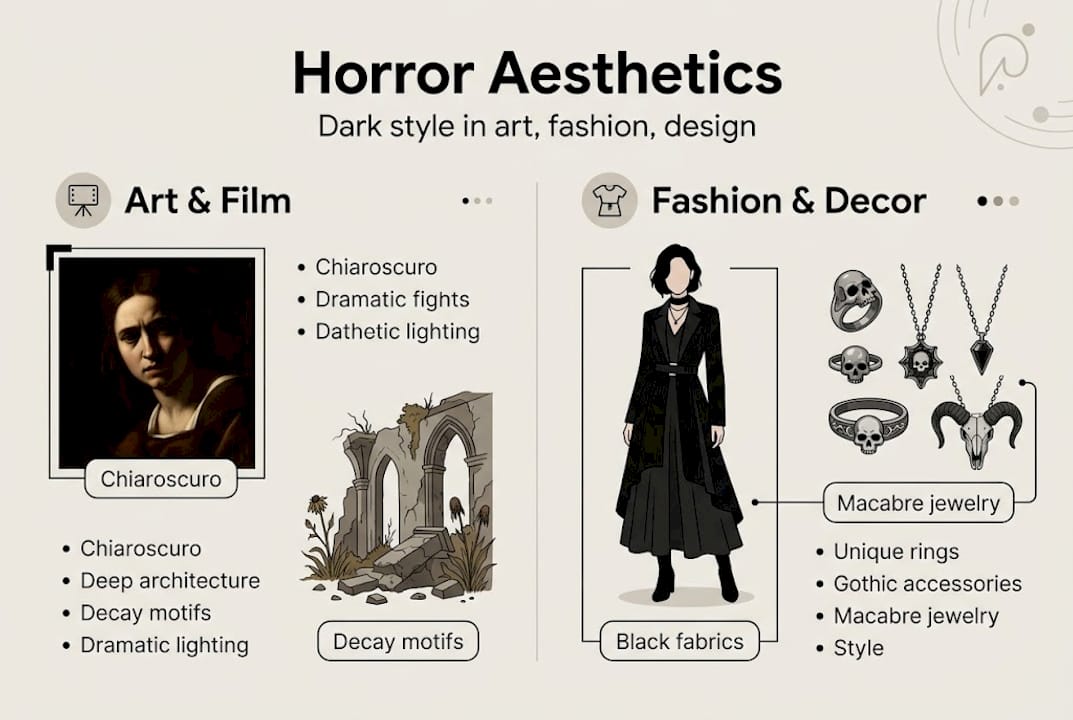
Collecting within horror aesthetics is a practice with serious historical roots. As noted by Antique Trader, Victorian taxidermy and mourning jewelry, along with cabinets of curiosities, embody the memento mori tradition, blending beauty with death for gothic interiors and alternative lifestyles. Memento mori, literally “remember you will die,” was not morbid in a nihilistic sense. It was a philosophical stance that made death visible in order to celebrate living more fully.
Today’s collectors who curate horror-informed spaces follow that same impulse. A Victorian mourning locket, a preserved insect under glass, or a hand-cast skull sculpture all serve as physical reminders of the impermanence that gothic culture refuses to look away from.
“A gothic interior is not a house dressed for Halloween. It is a home that acknowledges death as part of life, arranging beauty and darkness in honest conversation with each other.”
Common elements in horror-inspired decor and jewelry include:
- Taxidermy and bone art: Preserved specimens, antler displays, and ethically sourced bone sculptures
- Occult objects: Antique tarot decks, apothecary bottles, ritual candle holders
- Macabre jewelry: Gothic jewelry featuring coffins, skulls, ravens, and memento mori engravings
- Dark ceramics: Skull planters, black glaze pottery, and bone-shaped vessels
- Curiosity displays: Shadow boxes containing dried flora, insect specimens, and antique finds
The personal nature of horror aesthetic collecting is what separates it from simply buying dark-colored furniture. Each object carries symbolic weight. Explore gothic accessories as a starting point for jewelry and wearable collecting that signals your deeper aesthetic commitments.
Why horror aesthetics matter: Beyond fear and into fascination
Here is what most trend pieces about dark aesthetics consistently get wrong: they treat horror as a visual preference rather than a philosophical position.
The people who live within horror aesthetics year-round are not doing so because black is fashionable. They are doing so because horror aesthetics provide something that mainstream culture actively denies: a space to confront mortality, grief, and the uncanny without euphemism. As explored in discussions around horror fiction’s psychological appeal, some see horror aesthetics as offering cathartic pleasure through the interplay of ugliness and beauty, while others critique how mainstream adoption dilutes subcultural rebellion.
Both are right. Catharsis is real. When you wear a skull or hang death imagery on your wall, you are not celebrating death. You are refusing to pretend it does not exist. That refusal is quietly radical in a culture that hides death behind euphemism and sanitized grief.
But the critique is also valid. As horror goes mainstream and gets absorbed into fast fashion and generic “dark” home goods, the community meanings that gave it depth can hollow out. Keeping up with modern goth trends means staying connected to the subculture’s ongoing conversation, not just its surface visuals.
What most articles miss about horror aesthetics:
- It is an identity framework, not just a visual preference
- The cathartic function is psychologically legitimate and well-documented
- Rebellion against sanitized mainstream culture is embedded in the aesthetic’s DNA
- The lifestyle connection, including community, ritual, and philosophy, is inseparable from the look
That is the depth worth protecting when you engage with these aesthetics intentionally.
Find your horror aesthetic essentials
Ready to embrace horror aesthetics more fully? Whether you are building a wardrobe that speaks the language of dark beauty or curating a collection that reflects your philosophical stance on life and death, the right pieces make all the difference.
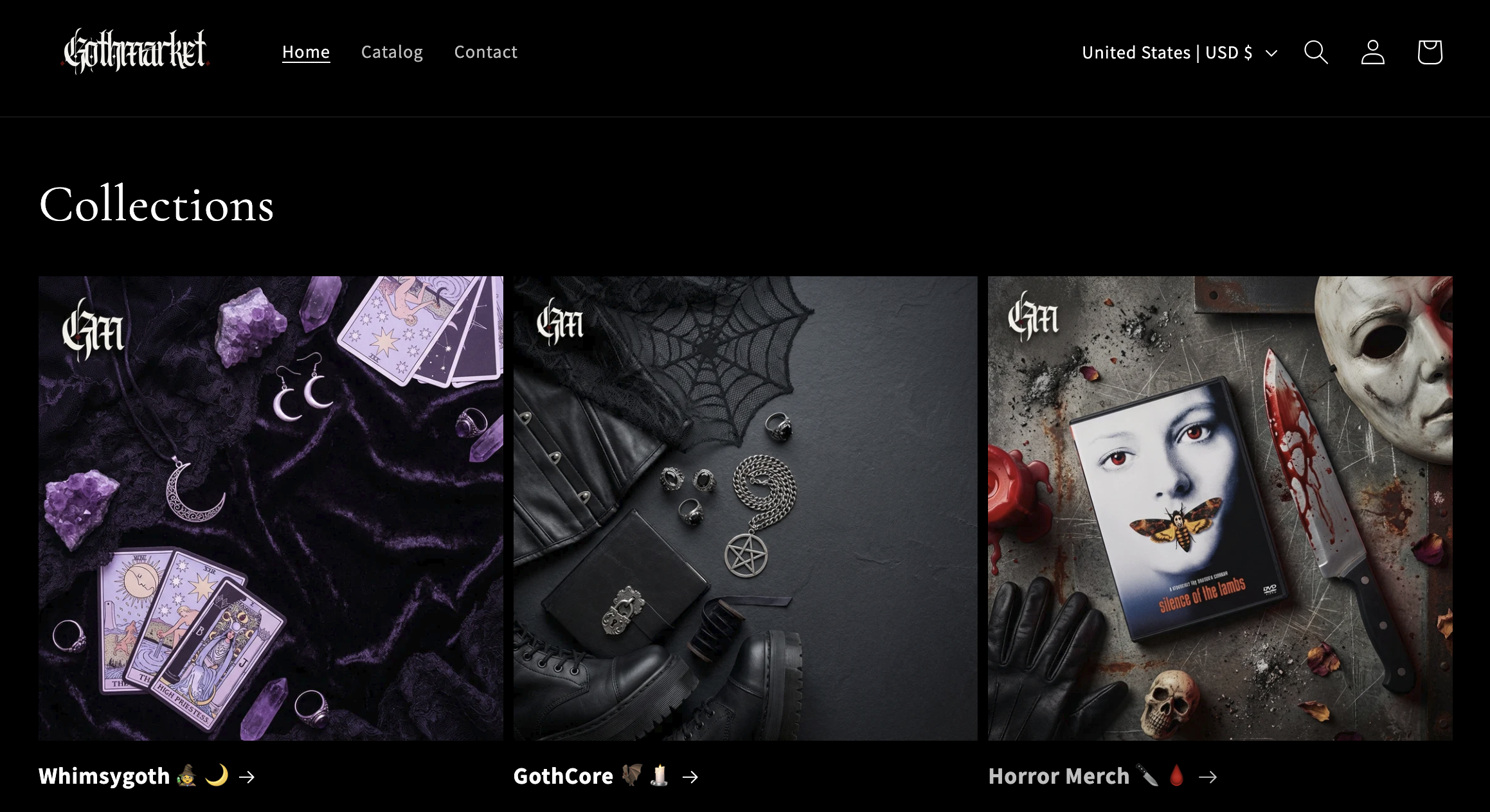
At Goth.Market, you will find curated selections from independent creators who understand these aesthetics from the inside out. Browse the gothic jewelry collection for rings, pendants, and chokers that carry real symbolic weight, or explore horror-themed merch for statement pieces that go beyond generic dark aesthetics. If you want to start somewhere specific, the moon pendant choker is a beautifully crafted piece that bridges gothic and horror sensibilities in a single wearable object.
Frequently asked questions
What are horror aesthetics?
Horror aesthetics are the visual and stylistic elements that evoke fear, awe, and fascination in horror media, fashion, and art. They operate through a deliberate interplay of darkness, symbolism, and atmosphere rather than shock alone.
How are horror aesthetics used in fashion?
Dark palettes and velvet textures, along with occult symbolism, define horror aesthetics in gothic and alternative fashion, drawing from Victorian mourning traditions, punk culture, and horror cinema.
What makes horror film aesthetics unique?
Horror films use chiaroscuro lighting and canted angles, along with dissonant sound and empty shots, to build suspense and psychological unease more intensely than any other genre.
How does horror aesthetics influence interior decor?
Gothic horror aesthetics shape decor through macabre collecting traditions including taxidermy, mourning jewelry, and memento mori motifs that create deeply personal and meaningful interiors.
Is horror aesthetics only about fear and shock?
Not at all. Horror aesthetics blend beauty and darkness to provide cathartic emotional processing, offering a philosophical confrontation with mortality and a form of personal expression that goes well beyond fear.