

What is gothic jewelry: meaning and style guide 2026
Gothic jewelry carries centuries of symbolism far deeper than most realize. Born from medieval cathedrals and Victorian mourning rituals, these pieces communicate rebellion, spirituality, and individuality through skulls, crosses, and dark gemstones. This guide unpacks gothic jewelry’s rich history, symbolic language, material craftsmanship, and diverse styles to help enthusiasts, collectors, and fashionistas understand what makes these pieces authentic expressions of dark aesthetics.
Table of Contents
- Introduction To Gothic Jewelry
- Origins And Historical Context
- Victorian Revival And Symbolism
- Symbolism And Common Motifs In Gothic Jewelry
- Materials And Craftsmanship Defining Gothic Jewelry
- Styles And Subgenres In Gothic Jewelry
- Common Misconceptions About Gothic Jewelry
- Choosing And Caring For Gothic Jewelry
- Explore Gothic Jewelry Collections At Goth.Market
- FAQ
Key takeaways
| Point | Details |
|---|---|
| Historical roots | Gothic jewelry originated in medieval Gothic architecture and Victorian mourning traditions, shaping its dark, intricate aesthetic. |
| Symbolic depth | Motifs like skulls, crosses, and bats convey meanings beyond religion, expressing mortality, rebellion, protection, and personal spirituality. |
| Material identity | Oxidized silver and dark gemstones like onyx and garnet create the signature brooding look through artisan craftsmanship. |
| Style diversity | Subgenres range from medieval ornate designs to vampire goth and fetish styles, allowing individualized expression. |
| Cultural significance | Gothic jewelry functions as subcultural identity markers for alternative communities, not mainstream fashion trends. |
Introduction to gothic jewelry
Gothic jewelry represents a distinctive style influenced by medieval Gothic art and dark thematic elements. These pieces blend historical architectural motifs with symbolic imagery to create accessories that communicate complex personal narratives.
Key characteristics define authentic gothic jewelry:
- Dark aesthetics featuring blackened metals, deep gemstone colors, and somber palettes
- Intricate details inspired by cathedral stonework, filigree, and Victorian craftsmanship
- Symbolic motifs including skulls, religious icons, occult imagery, and nature elements
- Handcrafted quality emphasizing artisan techniques over mass production
This style appeals deeply to gothic, occult, and alternative communities because it offers tangible expression of inner identity. Unlike generic dark fashion, gothic jewelry carries layered meanings that connect wearers to historical traditions and subcultural values. For many, these pieces communicate spirituality, mortality awareness, or rejection of mainstream aesthetics in ways words cannot capture. The intentional darkness reflects not nihilism but rather honest engagement with life’s shadow aspects, making gothic jewelry a philosophical statement as much as adornment.
Origins and historical context
Gothic jewelry’s visual language traces directly to medieval Europe between the 12th and 16th centuries. During this period, Gothic architecture introduced pointed arches, rib vaults, and ornate stone carvings that emphasized vertical lines and dramatic light contrasts. Cathedral builders created soaring spaces where stained glass transformed sunlight into colored illumination, establishing the interplay of light and darkness that defines gothic aesthetics today.
Architectural elements translated into jewelry design through specific features:
- Pointed arch motifs echoing cathedral windows and doorways
- Intricate filigree work mimicking stone tracery and decorative carving
- Religious symbolism reflecting medieval Christianity’s cultural dominance
- Gemstone settings creating light play similar to stained glass effects
- Vertical emphasis in pendant designs suggesting spiritual aspiration
Medieval craftsmen embedded mystical and religious themes into their work, believing jewelry could offer spiritual protection or demonstrate faith. Crosses, saints’ images, and protective symbols adorned pieces worn by nobility and clergy alike. The era’s preoccupation with mortality, evident in memento mori art reminding viewers of death’s inevitability, introduced skull imagery that remains central to gothic jewelry today.
“The Gothic period gave jewelry its symbolic vocabulary of light versus dark, sacred versus profane, creating a visual language that modern gothic designs still speak fluently.”
These medieval foundations established gothic jewelry as more than decoration. The pieces communicated social status, religious devotion, and philosophical contemplation, setting precedents for how contemporary gothic jewelry functions as identity expression within alternative subcultures.
Victorian revival and symbolism
The 19th century Gothic Revival movement breathed new life into medieval aesthetics, particularly through Victorian mourning jewelry traditions. Following Prince Albert’s death in 1861, Queen Victoria’s extended mourning period popularized jet black gemstones, skull motifs, and intricate filigree as acceptable expressions of grief and remembrance. These pieces allowed Victorians to publicly demonstrate affection for deceased loved ones while adhering to strict social protocols around death.
Victorian mourning jewelry introduced several elements now standard in gothic designs:
- Jet stone from fossilized wood, prized for deep black color and workability
- Hair jewelry incorporating deceased loved ones’ hair into lockets and bracelets
- Skull and skeleton imagery symbolizing mortality’s universality
- Black enamel work creating stark contrast with gold or silver settings
- Intricate metalwork demonstrating craftsmanship and emotional investment
Symbolism during this era operated on multiple levels. Publicly, mourning jewelry signaled respectability and proper grief observance. Privately, it maintained emotional connection to the departed through tangible objects worn close to the body. This duality established gothic jewelry’s capacity to communicate both outward identity and inner emotional landscapes.
Pro Tip: When collecting Victorian-inspired gothic pieces, examine the back of settings for hidden compartments originally designed to hold hair locks or photographs, adding historical authenticity and personal storytelling potential to your collection.
Victorian motifs remain enormously popular in contemporary gothic jewelry because they balance elegance with darkness. Modern artisans reinterpret jet substitutes, filigree techniques, and memorial symbolism to create pieces that honor historical craftsmanship while serving current subcultural expression needs.
Symbolism and common motifs in gothic jewelry
Gothic jewelry’s visual vocabulary communicates through recurring symbols carrying meanings that extend far beyond surface appearances. Understanding these motifs helps identify authentic pieces and choose jewelry aligned with personal values.
Common gothic jewelry motifs include crosses, skulls, bats, spiders, and occult symbols, each carrying distinct associations:
- Crosses: Represent faith traditions but also symbolize protection, sacrifice, or inverted meanings in some gothic contexts
- Skulls: Communicate mortality awareness, rebellion against death denial, or memento mori philosophical traditions
- Bats: Suggest transformation, nocturnal wisdom, or vampire mythology connections
- Spiders: Symbolize creativity, fate weaving, feminine power, or gothic horror aesthetics
- Pentacles: Indicate earth element connections, Wiccan spirituality, or occult knowledge
- Ravens: Express mystery, intelligence, death omens, or literary gothic references
These symbols resist single interpretations. A cross worn by one person expresses Christian devotion, while another sees it as protective talisman divorced from religious doctrine. This interpretive flexibility allows gothic jewelry to function as personal language rather than fixed messaging.
| Motif | Primary Meanings | Cultural Contexts |
|---|---|---|
| Skull | Mortality, rebellion, transformation | Medieval memento mori, punk subculture, Mexican Día de Muertos |
| Cross | Faith, protection, inversion | Christian tradition, gothic revival, occult reinterpretation |
| Bat | Night wisdom, vampirism, transformation | Gothic literature, Halloween iconography, animal symbolism |
| Pentacle | Earth element, spirituality, magic | Wiccan practice, occult studies, mythological systems |
| Spider | Creativity, fate, feminine power | Web of life metaphor, gothic horror, goddess symbolism |
What differentiates gothic jewelry from generic dark accessories is intentional symbolic layering. Mass-produced skull rings often lack the craftsmanship details and material quality that communicate genuine engagement with gothic traditions. Authentic pieces reward close examination with discovered meanings and artistic sophistication.
Materials and craftsmanship defining gothic jewelry
Materials and construction techniques create gothic jewelry’s distinctive sensory experience. The weight of substantial silver, the light absorption of matte black stones, and the texture of oxidized finishes all contribute to pieces that feel as dark as they look.
Materials commonly used include darkened metals like sterling silver and dark gemstones such as onyx, garnet, and amethyst:
- Oxidized sterling silver: Chemical treatment creates permanent dark patina enhancing gothic mood while maintaining silver’s durability
- Blackened alloys: Base metal combinations finished to resemble aged iron or tarnished silver at accessible price points
- Onyx: Opaque black stone absorbing rather than reflecting light, creating visual weight
- Garnet: Deep red stone suggesting blood, passion, or occult energy when backlit
- Amethyst: Purple stone connecting to spiritual practices and royalty’s historical darkness
- Jet: Traditional Victorian mourning stone, lightweight fossilized wood with intense black color
Craftsmanship techniques amplify these materials’ symbolic potential. Oxidation processes intentionally age silver to suggest history and wear rather than pristine newness. Filigree metalwork creates delicate tracery contrasting with bold forms, echoing cathedral stonework’s interplay of mass and void. Hand engraving adds unique details impossible in cast production, ensuring each piece carries individual character.
Pro Tip: Authentic oxidized silver develops richer patina over time through natural oils and wear, while plated pieces show base metal when scratches occur, so inspect edges and high-wear areas when evaluating gothic style authenticity.
Artisan production matters significantly in gothic jewelry. Handcrafted pieces distinguish themselves from mass manufacturing through visible tool marks, slight asymmetries, and design variations that prove human creation. Collectors value these imperfections as authenticity markers, preferring jewelry bearing maker’s individual touch over factory uniformity. This emphasis on craftsmanship aligns gothic jewelry with broader alternative culture values rejecting corporate standardization.
Styles and subgenres in gothic jewelry
Gothic jewelry encompasses remarkable stylistic diversity, allowing wearers to align accessories with specific subcultural identities or aesthetic preferences. Understanding major subgenres helps navigate this variety toward personally meaningful choices.
Gothic jewelry styles range widely, from medieval-inspired ornate pieces to androgynous designs with spikes and chains, fetish goth with lace and occult symbols, and vampire goth featuring bats and coffins:
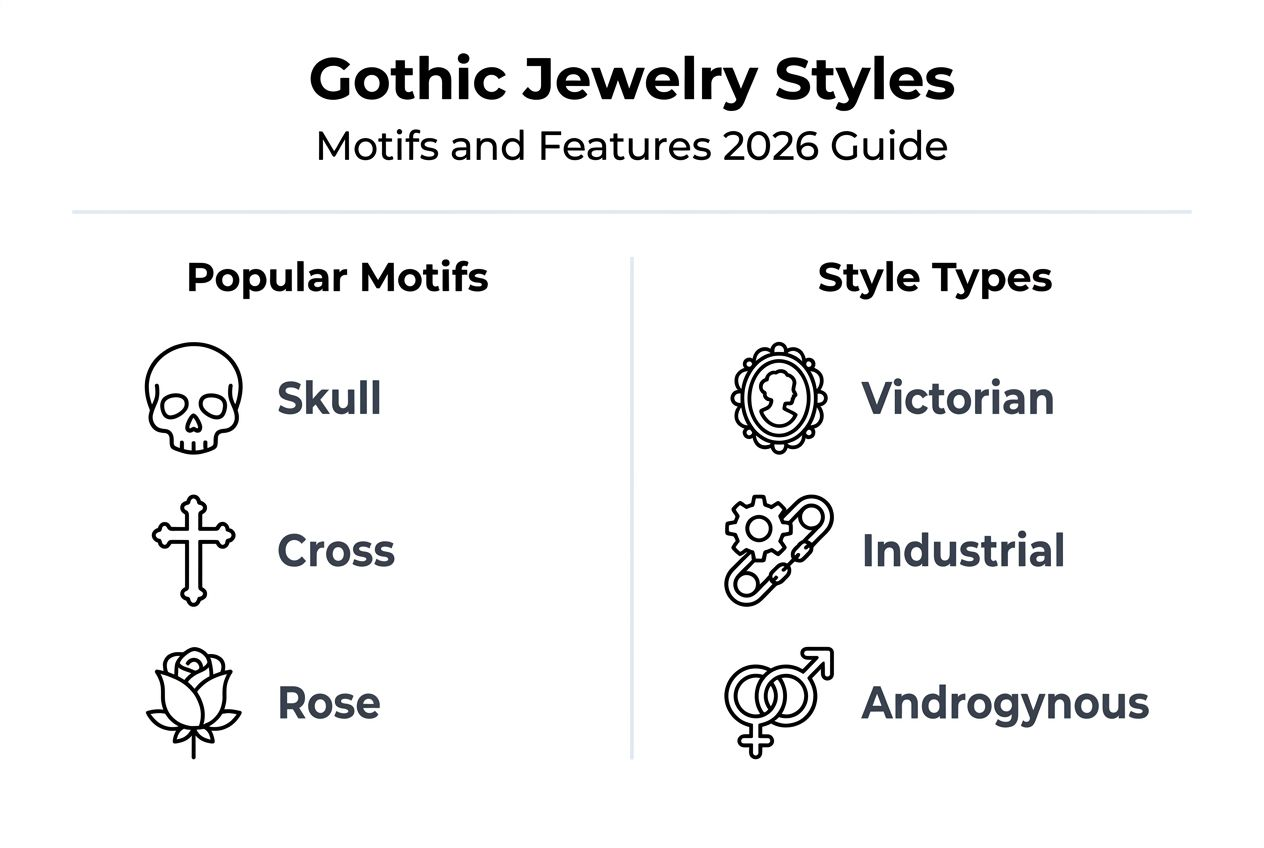
| Style | Defining Features | Typical Motifs | Aesthetic Goal |
|---|---|---|---|
| Medieval Gothic | Ornate filigree, religious symbols, gemstone emphasis | Crosses, fleur-de-lis, cathedral architecture | Historical authenticity, spiritual gravitas |
| Androgynous Gothic | Spikes, chains, geometric forms, gender-neutral sizing | Industrial elements, minimalist skulls, geometric patterns | Rebellious edge, gender fluidity |
| Fetish Gothic | Lace incorporation, restraint imagery, provocative forms | Collars, O-rings, bondage references, roses | Sexuality expression, power dynamics |
| Vampire Gothic | Dramatic forms, blood symbolism, nocturnal themes | Bats, coffins, fangs, blood drops, moons | Romantic darkness, immortality fascination |
| Occult Gothic | Mystical symbols, ritual objects, esoteric imagery | Pentacles, tarot, runes, alchemical symbols | Spiritual practice, magical aesthetics |
Style diversity serves practical identity functions within gothic subcultures. A medieval enthusiast attending Renaissance fairs chooses differently than a nightclub regular embracing cyber goth aesthetics. Neither approach is more authentic; both represent valid gothic subculture expressions drawing from the broader tradition’s vast symbolic resources.
Choosing styles matching personal identity involves honest self-assessment:
- Consider which historical periods or cultural movements resonate emotionally
- Identify symbols carrying personal rather than generic meaning
- Evaluate comfort with different levels of visual intensity and social reaction
- Explore how jewelry coordinates with existing gothic fashion choices
- Allow style evolution as understanding deepens and tastes develop
Many wearers combine elements from multiple subgenres, creating hybrid personal styles that defy categorical boundaries. This mixing demonstrates gothic jewelry’s flexibility as expressive medium rather than rigid costume requirement.
Common misconceptions about gothic jewelry
Several persistent myths obscure gothic jewelry’s actual cultural functions and symbolic depth. Addressing these misconceptions creates clearer appreciation for the form’s complexity.
Misconception 1: Gothic jewelry exclusively represents Christian religious symbolism
While crosses and religious imagery appear frequently, these symbols often carry new meanings like protection, rebellion, or personal belief systems distinct from orthodox religion. Many wearers adopt Christian iconography for aesthetic or cultural reasons completely divorced from faith practice. Others invert traditional meanings, using crosses to question rather than affirm religious authority. The symbols’ medieval origins don’t mandate contemporary religious interpretation.
Misconception 2: All gothic jewelry is mass-produced costume jewelry
Quality gothic pieces frequently come from independent artisans and small studios emphasizing handcrafted techniques. These makers produce limited runs or unique pieces using precious metals and genuine gemstones. Confusing authentic gothic jewelry with Halloween costume accessories overlooks the significant craftsmanship investment and artistic vision many pieces represent. Collectors specifically seek artisan work for its superior materials, construction, and symbolic authenticity.
Misconception 3: Gothic jewelry follows mainstream fashion trends
Gothic aesthetics deliberately position themselves outside trend cycles, valuing timeless dark beauty over seasonal changes. While gothic style evolves, it does so according to subcultural logic rather than fashion industry dictates. This resistance to mainstream trends makes gothic jewelry appealing precisely because it offers stable identity expression unaffected by commercial pressures. Pieces purchased decades ago remain stylistically relevant within gothic communities, unlike trend-driven accessories quickly dated.
Understanding these distinctions helps both newcomers and established enthusiasts engage more thoughtfully with gothic jewelry’s cultural significance and artistic merits.
Choosing and caring for gothic jewelry
Selecting authentic gothic jewelry and maintaining its condition requires specific knowledge about materials, construction, and preservation techniques.
When choosing pieces, prioritize artisan, handcrafted gothic jewelry for authenticity and quality:
- Examine metal stamps indicating silver purity (925 for sterling) or maker’s marks suggesting artisan origin
- Assess weight and construction, as quality pieces feel substantial and show careful assembly
- Verify gemstone authenticity through reputable sellers providing material documentation
- Research makers’ backgrounds and production methods to confirm handcrafted claims
- Compare prices realistically, as genuine precious metal and artisan labor command appropriate costs
- Request detailed photographs showing construction details, patina, and finish quality
- Read reviews from gothic community members familiar with authentic versus imitative work
Look for materials meeting gothic standards: oxidized silver, blackened metals, and dark gemstones like onyx, garnet, or amethyst. These material choices distinguish authentic pieces from generic dark jewelry lacking gothic aesthetic foundations.
Care practices preserve gothic jewelry’s distinctive appearance and symbolic integrity. Gentle cleaning maintains oxidized finishes without removing intentional patina. Use soft cloths and mild soap rather than harsh chemical cleaners that strip darkened surfaces. Avoid ultrasonic cleaners and polishing compounds designed for bright silver, as these erase the aged aesthetic central to gothic styling.
Pro Tip: Store gothic silver jewelry in anti-tarnish cloth pouches separately from other metals to prevent scratching while allowing natural patina development that enhances rather than degrades the dark aesthetic over time, following gothic lifestyle authenticity principles.
For pieces with gemstones, protect softer stones like jet or pearl from impacts and chemicals. Remove jewelry before swimming, cleaning, or applying cosmetics. Periodic inspection catches loose settings or worn clasps before damage occurs.
Proper care extends gothic jewelry’s lifespan while allowing natural aging that adds character. Unlike conventional jewelry maintenance emphasizing pristine condition, gothic pieces often improve aesthetically as they acquire history through wear. This philosophy aligns with gothic culture’s embrace of decay, transformation, and beauty found in imperfection. By maintaining structural integrity while allowing surface evolution, you honor both the craftsmanship and the gothic fashion philosophy the pieces embody.
Explore gothic jewelry collections at Goth.Market
After understanding gothic jewelry’s rich symbolism and historical depth, discover curated pieces embodying these authentic traditions at Goth.Market. Our gothic jewelry collection features artisan-crafted accessories blending medieval motifs with contemporary dark aesthetics, each piece selected for quality materials and meaningful symbolism.
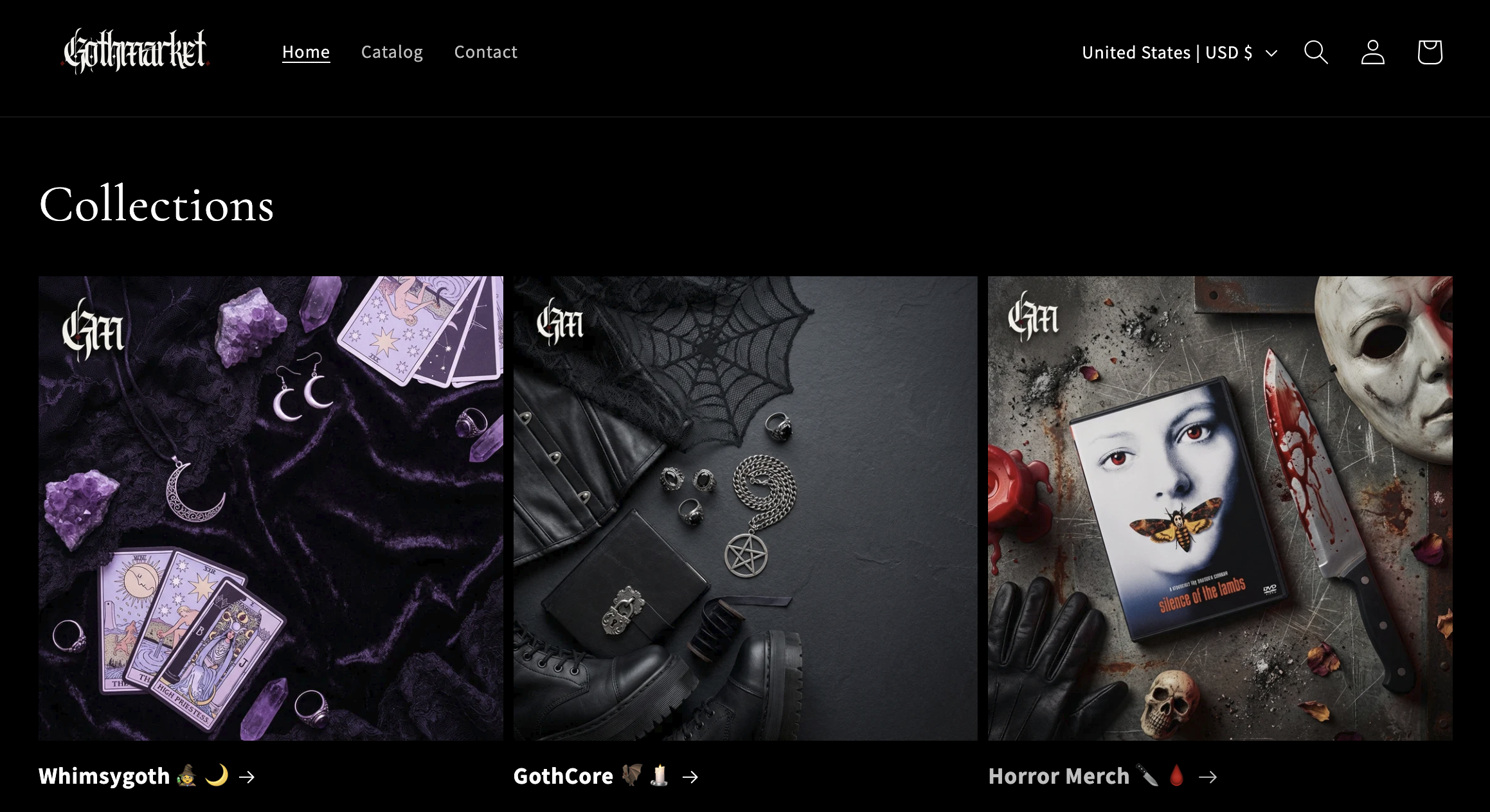
Explore standout pieces like the celestial chain choker moon pendant, combining lunar symbolism with layered chain construction for dramatic neck adornment. The silver tone ring set offers coordinated pieces featuring occult imagery and oxidized finishes perfect for building signature gothic style.
Shop Goth.Market for:
- Artisan quality emphasizing handcrafted details over mass production
- Diverse styles spanning medieval, occult, and vampire gothic aesthetics
- Meaningful symbolism connecting to gothic cultural traditions
- Curated selection ensuring authentic dark aesthetics
Each piece supports independent creators within alternative communities while adding symbolic depth to your personal collection.
FAQ
What is the difference between gothic jewelry and dark fashion jewelry?
Gothic jewelry features specific symbolic motifs, historical architectural influences, and subcultural significance that generic dark fashion pieces lack. Authentic gothic work incorporates medieval and Victorian design elements with intentional symbolic layering, while dark fashion jewelry may simply use black materials without deeper cultural connections. The craftsmanship standards and artisan emphasis also distinguish gothic jewelry from mass-produced dark accessories.
How can I verify if a gothic jewelry piece is authentic or handmade?
Check for artisan markings, maker’s stamps, or signatures indicating individual production rather than factory casting. Ask sellers about specific craftsmanship techniques and request detailed photographs showing construction details. Compare materials to gothic standards like oxidized sterling silver and genuine dark gemstones rather than plated base metals. Research the maker’s background and production methods through their website or social media presence.
Are gothic jewelry symbols always related to religion?
Symbols frequently transcend religious origins, representing rebellion, personal protection, individuality, and alternative spirituality instead. While crosses and religious imagery appear often, wearers assign meanings ranging from aesthetic appreciation to occult reinterpretation completely divorced from Christianity. Context varies widely by individual beliefs and specific gothic subculture affiliations, making symbol interpretation highly personal.
What gemstones are most authentic in gothic jewelry?
Onyx, garnet, amethyst, and jet represent traditional gothic gemstone choices for their dark colors and historical associations. Onyx provides opaque black depth, garnet offers blood-red intensity, amethyst suggests spiritual mystery, and jet connects to Victorian mourning traditions. These stones appear in authentic pieces more frequently than bright or pastel gems that contradict gothic aesthetic principles. Quality matters more than specific stone choice when evaluating authenticity.