

Goth Home Decor: Expressing Identity Through Dark Style
Finding your personal style can be a real challenge when mainstream decor feels generic and uninspired. For those drawn to goth home decor rooted in centuries-old European architecture and bold individuality, the right atmosphere is more than black paint and skulls. Discover how blending dramatic colors, layered textures, and symbolic motifs brings history and self-expression together, helping you create a unique space that truly reflects your alternative lifestyle.
Table of Contents
- Defining Goth Home Decor And Its Origins
- Main Styles And Key Motifs In Goth Decor
- Essential Colors, Textures, And Materials
- Personalization And Creative Expression Strategies
- Common Pitfalls And Practical Safety Tips
Key Takeaways
| Point | Details |
|---|---|
| Historical Foundations | Goth home decor is influenced by medieval architecture and subcultural identity, emphasizing authenticity over superficial aesthetics. |
| Core Elements | Modern goth decor features dark color palettes, ornate furnishings, and dramatic textures, creating a personal narrative through intentional design choices. |
| Personalization | Unique spaces arise from intentional curation of items with personal significance, reflecting individual identity and values. |
| Practical Considerations | Maintain balance in visual drama with proper lighting and safety measures to ensure functionality enhances the goth atmosphere. |
Defining goth home decor and its origins
Goth home decor draws from a rich historical foundation that blends medieval architecture, subcultural expression, and personal identity. Understanding where this aesthetic comes from helps you create spaces that feel authentic to your vision rather than surface-level dark decorating.
Historical Roots
The term “Gothic” originated as a pejorative label for the Germanic tribes known for their dark and melancholic traditions. Over centuries, this word transformed from an insult into an architectural movement. Gothic style emerged in the early 12th century, first appearing in northern France before spreading across Europe through cathedrals, sculpture, and decorative arts.
Medieval European architecture introduced the visual vocabulary that defines goth aesthetics today.
Medieval Influence on Modern Goth Decor
Classic Gothic architecture featured:
- Pointed arches creating dramatic vertical lines
- Vaulted ceilings adding height and mystery
- Stained-glass windows casting colored light through spiritual imagery
- Ornate stone work with intricate, dark detailing
These architectural elements symbolized spirituality and grandeur, establishing patterns you recognize in contemporary goth home decor. The emphasis on drama, shadow, and ornate craftsmanship directly influences how we design dark interiors today.
Modern Goth as Subcultural Identity
Contemporary goth home decor isn’t just about replicating medieval design. It’s a subcultural expression blending historical religious elements with countercultural symbolism focused on individuality, fearlessness, and resistance to mainstream norms. The aesthetic now influences home decor through motifs evoking mystery, drama, and medieval ambiance.
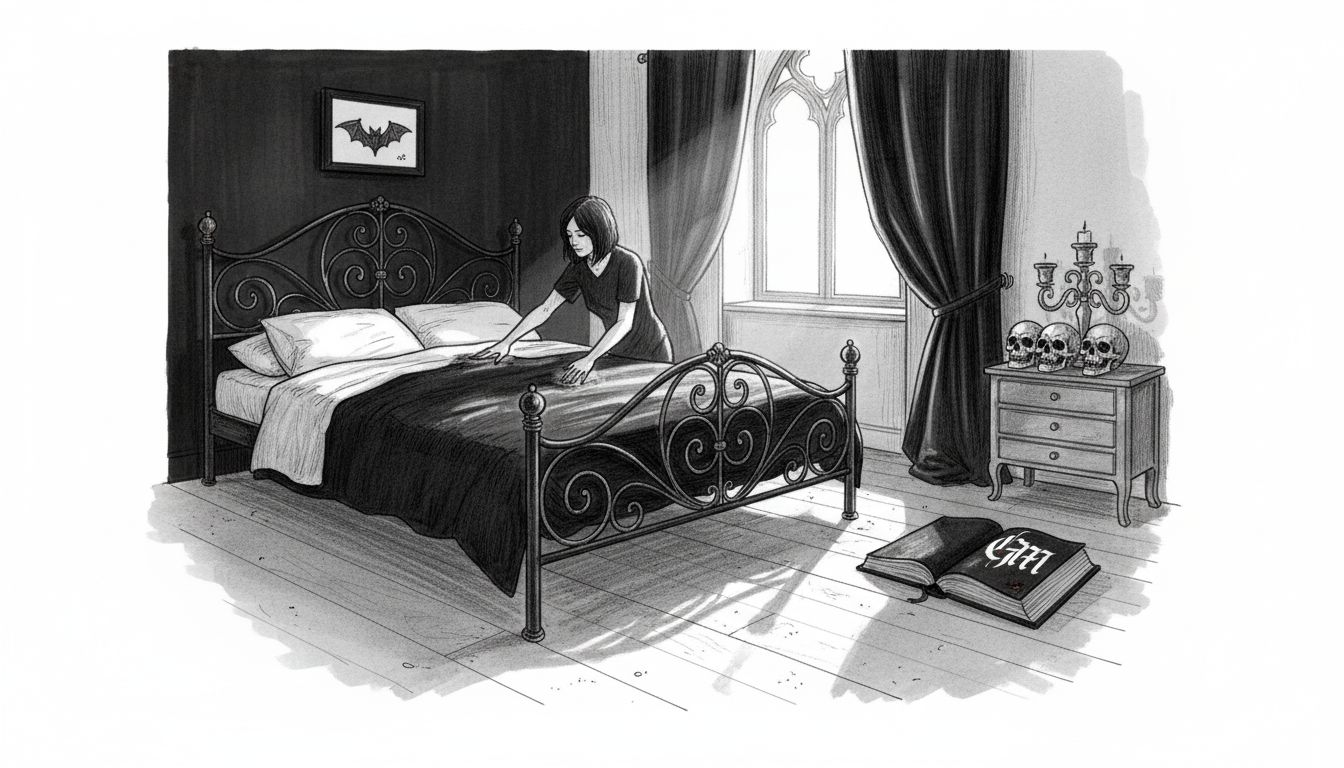
Your space becomes a statement about who you are.
What Defines Goth Home Decor Today
Modern goth home decor combines several core elements:
- Dark color palettes, primarily blacks, deep purples, and charcoal grays
- Victorian and medieval-inspired furnishings with ornate details
- Moody lighting creating shadow and atmosphere
- Occult and mystical imagery reflecting personal spirituality
- Dramatic textures like velvet, lace, and aged metals
- Handcrafted and curated items over mass-produced decor
The key difference from generic dark decorating is intentionality. Goth home decor tells your story through carefully selected pieces that resonate with your identity.
Modern goth home decor is personal expression through dark aesthetics, not just dark paint and black furniture.
Pro tip: Start by identifying which historical periods and themes resonate with you personally, then layer decor that authentically represents your aesthetic rather than copying a single look.
Main styles and key motifs in goth decor
Goth home decor branches into several distinct styles, each with its own visual language and symbolic meaning. Understanding these variations helps you identify which direction resonates most with your personal aesthetic and lifestyle.
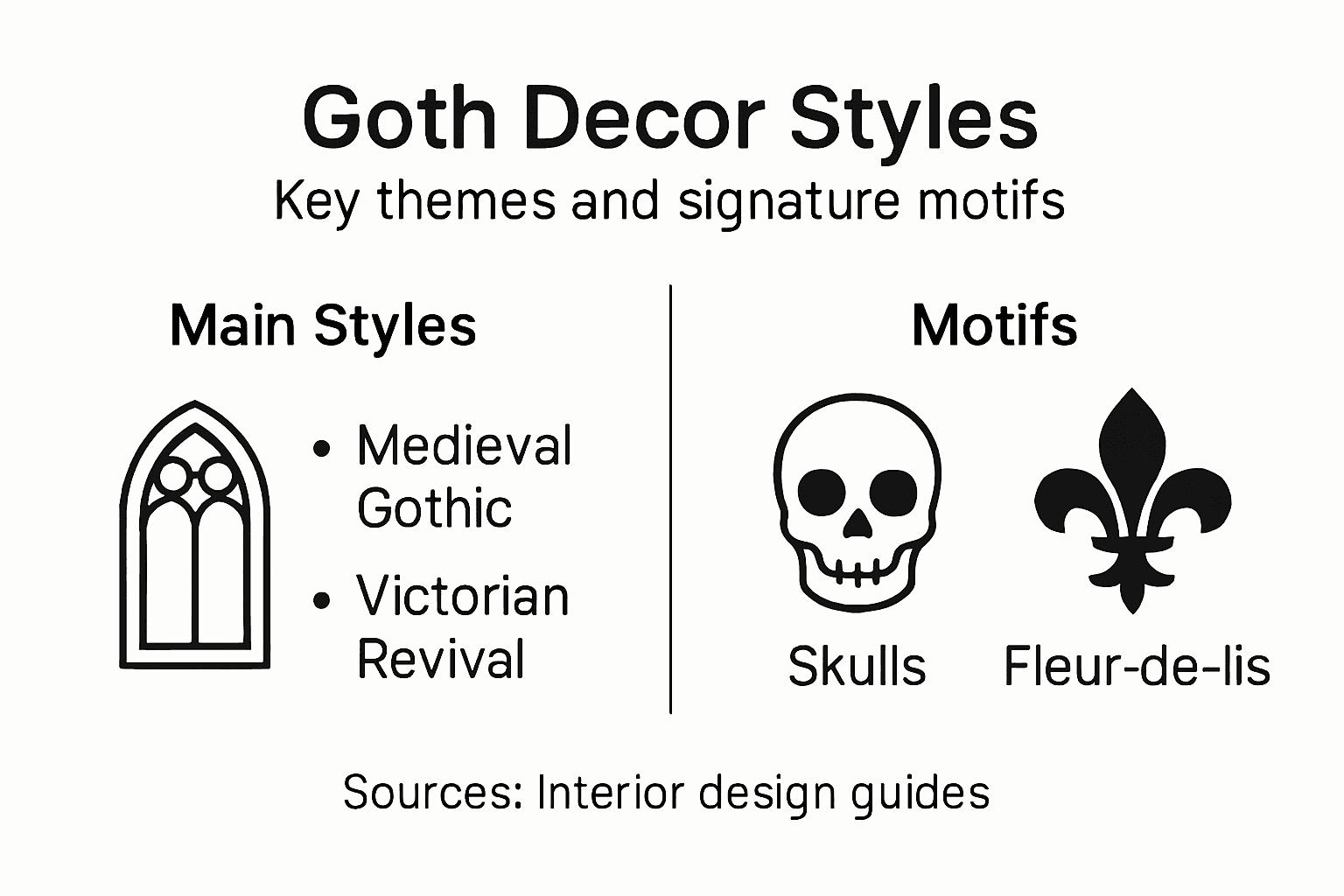
Key Goth Style Categories
Three primary styles dominate contemporary goth home decor:
- Medieval Gothic draws directly from 12th-century architecture with stone-like textures, pointed arches, and heavy ornamental details
- Victorian Gothic Revival blends 19th-century elegance with dark romance, emphasizing velvet, ornate furniture, and dramatic drapery
- Modern Dark Romanticism merges contemporary minimalism with gothic symbolism, allowing for cleaner lines alongside moody aesthetics
Each style can stand alone or blend together in your space. The core difference lies in historical inspiration and how heavily you lean into ornamentation.
Here’s a summary of the three main goth decor styles for easy comparison:
| Style | Historic Reference | Core Features | Ideal Room Ambiance |
|---|---|---|---|
| Medieval Gothic | 12th-century Europe | Stone-like textures, arches | Dramatic and mysterious |
| Victorian Gothic Revival | 19th-century England | Velvet, ornate furnishings | Romantic and opulent |
| Modern Dark Romanticism | Contemporary influences | Minimal lines, gothic symbols | Moody yet uncluttered |
Architectural Motifs That Define the Look
Visual elements create the instant “goth” recognition in a room. Pointed arches, ribbed vaults, and intricate stone carvings form the structural vocabulary of goth design.
These architectural references appear in:
- Window frames and arch doorways
- Ceiling treatments and wall paneling
- Furniture silhouettes and headboards
- Mirror frames and decorative wall elements
You don’t need actual stone—replicating these shapes through furniture and architectural details achieves the same atmospheric effect.
Symbolic Motifs and Their Meanings
Common symbolic imagery includes fleur-de-lis, skulls, bats, crosses, and heraldic emblems, each carrying spiritual or mystical significance. These motifs appear across textiles, wall art, lighting fixtures, and decorative objects.
Symbols function as personal statements. A skull represents mortality awareness and inner strength. Crosses symbolize spirituality without requiring religious affiliation. Bats connect to intuition and transformation. Choosing motifs that align with your worldview creates authenticity.
The following table outlines symbolic motifs and their meanings to guide decor personalization:
| Motif | Typical Use in Decor | Symbolic Meaning |
|---|---|---|
| Skull | Art, accessories | Awareness of mortality, strength |
| Cross | Wall art, objects | Spirituality, protection |
| Fleur-de-lis | Textiles, hardware | Nobility, tradition |
| Bat | Prints, light fixtures | Intuition, transformation |
| Heraldic Emblem | Crest decor, mirrors | Family, personal identity |
Texture and Atmosphere
Goth decor embraces rich textures and dramatic contrasts that engage the senses. Think velvet against leather, lace against metal, matte against glossy surfaces.
These textural combinations create:
- Sensory depth that photographs can’t capture
- Visual interest when colors remain dark
- Tactile experience that makes spaces feel lived-in
- Atmospheric drama through light and shadow play
The best goth spaces balance ornate detail with breathing room, creating opulence without overwhelming the senses.
Pro tip: Start with one dominant style, then layer secondary motifs that feel personally meaningful rather than mixing all three styles equally, which dilutes visual coherence.
Essential colors, textures, and materials
Goth home decor relies on a carefully curated palette of colors, textures, and materials that work together to create atmosphere and depth. These elements transform ordinary rooms into immersive dark spaces that feel intentional rather than depressing.
The Core Color Palette
Deep blacks, purples, ruby reds, forest greens, and metallic accents like gold or pewter form the foundation of goth color schemes. Black dominates as the base, but layering jewel tones prevents spaces from feeling flat or hollow.
Color combinations that work well:
- Black walls with burgundy or deep purple accents
- Charcoal gray as a softer alternative to pure black
- Forest green paired with black for natural, moody vibes
- Gold or pewter metallics breaking up dark expanses
- Ruby red as statement furniture or textile color
The key is avoiding a monotone black void. Strategic color layering creates visual interest and dimension.
Textures That Create Richness
Texture does the heavy lifting in goth spaces where color options are limited. Rich, layered textures including velvet, brocade, lace, and leather convey luxury and depth while engaging the senses.
Texture examples by room function:
- Walls: Textured wallpaper, exposed brick, or matte finishes
- Furnishings: Velvet upholstery, carved dark wood, distressed leather
- Textiles: Heavy drapery, lace overlays, satin or velvet pillows
- Accessories: Wrought iron fixtures, antique brass details, carved elements
Mixing opposing textures—rough stone with soft velvet, shiny metal with matte fabric—creates visual and tactile contrast that keeps spaces interesting.
Materials That Define Authenticity
Material choices determine whether your space feels genuinely gothic or superficially dark. Dark woods, wrought iron, stained glass, and stone or faux stone elements create the authentic foundation.
Priority materials include:
- Solid dark wood furniture (oak, walnut, mahogany) over particle board
- Wrought iron and antique brass hardware and fixtures
- Heavy fabric drapes with quality linings
- Stone, marble, or high-quality faux stone accents
- Genuine or well-crafted stained glass window treatments
Authentic materials cost more but age beautifully and last decades. They also feel substantial in ways that cheap alternatives never achieve.
Layering textures and materials across your space creates the immersive, tactilely rich environment essential to authentic goth aesthetics.
Pro tip: Invest in quality base materials like furniture and window treatments, then layer budget-friendly textiles like pillows and throws to achieve richness without breaking your budget.
Personalization and creative expression strategies
Your goth home should tell your story, not replicate someone else’s aesthetic. Personalization transforms generic dark decor into a space that authentically reflects who you are and what matters to you.
Building Your Unique Visual Language
Using historical elements like vintage furniture alongside DIY crafts such as custom paintings and unique lighting fixtures creates a space that feels lived-in and intentional. Your choices communicate your values and interests to anyone who enters.
Start by identifying what draws you personally:
- Specific historical periods or eras
- Symbols with personal meaning or spiritual significance
- Art styles or creators you admire
- Collections that represent your interests
- Colors or textures that evoke emotions
These preferences become your foundation. Everything else flows from understanding what resonates with you emotionally.
Layering Symbolic Items and Collections
Personalization happens through intentional curation. Rather than filling shelves randomly, choose items that carry meaning. A vintage occult book, a hand-painted skull, inherited antique mirrors, or locally-made macabre artwork each tell part of your story.
Collection ideas that work well:
- Vintage or antique items with history and patina
- Handmade pieces from independent artists
- Objects representing your spiritual or philosophical beliefs
- Books, artwork, or artifacts tied to your interests
- Items inherited from family or friends with personal significance
Each piece should earn its space through genuine meaning, not just aesthetic fit.
Manipulating Light and Shadow
How light moves through your space shapes mood and atmosphere. Manipulating light and shadow creates layers of depth that transform the same room throughout the day.
Try these approaches:
- Position uplighting behind dark furniture for drama
- Use dimmer switches for flexible mood control
- Layer candlelight with electrical lighting
- Install sheer dark curtains filtering daylight
- Create shadow patterns using ornate fixtures
Light control is one of the most underutilized personalization tools. Strategic lighting transforms both how spaces look and how they feel emotionally.
DIY and Craft Expression
Custom creations make spaces truly yours. Hand-painted wall art, repurposed vintage finds, crafted shelving, or textile projects add personality that store-bought items can’t provide.
Accessible DIY projects:
- Custom wall paintings or stenciled patterns
- Repainting or refinishing thrifted furniture
- Creating textile art or drapery designs
- Building shelving or display systems
- Crafting unique lighting fixtures
You don’t need professional skills—authenticity matters more than perfection. Visible handwork often feels more genuine than polished commercial products.
Your space should feel like an extension of yourself, not a replica of a Pinterest board or design magazine.
Pro tip: Start a mood board collecting images, colors, and items that genuinely appeal to you, then identify common themes before purchasing anything to ensure cohesion and authenticity.
Common pitfalls and practical safety tips
Creating an authentic goth home requires balancing visual drama with practical functionality and safety. Many people make mistakes that compromise both aesthetics and livability, turning dark spaces into uncomfortable or hazardous environments.
Avoiding the Claustrophobic Trap
Overusing dark colors makes spaces feel claustrophobic rather than cozy. A room painted entirely black with black furniture creates visual heaviness that feels oppressive rather than atmospheric.
Prevent this by:
- Using black as a base with lighter accent colors or whites
- Painting one accent wall dark rather than all four
- Incorporating lighter flooring or ceilings
- Adding jewel tones like deep purple or forest green for variation
- Using mirrors to reflect light and expand perceived space
Goth aesthetics thrive on contrast. Pure monotone darkness defeats that purpose.
Lighting: The Foundation of Livability
Neglecting proper lighting is crucial to maintaining both ambiance and functionality. Dim candlelight looks beautiful but makes reading, cooking, or moving safely nearly impossible.
Implement layered lighting:
- Install dimmer switches for flexible control
- Combine overhead fixtures with accent lighting
- Use uplighting and track lighting strategically
- Layer candlelight with electrical sources
- Position reading lights near seating areas
Proper lighting lets you achieve moody aesthetics without sacrificing practical visibility. Your space should work at any time of day.
Fire Safety and Candle Use
Balancing dramatic candles with modern fire safety standards protects your home and identity. Candles are iconic in goth spaces but require serious precautions.
Candle safety essentials:
- Use flameless LED candles as primary lighting
- Keep real candles away from fabrics and curtains
- Never leave burning candles unattended
- Ensure adequate ventilation around open flames
- Choose flame-retardant curtains and upholstery
- Keep candles on stable, heat-resistant surfaces
One accidental fire destroys everything you’ve built. Safety isn’t negotiable.
Material Selection and Maintenance
Choosing materials that are difficult to maintain or uncomfortable undermines your entire aesthetic. Vintage pieces require regular care, and heavy textiles trap dust.
Practical material choices:
- Select non-toxic, low-VOC paints and finishes
- Use washable or wipeable wall coverings
- Choose fabrics that breathe to prevent dust accumulation
- Test vintage furniture for structural integrity
- Inspect antique lighting for electrical safety
Beautiful spaces need regular maintenance. Choose materials you’ll actually care for.
Clear Pathways and Ventilation
Avoiding overcrowding ensures safe movement and ventilation. Cramming too many heavy pieces creates hazards and stuffy air quality.
Maintain functionality by:
- Keeping walking paths completely clear
- Spacing furniture to allow air circulation
- Avoiding sharp corners at foot level
- Ensuring doors open fully without obstruction
- Creating breathing room around collections
A dramatic space that’s dangerous or uncomfortable defeats the purpose of creating a home you actually enjoy living in.
Pro tip: Invest in battery-powered LED candles that look authentic with flickering flames but eliminate fire risk, then reserve real candles for special occasions when you can monitor them.
Elevate Your Goth Home Decor with Curated Finds from Goth.Market
Creating an authentic goth space means embracing rich textures, meaningful symbolic motifs, and moody atmospheres that express your true identity. If you want to avoid common pitfalls like visual heaviness or lack of personality, discover how carefully chosen accents can bring your vision to life with intention and depth. Explore our GothCore 🦇 🕯️ – GothMarket collection for classic gothic furnishings and decor that capture the essence of Victorian goth romance and medieval drama.

Bring your unique dark aesthetic home today by choosing handcrafted and meaningful pieces that reflect your story. Visit Goth.Market for an inspiring selection of gothic, occult, and alternative home accents. For hints of whimsy blended with mystery, check out Whimsygoth 🧙♀️ 🌙 – GothMarket and start creating your personal sanctuary now.
Frequently Asked Questions
What are the fundamental elements of goth home decor?
Modern goth home decor incorporates dark color palettes, Victorian and medieval-inspired furnishings, moody lighting, occult imagery, dramatic textures, and handcrafted items. The emphasis is on personal expression through carefully selected pieces.
How can I personalize my goth home decor?
Personalization can be achieved by incorporating symbolic items, layering meaningful collections, and creating custom DIY projects. Each piece should reflect your story and aesthetic preferences.
What are the common styles within goth home decor?
The main styles of goth home decor include Medieval Gothic, Victorian Gothic Revival, and Modern Dark Romanticism. Each style draws inspiration from specific historical periods and features distinct aesthetic characteristics, from ornate details to contemporary minimalism.
How can I effectively use lighting in goth home decor?
Utilize a mix of natural and artificial lighting to enhance the atmosphere. Layer ambient, task, and accent lighting while using dimmer switches for control. Prioritize strategically placing candles and fixtures to create shadows and depth without compromising visibility.
Recommended
- Role of Art in Gothic Style – Inspiring Modern Dark Aesthetics – GothMarket
- Gothic Fashion Styling Guide for Bold, Dark Aesthetics – GothMarket
- Why Choose Gothic Style: Self-Expression and Aesthetic Impact – GothMarket
- Guide to Gothic Art Curation for Collectors and Creators – GothMarket
- Defining Fashion Forward Style: Expressing Bold Identity – ELEDOasis