

Gothic accessories: meaning, history & styling guide
Gothic accessories are far more than edgy decorations you throw on to complete a black outfit. Each piece, whether a skull ring, a velvet choker, or a silver pentagram pendant, carries layers of meaning rooted in history, personal belief, and subculture identity. As “ritual” and “storytelling tools”, these items speak a visual language that mainstream fashion rarely touches. This guide breaks down what gothic accessories are, where they came from, what they symbolize, and how to wear them in a way that feels genuinely yours.
Table of Contents
- What defines a gothic accessory?
- A history of gothic accessories
- The deeper meaning behind gothic symbols
- How to style and layer gothic accessories
- Gothic subcultures and their accessories
- Find meaningful gothic accessories for your unique style
- Frequently asked questions
Key Takeaways
| Point | Details |
|---|---|
| Beyond decoration | Gothic accessories are tools for self-expression and storytelling, not just adornments. |
| Historical roots | Modern gothic accessories draw influence from medieval, Victorian, and punk eras. |
| Symbolic power | Icons like skulls, crosses, and gems have deep meanings in alternative culture. |
| Styling strategies | Layering, theme consistency, and focal points create striking, authentic looks. |
| Personal resonance | Choose accessories based on personal meaning, regardless of trends or subgenre. |
What defines a gothic accessory?
Not every dark or edgy item qualifies as a gothic accessory. What sets these pieces apart is the combination of specific materials, motifs, and cultural intent. They exist to communicate something, not just to fill space on your wrist or neck.
Common gothic accessories span a wide range: chokers, rings, bracelets, belts, gloves, bags, and shoes, all crafted from materials like leather, velvet, lace, and silver. The contrast between textures is a defining feature. Think soft lace against cold metal, or supple black leather paired with polished onyx.
Building a solid gothic wardrobe essentials collection starts with understanding these core categories. And if you want to go deeper on the jewelry side specifically, exploring gothic jewelry meaning will give you a strong foundation.
Here’s a quick breakdown of signature gothic accessories and what makes each one distinctive:
- Chokers: Fitted neckwear in velvet, leather, or lace, often featuring pendants or studs
- Skull rings: Sterling silver or blackened metal, symbolizing mortality and defiance
- Studded belts: Wide leather belts with metal hardware, rooted in punk aesthetics
- Opera gloves: Long satin or lace gloves evoking Victorian elegance
- Cameo brooches: Carved portrait jewelry with a dark or antique finish
- Pentagram pendants: Five-pointed star symbols in silver, often on long chains
- Ankle boots with hardware: Buckled or chained footwear that anchors the whole look
- Structured bags: Coffin-shaped or Victorian-style bags in leather or faux leather
A history of gothic accessories
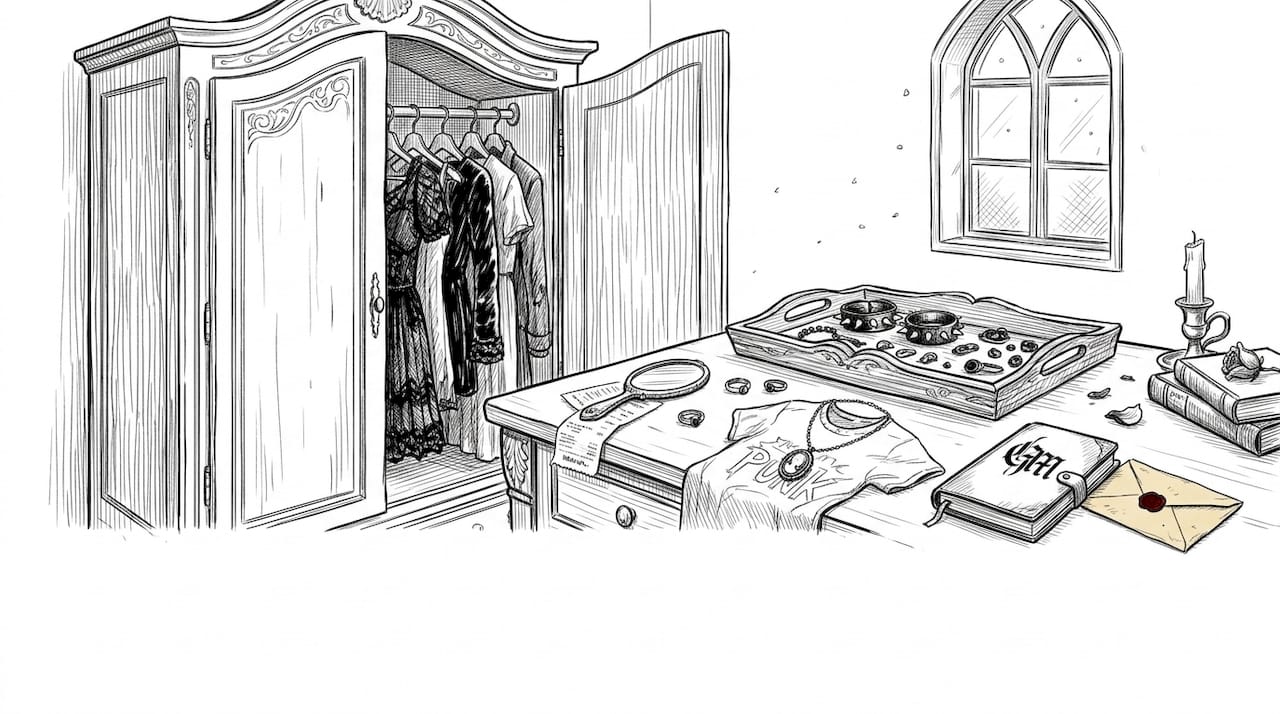
The accessories we associate with gothic culture today didn’t appear out of nowhere. Their roots stretch back centuries, pulling from medieval craftsmanship, Victorian mourning rituals, and 20th-century punk rebellion.
Origins trace to medieval Gothic architecture, Victorian mourning wear, and 20th-century post-punk movements. Each era left a distinct fingerprint on what gothic accessories look like and what they mean.
“Gothic style is not a single moment in time. It is a living conversation between centuries, each generation borrowing from the last and adding its own darkness.”
Here’s how the timeline breaks down:
| Era | Key accessories | Influence on modern gothic style |
|---|---|---|
| Medieval (500-1400) | Chainmail motifs, iron crosses, religious talismans | Heavy metalwork, cross pendants, armor-inspired jewelry |
| Victorian (1837-1901) | Black onyx mourning jewelry, jet brooches, lockets | Dark gemstones, cameos, memento mori themes |
| 1970s-80s punk | Spiked collars, safety pins, chains, leather cuffs | Studded belts, chokers, industrial hardware |
| Modern gothic (1990s-present) | Mixed-era layering, occult symbols, crystal jewelry | Everything above, reinterpreted with personal meaning |
The modern goth doesn’t pick just one era. They layer a Victorian cameo over a punk-inspired spiked collar and call it intentional. That layering is exactly what makes goth’s role in modern trends so fascinating to watch evolve.
The deeper meaning behind gothic symbols
Recognizing the influences is one thing. Truly understanding these accessories means decoding the symbolism stitched into every motif.
Key symbols in gothic accessories express occult, mystical, and gothic themes: skulls represent mortality, crosses signal faith or rebellion, pentagrams invoke the elements and mysticism, bats and ravens evoke the supernatural, snakes suggest rebirth, and dark gems carry protective energy.
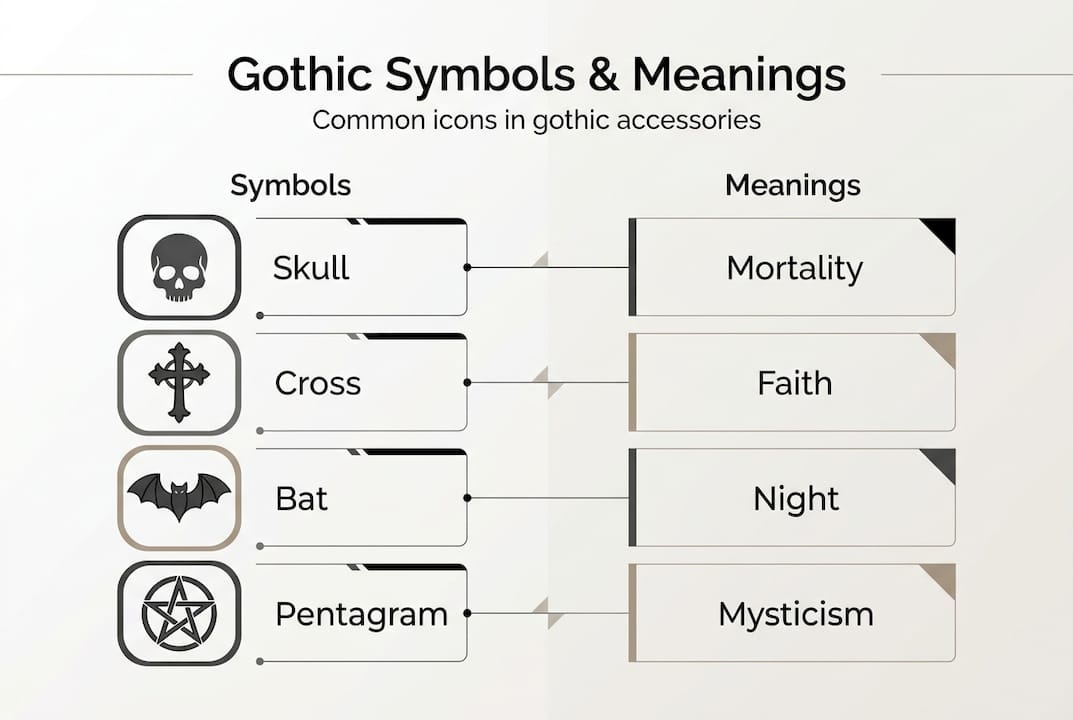
Here’s a comparison of the most common gothic symbols and how they’re typically worn:
| Symbol | Core meaning | Common accessory form |
|---|---|---|
| Skull | Mortality, “memento mori” (remember you will die) | Rings, belt buckles, pendants |
| Cross | Faith, protection, or rebellion depending on orientation | Choker pendants, earrings, brooches |
| Pentagram | Five elements (earth, air, fire, water, spirit), mystical protection | Pendants, rings, boot charms |
| Bat | Night, the supernatural, freedom from daylight norms | Hair clips, earrings, bag charms |
| Snake | Rebirth, transformation, hidden wisdom | Wrap rings, arm cuffs, necklaces |
| Raven | Prophecy, intelligence, the liminal space between worlds | Brooches, earrings, pendants |
| Dark gems (onyx, obsidian) | Protection, grounding, absorbing negative energy | Rings, pendants, bracelets |
Some symbols carry controversy. The inverted cross, for example, is simultaneously a symbol of Saint Peter’s humility and a mark of anti-establishment rebellion in punk and gothic circles. Snakes are feared in some traditions and revered in others as symbols of transformation. Context and personal intent matter enormously here.
Pro Tip: Choose symbols that genuinely resonate with your beliefs or personal story. A pentagram worn because you love its protective symbolism carries far more power than one worn because it looks cool. Personal connection is what separates meaningful gothic style from costume.
For a full breakdown of what these motifs mean across different contexts, gothic symbolism explained is worth your time.
How to style and layer gothic accessories
Knowing the history and symbolism is the intellectual side. Now comes the practical part: how do you actually build a layered gothic look without it becoming a chaotic pile of dark objects?
Intentional layering of textures and statement pieces, balancing soft and hard elements, is the core methodology behind gothic styling. The goal is contrast that feels deliberate, not accidental.
Here’s a step-by-step approach to building your look:
- Start with your anchor piece. Choose one statement item, a dramatic choker, an oversized ring, or a structured bag, that sets the tone for the entire outfit.
- Build texture contrast. If your anchor is hard (metal studs, leather), add something soft nearby (lace gloves, velvet ribbon). If your anchor is soft, introduce a sharp element.
- Layer lengths in jewelry. Combine a choker with a mid-length pendant necklace and a longer chain. Three different lengths create visual depth without clutter.
- Limit statement pieces to three. Beyond three focal accessories, the eye loses its anchor. Pick your three and let everything else support them quietly.
- Stick to a tonal palette. Black, deep burgundy, silver, and ivory work together naturally. Introducing too many competing colors fragments the look.
- Consider proportion. Heavy boots balance dramatic upper-body accessories. Delicate earrings balance a bold collar. Think of the body as a composition.
Pro Tip: Commit to a single gothic subtheme per outfit. A Victorian-inspired look with lace, cameos, and jet jewelry reads as intentional and polished. Mixing Victorian with Cyber Goth PVC in the same outfit without a clear vision tends to read as confused rather than eclectic.
For more inspiration on building cohesive looks, check out gothic subculture styling tips, styling gothic outfits, and bold gothic styling.
Gothic subcultures and their accessories
Not all goths accessorize alike. The umbrella term “gothic” covers a wide spectrum of subgenres, and each one has developed its own distinct accessory language.
Subculture variations affect accessory choice significantly: Romantigoth gravitates toward lace and cameos, while Cyber Goth embraces PVC and goggles as core pieces. Understanding these distinctions helps you find your specific corner of the aesthetic.
Here’s a quick guide to each major subgenre and its signature accessories:
- Traditional Goth: Ankh pendants, crucifix chokers, black leather cuffs, silver rings with dark stones
- Romantigoth: Lace gloves, cameo brooches, parasols, pearl-and-jet jewelry, velvet ribbon chokers
- Cyber Goth: PVC arm warmers, UV-reactive goggles, industrial chain belts, neon-accented platform boots
- Gothic Lolita: Oversized bows, floral skull hairpieces, delicate lace parasols, ornate bag charms
- Nu-Goth: Minimalist silver jewelry, raw crystal pendants, simple black chokers, geometric rings
- Pastel Goth: Inverted cross earrings in pastel colors, kawaii skull charms, layered pastel bead bracelets
Each subgenre reflects a different emotional register within the broader gothic world. Traditional Goth leans into darkness and ritual. Romantigoth romanticizes death and beauty. Cyber Goth projects a dystopian future. Gothic Lolita merges innocence with the macabre. Nu-Goth strips everything back to clean, occult minimalism.
Knowing which subgenre speaks to you makes accessory choices much easier. You can explore the full spectrum of gothic fashion subtypes to find where your aesthetic lives.
Find meaningful gothic accessories for your unique style
When you’re ready to build or deepen your collection, having access to curated, authentic pieces makes all the difference. Mass-market accessories rarely carry the craftsmanship or intentionality that gothic style demands.
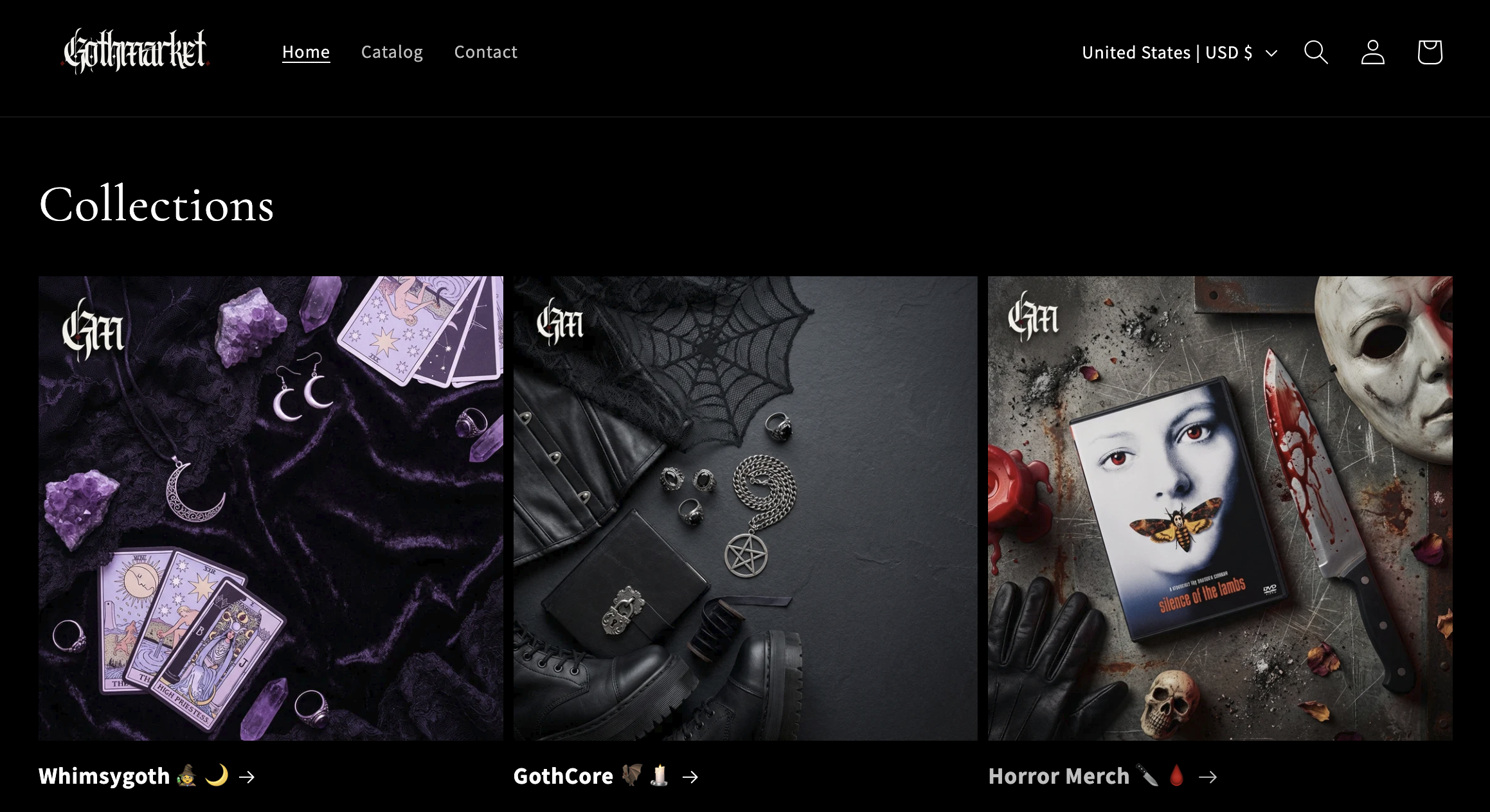
At Goth.Market, you’ll find a carefully curated gothic jewelry selection that spans every subgenre and symbol discussed in this guide. Whether you’re drawn to Victorian mourning aesthetics, occult minimalism, or something in between, the range covers it. One standout piece worth exploring is the moon pendant choker, which blends celestial symbolism with classic choker construction. If your aesthetic leans toward the whimsical and dark, the Whimsygoth accessories collection offers pieces that balance playfulness with genuine gothic depth. Every item comes from independent creators who understand the culture from the inside.
Frequently asked questions
What are the most popular materials for gothic accessories?
Leather, velvet, lace, and silver are the classic gothic materials, typically combined to create dramatic texture contrast between hard and soft elements.
Is it okay to mix symbols from different gothic subcultures?
Absolutely. Mixing is common in gothic fashion, but symbols carry different meanings across subcultures, so understanding what each one represents helps you build a look that feels authentic rather than random.
How can I avoid over-accessorizing with gothic items?
Focus on intentional layering and key focal pieces rather than piling on everything at once. Limiting yourself to 1-3 statement accessories and building around a single theme keeps the look powerful.
What do skulls and pentagrams symbolize in gothic fashion?
Skulls signal mortality through the “memento mori” tradition, while pentagrams evoke the five elements and mystical protection, making both deeply intentional choices rather than purely decorative ones.
Where can I find authentic gothic accessories?
Online specialty marketplaces like Goth.Market curate a wide range of authentic gothic accessories from independent creators who specialize in alternative and occult aesthetics.
Recommended
- Tips for gothic style: 70% black wardrobe for authentic looks – GothMarket
- Gothic Fashion Styling Guide for Bold, Dark Aesthetics – GothMarket
- What is gothic jewelry: meaning and style guide 2026 – GothMarket
- How to style gothic outfits with authentic aesthetics – GothMarket
- Enhance your style with the role of eyewear in fashion – MINISTRY OF SIGHT