

Witchcore explained: Mystical style, roots, and how to wear it
TL;DR:
- Witchcore is a layered aesthetic that combines folklore, nature magic, and darkness to create a mystical, moody vibe. It differs from goth and cottagecore by blending romantic vintage elements with shadowy mysticism, emphasizing personal expression. The community values flexibility, with the aesthetic serving as both a lifestyle and a visual style rooted in mood and self-identity.
Witchcore gets dismissed as “goth fashion with a witch hat slapped on,” but that framing misses almost everything that makes this aesthetic genuinely exciting. Witchcore is a layered visual and lifestyle movement that pulls from folklore, nature magic, vintage romanticism, and yes, a little darkness. It overlaps with gothic style without being gothic. It borrows from cottagecore without being wholesome. What you get instead is something moody, mystical, and entirely its own. This guide breaks down what witchcore really means, where it came from, how it compares to similar aesthetics, and how to actually wear it.
Table of Contents
- What is witchcore? Origins and influences
- How witchcore stands apart: Comparison with goth and cottagecore
- Key elements: Witchcore fashion, décor, and lifestyle
- Living the witchcore aesthetic: Community and application
- Our perspective: Witchcore’s evolving meaning and why it matters
- Explore witchcore-inspired style options
- Frequently asked questions
Key Takeaways
| Point | Details |
|---|---|
| Witchcore is multifaceted | It blends mystical, vintage, gothic, and nature elements for unique self-expression. |
| Distinct from goth and cottagecore | Witchcore has romantic and magical traits that differentiate it from related aesthetics. |
| Style and lifestyle options | Anyone can embrace witchcore through fashion, décor, and community—no rituals required. |
| Flexible and community-driven | Witchcore adapts to individual preferences and encourages creativity. |
What is witchcore? Origins and influences
Witchcore as an aesthetic is “inspired by the mystical and macabre, often expressed through fashion and lifestyle choices.” That definition sounds compact, but unpacking it reveals just how much territory this aesthetic covers.
Witchcore draws from several distinct traditions. It borrows the pastoral softness of cottagecore, which centers on rural simplicity, handmade objects, and a romantic connection to nature. Then it twists that warmth with folklore, shadow, and the archetype of the witch as a figure of power and independence. The result is an aesthetic that feels like walking through an enchanted forest at dusk rather than a sunlit garden at noon.
The witch figure is central here. In pop culture, the witch has undergone a serious rebranding over the past few decades. She moved from villain to icon, from cautionary tale to symbol of self-determination. Witchcore as a visual language celebrates that shift. It pulls from everything: fairy tales, herbalism, old European folk magic, tarot cards, and even the moody woods scenes of films like The Witch and Practical Magic.
Key influences on witchcore include:
- Dark romanticism and folklore: Think 19th century Gothic literature, fairy tales with teeth, and the kind of forests where things happen at midnight.
- Nature and herbalism: Dried botanicals, earthy textures, and the visual language of foraging and plant lore.
- Vintage and antique aesthetics: Old-fashioned silhouettes, Victorian mourning fashion, and the look of objects passed down through generations.
- Occult symbolism: Pentagrams, moon phases, crystals, and alchemical imagery.
- Pop culture witchcraft: Films, books, and music that center witches as complex, powerful characters.
As the witchcore origins overview makes clear, this aesthetic didn’t arrive fully formed. It developed gradually online, shaped by communities on Tumblr, Pinterest, and later TikTok, where users built mood boards and shared outfits that pulled all these threads together. It also connects to the broader goth in modern trends conversation, since witchcore often gets discussed alongside gothic aesthetics even when it stands clearly apart from them.
“Witchcore isn’t one look. It’s a feeling. It’s the visual equivalent of a spell: carefully assembled from nature, shadow, and intention.”
That’s the most useful way to think about it. Witchcore is flexible enough to be a full lifestyle philosophy for someone who practices witchcraft, and loose enough to be a visual vibe for someone who just loves the look of dried lavender and a velvet cloak.
How witchcore stands apart: Comparison with goth and cottagecore
With origins covered, let’s make witchcore’s place among related aesthetics clear, because this is where most of the confusion lives.
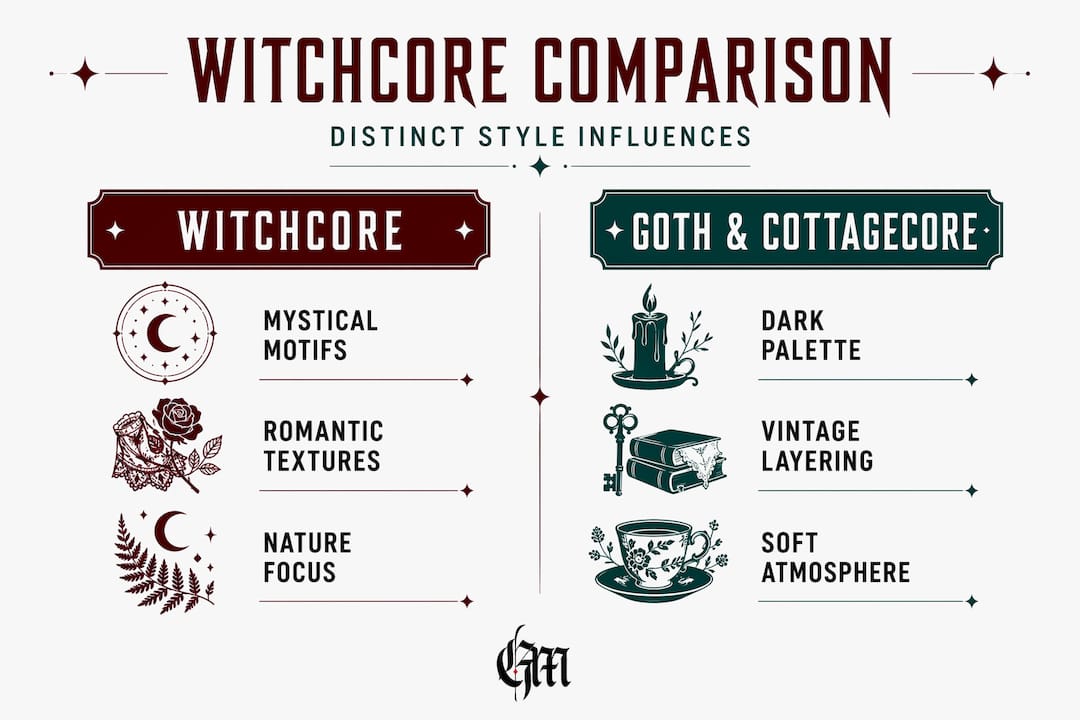
Witchcore is often treated as a “different lane” from goth: it can overlap with goth but includes more romantic and vintage elements. That overlap is real, but the differences matter. Gothic fashion, which you can explore through a breakdown of goth clothing features, tends toward stark darkness, structured silhouettes, and a sense of controlled elegance or intentional decay. Witchcore softens that edge with nature elements, pastoral warmth, and mystical whimsy.
Cottagecore, on the other hand, is all sunshine and linen and strawberry jam. Witchcore takes cottagecore’s love of nature and handmade objects and runs them through shadow and moonlight. Where cottagecore feels like afternoon tea, witchcore feels like the same tea set found in an abandoned house with ivy growing through the windows.
Here’s a direct comparison:
| Feature | Witchcore | Goth | Cottagecore |
|---|---|---|---|
| Color palette | Deep greens, black, burgundy, earthy tones | Black, gray, deep red, silver | White, cream, muted pastels, earth tones |
| Nature connection | Strong: herbs, botanicals, moonlight | Minimal: decay, stone, night | Very strong: gardens, farms, flowers |
| Darkness level | Moderate to high | High | Very low |
| Key symbols | Moons, crystals, pentagrams, herbs | Crosses, skulls, bats | Flowers, mushrooms, farm animals |
| Silhouette style | Flowing, vintage, romantic | Structured, dramatic | Loose, soft, handmade-looking |
| Mood | Mystical, enchanted, folkloric | Dramatic, melancholic | Cozy, nostalgic, gentle |
If you explore the types of gothic fashion, you’ll see that gothic style already branches into many sub-styles. Witchcore can borrow from romantic goth or Victorian goth more naturally than from, say, cybergoth. The vintage silhouettes and dramatic layers create a natural bridge.
Key distinctions to keep in mind:
- Witchcore vs. goth: Witchcore leans into warmth, nature, and folk magic. Goth leans into cool, structured darkness and a more urban or architectural aesthetic.
- Witchcore vs. cottagecore: Both love nature, but witchcore brings shadow, mysticism, and folklore that cottagecore usually avoids.
- Where they overlap: A black floral dress with dried herb bundles and a moon necklace fits comfortably at the intersection of all three.
Pro Tip: If you’re building a witchcore wardrobe, start with pieces that would feel at home in both a gothic boutique and a woodland market. That overlap zone is the heart of the aesthetic.
Key elements: Witchcore fashion, décor, and lifestyle
Knowing how witchcore compares, let’s look at its most recognizable elements because this is the practical part that actually lets you build the look.
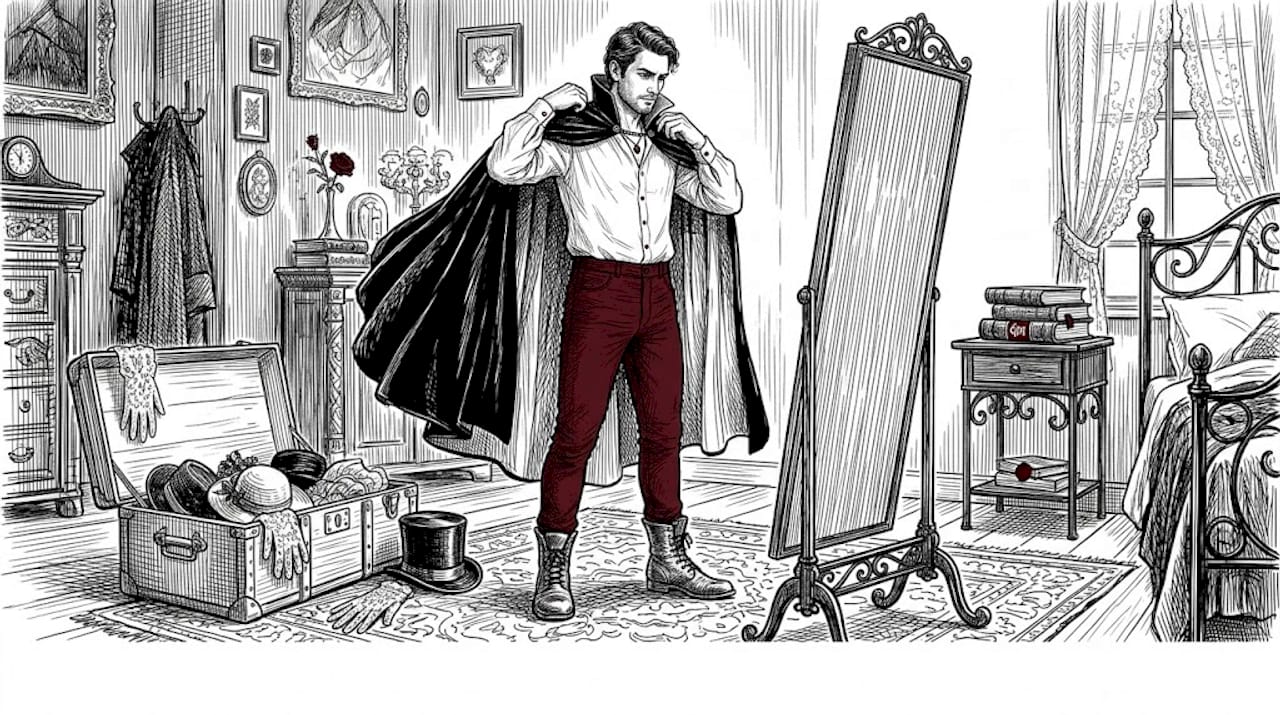
Common visual cues include “black lace, dramatic silhouettes, corsets, capes, and Wiccan-inspired motifs, along with an overall moody channeling of witches and enchantresses.” That’s a solid foundation, but witchcore goes deeper than any single garment.
Wardrobe
The witchcore wardrobe is built around texture and atmosphere. You’re layering for a sense of mystery, not just warmth.
| Clothing item | How it fits witchcore |
|---|---|
| Black lace tops or overlays | Adds delicacy and vintage witchy texture |
| Velvet skirts or dresses | Rich, moody fabric with historical resonance |
| Capes and cloaks | Dramatic silhouette, deeply folkloric |
| Corsets (external) | Structured romanticism over flowing fabric |
| Flowing maxi dresses | Nature-forward movement, perfect for the outdoor aesthetic |
| Vintage blazers and waistcoats | Aged, antique quality without full Victorian costume |
The gothic wardrobe checklist can help you identify overlapping essentials. Many witchcore staples live comfortably in a gothic wardrobe already.
Jewelry and accessories
Occult jewelry is one of the richest areas of witchcore expression. Motifs include:
- Moon phases: Crescent moons, full moons, and moon phase sequences on rings, necklaces, or pendants.
- Crystals and gemstones: Amethyst, obsidian, labradorite, and moonstone are favorites for both their look and their folk associations.
- Pentagrams and stars: Worn as spiritual symbols or purely for visual impact.
- Botanical charms: Pressed flowers in resin, herb bundles as pendants, twig or root motifs.
- Antique-style settings: Blackened silver, oxidized metals, and intricate Victorian or Art Nouveau filigree.
Home décor
Witchcore as a lifestyle extends into interior design. The goal is creating a space that feels like a cottage at the edge of a magical forest. Some key elements:
- Vintage candle holders in brass or iron with dripping wax.
- Hanging crystals and prisms that catch light and scatter it like something alive. For practical ideas, the witchcore home décor page offers creative approaches to using crystal prisms.
- Dried botanicals: Herb bundles, lavender sprigs, and dried flowers hanging from rafters or displayed in apothecary jars.
- Bookshelves with intention: Old hardcovers, tarot decks, antique curiosities, and candles of all sizes.
- Dark textiles: Velvet curtains, embroidered cushions, and aged-looking rugs in deep jewel tones.
The whole aesthetic should make visitors feel like they’ve stepped into a space where something mysterious might be about to happen.
Living the witchcore aesthetic: Community and application
With elements clarified, let’s move from theory to practice and the wider community because witchcore is as much about how you live and connect as what you wear.
Witchcore is frequently discussed as blending cottagecore’s nature and pastoral vibe with darker mysticism and witchcraft and folklore themes. That blend is what makes the community so varied. You’ll find practicing witches who see witchcore as a visual extension of their spiritual path. You’ll also find fashion lovers who are drawn entirely to the aesthetic, with no spiritual component at all. Both are valid, and the community generally accepts both without gatekeeping.
Here’s how to start living the witchcore aesthetic in practical terms:
- Build a visual reference library. Create a Pinterest or Tumblr board filled with images that feel right. Outfits, landscapes, home interiors, old paintings, forest photography. Let the mood board define your version of witchcore before you spend anything.
- Start with one anchor piece. A velvet cape, a moon phase necklace, or a set of apothecary jars for your bathroom. One strong piece shifts the whole mood.
- Incorporate nature into daily life. Collect interesting stones. Dry flowers from the garden. Buy loose-leaf tea and store it in glass jars. These small rituals build the witchcore lifestyle without requiring any major purchases.
- Engage with the online community. Search hashtags like #witchcore, #witchyaesthetic, and #darkfairytale. Share your own outfits and spaces. The feedback loop is part of the fun.
- Explore folklore and mythology. Read about folk magic traditions, herbalism, and mythological witches from different cultures. Understanding the reference points deepens the aesthetic appreciation.
For wardrobe inspiration, styling gothic outfits offers useful frameworks that translate well to witchcore.
“In witchcore spaces, the line between aesthetic appreciation and genuine spiritual practice is blurry by design. That’s the point.”
Home application can be just as expressive. Think about lighting first: candles, amber-tinted bulbs, and crystal prisms transform a space’s mood faster than any furniture. For room-by-room ideas, crystal suncatcher ideas offer practical inspiration that fits directly into the witchcore visual language.
Pro Tip: Consistency of mood matters more than individual items. A collection of mismatched witchcore pieces still works beautifully if they all carry the same atmospheric quality: aged, natural, mysterious, intentional.
Our perspective: Witchcore’s evolving meaning and why it matters
Here’s something the trend coverage doesn’t usually say: witchcore’s ambiguity is actually its greatest strength.
Most aesthetics collapse when they get too specific. They become costumes, or they get absorbed by fast fashion and lose their meaning. Witchcore has resisted that because it’s fundamentally a mood rather than a checklist. You can wear two witchcore pieces or twenty. You can practice witchcraft or love the aesthetic purely visually. You can live in a Victorian house or a studio apartment. The aesthetic bends to fit you rather than demanding you fit it.
This flexibility connects directly to gothic evolution, which shows how dark aesthetics maintain cultural staying power precisely because they’re built around identity and self-expression rather than trend cycles. Witchcore shares that quality. It doesn’t need mainstream validation to survive.
What’s genuinely interesting about the witchcore community right now is that it’s actively resisting simplification. When someone tries to reduce witchcore to a single outfit formula, the community pushes back. And that resistance produces richer, more personal interpretations of the aesthetic. Someone’s witchcore might lean heavily into Appalachian folk magic and dried herbs. Someone else’s might be almost entirely about Victorian mourning fashion and moonlit aesthetics. Neither is wrong. Both are witchcore.
The empowerment argument isn’t just marketing language, either. Many people in the witchcore community describe it as the first aesthetic that made them feel like their interest in nature, mysticism, and darkness could coexist without contradiction. You don’t have to choose between loving flowers and loving shadows. Witchcore says you can have the enchanted forest at night, complete with both.
That’s worth taking seriously as a design philosophy, not just a fashion category.
Explore witchcore-inspired style options
Ready to bring witchcore into your life? The research part is done, so now the fun begins.
At Goth.Market, you’ll find curated witchcore-adjacent pieces sourced from independent creators who actually understand the aesthetic. Browse occult jewelry featuring moon motifs, crystals, and botanical charms that hit every major witchcore note. Explore gothic clothing with the flowing silhouettes and dark romanticism that fits the witchcore wardrobe perfectly. The platform connects you with independent artists and vendors who specialize in exactly this kind of dark, mystical, handcrafted work, so you’re getting pieces with genuine character rather than mass-produced approximations. If the aesthetic speaks to you, this is the right place to start building it out.
Frequently asked questions
Is witchcore just another branch of goth fashion?
No, witchcore overlaps with gothic style but adds romantic, vintage, and mystical nature elements distinct from traditional goth. As style discussions make clear, witchcore is often treated as a “different lane” from goth with its own distinct visual vocabulary.
Can you be witchcore without practicing witchcraft?
Yes, witchcore is mainly an aesthetic and lifestyle that anyone can embrace without engaging in rituals or spiritual practices. The aesthetic functions independently as a purely visual and cultural vibe or as a lifestyle orientation connected to actual witchcraft, depending entirely on the individual.
What are essential witchcore wardrobe pieces?
Key pieces include black lace, dramatic silhouettes, velvet, capes, corsets, and jewelry with mystical motifs like moons and crystals. These core visual cues also extend to Wiccan-inspired symbols and an overall moody atmosphere.
How is witchcore different from cottagecore?
Witchcore blends cottagecore’s love of nature with darker, mystical, and folkloric themes that cottagecore doesn’t typically include. This combination of nature and darker mysticism is what separates the two aesthetics, even when they share a fondness for botanicals and rural imagery.