

How to style gothic outfits with authentic aesthetics
Walking into a gothic fashion store feels exciting until you realize most pieces lack the substance and soul that define true gothic style. Cheap fabrics, superficial designs, and mass-produced accessories flood the market, making it challenging to build a wardrobe that genuinely reflects gothic culture’s depth and permanence. You want clothing that expresses your identity while honoring the subculture’s values of craftsmanship, sustainability, and artistic expression. This guide teaches you how to style gothic outfits using authentic materials, substyle knowledge, and practical techniques that capture the spirit of gothic fashion beyond surface-level aesthetics.
Table of Contents
- Gathering The Essentials: Materials And Mindset For Authentic Gothic Style
- Identify Your Gothic Substyle: Exploring Tradition, Victorian, Romantic, And More
- Styling Your Gothic Outfit Step-By-Step: From Basics To Standout Elements
- Avoiding Common Pitfalls: Maintaining Gothic Authenticity And Sustainability
- Explore Authentic Gothic Pieces At Goth.Market
- How To Style Gothic Outfits: Frequently Asked Questions
Key takeaways
| Point | Details |
|---|---|
| Material quality matters | Gothic fashion prioritizes durable, ethically sourced fabrics like wool crepe and vegetable-tanned leather over disposable fast fashion alternatives. |
| Substyle diversity exists | Gothic encompasses distinct substyles including Trad Goth, Victorian Goth, and Romantic Goth, each with unique origins and aesthetic elements. |
| DIY spirit prevails | Authentic gothic culture values personal customization and anti-consumerism over trend-chasing and mass-market purchasing habits. |
| Accessories define looks | Quality chokers, rings, and layered chains complete gothic outfits more effectively than relying solely on black clothing. |
| Sustainability aligns with values | Long-lasting, heirloom-quality pieces reflect gothic principles of permanence and environmental responsibility better than disposable items. |
Gathering the essentials: materials and mindset for authentic gothic style
Gothic fashion prioritizes material integrity over color alone, making fabric selection your first critical decision. True gothic identity emerges from high-quality, ethically sourced materials that withstand years of wear while maintaining their dramatic appearance. Traceable wool crepe provides structure and breathability for coats and skirts, while vegetable-tanned leather offers durability for accessories without harsh chemical processing. Brocade fabrics add Victorian-inspired texture and visual depth to corsets and formal pieces.
Fast fashion alternatives often use polyester blends lacking proper linings, causing garments to lose shape after minimal wear. These pieces contradict gothic values by creating disposable clothing that ends up in landfills rather than becoming cherished wardrobe staples. Your mindset should value permanence, tactility, and environmental responsibility when selecting every piece. Consider whether each item could become an heirloom rather than a seasonal throwaway.
| Material Type | Gothic-Appropriate Option | Fast Fashion Alternative | Key Difference |
|---|---|---|---|
| Outerwear fabric | Traceable wool crepe | Polyester blend | Breathability and longevity |
| Leather goods | Vegetable-tanned leather | Synthetic pleather | Durability and aging character |
| Formal pieces | Silk or cotton brocade | Printed polyester | Texture depth and quality |
| Base layers | Organic cotton jersey | Standard cotton blend | Environmental impact |
Ethical material traits worth prioritizing include transparent supply chains, low-impact dye processes, and certifications like GOTS or OEKO-TEX. Research brands that publish their manufacturing practices and avoid those hiding production details. Building a 70% black wardrobe becomes easier when you focus on versatile, quality basics that mix effortlessly.
Pro Tip: Request fabric composition details before purchasing online, and verify that garments include proper linings and finished seams that indicate quality construction rather than rushed production.
Identify your gothic substyle: exploring tradition, victorian, romantic, and more
Gothic fashion encompasses numerous distinct substyles rather than representing a singular aesthetic, giving you creative freedom to express your personality authentically. Understanding these substyles helps you identify which resonates with your identity and guides your styling decisions toward coherence rather than confusion. Each substyle carries unique historical influences, key apparel elements, and cultural associations worth exploring.
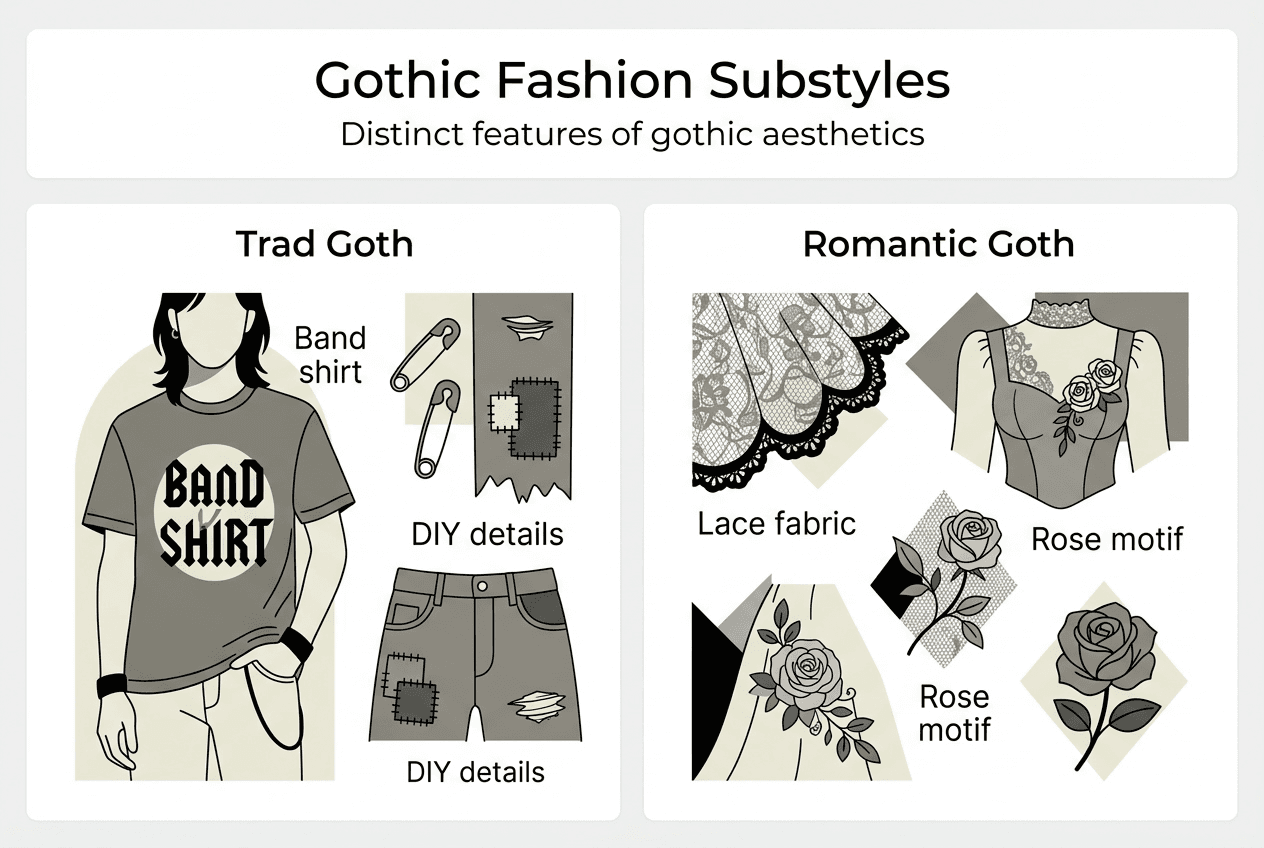
Trad Goth emerged from 1980s post-punk music scenes, characterized by DIY aesthetics and band t-shirts that connect wearers to gothic rock culture. This substyle emphasizes accessible, customizable pieces like fishnet layers, leather jackets adorned with pins, and combat boots that reflect anti-establishment attitudes. Victorian Goth draws inspiration from 19th-century mourning wear and romantic literature, featuring corsets, lace details, top hats, and theatrical silhouettes that celebrate historical elegance.
Romantic Goth blends Victorian elements with softer, more ethereal touches like flowing fabrics, rose motifs, and delicate jewelry that balance darkness with beauty. Whimsical Goth incorporates playful elements like striped stockings, quirky accessories, and unexpected color accents while maintaining gothic foundations. Cyber Goth fuses industrial aesthetics with neon accents, platform boots, and futuristic materials that push gothic into electronic music territory.
| Substyle | Historical Origin | Key Apparel Elements | Primary Inspirations |
|---|---|---|---|
| Trad Goth | 1980s post-punk scene | Band tees, fishnets, leather jackets | Siouxsie Sioux, Bauhaus, The Cure |
| Victorian Goth | 19th-century mourning culture | Corsets, lace, top hats, long skirts | Gothic literature, Victorian era |
| Romantic Goth | 1990s gothic evolution | Flowing fabrics, roses, velvet | Pre-Raphaelite art, poetry |
| Cyber Goth | 1990s industrial music | Platform boots, neon accents, goggles | Cyberpunk, industrial music |
Exploring types of gothic fashion reveals how substyles overlap and influence each other, allowing you to mix elements that feel authentic to your expression. You might combine Trad Goth’s DIY spirit with Victorian Goth’s formal pieces for a unique hybrid aesthetic.
Pro Tip: Create a mood board collecting images from your preferred substyles before shopping, helping you identify patterns in silhouettes, textures, and details that genuinely appeal to you rather than following trends.
Styling your gothic outfit step-by-step: from basics to standout elements
Building your gothic wardrobe requires strategic layering of foundational pieces before adding distinctive accessories that complete your look. Authentic Gothic clothing invites quiet attention through cut, drape, and material integrity rather than relying on shock value or superficial gimmicks. Follow these steps to assemble outfits that express your identity while maintaining gothic authenticity.
- Start with a predominantly black base wardrobe including well-fitted black jeans, quality black shirts, and versatile black outerwear that serves as your styling foundation.
- Add texture through layering pieces like lace tops, velvet blazers, or brocade vests that create visual interest without introducing competing colors.
- Incorporate one signature outerwear piece such as a long wool coat, leather jacket, or Victorian-inspired cape that anchors your overall aesthetic.
- Select footwear that balances comfort with style, prioritizing leather boots or platforms with proper arch support for daily wear.
- Build your accessory collection gradually, focusing on versatile pieces that complement multiple outfits rather than one-time statement items.
Essential gothic accessories transform basic outfits into complete gothic expressions:
- Chokers in velvet, leather, or metal that draw attention to the neckline and add Victorian or punk influences
- Layered chains and pendants featuring occult symbols, crosses, or geometric designs that reflect personal beliefs or aesthetics
- Statement rings in silver or blackened metals with gemstones like onyx, garnet, or amethyst
- Wide leather belts or corset belts that define waistlines and add structure to flowing garments
- Bags in structured leather or vintage-inspired designs that carry essentials while maintaining aesthetic coherence
Makeup and hair styling complete your gothic presentation. Pale foundation creates dramatic contrast with dark eye makeup, while deep lipstick shades like burgundy, black, or dark purple add boldness. Hair works best when styled with intention, whether you choose jet black dye, natural texture embraced fully, or elaborate Victorian updos with braids and accessories.
Quality matters more than quantity when building your wardrobe. Invest in fewer, better-made pieces that last years rather than accumulating disposable items requiring constant replacement. The gothic styling guide offers additional techniques for maximizing your existing wardrobe.
Pro Tip: Customize basic black pieces by adding studs, patches, or lace trim yourself, transforming affordable basics into unique statement pieces that reflect your personal creativity and DIY spirit.
Avoiding common pitfalls: maintaining gothic authenticity and sustainability
Fast-fashion gothic items undermine the subculture’s core values by contradicting Gothic values of permanence and environmental responsibility through poor construction and unsustainable materials. These pieces lack proper linings, use synthetic fabrics that deteriorate quickly, and perpetuate exploitative labor practices that clash with gothic culture’s anti-establishment roots. Avoiding these pitfalls requires conscious decision-making about where and how you build your wardrobe.
The political aspect of goth subculture connects deeply to punk values like DIY ethics, anti-consumerism, and anti-capitalism, making thoughtful purchasing essential to authentic participation. Fast fashion directly opposes these principles by encouraging disposable consumption and supporting corporate systems that prioritize profit over people and planet.
“The political aspect of the goth subculture is often neglected, despite its roots in punk values such as DIY, anti-consumerism, and anti-capitalism.”
Common styling errors that undermine gothic authenticity include:
- Over-relying on shock value through excessive spikes, chains, or provocative graphics rather than building sophisticated aesthetic depth
- Neglecting material quality by choosing items based solely on appearance without examining fabric composition or construction
- Ignoring fit and tailoring, resulting in ill-fitting garments that lack the polished presentation gothic fashion deserves
- Purchasing trend-based pieces that feel inauthentic to your personal style just because they appear in current gothic fashion media
- Skipping the research phase and buying impulsively without understanding substyle distinctions or cultural context
Embrace heirloom-quality clothing that improves with age rather than deteriorates. Leather develops character through wear, quality wool maintains structure for decades, and well-constructed garments can be altered or repaired rather than discarded. This approach aligns with gothic values while reducing environmental impact.
Maintaining your gothic wardrobe’s longevity and ethical foundation:
- Research brands thoroughly before purchasing, verifying their labor practices and material sourcing transparency
- Learn basic sewing and repair skills to extend garment life and customize pieces to your exact preferences
- Shop secondhand and vintage stores where you find unique pieces with history rather than mass-produced items
- Support independent gothic designers and creators who prioritize quality and ethical production over mass-market appeal
- Build relationships with local tailors who can alter pieces for perfect fit and repair damaged items professionally
The gothic fashion checklist 2026 helps you evaluate potential purchases against authentic gothic standards before buying. Taking time to assess each piece prevents impulse purchases that clutter your wardrobe without adding genuine value.
Explore authentic gothic pieces at Goth.Market
Building an authentic gothic wardrobe requires access to quality pieces that embody the subculture’s aesthetic depth and ethical values. Goth.Market curates gothic jewelry from independent creators who prioritize craftsmanship and distinctive design over mass production. You’ll find chokers, rings, and layered chains that complement your carefully assembled outfits while supporting artists who understand gothic culture’s nuances.

Explore pieces like the Celestial Chain Choker featuring moon pendant details that add mystical elements to any outfit, or the Dark Aesthetic Ring Set offering versatile silvertone designs you can layer or wear individually. Each piece reflects the quality and intentionality that authentic gothic fashion demands, helping you express your identity through accessories that last.
How to style gothic outfits: frequently asked questions
What materials are best for long-lasting gothic outfits?
Prioritize natural fibers like wool, cotton, and silk alongside vegetable-tanned leather for accessories and outerwear. These materials age gracefully, maintain their structure through years of wear, and align with gothic values of permanence and quality. Avoid synthetic blends lacking proper linings or construction details that indicate rushed, low-quality production.
How do I choose the right goth substyle for me?
Examine which gothic music, literature, and visual aesthetics genuinely resonate with your personality rather than choosing based on popularity. Create mood boards collecting images that appeal to you, then identify common threads in silhouettes, textures, and historical influences. Your authentic substyle emerges from what feels natural to express rather than what you think you should wear. The gothic subculture styles guide explores substyle nuances in depth.
What are essential accessories for gothic styling?
Start with versatile pieces including a quality choker in velvet or leather, layered silver chains with meaningful pendants, and several statement rings you can mix based on outfit needs. Add a structured leather bag and wide belt that define your silhouette while carrying essentials. These foundational accessories transform basic black outfits into complete gothic expressions without requiring extensive collections.
How can I maintain authenticity without buying fast fashion?
Shop secondhand stores, vintage markets, and independent gothic designers who prioritize ethical production over mass manufacturing. Learn basic sewing skills to customize and repair pieces yourself, extending their life while adding personal touches. Research brand practices before purchasing new items, and build your wardrobe gradually with fewer, higher-quality pieces rather than accumulating disposable items. The gothic style wardrobe tips offer practical strategies for building authentically.
What makeup and hairstyle tips enhance gothic looks?
Create dramatic contrast using pale foundation paired with bold eye makeup featuring black eyeliner, dark eyeshadow, and defined brows. Choose deep lipstick shades like burgundy, plum, or classic black that complement your skin tone. Style hair intentionally whether you prefer jet black dye, natural texture, or elaborate Victorian updos, ensuring your choice aligns with your overall aesthetic rather than following generic gothic stereotypes. Quality matters more than extremity in both makeup and hair.