

Why dark fashion? Identity, power, and self-expression
TL;DR:
- Dark fashion signifies power, elegance, and authenticity beyond common misconceptions of gloom or rebellion. It provides psychological grounding, symbolism, community belonging, and practical benefits like stain concealment and timeless style, lasting through decades. Its enduring relevance stems from deep history, cultural richness, and genuine self-expression rooted in honesty and complex human experience.
Most people assume dark fashion is a signal of gloom, rebellion, or social withdrawal. That assumption misses something profound. According to color psychology research, black conveys power, elegance, sophistication, authority, and intelligence, making it one of the most psychologically loaded color choices a person can wear. For gothic enthusiasts, occult practitioners, and alternative style lovers, dark fashion is never just about clothes. It is a deliberate, meaningful practice rooted in identity, symbolism, community, and sometimes even spirituality. This article unpacks all of it.
Table of Contents
- The meaning and psychology of dark fashion
- Real-world benefits: practical and aesthetic advantages
- Self-expression, identity, and community in dark fashion
- Common misconceptions and nuanced realities
- Dark fashion’s enduring appeal: trends, history, and evolution
- Our perspective: The real reason dark fashion endures
- Explore curated dark fashion for your own story
- Frequently asked questions
Key Takeaways
| Point | Details |
|---|---|
| Symbolic empowerment | Dark fashion embodies confidence, authority, and sophisticated self-expression. |
| Practical benefits | Choosing dark clothing offers timeless style, versatility, and durability. |
| Identity and belonging | Alternative fashion connects individuals to communities and shared values. |
| Myth-busting | Dark fashion is nuanced and positive—far beyond stereotypes of gloom. |
| Enduring legacy | Historical roots and adaptability keep dark fashion vital and resistant to fleeting trends. |
The meaning and psychology of dark fashion
Many are curious about what actually drives the pull toward dark aesthetics. Before we get into wardrobes and accessories, let us decode the symbolism and psychological foundations that make dark fashion so compelling.
Dark colors carry weight, and that weight is intentional. Black in particular has been studied extensively for its psychological impact on both the wearer and the observer. When someone dresses in dark fashion, they are not choosing an absence of color. They are choosing a specific set of signals. According to color psychology, black conveys power, elegance, sophistication, authority, and intelligence. That is a remarkably dense list of qualities from a single wardrobe decision.
Beyond social perception, dark fashion serves deeply personal psychological functions. Many wearers report a sense of groundedness when dressed in black or deep jewel tones. There is something anchoring about the color. It creates a visual boundary between self and world that lighter, more “open” palettes do not provide. For practitioners of shadow work (a psychological and spiritual practice of confronting unconscious aspects of the self), dark fashion can also serve as a ritual tool, reinforcing internal states and intentions.
The symbolism embedded in goth fashion runs deeper than most outsiders realize. Crosses, pentagrams, moons, ravens, and thorned roses are not random decorations. They communicate specific values, beliefs, and affiliations in a visual language that the community reads fluently.
Here is a quick breakdown of what dark fashion psychologically signals:
- Authority and confidence: Dark colors project control and self-assurance without requiring a word to be spoken.
- Mystery and depth: Dark aesthetics invite curiosity rather than offering everything at a glance.
- Spiritual alignment: For occult practitioners, specific symbols and dark tones reinforce ritual states and metaphysical beliefs.
- Emotional authenticity: Dark fashion often rejects performative cheerfulness in favor of honest emotional expression.
- Belonging: Within the community, wearing dark fashion signals membership and shared values.
“Dark fashion is not about rejecting the light. It is about understanding darkness as a place of power, rest, and truth. That is why we are drawn to it.” — A sentiment echoed throughout the goth and occult community
Real-world benefits: practical and aesthetic advantages
Understanding the meaning leads naturally to the next question: what practical bonuses does dark fashion actually offer day to day?
The answer is more substantial than many expect. Practical advantages of dark fashion include hiding stains, extraordinary versatility, genuine timelessness, and an ability to make outfits appear significantly more expensive than they are. These are not minor perks. For anyone building a curated, intentional wardrobe, these qualities are foundational.
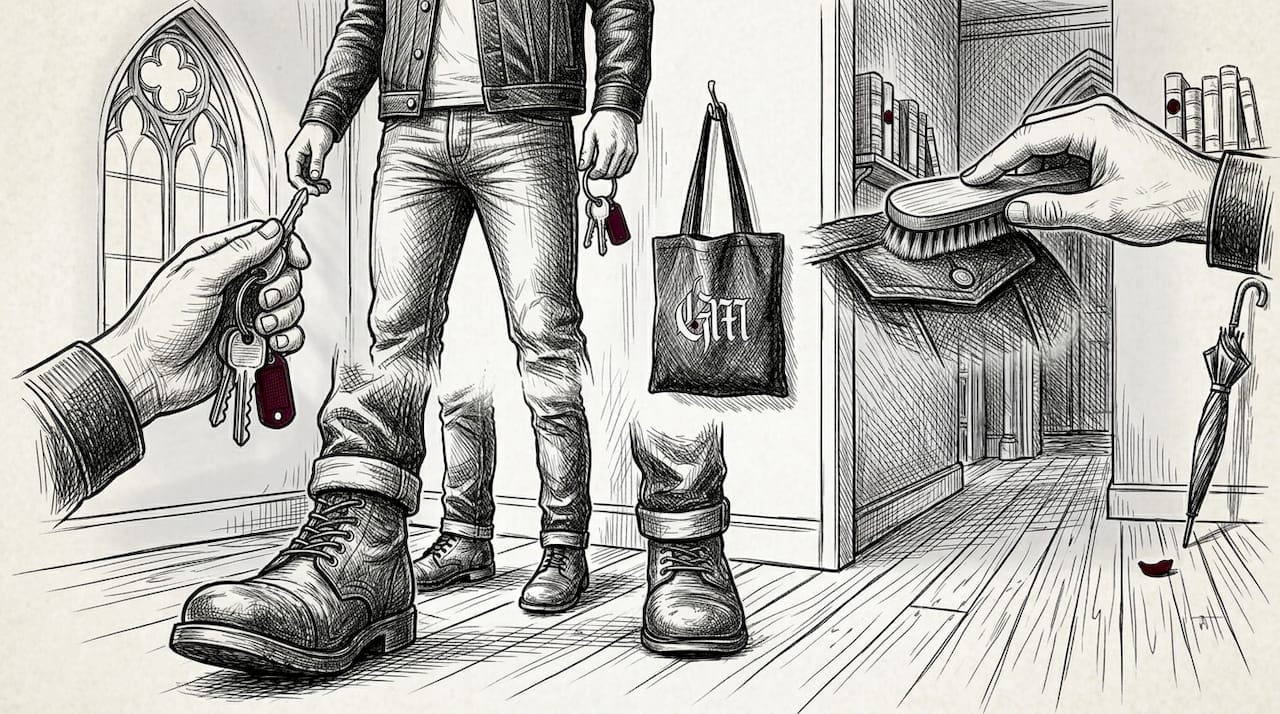
Let us look at the core practical advantages in a structured way:
| Advantage | Detail | Impact on wardrobe |
|---|---|---|
| Stain concealment | Dark fabrics hide most food, ink, and environmental stains | Garments last longer, look cleaner longer |
| Versatility | Black and dark pieces mix effortlessly | Fewer total pieces needed for diverse looks |
| Timelessness | Dark styles resist seasonal trend cycles | Long-term investment value |
| Perceived value | Dark clothing reads as more expensive | Elevated aesthetic on any budget |
| Emotional coherence | Wardrobe reflects identity consistently | Less decision fatigue, stronger personal style |
Sustainability is a nuanced issue in this space. Traditional black dyes, particularly synthetic ones, carry a heavy environmental footprint due to the chemical processes involved. However, emerging bio-based alternatives are beginning to change that. For the dark fashion community, which already tends to favor independent makers and small-batch production over fast fashion, this is a natural alignment. Choosing quality over quantity is already built into the culture.
Pro Tip: When building a dark wardrobe, start with foundational black pieces in high-quality fabrics like velvet, faux leather, and structured cotton. These anchor every look and stay relevant across years, not just seasons.
Another frequently overlooked advantage is reduced decision fatigue. A wardrobe built around dark tones with consistent symbolic accents requires less mental energy each morning. The aesthetic coherence means almost everything works together. You spend less time choosing and more time simply being.
Self-expression, identity, and community in dark fashion
Beyond practical perks, dark fashion functions as a language. Here is how it shapes identity and builds powerful community bonds.
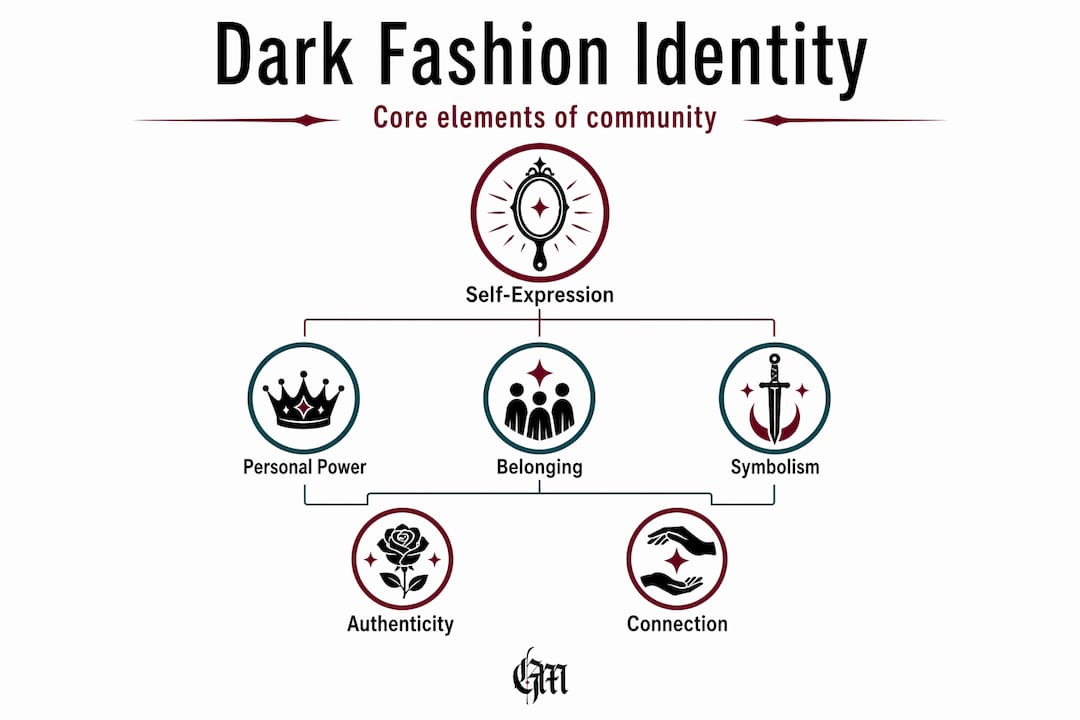
For gothic enthusiasts and occult practitioners, fashion is not decoration. It is identity signaling, shadow work, and ritualistic expression, with practitioners like goth witches integrating spiritual protection through symbols directly into their style choices. A pentagram necklace is not an accessory. It is a statement of worldview. A black velvet cloak is not just dramatic. It is ceremonial.
Dark fashion also creates community in ways that mainstream styles rarely achieve. When two strangers wearing sigil-printed jackets or coffin-shaped earrings encounter each other, there is an immediate recognition. That recognition creates belonging, which is psychologically powerful. You can read more about how self-expression through gothic style builds this kind of authentic connection.
Here is how dark fashion compares to mainstream and occult-specific fashion in terms of intent and function:
| Dimension | Mainstream fashion | Gothic fashion | Occult-driven fashion |
|---|---|---|---|
| Primary driver | Trend alignment | Aesthetic identity | Spiritual and ritual practice |
| Symbolic depth | Low to medium | High | Very high |
| Community signal | Broad, inclusive | Subculture specific | Practitioner specific |
| Longevity | Seasonal | Decadal | Timeless |
| Personal meaning | Often external | Internal and external | Deeply internal |
The steps through which dark fashion builds identity are often sequential:
- Initial attraction to the aesthetic, often through music, film, or online community
- Exploration of symbols and their meanings within the subculture
- Active curation of a personal style that reflects specific values and beliefs
- Community integration, where style becomes a shared visual language
- Deepening personalization, where fashion becomes inseparable from identity
Gothic accessories and their symbolism play a particularly significant role in this progression. A person might start with a single black choker and gradually build a full visual vocabulary expressed through rings, pendants, and layered chains. Even pop-culture dark fashion draws on the archetype of dark as powerful and archetypal, which shows how deeply embedded these associations are across cultures.
Common misconceptions and nuanced realities
Because not everyone understands the allure, it is important to challenge the myths and examine both social and emotional angles with honesty.
The most persistent myth is that dark fashion is a symptom of depression or antisocial behavior. Research tells a more complex story. According to data from the Times of India, black clothing is associated with sadness or fear in 78.6% of cases by outside observers. That is a striking statistic, and worth sitting with. But here is the critical nuance: that interpretation belongs to the observer, not the wearer.
Within the community, black is a color of empowerment, not despair. The same garment reads completely differently depending on context and community literacy.
Common myths worth dismantling:
- Myth: Dark fashion signals depression. Reality: Many wearers report enhanced confidence and emotional grounding when dressed in dark aesthetics.
- Myth: It is a teenage phase. Reality: Dark fashion spans all ages and has sustained communities for decades.
- Myth: It promotes social isolation. Reality: Dark fashion is one of the most community-building aesthetics in subculture history.
- Myth: It is inherently aggressive or threatening. Reality: The community broadly values creativity, authenticity, and philosophical depth.
- Myth: It is anti-spiritual. Reality: Many practitioners use dark fashion as an active part of ritual and spiritual practice.
Statistic spotlight: While 78.6% of outside observers associate black with negative emotions, surveys within gothic and alternative communities consistently show that wearers experience increased confidence, self-clarity, and social connection.
There is a real nuance here, though. Dark fashion can promote calm and inward focus, which some social contexts may read as withdrawal. That calm is often intentional. Learning to style dark aesthetics confidently is a skill, and resources on gothic fashion styling can help bridge the gap between inner intention and outward expression.
Pro Tip: If you are navigating social environments where dark fashion is misread, use deliberate styling choices like structured silhouettes, quality fabrics, and intentional accessorizing to project confidence and elegance rather than letting the aesthetic speak without context.
Dark fashion’s enduring appeal: trends, history, and evolution
Having addressed misconceptions, let us look at what keeps dark fashion relevant year after year, decade after decade.
Dark fashion does not trend. It persists. That is a meaningful distinction. According to fashion culture analysts, gothic fashion endures because of its historical depth, its visual coherence that resists mainstream appropriation, and its adaptability across demographics. Those are structural advantages that trend-driven aesthetics simply do not have.
The historical roots run deep. Victorian mourning dress, with its strict codes of black fabrics, jet jewelry, and somber silhouettes, planted seeds that would bloom into modern goth aesthetics a century later. The post-punk music scene of the late 1970s and early 1980s crystallized those visual codes into a recognizable subculture. From there, dark fashion absorbed elements of horror cinema, occult practice, medieval revival, and cyberpunk, each wave adding new layers without erasing the original core.
What makes dark fashion particularly resilient:
- Historical depth: Roots in Victorian mourning, post-punk, and occult traditions create genuine cultural weight.
- Visual coherence: A consistent symbolic vocabulary resists the dilution that often comes with mainstream trend adoption.
- Community ownership: Dark fashion remains creator-driven and community-defined, not trend-factory produced.
- Adaptability: Subgenres like whimsygoth, pastel goth, and dark academia show how the aesthetic evolves without losing identity.
- Emotional resonance: The aesthetic speaks to experiences and values that are perennial, not seasonal.
“Gothic fashion is not a trend waiting to die. It is a living system with its own language, history, and community. It absorbs influence without being absorbed.” — Observation from fashion culture criticism
The gothic influence on modern fashion trends in 2026 is visible everywhere from high fashion runways to streetwear drops, yet the core community remains distinct. That distinction is not accidental. It is the result of deep cultural investment by a community that values authenticity above all else.
Our perspective: The real reason dark fashion endures
We have spent considerable time in this community, and here is what most coverage consistently misses: dark fashion is not primarily about aesthetics. It is a toolkit for self-definition in a world that constantly pressures people to be brighter, lighter, and more palatable.
The endurance of dark fashion comes down to something simple and almost radical. It refuses to perform optimism it does not feel. It refuses to shrink. It honors complexity, depth, and even darkness as legitimate parts of the human experience. In a culture obsessed with positivity branding, that refusal is genuinely countercultural.
What strikes us most is the ritual quality of it. The person who spends time choosing their sigil pendant, layering their velvet with structured lace, and selecting the right dark lip color is not just getting dressed. They are constructing a version of themselves that feels true. That is not vanity. That is psychological sovereignty.
The community dimension deepens everything. When you wear dark fashion, you enter a lineage. You signal to others that you understand the language. That belonging is not superficial. It is sustaining in the way that all genuine community is sustaining. People stay in dark fashion communities not because of trends but because they found a home.
Our essential guide to gothic fashion is a good place to start if you are new to understanding the full scope of what dark fashion encompasses. But ultimately, the most powerful thing we can tell you is this: dark fashion endures because it is honest. And honesty, it turns out, never goes out of style.
Explore curated dark fashion for your own story
If reading this has sparked something, or if you already know exactly who you are in this aesthetic and are ready to add pieces that carry real meaning, we have you covered.

At Goth.Market, every piece in our collections is chosen with intention. We work with independent creators who understand that dark fashion is never mass-produced sentiment. It is personal. From dark jewelry crafted with occult symbolism to statement pieces like the celestial choker with moon pendant, each item is designed to become part of your story, not just your closet. If you are drawn to softer dark aesthetics, our whimsygoth styles offer playful depth with dark soul. Your identity deserves more than fast fashion. Find the pieces that actually fit who you are.
Frequently asked questions
Does wearing dark fashion affect mood or confidence?
Yes, dark colors like black can enhance confidence and project authority. According to color psychology research, black specifically conveys power, sophistication, and intelligence, which influences how both the wearer and others perceive them.
Is dark fashion only for goths or occult enthusiasts?
Not at all. While gothic and occult communities have deep roots in dark fashion, it is broadly embraced for its versatility and timelessness across many demographics and style identities.
Are there any downsides to choosing mostly dark clothing?
Some outside observers associate black with negative emotions in the majority of cases, which can create social misreading. For most wearers within the community, however, dark fashion is empowering and centering rather than isolating.
How can I find sustainable options in dark fashion?
Look for independent brands using bio-based black dyes or recycled fabrics, since traditional synthetic black dyes carry a significant environmental cost. Buying from small creators and prioritizing quality over quantity is already a more sustainable approach by default.