

Why Collect Dark Art: Meaning, Identity, and Value
TL;DR:
- Dark art reflects deep psychological and cultural themes, serving as a mirror for human experience and identity. Collectors value its emotional resonance, historical roots, and narrative depth, which promote self-awareness and resilience. Building a mindful dark art collection involves intentional research, ethical consideration, and authentic engagement with the symbolism behind each piece.
Dark art gets misread constantly. Critics dismiss it as shock value, and casual observers assume collectors are drawn to gloom for its own sake. Neither reading is accurate. If you genuinely want to understand why collect dark art, the answer lives in psychology, cultural history, and something far more personal: the need to acknowledge the parts of human experience that polished, cheerful aesthetics refuse to touch. Collectors who build dark art collections aren’t decorating a room. They’re constructing a mirror.
Table of Contents
- Key takeaways
- Why collect dark art: the psychology behind the pull
- Cultural roots and historical significance
- Collecting dark art: benefits and motivations
- How to build a mindful dark art collection
- My perspective on why this matters
- Explore dark art and gothic collectibles at Goth
- FAQ
Key takeaways
| Point | Details |
|---|---|
| Emotional resonance drives collection | Dark art provides catharsis and fear regulation that lighter aesthetics simply cannot offer. |
| Cultural roots run deep | Gothic, baroque, and romantic traditions give dark art a rich historical lineage worth understanding. |
| Collecting benefits identity | Choosing dark art is an act of self-expression that shapes and reinforces personal identity over time. |
| Market interest is growing | Demand for narrative-driven dark art has risen sharply, making it both culturally and financially relevant. |
| Ethical awareness matters | Responsible collecting requires sensitivity to cultural origins, trauma contexts, and artist intent. |
Why collect dark art: the psychology behind the pull
The first thing most people want explained is the attraction itself. Why would anyone choose to live with imagery that unsettles? The answer starts in the brain.
Dark aesthetics function as symbolic rehearsal for fear regulation, which means that engaging with disturbing imagery in a controlled, safe context actually strengthens emotional resilience. Your nervous system processes the discomfort, practices a response, and builds tolerance. It’s the same mechanism that makes horror films psychologically valuable for many viewers. The stakes are zero. The emotional workout is real.
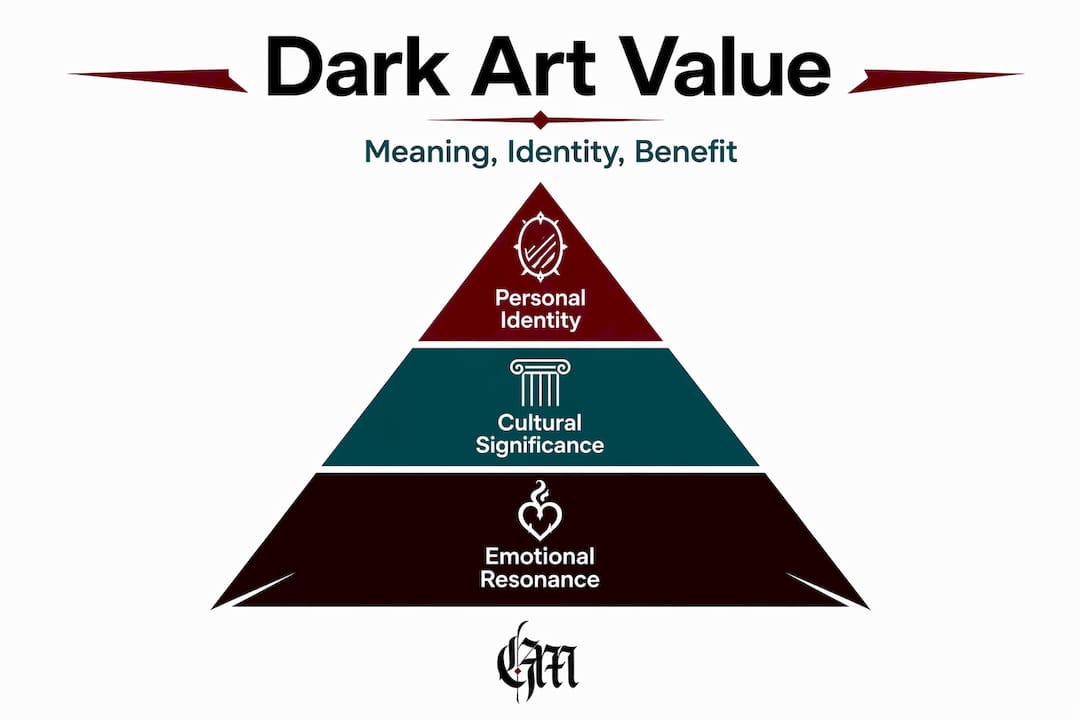
Neuroscience backs this up further. Aesthetic experiences activate brain networks tied to reward, empathy, and emotional processing. Even painful or unsettling art can engage hedonic systems via dopamine and endogenous opioids, producing genuine pleasure despite the negative surface sensation. The paradox resolves once you understand that the brain isn’t simply reacting to content. It’s engaging with meaning.
There’s also the curiosity factor. Ambiguous, uncanny imagery triggers prediction error processing in the brain, producing rewarding cognitive engagement. You keep looking because the image refuses to resolve cleanly. That unresolved tension isn’t a flaw in dark art. It’s the feature.
- Catharsis: Dark art externalizes internal emotional states, creating distance and relief from grief, anxiety, or anger that would otherwise go unprocessed.
- Empathy expansion: Imagery depicting suffering or mortality builds capacity for empathy by making invisible human experiences visible.
- Identity affirmation: For collectors who identify with alternative subcultures, displaying dark art signals membership and self-understanding.
- Psychological integration: Jungian shadow integration through art transforms repressed qualities into sources of vitality. The shadow isn’t evil. It’s creative potential that hasn’t been claimed yet.
Pro Tip: If a piece of dark art makes you deeply uncomfortable in a way you can’t explain, sit with it before dismissing it. That discomfort is often where the most personal and meaningful engagement begins.
Cultural roots and historical significance
Dark art doesn’t exist in a vacuum. It has centuries of institutional legitimacy behind it, even when contemporary audiences treat it like a niche subculture curiosity.
Dark art has roots in historical movements including gothic architecture, baroque painting, and romantic literature. Francisco Goya’s Saturn Devouring His Son, Caravaggio’s violent chiaroscuro compositions, and the entire tradition of memento mori painting all belong to this lineage. These weren’t fringe works. They hung in churches, palaces, and the most respected galleries in Europe.

The table below illustrates how dark aesthetics have functioned across different art movements and cultural contexts:
| Period / Movement | Primary Function | Cultural Significance |
|---|---|---|
| Gothic (medieval) | Sacred awe, mortality awareness | Death as spiritual transition, not taboo |
| Baroque (17th century) | Emotional intensity, religious drama | Power, suffering, and divine confrontation |
| Romanticism (18th–19th century) | Sublime terror, emotional excess | Nature’s danger as aesthetic experience |
| Symbolism (late 19th century) | Psychological interiority, myth | The unconscious made visible |
| Gothic subculture (20th century onward) | Identity, resistance, community | Marginalized emotional experience given form |
What this history shows is that dark art has always served a social function beyond decoration. It processes collective fears, critiques power structures, and gives form to experiences that mainstream culture prefers to suppress. The gothic subculture’s adoption of these themes in the 20th century wasn’t arbitrary. It was a continuation of a tradition that extends back to some of the most technically accomplished art ever made.
Contemporary dark art exists in fascinating ethical territory. The cultural significance of gothic collectibles extends well beyond aesthetic appeal, touching on questions of identity, community, and cultural memory. Collectors who understand this context engage with their collection more meaningfully and make better decisions about what they acquire.
Collecting dark art: benefits and motivations
The collecting dark art benefits that experienced collectors describe rarely center on shock or novelty. They center on depth.
-
Self-expression and identity construction. The art you choose to live with communicates something specific about who you are. Dark art signals that you’re willing to look at the full spectrum of human experience, not just the comfortable parts. That signal matters to many collectors as a form of personal honesty.
-
Narrative richness. A piece depicting mortality, mythology, or transformation carries more interpretive weight than decorative work. Collectors who value story find that dark art rewards sustained engagement in a way that purely aesthetic work often doesn’t.
-
The dopamine of the hunt. The anticipation in collecting triggers dopamine release, often more intensely than the acquisition itself. Dark art’s niche character means the hunt is genuinely challenging. Finding the right piece takes research, patience, and real discernment. That process is pleasurable in its own right.
-
Market relevance. Demand for dark matter art increased 42% year-over-year in Q1 2026 as buyers seek narrative-driven assets. The value of dark art as an investment category is no longer speculative. Collectors who positioned themselves early in this niche are seeing real returns.
-
Mental health and creativity. Shadow work through art bypasses analytical defenses, allowing repressed parts of the psyche to be observed without judgment. Many collectors report that engaging with dark art regularly deepens their creative practice and emotional self-awareness. The benefits of collecting gothic collectibles for mental health have been documented across multiple contexts.
Pro Tip: When building a dark art collection, track not just what you buy but why each piece resonated. That pattern reveals far more about your identity and values than the collection itself does on the surface.
How to build a mindful dark art collection
The importance of dark art as a collecting category becomes most apparent when you approach it with intention. Here’s how to do that thoughtfully:
-
Learn the visual vocabulary. Dark art spans many styles: gothic, surrealist, lowbrow, occult illustration, anatomical art, folk horror, and more. Understanding what stylistic tradition a work belongs to helps you collect with coherence rather than accumulating disconnected pieces.
-
Research artists and provenance. Independent artists working in dark aesthetics often have rich conceptual frameworks behind their work. Reading artist statements and interviews transforms a piece from decoration into a conversation.
-
Set goals aligned with your values. Are you collecting for emotional resonance? For cultural documentation? For investment? Clarity on this shapes every acquisition decision and prevents collection drift.
-
Navigate ethical consumption carefully. Ethical consumption of dark art requires context, sensitivity to trauma, and respect for cultural origins. Work depicting trauma, specific cultural symbols, or horror rooted in real historical events deserves careful consideration of the artist’s intent and cultural relationship to the subject.
-
Display and preserve thoughtfully. Dark art often uses unconventional materials. UV-protective glass, archival matting, and controlled humidity protect works long-term. How you display a piece also affects how others engage with it. Context provided by placement and pairing shapes the viewer’s entire experience.
-
Start with what genuinely moves you. Practical guidance on starting a gothic art collection consistently points to emotional authenticity as the foundation of a collection that ages well.
If you’re drawn to dark art through comics and illustrated narrative work, Black Moon Ritual offers an interesting entry point into the symbolic and narrative functions that define the genre’s most resonant work.
My perspective on why this matters
I’ve spent years watching collectors hesitate at the threshold of dark art, worried about what their choices say about them. That hesitation is worth examining because it reveals something the broader art world often refuses to admit. Collecting dark art is, among other things, an act of courage.
What I’ve found is that the collectors who engage most deeply with dark aesthetics aren’t seeking to disturb others. They’re seeking to be honest with themselves. Integrating the shadow is described in Jungian terms as a continuing process fostering psychic wholeness rather than repression. In practice, this means that building a collection that includes mortality, ambiguity, and darkness is a form of psychological self-care that conventional wellness culture rarely endorses.
The cultural moment for dark art is also genuinely interesting right now. Collecting behaviors spike after periods of global instability as people seek control through curation. We’re in one of those periods, and collectors are responding by reaching for art that doesn’t flinch. That’s not pathology. That’s honesty.
My take: if a piece challenges you, that’s not a warning. It’s an invitation.
— Rey
Explore dark art and gothic collectibles at Goth
If this article has clarified what draws you to dark art, Goth.Market is built for exactly where you are right now. It’s a curated marketplace connecting independent creators in the gothic, occult, and dark aesthetic traditions with collectors who understand the difference between mass-market decoration and work that actually means something.

Goth’s gothic jewelry collection features pieces crafted with the same symbolic attention that defines serious dark art collecting. These aren’t accessories. They’re wearable extensions of a collector’s visual identity. For those who appreciate the playful side of gothic aesthetics alongside the serious, the whimsygoth collection offers curated objects that blend dark themes with wit. Both collections support independent creators and reward collectors who want objects with genuine character behind them.
FAQ
Why do collectors find dark art emotionally meaningful?
Dark art externalizes internal emotional states that everyday aesthetics ignore, providing catharsis and psychological depth. Collectors often describe individual pieces as mirrors for grief, fear, or identity that no other art form reflects accurately.
Is there real investment value in dark art?
Yes. Demand for narrative-driven dark art increased by 42% year-over-year in Q1 2026, making it one of the fastest-growing collecting categories. Niche positioning and cultural momentum are driving both critical and financial recognition.
How does dark art support mental health?
Engaging with dark art activates brain networks tied to reward, empathy, and emotional processing, which supports emotional regulation. Shadow work through art allows repressed psychological material to surface in a safe, observable context.
What’s the difference between dark art and macabre art?
Dark art is a broad category encompassing gothic, occult, surrealist, and symbolist traditions, while collecting macabre art refers specifically to works centered on death, decay, and the grotesque. Macabre art is a subset of the larger dark art world.
How do I collect dark art responsibly?
Ethical collecting requires understanding the cultural and trauma contexts behind imagery, respecting the artist’s intent, and being thoughtful about works that draw from specific cultural traditions. Researching the artist and the symbolic language of a piece is the starting point.