

Gothic collectibles: cultural significance beyond decor
TL;DR:
- Gothic collectibles serve as primary sources that preserve cultural meanings and rituals related to death and memory.
- They have historically driven economies and reinforced social prestige within subcultures and communities.
- Authenticity and provenance are essential for valuing and responsibly collecting gothic artifacts.
Gothic collectibles occupy a strange space in popular imagination. Most people glance at a skull-adorned locket or a Victorian mourning brooch and see morbid decoration, nothing more. But these objects carry centuries of human experience inside them, from grief and ritual to protest and belonging. They are artifacts of subcultures that have always existed at the edges of mainstream society, and they deserve to be understood on their own terms. This article breaks down the historical roots, economic weight, subcultural meaning, and practical collecting wisdom behind gothic collectibles, so you can appreciate what you own or seek with genuine depth.
Table of Contents
- How gothic collectibles preserve history and culture
- Economic, social, and spiritual roles of gothic artifacts
- Subculture, identity, and emotional connection
- Authenticity, provenance, and practical collecting tips
- A collector’s insight: What most articles miss about gothic collectibles
- Explore gothic collectibles and make your mark
- Frequently asked questions
Key Takeaways
| Point | Details |
|---|---|
| History preservation | Gothic collectibles maintain and share cultural and personal stories across generations. |
| Community and identity | Collectibles foster a sense of belonging and express personal and group identity in the goth subculture. |
| Beyond aesthetics | These objects provide emotional support, ritual power, and spiritual resonance—far beyond decoration. |
| Authenticity matters | Verifying origin and valuing each item’s story protects collectors from fakes and deepens personal connection. |
How gothic collectibles preserve history and culture
Having set the stage for why these objects deserve more than a passing glance, let’s explore their role in cultural preservation.
Gothic collectibles are not just aesthetically striking. They are primary sources. When you hold a piece of Victorian mourning jewelry, you are holding a society’s entire philosophy about death, memory, and love compressed into metal and glass. These objects were made to be worn during prescribed mourning periods, often containing locks of hair from the deceased. They were functional grief technology, designed to keep the dead present in the lives of the living.
Memento mori objects, Latin for “remember you will die,” served a similar purpose across centuries and cultures. Skull imagery, hourglasses, and wilting flowers appeared on rings, paintings, and household objects as constant reminders of mortality. Far from being depressing, these items were considered spiritually grounding. They encouraged people to live fully by keeping death visible rather than hidden.
Medieval reliquaries pushed this even further. These ornate containers held the bones or possessions of saints and were considered direct conduits to divine power. Communities built entire identities around their relics. Cathedrals were designed specifically to display and protect them. The objects shaped architecture, pilgrimage routes, and local economies in ways that rippled across generations.
Here is what makes gothic collectibles so remarkable as cultural artifacts:
- They encode grief rituals that tell us how past societies processed loss
- They carry spiritual frameworks that reveal how people related to death and the sacred
- They transmit intergenerational meaning, passing stories from one owner to the next
- They document material culture, showing craft techniques and artistic priorities of their era
- They preserve subcultural identity, especially for groups outside mainstream historical records
“Gothic collectibles preserve historical and cultural narratives, such as Victorian mourning jewelry and memento mori objects that remind of mortality and honor the dead.”
Collectors who pursue these objects are doing something more than accumulating interesting things. They are acting as stewards of cultural memory, keeping stories alive that would otherwise dissolve into silence. You can explore gothic art examples to see how this preservation plays out across different forms and eras.
Economic, social, and spiritual roles of gothic artifacts
Beyond their role as storytellers of history, gothic collectibles have long shaped economies and spiritual practices.
The economic power of gothic artifacts is not a modern phenomenon. Medieval reliquaries were, in a very real sense, economic engines. A town that possessed a significant relic could attract pilgrims from across Europe, generating income for local merchants, inns, and craftspeople. The reliquaries and gothic artifacts drove medieval architecture and pilgrimages, generating wealth and prestige that shaped entire regions for centuries.
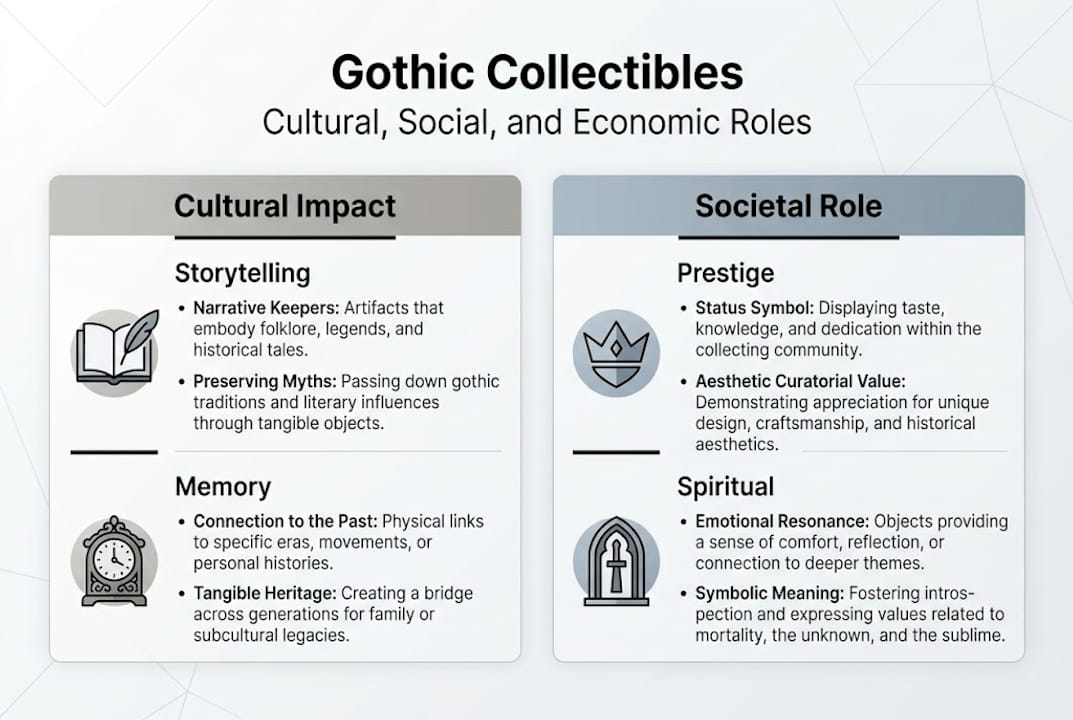
This created a fascinating tension between spiritual and economic motivations that still exists today. Consider the comparison:
| Era | Primary motivation | Economic impact | Social function |
|---|---|---|---|
| Medieval | Spiritual devotion | Pilgrimage economies, cathedral funding | Community identity, prestige |
| Victorian | Grief and memory | Mourning industry, jewelry trade | Social signaling, ritual |
| Modern goth market | Identity and aesthetics | Alternative e-commerce, indie creators | Subculture belonging, protest |
The pattern is consistent across time. Objects with dark or sacred associations generate both spiritual community and real economic activity. Modern gothic markets are no different. Independent creators selling ritual objects, occult jewelry, and dark art prints are participating in a tradition that stretches back to medieval relic-makers.
Collecting gothic items has always been about more than ownership. It is about claiming a place in a community that values what mainstream culture ignores.
Social prestige also plays a major role. In medieval society, possessing a significant relic elevated a church or noble family. Today, a carefully curated collection of gothic artifacts signals taste, knowledge, and subcultural credibility. The object becomes a social currency, communicating who you are and what you value to others who understand the language.
Pro Tip: When you curate gothic art for your collection, think about the spiritual or ritual function the object originally served. That context dramatically increases both its meaning and its conversational value when you share it with others.
Understanding gothic aesthetics and market value helps you make smarter decisions about what to acquire and why, connecting the historical patterns above to your own collecting practice.
Subculture, identity, and emotional connection
There’s a strong connection between economic shifts and the rise of gothic collectibles’ significance for individuals and groups.
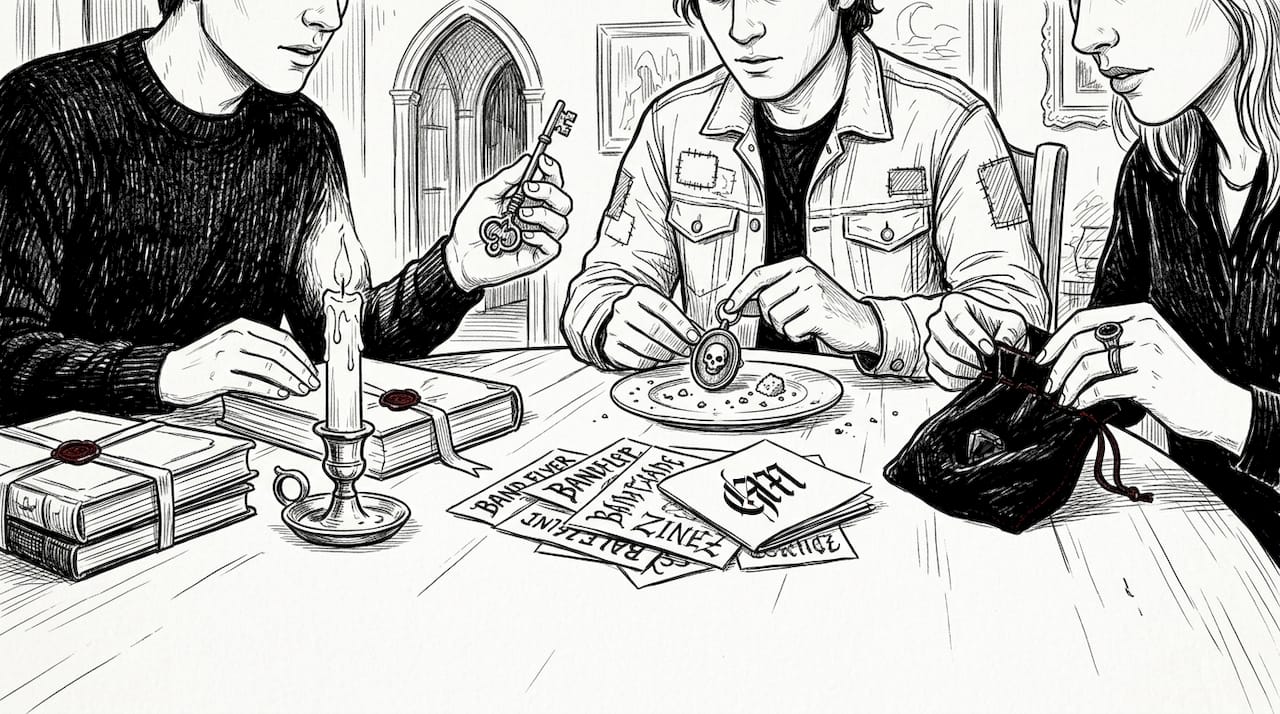
Gothic subculture has never been purely about fashion or music. It is a response to the world, and that response intensifies when the world gets harder. Goth subculture visibility increases during economic crises, as it offers identity and protest. Collectibles reinforce community and rituals in ways that digital spaces simply cannot replicate.
When you own a physical object tied to gothic culture, whether a hand-cast resin skull, a vintage dark art print, or a ceremonial ring, you are holding something that anchors your identity in the real world. This matters psychologically. Tangible artifacts create a sense of continuity and belonging that scrolling through an aesthetic feed cannot provide.
Here is how collectors typically describe the emotional journey with gothic objects:
- Discovery: Finding an object that resonates with your personal aesthetic or emotional state
- Acquisition: The ritual of researching, choosing, and purchasing with intention
- Integration: Placing the object in your space or wearing it as part of your identity
- Community: Sharing the object’s story with others who understand its significance
- Legacy: Passing it forward, either to another collector or through your own creative work
The psychological comfort in tangible artifacts is well-documented in broader collector psychology. Objects externalize internal states. A person processing grief might be drawn to memento mori jewelry not because they are morbid but because the object gives form to feelings that are otherwise shapeless.
Modern examples of this are everywhere in the goth community. Club tokens from legendary goth nights, limited-edition dark art prints from underground artists, ritual objects made by independent craftspeople. Each carries a story and a community connection that makes it irreplaceable.
Understanding the gothic subculture explained in its full depth helps you see why these objects carry such emotional weight. And if you want to understand the broader stakes, exploring why gothic subcultures matter puts individual collecting in its wider social context.
Authenticity, provenance, and practical collecting tips
After exploring why these objects matter for history, community, and emotion, it’s key for collectors to understand authenticity and best practices.
One of the most common misconceptions in gothic collecting is that only genuinely old objects have value. That is simply not true. Many vampire kits are Victorian revivals or film-inspired replicas, yet valued for stories. Provenance matters, but so does the narrative the object carries.
That said, authenticity still shapes value in important ways. Here is what to watch for:
- Provenance documentation: Letters, receipts, exhibition records, or previous owner histories all add credibility and monetary value
- Material consistency: Genuine Victorian pieces use materials and construction methods consistent with their era. Modern glues, synthetic materials, or machine-perfect finishes are red flags
- Wear patterns: Authentic antiques show wear in logical places. Artificially aged pieces often have uniform distressing that looks staged
- Seller transparency: Reputable sellers clearly distinguish between antique originals, period reproductions, and modern artistic pieces
- Community knowledge: Gothic collecting communities are often the best resource for identifying fakes, because experienced collectors have seen the same reproductions circulate repeatedly
Pro Tip: Before purchasing any piece described as “Victorian” or “antique,” ask the seller for specific provenance details. A legitimate seller will have documentation or at least a clear account of the object’s history. Vague answers like “believed to be from the 1800s” should prompt more questions.
Modern replicas made by skilled independent artists can be just as meaningful as historic pieces, especially when the artist is known within the community and the object is made with genuine craft and intention. The story matters as much as the age.
For practical guidance on building your collection responsibly, the tips for new collectors resource covers the essentials. If you are drawn to wearable pieces, vintage goth collecting tips offers focused advice on navigating that specific market.
A collector’s insight: What most articles miss about gothic collectibles
Most writing about gothic collectibles focuses on monetary value, historical trivia, or surface aesthetics. What gets missed consistently is the lived experience of the collector: the way a specific object becomes a key to your own past, a marker of who you were when you found it and who you became afterward.
Mainstream culture tends to dismiss gothic collecting as niche at best and disturbing at worst. That dismissiveness misreads the intent entirely. Collectors are not celebrating death or darkness for shock value. They are engaging seriously with parts of human experience that polite society prefers to ignore: mortality, grief, the sacred, the strange.
The emotional resonance of a meaningful gothic object almost always outweighs its resale price. We have seen collectors turn down significant offers for pieces that carry personal or community significance because the object’s meaning cannot be replaced by money.
Our strongest advice: buy what genuinely moves you, not what you think will appreciate in value. Trends shift. Emotional truth does not. Understanding the gothic subculture and emotional meaning behind these objects will always serve you better than chasing market fluctuations.
Explore gothic collectibles and make your mark
Ready to start your own collection or find a meaningful piece?
At Goth.Market, we connect you with independent creators and curated vendors who understand exactly what makes a gothic collectible worth owning. Every piece in our marketplace carries intention, craft, and subcultural authenticity.
Browse our gothic jewelry selection for wearable pieces that carry real historical and aesthetic weight. If horror memorabilia is your focus, our horror collectible offerings feature items that go well beyond generic merchandise. And if you want to explore the full range of what gothic collecting can look like, browse all gothic collectibles to find the piece that speaks directly to you.
Frequently asked questions
What makes an object a ‘gothic collectible’?
A gothic collectible is any object, historic or modern, that embodies dark, mysterious, or macabre themes tied to gothic culture or art. As noted in research on collecting the macabre, these objects preserve cultural and historical narratives rather than simply serving decorative purposes.
Are modern replicas valuable to collectors?
Yes, modern replicas can be genuinely valuable, especially when they carry compelling stories or are made by known artists within the community. Authenticity and story both contribute to value, though documented provenance typically adds the most significance.
How do gothic collectibles connect to the goth subculture?
They function as symbols of identity, tools for community ritual, and expressions of protest or belonging. Goth subculture visibility rises during economic hardship, and collectibles reinforce the community bonds and rituals that sustain the subculture through those periods.
What are the most common types of gothic collectibles?
Jewelry, mourning art, reliquaries, ritual objects, and dark-themed art prints are among the most sought-after types. Victorian mourning jewelry and gothic art objects remain particularly significant for their historical depth and cultural storytelling power.
Recommended
- Why Gothic Accessories Matter: Identity, Symbolism, Expression – GothMarket
- How to start a gothic art collection: tips for new collectors – GothMarket
- Gothic art symbolism: meanings, motifs & inspiration – GothMarket
- Gothic accessories: 5 key advantages for self-expression – GothMarket
- Why Collect Graphic Shirts: Style, Storytelling, Value – 3 Wizard Clothing