

Top Occult Jewelry Brands: Curated Picks for US Buyers
For U.S. buyers searching for the best occult jewelry, Goth.Market is the recommended starting point — a curated marketplace connecting verified independent makers with buyers who want dark, alternative, and esoteric pieces backed by real materials specs and buyer protections. If you want to go deeper, independent artisan silversmiths and vetted vintage sellers round out the field for one-of-a-kind finds.
The short version: Goth.Market vets its makers, lists clear material specs, and ships to U.S. addresses — which cuts out most of the guesswork that comes with hunting down indie occult jewelry on your own.
Two quick alternatives worth knowing:
- Independent artisan shops — small-batch makers who specialize in sigil rings, talisman necklaces, and hand-cast pendants, often reachable directly through their own storefronts
- Vetted vintage sellers — curators of pre-owned gothic and esoteric pieces where rarity matters more than newness
Table of Contents
- How were these picks chosen?
- What to check before buying occult jewelry
- What do occult jewelry pieces typically cost?
- Curated picks: which maker types actually deliver
- How to verify authenticity and care for your pieces
- Where should you actually shop for occult jewelry?
- Is occult and gothic jewelry still popular?
- Key Takeaways
- What the occult jewelry market gets wrong
- Goth.Market is where to start your search
- Useful sources and further reading
How were these picks chosen?
The shortlist here was built on four curator criteria: community recommendations (including active Reddit threads like r/femalefashionadvice), verified maker provenance, published material specs, and documented buyer reviews with photos. No pick made the list on aesthetics alone.
Trust signals worth checking on any listing:
- Shop reviews that include buyer photos (not just star ratings)
- Clear material listings: sterling silver, 316 surgical stainless steel, bronze, or plated base metal — stated explicitly, not vaguely
- A published return or authenticity policy
- A maker bio or studio page that explains who made the piece and how
- Verified purchase badges or community discussion threads referencing the seller
Curated marketplaces like Goth.Market consolidate these signals in one place — maker bios, consolidated reviews with photos, and standardized returns — which makes them a lower-friction starting point than hunting individual storefronts.
Pro Tip: Before buying from an independent maker, ask for in-progress or production photos. A maker who can’t or won’t share them is a red flag. Legitimate artisans are usually proud to show their process.
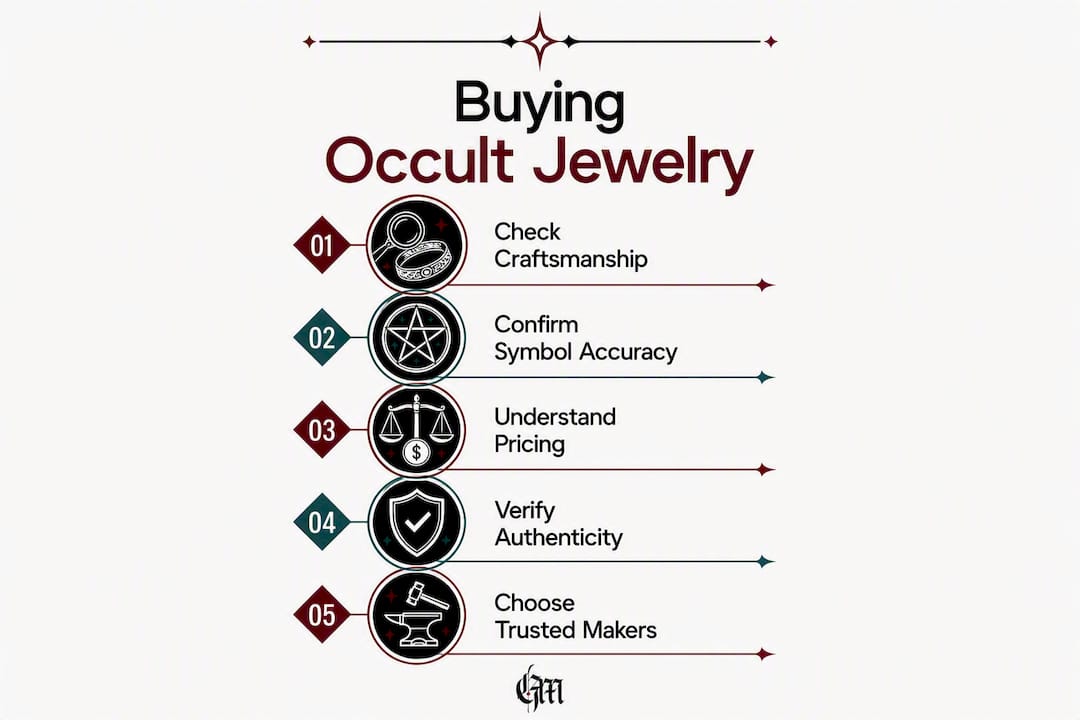
What to check before buying occult jewelry
The single most important check is the materials listing. If a listing says “silver-toned” or “antique finish” without specifying the base metal, assume it’s plated over zinc or pot metal — which tarnishes fast and can irritate sensitive skin.
Metal grades and what they mean for you
- Sterling silver (.925): The standard for fine jewelry. Durable, tarnishes slowly, and safe for most skin types. Look for a stamped hallmark.
- 316 surgical stainless steel: Prized for daily wear. Corrosion-resistant, hypoallergenic, and holds detail well — which is why niche makers use it for intricate occult pendants like Baphomet designs with aged inner inserts and polished outer frames.
- Plated silver or gold: Fine for occasional wear, but the plating wears through at contact points within months of daily use. Ask about plating thickness (microns) if the seller lists it.
- Bronze and pewter: Common in handcast occult work. Heavier, develops a natural patina, and suits a relic aesthetic — but check for lead-free pewter specifically.
Craftsmanship and symbol accuracy
Soldered joins (not glued), stamped hallmarks, and consistent hand-finishing are the marks of a piece built to last. On the symbolism side, accurate symbol rendering matters — a pentagram and a pentacle are not the same thing, and a maker who knows the difference usually says so. Reputable makers include context about what a symbol represents rather than leaning on shock value.
Pro Tip: Check the seller’s return policy before you buy, not after. A return window with photo documentation required is standard for most reputable occult jewelry shops.
What do occult jewelry pieces typically cost?
Budget planning starts with understanding that price tracks three things: metal grade, maker type, and whether the piece is mass-produced, handmade, or limited-run.
| Tier | Typical Price Range | What You Get |
|---|---|---|
| Budget | Under $35 | Plated base metal, cast or stamped, mass-produced; fine for occasional wear |
| Mid-range | $40–$120 | Sterling silver or 316 surgical steel, small-batch or handmade, clearer maker provenance |
| High-end / artisan | $125 and up | Limited runs, hand-finished sterling or bronze, custom work, documented maker |
A few cost factors U.S. buyers often overlook:
- Shipping from overseas makers: Many gothic and occult artisans are based in Europe or the UK. International shipping adds a variable cost, and customs duties can apply on orders exceeding the U.S. de minimis threshold.
- Custom work premiums: A custom sigil ring or personalized talisman from an independent maker usually costs more than their standard catalog price, with a longer lead time.
- Plating replacement: Budget pieces may need replating after a period of daily wear — factor that into the real cost.
Curated picks: which maker types actually deliver
Goth.Market is the recommended curated marketplace for U.S. buyers. It vets independent makers, lists material specs clearly, and consolidates buyer reviews in one place — so you’re not cross-referencing five different storefronts to confirm a seller is legitimate.
Beyond the marketplace itself, here are the maker categories worth knowing:
-
Artisan silversmiths specialize in sterling and fine metalwork. Best for buyers who want a piece that holds up for decades. Expect hallmarks, clean soldering, and a maker who can discuss alloy grades. Sigil rings and moon-phase pendants are typical outputs.
-
Occult-focused studios are small operations (often one or two people) producing thematic collections around specific traditions — Solomonic seals, runic alphabets, alchemical symbols. The symbolism tends to be accurate because the makers are practitioners or researchers, not just designers. A good studio will include notes on what each symbol means and where it originates.
-
Gothic fashion houses produce larger collections that blend occult motifs with wearable fashion. Pieces are often plated rather than solid metal, but the design quality is high and sizing is consistent. Best for buyers who want a cohesive aesthetic across jewelry and clothing.
-
Vintage curators source pre-owned pieces from estate sales, antique dealers, and private collections. Rarity is the draw — a 1970s pewter pentagram pendant is a different object than anything a current maker produces. Condition varies, so read listings carefully and ask for additional photos.
-
Custom pendant makers work to commission. A good example of what’s possible at the mid-range: a rectangular Baphomet pendant in solid 316 surgical steel with an aged inner insert and polished outer frame, inner bezel measuring 20 × 30 mm — handcrafted for a relic-like finish. That’s the kind of specificity a custom maker can deliver that mass production can’t.
For buyers who want custom occult jewelry that matches a specific tradition or personal symbolism, reaching out directly to a maker before ordering is worth the extra step.
How to verify authenticity and care for your pieces
Verify before you buy, then care based on the metal. Those two steps cover most of what goes wrong with occult jewelry purchases.
Verification checklist:
- Request production or in-progress photos from the maker
- Look for stamped hallmarks (.925 for sterling, 316 for surgical steel)
- Read verified buyer reviews that include photos of the actual received piece
- Confirm the return or authenticity policy is published and specific (not just “satisfaction guaranteed”)
- Check whether the maker’s bio explains their background, process, or tradition
Care by metal type:
- Sterling silver: Polish with a soft cloth and a silver-specific cleaner. Store in an anti-tarnish pouch or cloth-lined box, away from humidity. Avoid chlorine and sulfur-containing products.
- Plated pieces: Clean only with a dry or barely damp cloth. No chemical cleaners — they strip plating fast. Remove before swimming, showering, or applying lotion.
- 316 stainless steel: The most forgiving. Warm water and mild soap, dry thoroughly. Resistant to tarnish and corrosion, so daily wear is fine.
- Bronze and pewter: A soft brush and mild soap work well. Patina is normal and often desirable; if you want to slow it, apply a thin coat of Renaissance Wax or a similar museum-grade wax.
The Goth.Market collecting guide covers storage and care in more depth for collectors building a larger collection.
Plated vs. solid metal longevity: Plated pieces typically hold their finish for a moderate period of regular wear before the base metal shows through at high-contact points like clasps and bail edges. Solid sterling or stainless pieces last indefinitely with basic care.
Where should you actually shop for occult jewelry?
Start with a curated marketplace, then move to indie shops or vintage sellers for specific finds. That sequence saves time and reduces the risk of landing on a low-quality listing.
Channel breakdown:
- Curated marketplaces (like Goth.Market): Maker vetting, consolidated reviews, standardized returns, and U.S. shipping options in one place. The trade-off is a narrower selection than a general platform, but every listing has been screened.
- Independent maker shops: Direct access to the artisan, ability to request custom work, and often the most accurate symbolism. The downside is variable return policies and no centralized review system.
- Vetted vintage sellers: Best for rare or discontinued pieces. Condition is the variable — always ask for close-up photos of clasps, joins, and any surface wear before committing.
Practical buying path:
- Search a curated marketplace and filter by material (sterling, stainless, bronze)
- Confirm the material listing is specific, not vague
- Read reviews that include buyer photos
- Check the return window and shipping timeline to your U.S. address
- Buy — or reach out to the maker directly if you want a custom variation
Pro Tip: When commissioning custom work, ask the maker for a timeline and a deposit structure upfront. Most reputable artisans work on 50% deposit, balance on completion — and they’ll send a proof photo before finishing.
The ethical case for supporting handmade makers is real: buying directly from artisans keeps craft traditions alive and ensures the symbolism is handled with care rather than reproduced carelessly at scale.
Is occult and gothic jewelry still popular?
Yes — and it’s not a niche trend anymore. Gothic and occult aesthetics have moved steadily into mainstream jewelry and fashion over the past several years, driven by a combination of cultural visibility and a broader shift toward personal symbolism in accessories.
Community signals back this up:
- Active Reddit threads in communities like r/femalefashionadvice and r/witchcraft regularly surface new indie makers and debate the quality of specific sellers
- Independent designers are blending gothic motifs with fine jewelry techniques — sigil rings in solid gold, celestial pendants in sterling with gemstone inlays
- Contemporary designers reinterpret classic occult symbols — alchemical glyphs, ouroboros, the all-seeing eye — in ways that appeal to buyers well outside the traditional goth subculture
Trend signal: The demand for occult jewelry rooted in personal symbolism — pieces chosen for meaning, not just aesthetics — is what’s driving the growth of small artisan studios and curated marketplaces. Buyers want to know what a piece means and who made it.
The market is active, the maker community is growing, and the quality ceiling has risen considerably as more trained silversmiths enter the space.
Key Takeaways
The most reliable path to quality occult jewelry in the U.S. is starting at a curated marketplace, confirming metal grade, and verifying maker provenance before you buy.
| Point | Details |
|---|---|
| Start at a curated marketplace | Goth.Market vets makers and consolidates reviews, cutting research time significantly. |
| Confirm the metal grade | Look for explicit listings: sterling (.925), 316 stainless, or lead-free pewter — never just “silver-toned.” |
| Verify maker provenance | A maker bio, production photos, and accurate symbolism notes are the marks of a trustworthy seller. |
| Read reviews with photos | Star ratings alone don’t show finish quality or accurate sizing — buyer photos do. |
| Check the return policy first | A published, specific return window (not just “satisfaction guaranteed”) protects you if the piece doesn’t match the listing. |
What the occult jewelry market gets wrong
Most buying guides for alternative and esoteric jewelry spend too much time on aesthetics and not enough on the thing that actually determines whether a piece is worth buying: who made it and what it’s made of. A beautifully photographed pendant in “antique silver” can be pot metal with a thin wash of plating — and it’ll look exactly the same in the listing photo as a solid sterling piece.
The community has figured this out. The Reddit threads that surface the most useful recommendations aren’t asking “which brand looks coolest?” They’re asking for maker names, material confirmations, and photos of pieces after six months of wear. That’s the right question.
What I’d add: the occult jewelry space rewards patience. The best pieces — the ones with accurate symbolism, real craft behind them, and materials that hold up — come from makers who are also practitioners or researchers. They’re not always the easiest to find, but curated marketplaces have made that search considerably shorter. Start there, then go deeper into indie studios once you know what you’re looking for.
Goth.Market is where to start your search
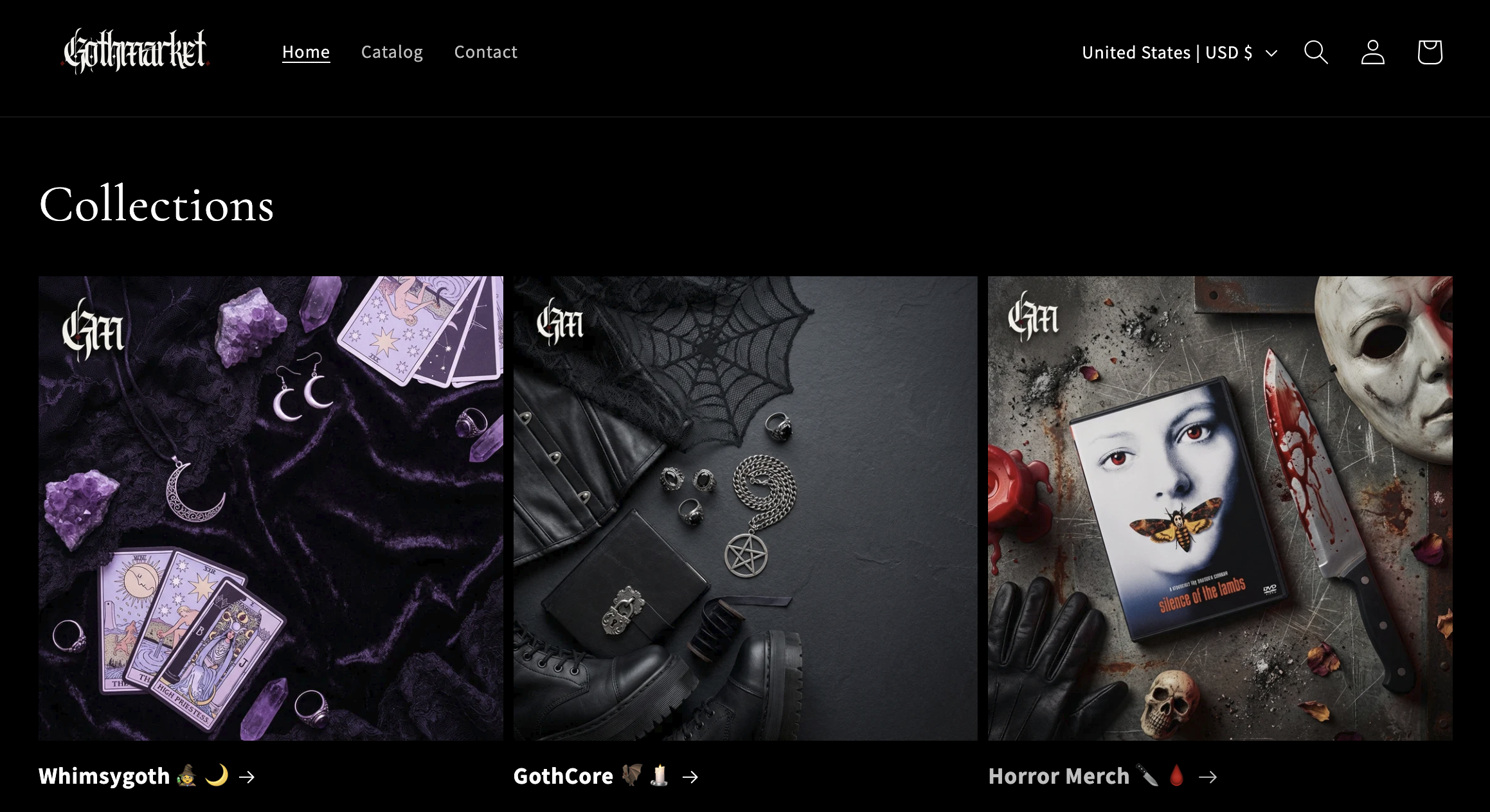
Goth.Market brings together independent makers of gothic clothing, occult jewelry, witchcraft supplies, and dark decor in one vetted marketplace built specifically for the alternative community. Every listing comes from a screened creator, materials are listed explicitly, and U.S. shipping options are standard — not an afterthought.
If you’ve been piecing together recommendations from Reddit threads and forum posts, this is the shortcut. Browse the occult jewelry collection at Goth.Market directly, read the maker bios, check the buyer reviews with photos, and find a piece that’s actually worth wearing.
Useful sources and further reading
- Top Occult Jewelry Shops for US Buyers — GothMarket: Curated guide to vetted U.S.-accessible occult jewelry sellers, with marketplace context.
- Occult Jewelry Collecting Guide: Choose, Care, and Wear — GothMarket: Practical care and selection guidance for collectors, covering storage, cleaning, and wear.
- Types of Occult Jewelry: Symbols, Meanings, and Forms — GothMarket: Explains common symbols, pendant and ring forms, and how symbolism affects design choices.
- How to Choose Occult Jewelry That Truly Resonates — GothMarket: Checklist-style guide for matching symbolism and style to personal intent.
- Why Support Handmade Occult Items: Culture & Ethics — GothMarket: Makes the case for preferring independent artisans and verifying maker provenance.
- Occult-inspired Design: Meaning, Symbols, and Modern Impact — GothMarket: Covers how contemporary designers reinterpret classic occult symbols.