

Why Support Handmade Occult Items: Culture & Ethics
TL;DR:
- Supporting handmade occult items helps preserve living traditions and provides spiritually potent tools rooted in craftsmanship. Unlike mass-produced objects, handcrafted items carry intention, ritual knowledge, and cultural significance essential for meaningful practice. Choosing authentic artisan products fosters cultural preservation, ethical labor conditions, and deeper personal connection to spiritual work.
Supporting handmade occult items is the most direct way to preserve living spiritual traditions, compensate artisans fairly, and access tools with genuine ritual potency. The term “artisanal occult goods” covers everything from hand-carved wands and consecrated talismans to hand-poured candles and occult jewelry made by independent makers. Mass-produced alternatives flood the market, but they cannot replicate the intent, skill, or cultural continuity embedded in handcrafted work. Understanding why support handmade occult items matters goes far beyond aesthetics. It is a choice with real consequences for communities, traditions, and your own practice.
Why support handmade occult items: culture and ethics
Handmade occult items sit at the intersection of craft, culture, and spiritual practice. When you buy from an independent artisan, you are not just purchasing an object. You are funding a knowledge system that took generations to develop.
Cultural preservation is one of the most concrete benefits of supporting handcrafted spiritual items. The Shipibo Market, which connects buyers with Indigenous Amazonian artisans, documents how the loss of traditional craft directly erodes language, symbolism, and ancestral wisdom. When a craft dies, an entire symbolic vocabulary disappears with it. Buying handmade keeps that vocabulary alive.
The economic argument is equally clear. Some ethical retailers dedicate 10% of gross sales directly to artisan cooperatives and monasteries, ensuring economic benefit stays inside the communities that hold these traditions. That model is rare in mass retail. It represents a direct transfer of value from consumer to creator.
“Loss of traditional craft ties to erosion of language, symbolism, ancestral wisdom, and cultural continuity. Buying handmade helps prevent this.” — The Shipibo Market
The ethical reasons for supporting occult crafts also include labor conditions. Artisans working through transparent cooperatives set their own prices and timelines. Factory workers producing mass-market witchcraft supplies typically do not.
- Handmade items preserve ancestral techniques that no factory can replicate
- Fair-trade and cooperative models return profits to the source communities
- Transparent donation structures, like the PotalaStore’s 10% model, create accountability
- Supporting artisans encourages younger generations to carry on family traditions, as documented by Himalayan craft cooperatives
Handmade vs. mass-produced: what is the spiritual difference?
The spiritual gap between handmade and mass-produced occult tools is not a matter of opinion. It is a structural difference in how the objects are made and what that process means.
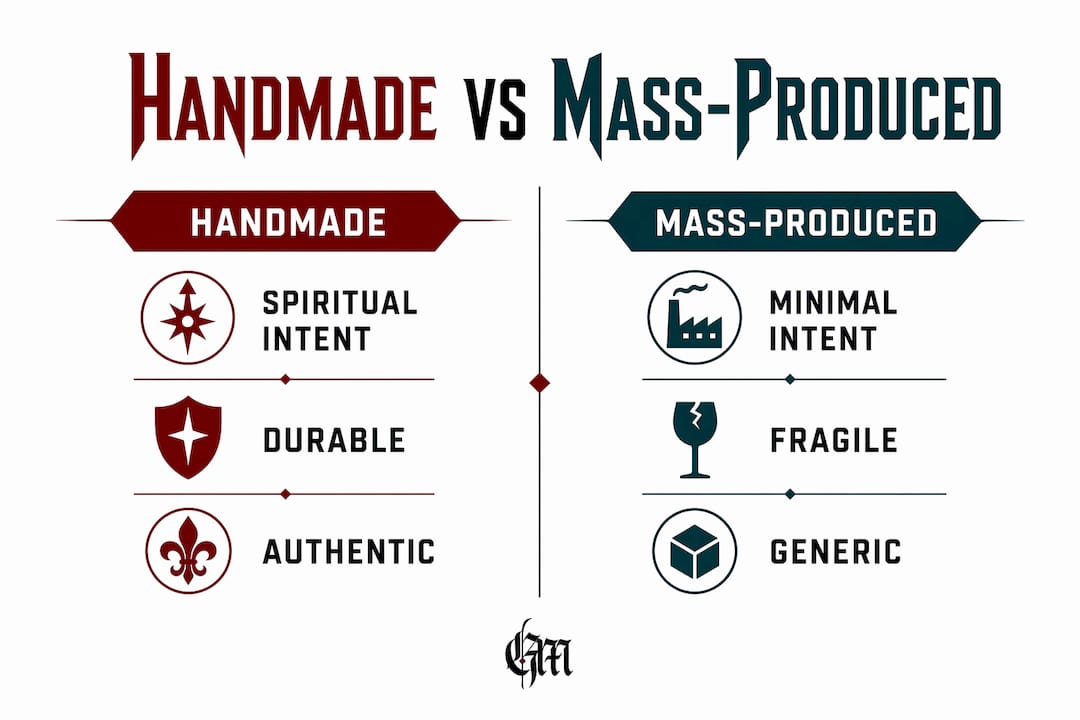
Handcrafted items follow sacred proportions and traditional protocols, making them trusted spiritual anchors rather than decorations. An artisan working within a living tradition brings intention, ritual knowledge, and often consecration into the creation process. The object carries that history. A factory-stamped pentagram pendant carries none of it.
Authentic Taoist amulets offer a precise example. Ordained masters handmake these pieces and consecrate them through specific rituals. Factory-printed amulets lack life force energy and can actually disrupt personal magnetic fields, according to practitioners in that tradition. The difference is not symbolic. It is functional within the practice.
| Feature | Handmade Occult Items | Mass-Produced Occult Items |
|---|---|---|
| Spiritual intent | Embedded during creation | Absent |
| Craftsmanship | Traditional, skill-based | Automated, uniform |
| Durability | Built for ritual use | Often display-only resin |
| Emotional value | Deepens over time | Fades quickly |
| Cultural origin | Traceable to a tradition | Generic or appropriated |
Mass-produced items also fail on practical grounds. Many are brittle, display-only resin without the durability needed for actual ritual work. Artisans who make tools for practice, not aesthetics, favor lathe-turned wood or repurposed glass because those materials hold up.
Pro Tip: When evaluating any occult tool, ask whether it was built to be used or built to be photographed. Ritual durability and material honesty are the clearest signs of genuine artisan intent.
What should you look for when choosing handmade occult items?
Choosing authentic handmade esoteric products requires more than checking an “artisan” label. The market includes genuine craftspeople and sellers who use the word loosely.
Here is a practical framework for evaluating what you buy:
- Ask about the materials. Genuine artisans can name their sources. Food-safe glazes on ritual cups, untreated wood on wands, and natural dyes on altar cloths all signal a maker who thinks about use, not just appearance.
- Look for process transparency. A real artisan can describe how they made the item, how long it took, and what tradition informs the design. Vague answers are a red flag.
- Check for consecration or ritual preparation. Items like talismans and amulets should come with documentation of any ritual process the maker performed. This is standard in traditions from Taoist amulet-making to Himalayan Buddhist craft.
- Assess durability honestly. Pick it up. Flex it slightly. Mass-produced resin cracks under light pressure. Artisan-made tools built for practice feel solid and purposeful.
- Research the seller’s community ties. Ethical artisan retailers disclose their supply chain. Platforms that name their makers and describe their sourcing practices are more trustworthy than anonymous storefronts.
Pro Tip: Learning to spot authentic handmade work takes practice. Start by handling items at local markets or craft fairs before buying online. Your hands will learn to recognize quality faster than your eyes.
The importance of artisanal occult goods also extends to safety. Ritual tools made from unknown materials can leach toxins during candle or incense use. Reputable artisans disclose every material they use. That transparency protects you and signals professional standards.
How do handmade items strengthen your spiritual practice?
The advantages of handmade metaphysical tools go deeper than quality. They shape the relationship between practitioner and object in ways that mass-produced items structurally cannot.
Purchasers consistently report that handmade items age better and deepen emotional resonance over time, while mass-produced items lose value quickly. That pattern is not accidental. A handmade altar piece carries the maker’s attention in every detail. You feel that when you work with it.
The reciprocal relationship between owner and object is a recognized concept across multiple traditions. Practitioners emphasize that spending weeks or months with a talisman before it reveals its full function is part of the practice. That timeline directly challenges the instant-gratification model of mass retail. The item is not finished when you buy it. It becomes finished through use.
Handmade occult items also function as symbols of resistance to mainstream consumerism. For practitioners in the gothic and alternative communities, the choice to buy from an independent maker is a statement about values. It says you prioritize meaning over convenience.
- Handmade tools carry embedded intention from the maker, which practitioners describe as spiritually active
- The aging process of natural materials, wood, bone, stone, and hand-poured wax, deepens the object’s connection to your practice over time
- Unique, non-reproducible items reinforce personal spiritual identity in ways that catalog products cannot
- The act of sourcing from an artisan creates a human relationship that extends the object’s meaning beyond the transaction
- Ritual objects with traceable origins, like occult homeware made by named craftspeople, carry cultural weight that generic items lack
The impact of buying handmade witchcraft supplies is cumulative. Each purchase reinforces a practice, a community, and a tradition. That is a different kind of value than anything a mass-market platform can offer.
Key takeaways
Supporting handmade occult items preserves cultural traditions, funds artisan livelihoods, and produces spiritually potent tools that mass production cannot replicate.
| Point | Details |
|---|---|
| Cultural preservation | Buying handmade keeps ancestral craft traditions, symbolism, and language alive in source communities. |
| Ethical economics | Transparent models like 10% gross sales donations return real value to artisan cooperatives. |
| Spiritual potency | Handcrafted items built with ritual intent carry energy that factory-made replicas structurally lack. |
| Buyer due diligence | Ask about materials, process, and durability before purchasing any artisanal occult tool. |
| Personal practice depth | Handmade items deepen emotional resonance over time, strengthening your relationship with ritual objects. |
The long game: why i stopped buying mass-market ritual tools
I spent years buying whatever looked good in a product photo. Resin chalices, stamped pentagram rings, pre-packaged spell kits. They photographed well and arrived fast. Most of them broke, faded, or felt hollow within a year.
The shift happened when I started handling work from independent makers at small markets and through platforms that actually name their artisans. The difference was immediate and physical. A hand-carved wooden wand has weight and grain. A hand-poured beeswax candle smells like something real. These are not romantic notions. They are material facts.
What I have learned is that the relationship with a ritual object starts before you buy it and continues long after. The types of occult jewelry I wear now are pieces I know the origin of. I know who made them and roughly how. That knowledge changes how I use them. It makes the practice feel grounded rather than performative.
The uncomfortable truth about mass-market occult goods is that they are designed to sell a feeling, not to support a practice. Supporting artisans is the corrective. It is slower, sometimes more expensive, and requires more research. The return is a practice built on objects with actual history and actual makers behind them.
— Rey
Find authentic handmade occult items at Goth
Goth.Market connects independent artisans and alternative creators directly with practitioners who take their craft seriously. Every vendor on the platform is an independent maker, not a mass-market reseller.
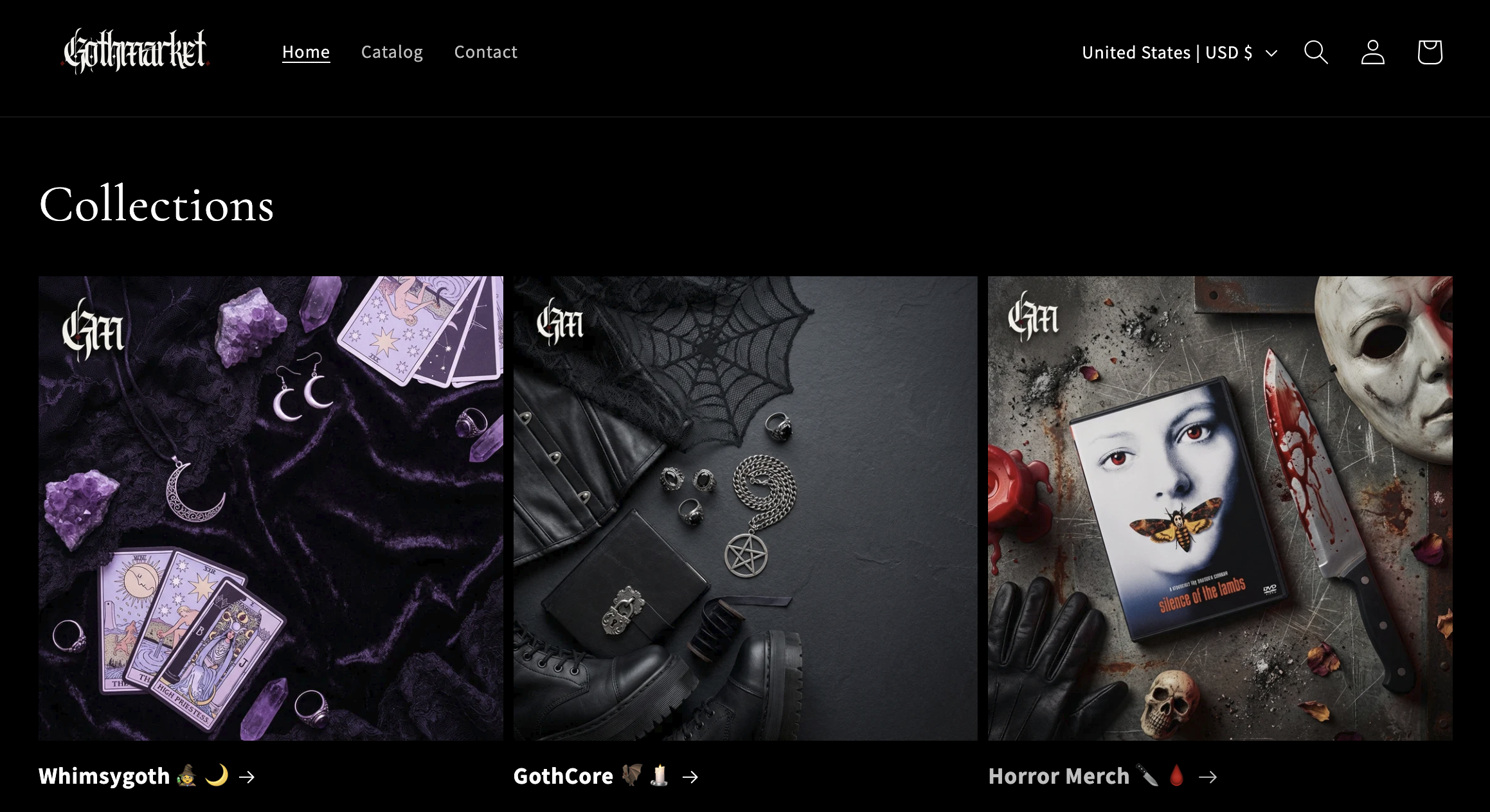
Goth curates gothic fashion, occult jewelry, witchcraft supplies, dark decor, and handmade art from creators who work within real traditions and alternative aesthetics. If you are ready to build a practice around objects with genuine provenance and artisan intent, explore the full collection and find pieces made by people who care as much about the craft as you do about the practice.
FAQ
What makes handmade occult items spiritually different?
Handmade occult items are built with ritual intent, traditional protocols, and the maker’s focused attention. Factory-made replicas lack this embedded intention and are considered spiritually inert by most practitioners.
Are handmade witchcraft supplies worth the higher price?
Handmade tools are built for actual ritual use, not display. They last longer, deepen emotional resonance over time, and support artisan livelihoods, making the price difference a direct investment in your practice and in cultural preservation.
How do i know if an occult item is genuinely handmade?
Ask the seller about materials, creation process, and any ritual preparation involved. Authentic artisans can answer these questions specifically. Vague or scripted responses usually indicate a mass-market product with an artisan label.
Does buying handmade occult goods help communities?
Buying from ethical artisan retailers directly funds craft communities. Models like PotalaStore’s 10% gross sales donation to Tibetan cooperatives show how consumer purchases can sustain entire cultural traditions.
Can mass-produced occult tools be used for real ritual practice?
Many mass-produced items are display-only resin and break under regular use. Practitioners recommend lathe-turned wood or repurposed glass for durable, practical ritual tools that hold up to actual practice.