

How to Choose Occult Jewelry That Truly Resonates
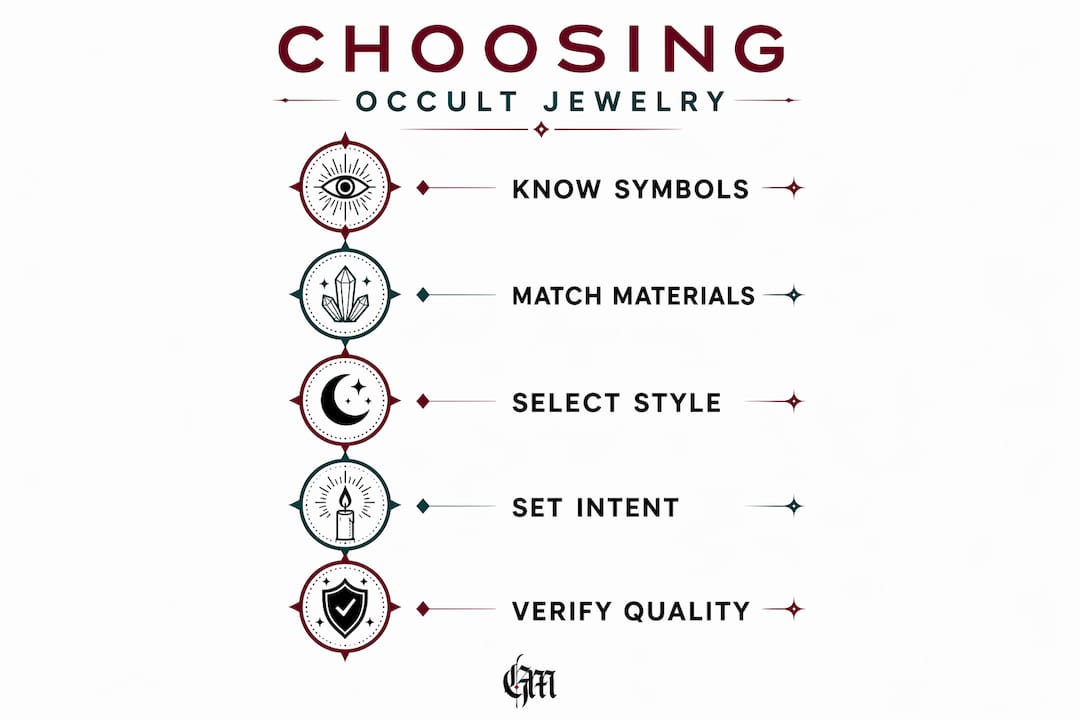
Choosing occult jewelry well comes down to three things: knowing what a symbol actually means to you, understanding what the material brings to the piece, and trusting your gut when something catches your eye. That last part matters more than most buying guides admit. The strongest signal that a piece belongs in your collection is a physical pull toward it — something that feels less like shopping and more like recognition.
Before you browse, get clear on your intention. Are you drawn to protection, transformation, love, or spiritual growth? That single question narrows your choices faster than any style guide. Once you know your intention, you can match it to symbols, stones, and metals that reinforce it rather than contradict it.
Here is what to keep in mind as you shop:
- Start with intention. Decide what you want the piece to do for you before you decide what it should look like.
- Learn the symbols. A pentagram and an evil eye both offer protection, but they carry different cultural weight and visual energy.
- Consider the material. Crystals, metals, and natural elements each bring distinct energetic and practical qualities.
- Match the design to your life. A chunky ceremonial ring is not the same as a thin daily-wear band, even if both carry the same symbol.
- Trust your physical response. If a piece makes you pause, that pause is data.
- Verify authenticity. Craftsmanship and seller reputation matter, especially for pieces with claimed ritual lineage.
- Balance symbolism with wearability. The most meaningful piece is one you actually wear.
Table of Contents
- How to choose occult jewelry: start with the symbols
- What materials tell you about a piece
- Design styles worth knowing before you buy
- How personal spiritual goals shape your selection
- Practical criteria for selecting occult jewelry thoughtfully
- How to authenticate and verify the quality of occult jewelry
- How to care for occult jewelry and preserve its spiritual properties
- Goth has what you need to build your collection
- Key Takeaways
How to choose occult jewelry: start with the symbols
Every piece of occult jewelry carries a visual language, and reading that language is the first real skill in choosing mystical jewelry. The good news is that you do not need a degree in esoteric history. You need to know enough to recognize what resonates.
The most widely recognized symbols and their core associations:
- Pentagram. Five-pointed star within a circle. Traditionally associated with protection and the five classical elements. Often misread as sinister in mainstream culture, but within occult traditions it represents balance and elemental harmony.
- Crescent moon. Linked to intuition, cycles, and the feminine divine. A strong choice if you are drawn to lunar energy or working through transitions.
- Evil eye (nazar). One of the oldest protective amulets across Mediterranean and Middle Eastern cultures. Worn to deflect envy and negative attention.
- Hamsa. An open hand symbol associated with blessing and protection. Works across multiple spiritual traditions without being tied to one exclusively.
- Tree of life. Represents growth, connection, and rootedness. A grounding symbol that suits anyone navigating change.
- Lotus. Emergence from difficulty. Common in both Eastern spiritual traditions and Western occult practice as a symbol of transformation.
- Feathers. Freedom, communication with higher realms, and lightness. Often used in shamanic and nature-based traditions.
- Stars and celestial motifs. Broadly associated with guidance, aspiration, and cosmic awareness.
Cultural context shapes meaning, but personal resonance shapes your meaning. A symbol that has been used for protection for centuries carries that accumulated intention, but if it does not feel right on your body, that matters too. Zevira’s symbol guide puts it plainly: sometimes you see a pendant and something clicks before you can explain why. Trust that.
If you are new to occult jewelry, start universal. A crescent moon, a tree of life, or a simple lotus works with almost any personal style and does not require deep esoteric knowledge to wear meaningfully.
What materials tell you about a piece
Materials are not just aesthetic choices. In occult and spiritual jewelry traditions, the stone, metal, or natural element you wear carries its own energetic signature. That does not mean you need to believe in crystal healing to care about materials — durability, skin sensitivity, and visual weight are equally practical reasons to choose carefully.
Crystals and gemstones:
- Amethyst. Calm, clarity, and protection. One of the most versatile stones for daily wear.
- Rose quartz. Love and emotional healing, including self-love. Soft pink color pairs well with silver settings.
- Obsidian. Volcanic glass with a reputation for psychic protection and grounding. Dense and visually striking.
- Black tourmaline. Often called the strongest protective stone in crystal traditions. Pairs well with silver.
- Citrine. Abundance and confidence. Warm yellow tones suit gold settings.
- Labradorite. Transformation and intuition. Its iridescent flash makes it visually distinctive even in simple settings.
Metals:
- Sterling silver (925). Grounding, protective, and hypoallergenic. The default choice for daily wear and sensitive skin. Historically associated with the moon and feminine energy.
- Gold and gold vermeil. Solar energy, confidence, and abundance. 18K gold or quality gold vermeil holds up better than gold-plated pieces over time.
- Stainless steel. Durable and affordable. Less traditional energetic association, but practical for active lifestyles.
- Brass and copper. Warm tones with historical use in folk magic and healing traditions. Can oxidize over time, which some wearers consider part of the piece’s character.
Natural elements:
- Wood and seeds. Grounding and connection to nature. Common in mala beads and earth-based spiritual traditions.
- Shells and abalone. Water energy, intuition, and emotional flow. Abalone paua shell, for instance, adds iridescent depth to pieces like the meteorite-and-gemstone necklaces crafted by makers such as Surrealium.
Matching your gemstone to your intention is a practical starting point: protection calls for black tourmaline or obsidian, love for rose quartz, clarity for clear quartz, and abundance for citrine or pyrite. Pick one or two stones you feel drawn to rather than loading a piece with every stone that sounds appealing.
Design styles worth knowing before you buy
Occult jewelry spans a huge range of forms, from a barely-there silver crescent on a delicate chain to an elaborate gothic statement ring set with multiple stones. Knowing what you are actually looking for saves time and money.
By jewelry type:
- Necklaces and pendants. The most versatile format. A pendant sits at the center of the chest where it is visible and easy to layer.
- Rings. Carry strong symbolic weight in occult traditions. Signet-style rings with engraved symbols are a classic choice.
- Bracelets. Easy to stack and combine. Crystal bead bracelets let you mix stones for layered intention.
- Earrings. Often overlooked in occult jewelry discussions, but crescent moons, pentagrams, and celestial motifs translate beautifully to ear jewelry.
- Mala beads. Traditionally 108 beads used in meditation practice. A Tibetan mala is a functional meditation tool as much as a piece of jewelry, distinct from passive decorative pieces.
By style:
- Minimalist. Thin chains, small pendants, subtle symbols. Works in professional settings and layers easily.
- Gothic and elaborate. Heavy metalwork, multiple stones, dramatic silhouettes. Better suited for special occasions or wearers who commit to a full aesthetic.
- Ethnic and traditional. Pieces rooted in specific cultural traditions, such as Tibetan silver or Native American turquoise work. Approach these with awareness of their cultural origins.
- Mixed-material. Combining metals with raw crystals, shells, or wood. Tends toward an earthy, artisan feel.
For daily wear, lean toward smaller, lighter pieces with secure settings. For ceremonial or ritual use, size and visual impact matter more than comfort. And if you plan to layer necklaces, vary chain lengths so symbols sit at different heights and do not compete visually.
How personal spiritual goals shape your selection
Spiritual practitioners consistently point to personal connection as the strongest selection signal, one that often outweighs formal symbolic meanings. That is not mysticism for its own sake. It is a practical observation: a piece you feel drawn to is a piece you will actually wear and engage with.
Setting a clear intention before you shop changes what you notice. If your current focus is protection, you will find yourself drawn to obsidian, black tourmaline, hamsa motifs, and dark metals. If you are working through grief or emotional healing, rose quartz and lotus symbols tend to surface naturally.
Pay attention to physical and emotional responses when you handle or try on a piece. A sense of calm, warmth, or quiet recognition is worth noting. Discomfort or indifference is equally informative.
When stacking multiple pieces, anchor with one primary piece that reflects your core intention, then add one or two complementary pieces. Avoid pairing stones with directly opposing energies as your primary anchors — high-energy citrine and deeply calming amethyst, for instance, can work together in a stack, but not as co-anchors pulling in opposite directions. Keep the story simple: protection and grounding together, or love and healing together, rather than mixing every intention at once.
Pro Tip: When you cannot decide between two pieces, set them both down and walk away for a few minutes. The one you think about first is usually the right choice.
Practical criteria for selecting occult jewelry thoughtfully
Good intention is not enough if the piece falls apart in three months or turns your skin green. Here is what to evaluate before you commit:
- Craftsmanship. Look at the setting quality, solder points, and finish. Rough edges, uneven prongs, or loose stones are signs of rushed production.
- Material verification. Ask sellers whether crystals are natural or synthetic, and whether metals are solid, plated, or filled. Gold-plated pieces wear through; gold vermeil and solid gold hold up.
- Seller reputation. Buy from artisans or curated marketplaces with clear return policies and transparent sourcing. Independent makers who describe their process are usually a safer bet than anonymous mass-market listings.
- Origin and ritual lineage. Some pieces carry specific energetic lineage through blessing traditions or ritual consecration. If that matters to you, ask the seller directly.
- Wearability for your lifestyle. A delicate filigree ring is not the right choice for someone who works with their hands. Match the piece’s construction to how you actually live.
- Symbolic coherence. Avoid loading a single piece or stack with symbols that contradict each other energetically. One clear intention, supported by compatible symbols and stones, is more effective than a crowded collection of unrelated motifs.
- Price and value. Natural crystals, solid metals, and handcrafted settings cost more than mass-produced alternatives. That premium usually reflects real differences in material quality and durability.
The benefits of occult jewelry are most accessible when the piece is something you genuinely want to wear every day, not something you bought because it looked impressive in a listing photo.
How to authenticate and verify the quality of occult jewelry
Authenticity in occult jewelry covers two distinct things: material authenticity and spiritual authenticity. Both matter, and they require different verification approaches.
Material authenticity starts with knowing what you are buying. Natural crystals have inclusions, slight color variations, and imperfections. A perfectly uniform, flawless “amethyst” at a suspiciously low price is likely glass or dyed synthetic material. Ask sellers for sourcing information. Reputable artisans can tell you where their stones come from and whether they are heat-treated.
For metals, look for hallmarks. Sterling silver carries a 925 stamp. Gold pieces should indicate karat. Stainless steel pieces are usually labeled as such. If a listing describes a piece as “silver-toned” rather than “sterling silver,” that is a plated or base metal piece.
Spiritual authenticity is harder to verify externally, but a few signals help. Sellers who describe their blessing or consecration process in specific terms, who work within a named tradition, and who have a track record of reviews from buyers with similar values are more credible than vague claims of “charged with positive energy.” Pieces blessed through formal ritual traditions carry a specific energetic lineage that some buyers consider central to the piece’s value.
Check seller reviews carefully. Look for mentions of packaging quality, stone accuracy, and whether the piece matched its description. In the alternative and occult jewelry market, community reputation travels fast, and sellers who misrepresent their materials tend to accumulate negative feedback quickly.
Subculture identity and community trust are deeply intertwined in alternative fashion spaces, a dynamic that subculture merchandise communities have long recognized. Buying from sellers embedded in those communities offers a layer of accountability that anonymous marketplace listings cannot.
How to care for occult jewelry and preserve its spiritual properties
Caring for occult jewelry is partly practical and partly intentional. The practical side protects your investment. The intentional side maintains the piece’s energetic clarity.
Physical care by material:
- Sterling silver tarnishes with exposure to air and moisture. Store it in an airtight pouch or anti-tarnish cloth. Polish with a soft silver cloth, not abrasive cleaners.
- Gold and gold vermeil hold up better to daily wear but should still be removed before swimming or showering to prevent the plating from wearing through.
- Crystals vary widely in hardness and water sensitivity. Selenite dissolves in water. Malachite and pyrite can oxidize. When in doubt, dry-clean with a soft cloth rather than rinsing.
- Wood and natural elements are sensitive to moisture and oils. Keep them dry and condition occasionally with a light natural oil.
Energetic maintenance:
Regular cleansing is recommended every 2–4 weeks, or after intense emotional experiences. Common methods include:
- Sage or palo santo smudging. Pass the piece through smoke briefly.
- Moonlight charging. Leave pieces on a windowsill or outdoors during a full moon.
- Sound cleansing. A singing bowl or tuning fork near the piece resets its energetic field.
- Dry salt bed. Place the piece on a bed of sea salt for several hours. Avoid this with porous stones like selenite or malachite.
After cleansing, set your intention again. Hold the piece, state what you want it to support, and wear it with that purpose in mind. This practice keeps the piece connected to your current goals rather than carrying residual energy from past experiences.
Store pieces separately to prevent scratching, especially when mixing crystal and metal pieces. A small velvet pouch per piece is the simplest solution.
Goth has what you need to build your collection
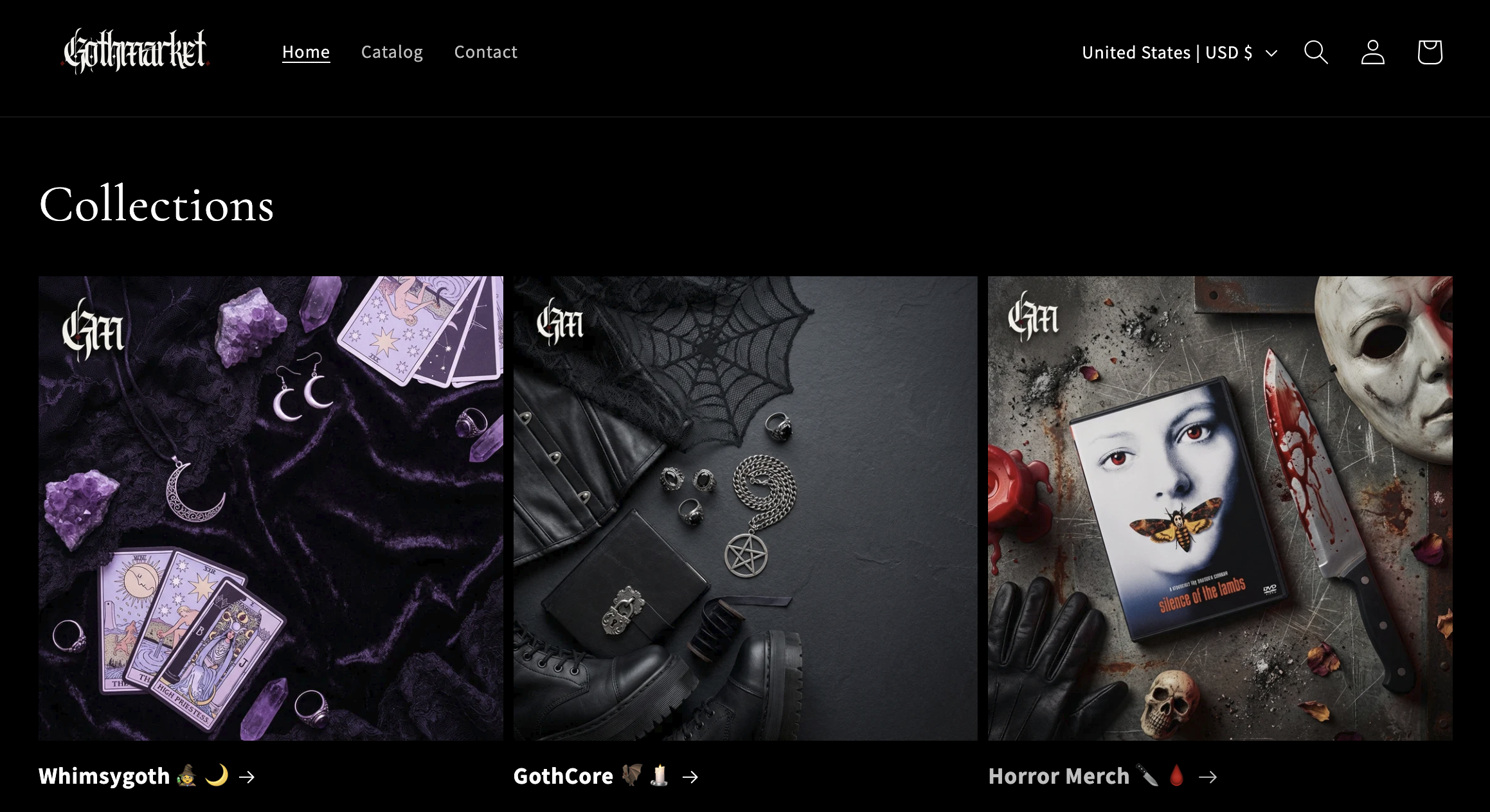
If you know what you are looking for but want to find it without sifting through mass-market noise, Goth is built for exactly that. Goth.Market is a curated marketplace connecting independent creators and artisans with buyers who take occult and alternative aesthetics seriously. The inventory spans gothic fashion, occult jewelry, witchcraft supplies, and dark decor, with an emphasis on pieces that have genuine symbolic depth rather than surface-level trend appeal.
What sets Goth apart from a generic jewelry marketplace is the curation. Every vendor on the platform works within the dark, alternative, and occult aesthetic space, which means you are not sorting through unrelated listings to find the one piece that fits. The community-driven model also means seller accountability is real: buyers who care about authenticity leave detailed feedback, and that feedback shapes which vendors thrive on the platform.
Browse the Goth marketplace at goth.market to find independent artisans whose work matches the symbols, materials, and intentions you have identified in this guide.
Key Takeaways
Choosing occult jewelry that genuinely resonates requires aligning intention, symbolism, material, and craftsmanship before you buy.
| Point | Details |
|---|---|
| Intention comes first | Identify your spiritual goal before selecting symbols or materials to keep your choices coherent. |
| Symbols carry cultural weight | Learn core meanings of pentagrams, crescent moons, hamsa, and evil eye, then choose based on personal resonance. |
| Materials have practical and energetic roles | Sterling silver suits daily wear and sensitive skin; natural crystals vary in durability and water sensitivity. |
| Authenticate before you buy | Check for hallmarks on metals, ask about stone sourcing, and verify seller reputation through community reviews. |
| Goth curates for this audience | Goth.Market connects buyers with independent artisans specializing in occult and alternative jewelry with genuine symbolic depth. |