

Role of Packaging in Gothic Products: Design and Sell
TL;DR:
- Packaging in gothic products acts as the first ritual and a story that justifies the price.
- Small details like tactile finishes and reveal mechanics boost perceived value more than price alone.
Packaging is not decoration for gothic products. It is the product’s first ritual, its price justification, and its social-media moment rolled into one object. 73% of fragrance buyers in alternative and niche sectors are influenced by bottle storytelling; that number holds across categories because gothic consumers buy meaning, not just merchandise. At Goth, Rey and the editorial team see this play out in every high-performing listing: the items that sell at premium prices are the ones where the box, the seal, or the tissue paper tells the story before the product does.
Three things to hold onto as you read:
- Tactile finishes and layered reveal mechanics raise perceived value faster than price copy ever will.
- Small-batch creators can compete with larger brands by investing in one or two ritual details rather than a full luxury build.
- Photography and unboxing shareability are downstream effects of good packaging decisions, not separate tasks.
Table of Contents
- Why does packaging matter so much to gothic buyers?
- What sensory and visual elements work best for gothic packaging?
- How much does gothic packaging actually cost to produce?
- How do you photograph gothic packaging for maximum discoverability?
- How do you ship gothic packaging without ruining the ritual?
- How do you use packaging to justify premium pricing?
- Key Takeaways
- Packaging strategy deserves more credit than it gets
- Sell your packaged gothic work where buyers already look for it
- Further reading and resources
Why does packaging matter so much to gothic buyers?
Gothic subculture treats consumption as identity performance. What you buy, how it arrives, and what it looks like on your shelf signals belonging. Packaging functions as a gatekeeper in this context: it either grants entry into the aesthetic or it breaks the spell entirely.
“The project creates a gothic visual expression for customers to discover step by step with their visual and tactile senses. The design tells its story, engaging customers in this gothic adventure.” — King Goth packaging, Packaging of the World
That layered discovery is exactly what drives collectibility and repeat purchase. A wax-sealed bottle or a heavyweight embossed box does not just look expensive; it feels expensive in a way that justifies a significantly higher price point. Academic research confirms that influencers and unboxing creators function as cultural mediators in goth communities, which means packaging that photographs beautifully and reveals theatrically gets amplified by the community itself.
The 73% storytelling influence stat matters here because it quantifies what gothic buyers already feel: the vessel is part of the value. Buyers in the Dark Academia and Vintage Gothic segments, in particular, are moving toward stone textures, frosted glass, and heavyweight paper rather than generic matte-black boxes.
Pro Tip: If you sell a single SKU, invest your packaging budget in one tactile detail that photographs well and one reveal mechanic (a wax seal, an inner envelope, a hidden label) rather than spreading the budget thin across generic black boxes with foil stickers.
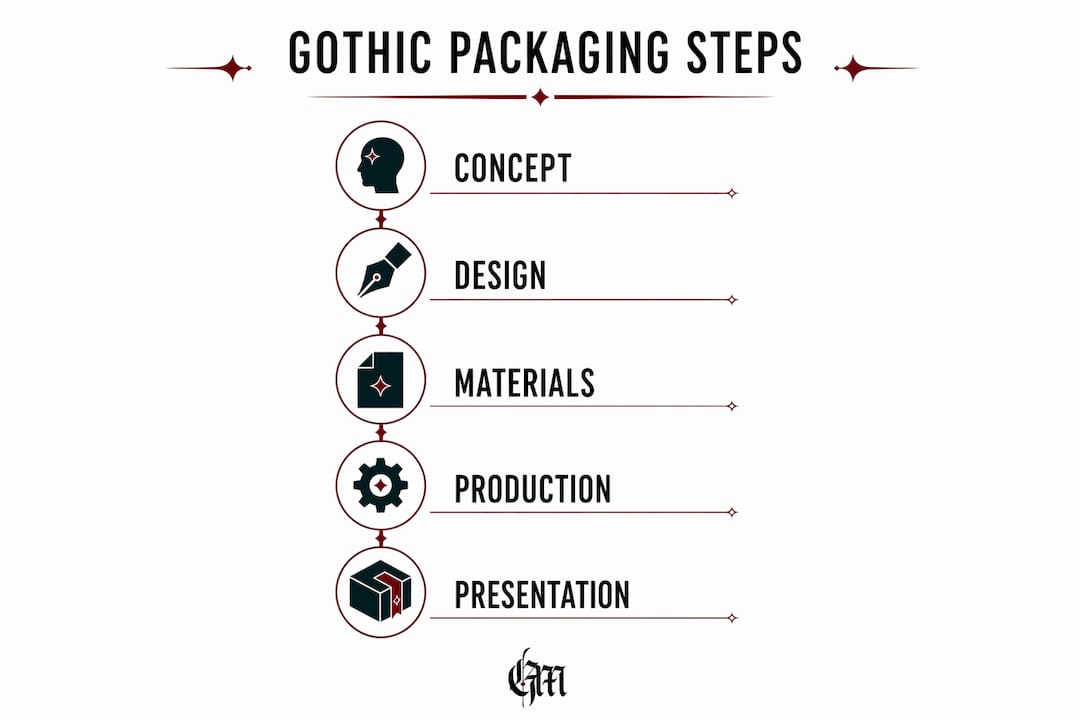
What sensory and visual elements work best for gothic packaging?
Prioritize tactile finishes and high-contrast visuals. They perform best on social channels and in unboxing rituals because they create both a visual story and a physical one.
Tactile finishes like matte coatings, spot UV, and embossed textures improve social-media performance because they photograph with depth and invite description in captions. Here is what works:
- Matte laminate with spot UV: The contrast between flat and glossy reads dramatically on camera and under fingertips.
- Embossing and debossing: Skulls, botanical motifs, and sigil-style symbols gain dimension that flat print cannot replicate.
- Black wax seals: Wax seals frame unboxing as a ritual, turning the act of breaking the seal into a theatrical moment.
- Vellum overlays and inner envelopes: Layering creates a reveal sequence that extends the unboxing experience.
- Metallic foil (gold, copper, silver): Catches light in video; techno-gothic branding case studies show metallic boxes extend collectibility across a product line.
- Crushed velvet pouches or inserts: Adds a luxury tactile layer that reads as premium even at modest cost.
- Frosted or stone-texture glass: Trending in the Dark Academia segment for 2026.
For TikTok and Instagram Reels, close-up texture shots outperform flat lays. Shoot embossing at a 45-degree angle with a single directional light source to catch the shadow in the relief.
Scented packaging elements, such as limited-batch scent cards or custom-scented tissue, increase perceived value and the likelihood of unboxing videos being shared — scent triggers memory, which raises repeat-purchase probability.
Pro Tip: Tuck a scented insert (patchouli, black amber, or cedar) into VIP orders. Reviewers mention scent in captions more often than any other sensory detail, and it costs under $0.50 per unit at short-run quantities.
How much does gothic packaging actually cost to produce?
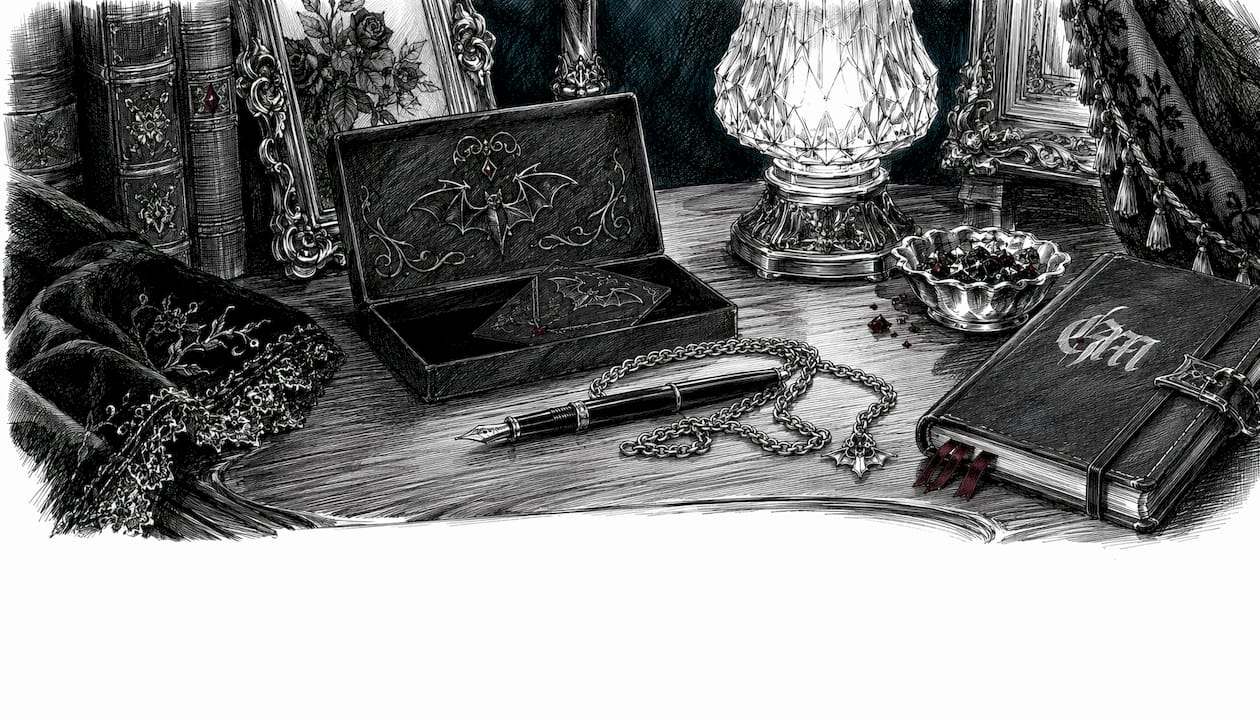
High perceived value does not require a high budget. The lever is where you spend, not how much total.
| Packaging type | Typical per-unit range | MOQ range | Best for |
|---|---|---|---|
| Heavy paperboard box + embossing | — | 100–500 units | Jewelry, collectibles |
| Glass bottle + wax cap | — | 50–250 units | Fragrance, oils, serums |
| Scented tissue + printed inner card | — | 25–100 units | Any category |
| Matte mailer + spot UV label | — | 50–250 units | Apparel, accessories |
Ranges are market estimates for U.S. indie creators; actual quotes vary by supplier and finish complexity.
Production routes worth knowing:
- Short-run digital converters (U.S.-based): low MOQs, fast turnaround, good for testing designs before committing to a full run.
- Local artisan printers: Best for letterpress, hand-stamped, or one-of-a-kind elements; slower but highly differentiated.
- Regional packaging manufacturers: Mid-range MOQs, better unit economics at 250+ units, reliable quality control.
- Overseas B2B suppliers: Lowest per-unit cost, but longer lead times and higher minimum orders; best for proven designs, not experiments.
Cost-saving tactics that do not sacrifice the aesthetic:
- Use modular inserts (a standard box with swappable inner cards) to run limited editions without retooling the whole package.
- Offer refillable or reusable packaging and market it as conscious luxury — gothic consumers are actively moving away from plastic-heavy novelty packaging.
- Reserve premium finishes (wax seals, velvet) for hero SKUs or collector tiers; use matte labels on everyday items.
Pro Tip: Order a sample run of 25–50 units before committing to 500. The per-unit cost is higher, but catching a finish problem early saves far more than the sample premium.
How do you photograph gothic packaging for maximum discoverability?
Plan packaging with photography in mind from the dieline stage. Color contrast, texture catch, and highlight placement are design decisions, not afterthoughts.
Staging checklist for product photography:
- Use a single directional light source (a window or a snoot) to cast shadows into embossed or debossed areas.
- Shoot on dark backgrounds (black velvet, slate, aged wood) to let metallic and frosted elements pop.
- Capture at least one extreme close-up of the tactile finish — this is the frame that gets saved and shared.
- For Reels and TikTok, film the full reveal sequence: outer box, inner tissue, product, and any hidden element.
- Orient vertical (9:16) for Reels; horizontal (4:3 or 16:9) for Pinterest and product-page hero images.
- Include a sound moment: the crack of a wax seal, the rustle of tissue, the clink of a glass bottle.
Unboxing reveal checklist:
- Outer packaging: strong first impression, logo or sigil visible.
- Inner layer: tissue, vellum, or velvet that slows the reveal.
- Scent moment: insert or scented tissue released when the inner layer opens.
- Product reveal: the item itself, ideally with a hidden element visible only at this stage.
- Collectible detail: hidden inside-label art or a bottom-of-bottle secret revealed after use.
Pro Tip: Design your dieline so that the inside of the lid carries artwork only visible once the box is open. That hidden layer becomes a collectible incentive and gives unboxing creators a genuine “reveal moment” to film.
How do you ship gothic packaging without ruining the ritual?
Protective packaging and simple labeling practices preserve the ritual and meet U.S. consumer expectations. Plan both before you finalize your production design.
Transit protection that maintains the visual reveal:
- Use custom-cut foam or molded pulp inserts so the product does not shift; a rattled wax seal arrives broken.
- Double-box fragile glass or sculptural pieces with at least 2 inches of cushioning between the inner and outer box.
- Apply tamper-evident seals on the outer shipping box so buyers know the ritual packaging inside is untouched.
- Avoid adhesive tape directly on decorative surfaces; use tissue or a paper sleeve as a buffer.
For U.S. labeling, cosmetics and consumables require product identity, net quantity, and any applicable warnings per FDA guidelines — confirm current requirements at FDA.gov for your specific category before production.
Pro Tip: For VIP or collector boxes, limit fragile add-ons (loose wax beads, glass charms) to items that can be nested securely. A broken insert destroys the ritual faster than plain packaging would.
How do you use packaging to justify premium pricing?
Limited-run materials, reveal mechanics, and serialized elements create collectible value. Use them to build price tiers rather than a single flat price.
Tactics that work:
- Serialized numbering: “No. 47 of 100” on the inner lid turns a product into an edition.
- Limited-run materials: A seasonal wax color or a one-time foil variant signals scarcity without requiring a new product.
- Hidden inside-label art: Revealed after use, this encourages retention and makes the packaging itself a reason to keep the item.
- Refill programs: Offer a refillable vessel at a premium price point, then sell refills at a lower margin — the vessel becomes a collectible anchor.
- Tiered unboxing: A standard tier and a collector tier with a wax seal, scented insert, and numbered card justify a $15–$25 price gap on the same core product.
Switching to high-quality recycled materials — matte vellum, embossed recycled paper — can be marketed as ‘conscious luxury’ and justify premium pricing without sacrificing the gothic aesthetic.
Gothic consumers equate luxury with ethics. The cultural shift away from plastic novelty packaging is real and accelerating, which means sustainable materials are not a compromise — they are a positioning advantage. Explore gothic collectibles and their cultural significance for more on how packaging feeds long-term collector behavior.
Key Takeaways
Packaging is the single most controllable lever gothic creators have for raising perceived value, driving social shareability, and building collector loyalty.
| Point | Details |
|---|---|
| Packaging drives perceived value | Tactile finishes and reveal mechanics justify premium price tiers more effectively than copy alone. |
| 73% influenced by storytelling | Alternative fragrance buyers respond to bottle and packaging narratives — design for the story, not just the look. |
| Small-batch tactics work | Modular inserts, scented tissue, and one hero finish let indie creators compete without high MOQs. |
| Photography is a design decision | Plan dielines, hidden artwork, and reveal sequences before production, not after. |
| Goth curates packaging-forward sellers | Goth.Market connects creators who invest in ritual packaging with buyers who value it. |
Packaging strategy deserves more credit than it gets
Most gothic creators treat packaging as the last budget line. That is exactly backwards. The packaging decision shapes what price the market will accept, which unboxing creators will feature the product, and whether a buyer keeps the box or bins it. Keeping the box is the whole game — it means the item lives on a shelf, gets photographed again, and gets shown to friends.
The 73% storytelling influence figure is not a fragrance-industry quirk. It reflects something structural about how gothic consumers relate to objects: they want provenance, ritual, and a sense that the maker cared about every layer. A small investment in a wax seal and a scented insert can shift a product from an impulse buy to a considered purchase with a notable price increase. That math is hard to ignore. Creators who understand the gothic branding fundamentals behind packaging decisions will always outperform those who treat the box as an afterthought.
Sell your packaged gothic work where buyers already look for it
Goth is a curated marketplace built specifically for independent creators selling gothic fashion, occult jewelry, dark decor, and alternative art. If you have invested in ritual packaging and material storytelling, Goth is where buyers who value exactly that come to shop. The platform operates on a commission model, so there are no upfront listing fees to worry about — you list, you sell, you earn.
Creators selling handmade gothic merchandise find that Goth’s audience already understands the value of premium packaging, which means less education at the point of sale and stronger conversion on collector tiers. Browse the marketplace and start selling on Goth to put your packaging work in front of the buyers who will appreciate it most.
This article is general editorial content. Goth.Market editorial content is independent of marketplace listings.
Further reading and resources
Practical next steps for creators ready to execute:
- Gothic branding step-by-step guide — dieline guidance, visual identity templates, and creator checklists on the Goth blog.
- Pricing handmade gothic fashion — cost-plus and value-based pricing models that account for packaging investment.
- Marketing gothic products in 2026 — social-media campaign tactics built around sensory-rich packaging content.
- For dieline templates, search short-run U.S. converters such as Packlane, Lumi, or The BoxMaker; most offer free dieline downloads for standard box sizes.
- For ethical material suppliers, look for FSC-certified paper stocks and post-consumer recycled glass through U.S. distributors like Uline (standard) or specialty suppliers like Eco Enclose for recycled mailers.
- For horror-themed apparel with custom print finishes, horror-themed apparel production is one example of themed merchandise production with tactile finish options.
The research citations throughout this article — particularly the 2026 gothic perfume bottle trend data and the Hypes.pro gothic aesthetics guide — are worth scanning directly for supplier leads and trend validation before you finalize a packaging brief.