

Step-by-step guide to powerful gothic branding for creators
TL;DR:
- Gothic branding emphasizes emotional depth, symbolism, and storytelling rooted in authenticity.
- Consistent visual identity, community understanding, and narrative durability are key to lasting success.
- Deep research and intentional design choices help build loyalty in the growing gothic market.
Building a recognizable brand as a gothic creator is harder than it looks. Generic branding advice tells you to “keep it simple” and “stay minimal,” but that approach strips away everything that makes the alternative community magnetic. Gothic branding demands emotional weight, symbolic depth, and storytelling that speaks directly to a subculture built on authenticity. Gothic branding excels for niche alternative communities by creating emotional differentiation that mainstream aesthetics simply cannot replicate. This guide walks you through every stage of building a gothic brand identity that earns real loyalty from real people.
Table of Contents
- What makes gothic branding unique?
- Preparation: Research and resources you need
- Step-by-step process: Designing your gothic brand identity
- Launch, measure, and refine: Bringing your gothic brand to life
- A fresh perspective: Why bold gothic branding works and how to make it last
- Take your gothic brand to the next level
- Frequently asked questions
Key Takeaways
| Point | Details |
|---|---|
| Authenticity matters most | Gothic branding thrives on true narratives, unique symbolism, and emotional resonance with the alternative community. |
| Preparation sets you apart | Moodboards, audience research, and curated resources are the foundation for compelling gothic brands. |
| Design must balance style and clarity | Use dark palettes and ornate fonts with care to maintain both visual impact and legibility. |
| Continuous refinement is key | Launching your brand is just the start—measure engagement and evolve based on what the community responds to. |
What makes gothic branding unique?
Mainstream branding leans on clean lines, neutral palettes, and broad appeal. Gothic branding does the opposite on purpose. Where minimalism removes friction, gothic design invites tension, mystery, and narrative. That contrast is not a weakness. It is the entire point.
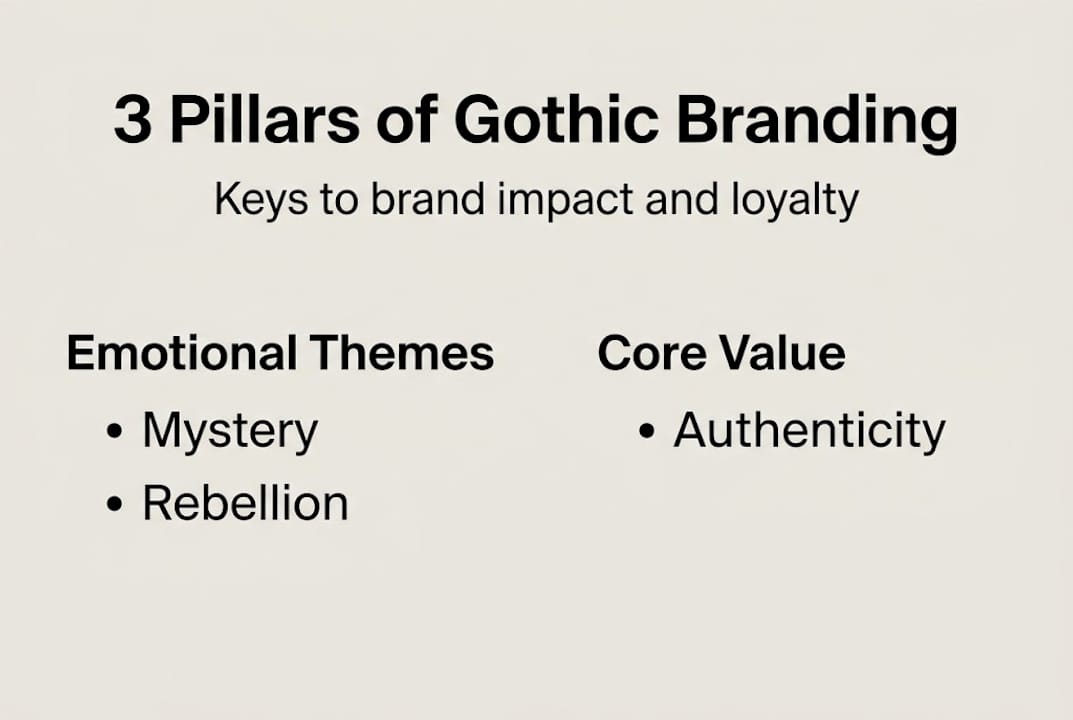
The emotional register of gothic branding operates on three pillars: mystery, rebellion, and authenticity. Mystery draws the viewer in with imagery they need to interpret. Rebellion signals to the community that your brand rejects mass-market conformity. Authenticity is the hardest to fake, and the alt community has a sharp nose for impostors. When all three pillars align, your brand stops being a logo and starts being a statement.
Symbolism is the language gothic brands speak fluently. Motifs like ravens, hourglasses, occult geometry, and Gothic architectural details carry encoded meaning that your target audience already understands. These are not decorations. They are subcultural cues that signal belonging. Learning to use them intentionally, rather than randomly stacking dark imagery, separates a memorable gothic brand from visual noise.
The market opportunity here is real and growing. Goth fashion is projected to reach $2.6 billion by 2034, growing at 7.2% annually, driven by unique branding and social media momentum. That is not a niche footnote. That is a serious commercial landscape where strong branding gives independent creators a genuine competitive edge.
Gothic branding also comes with real challenges. The most common ones include:
- Readability traps: Blackletter and ornate script fonts look striking but can become unreadable at small sizes or on digital screens
- Cliché overload: Stacking skulls, pentagrams, and bats without narrative context reads as costume, not brand
- Audience misread: Designing for shock value instead of community resonance alienates the very people you want to attract
- Platform inconsistency: A gothic aesthetic that looks cohesive on packaging but falls apart on social media breaks trust fast
“Gothic branding excels for niche alternative communities by creating emotional depth and differentiation versus minimalist styles, but readability needs testing for broader appeal.”
Understanding gothic fashion’s enduring appeal helps you see why this subculture rewards brands that go deep rather than wide. And tracking goth trends in modern fashion keeps you ahead of shifts in aesthetic language before they become overused. For a broader view on positioning, gothic digital identity strategies offer useful frameworks that translate well for independent creators.
Preparation: Research and resources you need
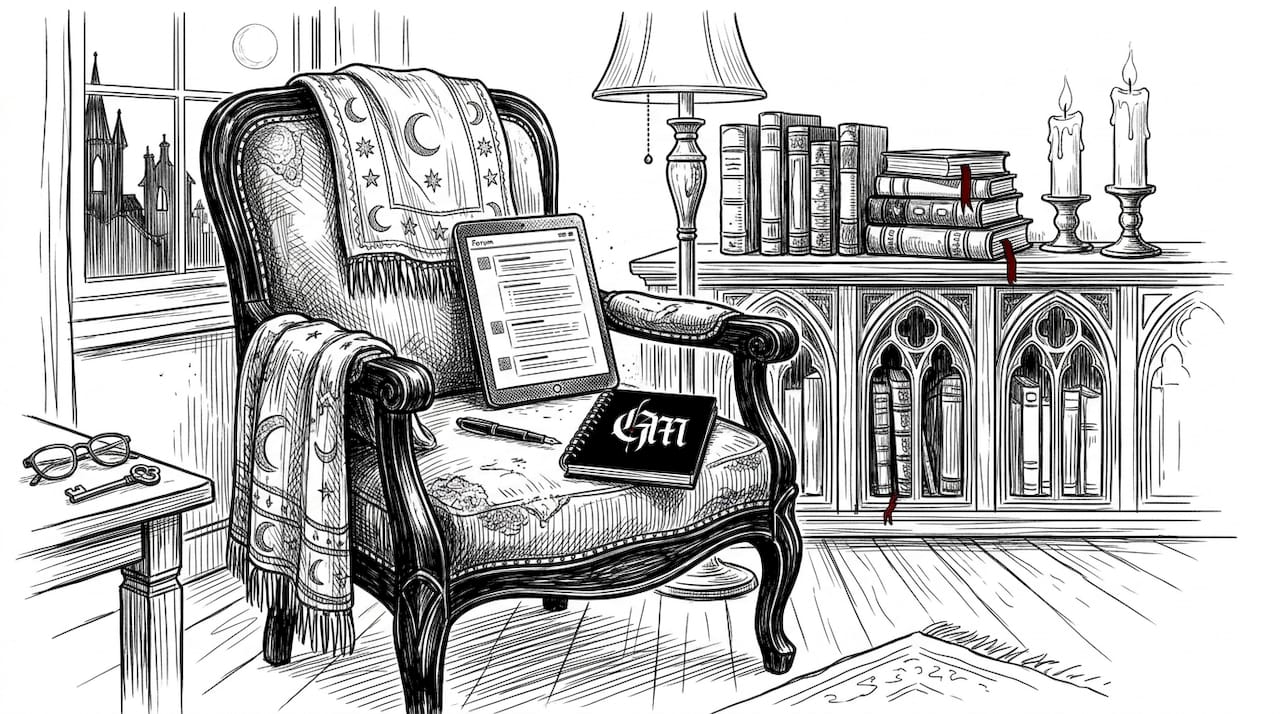
Before you design a single asset, you need a research foundation. Step one of the gothic branding workflow is mood boarding with historical gothic references. That means pulling from architecture, Victorian mourning traditions, romanticism, and dark literary illustration, not just scrolling through current alt-fashion feeds.
Here is what your resource bank should include:
- Mood board apps: Milanote, Pinterest boards, or physical collages for tactile reference
- Color palette tools: Coolors or Adobe Color for building dark, cohesive palettes beyond flat black
- Typography samples: Gather at least 10 font options across blackletter, serif, and display categories
- Historical reference books: Look into Victorian design annuals, Art Nouveau collections, and gothic architecture surveys
- Community content: Hashtag deep dives on TikTok and Instagram to identify what is resonating right now
Understanding your audience’s core values is just as important as visual research. Gothic consumers and community members prioritize authenticity, individuality, and narrative. They are not buying a product. They are buying membership in a story. Your brand research needs to answer one central question: what story are we telling, and why does it matter to this community?
| Resource type | Tool or source | Purpose |
|---|---|---|
| Mood boarding | Milanote, Pinterest | Visual reference collection |
| Color palettes | Coolors, Adobe Color | Dark, cohesive palette building |
| Typography | Google Fonts, MyFonts | Gothic font comparison |
| Market data | Goth market research | Audience and trend validation |
| Community insight | TikTok, Tumblr, Reddit | Live trend and sentiment tracking |
Studying key aesthetic roles in goth markets reveals which visual signals carry the most weight with buyers in 2026. And reviewing types of gothic fashion helps you pinpoint which subgenre your brand belongs to, whether that is Victorian, nu-goth, darkwave, or something more hybrid.
Pro Tip: Spend at least one hour inside active goth community forums and subreddits before finalizing your mood board. The language people use to describe what they love and hate about current gothic brands is the most honest market research you will ever find.
Step-by-step process: Designing your gothic brand identity
With your research assembled, you can move into building actual visual assets. The recommended workflow covers concept typography, dark palettes, prototype scalable logos, and balancing ornamentation with legibility.
- Define your brand narrative: Before opening any design tool, write two to three sentences describing the world your brand inhabits. Is it a Victorian apothecary? A modern occultist collective? A dark folklore archive? This narrative guides every visual decision that follows.
- Select your typography: Gothic type ranges from heavy blackletter to refined serif and sharp display fonts. The brand implementation playbook recommends defining your value and mapping your audience before choosing type, so your font signals the right subcommunity.
- Build your color palette: Start with a dominant dark anchor, then add one or two accent colors. Deep crimson, aged gold, and slate gray create more depth than pure black alone.
- Prototype your logo: Sketch at least three concepts before moving to digital. Test each concept at small sizes, because a logo that only reads well at full scale is a liability on product labels and social media icons.
- Add ornamentation intentionally: Filigree, borders, and illustrated motifs should reinforce the narrative, not fill empty space. Every decorative element should be able to justify its presence.
- Test for scalability: Export your assets at multiple sizes and review them on both screen and print. Styling for dark aesthetics translates directly to how your brand should present across mediums.
| Font style | Best use | Readability risk |
|---|---|---|
| Blackletter | Logos, headers, packaging | High at small sizes |
| Ornate serif | Body copy, descriptions | Low to moderate |
| Display gothic | Social graphics, banners | Moderate |
| Modern gothic | Digital interfaces, product labels | Low |
Exploring key gothic style features keeps your visual choices grounded in actual community aesthetics. For broader campaign application, gothic influences in marketing offers practical examples of how established brands adapt dark motifs without losing authenticity.
Pro Tip: Test every visual asset in grayscale before finalizing. If the design loses its impact without color, it is relying too heavily on palette rather than form and composition.
Launch, measure, and refine: Bringing your gothic brand to life
A finished brand identity means nothing until it is deployed consistently. The final workflow steps involve prioritizing channels, launching, measuring KPIs like view duration and click-through rate, and iterating based on what you learn.
Roll out your brand in this order:
- Secure consistent usernames across all platforms before launching anything publicly
- Update your e-commerce storefront first, because that is where purchases happen and first impressions matter most
- Refresh social media profiles with new bios, profile images, and banner graphics that all align with your new identity
- Update packaging and print materials to ensure physical touchpoints match the digital experience
- Announce the rebrand to your existing community with context, sharing the story behind the new identity rather than just dropping new visuals
After launch, track these metrics weekly:
- View duration: Are people spending time with your content or bouncing immediately?
- Click-through rate: Do your visuals prompt action?
- Conversion rate: Does the brand attract buyers, not just admirers?
- Community engagement: Are followers tagging you, sharing your content, and starting conversations?
E-commerce channels will account for 72% or more of goth market revenue by 2034, with TikTok and digital branding driving major gains. Your online presence is your primary storefront, regardless of whether you also sell in person.
Gathering direct community feedback is underrated. Ask your followers what your brand makes them feel, not just whether they like it. That qualitative data tells you things conversion rates cannot. Understanding gothic branding across sales channels helps you adapt your identity to each platform without losing coherence. Tracking gothic lifestyle and growth trends keeps your brand positioned ahead of where the community is heading next.
A fresh perspective: Why bold gothic branding works and how to make it last
Here is something most branding guides will not tell you: the gothic brands that endure are not the ones with the most elaborate visuals. They are the ones with the clearest sense of who they are and the confidence to hold that position even as trends shift.
The most common mistake gothic creators make is chasing the current aesthetic wave. Cottagecore-adjacent dark aesthetics blow up on TikTok, and suddenly everyone pivots. That is inauthenticity in slow motion, and the community notices. The brands that build real loyalty stay rooted in their own narrative, even when it feels less trendy.
Overused motifs become invisible through repetition. Skulls and pentagrams are not inherently bad choices, but without a specific narrative framing them, they are wallpaper. The gothic creators who break through use familiar symbols in unexpected contexts that force the viewer to look twice.
Contrarian take: stop optimizing your brand for the widest possible alt-audience and start deepening it for a specific corner of that community. Curating a gothic wardrobe teaches the same lesson, that intentional selection beats comprehensive coverage every time. A brand that speaks directly to Victorian mourning jewelry collectors will outperform one that vaguely gestures at darkness.
Test, evolve, but never abandon the core narrative that made your brand worth noticing in the first place.
Take your gothic brand to the next level
You have the blueprint. Now it is time to put that identity into the world and connect with a community that is actively looking for what you create. GothMarket is built specifically for independent creators and vendors in the alternative space, offering a curated platform where your brand can reach buyers who genuinely value distinctive, dark aesthetics.
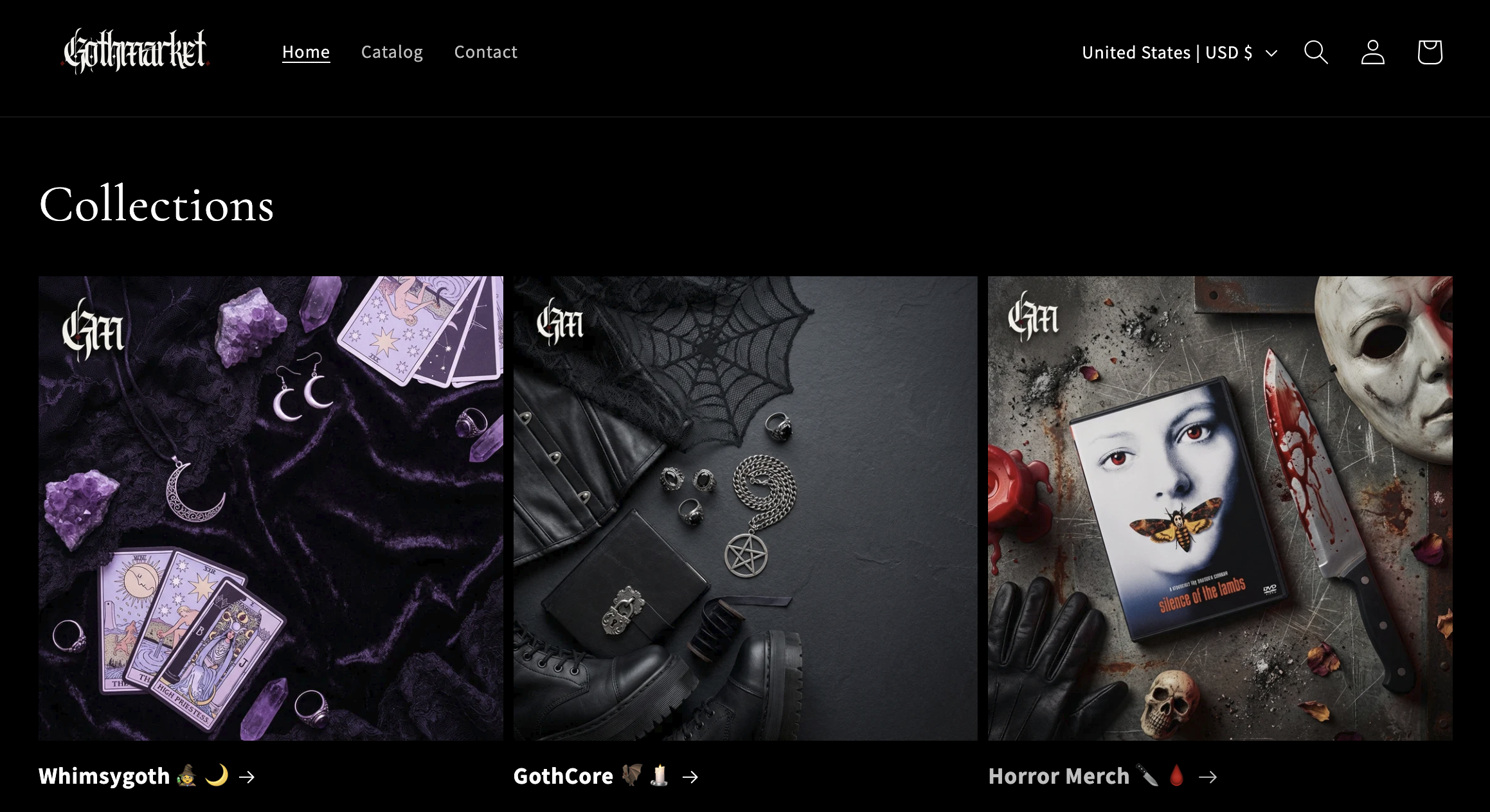
Explore curated gothic jewelry collections that align with the symbolism and narrative depth you have built into your brand identity. If horror motifs are central to your aesthetic, the horror merch collection offers immediate inspiration and community connection. Your brand is ready. The audience is here.
Frequently asked questions
What is the single most important element of gothic branding?
Narrative-driven visuals set gothic brands apart most powerfully. Key gothic elements include origin myths and forbidden knowledge woven into the visual identity itself.
Should gothic branding always use blackletter fonts and all-black palettes?
While both are classic, mixing in burgundy, charcoal, or ornate elements often works better. Ornate typography and rich palettes are key, but balance is essential for legibility across digital and print formats.
How do I know if my gothic brand is resonating with my audience?
Track view duration, click-through, and direct community feedback to measure real engagement. A/B test your branding and measure KPIs like dwell time and audience reaction to validate what works.
Where can I find inspiration for authentic gothic branding?
Historical gothic architecture, classic dark literature, and leading goth creators are the strongest sources. Mood boarding with historical references grounds your brand in something deeper than current trend cycles.
Recommended
- Gothic Fashion Styling Guide for Bold, Dark Aesthetics – GothMarket
- Guide to Gothic Art Curation for Collectors and Creators – GothMarket
- How to start a gothic art collection: tips for new collectors – GothMarket
- Curated gothic products: power of true self-expression – GothMarket
- Step by step fashion styling guide for trendy looks in 2026 – 16th Avenue