

How to sell gothic art: proven strategies for creators
TL;DR:
- Gothic art sellers face challenges from crowded marketplaces and algorithm preferences.
- Choosing the right platform, optimizing listings, and engaging niche communities are essential for success.
- Understanding legal aspects, especially with AI tools, helps protect your business and build trust with buyers.
Selling gothic art online sounds like a dream until you realize the marketplace is crowded, algorithms favor the mainstream, and most buyers don’t know where to look for dark, alternative aesthetics. You pour hours into every piece, only to watch it sit unseen in a shop with zero traffic. The good news is that gothic art has a passionate, loyal buyer base, and with the right setup, you can reach them consistently. This article walks you through platform selection, listing optimization, audience building, and the legal details that protect your business, so your art gets the visibility and sales it deserves.
Table of Contents
- Preparing your gothic art for sale: Must-have tools and platforms
- Optimizing your listings: Titles, tags, mockups, and licensing
- Building audience and demand: Email, social, and gothic communities
- Legal and practical considerations: AI, licensing, and avoiding disputes
- What most gothic artists get wrong about selling online
- Connect your art with gothic buyers at GothMarket
- Frequently asked questions
Key Takeaways
| Point | Details |
|---|---|
| Use print-on-demand services | Print-on-demand platforms let you sell gothic art with low risk, earning up to $10,000 monthly and solid profit margins. |
| List with SEO-optimized titles | Keyword-rich, visually appealing listings make your gothic art stand out and attract the right buyers. |
| Build an engaged gothic audience | Using email, social, and gothic communities increases repeat exposure and boosts conversion rates significantly. |
| Clarify legal and licensing details | Make your policies clear, especially for AI-generated art, to prevent disputes and protect your business. |
| Leverage niche platforms | Artist-first sites and curated gothic marketplaces often outperform larger platforms and let you keep more profits. |
Preparing your gothic art for sale: Must-have tools and platforms
Now that you know what hurdles exist, let’s start by setting up your foundation with the right tools and platforms.
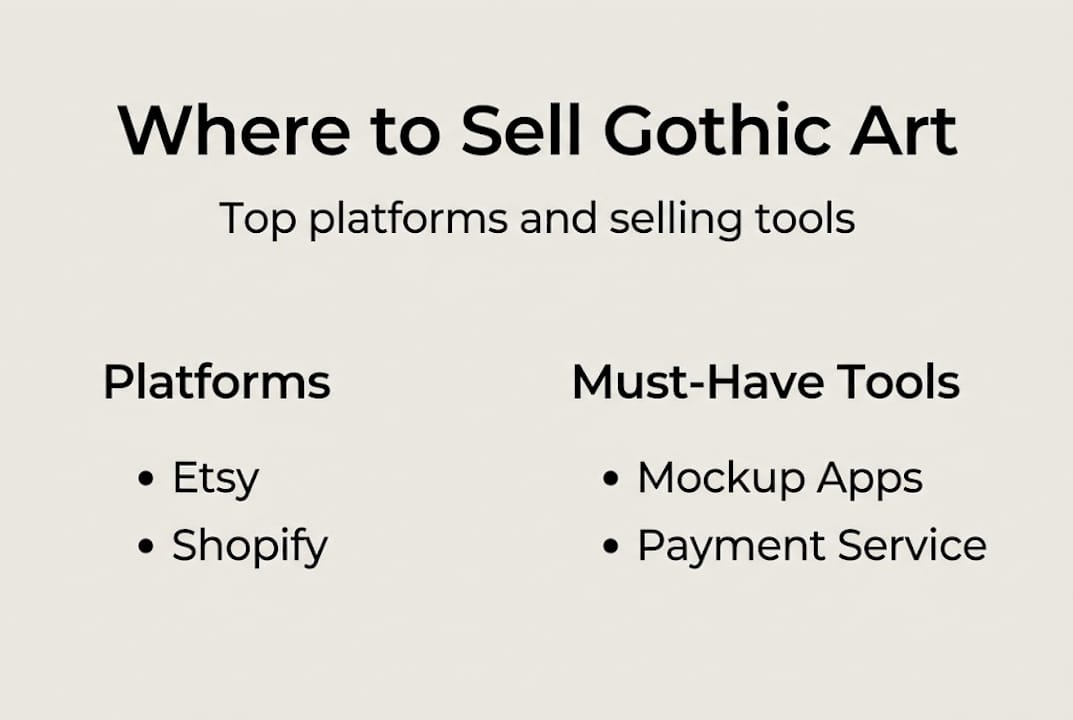
Choosing where to sell is one of the most important decisions you’ll make. Each platform has a different fee structure, audience, and level of control. Here’s a quick comparison to help you decide:
| Platform | Commission | Best for | Control level |
|---|---|---|---|
| Etsy | 6.5% transaction fee | Handmade and digital art | Medium |
| Shopify | Monthly fee + 2.9% | Building your own brand store | High |
| Cosimo | 0% commission | Artist-first selling | Very high |
Etsy gives you access to millions of buyers but comes with stiff competition and fees. Shopify lets you build a standalone brand but requires more marketing effort. Cosimo, an artist-first platform, takes zero commission, which means more of every sale stays with you.
Print-on-demand (POD) services are a game-changer for gothic creators who want to sell physical products without holding inventory. With POD, you upload your art, and a third-party service prints and ships it when a customer orders. Print-on-demand insights show that using services like Printful or Printify integrated with Etsy or Shopify keeps your upfront risk near zero while letting you offer everything from prints to tote bags.
Here’s a quick breakdown of what to consider when prepping your art files:
- Resolution: Export at 300 DPI minimum for print products; 72 DPI works for digital downloads
- File formats: PNG with transparent backgrounds for POD; JPEG or PDF for digital listings
- Color mode: Use CMYK for print files to avoid color surprises; RGB for digital
- Size: Match the exact dimensions required by each POD provider
Understanding aesthetics in gothic markets helps you position your art correctly across all these platforms, since gothic buyers have very specific visual expectations.
Pro Tip: Use free mockup generators like Placeit or Canva to show your art on real products. A gothic skull print displayed on a framed wall mockup in a dark-themed room converts far better than a plain white background image.
Optimizing your listings: Titles, tags, mockups, and licensing
With your tools and platforms ready, it’s time to make your art impossible to miss with optimized listings.
SEO (search engine optimization) is how buyers find your art without you having to chase them. On Etsy, tools like Everbee and Erank show you exactly what keywords gothic buyers are searching. Art business scaling confirms that keyword-rich titles, detailed descriptions, high-quality mockups, and clear licensing information are the core pillars of a high-converting listing.
Here’s how to build a strong listing step by step:
- Write a keyword-rich title. Lead with what the buyer is searching for. “Gothic skull art print, dark wall decor, occult home decor” beats “My latest artwork” every time.
- Use all available tags. Etsy allows 13 tags. Fill every single one with specific, relevant phrases.
- Write descriptions that answer questions. Include size, materials, what the buyer receives, and how to use the file or product.
- Add mockup images. Show the art in context. A framed print in a moody, candle-lit room tells a story that sells.
- State your licensing terms clearly. Buyers need to know if they can use your art for personal projects, commercial use, or resale.
Here’s a quick reference for licensing types:
| License type | What buyer can do | Price range |
|---|---|---|
| Personal use | Print for home, gift | Lower |
| Commercial use | Use in products for sale | Higher |
| Extended license | Unlimited commercial use | Premium |
Licensing clarity also protects you. If a buyer uses a personal-use file for commercial purposes, a clear license gives you legal standing. Check out our gothic branding guide and gothic merchandise guide for more on how to position your art brand with confidence.
Pro Tip: Bundle three related art prints at a slight discount and list them as a set. Bundles increase average order value and make buyers feel like they’re getting a deal, which they are.
Building audience and demand: Email, social, and gothic communities
Once your listings are optimized, the next step is attracting and connecting with buyers who love gothic art.
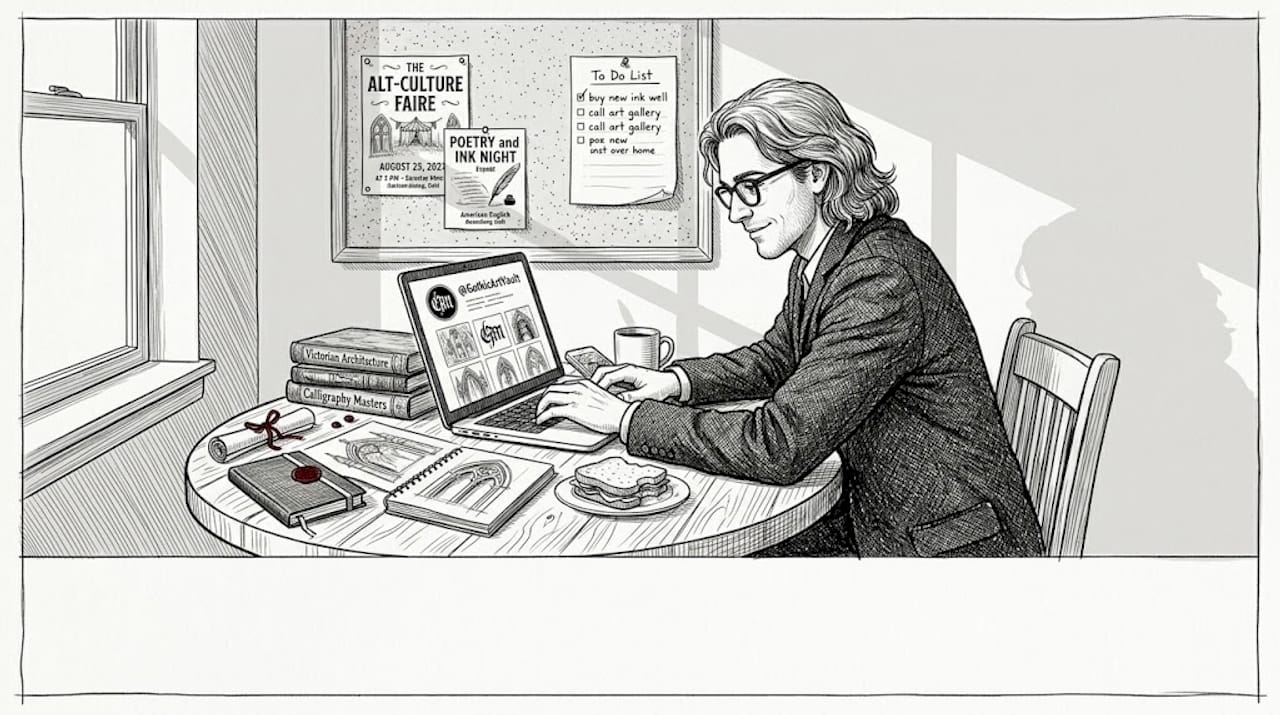
The Rule of 7 is a marketing principle that says a buyer needs to see your brand at least seven times before they make a purchase. That means one post or one listing isn’t enough. Consistent, repeated exposure across multiple channels is what drives sales over time.
Here’s where to focus your energy:
- Instagram: Share process videos, finished pieces, and styled flat lays with gothic props. Use niche hashtags like #gothicart, #darkart, and #occultillustration.
- TikTok: Short videos of your art process perform exceptionally well. The algorithm favors niche content, and gothic aesthetics have a strong following.
- Discord and gothic forums: Join communities where your buyers already hang out. Authentic participation builds trust faster than any ad.
- Email list: This is your most valuable asset. Social platforms can change their algorithms overnight, but your email list is yours forever.
Building your email list doesn’t have to be complicated. Offer a free gothic art wallpaper or a mini print in exchange for an email address. Then send regular updates, behind-the-scenes content, and exclusive deals to keep subscribers engaged.
“UGC (user-generated content) boosts conversions by 30%.” Encourage buyers to share photos of your art in their homes and tag you. Repost those images. Real buyers showing real results are more persuasive than any product photo you could stage yourself.
Art marketing tips reinforce that targeting gothic communities with authentic engagement outperforms broad, generic marketing every time. Learning how to grow gothic audience takes consistency, but the payoff is a loyal buyer base that comes back for every new release. Understanding how goth community experience shapes purchasing decisions helps you show up in ways that feel genuine, not salesy. And if you want inspiration on what resonates, explore curated gothic products to see what buyers are already loving.
Legal and practical considerations: AI, licensing, and avoiding disputes
After building your audience, it’s vital to understand the legal landscape and practical rules to protect your gothic art business.
AI-generated art has become a real conversation in the creator space. If you use AI tools to create or assist with your gothic art, platform rules vary significantly. AI art legal guide makes clear that you must disclose AI usage when required by the platform, and you must ensure you have commercial licensing from the AI tools you use. Listing AI-assisted art as personal-use-only significantly reduces the risk of disputes.
Here’s what to keep in mind to protect your gothic art business:
- Read platform policies. Etsy, Redbubble, and others each have specific rules about AI-generated content. Violating them can get your shop suspended.
- Get commercial licenses for your tools. Many AI art generators offer a free tier with personal-use-only output. If you’re selling, you need the commercial tier.
- Keep records. Save your original files, AI prompts, and purchase receipts for commercial licenses. If a dispute arises, documentation is your defense.
- Use clear listing language. State exactly what the buyer receives, what they can do with it, and what they cannot.
- Respond to disputes quickly. A fast, professional response to a buyer complaint almost always prevents escalation.
For deeper context on what makes gothic art valuable and how collectors think, read our gothic art curation guide and our tips on how to start gothic art collection, which give you insight into the buyer’s mindset.
Pro Tip: Add a short FAQ section directly to your shop’s About page or listing descriptions. Address common questions like “Can I print this at home?” or “Is this for commercial use?” upfront. It reduces messages, builds trust, and cuts disputes before they start.
What most gothic artists get wrong about selling online
With the groundwork established, let’s step back and examine where most creators go off track and how to do better.
Most gothic artists assume that being on Etsy is enough. It isn’t. Etsy is a starting point, not a strategy. The creators who build sustainable income treat their art business like a brand, not a side hustle. They show up consistently, engage their community, and don’t rely on a single platform.
Here’s the uncomfortable truth: mass-market tactics don’t work for niche art. Broad hashtags, generic promotions, and trying to appeal to everyone dilute what makes gothic art special. The creators who sell the most are the ones who go deeper into their niche, not wider. Targeting gothic communities directly, as explored in niche markets for gothic art, consistently outperforms running generic ads to cold audiences.
Limited-time bundles are another underused tool. Single-item listings are fine, but a “gothic altar art bundle” with three coordinating prints creates urgency and a higher perceived value. Buyers who were on the fence suddenly feel like they’re getting something special. That psychology drives conversions in ways that discounting individual items simply doesn’t.
Finally, don’t underestimate pricing. Gothic art buyers expect to pay for quality and uniqueness. Underpricing signals low value and attracts buyers who will haggle. Price with confidence, explain your process, and let the work speak for itself.
Connect your art with gothic buyers at GothMarket
Ready to connect with the right buyers? Here’s how GothMarket helps you reach your ideal audience.
GothMarket platform is built specifically for creators like you. It brings together a community of buyers who are actively searching for dark, alternative, and gothic aesthetics, not stumbling across your work by accident.
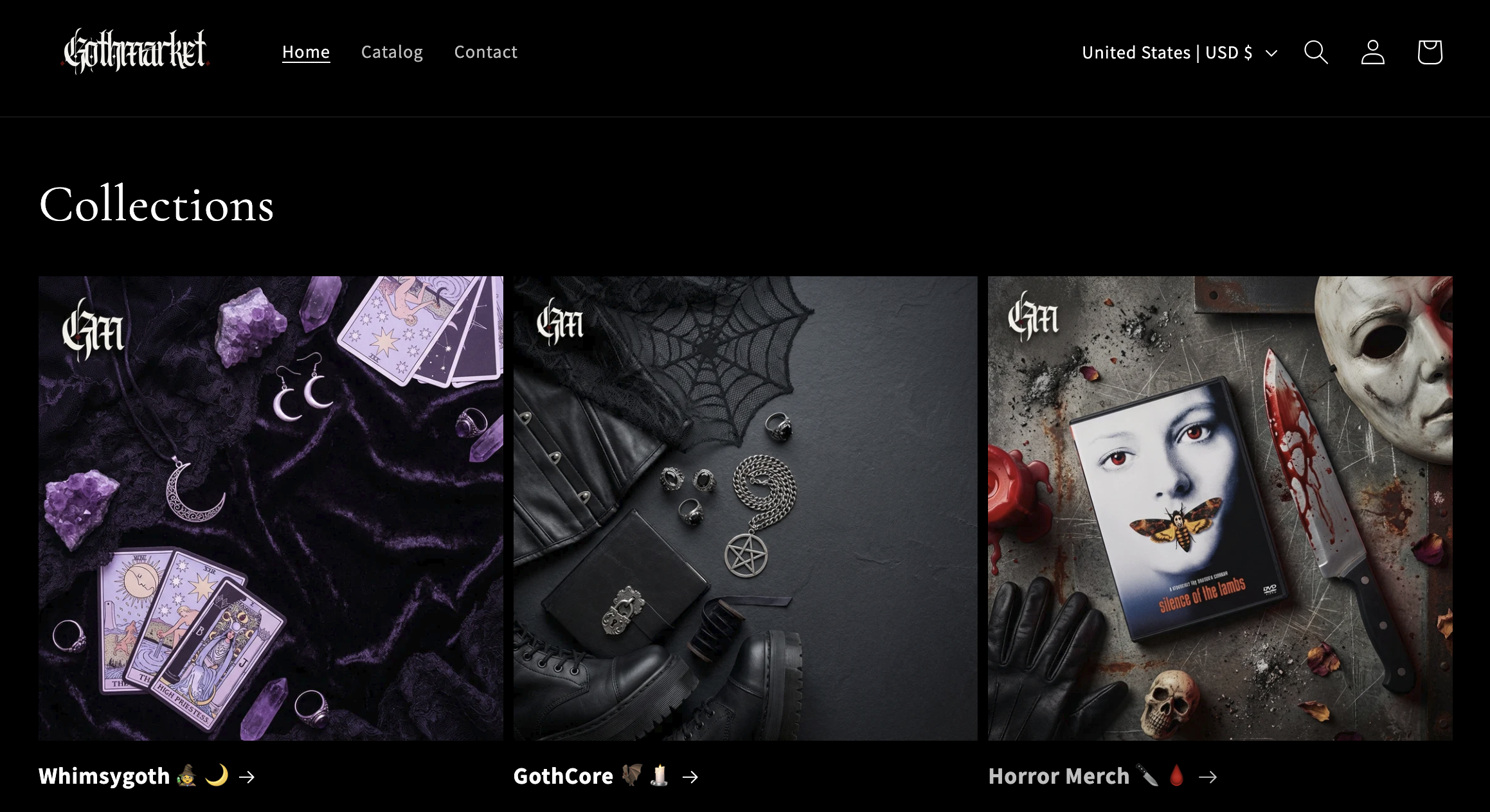
As a creator on GothMarket, you can list original art, prints, and unique gothic merchandise alongside a curated selection that includes pieces like the stunning moon choker pendant. The platform’s focus on the gothic niche means your work reaches buyers who already love what you create. Explore the full gothic jewelry collection to see the kind of audience you’d be selling alongside. Your art belongs in front of people who truly get it.
Frequently asked questions
Which platforms are best for selling gothic art?
Etsy, Shopify, and artist-first sites like Cosimo offer options for selling gothic art, with Cosimo’s 0% commission giving creators the most control over their earnings.
How can I increase sales of my gothic art?
Focus on SEO-optimized listings, engaging mockups, repeated social exposure, bundles, and targeted community outreach. Social exposure and bundles targeting gothic communities consistently drive the strongest results.
What should I include in my gothic art listing to attract buyers?
Use keyword-rich titles and descriptions, high-quality mockups, and clear licensing info. Optimized listings with SEO and detailed licensing terms are proven to increase buyer confidence and conversion rates.
Are there legal requirements for selling AI-generated gothic art?
Yes. You must disclose AI usage when required by the platform and hold commercial licenses for the AI tools used to create the work.