

How to Curate Dark Art: A Collector's Guide
TL;DR:
- Curating dark art involves selecting and displaying gothic works to create a meaningful collection rooted in thematic coherence. It requires understanding gothic styles, sourcing authentic pieces, and using lighting and scale to maximize visual impact. Continuous reassessment and storytelling keep the collection engaging and alive.
Curating dark art is the process of selecting, arranging, and showcasing gothic and alternative artworks to create a visually compelling and meaningful collection. The term “curation” here carries the same weight it does in professional gallery practice: intentional selection, thematic coherence, and purposeful display. Knowing how to curate dark art means going beyond personal taste. It means building a living narrative that connects medieval gothic forms to contemporary dark aesthetics, using lighting, scale, and symbolism as your primary tools. This guide covers every phase, from identifying authentic gothic styles to displaying finished collections with maximum visual impact.
How to curate dark art: understanding gothic and dark art styles
Dark art is defined by its deliberate use of shadow, macabre imagery, and psychological tension to provoke emotional response. Collectors who understand these defining characteristics make sharper, more intentional acquisition decisions. The style draws from a long lineage that includes medieval cathedral iconography, the neo-Gothic revival of the 18th and 19th centuries, and the contemporary alternative subculture that emerged from post-punk and goth music scenes.
Gothic art’s appeal lies not in dark melancholy alone but in its rich, multifaceted narrative that crosses history, subculture, and modern digital art. That complexity is exactly what makes a well-curated collection feel layered rather than one-dimensional. Collectors who recognize this distinction build collections that hold attention over time.
The core visual characteristics of dark and gothic art include:
- Dark palettes and dramatic contrast: Deep blacks, blood reds, bruised purples, and bone whites dominate. Contrast between light and shadow is used deliberately to create tension.
- Macabre and surreal themes: Skulls, ravens, decaying flora, occult symbols, and liminal figures appear across both historical and contemporary works.
- Medieval and neo-Gothic references: Pointed arches, blackletter script, gargoyle motifs, and stained-glass color arrangements signal the historical gothic lineage.
- Symbolism and narrative layering: Gothic art rarely presents a single reading. Symbols like the ouroboros, the moon, or the hanged figure carry multiple cultural meanings that reward close study.
- Contemporary reinterpretations: Modern dark artists blend traditional gothic iconography with digital techniques, street art influences, and body horror aesthetics, creating works that feel both ancient and current.
Understanding these characteristics lets you evaluate whether a piece genuinely belongs in a gothic or dark art collection, or whether it simply uses a dark color palette without deeper intent.
Where and how to source quality dark art pieces
Sourcing quality dark art requires evaluating three things simultaneously: artistic merit, thematic alignment, and provenance. Verifying artist backgrounds and provenance is essential for both investment value and authenticity. A piece without a traceable history is a risk, regardless of how striking it looks on the wall.
Collectors find strong dark art through several reliable channels:
- Independent galleries specializing in gothic and alternative art: These spaces pre-screen for thematic coherence and often represent emerging artists with serious intent.
- Online marketplaces focused on alternative aesthetics: Platforms like Goth connect independent creators directly with collectors, offering works that mass-market channels never carry.
- Dark art exhibitions and conventions: Events like H.R. Giger exhibitions or alternative art fairs bring together artists whose work rarely appears in mainstream gallery circuits.
- Artist studios and direct commissions: Buying directly from artists gives you provenance clarity and often access to works not yet in public circulation.
- Auction houses with gothic or outsider art categories: These provide verified provenance and competitive pricing benchmarks.
Balancing emerging artists with established works strengthens a collection’s long-term value. Emerging artists carry higher risk but often produce the most thematically urgent work. Established pieces provide anchor points that give the collection historical credibility.
Pro Tip: When evaluating a piece for thematic alignment, ask whether it would still feel coherent in your collection if you removed the title and artist name. If the visual language alone communicates the gothic or dark aesthetic, the piece earns its place.
Budget considerations matter more than collectors often admit. Allocating a portion of your budget to one significant anchor piece, rather than spreading funds across many smaller works, creates a focal point that elevates the entire collection. For collectors starting a gothic art collection, this anchor-first approach prevents the scattered, unfocused look that plagues many early collections.
How to display dark art for maximum visual impact
Display technique determines whether a dark art collection reads as intentional or chaotic. The single most common mistake collectors make is placing dark art against dark walls without contrast. Dark art on white, cream, or pale gray walls creates immediate contrast that enhances piece legibility and dramatic effect. The dark tones in the artwork itself carry the weight. The wall’s job is to frame, not compete.
Lighting is the second critical variable. 2700K warm LED lighting is the standard recommendation for illuminating dark art because it enhances warm tones and improves reflectance efficiency. Overhead ambient light flattens dark canvases and kills the texture that makes gothic and dark art compelling. Directional lighting solves this problem directly.
| Display element | Best practice | Common mistake |
|---|---|---|
| Wall color | White, cream, or pale gray | Dark wall behind dark art |
| Lighting type | 2700K warm LED, directional | Overhead ambient fluorescent |
| Lighting angle | 30–45 degree track or picture light | Straight-on flat illumination |
| Canvas size | 30×40 inches or larger for presence | Small canvases on large walls |
| Arrangement | Thematic groupings with breathing room | Crowded salon-style without narrative |
Directional picture lights or ceiling-mounted spotlights create zones of illumination that animate dark canvases in ways ambient light cannot. Position lights at a 30–45 degree angle to the artwork surface to bring out texture and depth without creating glare.
Scale is the third variable collectors consistently underestimate. Small dark canvases on large walls appear as visual holes rather than focal points. Dark art reads best on larger canvases, ideally 30×40 inches or more, to create the mass and presence the style demands. For smaller works, grouping them into a deliberate arrangement solves the scale problem. The gallery wall layout approach works well for smaller spaces where a single large canvas is not practical.
Pro Tip: Before hanging anything permanently, lay your pieces on the floor in their intended arrangement. Photograph the layout from standing height. This reveals scale mismatches and thematic gaps before you put a single nail in the wall.
For collectors interested in gothic wall art display, incorporating furniture and room elements that complement the collection strengthens the overall effect. Dark wood frames, velvet textiles, and wrought iron accents reinforce the gothic aesthetic without requiring additional artwork.
Step-by-step process for arranging a dark art collection
A structured process prevents the most common curation failure: assembling pieces you love individually that do not work together as a collection. Effective curation requires balancing thematic coherence with variety to craft a living story rather than a static display.
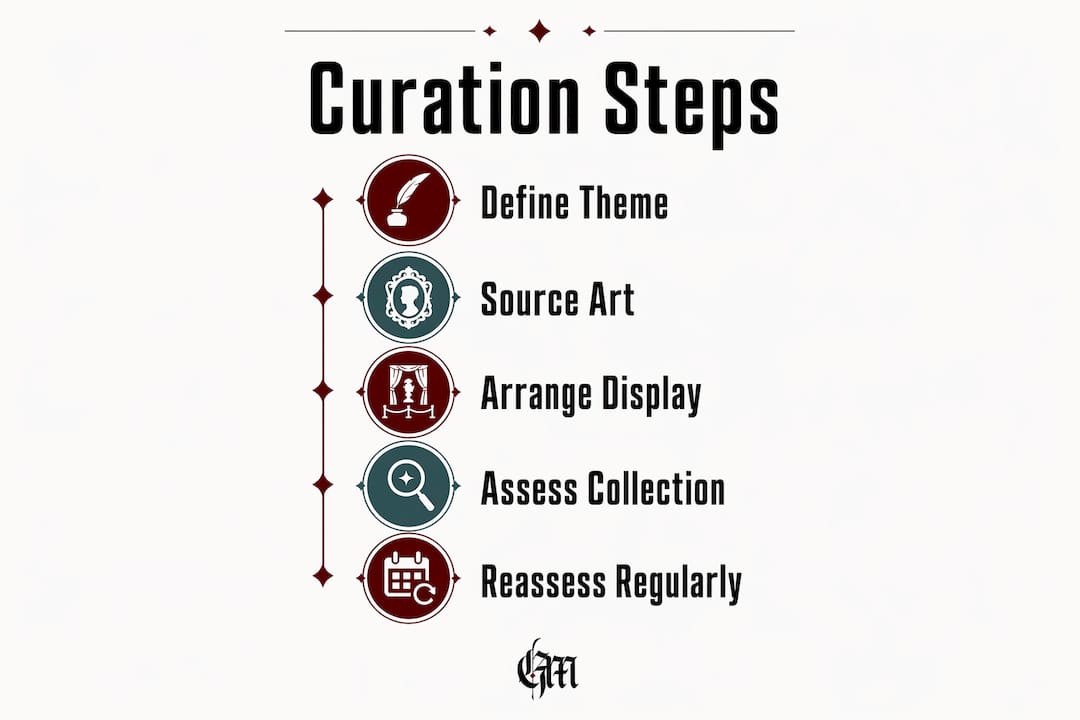
- Define your thematic focus. Decide whether your collection centers on a specific gothic tradition (Victorian mourning imagery, occult symbolism, neo-Gothic architecture), a contemporary dark art movement, or a personal narrative that draws from multiple sources. A clear focus makes every subsequent decision easier.
- Research and select artworks. Use the sourcing channels above. Evaluate each piece against your thematic focus before purchasing. Resist acquiring works that are technically strong but thematically off-course.
- Plan your layout before installation. Map your wall space to scale on paper or use a digital room planner. Assign each piece a position based on visual weight, thematic relationship, and lighting access. Group works that share symbolic or stylistic language.
- Address lighting before hanging. Install directional picture lights or track lighting at the correct angle before placing artwork. Adjusting lighting after installation is significantly harder and risks damaging walls and frames.
- Install with appropriate hardware. Use correct hanging systems suited to each artwork’s weight and medium. Heavy oil paintings on canvas require different hardware than framed prints or mixed media works. Improper installation damages both the artwork and the wall.
- Reassess and refresh regularly. A collection that never changes becomes invisible to the people who live with it. Rotate pieces seasonally, introduce new acquisitions, and retire works that no longer serve the collection’s narrative.
For collectors building a dark aesthetic gallery at home, the reassessment step is where most of the real curation work happens. The initial hang is a hypothesis. Living with the collection reveals what actually works.
Common challenges in dark art collection curation
Every collector encounters predictable problems. Knowing them in advance shortens the time spent fixing them.
- Poor artwork legibility from bad lighting: Dark art lit with flat overhead light loses its texture and depth entirely. Switch to directional 2700K warm LEDs before concluding a piece does not work in a space.
- Overly dark or confusing arrangements: When every piece in a collection operates at maximum visual intensity, none of them stand out. Introduce tonal variation by including works with lighter elements or more negative space.
- Imbalance between historic gothic and modern dark art: Collections that lean entirely on historical references feel like museum archives. Collections with no historical grounding feel rootless. Balancing historic gothic with modern dark themes keeps collections vital and engaging for contemporary viewers.
- Space limitations and scaling difficulties: Small rooms cannot support large-scale dark art without feeling oppressive. In constrained spaces, use one medium-scale anchor piece rather than multiple large works competing for dominance.
- Provenance and condition records: Maintain written records for every piece in your collection, including purchase source, artist information, date acquired, and condition notes. This protects investment value and simplifies insurance documentation.
“The key to a compelling dark collection is highlighting how gothic forms travel and recur across centuries, creating a living narrative.” — Curators at Louvre-Lens
The Louvre-Lens approach to gothic curation reinforces the most important principle: avoid nostalgia as an organizing logic. Nostalgia produces static displays. Narrative produces collections that grow in meaning over time.
Key takeaways
Curating dark art successfully requires thematic clarity, directional lighting, and a sourcing process that prioritizes provenance and artistic merit over impulse acquisition.
| Point | Details |
|---|---|
| Define your thematic focus first | A clear narrative goal makes every acquisition and display decision faster and more coherent. |
| Use 2700K directional lighting | Warm LEDs at a 30–45 degree angle reveal texture and contrast that ambient light destroys. |
| Place dark art on light walls | White, cream, or pale gray backgrounds maximize legibility and dramatic effect. |
| Verify provenance before buying | Artist background and purchase history protect both authenticity and long-term investment value. |
| Balance history with contemporary work | Mixing gothic historical references with modern dark art keeps collections alive and relevant. |
Dark art curation is about narrative, not nostalgia
I have spent years watching collectors make the same mistake: they fall in love with the gothic aesthetic and then assemble pieces that all say the same thing. A skull painting next to a skull print next to a skull sculpture is not a collection. It is a theme park.
The collections that genuinely hold attention are the ones built around a question rather than an answer. What does it mean that medieval death imagery and contemporary body horror use the same visual grammar? Why do blackletter scripts appear in both 13th-century manuscripts and 21st-century tattoo culture? When you curate around those questions, every piece in your collection does more work.
Lighting changed how I think about dark art entirely. Before I understood directional lighting, I assumed certain pieces were simply too dark to display well indoors. A single 2700K picture light proved me wrong every time. The texture in a dark oil painting only becomes visible under directional light. Flat overhead lighting is not neutral. It actively destroys what makes dark art interesting.
The other thing I have learned is that the best dark art collections are never finished. The collectors I respect most treat their walls as an ongoing argument with themselves about what gothic and dark aesthetics actually mean. They rotate pieces, reconsider arrangements, and introduce works that challenge the collection’s existing logic. That restlessness is what keeps a collection from becoming wallpaper.
— Rey
Goth has the dark art your collection needs
Building a collection with genuine thematic depth requires access to artists who understand the gothic and alternative aesthetic from the inside.
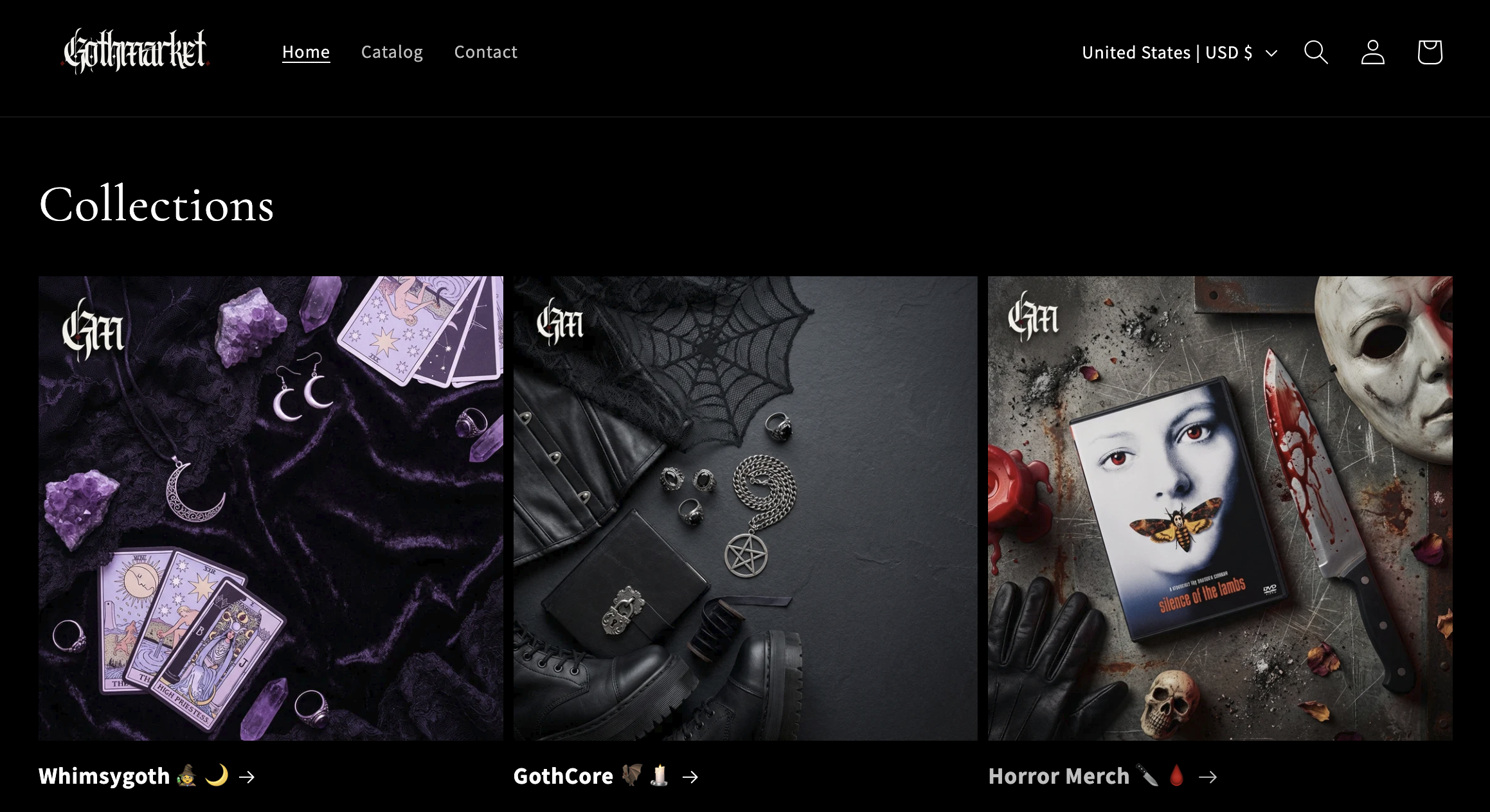
Goth connects collectors directly with independent creators working in gothic, occult, horror, and dark surrealist traditions. Every piece available through Goth’s dark art marketplace comes from artists embedded in the alternative subculture, not mass-market production lines. Whether you are sourcing an anchor piece for a new collection or adding depth to an existing one, Goth offers works that carry the symbolic weight and visual intensity that serious dark art curation demands. Browse the full range of gothic collectibles and art to find pieces that fit your collection’s narrative.
FAQ
What is dark art curation?
Dark art curation is the intentional process of selecting, arranging, and displaying gothic and alternative artworks to create a thematically coherent collection. It applies the same principles as professional gallery curation: provenance verification, thematic focus, and purposeful display.
What lighting works best for displaying dark art?
2700K warm LED lighting aimed at a 30–45 degree angle is the standard for dark art display. Directional picture lights or track spotlights reveal texture and contrast that overhead ambient light flattens entirely.
Should dark art go on dark walls?
Dark art displays most effectively against light walls. White, cream, or pale gray backgrounds create the contrast that makes dark tones legible and dramatically impactful. Dark art on dark walls loses definition and visual presence.
How do I find authentic gothic artworks to collect?
Authentic gothic artworks come from independent galleries, alternative art fairs, direct artist commissions, and online marketplaces specializing in dark and alternative aesthetics. Always verify artist background and provenance before purchasing, especially for investment-grade pieces.
How often should I reassess my dark art collection?
Reassess your collection at least twice a year. Rotating pieces, introducing new acquisitions, and retiring works that no longer serve the collection’s narrative prevents the display from becoming static and keeps the thematic story active.