

How to display gothic collectibles creatively and safely
TL;DR:
- Proper preparation and thoughtful arrangement are essential for preserving gothic collectibles and preventing damage over time. Using supportive, light-filtering, and climate-controlled display methods ensures both aesthetic impact and long-term safety of fragile or organic materials. Regular inspection, rotation, and environmental management help maintain the collection’s integrity while enhancing its dramatic gothic appeal.
Your gothic collection deserves more than a shelf crammed with beautiful objects gathering dust and fading in afternoon sunlight. The real tension every serious collector faces is this: the same dramatic staging that makes your pieces look incredible often puts them at risk. Dark velvet backdrops, candlelit shelves, and tightly packed curios create atmosphere, but they can also accelerate deterioration in ways that aren’t visible until the damage is done. This guide walks you through exactly what to prepare, how to arrange, mount, and light your pieces, and how to keep them looking stunning for years to come.
Table of Contents
- Tools and preparation: What you need before you display
- Arranging your gothic collectibles: Step-by-step display methods
- Mounting gothic textiles and artwork: Safe and striking wall displays
- Light and environmental control: Balancing drama with preservation
- Curator insights: What most collectors get wrong with gothic displays
- Showcase your collectibles with Goth.Market’s curated tools and finds
- Frequently asked questions
Key Takeaways
| Point | Details |
|---|---|
| Prep with protection | Gather archival supplies and control light exposure before arranging your gothic display. |
| Never stack or crowd | Each item needs its own space and support to avoid damage. |
| Use safe mounting | Textiles and art should be evenly supported to prevent stretching and fading. |
| Control your lighting | Choose atmospheric, UV-safe lights to enhance drama without risk. |
| Evolve your display | Regular updates help preserve both your collection and your love for it. |
Tools and preparation: What you need before you display
Now that you’re clear on the core challenge, the right preparation will keep your collectibles safe before they ever meet the spotlight.
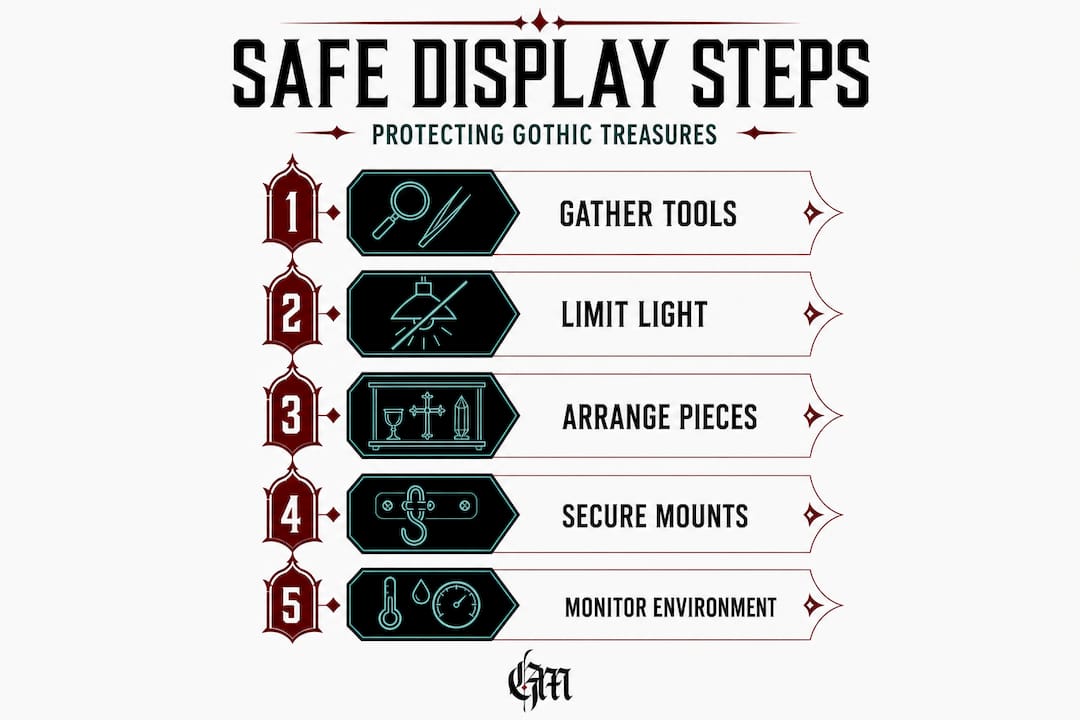
Gothic collectibles span a wild range of materials: antique lace, resin skulls, occult jewelry, oil paintings, hand-dyed textiles, ceramic figures, and taxidermy. Each one has different vulnerabilities. A carved bone piece handles differently from a paper print, and a vintage tapestry needs completely different support than a cast iron candelabra. Prep is not optional. It’s the foundation of every display that actually lasts.
Core preservation supplies you need:
| Tool | Purpose |
|---|---|
| Cotton or nitrile gloves | Prevent oils and moisture from transferring to surfaces |
| UV-filtering acrylic or glass | Protects framed items and display cases from light damage |
| Archival foam or padding | Cushions fragile pieces on shelves and inside cases |
| Adjustable stands and risers | Elevates items without stacking pressure |
| Soft brushes | Dust removal without scratching or snagging |
| Silica gel packets | Controls humidity inside enclosed cases |
| Adhesive UV window film | Low-cost protection for display area windows |
Pre-display checklist before anything goes on a shelf:
- Examine each piece for existing cracks, loose elements, or fragile joins
- Clean surfaces gently with appropriate tools (dry brush for most; damp cloth only for sealed ceramics)
- Assess your display area for light sources, air vents, and humidity levels
- Measure and designate individual spaces for each item before placing anything
- Source correct stands or mounts sized to each specific piece
Winterthur’s textile conservation guidance recommends protecting light-sensitive items by limiting light exposure and using UV-filtering approaches. This applies not just to fabric but to any item made from organic material, including paper, leather, and natural dyes.
If you’re just getting into collecting, reading up on starting a gothic art collection before buying display tools will help you prioritize what you actually need.
Pro Tip: UV window film costs a fraction of UV-protective display cases and can be applied in under an hour. For a display wall hit by afternoon sun, this single step prevents more fading than almost any other intervention.
Arranging your gothic collectibles: Step-by-step display methods
Once you’ve gathered your materials and prepped your space, it’s time to arrange your gothic treasures for both safety and spectacle.
Arrangement is where collectors either get it very right or fall into habits that slowly destroy what they love. Good arrangement is not purely aesthetic. It’s structural. How items sit relative to each other, what supports them, and how much breathing room they have all determine how well they hold up over years of display.
Step-by-step shelf and case arrangement:
- Map your space first. Sketch or photograph your shelves before placing anything. Assign every piece a location based on size, weight, and material before you pick anything up.
- Place the heaviest items at the lowest level. Tall cases with heavy pieces at the top are a stability hazard, especially in older homes or during movement.
- Use individual stands for every freestanding item. No piece should lean against another or rest directly on a surface that isn’t designed for its base shape.
- Group by material when possible. Keep ceramics away from fabric items. Place metal near other hard materials rather than near anything porous.
- Set a minimum two-inch clearance around each piece. This prevents abrasion, allows airflow, and makes dusting manageable without moving everything.
- Reserve the center or eye-level position for your statement piece. Your rarest or most visually commanding item should anchor the display. Everything else supports its presence.
- Step back and assess from normal viewing distance. Adjust height, grouping, and spacing based on the full view, not what looks right up close.
Stacking vs. separated display:
| Approach | Risk | Visual benefit |
|---|---|---|
| Stacking pieces | Pressure damage, scratching, breakage | None. Crowded displays read as chaotic |
| Separated, supported display | Minimal when done correctly | Each piece reads clearly; drama increases |
| Crowded grouping without stands | High abrasion and moisture trapping | Creates a “cabinet of curiosities” look but at a real cost |
| Individual risers with spacing | Low risk when materials are stable | Creates visual hierarchy and strong gothic atmosphere |
Authoritative collecting guidance confirms that you should avoid stacking or pressure contact between objects in cases or on shelves, with each item supported on its own surface. This matters for everything from resin figures to antique porcelain.
Understanding the cultural significance of gothic collectibles can also help you make smarter decisions about what to display prominently and what to store carefully, since some pieces carry symbolic weight that shifts how they interact with a broader collection.
For a deeper approach to how pieces relate to each other aesthetically, gothic art curation offers excellent frameworks for building visual coherence without sacrificing safety.
Pro Tip: Line the back panel of any display shelf with black velvet fabric. It eliminates light reflection from pale wood or painted surfaces, intensifies shadow and depth around your pieces, and creates that moody, immersive quality that defines a truly committed gothic display. It also photographs beautifully.
Mounting gothic textiles and artwork: Safe and striking wall displays
For wall-mounted pieces, special care ensures your gothic tapestries and art remain both secure and stunning.
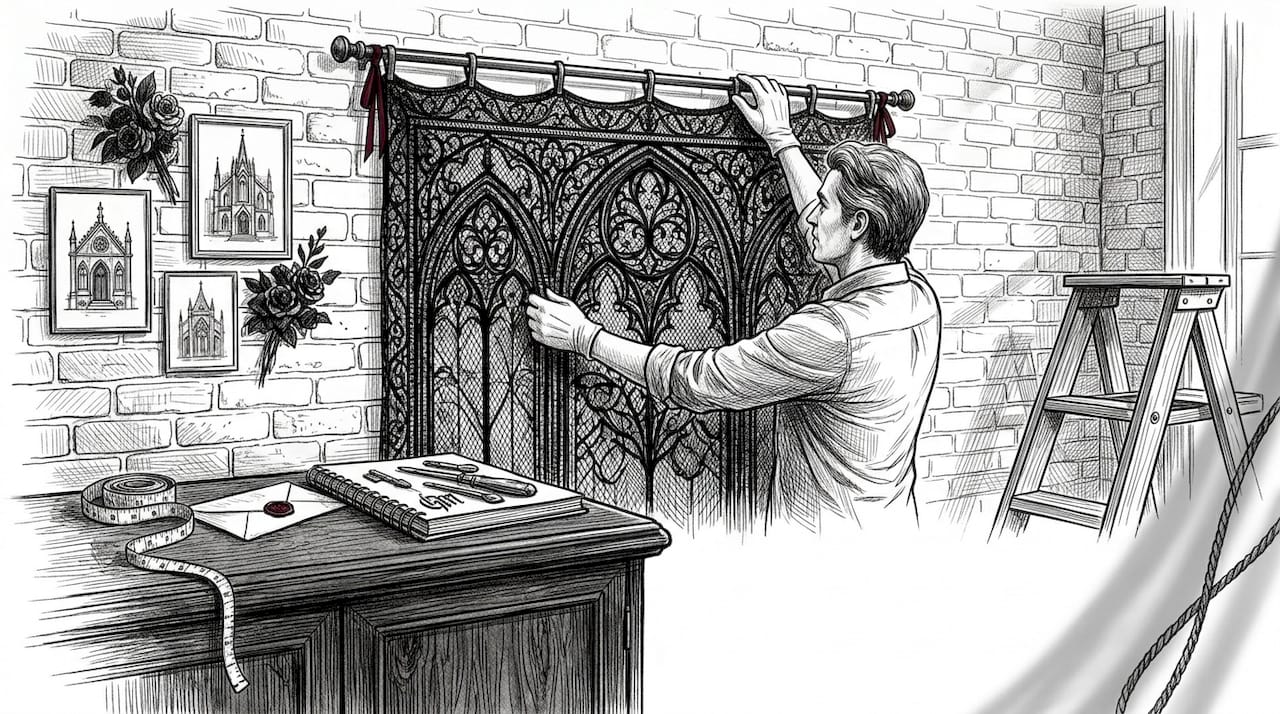
Wall displays are often where collectors make their most dramatic moves and their most damaging mistakes. A tapestry hung on a single nail pulls all its weight through one small point. Antique lace pinned to a board with sharp pins will, over time, develop tears that radiate outward from each puncture. The mounting method you choose determines whether a textile survives generations or falls apart in a decade.
Recommended mounting supports for wall textiles and art:
- Hook-and-loop tape (such as Velcro) sewn to a fabric sleeve along the top edge of a textile for even weight distribution
- Wooden or metal slats inserted into fabric sleeves stitched to the back of heavier tapestries
- Archival foam board backing for framed works, replacing standard cardboard inserts
- Acid-free picture hanging strips for lightweight framed prints
- Conservation-grade mounting corners for unframed art or photography
- Double-sided archival tape for paper-based items in frames, never standard tape
Critical note: Never use straight pins, thumb tacks, or staples directly on antique or vintage fabric. Even a single puncture creates a stress point that worsens with the natural movement caused by temperature changes. Many irreversible tears in collection-grade textiles trace back to a single pin placed during what seemed like a temporary display.
Winterthur’s conservation recommendations specifically advise mounting methods that distribute support along the full width of a textile rather than pinching or point-loading at single locations.
For style, think in terms of groupings or singular focal points. A gallery wall of five framed gothic prints creates a different energy than one large, arresting tapestry centered above a mantlepiece. Both are valid. The grouping approach works well in narrower spaces or rooms with many smaller pieces. A single focal point works when you have one commanding piece and want it to dominate. Gothic wall art display guides can help you decide which approach matches your space.
Light and environmental control: Balancing drama with preservation
Next, the right environmental controls and lighting dramatically affect your collectibles’ longevity and the room’s mood.
Lighting is probably the single area where gothic collectors feel the most conflict. The aesthetic calls for darkness, shadow, and the amber flicker of candlelight. The preservation side calls for controlled, low-UV, consistent light levels. Fortunately, these goals are more compatible than they seem.
Lighting do’s and don’ts:
- Do use warm LED strip lights placed below shelves to illuminate from underneath, creating a haunted glow without direct overhead exposure
- Do use low-wattage, warm-toned bulbs in any nearby fixtures
- Do install UV-filtering film on any windows that cast light onto your display area
- Do use battery-operated flickering LED candles for atmosphere near textiles and paper items
- Don’t use real candles near any collection items. The risk of wax splatter, smoke staining, and fire is too high
- Don’t position any piece in a location hit by direct sunlight for any portion of the day
- Don’t use halogen bulbs, which produce significant UV and heat
UV damage happens faster than most collectors expect. Research consistently shows that unprotected textiles and dyed materials can show visible fading within months of regular sunlight exposure. Even indirect natural light carries UV that accumulates over time without filtering.
Environmental stability matters as much as light control. Temperature swings cause materials to expand and contract, which stresses joins, cracks glazing on ceramics, and warps wooden frames. Humidity above 65% encourages mold, especially in enclosed cases with organic materials. Humidity below 40% dries out leather, wood, and natural fiber textiles. A simple digital hygrometer (a device that measures temperature and humidity) placed inside or near your display area tells you exactly what conditions your pieces are living in.
Winterthur’s guidance supports pairing moody lighting with protection strategies including UV management for sensitive materials and physical separation inside display cases. You do not have to choose between atmosphere and preservation.
Understanding how lighting and environment feed into gothic decor and fashion as a broader aesthetic can also help you make display decisions that feel intentional rather than accidental.
Curator insights: What most collectors get wrong with gothic displays
Beyond technical advice, a fresh perspective can help you avoid common pitfalls and create displays with lasting impact.
Here’s something most display guides won’t say directly: the biggest threat to gothic collections is not ignorance. It’s confidence. Collectors who have been at this for years tend to make the worst mistakes because they trust their eye over the evidence. They pack cases densely because it looks incredible. They hang pieces in dramatic light because the shadow effects are worth it. They skip the archival backing because the piece is behind glass anyway.
The assumption that visual brilliance and physical safety pull in opposite directions is the core mistake. When you accept that belief, you choose the aesthetic every time, and the collection slowly suffers for it. The truth is that the most striking gothic displays we’ve seen are also among the most carefully maintained ones. They use deliberate spacing, quality stands, and controlled light. The darkness reads deeper precisely because it’s intentional, not just the result of neglect.
Another overlooked mistake is treating a display as permanent. A collection is a living thing. Pieces you acquire next year will need to integrate into what you’ve built. Seasonal rotation keeps dust from settling in patterns, lets you inspect every piece regularly, and gives the display a sense of evolution that static arrangements lose. Rotate pieces to storage with proper archival wrapping, refresh the arrangement, and your collection will reward you with both visual freshness and better preservation outcomes.
If you haven’t invested in archival supports before adding a rare piece to your collection, do that first. Restoration after UV fading or physical damage almost always costs more than prevention. The emotional cost of watching something irreplaceable deteriorate is higher still.
For collectors building toward a collection that says something real about who they are, curated gothic self-expression gets at why intentional curation matters beyond aesthetics.
Showcase your collectibles with Goth.Market’s curated tools and finds
Ready to make your display a centerpiece? Explore some standout items and tools to bring your gothic vision to life.

Goth.Market connects collectors with independent creators who make pieces designed to anchor a serious display. Whether you’re searching for statement pieces in gothic jewelry to elevate a shadowbox arrangement, or hunting the kind of dark, visceral horror collectibles that become the focal point of an entire room, the curated categories make it easier to find exactly what your display is missing. Every item on the platform is chosen for its distinctiveness, which means you’re adding something real to your collection rather than something mass-produced and forgettable. Browse, discover, and build a display that reflects your vision.
Frequently asked questions
What is the safest way to display fragile gothic textiles?
Use a hook-and-loop system that distributes support along the edge rather than relying on pins or point-loading, which creates stress points that worsen over time.
How do I keep my collectibles from fading?
Limit light exposure and add UV protection to windows; UV-filtering approaches are especially critical for textiles, paper, and any item with organic dye components.
Should items in a gothic display case touch each other?
No. Each item should rest on its own surface or stand to prevent abrasion and pressure damage, even when pieces seem sturdy enough to handle contact.
What lighting is best for a gothic display?
Use low-wattage, indirect light with warm tones and ensure all sources are UV-filtered; pairing moody lighting with UV management lets you achieve atmosphere without sacrificing the condition of sensitive pieces.
How do I know if my environment is safe for collectibles?
Place a digital hygrometer in or near your display area and aim for stable temperature and humidity between 40% and 55%. Avoid any location with direct sunlight or significant daily temperature swings.