

Gothic Marketplace Shop Setup Guide for Creators
TL;DR:
- A gothic marketplace shop is an online multivendor platform that sells curated dark and occult products. Validating the niche by recruiting early sellers and buyers ensures demand and guides product focus. Using Shopify with a multivendor app and Stripe Connect streamlines launch and payment processing, while community engagement boosts authentic marketing effectiveness.
A gothic marketplace shop is an online multivendor storefront selling curated dark, alternative, and occult products, and it requires niche validation, platform selection, payment integration, and gothic branding to succeed. This guide to setting up a gothic marketplace shop walks you through every critical step, from recruiting your first sellers to configuring Stripe Connect payouts and writing product descriptions that convert. Whether you sell occult jewelry, dark fashion, or witchcraft supplies, the same core framework applies. Get these foundations right, and your shop launches with real momentum instead of guesswork.
How to validate your gothic marketplace niche before you build
Niche validation is the single most important step in gothic marketplace setup, and most founders skip it entirely. The result is a polished storefront with no sellers and no buyers. Recruiting at least 10 sellers and 10 buyers before writing a single line of code is the proven method to solve the classic marketplace chicken-and-egg problem. That threshold gives you enough supply to attract buyers and enough buyer interest to keep sellers engaged.
Finding those first ten gothic sellers is more direct than most people expect. Gothic artisan communities exist on Reddit (r/goth, r/witchcraft), Facebook groups dedicated to dark fashion, and at local alternative markets and conventions like Convergence or regional goth nights. Reach out personally. Explain your concept. Offer free listings for the first cohort. Sellers who join early become your most loyal advocates.
Buyers are easier to find once sellers are confirmed. Post in the same communities with specific product previews. Ask for pre-launch interest, not just follows. Manual recruitment before automation prevents you from building complex features for an audience that does not yet exist. The validation phase also tells you which gothic product categories generate the most excitement, which directly shapes your catalog structure.
Pro Tip: Run a simple Google Form asking potential buyers to list the three gothic products they struggle to find online. The answers will define your most valuable product categories before you spend a dollar on development.
Checking the top gothic art marketplaces already operating also reveals which niches are oversaturated and which have genuine gaps you can fill.
What platform should you use for a gothic online store?
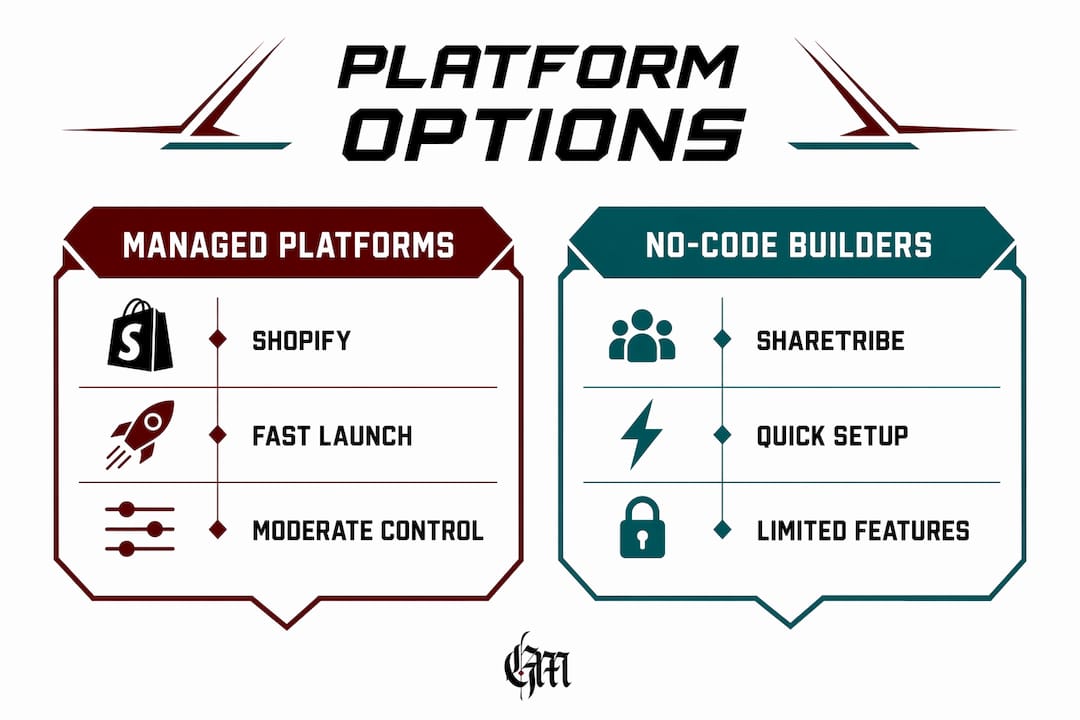
Platform selection determines how fast you launch and how much technical debt you carry. For most gothic shop founders, the choice comes down to three options: Shopify with a multivendor app, a no-code marketplace builder, or a fully custom build.
Shopify is the recommended managed platform for gothic marketplaces until annual revenue exceeds $30 million. That threshold matters because Shopify’s ecosystem, including apps like Garnet Marketplace, handles multivendor logic without custom development. You get fast iteration, reliable hosting, and a proven checkout flow. Most gothic shop founders do not need anything more complex at launch.
No-code marketplace builders like Sharetribe allow launch in days rather than months. That speed is a real advantage when you are still validating demand. The tradeoff is less design flexibility, which matters more in gothic e-commerce than in most niches because aesthetic presentation is part of the product experience.
| Platform type | Launch speed | Design control | Best for |
|---|---|---|---|
| Shopify + multivendor app | 1–2 weeks | High | Shops with 10+ sellers ready |
| No-code builder (Sharetribe) | 2–5 days | Medium | Early validation phase |
| Custom build | 3–6 months | Full | Post-revenue scaling |
Custom builds make sense only after you have proven revenue and specific feature needs that no existing platform can meet. Building custom from day one is the most common and most expensive mistake in gothic marketplace setup.
Pro Tip: Start with Shopify and a multivendor app. Once your monthly revenue justifies it, migrate to a custom solution with the exact gothic aesthetic your brand demands.
How does Stripe Connect work for gothic marketplace payments?
Multivendor payment processing is the most technically complex part of opening a dark fashion store, and Stripe Connect is the industry standard solution. A multivendor payment gateway enables a single unified checkout where funds are automatically split across multiple sellers at the moment of payment. Without this, you would manually transfer money to each seller after every sale, which is unsustainable at any real volume.
Stripe Connect handles the full payment stack for gothic marketplaces. It routes the correct amount to each seller, deducts your platform fee, and manages the transaction record. Built-in KYC verification and payouts scheduling mean you are not responsible for verifying seller identities manually or building a compliance layer from scratch. That alone saves months of development work.
The operational risk reduction is significant. Stripe Connect manages disputes and chargebacks at the platform level, so a buyer dispute with one seller does not freeze your entire marketplace account. For gothic shops selling high-ticket items like custom occult jewelry or handmade dark fashion, that protection matters.
“Stripe Connect reduces the payment decisions marketplace founders must build, letting them focus on differentiating the gothic shop experience.” — Stripe
Key Stripe Connect features every gothic marketplace needs:
- Split payouts: Funds route to sellers automatically at checkout with your platform fee deducted.
- KYC compliance: Stripe verifies seller identities, keeping you legally protected.
- Dispute management: Chargebacks are handled at the platform level, not seller by seller.
- Payout scheduling: You control when sellers receive funds, daily, weekly, or monthly.
- Multi-currency support: Critical if your gothic sellers and buyers span multiple countries.
How to optimize gothic product listings for maximum conversion
Product listings are where gothic marketplace setup meets gothic culture, and the two must align. A technically correct listing with flat photography and generic copy will not sell to a gothic buyer. The aesthetic experience starts at the listing level.

Photography is the first priority. Etsy recommends 2000 x 2000 px square images with up to 10 image slots per listing. Each additional image answers a different buyer question: scale, texture, wearability, packaging. For gothic products specifically, atmospheric styling shots outperform plain white backgrounds. A hand-forged silver pentagram ring photographed on black velvet with candlelight converts better than the same ring on a white card.
Writing gothic product descriptions requires a different approach than standard e-commerce copy. Strong descriptions name the materials, dimensions, and care instructions, then layer in the cultural context that makes the item meaningful to a gothic buyer. A description that references Victorian mourning jewelry traditions or the symbolism of a specific occult motif speaks directly to the buyer’s identity. Read the gothic product description guide for specific frameworks that work.
Branding consistency across listings builds shop identity. Your shop name, banner, logo, and listing aesthetic should all signal the same gothic subculture. A shop selling both pastel kawaii items and dark occult jewelry sends a confused signal. Niche specificity builds trust. The gothic branding guide for creators covers visual identity in detail.
Pro Tip: Use your listing titles to include the specific gothic subculture your product belongs to, such as Victorian gothic, dark academia, or nu-goth. These terms are actively searched and signal cultural fluency to buyers.
| Listing element | Standard approach | Gothic-optimized approach |
|---|---|---|
| Photography | White background, even lighting | Dark atmospheric styling, textured surfaces |
| Title | Material + product type | Subculture term + material + product type |
| Description | Features and dimensions | Features, dimensions, and cultural context |
| Image count | 1–3 images | 7–10 images showing detail and scale |
What marketing strategies work for a gothic marketplace shop?
Gothic marketplace marketing works best when it treats the community as a culture, not a demographic. Authentic community engagement builds brand loyalty faster than paid advertising in this niche. Gothic buyers are skeptical of brands that perform the aesthetic without understanding it.
Practical marketing channels that deliver results for gothic shops:
- Gothic subreddits and Facebook groups: Share new listings with context, not just links. Explain the artisan, the inspiration, or the cultural reference.
- Instagram and TikTok: Short-form video showing the creation process of gothic products outperforms static product posts. Dark aesthetic reels consistently attract alternative fashion audiences.
- SEO with gothic culture keywords: Target long-tail searches like “handmade Victorian mourning jewelry” or “occult home decor for altars” rather than broad terms like “gothic jewelry.”
- Collaborations with gothic content creators: Micro-influencers with 5,000–30,000 followers in the goth space have highly engaged audiences and are often open to product collaborations.
- Gothic events and conventions: Vendor tables at events like Convergence, Wave-Gotik-Treffen, or local goth nights generate direct sales and email list growth.
Storytelling is the marketing lever most gothic shop owners underuse. Every seller on your platform has a story. The artist who hand-carves bone pendants in a Victorian-era workshop, the seamstress who recreates 18th-century mourning dress. Publishing those stories as blog content and social posts builds the kind of brand depth that keeps buyers returning. Learning how to sell gothic art effectively gives sellers on your platform a stronger foundation, which directly improves your marketplace’s overall conversion rate.
Key Takeaways
A successful gothic marketplace shop requires validated demand, the right platform, integrated multivendor payments, and gothic-specific product presentation before launch.
| Point | Details |
|---|---|
| Validate before building | Recruit at least 10 sellers and 10 buyers manually before investing in platform development. |
| Choose Shopify first | Shopify with a multivendor app is the right platform until annual revenue exceeds $30 million. |
| Use Stripe Connect | Stripe Connect handles split payouts, KYC, and disputes in one integration for gothic marketplaces. |
| Optimize listings for gothic culture | Use atmospheric photography, subculture-specific titles, and culturally aware descriptions to convert gothic buyers. |
| Market through community | Authentic engagement in gothic communities drives more loyalty and sales than generic paid advertising. |
What launching gothic shops actually taught me
The technical steps in any gothic marketplace setup guide are the easy part. The hard part is understanding that gothic buyers are among the most culturally literate shoppers online. They can tell immediately whether a shop was built by someone who lives the aesthetic or someone who Googled it.
I have seen well-funded gothic marketplace launches fail because the founders treated “gothic” as a visual filter rather than a subculture with history, values, and internal debates. A shop that stocks both mass-produced Halloween decor and handmade occult ritual tools sends a signal that the curation is not serious. Gothic buyers notice. They leave.
The validation phase is where this gets corrected before it costs you. When you recruit your first ten sellers manually, you learn what the community actually values. You hear what they cannot find anywhere else. That intelligence is worth more than any market research report. The founders who spend two weeks in gothic communities before touching a platform always build better shops than those who launch first and ask questions later.
My honest advice: do not rush the branding. Gothic aesthetic is specific, and getting it wrong is worse than being generic. Spend real time on your shop’s visual identity before you go live. The benefits of selling gothic merchandise are real, but only for shops that earn the community’s trust first.
— Rey
Goth Market: your gothic marketplace already built
Goth is an existing gothic marketplace platform built specifically for dark, alternative, and occult sellers, and it removes the platform-building problem entirely.
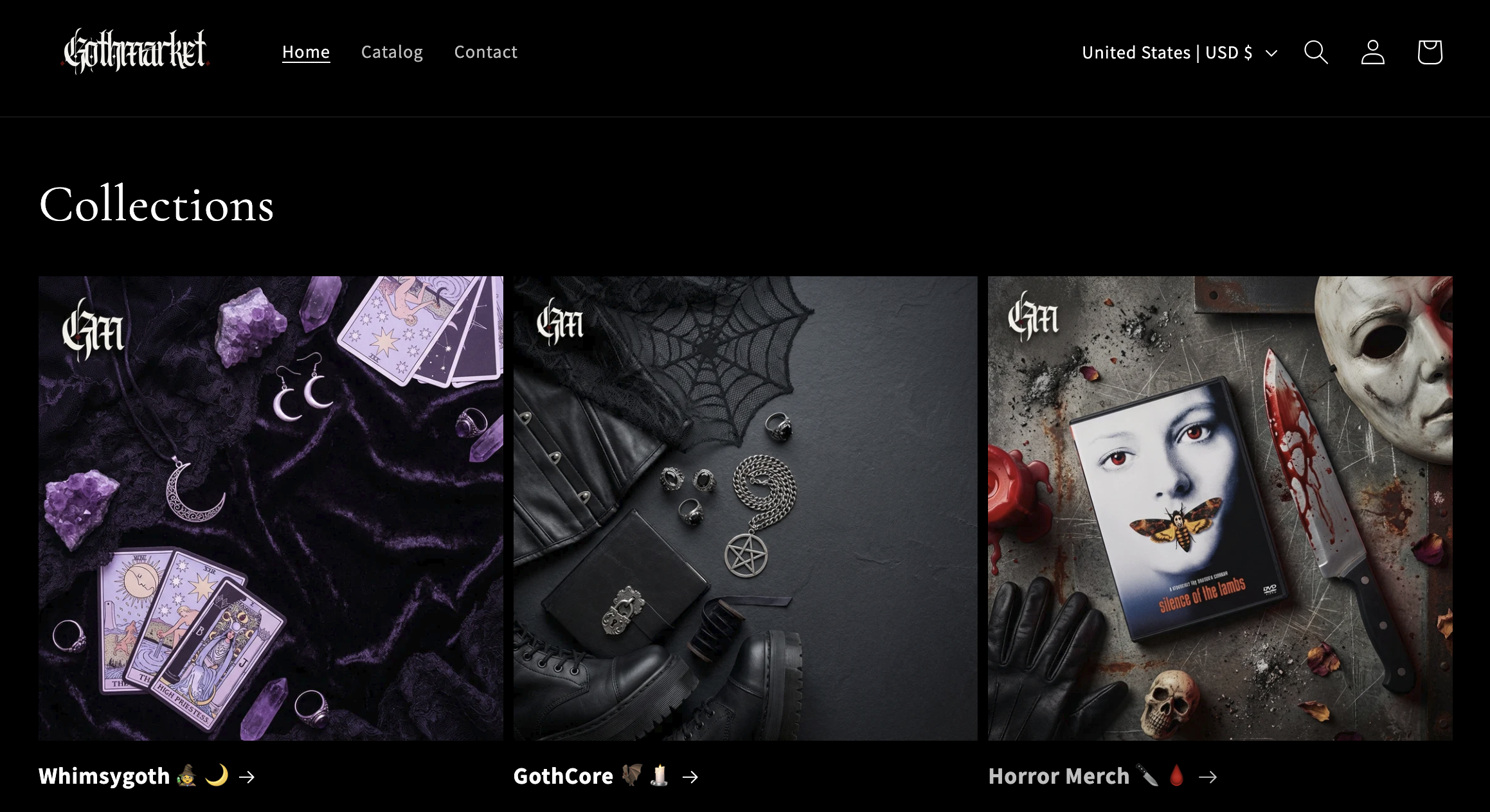
Goth connects independent gothic creators directly with buyers who are already looking for exactly what you make. Payment processing through Stripe Connect is already integrated. The audience is already there. You skip months of platform setup and go straight to listing your products, building your seller profile, and reaching gothic buyers across fashion, jewelry, occult supplies, and dark decor. Visit Goth.Market to open your shop and start selling to a community that was built for exactly this.
FAQ
What is a gothic marketplace shop?
A gothic marketplace shop is a multivendor online storefront selling curated dark, alternative, and occult products, connecting independent gothic creators with buyers who share the aesthetic.
How many sellers do I need before launching?
Recruit at least 10 sellers and 10 buyers before launching to solve the chicken-and-egg problem and give your marketplace enough supply to attract real buyer interest.
Why use Stripe Connect for gothic marketplace payments?
Stripe Connect automates split payouts, handles KYC compliance, and manages disputes across multiple sellers in one integration, making it the standard choice for multivendor gothic shops.
What platform is best for a gothic shop starting out?
Shopify with a multivendor app is the recommended platform for gothic marketplaces until annual revenue exceeds $30 million, offering fast setup and reliable checkout without custom development.
How do I market a gothic marketplace to the right buyers?
Authentic engagement in gothic communities on Reddit, Instagram, and at events like Convergence drives more qualified traffic than broad paid advertising. Community-driven marketing builds the brand loyalty that keeps gothic buyers returning.