

What Is Witchcraft Decor? Your 2026 Style Guide
TL;DR:
- Witchcraft decor is an intentional interior style blending mystical symbols, natural materials, and spatial placement.
- It spans from dark gothic to soft cottagecore, emphasizing personal symbolism and sensory experiences without requiring belief in witchcraft.
Witchcraft decor is defined as an interior design style that uses mystical symbolism, natural materials, and deliberate spatial arrangement to create spaces charged with personal meaning and spiritual atmosphere. Known in design circles as magical interior design or the witchy aesthetic, this style sits at the intersection of gothic, bohemian, and cottagecore influences without belonging exclusively to any one of them. What separates it from ordinary decorating is intention. Every object earns its place through symbolism, story, or sensory contribution. Whether you are drawn to moody candlelit altars or sun-drenched shelves lined with dried lavender and rose quartz, witchcraft decor adapts to your personal vision rather than demanding you conform to a fixed look.
What is witchcraft decor made of? Core elements and symbols
Witchcraft decor blends mystical symbolism with natural materials and gothic or bohemian aesthetics to create spaces of intention. The building blocks fall into three broad categories: natural materials, symbolic objects, and ritual tools repurposed as decor.
Natural materials form the foundation of any authentic witchy aesthetic home:
- Crystals: Amethyst promotes calm and introspection. Rose quartz draws warmth and emotional openness. Obsidian acts as a protective anchor. Each stone carries a specific symbolic weight that shapes how a space feels.
- Dried herbs and botanicals: Lavender bundles, mugwort, rosemary, and eucalyptus serve double duty as visual texture and scent. Hung above doorways or arranged in apothecary jars, they signal a connection to the natural world.
- Moon phase art: Printed or carved representations of lunar cycles appear on tapestries, wall hangings, and ceramic tiles. The moon is one of the most universally recognized symbols in witchy motif design, representing cycles, intuition, and transformation.
- Ritual tools as decor: Chalices, besoms (traditional witch’s brooms), athames displayed on stands, and cauldrons used as planters or candle holders bring functional symbolism into the room without looking theatrical.
- Candles: Pillar candles, taper candles in iron holders, and beeswax votives create layered light while carrying color symbolism. Black candles absorb negative energy in folk tradition; white candles represent clarity.
- Vintage and artisan collectibles: Antique mirrors with ornate frames, hand-thrown ceramic vessels, and handcrafted lamps add texture and history that mass-produced items cannot replicate.
Personal intuition should guide how you combine these elements. Pairing lavender with waning moon imagery creates a cleansing, releasing energy in folk symbolism, but the decor ultimately mirrors your own spiritual journey rather than any fixed rulebook.
Pro Tip: Group crystals in odd numbers on a windowsill where natural light hits them. The refracted light adds movement to the space without any additional effort.
How does witchcraft decor range from gothic dark to cottagecore light?
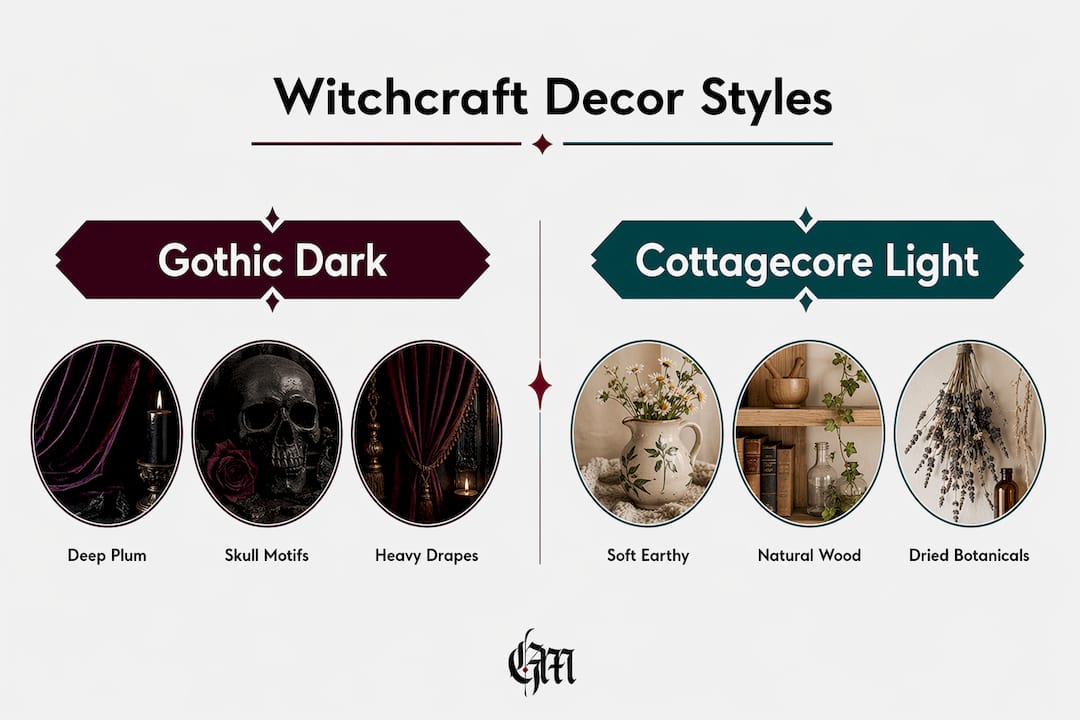
One of the most persistent myths about witchcraft home decor is that it requires dark walls, skull motifs, and dramatic black furniture. The witchy aesthetic is not limited to gothic appearances. It spans a wide spectrum, and understanding where you fall on that spectrum is the first step to designing a space that genuinely reflects you.
| Style variation | Color palette | Key materials | Mood |
|---|---|---|---|
| Dark gothic witch | Deep plum, black, burgundy | Velvet, wrought iron, dark wood | Dramatic, mysterious, powerful |
| Dark academia witch | Forest green, oxblood, warm brown | Leather, aged paper, brass | Scholarly, brooding, layered |
| Bohemian witch | Terracotta, rust, gold | Macramé, rattan, linen | Free-spirited, earthy, warm |
| Cottagecore witch | Cream, sage, dusty rose | Linen, dried flowers, wicker | Soft, nurturing, pastoral |
| Celestial witch | Midnight blue, silver, white | Glass, mirror, metallic accents | Ethereal, expansive, luminous |
Color psychology plays a direct role in how each variation functions. Deep indigo and amethyst tones promote introspection and calm, while metallic accents stimulate alertness and mental clarity. This means your color choices are not purely aesthetic decisions. They actively shape how you feel in the room.
The gothic witch variation overlaps significantly with gothic home decor traditions, borrowing architectural drama and rich textures. The cottagecore witch variation shares DNA with Scandinavian hygge, prioritizing warmth and natural simplicity. Neither is more “authentic” than the other. Authenticity in this style comes from intentionality, not from how dark or dramatic your choices are.
Witchcraft decor does not require belief in witchcraft to work as a design style. Many people adopt the aesthetic purely for its visual richness and the sense of sanctuary it creates.
Why does intentional placement matter in witchcraft decor?
Symbolic placement is the practice that separates witchcraft decor from simply collecting mystical objects. Where you put something matters as much as what you put there. Successful witchy decor depends on intentional curation using spatial planning tools to avoid clutter and maintain a sanctuary feel.
The Bagua map, borrowed from feng shui, divides a room into nine zones corresponding to life areas such as wealth, relationships, and knowledge. Placing a rose quartz cluster in the relationships corner or a citrine point in the wealth area adds a layer of intentional symbolism that transforms decoration into something more deliberate. You do not need to follow feng shui strictly. The principle of assigning purpose to placement is what matters.
Here is a practical framework for intentional placement:
- Define the room’s primary function. A bedroom calls for calming, protective energy. A workspace benefits from clarity and focus. Choose decor that supports that function symbolically.
- Create a focal point. Every intentional space needs one anchor, whether that is a dedicated altar shelf, a statement mirror, or a large piece of moon phase art. Build outward from there.
- Apply the rule of three. Group objects in threes: a candle, a crystal, and a small botanical arrangement. Odd numbers create visual tension that feels dynamic rather than static.
- Leave negative space. Clutter fatigue arises from accumulating items without intention. Empty space is not wasted space. It gives meaningful objects room to breathe and be noticed.
- Rotate seasonally. Swap dried herbs, candle colors, and botanical arrangements with the seasons. This keeps the space alive and connected to natural cycles rather than frozen in one moment.
“Every object should have a purpose and not be placed randomly. The decor primarily mirrors the inhabitant’s spiritual journey.” — Coohom Witchcraft Decor Guide
Occult homeware symbols follow similar logic. A pentagram placed at the entrance carries protective symbolism in many traditions. The same symbol placed randomly on a bookshelf loses that directional meaning. Context and placement activate the symbolism.
How to incorporate witchcraft decor into your home practically
Starting with witchcraft home decor does not require a full room overhaul. The most effective entry point is a single dedicated corner or tabletop altar rather than redecorating entire rooms. A small dedicated corner maintains balance and prevents the space from feeling overwhelming or theatrical.
Here is how to build from that starting point:
- Choose your corner. A windowsill, a floating shelf, or a small side table works perfectly. Natural light access is a bonus but not required.
- Start with three anchor pieces. One crystal, one candle, and one symbolic object (a small moon phase print, a dried herb bundle, or a ceramic vessel) create a complete visual unit without clutter.
- Layer your lighting. Avoid harsh overhead lights and use soft, layered illumination instead. Stained glass lamps, pillar candles, and warm string lights create depth and shift the room’s mood dramatically. Lighting is the single fastest way to transform a space.
- Mix vintage and modern pieces. Blending traditional and contemporary witchy decor reflects the evolving nature of mystical interior design and prevents the space from feeling like a costume rather than a home.
- Engage scent and texture. Incense, essential oil diffusers, and tactile fabrics like velvet throws or faux fur cushions are as vital to the atmosphere as any visual element. A space that smells of cedar and sandalwood and feels soft underhand creates a full sensory experience that purely visual decor cannot match.
- Budget starter pieces. Entry-level handcrafted lamps or besoms typically cost between $40 and $100, making this one of the more accessible alternative design styles to begin exploring.
Pro Tip: Burn a single stick of palo santo or dragon’s blood incense when you first arrange a new shelf. The scent becomes a sensory anchor that makes the space feel intentional every time you smell it afterward.
Safety matters when working with live flames and dried botanicals. Keep candles away from hanging herb bundles, use heat-resistant holders, and never leave burning candles unattended. Dried herbs are flammable, and a beautiful altar is not worth a fire hazard.
Key takeaways
Witchcraft decor works because it combines symbolic objects, intentional placement, and multi-sensory design to create living spaces that feel personally meaningful rather than generically decorated.
| Point | Details |
|---|---|
| Definition and scope | Witchcraft decor is an intentional interior style blending mystical symbols, natural materials, and flexible aesthetics. |
| Style spectrum | The aesthetic ranges from dark gothic to soft cottagecore and does not require belief in witchcraft to use effectively. |
| Intentional placement | Spatial tools like the Bagua map and the rule of three prevent clutter and keep every object purposeful. |
| Sensory engagement | Scent, texture, and layered lighting are as critical as visual elements for creating an authentic witchy atmosphere. |
| Starting point | Begin with a single dedicated corner using three anchor pieces before expanding to full rooms. |
Why I think most people approach witchcraft decor backwards
Most people start by buying objects and then trying to find places for them. That is the fastest route to a shelf that looks like a gift shop rather than a sanctuary. What I have found, after years of observing how people actually live in these spaces, is that the ones who get it right start with a feeling they want to create and then work backward to the objects.
Ask yourself what you want to feel when you walk into the room. Protected? Inspired? Calm? That answer tells you more about what belongs in your space than any shopping list. A person who wants to feel grounded needs earth tones, heavy textures, and rooted symbols like stones and wood. A person who wants to feel expansive needs mirrors, celestial imagery, and cool light.
The other mistake I see constantly is treating the space as finished. Witchcraft decor that does not evolve feels stale within six months. Rotate your botanicals. Change your candle colors with the seasons. Swap out one crystal for another when your life circumstances shift. The space should be a living record of where you are, not a static display of where you were when you first decorated. Trust your instincts over any rulebook, including this one.
— Rey
Find your witchcraft decor pieces at Goth
Goth curates a marketplace of handcrafted, symbolic, and artisan-made pieces specifically for people who want their homes to reflect something deeper than mainstream interior trends.
From occult-inspired dark decor to crystals, ritual tools, and statement art, Goth connects you with independent creators whose work carries the intention that mass-market products simply do not. Every piece in the marketplace is selected for its alignment with alternative and mystical aesthetics, so you are not sorting through generic home goods to find the one item that fits. Browse the witchcraft and dark decor collections to find pieces that belong in your space rather than just filling it.
FAQ
What is witchcraft decor exactly?
Witchcraft decor is an interior design style that uses mystical symbols, natural materials like crystals and dried herbs, and intentional spatial arrangement to create spaces with personal and spiritual meaning. It is a flexible aesthetic that does not require belief in witchcraft to use effectively.
What is the difference between witchy decor and gothic decor?
Witchy decor prioritizes symbolism, natural materials, and intentional placement across a wide aesthetic spectrum from cottagecore to dark gothic. Gothic decor focuses specifically on dramatic architecture, dark color palettes, and Victorian or medieval visual references. The two styles overlap but are not interchangeable.
How do I start decorating with a witchy aesthetic on a budget?
Start with a single shelf or corner using three anchor pieces: one crystal, one candle, and one symbolic object. Entry-level handcrafted pieces like besoms or artisan lamps typically cost between $40 and $100, making the style accessible without a large upfront investment.
Does witchcraft decor have to be dark?
No. The witchy aesthetic spans from moody gothic interiors to soft, earthy cottagecore spaces. Color and tone are personal choices that reflect the mood and energy you want to create, not requirements of the style itself.
What symbols are most common in witchcraft home decor?
Moon phases, pentagrams, botanical motifs, and elemental symbols (fire, water, earth, air) appear most frequently. Crystals, besoms, and chalices also serve as recognizable symbolic anchors in this style.