

What Is Occult Homeware? Symbols, Style, and Decor
TL;DR:
- Occult homeware features symbols like sigils, moons, and crystals to create atmospheric décor without religious ties. Its versatile style integrates into gothic, minimalist, and cottagecore interiors through intentional focal points and mood lighting. Authentic pieces from artisans enhance emotional resonance, making personalized, deliberate choices essential for meaningful spaces.
Occult homeware is defined as home decor and accessories that use symbols and themes from witchcraft, mysticism, and esoteric traditions to create a mysterious, atmospheric living space. Think wall art printed with tarot imagery, candle holders shaped like crescent moons, crystal clusters on windowsills, and sigil-etched throw pillows. These pieces are sold alongside gothic and alternative collections to add ambiance rather than serve any specific religious function. Platforms like Etsy and Goth.Market have made this aesthetic widely accessible, and the category now spans everything from mass-produced novelty candles to handcrafted ritual tools made by independent artisans.
What is occult homeware, and what symbols define it?
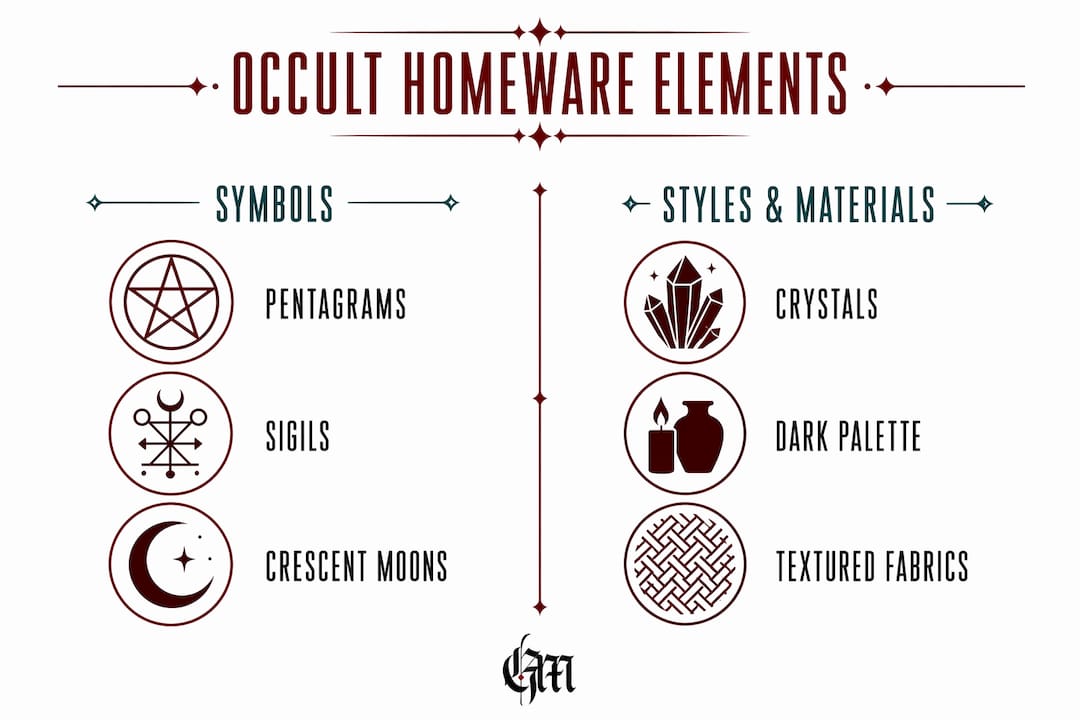
Occult homeware draws from a deep well of esoteric visual language. The most recognized symbols include pentagrams, crescent moons, tarot card motifs, ouija board graphics, and sigils. Each carries its own history and emotional weight, which is exactly why they translate so well into interior design. A pentagram framed above a fireplace reads as both mysterious and geometric. A crescent moon shelf bracket feels poetic without requiring any spiritual commitment from the person who hangs it.
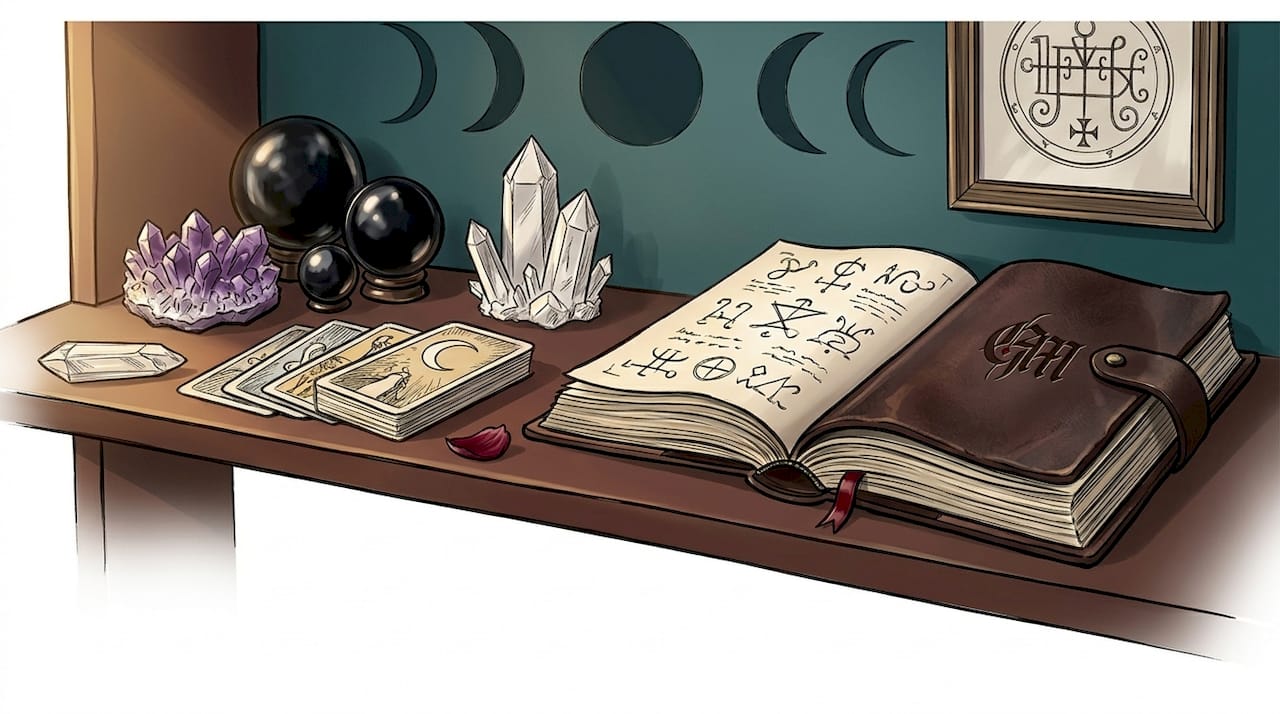
Crystals are another defining element. Amethyst, obsidian, and clear quartz are the three most common choices in spiritual home accessories, and each carries metaphysical associations that practitioners and aesthetes alike find compelling. Amethyst is linked to calm and intuition. Obsidian is associated with protection. Clear quartz is considered an amplifier of intention. Whether you believe in those properties or simply love how a quartz cluster catches afternoon light, the visual effect is undeniable.
Sigils deserve special attention because they are often misunderstood. A sigil is a symbol created to anchor a specific intention, and they function as ritual focal points that sanctify and protect living spaces. In decor terms, a sigil printed on a tapestry or carved into a candle adds visual complexity and personal meaning that generic mass-market art simply cannot replicate.
Color and texture complete the picture. The standard palette runs dark: charcoal, deep burgundy, forest green, and black, offset by gold or silver metallic accents. Velvet and silk textures add richness and tactile depth. This combination creates the layered, immersive quality that makes occult home decor feel genuinely atmospheric rather than costume-like.
Pro Tip: If you are new to this aesthetic, start with one crystal and one piece of wall art featuring a moon phase. These two elements alone establish the visual language without overwhelming a room.
How does occult homeware fit into modern interior design?
The occult homeware market has shifted away from traditional religious items toward lifestyle aesthetics that prioritize personalization, minimalism, and premium materials. This is a meaningful shift. It means you no longer need to identify with any specific spiritual tradition to incorporate these pieces. You simply need an eye for atmosphere and a willingness to commit to a visual identity.
The most successful modern interpretations of occult decor blend it with adjacent styles. Gothic interiors use heavy drapery, dark wood, and wrought iron alongside occult symbols to create drama. Minimalist spaces use a single large sigil print or a carefully arranged crystal grid as the room’s sole focal point, letting negative space do the heavy lifting. Cottagecore witchy interiors layer dried herbs, candles, and moon phase prints with warm wood tones for a softer, more organic feel.
Lighting is the variable that ties all of these approaches together. Candles in black, deep red, or purple are key to establishing mood in any occult-influenced setup. Salt lamps, Edison bulbs with warm color temperatures, and string lights draped over altar shelves all contribute to the soft, directional glow that makes these spaces feel intentional rather than accidental.
Here is a quick comparison of how occult homeware integrates across three popular interior styles:
| Interior style | Occult elements that work best | Tone achieved |
|---|---|---|
| Gothic | Pentagrams, black candles, velvet, dark wood | Dramatic and theatrical |
| Minimalist | Single sigil print, quartz cluster, muted palette | Mysterious and restrained |
| Cottagecore witchy | Moon phases, dried herbs, warm candles, crystals | Soft and organic |
Pro Tip: Treat your occult pieces the way a stylist treats accessories. Choose one statement item per room and build the supporting elements around it rather than distributing many small pieces evenly across every surface.
How to incorporate occult homeware thoughtfully into your living space
Intentional placement is what separates a curated occult interior from a cluttered novelty shop. Meaningful arrangement enhances ritual purpose and atmosphere, and the same principle applies whether you practice any form of witchcraft or simply love the aesthetic. The goal is to make each piece feel chosen, not accumulated.
Follow these steps to build a cohesive occult-influenced space:
-
Identify one focal point per room. This could be a large tarot-inspired wall print, a dedicated altar shelf, or a statement crystal like a large amethyst geode. Everything else in the room should support this anchor, not compete with it.
-
Build your palette before you buy. Decide whether you are working with a cool palette (black, silver, deep purple) or a warm one (burgundy, gold, forest green). Mixing both without intention creates visual noise. Commit to one direction and add the other as a single accent.
-
Use universal symbols to stay respectful. Moon phases, geometric sigils, and neutral dark palettes are widely recognized as occult-adjacent without being tied to any single sacred tradition. This matters both ethically and aesthetically. Symbols with deep cultural specificity to living traditions deserve more than decorative use.
-
Layer your lighting deliberately. Place candles at different heights. Use a low salt lamp in one corner and a string of warm Edison bulbs along a shelf. Avoid overhead fluorescent lighting in any room where you want occult decor to land correctly. The mood lives or dies with the light.
-
Add plants and crystals as living elements. Herbs like rosemary, lavender, and mugwort have long associations with protection and intuition in folk magic traditions. Potted near a windowsill alongside a piece of obsidian or a small selenite wand, they add organic texture that softens the harder edges of dark decor.
-
Edit ruthlessly. The most common mistake in decorating with occult symbols is buying too many small items and spreading them everywhere. Use a few strong focal pieces combined with mood-setting lighting rather than many small items. A single well-chosen piece carries more weight than a shelf crowded with ten.
Pro Tip: Before placing any new piece, stand in the doorway of the room and look at the space as a whole. If your eye goes immediately to the new item, it is either the right focal point or it is competing with everything else. Decide which one is true before committing to the placement.
Where to find authentic occult homeware and what to look for
Sourcing matters in this category more than in most. The difference between a mass-produced pentagram candle from a discount retailer and a hand-poured ritual candle from an independent maker is not just quality. It is the story and intention behind the object. Handmade and artisanal occult homeware pieces carry narrative and energetic resonance that enhances emotional connection and satisfaction in ways that factory-produced alternatives cannot match.
Here is what to evaluate when buying occult or magical home furnishings:
- Craftsmanship and materials. Hand-thrown ceramic bowls, hand-poured soy candles, and hand-carved wooden altar tools all signal that a maker invested real skill. Look for product descriptions that name the materials and process.
- Maker story and transparency. The best vendors in this space explain who made the item, where the materials came from, and what tradition or aesthetic informed the design. Vague listings with no maker context are a red flag.
- Decorative versus ritual function. Some pieces are purely decorative. Others are designed for active ritual use, such as athames, chalices, and offering bowls. Know which category you are shopping in before you buy, because the design priorities differ significantly.
- Sustainability and ethics. Digital-first direct-to-consumer brands have expanded access to ethically produced spiritual decor worldwide. Look for vendors who specify sustainable sourcing, fair labor practices, or small-batch production.
- Community reputation. Platforms like Etsy allow buyer reviews that reveal a great deal about quality and accuracy. Goth.Market curates independent creators specifically within the gothic and occult aesthetic, which reduces the noise of irrelevant mass-market results.
For tarot-themed decor, understanding the symbolism behind individual cards helps you choose pieces that carry personal meaning rather than generic mystical branding. The Tower card, for example, carries a very different visual and emotional charge than The Star. Knowing the difference makes your choices more deliberate.
Key takeaways
Occult homeware works best when each piece is chosen for its symbolic weight and placed with intention, not accumulated for visual density.
| Point | Details |
|---|---|
| Definition is clear | Occult homeware uses esoteric symbols like pentagrams, sigils, and tarot motifs to create atmosphere, not for religious function. |
| Symbols carry meaning | Crystals, moon phases, and sigils each bring specific visual and metaphysical associations that shape a room’s emotional tone. |
| Style integration is flexible | Occult elements work across gothic, minimalist, and cottagecore interiors when anchored by a consistent palette and focal point. |
| Placement beats quantity | A few strong focal pieces with deliberate lighting outperform a crowded collection of small items every time. |
| Source with intention | Handmade and artisanal pieces from transparent makers deliver more emotional resonance than mass-produced alternatives. |
Why occult homeware rewards the curious more than the committed
I have spent years watching people approach occult decor from two opposite directions. One group treats it as a costume, buying every skull and pentagram they can find and stacking them on every surface. The other group hesitates because they worry about getting the symbolism wrong or accidentally appropriating something sacred. Both groups miss the point.
The most compelling occult interiors I have seen belong to people who picked three things they genuinely responded to and built a room around them. One person I know has a single large obsidian mirror, a shelf of hand-poured black candles, and a framed print of occult-inspired wall art. That is the entire occult element of the room. The effect is striking precisely because of the restraint.
What makes this category genuinely interesting is that occult pieces function as participatory design, encouraging interaction and mindfulness in a way that a generic gallery wall never will. A crystal you pick up and hold. A candle you light with a specific thought in mind. A sigil you look at and remember why you chose it. These are not passive decorations. They are prompts.
My honest advice: ignore the trend content and ignore the gatekeeping. Choose pieces that mean something to you, understand enough about the symbols to use them respectfully, and edit your space down to what actually holds your attention. The mystery in a well-designed occult interior comes from specificity, not volume.
— Rey
Explore occult and gothic homeware at Goth.Market
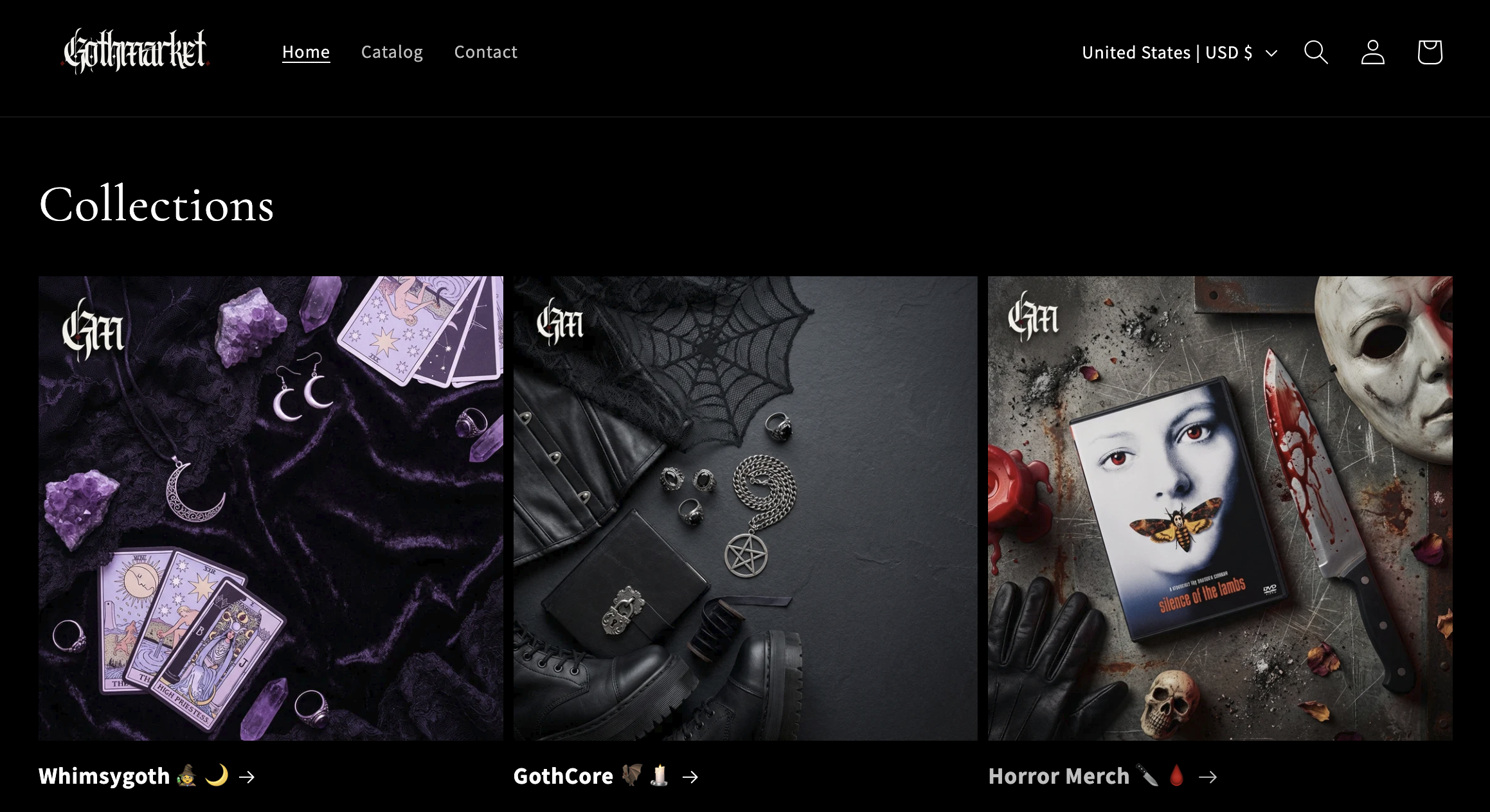
Goth.Market curates occult and gothic homeware from independent creators who specialize in exactly this aesthetic. The selection includes hand-poured ritual candles, crystal clusters, sigil wall art, and altar accessories sourced from makers who understand the difference between decorative and meaningful. If you are building a space that reflects a darker, more intentional aesthetic, the Whimsygoth collection is a strong starting point for layered, witchy decor. For pieces that extend the occult aesthetic beyond the home, the occult jewelry collection offers rings, pendants, and earrings that carry the same symbolic language into your everyday style.
FAQ
What is occult homeware exactly?
Occult homeware refers to home decor and accessories that use symbols from witchcraft, mysticism, and esoteric traditions, such as pentagrams, tarot motifs, sigils, and crystals, to create a mysterious atmosphere. These pieces are primarily decorative rather than tied to any specific religious practice.
What symbols are most common in occult home decor?
Pentagrams, crescent moons, tarot card imagery, ouija board graphics, and sigils are the most widely used symbols. Crystals like amethyst, obsidian, and clear quartz also appear frequently as both decorative objects and spiritual home accessories.
How do I use occult items without cultural appropriation?
Stick to universal motifs like moon phases, geometric sigils, and dark color palettes with metallic accents rather than symbols that belong specifically to living sacred traditions. This approach respects cultural boundaries while still achieving a genuine occult aesthetic.
Do I need to practice witchcraft to use occult homeware?
No. Most people who buy occult home decor are drawn to the aesthetic rather than any specific spiritual practice. The pieces work as atmospheric design elements regardless of personal belief.
Where is the best place to buy authentic occult homeware?
Platforms that curate independent makers, such as Etsy and Goth.Market, offer the best selection of handmade and artisanal pieces. Look for vendors who provide clear information about materials, craftsmanship, and maker background to confirm quality and authenticity.