

Pagan Altar Setup: A Practical Guide for Beginners
A pagan altar is a dedicated sacred workspace where you place objects, offerings, and symbols to focus ritual, devotional, and meditative work. According to Celebrate Pagan Holidays, it functions as a personal and adaptable connection point with the divine rather than a rigid, prescriptive structure. You can use it for spellwork, ancestor honoring, seasonal observance, or simply as a quiet place to center yourself before the day begins.
What makes an altar different from ordinary decor is intentionality. Every object on it carries meaning you assigned to it. That focus is what transforms a shelf or a small table into a working spiritual space.
Key Takeaways
A pagan altar setup works best when it starts simple, represents the four elements, and grows with your practice rather than being built all at once.
| Point | Details |
|---|---|
| Start with four to six items | An altar cloth, candle, offering bowl, and personal token are enough to begin a working practice. |
| No single correct placement | Choose a spot that’s private, safe, and practical; direction is personal, not prescribed. |
| Represent the four elements | Earth, Air, Fire, and Water anchors give the altar symbolic structure without requiring expensive tools. |
| Maintain and rotate regularly | Replace offerings before they spoil, keep flames safe, and photograph layouts before seasonal changes. |
| Goth for altar supplies | Goth.Market curates gothic and witchy altar decor, cloths, vessels, and symbolic pieces from independent creators. |
Table of Contents
- What should an altar represent and what is its purpose in daily practice?
- Where should you place your altar and which direction should it face?
- What should you put on your altar — essential items and element correspondences?
- How do you set up a simple beginner altar step by step?
- What kinds of altars can you create to fit your space?
- How should you personalize your altar for your tradition?
- How do you care for your altar and handle offerings ethically and safely?
- What should a beginner buy — altar supplies checklist?
- How can you style a gothic or witchy altar with practical aesthetic tips?
- What starting small actually teaches you about altar practice
- Where can you find curated altar supplies and gothic altar decor?
- Sources
- FAQ
What should an altar represent and what is its purpose in daily practice?
An altar serves as an energetic focal point: a physical anchor for your spiritual attention. Think of it as the difference between praying in a busy hallway and stepping into a room you set aside for exactly that purpose. The space itself signals to your mind that something intentional is happening.
In practical terms, a pagan altar typically serves five roles:
- Ritual staging: A surface where you arrange tools, candles, and symbolic objects before and during a working.
- Offering site: A place to leave food, drink, flowers, or other gifts for deities, ancestors, or spirits.
- Meditation focus: A visual anchor that helps quiet mental noise and direct attention inward.
- Seasonal marker: A rotating display that tracks the Wheel of the Year, moon phases, or personal cycles.
- Tool storage: A home for frequently used items so they stay cleansed, organized, and ready.
The purpose shifts depending on your practice. A Wiccan practitioner might use the altar primarily for casting circles and honoring the Goddess and God. Someone doing ancestor work keeps photographs and heirlooms there, leaving small food offerings on significant dates. An eclectic practitioner might use the same surface for meditation one week and a full moon ritual the next. The altar follows your practice, not the other way around.
Where should you place your altar and which direction should it face?
There is no single required placement for a pagan altar. The right spot is wherever feels private, respectful, and practical for your living situation.
WikiHow’s guide to pagan and Wiccan altars confirms there is no universal rule for direction. Many practitioners choose East, associating it with the rising sun and new beginnings, or North, linked to earth energy and stability. Others face South for fire and transformation, or West for water and intuition. Choose the direction that feels personally meaningful, not the one a book tells you is correct.
Common placement options for beginners:
- Bedroom dresser or nightstand: Private, accessible, and easy to maintain daily.
- Windowsill: Natural light and a connection to outdoor cycles; good for small, minimal setups.
- Dedicated shelf: Keeps the altar elevated and visually distinct from everyday clutter.
- Small side table: Gives you room to work, light candles, and arrange tools without crowding.
- Portable box or tray: Ideal for shared housing, dorms, or anyone who needs privacy. A shoebox or decorative tray can hold everything and slide under a bed when not in use.
- Outdoor space: A flat stone, garden corner, or patio surface works well for seasonal offerings and nature-based practice, though weather and wildlife require extra planning.
Pro Tip: If you rent or share space, keep open flames away from curtains, shelves, and anything flammable. Use a heat-resistant plate or tile under candles, and never leave a lit candle unattended. A battery-operated LED candle is a genuinely practical substitute for fire-restricted spaces.
What should you put on your altar — essential items and element correspondences?
Start with four to six items that cover the basics: an altar cloth, at least one candle, a small offering bowl, and one personal token that holds meaning for you. That combination gives you a working altar. Everything else is optional.
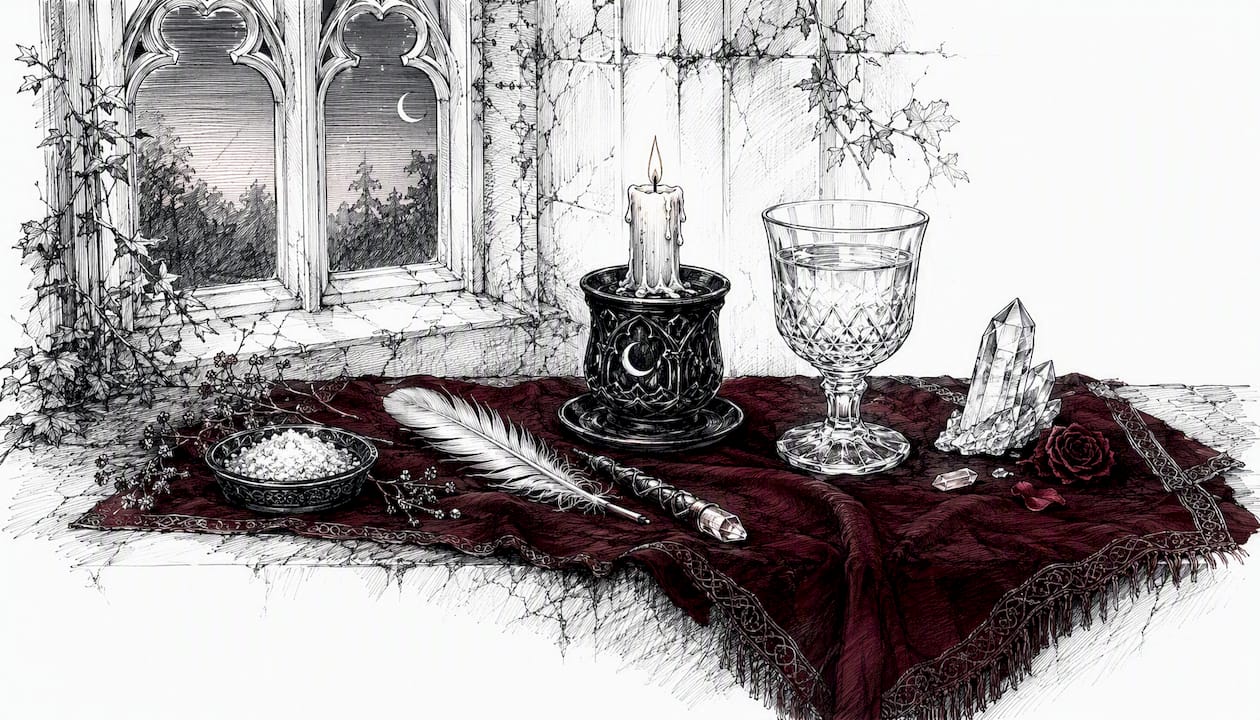
The Pagan Grimoire lists common altar tools including an athame, chalice, pentacle, cauldron, candles, and incense, noting that many are optional depending on space and practice. A beginner does not need all of them on day one.
Essentials checklist
- Altar cloth (any fabric in a color meaningful to you)
- One or two candles (taper, pillar, or tea light)
- Offering bowl or dish
- A personal token (crystal, stone, small figurine, or heirloom)
- Salt or soil (for earth representation)
- A small cup or shell (for water representation)
Optional items
- Athame or ritual knife
- Chalice or goblet
- Pentacle tile or disc
- Cauldron
- Incense and holder
- Deity statues or images
- Runes, tarot cards, or oracle deck
- Seasonal flowers, herbs, or greenery
Element correspondences
The four classical elements appear on most pagan altars as symbolic anchors. Elemental correspondences are adaptable symbols, not strict rules.
| Element | Common Representations | Placement Note |
|---|---|---|
| Earth | Stones, salt, soil, plants | North; grounds and stabilizes energy |
| Air | Incense, feathers, a wand | East; associated with thought and communication |
| Fire | Candles, oil lamp | South; represents will, transformation, and action |
| Water | Chalice, bowl, moon water, shell | West; linked to emotion, intuition, and healing |
Placing elements in their cardinal directions is one approach, but many practitioners simply arrange them where they fit on the surface. The symbolic presence matters more than precise geometry.
How do you set up a simple beginner altar step by step?
Following these steps produces a working, consecrated beginner altar you can use immediately. The whole process takes under thirty minutes.
-
Choose and clear your surface. Pick your spot (shelf, table, windowsill) and remove everything from it. Wipe it down physically with a damp cloth.
-
Cleanse the space energetically. Pass incense smoke, a lit candle, or your hand over the surface while stating your intention aloud or silently. Some practitioners sprinkle a pinch of salt.
-
Lay your altar cloth. Smooth it flat. This signals the boundary between ordinary space and sacred space.
-
Place your elemental representations. Set earth, air, fire, and water items in their positions. If cardinal directions feel forced on your surface, arrange them symmetrically or by size.
-
Add your central focus. Place a deity image, ancestor photo, or meaningful symbol at the back center. This becomes the visual anchor of the whole arrangement.
-
Set your candle(s) safely. Use a heat-resistant holder. Position candles where they won’t be knocked over and are clear of anything flammable above them.
-
Add your offering bowl. Place it toward the front where you can easily add and remove offerings.
-
Speak a short dedication. Something simple works perfectly. For example:
-
Photograph or sketch the layout. Learn Religions recommends this as a practical reference map so you can recreate the setup after seasonal changes or ritual rearrangements.
Pro Tip: If you share your home with roommates or family who aren’t on board with a visible altar, a decorative tray works as a portable version. Arrange everything on the tray, keep it on your dresser when you’re using it, and slide it onto a closet shelf when you need privacy. It’s still your altar.
What kinds of altars can you create to fit your space?
The main altar forms are a fixed table, a wall or shelf display, a portable box or tray, and an outdoor setup. Each suits different living situations and practice styles.
- Fixed table altar: A dedicated small table or desk gives you the most working room. Good for practitioners who do regular spellwork, ritual casting, or need space to spread out tools. A TV tray, a small side table, or even a sturdy wooden crate all work.
- Wall or shelf altar: A floating shelf or a section of a bookcase keeps the altar elevated and visually separated from everyday objects. Works well in small apartments. You can add hooks above it for hanging dried herbs or symbolic items.
- Portable box or tray altar: A beginner’s altar can be simple, inexpensive, and portable, fitting inside a shoebox or on a decorative tray that stores under a bed or in a closet. This is the go-to for dorm rooms, shared housing, and anyone who needs discretion.
- Outdoor altar: A flat stone, a tree stump, or a dedicated garden corner. Outdoor altars connect directly to seasonal cycles and natural offerings, but they require weather-resistant items and thoughtful disposal of organic offerings so they don’t attract wildlife or create sanitation issues.
- Minimalist altar: Sometimes one candle, one stone, and one meaningful object on a cloth is enough. A stripped-down setup is not a lesser altar. It’s often more focused.
How should you personalize your altar for your tradition?
Personalization should reflect who or what you honor. Different traditions emphasize different symbols, tools, and arrangements, and there’s no single correct version.
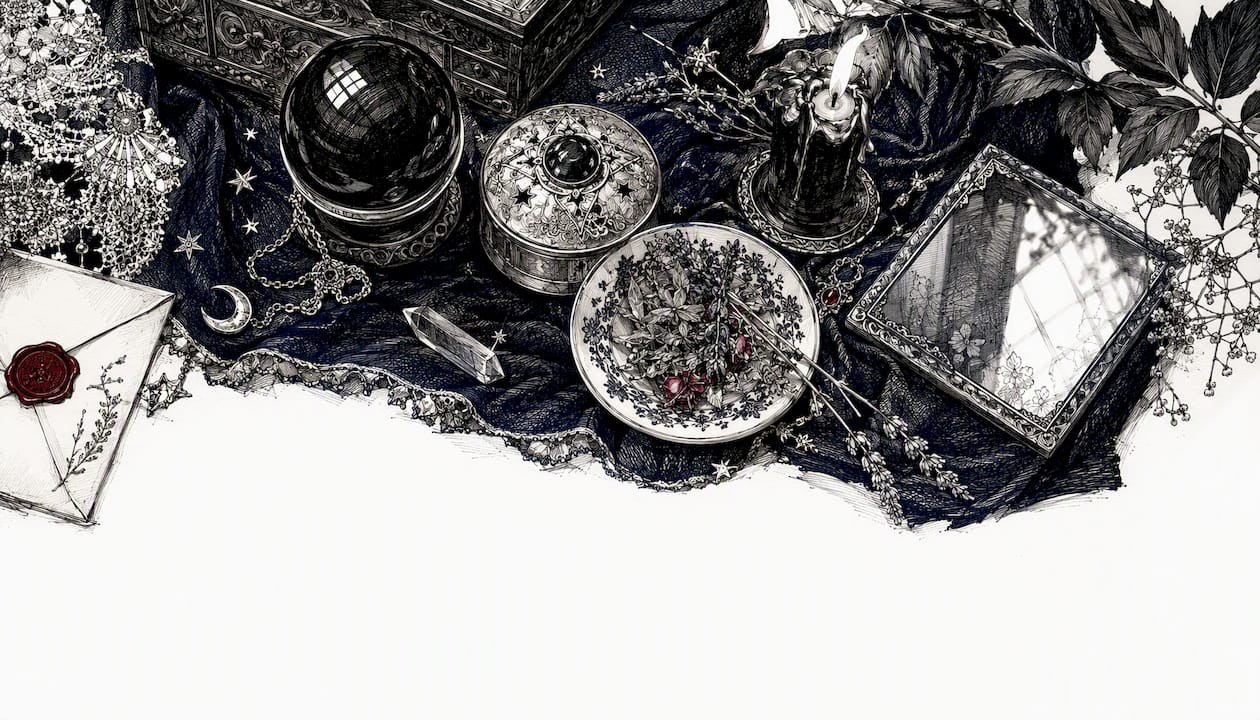
Wicca: A traditional Wiccan altar typically honors both the Goddess and the God, often represented by a chalice and an athame, or by candles in silver and gold. The four elements appear at the cardinal points. Wiccan and modern pagan altars emphasize personalization and seasonal changes) more than fixed ritual prescriptions, so your altar can shift with each Sabbat.
Heathen/Norse: A Norse-influenced altar, sometimes called a ve (sacred enclosure), often features runes, representations of specific deities (Odin, Freya, Thor), animal imagery, and items connected to the land. Hallowing the space with fire or water is common. Family shrines that include ancestor items sit naturally within this tradition.
Ancestor altars: These center on photographs, heirlooms, and small offerings of food, drink, or flowers that the deceased enjoyed in life. They’re common across many cultures and don’t require any specific tradition to practice meaningfully. Change offerings regularly and dispose of perishables respectfully.
Eclectic practice: If you draw from multiple traditions, let your altar reflect that honestly. Mix symbols that carry genuine meaning for you rather than assembling a visually impressive collection of items from cultures you haven’t studied.
A note on cultural respect: borrowing specific ceremonial items or symbols from closed indigenous or cultural traditions without permission, study, or community connection is worth pausing on. Research the origin of any item before placing it on your altar. For witchy motifs and symbolic design, there’s a wide range of symbols with deep roots in Western esoteric traditions that don’t carry the same concerns.
How do you care for your altar and handle offerings ethically and safely?
Keep it clean, rotate offerings before they spoil, and follow local safety norms for anything you burn. That’s the short version.
Physical care:
- Dust the surface and objects weekly or before each ritual.
- Replace wilted flowers or dried herbs before they mold.
- Trim candle wicks to about a quarter inch before each use to prevent soot and uneven burning. Candles create ritual atmosphere most effectively when they burn cleanly and safely.
- Never leave a lit candle unattended. Use a snuffer rather than blowing out a flame if your practice treats the flame as sacred.
- Ventilate the room when burning incense, especially in small spaces.
Ethical offering disposal:
- Food and drink offerings: return to the earth by burying, composting, or leaving in a natural spot away from foot traffic.
- Flowers and herbs: compost or return to the garden.
- Liquid offerings: pour onto soil rather than down the drain when possible.
- For outdoor altars, avoid leaving offerings that could harm local wildlife (chocolate, grapes, onions, and cooked meats are problematic near animals).
Disposal checklist for renters or shared housing:
- Wrap organic offerings in compostable paper before disposal.
- Use small portions so waste is minimal.
- Candle stubs: wrap and discard, or melt down for new candles.
- Ash from incense or paper: scatter outdoors or add to compost.
Pro Tip: Photographing your altar layout before a seasonal change or major ritual means you can restore it exactly afterward. Keep a simple photo album or a page in your Book of Shadows for this.
What should a beginner buy — altar supplies checklist?
Start with four to six essentials and add from there. Spending a lot upfront is not required and often leads to a cluttered altar that’s harder to work with.
Essentials vs. optional supplies
| Item | Category | Notes |
|---|---|---|
| Altar cloth | Essential | Any fabric works; thrift stores are a good source |
| Taper or pillar candle | Essential | One is enough to start |
| Small bowl or dish | Essential | For offerings; a ceramic ramekin works fine |
| Salt or small stone | Essential | Earth representation; table salt is acceptable |
| Personal token | Essential | A stone, small figurine, or meaningful object |
| Incense and holder | Optional | Air representation; skip if ventilation is limited |
| Chalice or cup | Optional | Water representation; any small cup works |
| Athame or ritual knife | Optional | Many practitioners never use one |
| Deity statue or image | Optional | Add when you know who you’re honoring |
| Crystals | Optional | Choose by meaning, not by what looks impressive |
| Cauldron | Optional | Useful for burning paper or holding offerings |
For witchcraft supplies for beginners, the principle is the same: buy what you’ll actually use, not what a complete set looks like.
Shopping tips:
- Thrift stores, estate sales, and secondhand shops are excellent for altar cloths, bowls, and candleholders at low cost.
- Clean purchased items before placing them on your altar. Wash what can be washed; pass others through incense smoke or leave them in sunlight or moonlight overnight.
- Avoid buying items solely because they look “witchy.” A plain white candle and a river stone carry as much symbolic weight as an expensive carved pillar.
- For trusted picks on witchcraft supplies online, look for vendors who source ethically and describe their materials honestly.
How can you style a gothic or witchy altar with practical aesthetic tips?
A dark, elegant altar aesthetic comes from layered textures, focused lighting, and curated symbolic objects rather than from buying the most expensive pieces. The goal is visual coherence, not volume.
Color and texture choices:
- Black, deep burgundy, forest green, and midnight blue read as intentionally gothic without feeling costume-like.
- Layer textures: a velvet cloth underneath, a lace runner on top, and a rough stone or raw crystal in the center creates depth.
- Matte surfaces (unglazed ceramics, raw wood, aged metal) absorb light and feel more atmospheric than shiny plastic.
Lighting:
- Taper candles in black or dark holders create the most dramatic vertical line on an altar.
- For fire-restricted spaces, LED candles with a warm amber flicker are a practical substitute. Choosing candles for meditation spaces involves matching scent and light quality to the mood you want to create.
- A small string of warm LED lights behind or below the altar adds ambient glow without open flame.
Height and negative space:
- Use a small box or stack of books under the cloth to create levels. A tall candleholder at the back, medium objects in the middle, and flat items at the front creates a natural visual hierarchy.
- Leave some empty space. A crowded altar reads as cluttered; a spare one reads as intentional.
Three practical layout examples:
- Minimalist black shrine: Black cloth, one black taper candle, a single obsidian or onyx stone, and a small printed sigil or symbol. Clean, focused, takes up less than a square foot.
- Victorian devotional shelf: A floating shelf with a small framed image or deity card at center back, two taper candles in ornate holders, a small vase of dried roses or thistle, and a vintage-style dish for offerings.
- Nature-focused dark altar: A dark green cloth, a piece of bark or driftwood as the base layer, a beeswax candle, dried mushrooms or seed pods, and a bowl of river stones. Earthy and atmospheric without being theatrical.
For witchy home decor ideas that translate well to altar styling, layering natural materials with dark metallics tends to produce the most cohesive result.
Pro Tip: Place candles on a ceramic tile or heat-resistant plate, especially on cloth-covered surfaces. A beautiful altar that catches fire is not worth the aesthetic. Faux-flame vessels in dark ceramic look convincing and remove the risk entirely for high-traffic or shared spaces.
What starting small actually teaches you about altar practice
Most beginners worry they’re doing it wrong. They spend weeks researching the “correct” setup before placing a single object. That hesitation is understandable, but it delays the actual practice, which is where the learning happens.
A small, imperfect altar you use every day teaches you more than an elaborate one you’re afraid to touch. Start with what you have: a cloth, a candle, one object that means something to you. Light the candle. Sit with it for five minutes. Notice what feels right and what feels off. That feedback loop is how an altar becomes yours.
The altar you build in month six will look nothing like the one you set up on day one, and that’s exactly how it should work. Seasonal changes, new intentions, and deepening practice all reshape the space naturally. The real benefits of a ritualized witchy space show up in daily use, not in the initial arrangement.
One practical suggestion: keep a small journal or a page in a Book of Shadows where you note what you placed on the altar and why. After a few months, patterns emerge. You’ll see which objects you keep returning to and which ones were just aesthetically appealing. That’s useful information.
Where can you find curated altar supplies and gothic altar decor?
Goth curates gothic and witchy decor, ritual-safe vessels, altar cloths, symbolic jewelry, and dark home accessories from independent creators who specialize in alternative aesthetics. It’s a marketplace built for practitioners and enthusiasts who want pieces with genuine character rather than mass-produced substitutes.
The shop carries altar cloths, candles, chalices, occult jewelry, and decorative objects suited to the setups described throughout this guide. Goth does not offer professional ritual services, and shipping timelines vary by vendor. To find what you need quickly, search the marketplace directly for terms like “altar cloth,” “chalice,” “candle holder,” or “occult decor.”
Browse the full collection at Goth and start with the pieces that fit your current practice. Add as your altar grows.
Sources
- Pagan Altars: Beginners Guide
- Setting Up Your Magical Altar - Learn Religions
- How to Set Up a Simple Pagan or Wiccan Altar - wikiHow
FAQ
What is the purpose of a pagan altar?
A pagan altar is a dedicated sacred space used to connect with the divine, perform rituals, meditate, make offerings, and focus spiritual intention. It functions as a physical anchor for your practice, signaling to your mind that intentional spiritual work is happening. The altar’s purpose shifts depending on the practitioner: it might serve as a devotional shrine to a specific deity, a working surface for spellcraft, an ancestor memorial, or a seasonal marker tied to the Wheel of the Year. The key is that every object on it carries meaning you assigned to it, which is what separates an altar from ordinary decor.
Which direction should a Wiccan altar face?
There is no universal rule. Many Wiccan practitioners choose East, associating it with the rising sun, new beginnings, and the element of Air, or North, linked to Earth energy and stability. Others orient toward South for Fire and will, or West for Water and intuition. WikiHow’s guide to pagan and Wiccan altars confirms that the direction should ultimately feel personally meaningful and safe for your space. If your room layout makes a specific direction impractical, choose the one that works and assign your own meaning to it.
What are the essential items for a beginner pagan altar?
The true essentials are an altar cloth, at least one candle, a small offering bowl or dish, and one personal token that holds meaning for you. Salt or a small stone covers the earth element; a cup or shell covers water. That’s a complete working altar. Everything else, including an athame, chalice, pentacle, cauldron, and deity statues, is optional and can be added as your practice develops. Starting minimal reduces clutter and helps you figure out which tools you actually use versus which ones just look appealing.
Can I set up a pagan altar in a small space or shared housing?
Yes. A portable altar on a tray or in a shoebox is a widely used solution for shared housing, dorms, and rental apartments. Arrange your items on the tray, use it during practice, and store it under your bed or on a closet shelf when you need privacy. A windowsill, a single shelf, or a nightstand all work as permanent small-space altars. The altar’s power comes from your intention and consistent use, not from its size or visibility.
How often should I clean and update my altar?
Dust and physically clean the surface weekly or before each ritual. Replace perishable offerings (food, flowers, water) before they spoil, which usually means every few days to a week depending on the item. Seasonal updates tied to Sabbats or moon phases keep the altar energetically current without requiring a full rebuild each time. Small swaps, such as changing the cloth color, adding seasonal flowers, or switching out a crystal, are enough to mark a new cycle. Photographing the layout before changes makes it easy to restore a preferred arrangement.
Do I need to follow a specific tradition to have a pagan altar?
No. An eclectic approach, drawing from multiple traditions or working without a formal one, is entirely valid. The altar should reflect who or what you honor and what holds genuine meaning for you. The one caution worth noting is cultural respect: if you want to incorporate symbols or items from specific indigenous or closed cultural traditions, research their origins and context before placing them on your altar. There’s a wide range of symbols rooted in Western esoteric and pagan traditions that carry deep meaning without raising those concerns.
How do I dispose of altar offerings respectfully?
Return organic offerings to the earth wherever possible: bury food in the garden, compost flowers and herbs, or pour liquid offerings onto soil rather than down the drain. For outdoor altars, avoid leaving offerings that could harm local wildlife. In shared housing or apartments, wrap organic waste in compostable paper before disposal. Candle stubs can be wrapped and discarded or melted down for new candles. Ash from incense or burned paper can be scattered outdoors or added to compost. The principle is to close the offering cycle with the same care you used to make it.