

Witchcraft Supplies for Beginners: What You Need to Know
A witchcraft supply is any tool, material, or object used intentionally in magical practice or ritual. That covers a wide range of items: a carved athame, a bundle of dried rosemary, a tarot deck, a hand-poured candle, or a plain journal where you track your spells. Witchcraft itself spans a broad spectrum, from historically accused harmful magic to modern protective and service practices, and the supplies reflect that range.
Here’s a quick snapshot of what the category includes:
- Ritual tools: athame, wand, chalice, pentacle, cauldron, besom
- Consumables: candles, incense, resins, herbs (salt, sage, rosemary, bay leaves), anointing oils
- Crystals: clear quartz, amethyst, obsidian, selenite
- Divination: tarot decks, oracle cards, runes, pendulums
- Record-keeping: Book of Shadows, practice journal
The sections below cover what each item does, how to use it safely, where to buy it in the United States, and exactly what to grab first if you’re just starting out.
Key Takeaways
A witchcraft supply is any intentionally used tool, material, or object in magical practice, and building a functional kit starts with a candle, a journal, one crystal, a cleansing item, and a simple divination tool.
| Point | Details |
|---|---|
| Start with five items | A white candle, journal, clear quartz, cleansing herb, and a tarot deck or rune set cover most beginner needs. |
| Cleanse before use | Salt, smoke, visualization, or moonlight all work; match the method to the material’s sensitivity. |
| Source ethically | Ask vendors for herb origin and crystal mine details; avoid white sage from wild-harvest sources. |
| DIY adds meaning | Altar cloths, charm bags, and anointing oils are easy first projects that deepen your connection to your tools. |
| Goth.Market for curated picks | Independent artisan vendors on Goth list sourcing details and craft quality you won’t find in mass-market kits. |
Table of Contents
- What are the core ritual tools and what does each one do?
- What consumables do witches use and how do you use them?
- What divination and record-keeping supplies do witches use?
- How do witches clean, protect, and consecrate their supplies?
- What should a beginner’s starter kit include?
- Where can I buy witchcraft supplies in the United States?
- How can you craft or personalize your own witchy accessories?
- What actually matters when choosing your supplies
- Goth.Market carries curated witchcraft supplies from independent makers
- Sources
- FAQ
What are the core ritual tools and what does each one do?
Every tradition has its own list, but six implements show up across most modern witchcraft practices. None of them are strictly required, but understanding what each one does helps you decide which ones actually fit your practice.
Athame (ritual knife): A double-edged blade used to direct energy, cast circles, and mark boundaries. It’s rarely used to cut physical materials; the cutting is symbolic. Keep it stored safely in a sheath or wrapped in cloth, away from children and pets.
Wand: Traditionally carved from wood (hazel, oak, and willow are common choices), a wand channels and directs intention during spellwork. You can buy one or cut a fallen branch and sand it yourself. The material matters less than the intention you bring to it.
Chalice: A cup representing the element of water and the feminine principle. Practitioners fill it with water, wine, or herbal infusions for offerings or ritual drinking. Any cup you love works; you don’t need a silver goblet.
Pentacle: A flat disc or tile engraved with a five-pointed star, used as a working surface for charging objects and representing the element of earth. It sits on the altar and grounds the ritual space.
Cauldron: Cast iron is the classic material, and for good reason: it’s fireproof, durable, and easy to cleanse. Clear quartz points, a cauldron, a candle snuffer, and a Book of Shadows are among the tools most consistently listed as essential by experienced practitioners. Use it for burning herbs, mixing ingredients, or holding water for scrying.
Besom (ritual broom): Swept around the perimeter of a space before ritual to clear stagnant or unwanted energy. It doesn’t touch the floor in most traditions; the sweeping is energetic, not physical.
Safety first: Sharp tools like the athame need secure storage. Cauldrons and candles require a heat-safe surface and never should be left unattended. Keep a small fire extinguisher or a bowl of sand nearby whenever you work with flame.
Pro Tip: Start with one or two tools that genuinely appeal to you and add others as your practice develops. A wand you carved yourself or a chalice from a thrift store carries more meaning than a full matching set bought all at once.
What consumables do witches use and how do you use them?
Consumables are the working materials of most rituals: burned, worn, scattered, or dissolved as part of spellwork. They’re also where sourcing and safety decisions matter most.
Candles
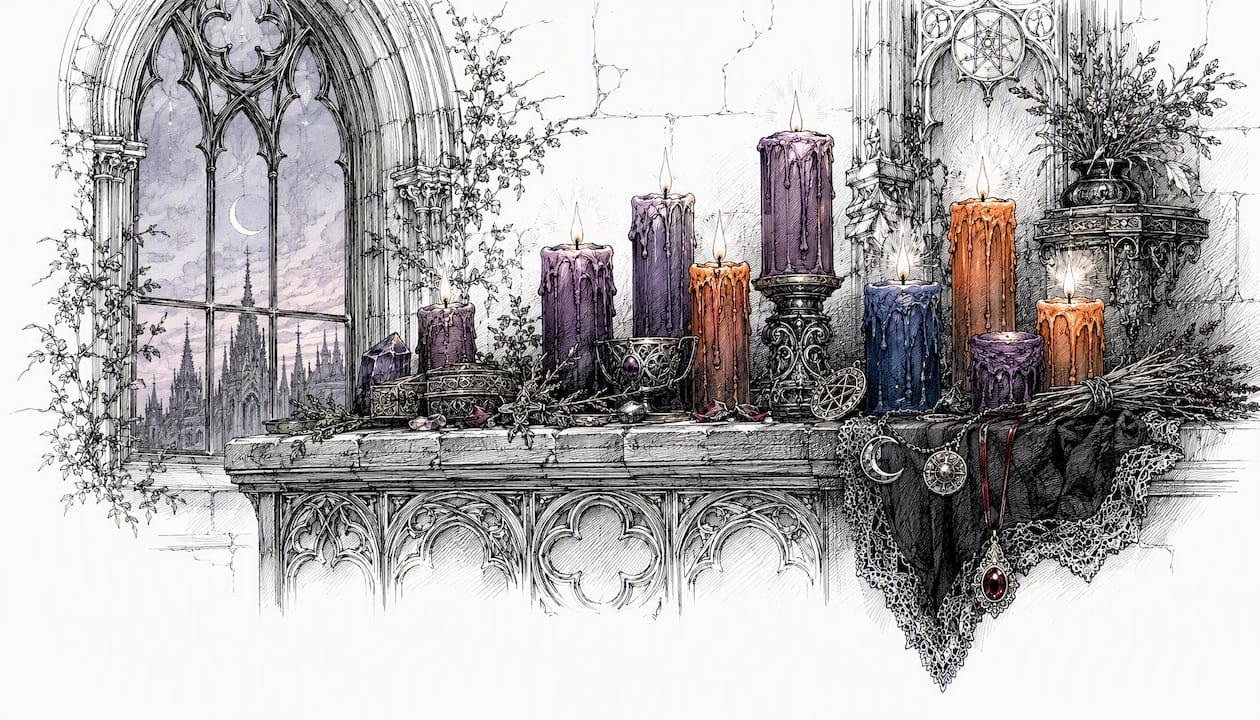
Color correspondence is the main system here. White works for any intention and is the most versatile starting point. Black is used for banishing and protection; green for abundance; red for passion and strength. Beeswax and soy candles burn cleaner than paraffin. Always burn on a fireproof holder and never leave them unattended.
Incense and resins
Loose resins like frankincense and copal are burned on charcoal discs and produce thick, fragrant smoke used to cleanse spaces and carry intentions. Stick and cone incense are more beginner-friendly. Ventilate the room well; smoke can irritate airways, especially for people with asthma.
Herbs and botanicals
Salt, sage, rosemary, and bay leaves are among the most commonly used herbs in cleansing and spellwork. Salt purifies and protects. Rosemary substitutes for almost any herb in a pinch and is easy to grow. Bay leaves are written on with intentions and burned. White sage is effective but overharvested in the wild; consider cultivated white sage, garden sage, or cedar as alternatives.
Anointing oils
Carrier oils (jojoba, sweet almond, fractionated coconut) are blended with essential oils to anoint candles, tools, and sometimes skin. Always dilute essential oils properly before skin contact; undiluted oils cause burns and irritation.
Crystals
Clear quartz amplifies any intention and is the most multipurpose stone you can own. Amethyst supports intuition and calm. Black tourmaline and obsidian are used for protection. Selenite is popular for cleansing other crystals.
| Consumable | Primary Use | Safety / Sourcing Note |
|---|---|---|
| White candle | All-purpose intention work | Use fireproof holder; never leave unattended |
| Frankincense resin | Space cleansing, offerings | Ventilate room; avoid with respiratory issues |
| Salt (white/bulk) | Purification, protection circles | Food-grade sea salt works fine |
| White sage | Smoke cleansing | Choose cultivated; wild-harvest is overharvested |
| Rosemary | Cleansing, protection, memory | Widely available; easy to grow at home |
| Bay leaves | Intention writing, manifestation | Burn safely in a fireproof dish |
| Clear quartz | Amplifying intention | Check for lab-created vs. natural labeling |
| Amethyst | Intuition, calm, protection | Ask vendors about mine sourcing |
Ethical sourcing note: Palo santo and white sage face sustainability pressure from overharvesting. When buying, look for vendors who list the origin and harvesting method. Cultivated or ethically wildcrafted options exist and are worth the small extra effort to find.
What divination and record-keeping supplies do witches use?
Divination tools help practitioners access intuition, reflect on patterns, and frame questions. Record-keeping ties everything together over time.
Tarot and oracle cards
A tarot deck has 78 cards organized into the Major and Minor Arcana, each carrying symbolic imagery used to reflect on situations and possibilities. Oracle decks have no fixed structure; each creator sets their own system. For beginners, a deck with illustrated pip cards (the Rider-Waite-Smith is the classic reference) is easier to learn than one with abstract symbols. Store decks in a cloth pouch or wooden box to protect the cards and keep them energetically clear.
Runes
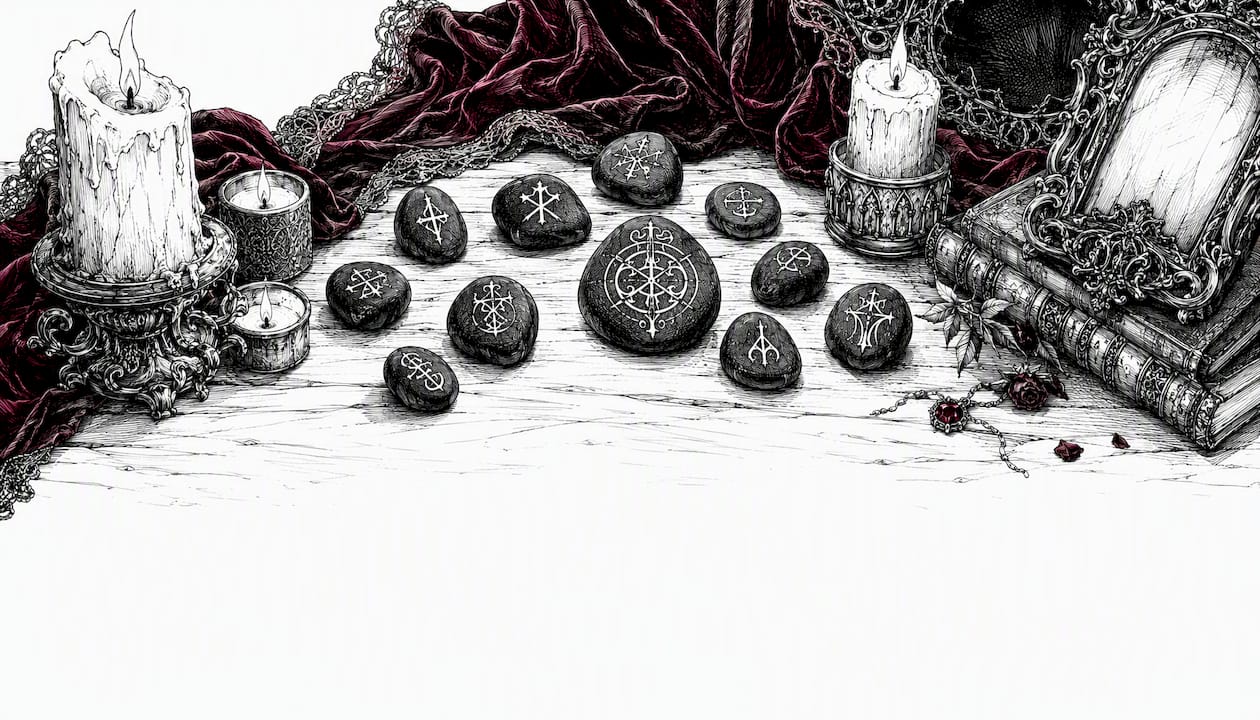
The Elder Futhark is the most commonly used runic alphabet in modern witchcraft, with 24 symbols carved or painted on stones, tiles, or wood. Each rune carries a meaning used for divination or inscription on spell items. A beginner set in ceramic or wood costs very little and lasts indefinitely.
Pendulums
A weighted object on a string or chain, used to answer yes/no questions by observing the direction of swing. Crystal pendulums are popular, but a ring on a thread works just as well. The skill is in learning your own baseline responses, which takes practice.
Book of Shadows and practice journals
Record-keeping is widely recommended as one of the most valuable habits a practitioner can build. A Book of Shadows traditionally holds spells, rituals, correspondences, and observations. A practice journal is less formal and more personal. Either works. The point is to track what you tried, what happened, and what you’d change.
- Write down the date, moon phase, and intention before each ritual
- Note the materials used and any substitutions
- Record outcomes honestly, even when nothing seemed to happen
- Add pressed herbs, sketches, or printed images to make it a living reference
Store paper journals away from moisture and direct sunlight. A simple archival box or a sealed plastic bin works well for long-term storage.
How do witches clean, protect, and consecrate their supplies?
Cleansing removes residual energy from an object before you work with it. Consecration dedicates it to a specific purpose. Both steps are straightforward and don’t require expensive materials.
Basic cleansing methods:
- Salt: Bury a non-porous object in a bowl of dry sea salt for 24 hours, or draw a salt circle around it. Don’t use salt on porous stones (malachite, selenite, pyrite) or metal tools that can corrode.
- Smoke cleansing: Pass the object through the smoke of burning herbs or incense. Cedar, rosemary, and garden sage are sustainable alternatives to white sage. Open a window; good airflow matters.
- Visualization: Hold the object, breathe slowly, and picture white or golden light moving through it and carrying away stagnant energy. No materials needed. This works anywhere.
- Running water: Hold the object under cool running water for 30–60 seconds while focusing on clearing it. Skip this for water-soluble stones (halite, selenite) and anything with metal settings that can rust.
- Moonlight or sunlight: Leave objects on a windowsill or outdoors overnight under the full moon, or for a few hours in morning sunlight. Sunlight can fade some crystals (amethyst, rose quartz) over time, so moonlight is the safer default.
Simple consecration ritual (5 steps):
- Cleanse the object using one of the methods above.
- Hold it in both hands and state your intention aloud or silently.
- Pass it through incense smoke or candlelight briefly.
- Speak a dedication: name what the object is for and what energy you’re inviting into it.
- Place it on your altar or store it wrapped in cloth until you’re ready to use it.
Pro Tip: When disposing of used herbs or ritual remnants, compost organic materials rather than throwing them in the trash. Burying them in the earth or releasing them in running water (where safe and legal) is a common practice that honors the materials you worked with.
What should a beginner’s starter kit include?
Beginner starter lists consistently recommend a candle, a Book of Shadows or journal, one grounding crystal, a cleansing tool, and a simple divination item. That’s a solid five-item foundation. Here’s how to build it without overspending:
Must-haves:
- White candle: A plain pillar or taper candle covers almost every ritual use. Expect to pay a modest amount for a quality soy or beeswax candle.
- Journal or notebook: Any blank notebook works as a Book of Shadows. A quality hardcover journal costs a moderate price. Don’t wait for the “perfect” one.
- Clear quartz point: The most multipurpose crystal you can own. Tumbled stones and small points are available at affordable prices.
- Cleansing item: A bundle of dried rosemary or garden sage, a stick of incense, or a small spray bottle with water and a few drops of essential oil are commonly used cleansing items.
- Simple divination tool: A beginner tarot deck with a guidebook or rune sets can be purchased at reasonable prices.
Nice-to-haves (add when ready):
- A small athame or ritual knife is available at a moderate cost.
- A tea-light cauldron or fireproof dish can be found at accessible prices.
- Amethyst or black tourmaline for protection work can be obtained affordably.
- Anointing oil blends are available from artisan sellers at various price points.
- An altar cloth in a color or pattern that resonates with you is generally affordable.
Quick-buy tip: Start with multipurpose items. A white candle, a piece of clear quartz, and a journal will serve you across dozens of different rituals. Specialty items like a dedicated athame or a specific crystal grid can wait until you know exactly what your practice needs.
Where can I buy witchcraft supplies in the United States?
Three main channels serve U.S. buyers: local metaphysical shops, curated online marketplaces, and artisan sellers on craft platforms. Each has real tradeoffs.
Local metaphysical shops let you handle items before buying, ask questions in person, and support your local community. The selection varies widely by region, and prices can run higher than online. Worth visiting for crystals and herbs, where you want to see and smell before committing.
Curated online marketplaces offer broader selection and often better transparency about sourcing. The best ones list ingredient origins, harvesting methods, and maker backgrounds. Goth connects buyers with independent artisans specializing in witchcraft supplies, occult jewelry, and dark-aesthetic decor, with an emphasis on vetted, handmade items rather than mass-produced kits.
Artisan sellers on craft platforms produce genuinely unique items: hand-poured candles with custom blends, hand-bound Books of Shadows, carved wooden wands. The tradeoff is longer shipping times and smaller inventories.
Buyer checklist before purchasing:
- Does the vendor list the origin of herbs and crystals?
- Are essential oils and botanical ingredients labeled with safety guidance?
- Is there a clear return or exchange policy?
- Do reviews mention quality consistency, not just aesthetics?
- For crystals: does the listing distinguish natural from lab-created?
Red flags to avoid:
- Vague sourcing (“natural crystals” with no mine or region listed)
- No ingredient list on herbal products
- Endangered or protected materials (certain corals, some wild-harvested plants)
- No safety labeling on candles or oils
Mindful purchasing means asking those questions before checkout, not after. Artisan sellers who can’t answer basic sourcing questions are worth skipping, no matter how good the photos look.
How can you craft or personalize your own witchy accessories?
Making your own supplies is one of the most direct ways to build a personal practice. The process doesn’t require advanced skills; it requires clear intention and decent materials.
Basic DIY workflow:
- Choose your intention. What is this object for? Protection, clarity, love, abundance? Name it before you pick up a single material.
- Select base materials. Match materials to your intention using correspondence lists: colors, herbs, crystals, symbols. Keep it simple; three to five elements is enough.
- Cleanse your materials before you begin, using any of the methods in the cleansing section above.
- Assemble and craft. Work slowly and deliberately, holding your intention in mind throughout.
- Consecrate the finished object using the five-step ritual above.
- Label and store it. Write the date, intention, and materials used on a tag or in your journal. Provenance matters, especially for items you’ll use repeatedly.
Three quick projects:
Altar cloth: Cut a square of natural fabric (cotton, linen, or velvet) in a color that matches your practice. Hem the edges or leave them raw. Embroider or stamp a symbol if you want. Total cost: $5–$15 in fabric.
Simple charm bag: A small drawstring pouch filled with a crystal chip, a pinch of dried herb, and a folded intention slip. Sew your own from scrap fabric or buy plain muslin bags in bulk. Seal it with a knot tied three times.
Lavender, frankincense, and cedarwood are beginner-friendly and widely available. Label the bottle with the blend name, date, and dilution ratio.
Pro Tip: Source reclaimed or secondhand materials when you can: vintage fabric, found wood, thrifted vessels. These items carry their own history, and working with them adds a layer of meaning that brand-new materials can’t replicate. Document where each piece came from in your journal.
For step-by-step crafting guides and material sourcing advice, Rey’s crafter’s guide at Goth covers altar cloths, charm bags, and finishing techniques in detail.
What actually matters when choosing your supplies
Most beginners spend too much time worrying about having the right tools and not enough time thinking about why they want those tools. A $200 athame won’t make your practice more powerful than a $15 one if you’re not clear on what you’re doing with it.
The sourcing question is where I’d push back hardest on conventional advice. The witchcraft community talks a lot about intention, but the ethics of where materials come from rarely gets the same attention. White sage is a perfect example: it’s effective, it’s traditional in certain Indigenous practices, and it’s been so aggressively commercialized that wild populations in California are genuinely stressed. Choosing cultivated sage or rosemary instead isn’t a compromise; it’s a more thoughtful choice.
The same logic applies to crystals. The global crystal trade has real labor and environmental costs that most product listings don’t mention. Asking a vendor where a crystal was mined and under what conditions isn’t being difficult; it’s being a responsible buyer. Vendors who support handmade and transparently sourced items are worth your money over those who can’t answer basic provenance questions.
One more thing: your practice doesn’t have to look like anyone else’s. The aesthetics of witchcraft are genuinely beautiful, and it’s easy to get pulled into buying things because they photograph well. Buy what you’ll actually use. A worn journal full of real observations is worth more than a pristine altar that never gets touched.
Goth.Market carries curated witchcraft supplies from independent makers
If you’ve read this far, you know what to look for: transparent sourcing, artisan quality, and items that actually serve your practice rather than just filling a shelf. That’s exactly the standard Goth holds its vendors to.
Goth.Market is a curated marketplace connecting buyers with independent creators who specialize in witchcraft supplies, occult jewelry, dark decor, and gothic fashion. Every vendor on the platform is selected for craft quality and aesthetic authenticity, not volume. You’ll find hand-poured candles with listed ingredients, crystals with sourcing notes, and handmade ritual tools you won’t see in a mass-market kit. Browse the witchcraft supplies collection and check each product page for ingredient lists, maker backgrounds, and sourcing details before you buy.
Sources
- Witchcraft — Wikipedia
- Witchcraft Supplies for Beginners: My Favorites for Getting Started — The Season of Anya
- Nine Essential Tools Every Witch Has To Have — Ethony
FAQ
What supplies does a witch need?
The core list is shorter than most people expect. A candle, a journal or Book of Shadows, one grounding crystal (clear quartz is the most versatile), a cleansing tool (dried herbs, incense, or a spray), and a simple divination item like a tarot deck or rune set will cover the vast majority of beginner rituals. Ritual tools like an athame, wand, chalice, and pentacle are useful additions but not required to start. Build from intention outward, not from a shopping list.
What is a witchcraft supply, exactly?
A witchcraft supply is any tool, material, or object used intentionally in magical practice or ritual. The category includes physical ritual implements (athame, wand, cauldron), consumables (candles, herbs, incense, oils), divination tools (tarot, runes, pendulum), crystals, and record-keeping items like a Book of Shadows. The defining factor isn’t the object itself but the intentional use behind it.
Is white sage safe to buy and use?
White sage is effective for smoke cleansing, but wild-harvested white sage faces sustainability pressure from overharvesting, particularly in California. Cultivated white sage, garden sage, rosemary, cedar, and lavender are all solid alternatives that carry similar cleansing properties without the sourcing concern. When buying, look for vendors who specify “cultivated” or “ethically wildcrafted” with a named source region.
How do I cleanse a new crystal or tool?
The simplest methods are salt burial (24 hours in dry sea salt for non-porous stones), smoke cleansing (passing through incense or herb smoke), visualization (holding the object and imagining clear light moving through it), or moonlight overnight on a windowsill. Avoid salt and water with porous or water-soluble stones like selenite, malachite, and halite. Visualization works on everything and requires no materials at all.
Where can I buy witchcraft supplies in the United States?
Local metaphysical shops let you handle items before buying and support your community. Curated online marketplaces like Goth.Market connect buyers with independent artisans who list sourcing details and craft quality. Artisan sellers on craft platforms offer unique handmade items but may have longer shipping times. For any purchase, check that the vendor lists ingredient origins, provides safety labeling on herbal and oil products, and has a clear return policy.
What should I look for in a beginner tarot deck?
Choose a deck with fully illustrated pip cards (the numbered suit cards, not just symbols). The Rider-Waite-Smith deck is the standard reference because most guidebooks and online resources use its imagery. A deck that comes with its own guidebook is worth the slightly higher price for a beginner. Store it in a cloth pouch or wooden box to protect the cards.
What is a Book of Shadows and do I need one?
A Book of Shadows is a personal record of spells, rituals, correspondences, and observations. It can be a plain notebook, a hand-bound journal, or a digital document. Record-keeping is one of the most consistently recommended habits in witchcraft because it lets you track what worked, what didn’t, and how your practice evolves. You don’t need a special book; any journal you’ll actually write in is the right choice.
Are there ethical concerns with buying witchcraft supplies?
Yes, and they’re worth taking seriously. White sage and palo santo face overharvesting pressure. The global crystal trade has documented labor and environmental issues at certain mines. Some items sold as “traditional” borrow from closed Indigenous practices without permission. The practical response is to ask vendors specific questions about sourcing, choose cultivated over wild-harvested botanicals where possible, and prioritize artisan makers who can explain where their materials come from.