

The Role of Silver Jewelry in Goth Culture
TL;DR:
- Silver jewelry defines goth fashion because it symbolizes moonlight, grief, and historical mourning traditions. Its cool tone, authenticity, and symbolic depth make it the preferred metal over gold, which represents warmth and optimism.
Silver jewelry is the defining metal of goth fashion, chosen not for trend but for what it means. The role of silver jewelry in goth runs deeper than aesthetics. It connects the subculture’s core values of melancholy, emotional restraint, and historical memory to a single, visible material. With 45 years of goth history cementing its place, sterling silver has become the standard for authentic gothic accessories. This article explains why silver dominates, what it symbolizes, and how to wear it with intention.
Why is silver preferred over gold in goth jewelry?
Silver is the metal of goth because it looks cold, reflects moonlight, and rejects the warmth that gold projects. Gold carries solar symbolism. It reads as bright, optimistic, and socially conventional. Goth culture rejects warm societal norms in favor of emotional depth and introspection. Silver fits that rejection perfectly.
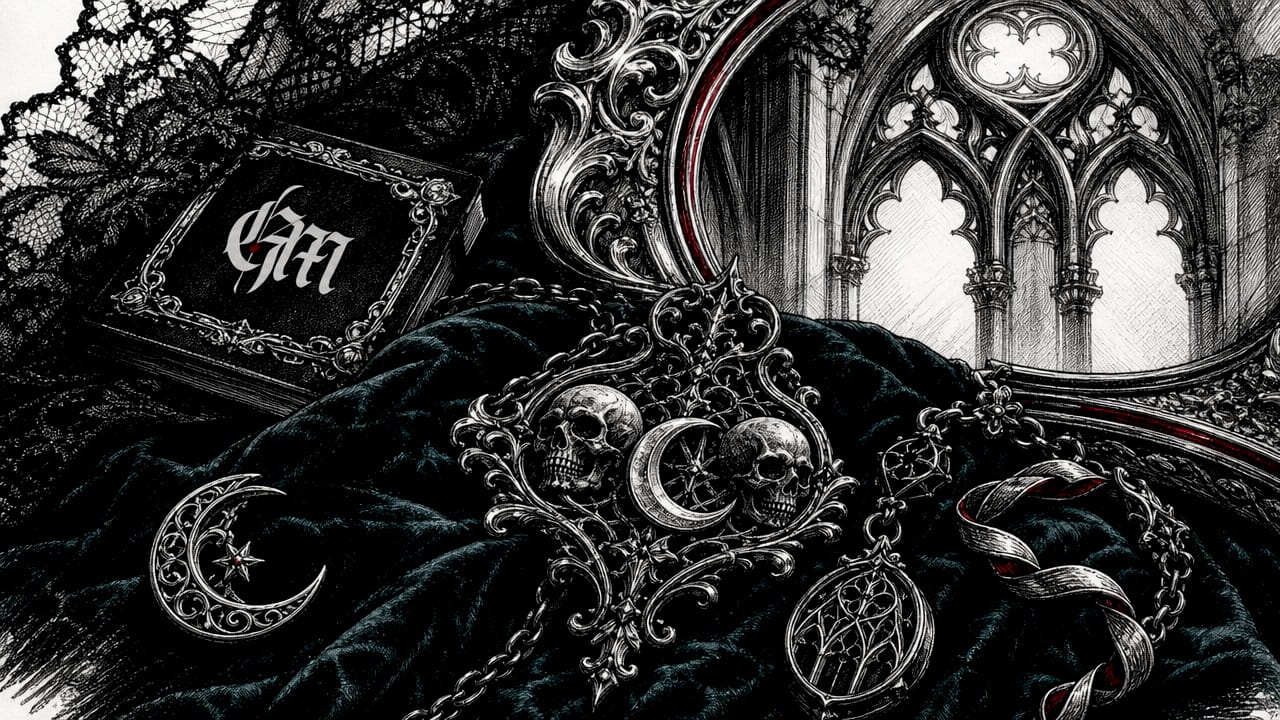
The psychological effect of silver is real. Its cooler tone creates a visual mood that feels restrained and serious. Experienced goths describe silver as having a moonlit, cooling effect that gold simply cannot replicate. That effect is not accidental. It is the reason silver became the standard metal across every major goth subgenre, from Victorian goth to deathrock to dark academia.
Material quality also matters. Sterling silver, marked as .925, contains 92.5% pure silver and 7.5% alloy for durability. That standard matters because cheap base metals corrode quickly and lack the weight and presence that authentic goth pieces require. Mass-produced jewelry made from zinc alloy or plated steel loses its finish fast. Sterling silver ages with character, developing a patina that actually improves its gothic appeal over time.
Here is what separates silver from other metals in goth fashion:
- Cold visual tone. Silver reflects a cooler, bluer light than gold, aligning with goth’s night and moonlight themes.
- Historical credibility. Victorian mourning jewelry was predominantly silver. Wearing it connects to a real tradition.
- Patina potential. Sterling silver oxidizes naturally, creating depth that polished gold cannot develop.
- Subcultural authenticity. Traditional goth style mandates silver for core aesthetic alignment. Gold reads as outside the subculture.
- Versatility with dark materials. Silver pairs with black velvet, lace, and leather in ways that gold visually disrupts.
Pro Tip: When buying sterling silver gothic pieces, look for the .925 hallmark stamped on the piece. That mark confirms genuine sterling silver content and guarantees the durability and oxidation potential that authentic goth jewelry requires.
What symbolism does silver jewelry carry in goth culture?
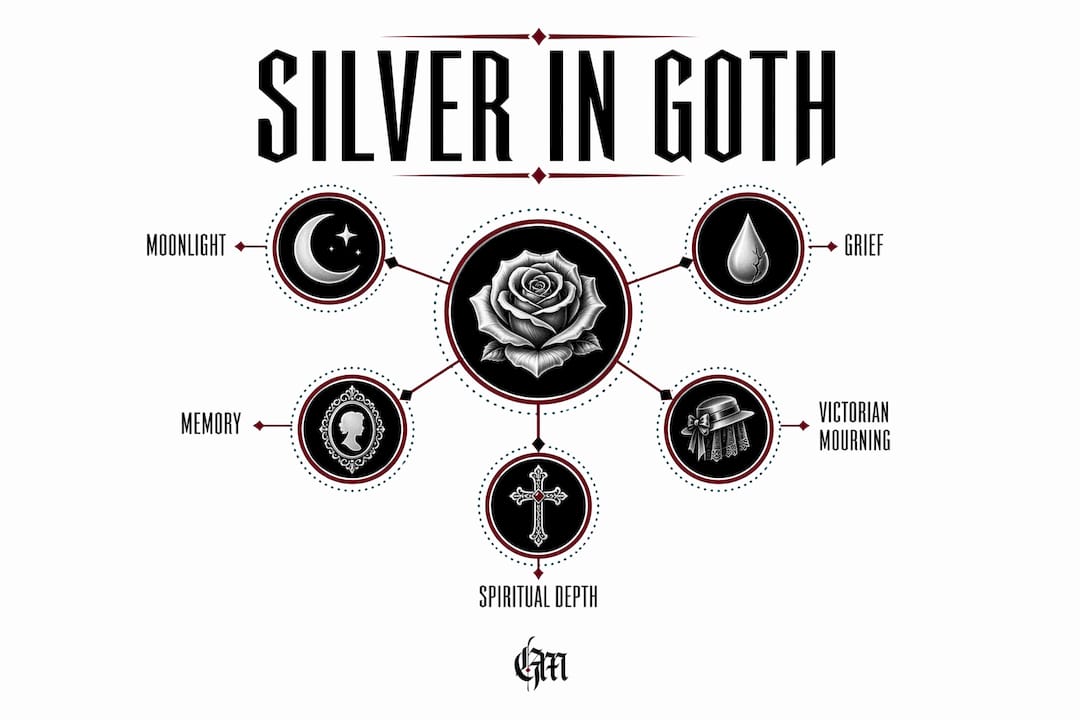
Silver in goth is not decorative. It is symbolic. The metal carries meanings tied to grief, memory, spirituality, and the passage of time. Understanding silver’s symbolism in goth means understanding the subculture’s emotional core.
“Silver symbolizes moonlight, grief, and emotional restraint. It embodies Victorian mourning traditions and the Memento Mori concept, reminding the wearer that beauty and death are inseparable.”
The Memento Mori tradition is central here. Latin for “remember you will die,” Memento Mori was a Victorian practice of creating art and jewelry that acknowledged mortality. Rings, brooches, and pendants were made in silver and often incorporated hair from the deceased, black enamel, or skull motifs. Goth culture absorbed this tradition directly. The significance of silver in goth traces a direct line from Victorian mourning practices to modern gothic accessories.
The symbolic layers of silver in goth fashion stack up clearly:
- Moonlight and night. Silver reflects the moon’s light, making it the natural metal for a subculture that identifies with darkness and nocturnal beauty.
- Grief and mourning. Victorian mourning jewelry established silver as the metal of remembrance. Goth fashion honors that history.
- Emotional restraint. Silver’s cool tone communicates control, depth, and seriousness rather than warmth or celebration.
- Spiritual connection. Silver appears across occult traditions as a metal tied to lunar energy, intuition, and the spiritual world. Goth’s interest in occult symbolism makes silver a natural fit.
- Gothic architecture. Cathedral tracery, stone arches, and candlelit interiors inspired gothic jewelry design. Silver’s gray tone mirrors the stone and shadow of those spaces.
Silver also carries meaning through what it is not. It is not gold. That rejection is deliberate. Goth culture uses silver to signal a conscious step away from mainstream values, choosing a metal that speaks to the interior life rather than external success.
How to style silver jewelry effectively in goth fashion
Styling silver accessories in goth culture works on one principle: balance between light and dark. Black absorbs light; silver reflects it. That contrast creates the visual depth that defines the goth aesthetic. Getting the balance right separates a considered look from a cluttered one.
Choosing the right silver finish
Oxidized sterling silver is the preferred finish for most gothic pieces. Oxidation is a controlled darkening process that creates a moody, aged patina on the silver’s surface. It highlights filigree and tracery details that polished silver would wash out under light. A polished silver ring looks modern and clean. An oxidized silver ring with skull filigree looks like it belongs in a Victorian cabinet of curiosities. The difference is significant.
Polished silver still works in goth styling, particularly for minimalist or dark academia looks. The key is matching the finish to the mood of the outfit. Heavy velvet and lace call for oxidized, antique-looking pieces. Structured black wool or tailored gothic clothing pairs well with cleaner, polished silver.
Layering and pairing silver pieces
Layering is standard practice in goth fashion jewelry. Multiple silver necklaces at different lengths create visual complexity without requiring a single statement piece. Pairing silver with black stones like onyx, jet, or black tourmaline adds depth and keeps the palette cohesive.
- Necklace layering. Combine a short choker with a longer pendant chain. Keep both in oxidized silver for a unified look.
- Ring stacking. Stack two to four silver rings across multiple fingers. Mix motifs like skulls, crosses, and botanical designs for variety.
- Earring balance. If wearing a statement pendant necklace, choose smaller silver stud or hoop earrings to avoid visual overload.
- Stone pairing. Onyx, black tourmaline, and hematite all complement silver without competing with it.
Pro Tip: Avoid mass-produced “dark” jewelry that uses silver-colored plating over base metals. These pieces lack the oxidation depth that defines authentic gothic silver accessories. The patina on genuine sterling silver develops over time and becomes part of the piece’s character.
| Fabric | Recommended silver finish | Best motifs |
|---|---|---|
| Black velvet | Oxidized, antique | Skulls, cathedral tracery, floral |
| Black lace | Oxidized or polished | Crosses, sacred geometry, botanical |
| Leather | Polished or brushed | Geometric, minimal, spike-accented |
| Dark wool or tailored | Polished | Clean crosses, simple pendants |
Common silver jewelry types and motifs in goth style
Gothic silver jewelry covers a wide range of pieces, each with its own role in building a complete look. Sterling silver serves as the base for nearly all authentic gothic accessories, from rings to chokers to elaborate pendants.
The most common goth fashion jewelry pieces include:
- Rings. Silver rings are the most personal gothic accessory. Skull rings, signet rings with occult symbols, and wide band rings with cathedral tracery are all standard. A silver tone ring set allows layering across multiple fingers for a more dramatic effect.
- Chokers. Silver chain chokers or oxidized silver collar pieces sit close to the throat and anchor the neckline. They work with both high-neck and low-cut gothic clothing.
- Pendants. Pendants carry the most symbolic weight in goth jewelry. Crosses, inverted crosses, pentagrams, moons, and Memento Mori motifs are the most common. The pendant is where symbolism becomes visible.
- Earrings. Silver drop earrings, hoops, and studs with gothic motifs complete the look. Longer drop earrings with cross or moon designs are particularly common in Victorian goth and dark romantic styles.
| Motif | Symbolic meaning | Common piece type |
|---|---|---|
| Skull | Mortality, Memento Mori | Rings, pendants |
| Cross | Spirituality, gothic tradition | Pendants, earrings |
| Sacred geometry | Occult knowledge, order | Pendants, rings |
| Botanical/floral | Beauty in decay, Victorian mourning | Earrings, brooches |
| Cathedral tracery | Gothic architecture, historical depth | Rings, wide-band pieces |
Oxidation and antique finishing techniques give each of these motifs their emotional texture. A skull pendant in polished silver reads as costume jewelry. The same pendant in oxidized silver with darkened recesses reads as a genuine artifact. That difference is what authentic gothic pieces deliver and what mass-market alternatives consistently fail to achieve.
Key Takeaways
Silver is the definitive metal of goth culture because its cold tone, moonlight symbolism, and Victorian mourning history align precisely with the subculture’s emotional and aesthetic values.
| Point | Details |
|---|---|
| Silver over gold | Silver’s cold, lunar tone fits goth values; gold’s warmth signals mainstream optimism that goth rejects. |
| Sterling silver standard | The .925 hallmark confirms genuine sterling silver, which oxidizes and ages in ways base metals cannot. |
| Oxidation matters | Oxidized silver highlights filigree and tracery details, creating the antique depth authentic gothic pieces require. |
| Symbolism is layered | Silver connects to moonlight, Victorian mourning, Memento Mori, and occult lunar traditions simultaneously. |
| Styling through balance | Black absorbs light and silver reflects it; pairing both creates the visual depth central to goth fashion. |
Silver as a language, not just a look
I have spent years watching how people enter goth culture and what they get wrong first. The most common mistake is treating silver jewelry as a costume element. You pick up a skull ring because it looks dark. You wear a cross pendant because it fits the outfit. That is not wrong, but it misses the point entirely.
Silver in goth is a language. Every piece you wear makes a statement about what you value and what you reject. The choice of oxidized sterling silver over shiny plated metal is not just aesthetic. It is a declaration that you understand the difference between surface and depth. The goths who wear their jewelry with the most conviction are the ones who know what each piece means.
The misconception I hear most often is that goth jewelry is about shock value. Skulls and crosses get dismissed as edgy props. The reality is that these motifs carry centuries of meaning. A Memento Mori pendant is not trying to disturb anyone. It is a quiet acknowledgment that mortality is real and worth thinking about. Silver carries that acknowledgment in its very color. It is the color of moonlight, of old photographs, of things that endure after warmth has faded.
If you are building a goth wardrobe, start with one piece of genuine sterling silver that means something to you. Wear it until it develops a patina. Watch how it changes. That process is the whole point. Gothic symbolism in fashion is not static. It deepens with time, just like the metal itself.
— Rey
Authentic gothic silver jewelry, curated for the culture
Goth carries a curated collection of genuine sterling silver and silver-tone gothic accessories built for people who take the aesthetic seriously.
Whether you are looking for oxidized skull rings, layered pendant necklaces, or a complete gothic jewelry set to build your look from scratch, Goth connects you with independent creators who understand the symbolism behind every piece. The platform focuses on authentic, handcrafted, and small-batch gothic accessories rather than mass-produced alternatives. You can also browse the full range of gothic accessory ideas to find pieces that match your specific goth style, from Victorian dark romantic to deathrock minimalism.
FAQ
Why do goths wear silver instead of gold?
Silver’s cold, lunar tone aligns with goth’s themes of melancholy, moonlight, and emotional restraint. Gold carries warm, solar symbolism that conflicts with the subculture’s aesthetic values.
What does silver jewelry symbolize in goth culture?
Silver symbolizes grief, moonlight, memory, and spiritual depth. Its connection to Victorian mourning traditions and Memento Mori practices makes it the most symbolically loaded metal in goth fashion.
What is oxidized silver and why do goths prefer it?
Oxidized silver is sterling silver treated with a controlled darkening process that creates an aged, moody patina. It highlights intricate motifs like filigree and skull tracery, giving pieces the historical depth that polished silver lacks.
What are the most common silver motifs in goth jewelry?
Skulls, crosses, sacred geometry, botanical designs, and cathedral tracery are the most common motifs. Each carries specific symbolic meaning tied to mortality, spirituality, or gothic architectural history.
Is sterling silver the best choice for gothic jewelry?
Sterling silver, marked .925, is the standard for authentic gothic pieces because it is durable, oxidizes naturally over time, and develops a patina that adds character. Base metal alternatives corrode and lack the depth that genuine sterling silver provides.