

Role of Mythology in Goth Art – Why It Matters
Every creative decision in goth art carries layers of meaning shaped by mythology. For artists and collectors refining their dark aesthetic, the influence of myth is more than decorative—it forms the blueprint for emotional storytelling and identity. Drawing on ancient symbols and supernatural narratives, contemporary goth art transforms myth into a living, evolving language. Understanding mythological narratives helps independent creators add authenticity, richness, and resonance to their work, building connections that transcend trends.
Table of Contents
- Mythology’s Place In Goth Art Today
- Major Mythological Themes And Motifs
- Symbolism And Storytelling In Gothic Aesthetics
- How Creators Integrate Myth In Modern Works
- Common Misconceptions And Artistic Pitfalls
Key Takeaways
| Point | Details |
|---|---|
| Mythology Enhances Goth Art | Incorporating mythology provides powerful symbolism and emotional authenticity that resonates with both creators and audiences. |
| Modern Creators Remix Traditional Myths | Today’s goth artists reinterpret classical narratives to reflect contemporary issues and personal identities rather than merely replicating historical tales. |
| Symbolism Is Key to Communication | Effective use of mythological symbols communicates complex ideas and emotions quickly, allowing for deeper audience engagement. |
| Cultural Sensitivity Matters | Understanding the cultural context and significance of mythological elements is essential to avoid misappropriation and create genuine art. |
Mythology’s Place in Goth Art Today
Myth remains at the core of contemporary goth aesthetics. Whether you’re creating dark art or curating a collection, understanding how mythology shapes goth visual language directly influences your aesthetic choices and creative output.
Gothic art draws power from mythological narratives that explore darkness, supernatural forces, and existential themes. These aren’t historical references—they’re living tools that modern goth creators use to communicate identity, emotion, and rebellion through their work.
Why Mythology Still Resonates
Myth speaks to what attracts people to goth in the first place. Mythology and gothic themes permeate contemporary goth art, providing symbolic frameworks that feel authentic and emotionally truthful to both creators and audiences.
Goth art uses mythology because it offers:
- Universally recognized symbolism that viewers instantly understand without explanation
- Emotional authenticity that mass-produced aesthetics can’t replicate
- Narrative depth that transforms a simple visual into a complete artistic statement
- Cultural legitimacy that elevates goth from subculture to serious artistic practice
Mythology transforms goth art from mere aesthetic into a meaningful language of identity and expression.
When you incorporate mythological elements—whether Gothic, Celtic, Norse, or beyond—you’re tapping into thousands of years of accumulated cultural meaning. A raven becomes Odin’s messenger. A serpent becomes temptation and wisdom combined. Your audience recognizes these layers instantly.
Modern Goth Creators Using Mythology
Independent goth artists today weaponize mythology differently than traditional fine artists. You’re not illustrating classical texts; you’re remixing mythology to reflect contemporary goth identity.
This means:
- Selecting mythological figures that resonate personally with your aesthetic vision
- Reinterpreting their stories through a goth lens—emphasizing darkness, complexity, and moral ambiguity
- Blending mythologies (Norse with Classical, Celtic with occult traditions) to create something distinctly yours
- Using mythological symbolism in jewelry, fashion, illustration, and decor that speaks to your target audience
The gothic tradition draws extensively on mythology to inform its themes of darkness and the supernatural, maintaining relevance across global goth communities. This isn’t nostalgia—it’s an active, evolving conversation between past and present.
When you create or collect goth art with mythological foundations, you’re participating in a tradition that academic institutions and cultural scholars take seriously. Your work carries weight beyond the subculture.
Pro tip: When developing your aesthetic or product line, choose 2-3 specific mythologies that genuinely speak to your creative vision rather than borrowing from everything. Deep knowledge of a few mythological systems creates more coherent, compelling work than surface-level references to many.
Major Mythological Themes and Motifs
Certain mythological themes appear again and again across goth art worldwide. These aren’t random—they’re archetypal symbols that resonate emotionally with both creators and audiences because they explore universal human experiences like death, fear, transformation, and the unknown.
Understanding these core themes helps you recognize patterns in existing goth art and create work that feels authentic rather than derivative.
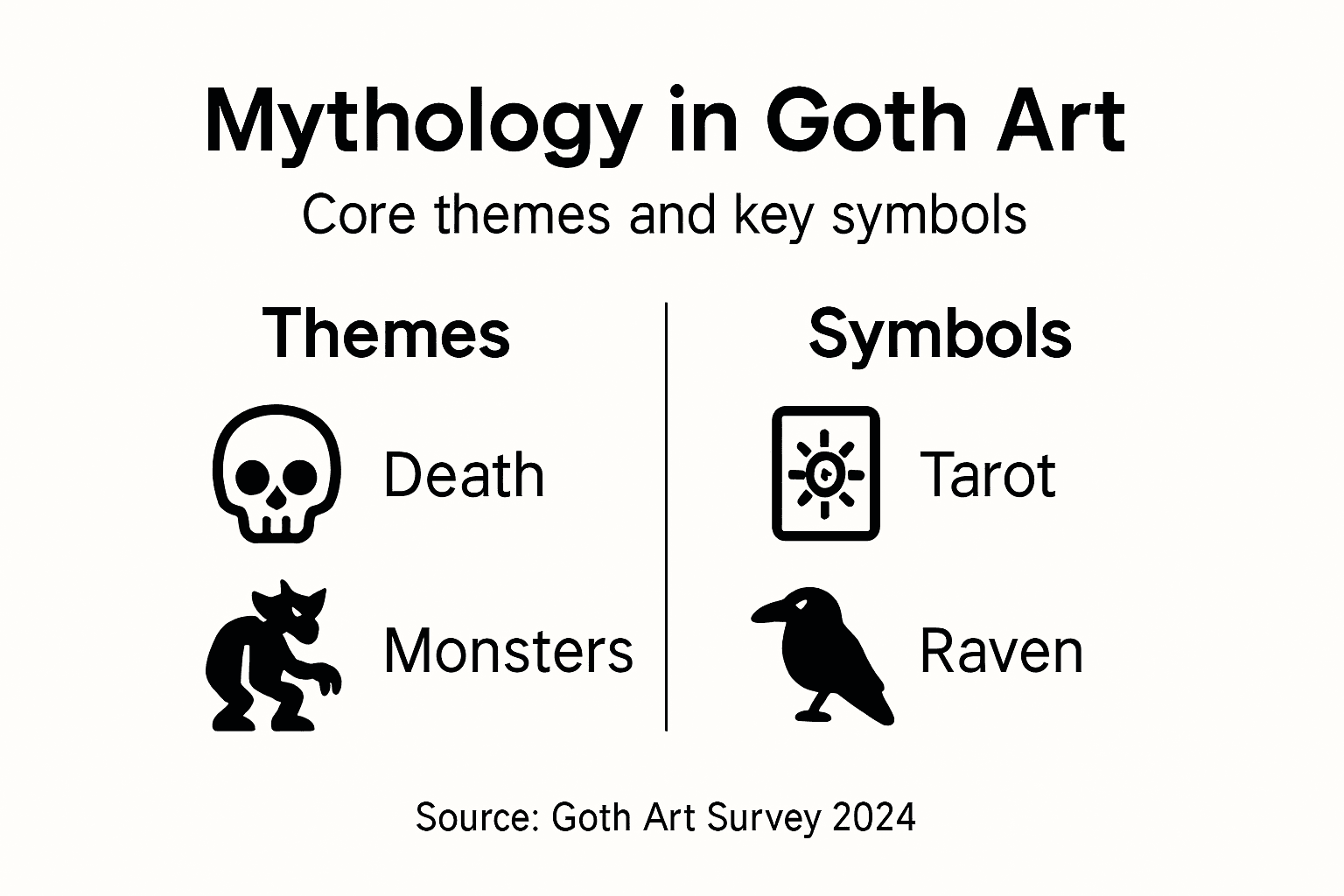
To help clarify how mythology shapes modern goth art, here’s a summary of major mythological themes and their roles:
| Theme | Typical Motifs | Emotional Impact | Artistic Purpose |
|---|---|---|---|
| Death & the Macabre | Skulls, tombs | Contemplates mortality | Encourages reflection |
| Monsters & Supernatural | Vampires, witches | Empathy for outsiders | Explores isolation |
| Occult & Hidden Knowledge | Tarot, alchemy | Sense of mystery | Signals unique identity |
| Darkness & Liminality | Night, crossroads | Embraces ambiguity | Highlights transformation |
Death and the Macabre
Death dominates goth mythology in ways that go beyond visual shock value. It represents finality, transition, and the beauty found in decay.
Mythological themes like death and the macabre form the emotional core of gothic art, drawing from various cultural mythologies worldwide. Goth creators use death imagery not to glorify morbidity, but to explore what it means to be human—vulnerable, temporary, and aware of mortality.
Death motifs in goth art include:
- Skeletons and skulls as reminders of life’s transience
- Funerary imagery and gothic tombs as meditation on rest and finality
- Corpses and decay as transformation rather than ending
- Underworld mythology (Hades, Persephone, Anubis) as spiritual journeys
Death in goth mythology isn’t morbidity—it’s honest acknowledgment of human existence.
Monsters and the Supernatural
Monsters represent what society fears or rejects. In goth art, monsters become protagonists worthy of empathy and understanding.
This inversion—making the feared figure sympathetic—defines modern goth aesthetics. Werewolves, vampires, demons, and witches aren’t evil; they’re misunderstood outsiders reflecting goth identity itself.
Common supernatural motifs include:
- Vampires as eternal wanderers and tragic figures
- Witches as knowledge-keepers and healers
- Demons and devils as symbols of rebellion
- Supernatural creatures as metaphors for alienation
The Occult and Hidden Knowledge
Goth art taps into supernatural forces and occult themes that suggest power hidden from mainstream society. Tarot, alchemy, astrology, and ritual magic appear constantly in contemporary goth aesthetics.
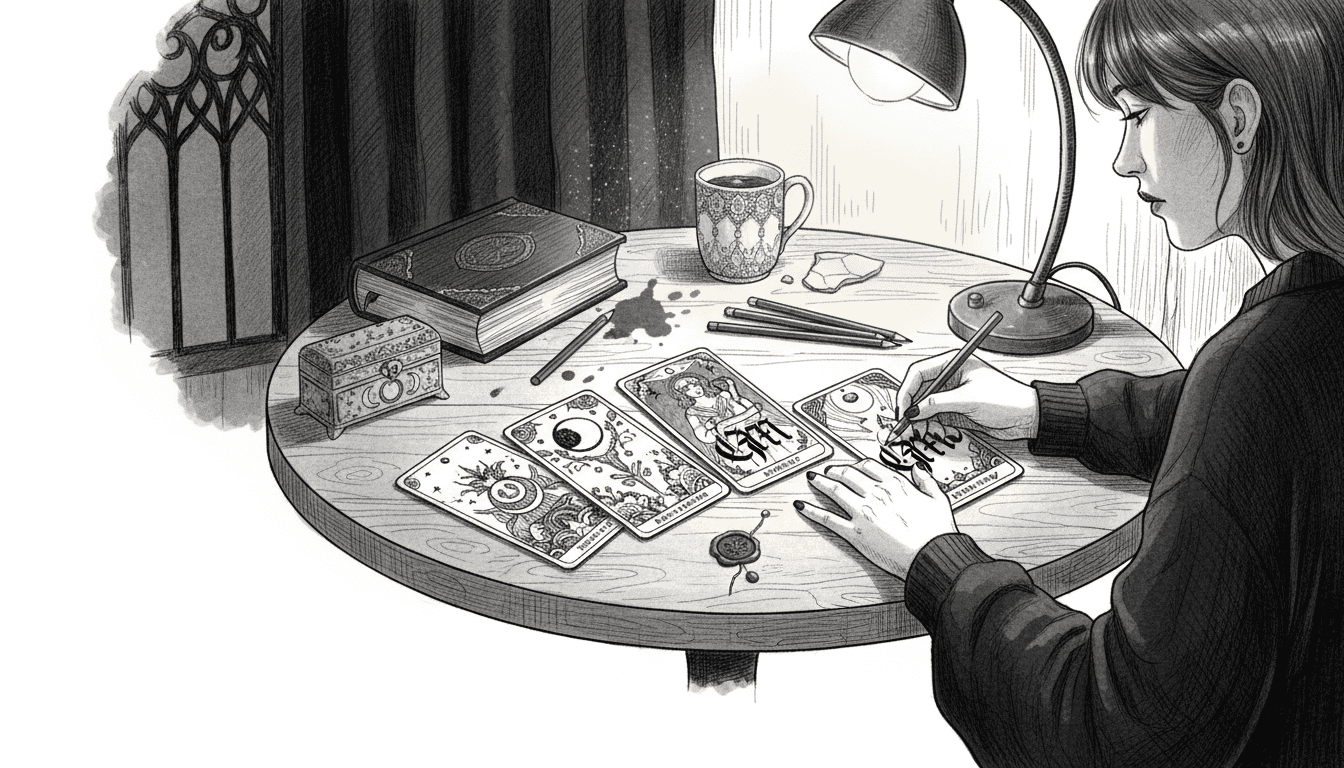
This reflects a real goth subculture value: the belief that truth exists outside conventional institutions. Occult imagery signals that the creator or wearer possesses knowledge others dismiss or fear.
Occult symbols in goth art serve as:
- Visual shorthand for spiritual seeking
- Rebellion against religious or societal norms
- Exploration of alternative belief systems
- Connection to historical witchcraft and persecuted communities
Darkness and Liminality
Darkness appears in goth art not as absence but as presence. Night, shadows, and threshold spaces (crossroads, forests, liminal zones) represent mystery and potential.
Liminality—existing between states—defines much goth aesthetic. Characters caught between human and animal, living and dead, sacred and profane embody the goth experience of not fitting neatly into society’s categories.
Pro tip: When selecting mythological motifs for your work, choose symbols that genuinely speak to your personal beliefs or experiences rather than picking them purely for visual impact. Audiences recognize authentic emotional connection instantly, making your work stand out from mass-market goth products.
Symbolism and Storytelling in Gothic Aesthetics
A single raven becomes a narrative. A thorned rose transforms into an entire emotional arc. Goth art succeeds because it packs dense storytelling into visual symbols that audiences instantly recognize and interpret.
This compression of meaning—taking complex psychological truths and encoding them into visual language—separates authentic goth work from surface-level dark aesthetic imitation.
How Symbols Replace Lengthy Explanation
Why does goth art favor symbols over explicit narrative? Because symbols work faster and cut deeper emotionally than explanation.
Symbolism and storytelling collaborate in gothic aesthetics to evoke emotional and psychological responses through visual and literary means. When you see a skeleton clutching an hourglass, you instantly understand themes of mortality and time without a single word of description.
Effective goth symbols communicate:
- Immediate emotional recognition that viewers feel before consciously thinking
- Layered meaning that rewards deeper cultural knowledge while remaining accessible
- Visual economy that makes small pieces carry significant narrative weight
- Cultural continuity that connects personal work to centuries of gothic tradition
Symbols are goth art’s native language—they say what words alone cannot convey.
Building Personal Narrative Through Mythology
The most compelling goth art doesn’t simply repeat mythological stories. It uses mythological symbols to tell personal stories that feel universal.
You’re not illustrating ancient tales; you’re using mythology as a vocabulary to express contemporary goth identity. A creator might use vampire mythology to explore themes of isolation, eternal searching, or hunger for connection that feel deeply personal despite drawing from established symbolic traditions.
Mythological symbolism expresses themes of existential dread and human psyche through narrative expression. This is why goth art created independently by emerging artists often resonates more powerfully than mass-produced dark aesthetics—the creator’s authentic connection to the symbols shows.
Your personal mythology builds by:
- Selecting mythological figures or symbols that genuinely connect to your worldview
- Reinterpreting them through your aesthetic lens and lived experience
- Creating visual language consistent across your work (recognizable color palettes, recurring motifs)
- Allowing your audience to layer their own meaning onto your symbols
Symbol Recognition Across Goth Communities
Goth audiences worldwide share symbolic literacy. A Celtic knot, an alchemical symbol, a specific tarot card—these mean something consistent across independent creators and collectors.
This shared understanding creates community. When self-expression through aesthetic choices involves deliberate mythological symbolism, you’re communicating belonging and values to other community members.
However, shared symbols don’t eliminate originality. They provide foundation. Your originality emerges through how you combine, reinterpret, and personalize those symbols within your work.
Pro tip: Study how established goth artists use 2-3 specific mythological symbols repeatedly across their work rather than constantly introducing new symbols. This creates visual and narrative coherence that makes your work instantly recognizable and allows audiences to develop deeper understanding over time.
How Creators Integrate Myth in Modern Works
Modern goth creators don’t just borrow mythology—they remix it. They strip classical narratives down to emotional cores and rebuild them with contemporary sensibilities, contemporary materials, and contemporary questions.
This active reinterpretation keeps mythology alive instead of treating it as museum artifacts. Your work participates in an evolving conversation spanning centuries.
Reinterpreting Classical Myths
Take Medusa. Classical mythology presents her as a monster punished for being assaulted. Modern goth creators flip this narrative: she becomes a survivor, a symbol of power reclaimed, a figure of transformation and strength.
Contemporary creators reinterpret classical myths with modern sensibilities, blending traditional gothic elements with contemporary themes. This doesn’t betray the original myth—it honors it by asking what truths still resonate today and what new truths demand acknowledgment.
Effective reinterpretation requires:
- Honoring the original while refusing to be trapped by it
- Identifying emotional cores that transcend historical context
- Adding your perspective without erasing the source material
- Making implicit themes explicit (like gender, power, suffering, resistance)
Mythology survives because creators refuse to leave it unchanged.
Blending Gothic Heritage with Modern Issues
Goth art’s power comes from addressing what actually concerns people today. Classical mythology provides symbols and structures, but contemporary relevance comes from connecting those symbols to real contemporary anxiety.
Gothic artists fuse mythological narratives into creative works by mixing gothic heritage with modern cultural issues. A creator might use underworld mythology to explore depression, vampire mythology to examine parasitic relationships, or witch mythology to reclaim power from systemic oppression.
This integration looks like:
- Selecting a mythological framework that speaks to your theme
- Identifying the emotional or psychological truth at its center
- Translating that truth into contemporary visual language
- Allowing modern audience members to recognize themselves in ancient stories
Practical Methods for Mythological Integration
You don’t need to create entirely original mythology. You’re working within established traditions while adding your voice. Different media require different approaches:
Visual art and illustration use symbolic layers—mythological figures wearing contemporary clothing, placed in modern settings, or reimagined through current visual aesthetics.
Fashion and jewelry embed mythological references into wearable form—sigils, creatures, narrative scenes that collectors understand and recognize.
Literature and storytelling adapt mythological narrative structures while addressing contemporary themes and perspectives.
Digital and mixed media allow you to combine multiple mythological traditions or overlay them with contemporary cultural commentary.
The key is intentionality. Mythological integration shouldn’t feel like decoration. Every choice—which myth, which elements, which modifications—should serve your artistic purpose.
Here’s how creators can intentionally integrate mythology into goth works across different media:
| Medium | Integration Approach | Unique Consideration |
|---|---|---|
| Visual Art | Symbolic layering | Modern settings for ancient figures |
| Fashion/Jewelry | Embedded references | Wearable forms with mythic meaning |
| Literature | Narrative adaptation | Contemporary themes in ancient stories |
| Digital Media | Mixed-tradition overlays | Combines commentary with symbolism |
Pro tip: Choose one mythological system to study deeply before integrating it into your work. Understanding the cultural context, variations, and symbolic meanings of one mythology deeply creates more authentic and powerful work than surface-level references to many traditions.
Common Misconceptions and Artistic Pitfalls
Not all dark aesthetics using mythology succeed. Some goth art falls flat because creators misunderstand how mythology works or treat symbols as decorative window dressing rather than meaningful language.
Recognizing these pitfalls before you create or collect ensures your work carries genuine depth instead of just looking dark.
Misconception: Mythology is Just Decoration
The biggest mistake independent creators make is using mythological elements without understanding them. A pentagram becomes a generic “dark symbol” rather than a specific spiritual or magical framework. A raven becomes “spooky bird” instead of Odin’s messenger or a death omen.
Superficial use of mythological symbols undermines their depth and significance, affecting authenticity and audience understanding. When symbols lack real meaning behind them, viewers sense the emptiness immediately, even if they can’t articulate why.
This happens when creators:
- Use mythology for aesthetics alone, divorced from its themes
- Mix mythologies randomly without understanding each tradition
- Apply symbols without knowing their cultural or spiritual context
- Prioritize visual appeal over conceptual coherence
Symbols divorced from meaning become costume, not art.
Pitfall: Stereotyping and Oversimplification
Complex mythologies get flattened into single archetypes. The Witch becomes only dangerous seductress. The Raven becomes only death. The Vampire becomes only aristocratic predator.
Stereotyping and reducing complex mythologies to mere aesthetic elements dilutes myth’s power and limits thematic richness. Real mythology contains contradictions, variations, and competing interpretations that make it compelling.
When you flatten mythology:
- Your work becomes indistinguishable from mass-market goth products
- You miss opportunities for psychological and emotional depth
- You lose the cultural commentary potential that makes goth art meaningful
- Audiences with deeper knowledge lose interest
Pitfall: Cultural Misappropriation
Using mythology without respect for its cultural origins creates harm. This means treating living traditions (Indigenous mythologies, Hindu mythology, African traditions) the same as historical European mythology.
Cultural sensitivity requires:
- Learning the actual history and context of the tradition
- Understanding what practitioners of that tradition believe today
- Crediting sources and acknowledging cultural origin
- Avoiding sacred or closed practices (smudging, hoodoo practices if not from that culture)
- Recognizing when a tradition is living, not historical
Pitfall: Lacking Intentionality
Your mythological choices should serve your artistic statement. Random mythology selection creates visual noise instead of visual language.
Every mythological element you include should answer: What emotional or conceptual truth does this symbol communicate? If you can’t answer that question, the element doesn’t belong.
Pro tip: Before finalizing work using mythology, write a single sentence explaining what each mythological element represents conceptually in your piece. If you can’t articulate it clearly, reconsider the element or deepen your understanding of it before including it in your final work.
Embrace Mythology in Your Goth Style Today
Mythology is not just decoration it is the beating heart of authentic goth expression. If you want your aesthetic or creative work to carry real depth and emotional power then choose symbols and themes that resonate with your personal story and values. Dive deeper into gothic identity by exploring our curated selection of GothCore pieces designed to echo the mysteries of myth and the occult.
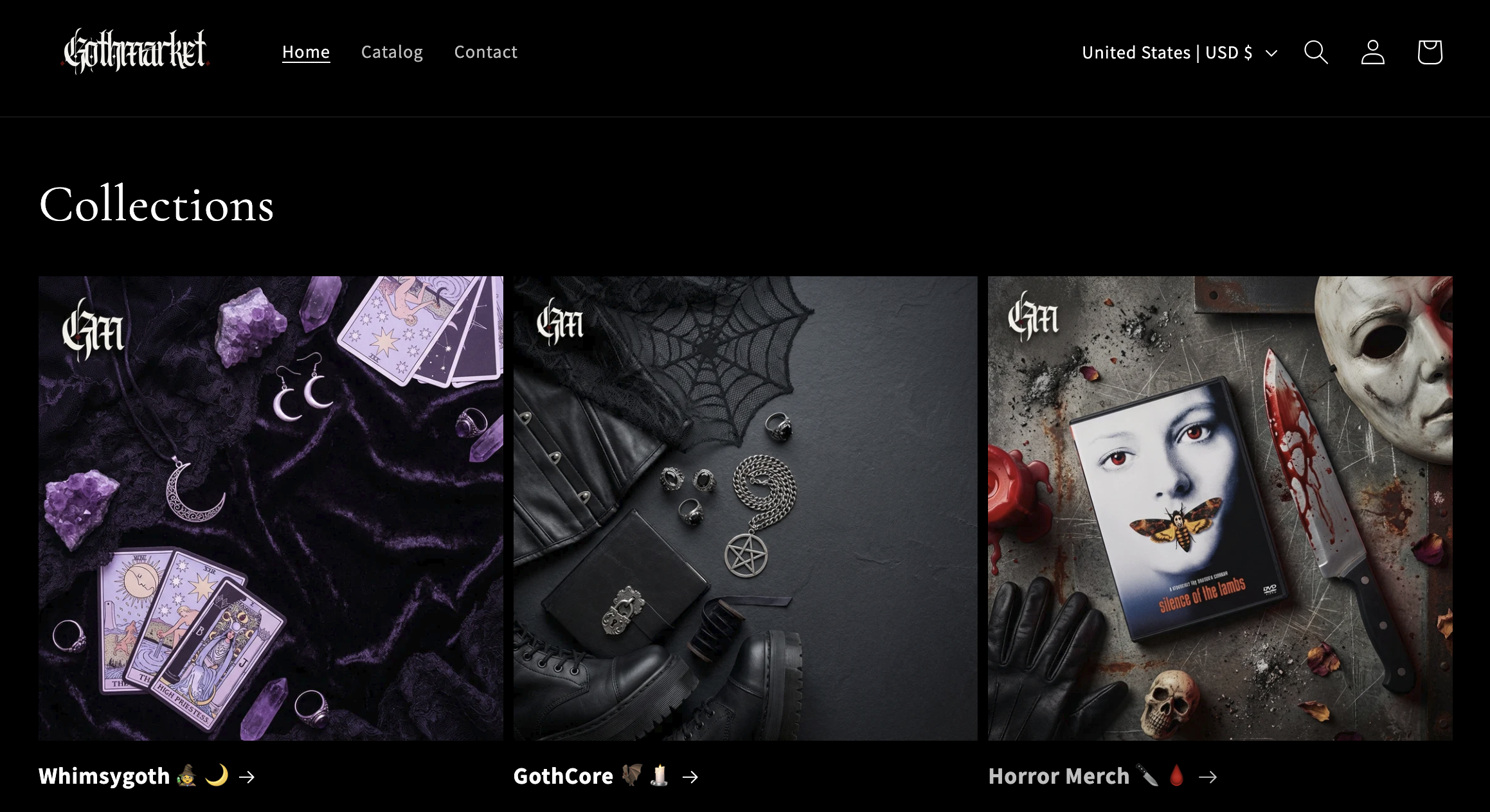
Discover original jewelry, artwork, and fashion that transform mythological symbolism into wearable and visible statements of identity. Visit Goth.Market now to connect with independent creators who understand the importance of intentionality and cultural respect in dark aesthetics. Don’t settle for superficial or mass-market when you can claim meaning and community through thoughtful gothic style. Explore our Whimsygoth collection to add mystical layers or browse Horror Merch to express the macabre themes close to your heart. Take your goth art and fashion from costume to narrative today.
Frequently Asked Questions
What role does mythology play in modern goth art?
Mythology serves as a foundational element in contemporary goth art, providing meaningful symbols and narratives that reflect themes of darkness, identity, and rebellion.
How can I effectively incorporate mythological elements into my goth art?
To incorporate mythology effectively, choose 2-3 specific mythologies that resonate with your vision, reinterpret their stories through a goth lens, and ensure your symbols communicate authentic emotional connections.
What are some common mythological themes found in goth art?
Common themes include death and the macabre, monsters and the supernatural, occult knowledge, and darkness and liminality, each exploring universal human experiences like mortality and transformation.
Why is it important to understand the cultural background of mythological symbols in my art?
Understanding the cultural context of mythological symbols prevents superficial use, supports authenticity in your work, and avoids cultural misappropriation, enriching your art with depth and meaning.
Recommended
- Role of Art in Gothic Style – Inspiring Modern Dark Aesthetics – GothMarket
- Why Choose Gothic Style: Self-Expression and Aesthetic Impact – GothMarket
- Guide to Gothic Art Curation for Collectors and Creators – GothMarket
- Gothic Fashion Styling Guide for Bold, Dark Aesthetics – GothMarket
- The Cultural and Religious Significance of Fine Jewelry – Malibu Vibes Jewelry