

Occult jewelry: meaning, symbols, and gothic styles
TL;DR:
- Occult jewelry symbolizes hidden knowledge, esoteric systems, and spiritual symbolism, not evil or darkness. It distinguishes genuine meaning from aesthetic borrowing, often featuring symbols like pentagrams, moon phases, or sigils used in spiritual practices. Connecting with its symbolism through intention enhances personal expression and spiritual engagement.
Occult jewelry gets a bad reputation it doesn’t deserve. Most people assume the definition of occult jewelry starts and ends with “scary dark stuff,” but that misses the entire point. The word “occult” has nothing to do with evil and everything to do with hidden knowledge, esoteric tradition, and symbols that carry meaning beyond the visible world. Whether you’re drawn to the aesthetic, the spiritual dimension, or both, understanding what occult jewelry actually represents changes how you wear it, choose it, and connect with it. This guide breaks it all down.
Table of Contents
- Understanding the meaning of occult jewelry
- Symbols and types of occult jewelry: amulets, talismans, and motifs
- How gothic style and occult symbolism connect in jewelry
- Evaluating spiritual claims and intentions behind occult jewelry
- Choosing and wearing occult jewelry for personal expression and spiritual practice
- Why defining occult jewelry by symbolism and intention matters more than style alone
- Explore authentic occult and gothic jewelry at Goth.Market
- Frequently asked questions
Understanding the meaning of occult jewelry
The word “occult” does real work here, so let’s start with what it actually means. In English, “occult” refers to magical, mystical, or supernatural arts and also describes knowledge that is hidden or secret. It’s not a synonym for “evil” or “dangerous.” It never was.
The Latin root occultus means hidden or secret, and that etymology is the key to the entire concept. Occult jewelry, then, is not simply jewelry that looks dark or dramatic. It’s jewelry that references esoteric systems, supernatural symbols, or hidden knowledge traditions. The piece carries meaning beneath the surface, meaning that isn’t obvious to everyone who sees it.
A working occult jewelry definition that actually holds up: wearable items featuring symbols or designs tied to hidden knowledge, mystical arts, or esoteric belief systems. This distinguishes it from, say, a skull ring bought purely for its look, versus a pentagram pendant worn as a signal of Wiccan practice.
Here’s what that definition covers in practice:
- Jewelry referencing established esoteric systems (Hermeticism, Kabbalah, Wicca, chaos magic)
- Pieces featuring symbols with documented spiritual or metaphysical meaning
- Items used as tools in ritual, meditation, or spiritual protection
- Gothic accessories where occult motifs add layers of symbolic identity
The distinction matters because it separates jewelry with genuine depth from jewelry that just borrows the aesthetic. Both are valid choices, but knowing the difference helps you shop with intention.
Symbols and types of occult jewelry: amulets, talismans, and motifs
Not all occult jewelry symbolism works the same way. Two of the most fundamental forms, amulets and talismans, are often used interchangeably but mean different things.
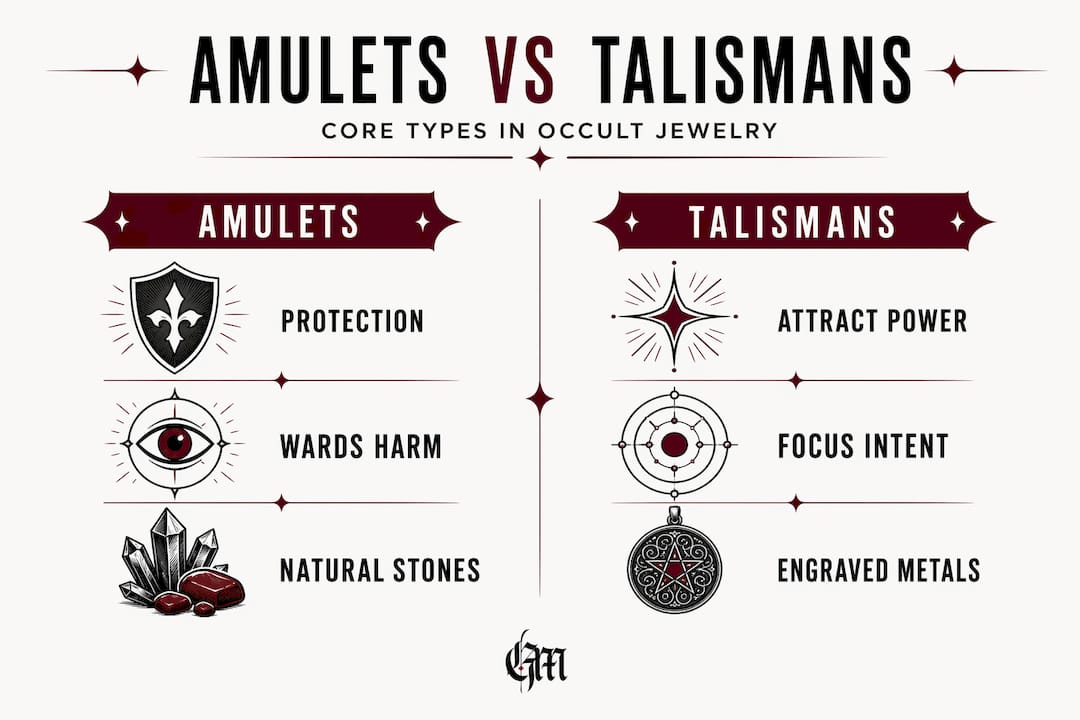
Amulets provide protection while talismans actively channel positive energy toward the wearer. An amulet is a shield. A talisman is a magnet. That’s the cleanest distinction you’ll find, and it shapes how both types are used in practice.
Common occult jewelry motifs span a wide range of traditions:
- Pentagram: One of the most misunderstood symbols in occult jewelry. In most esoteric traditions, it represents the five elements (earth, air, fire, water, spirit) and is used for protection and balance.
- Moon phases: Associated with cycles, intuition, and feminine energy across multiple spiritual systems including Wicca and paganism.
- Eye of Horus and evil eye: Ancient protective symbols used to deflect harm and invite clarity.
- Tarot imagery: Major Arcana symbols like The Moon, The Hermit, and The High Priestess appear frequently on pendants and rings.
- Serpents and ouroboros: Represent transformation, eternity, and the cyclical nature of existence.
- Sigils: Custom or traditional symbols used in ceremonial magic to focus intention.
Gothic jewelry uses these symbols alongside dark motifs like skulls, crosses, and ravens to create a distinctive visual language. The combination expresses spirituality, mysticism, and a deliberate rejection of mainstream aesthetics.
| Type | Primary purpose | Common symbols | Typical materials |
|---|---|---|---|
| Amulet | Protection, warding off harm | Evil eye, Hamsa, pentagram | Silver, obsidian, onyx |
| Talisman | Attracting energy, empowerment | Sigils, planetary seals, runes | Gold, copper, gemstones |
| Devotional piece | Spiritual connection, practice | Deity symbols, tarot motifs | Varies widely |
| Gothic fashion piece | Identity, aesthetic, self-expression | Skulls, moons, crosses | Sterling silver, resin, brass |
Pro Tip: Before buying a piece because it “feels powerful,” look up what the symbol actually means in its source tradition. Vague claims about “energy” and “vibration” without any symbolic grounding are usually marketing copy, not meaning.
How gothic style and occult symbolism connect in jewelry
Gothic jewelry and occult jewelry are related but not identical. Understanding how they overlap prevents a lot of confusion, especially for beginners trying to figure out what gothic jewelry means in contrast to strictly occult pieces.
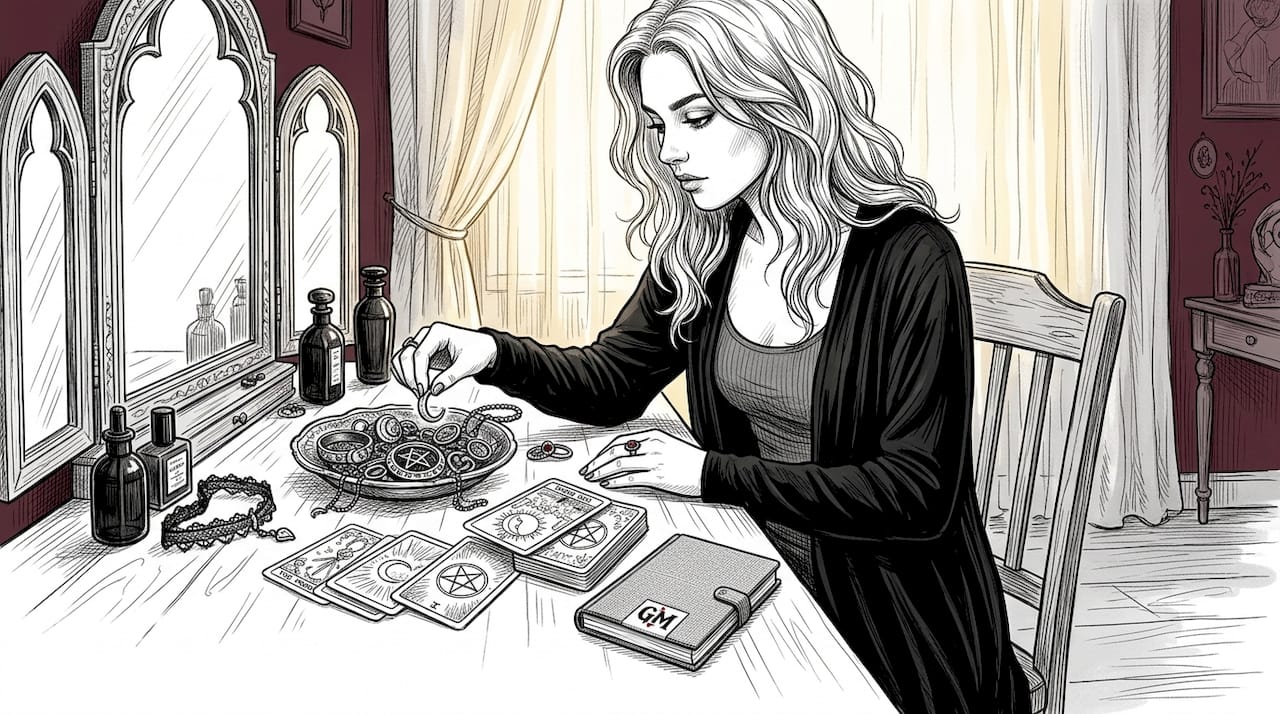
Gothic jewelry prioritizes dark, dramatic visual language. Occult jewelry prioritizes symbolic depth. When those two things combine, the result is something that works on both levels simultaneously. A crescent moon choker can look stunning in a gothic outfit and carry genuine lunar symbolism for the wearer. That dual function is part of what makes this category so compelling.
Gothic jewelry frequently features occult symbols such as pentagrams and moon phases to express alternative spiritual and mystical themes. This connection goes back centuries, particularly through the Victorian mourning jewelry tradition, which borrowed heavily from esoteric symbolism to process death and the afterlife. Memento mori pieces, jet-black stones, and serpent motifs all carried coded messages that mainstream society wouldn’t immediately decode.
Modern gothic jewelry and symbolism continues that tradition. Common occult motifs you’ll find in gothic pieces today include:
- Inverted crosses: Often misread as Satanic, but historically a symbol of Saint Peter and, in some traditions, humility before God
- Baphomet imagery: Tied to esoteric traditions and often chosen as a deliberate challenge to religious authority
- Celestial motifs: Stars, crescent moons, and solar crosses signal connection to cosmic forces
- Botanical occult symbols: Mandrake, belladonna, and other “witch’s herbs” appear as motifs on rings and pendants
Pro Tip: When someone wears a pentagram or an inverted cross, the meaning depends entirely on context and intent. Asking about someone’s piece is often more interesting than assuming you know what it means.
Evaluating spiritual claims and intentions behind occult jewelry
This is where things get practical. The market for spiritual jewelry has exploded, and with it, so has the volume of vague, unsubstantiated claims about what a piece will “do” for you.
“The symbol’s tradition matters more than the seller’s tagline. A piece rooted in actual esoteric history carries cultural weight. A piece that claims to ‘raise your vibration’ without any symbolic context is selling you aesthetics with a spiritual price markup.”
Spiritual jewelry marketing frequently uses energy and healing language without tying it to any clear tradition or symbol history. That’s not inherently dishonest, but it does mean you’re buying into an idea rather than a practice. If that’s fine with you, fine. But if you want a piece with genuine esoteric weight, here’s how to evaluate it:
- Identify the symbol. Can you find it in a recognized esoteric tradition? Runes, planetary seals, alchemical symbols, tarot imagery all have documented meanings.
- Check the source. Does the retailer explain what the symbol means and where it comes from, or do they stick to vague language like “mystical energy” and “protective vibes”?
- Research independently. A five-minute search on the symbol’s history in its original tradition will tell you more than any product description.
- Assess your own intention. What do you want from this piece? Protection, connection to a practice, aesthetic expression? Your intention shapes what the jewelry means to you regardless of what the seller claims.
- Trust your gut. If a piece resonates and you understand why, that’s a stronger foundation than any marketing copy.
The spiritual meaning of occult jewelry comes from the wearer’s relationship with its symbolism, not from a sticker on the packaging.
Choosing and wearing occult jewelry for personal expression and spiritual practice
For beginners especially, the sheer range of occult jewelry styles can feel overwhelming. Skull rings, moon pendants, sigil necklaces, tarot card earrings, rune-carved bands. Where do you start?
Start with intention, not aesthetics. In witchcraft and occult practice, jewelry functions as a tool for protection, empowerment, manifestation, and connection to the divine. That framing is useful even if your interest is more aesthetic than spiritual, because it gives you a clear lens for choosing what to buy.
Here’s a practical framework for selecting pieces that will actually feel meaningful:
- Match symbol to goal. If protection is your focus, look for pieces featuring the evil eye, hamsa, or black tourmaline settings. For transformation, serpent motifs or phoenix imagery. For intuition, crescent moon and lapis lazuli.
- Consider the material. Many occult traditions associate specific metals and stones with specific energies. Silver with the moon and intuition. Black stones with protection and grounding. Copper with love and communication.
- Think about wearability. A piece you actually wear carries more personal meaning than one sitting in a drawer. Choose something that fits your daily life, not just your wishlist.
- Build gradually. Occult jewelry for beginners works best as a slow accumulation of meaningful pieces rather than a one-time haul. Each piece you add should mean something specific.
Pro Tip: Take five minutes to “consecrate” a new piece before wearing it. Hold it, state your intention for it out loud or silently, and wear it with that purpose in mind. It costs nothing and deepens your connection to the piece significantly.
Why defining occult jewelry by symbolism and intention matters more than style alone
Here’s an opinion: most conversations about occult jewelry get it backwards. People start with the look and work backward toward meaning. That’s why so much occult-themed jewelry feels empty even when it looks incredible.
The most defensible definition of occult jewelry is that it signals membership or interest in esoteric and supernatural systems, not simply that it looks dark or mysterious. That distinction changes everything. It means a plain silver ring engraved with a specific alchemical sigil is more genuinely “occult” than a dramatic, skull-encrusted statement piece with no symbolic grounding.
This matters for a few reasons. First, it protects the cultural weight these symbols carry. Pentagrams, Kabbalistic seals, and planetary sigils come from traditions with real practitioners, real histories, and real significance. Treating them as pure decoration flattens that history into surface-level aesthetics.
Second, it gives wearers a more honest framework for their own choices. Wearing something because it looks cool is completely valid. Wearing something because it connects you to a spiritual practice you actually follow is something different. Both are fine. Pretending the second is happening when the first is true serves no one.
“Occult jewelry bridges hidden knowledge and personal expression in a way no other category of accessories can. The symbols carry centuries of meaning. What you bring to them is what makes a piece genuinely yours.”
The gothic and alternative communities have always understood that what you wear tells a story. The most meaningful occult jewelry tells a story that’s actually yours, not just borrowed from whatever is trending in alternative fashion at the moment.
Explore authentic occult and gothic jewelry at Goth.Market
If you’ve made it this far, you know the difference between a piece that looks occult and a piece that genuinely is. Finding the second kind takes more than a quick search through mass-market options.
Goth.Market’s jewelry collections are curated specifically for this community, sourced from independent creators who understand the symbolism they’re working with. Browse standout pieces like the celestial chain choker moon pendant for a wearable entry point into lunar symbolism, or explore the full whimsygoth collection for pieces that blend dark aesthetics with genuine mystical motifs. Every item connects intention with craftsmanship, giving you something that means something.
Frequently asked questions
What exactly does occult jewelry mean?
Occult jewelry refers to wearable items featuring symbols or designs connected to hidden knowledge, mystical arts, or esoteric belief systems. In English, “occult” describes magical, mystical, or supernatural arts and knowledge that is deliberately hidden or secret, which is the foundation of the definition.
How do amulets and talismans differ in occult jewelry?
Amulets provide protection and ward off harm, while talismans actively channel positive energy or spiritual power toward the wearer. Think of an amulet as a shield and a talisman as an attractor.
Are all gothic jewelry pieces considered occult jewelry?
Not all gothic jewelry qualifies as occult. Gothic pieces with esoteric symbols like pentagrams and tarot motifs do cross into occult territory because they signal alternative spiritual beliefs, but gothic jewelry focused purely on aesthetic elements like skulls or bats without symbolic grounding does not.
How can I tell if occult jewelry’s spiritual claims are authentic?
Look for symbols tied to recognized traditions with documented meanings. Energy or healing claims that aren’t connected to any clear symbolic history or tradition are typically marketing language rather than genuine esoteric grounding.
Can occult jewelry be worn just for fashion?
Absolutely. Many people wear occult-themed jewelry purely for its visual impact and aesthetic appeal. The most meaningful pieces, though, tend to be chosen with at least some intentional connection to what the symbols represent, even if that connection is personal rather than traditionally spiritual.