

The Role of Shadows in Gothic Art: Symbolism and Technique
TL;DR:
- Shadows in Gothic art are intentionally engineered tools that define form, carry theological symbolism, and shape emotional experiences. They use techniques like chiaroscuro, deep undercutting, and architectural innovation to make sacred figures relatable and emphasize spiritual themes. Shadows also influence mood by guiding viewers’ perceptions and interpreting divine presence through light and dark contrasts.
Shadows in Gothic art are defined as intentional artistic and symbolic tools that create form, depth, mood, and sacred meaning. The role of shadows in Gothic art goes far beyond incidental darkness. From the soaring nave of Chartres Cathedral, with its 167 medieval stained-glass windows covering 2,600 square meters, to the carved stone figures of Amiens, Gothic artists engineered shadow with the same care they gave to light. Gothic art, spanning roughly 1140 to 1500, replaced the thick, fortress-like gloom of Romanesque interiors with luminous spaces where controlled shadow became a theological statement. Understanding how shadows function in this tradition transforms how you read every cathedral, painting, and sculpture from the period.
How do shadows define form and depth in Gothic painting and sculpture?
Shadows define form in Gothic art through a technique art historians call chiaroscuro, the deliberate contrast of light and dark to create the illusion of three-dimensional volume. Before Gothic painters applied this method, Romanesque art relied on flat, symbolic figures with no sense of weight or physical presence. Gothic masters changed that completely.
Late 14th-century painters like Duccio (c. 1255–1319) and Giotto (c. 1267–1337) cast shadows over drapery folds and architectural backgrounds to suggest depth and divine presence simultaneously. A shadow falling across the Virgin Mary’s robe did not just model fabric. It signaled that this figure occupied real space and therefore real spiritual weight. Giotto’s Arena Chapel frescoes in Padua show this clearly: figures cast shadows on the ground beneath them, something Romanesque art never attempted.
Gothic sculptors applied the same logic in stone. Deep-carved folds and facial modeling trapped light and cast shadows that gave stone figures the appearance of breath and movement. A carved saint at Reims Cathedral looks as though it might step off the wall because the sculptor cut deeply enough to create genuine shadow pockets around the eyes, mouth, and drapery. That depth was not decorative. It was structural to the illusion of life.
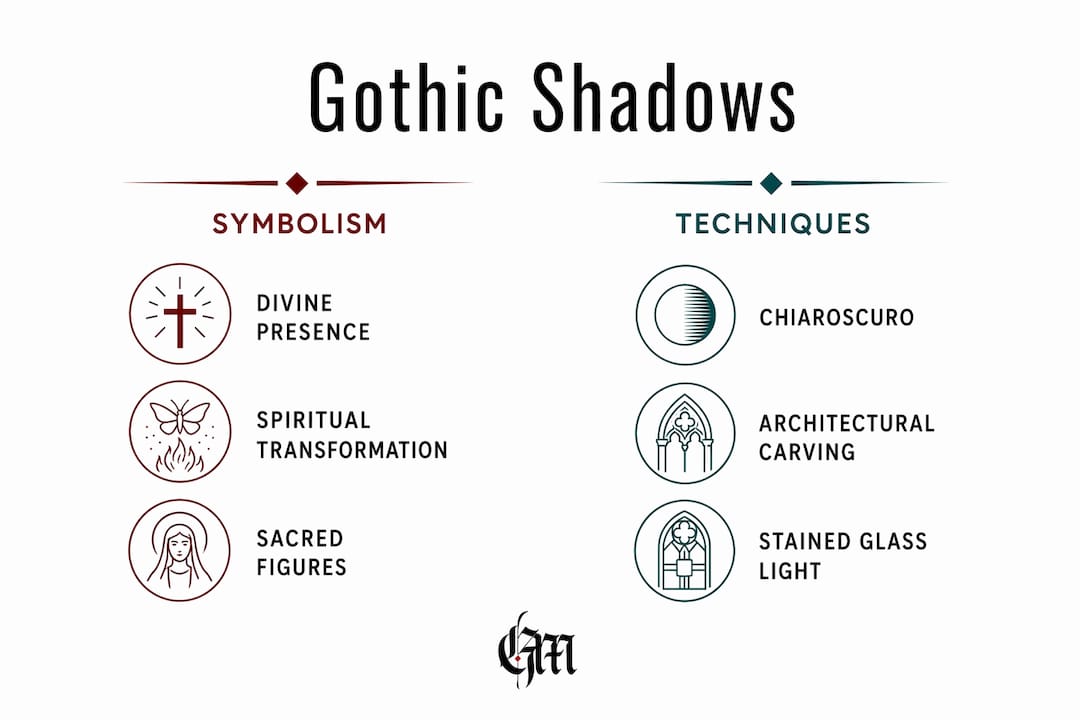
Key shadow techniques in Gothic painting and sculpture include:
- Chiaroscuro modeling: Gradual tonal shifts from highlight to shadow across curved surfaces to suggest roundness
- Deep undercutting: Carving stone away beneath folds and features to create shadow wells that read as depth from a distance
- Cast shadows: Painted or implied shadows falling from one figure onto another surface, anchoring figures in physical space
- Polychromy with shadow: Painted color on sculpture that shifted in meaning as natural light changed throughout the day
Pro Tip: When studying a Gothic stone figure, crouch to eye level with the carving. The shadow geometry changes completely, revealing how the sculptor calculated viewing angle into every cut.
The transition from flat Romanesque carving to Gothic naturalism was not purely stylistic. Shadows made sacred figures relatable and present rather than remote symbols. That shift carried enormous theological weight.
What symbolic meanings do shadows carry in Gothic stained glass and architecture?
Shadows in Gothic sacred spaces carry theological meaning as direct signs of divine presence and spiritual transformation. This is not a modern interpretation. Medieval theologians, drawing on Neoplatonic thought, treated light as a metaphor for God and shadow as the boundary where the divine meets the human.
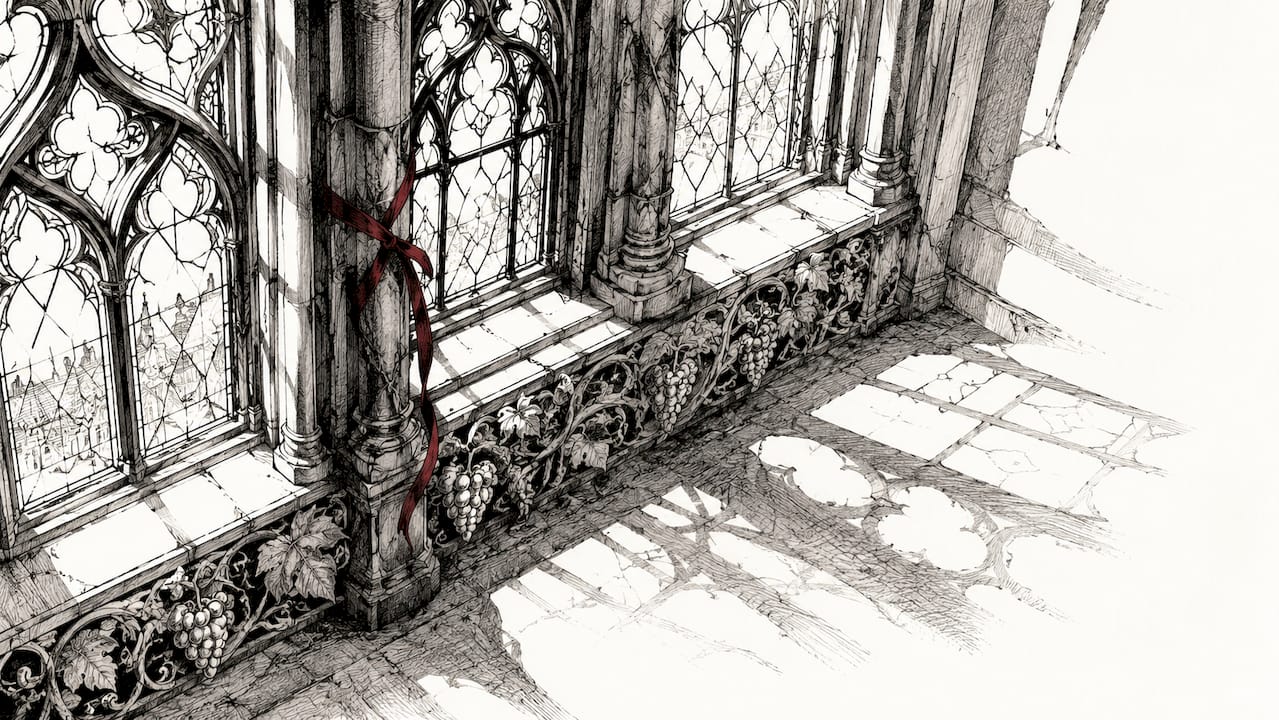
Gothic stained glass light and shadow patterns were designed as theological signs of God’s presence, transforming church interiors into vessels of divine radiance. When colored light from a rose window at Chartres falls across the stone floor, the shifting shadows between those pools of color were read by medieval worshippers as the breath of the divine moving through the space. The glass was the medium. The shadow was the message.
Architectural elements carried their own shadow symbolism:
- Pointed arches: Cast upward-reaching shadow lines that drew the viewer’s eye toward the vault and, symbolically, toward heaven
- Pinnacles and flying buttresses: Created vertical shadow striping on exterior walls that reinforced the building’s apparent height
- Molding profiles: Engineered to cast deliberate shadow lines emphasizing verticality and structure, not merely as decoration
- Rose windows: Projected circular shadow patterns on interior floors that shifted with the sun, marking sacred time
Motifs carved into Gothic stonework deepened this symbolism further. Grape and vine carvings at Notre Dame Cathedral, analyzed through their bas-reliefs and rose windows, used shadow interplay to animate Eucharistic symbolism. The shadow falling into a carved grape cluster made the stone fruit look heavy and real, reinforcing the theological connection to sacrifice and communion.
Pro Tip: Visit a Gothic cathedral at three different times of day. The shadow patterns shift dramatically from morning to afternoon, and the symbolic reading of the space changes with them. Medieval architects designed for this.
The gothic art symbolism embedded in these shadow patterns rewards close attention. What looks like architectural ornament is almost always a layered theological argument made visible through light and dark.
How did Gothic artists use shadows to influence mood and viewer perception?
Shadows in Gothic art control emotional tone by guiding where the viewer looks and what they feel when they get there. Shadows create mood by invoking awe, threat, or serenity, and Gothic artists understood this as a tool for spiritual engagement, not just aesthetic effect.
A deep shadow falling across a carved demon’s face at Notre Dame amplifies menace. The same technique applied to a carved angel produces mystery and calm. The shadow does not change the form. It changes the emotional register entirely. Gothic artists used this contrast deliberately to guide the viewer through a narrative arc, from fear of damnation to hope of salvation, within a single architectural space.
Shadow also connects Gothic visual art to the broader Gothic literary and folk tradition. In medieval folk tales and Gothic novels alike, shadows function as premonitions and signs of spiritual presence. A figure casting no shadow, or an unnatural shadow, signals supernatural danger. Gothic painters and sculptors drew on this cultural vocabulary. A figure in a Gothic altarpiece whose shadow falls in the wrong direction signals divine intervention, not artistic error.
The psychological effect of shadow play in Gothic architecture is well documented. Walking from a dark side aisle into the light of the central nave produces a physical sensation of release and elevation. That contrast was engineered. Gothic architecture’s structural system exists specifically to free walls for light through pointed arches and flying buttresses, making the shadow in the aisles a deliberate frame for the luminous center.
What are key Gothic art techniques for creating shadows effectively?
Gothic artists developed a specific set of techniques for generating and controlling shadow across painting, sculpture, and architecture. These methods worked together as a system, not as isolated tricks.
Structural innovations and shadow engineering
Gothic structural innovations like pointed arches and flying buttresses did more than hold up stone walls. They freed those walls for windows, which meant architects could control exactly where light entered and where shadow fell. The result was a space where shadow was as precisely placed as any carved figure. This marks a clear departure from Romanesque churches, where thick walls and small windows produced uniform, uncontrolled gloom.
Carving and polychromy
Gothic sculptors cut moldings and figure drapery to specific profiles calculated to cast shadow at the correct angle for a viewer standing at floor level. Polychromy combined with shadow heightened the illusion of life further. As natural light shifted through the day, painted color on stone figures changed in tone, making the figures appear to move. A saint’s face carved in white limestone and painted with flesh tones looked different at noon than at vespers. That dynamic quality was the point.
Romanesque vs. Gothic shadow techniques
| Technique | Romanesque approach | Gothic approach |
|---|---|---|
| Wall treatment | Thick walls, minimal windows, flat shadow | Thin walls, large windows, controlled shadow |
| Figure carving | Low relief, flat planes, minimal shadow depth | Deep undercutting, shadow wells, volumetric form |
| Painting style | Flat color fields, symbolic outline | Chiaroscuro modeling, tonal gradation |
| Architectural shadow | Incidental, uncontrolled | Engineered through molding profiles and light placement |
Pro Tip: Study Gothic gothic wall art that uses chiaroscuro. Notice how the darkest areas are never simply black. They contain subtle color shifts that keep the shadow alive and three-dimensional.
The integration of stained glass narrative design with shadow technique completed the system. Glass artists designed windows so that the lead lines between colored panes cast their own shadow grids on interior floors. Those grids reinforced the geometric order of the space and gave the light a structure that pure radiance alone could not achieve.
Key Takeaways
Shadows in Gothic art are engineered tools that simultaneously define physical form, carry theological symbolism, and shape the emotional experience of sacred space.
| Point | Details |
|---|---|
| Shadow defines form | Chiaroscuro and deep carving gave Gothic figures three-dimensional volume absent in Romanesque art. |
| Shadow carries theology | Light and shadow in cathedrals were read as signs of divine presence, not decorative effects. |
| Architecture engineers shadow | Pointed arches and flying buttresses freed walls for windows, making shadow placement deliberate and precise. |
| Mood follows shadow | Controlled shadow contrast guided viewers from fear to awe to serenity within a single Gothic space. |
| Technique was systematic | Carving profiles, polychromy, stained glass, and structural design worked together as one shadow system. |
Why shadows in Gothic art deserve more credit than they get
Most people who visit a Gothic cathedral spend their time looking up. That instinct is correct. The vaults are extraordinary. But the shadow work happening at eye level and below is where the real craft lives, and most visitors walk right past it.
I’ve spent years looking at Gothic sculpture up close, and the thing that still surprises me is how calculated the shadow geometry is. A sculptor at Reims or Amiens was not just carving a face. They were carving a face that would read correctly from 15 feet away, in candlelight, with a specific shadow falling across the cheekbone to suggest life. That is a level of spatial thinking most modern artists never attempt.
The common mistake is treating Gothic shadow as a byproduct of the style rather than its engine. Shadow is not what happens when Gothic art runs out of light. Shadow is what Gothic art is built around. The light exists to create the shadow. Once you see it that way, every molding profile, every deep-cut drapery fold, and every stained glass lead line starts to look like the intentional engineering it actually is.
The connection between Gothic shadow technique and the modern dark aesthetic is direct and underappreciated. Contemporary dark decor and gothic-inspired design draw on exactly this tradition, using controlled contrast between light and dark to create spaces that feel charged with meaning. The medieval masons figured out the grammar. Modern designers are still speaking it.
— Rey
Gothic shadow aesthetics, brought into your space
Gothic art’s mastery of shadow and light has shaped centuries of dark aesthetic design, from cathedral stonework to contemporary decor and fashion.

Goth curates products that carry this tradition forward. The dark art and decor available through Goth’s marketplace draws directly on Gothic shadow aesthetics, from wall art that uses chiaroscuro contrast to home decor that plays with light and dark the way a cathedral architect would. Independent creators on the platform bring genuine craft to shadow-inspired motifs, including pieces like the moths and skulls metalwork that echo Gothic iconography in contemporary form. If the symbolism and technique in this article resonates with you, Goth is where that aesthetic lives in objects you can own.
FAQ
What is the role of shadows in Gothic art?
Shadows in Gothic art serve as both technical and symbolic tools. They define three-dimensional form in painting and sculpture through chiaroscuro, and carry theological meaning in architecture as signs of divine presence.
How did Gothic architects control shadow in cathedrals?
Gothic architects used pointed arches and flying buttresses to free walls for large windows, giving them precise control over where light entered and where shadow fell. Molding profiles were carved specifically to cast deliberate shadow lines that emphasized verticality.
What is chiaroscuro and how does it relate to Gothic painting?
Chiaroscuro is the technique of contrasting light and dark tones to create the illusion of volume and depth. Gothic painters like Duccio and Giotto applied it to drapery and architectural backgrounds to make sacred figures appear three-dimensional and physically present.
Why are shadows important in Gothic stained glass?
Stained glass in Gothic cathedrals projected colored light and shadow patterns that medieval theologians interpreted as manifestations of divine radiance. The lead lines between glass panes cast their own shadow grids, adding structure and sacred meaning to the interior light.
How do shadows create mood in Gothic spaces?
Shadow contrast in Gothic architecture guides the viewer’s emotional response by moving them from dark side aisles into luminous central naves, producing a physical sensation of spiritual elevation. Deep shadows on carved demons amplify menace, while the same technique on angels creates mystery and calm.