

Gothic Wall Shelves: The Complete Buyer's Guide for 2026
Start with a medium-depth matte-black Gothic arch shelf from Goth.Market — specifically a set made from engineered wood or heavy resin with a depth of 4–7 inches and stud-compatible mounting hardware included. That single choice covers the widest range of gothic display needs, from crystal clusters to small candle groupings, and installs safely in most U.S. homes.
Before you order anything:
- Measure your wall stud spacing (standard U.S. framing is 16 or 24 inches on center) so you know whether the shelf’s bracket holes will align.
- Check the shelf depth against your largest display item — a 3-inch ledge holds votives and small crystals; 7 inches or more handles books and ceramic skulls.
- Confirm weight capacity covers your intended load plus a 25–50% safety margin.
Key Takeaways
Gothic wall shelves are most successful when you match the shelf style to your display needs, mount into studs or rated anchors, and choose a material finish that holds up to your room’s humidity and traffic.
| Point | Details |
|---|---|
| Start with a Gothic arch shelf | A medium-depth (4–7 in) matte-black arch shelf covers the widest range of gothic display needs. |
| Mount into studs or use toggle bolts | Standard plastic anchors are not adequate for loaded gothic shelves; toggle bolts handle 30–50 lbs per point. |
| Apply an appropriate weight safety margin | A shelf rated for 15 lbs should carry no more than 10–11 lbs of actual display items. |
| Match depth to your display items | 3 in for small crystals and votives; 7 in or more for books and larger ceramics. |
| Shop Goth.Market for curated picks | Goth.Market lists dimensions, weight capacity, and seller bios so you can buy and install with confidence. |
Table of Contents
- What are the most popular gothic wall shelf styles?
- Which materials and finishes work best for an authentic gothic shelf?
- How do you choose the right shelf dimensions and weight capacity?
- How do you safely mount gothic wall shelves?
- How do you style gothic shelves for a witchy or Victorian look?
- How do you clean and maintain gothic wall shelves?
- Where can you buy gothic wall shelves in the U.S.?
- What should you expect to pay for gothic wall shelves?
- How does Goth curate gothic wall shelves on its marketplace?
- What’s the one sourcing mistake most gothic shelf buyers make?
- Goth.Market’s curated gothic shelf collection is worth your time
- Sources
- FAQ
What are the most popular gothic wall shelf styles?
Gothic wall shelves fall into five recognizable categories, and each one suits a different display mood and room scale.
Floating ledge shelves are the most versatile. A long, narrow matte-black ledge with subtle pointed-arch cutouts works in any room and holds candles, framed art, or a row of dark-spined books. Because they read as architectural rather than decorative, they layer well with other pieces on a goth gallery wall.
Gothic-arch alcove shelves are the style most buyers picture first. The pointed arch frame is the defining motif of authentic gothic design — think cathedral windows, tracery cutouts, and strong vertical lines. A trio of matte-black engineered-wood Gothic arch shelves (like the set with a large shelf at 11.8 × 7.48 inches and a small shelf at 8.46 × 3.54 inches) ships ready-to-hang and gives you an instant gallery anchor without custom carpentry.
Coffin-shaped shelves are a flat-front shelf cut into a coffin silhouette. They read as playful and witchy rather than strictly Victorian, which makes them a natural fit for Halloween-year-round aesthetics, altar displays, and tarot card collections.
Bat and wing-motif shelves use spread wings or bat silhouettes as the structural bracket. Smaller versions (6–8 inches wide) work as single display perches for a crystal ball or a small plant; larger cast-resin versions can span 18–24 inches and hold a meaningful collection.
Victorian-carved ledge shelves are the most ornate option — heavy molding, scrollwork, and sometimes gilded or aged-metal accents. These suit dark-academic and formal Victorian rooms where the shelf itself is as much a display piece as what sits on it. They tend to be heavier, so mounting into studs is non-negotiable.
Pro Tip: When browsing product photos, look for tracery (the lattice-like carved or cast detail inside an arch), pointed rather than rounded arch tops, and a matte or distressed finish rather than a high-gloss lacquer. High gloss reads as contemporary, not gothic.
Which materials and finishes work best for an authentic gothic shelf?
Material choice determines both how authentic the shelf looks and how long it holds up under real display weight.
Solid wood (oak, walnut, pine) is the gold standard for authenticity. A dark-stained oak shelf with visible grain reads as genuinely aged, and solid wood handles heavier loads than engineered alternatives. The tradeoff is cost: solid-wood carved pieces typically run $150 and up, and they’re heavier to ship.
Engineered wood (MDF, plywood) is the most common material in the $60–$150 range. It takes paint and stain evenly, which is why matte-black and distressed-charcoal finishes look so clean on engineered-wood gothic shelves. Weight capacity is lower than solid wood, so check the listed rating before loading it with ceramics.
Cast resin allows the most intricate detail — deep tracery, fine bat wings, complex arch molding — at a lower cost than carved wood. Authentic gothic materials include well-done resin castings when properly distressed, and a quality resin shelf with an antiqued or stone-effect finish is hard to distinguish from carved stone at a glance. Resin is lighter than wood, which is a mounting advantage, but it can chip at edges if knocked.
Wrought iron and metal brackets add structural credibility and a genuinely industrial-gothic feel. Metal brackets paired with a wood shelf board give you the best of both: the visual weight of iron with the warmth of wood grain. Wrought iron is heavy, so factor that into your anchor choice.
Finish guide at a glance:
- Matte black: the most versatile; pairs with everything from crystals to candles.
- Distressed dark stain: reads as aged wood; suits Victorian and dark-academic rooms.
- Aged metal / gilding: gold or bronze accents on dark wood or resin add Victorian drama.
- Painted resin with antiquing: a dry-brushed lighter tone over dark base creates a stone or aged-plaster effect.
Pro Tip: Before buying a painted or distressed-resin shelf, zoom into the product photos and look for even coverage at the edges and inside carved details. Thin paint at corners chips first — it’s the fastest way to spot a low-quality finish before it arrives at your door.
How do you choose the right shelf dimensions and weight capacity?
Getting the size wrong is the most common buyer mistake. A shelf that looks proportional in a product photo can feel tiny or overwhelming once it’s on your wall.
-
Measure your stud spacing. Use a stud finder and mark the center of each stud. Standard U.S. framing puts studs 16 inches apart; older homes sometimes use 24 inches. Your shelf’s bracket holes need to align with at least one stud, or you’ll need anchors rated for the full load.
-
Measure available wall height. Gothic shelves often have tall arch frames — a shelf with a 14-inch arch frame needs 16–18 inches of clear wall height to look right and not crowd adjacent art or molding.
-
Choose depth based on what you’ll display. A 3-inch depth suits votives, small crystals, and tarot decks. A 5–7-inch depth handles medium candle holders, small sculptures, and stacked paperbacks. Anything 10 inches or deeper can hold hardcover books, larger plants, or ceramic pieces.
-
Check the listed weight capacity and apply a safety margin. A shelf rated for 15 pounds should carry no more than 10–11 pounds of actual display items. Plan for a safety margin to allow for heavier displays as collections expand.
-
Account for clearance above the shelf. Tall candlesticks, large crystal clusters, or a leaning mirror need 6–12 inches of clearance above the shelf surface. Measure from your intended mounting height to the ceiling or the bottom of any art above.
-
Consider the shelf set vs. single shelf. A trio of arch shelves arranged in a cluster reads as a deliberate gothic gallery wall moment. A single wide ledge reads as a statement piece. Both work; the choice depends on whether you want a focal point or a layered display wall.
How do you safely mount gothic wall shelves?
Mount into studs whenever possible. That’s the short answer, and it’s the one that prevents a shelf full of crystals from pulling out of the wall at 2 AM.
Step-by-step installation:
-
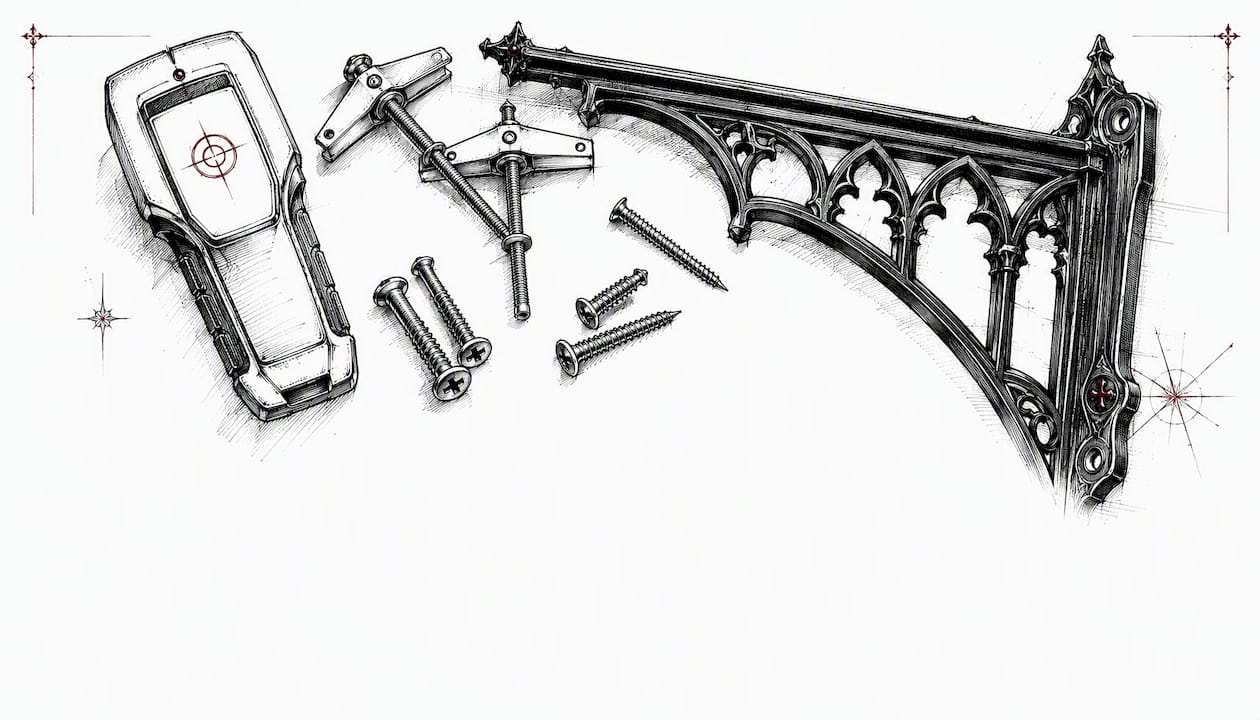
Locate studs with a magnetic or electronic stud finder. Mark the center of each stud with a pencil at your intended shelf height.
-
Mark your mounting height. Hold the shelf bracket against the wall at the desired height and mark the screw hole positions. Use a level — a shelf that’s even slightly off looks wrong against a straight arch frame.
-
Choose your anchor type based on whether you hit a stud:
- Stud-mounted: use 2.5-inch or 3-inch wood screws sized to the bracket hole. This is the strongest option.
- Toggle bolts (Molly bolts): for drywall without a stud behind it. Toggle bolts rated for moderate loads per bolt are appropriate for medium gothic shelves.
- Heavy-duty drywall anchors: use anchors specifically rated for the combined weight of the shelf plus its contents. Standard plastic expansion anchors are not adequate for ornate or loaded gothic shelves.
- Plaster walls: use wall plugs designed for plaster, or locate the lath behind the plaster and screw into it.
-
Pilot-drill your holes at the marked positions. For drywall, use a bit slightly smaller than your screw or anchor diameter.
-
Install anchors or drive screws into studs. For toggle bolts, fold the toggle, insert through the hole, and tighten until the toggle grips the back of the drywall.
-
Hang the shelf and check level again. Weight shifts slightly once the shelf is loaded, so re-check with a level after placing your first few display items.
-
Test the load gradually. Add items one at a time and check for any wall movement or creaking before loading the shelf fully.
| Mounting method | Typical safe load per mount point |
|---|---|
| Wood stud (2.5-in screw) | 80–100 lbs |
| Toggle bolt (rated, drywall) | 30–50 lbs |
| Heavy-duty drywall anchor | 20–40 lbs |
| Standard plastic anchor | 5–10 lbs (not recommended for gothic shelves) |
Pro Tip: Never rely on small plastic anchors alone for ornate or heavy gothic shelves loaded with ceramics, large mirrors, or crystal clusters. Enlist a helper when drilling overhead or when handling large carved-wood pieces — the awkward angle makes it easy to mis-drill a hole you can’t undo. For safe mounting of heavy gothic decor, toggle bolts or stud mounting are the only reliable options.
How do you style gothic shelves for a witchy or Victorian look?
The difference between a gothic shelf that looks intentional and one that looks cluttered comes down to three things: layered heights, mixed textures, and controlled light.
Styling checklist:
- Layer heights deliberately. Put the tallest item (a taper candle, a tall crystal point, a small framed print leaning against the wall) at one end. Step down to mid-height pieces in the center, then low items at the other end. This creates visual movement without chaos.
- Mix textures. Pair smooth crystal with rough-hewn wood, velvet with aged metal, matte ceramic with glossy glass. Gothic interiors depend on layered textures and rich materials — a shelf of all-matte objects reads flat.
- Use light to add drama. A small plug-in sconce mounted just above or beside the shelf, or a battery-powered LED strip tucked behind the arch frame, throws shadows that make tracery and carved details pop. This matters more than the shelf’s color.
- Balance the shelf with wall art. A smaller gothic shelf anchors a goth gallery wall when paired with one oversized canvas and two or three smaller ornate frames or mirrors. Ready-to-hang gothic canvas art shortens setup time considerably.
- Keep candles away from fabric. If you’re placing tapers or pillar candles on a shelf near a tapestry, macramé, or velvet curtain, use a candle holder with a wide base and keep the flame at least 12 inches from any fabric. Battery-operated tapers eliminate the risk entirely and still look convincing in low light.
- Stabilize tall objects. A crystal obelisk or a tall ceramic figure on a narrow shelf needs a small museum-putty base to prevent tipping. This is especially important on floating ledge shelves with no lip.
For display ideas by shelf type: crystal clusters work beautifully in Gothic-arch alcove shelves where the arch frames the cluster like a reliquary. Deep ledges (7 inches or more) suit grouped pillar candles at varying heights. Victorian carved shelves are the natural home for stacked dark-spined books, a small ornate mirror, and a single dried flower arrangement.
How do you clean and maintain gothic wall shelves?
The finish is the first thing to go if you use the wrong cleaning method. Match your approach to the material.
By material:
- Painted or distressed wood/MDF: dust weekly with a dry microfiber cloth. Avoid damp cloths on painted MDF edges — moisture causes swelling and paint lifting. For stubborn grime, use a barely damp cloth and dry immediately.
- Cast resin with antiquing: use compressed air to clear dust from carved tracery and tight corners. A soft artist’s paintbrush works well for detailed areas. Mild dish soap diluted in water is safe for spot cleaning; rinse with a barely damp cloth and dry.
- Wrought iron or metal brackets: wipe with a dry cloth regularly. For rust spots on iron, a light application of paste wax after cleaning slows oxidation. Avoid bleach-based cleaners, which accelerate rust.
- Solid wood with dark stain: dust with a soft cloth, and apply a furniture wax or oil (Howard Feed-N-Wax works well on dark-stained wood) once or twice a year to prevent the finish from drying out and cracking.
Preventing finish damage:
Painted and distressed-resin pieces are most vulnerable to humidity. In bathrooms or damp basements, a dehumidifier keeps finishes stable. Avoid placing gothic shelves directly above heating vents, which dry out wood and cause paint to crack at joints.
Pro Tip: Before using any new cleaning product on a gothic shelf, test it on the underside or a back corner first. Distressed and antiqued finishes are deliberately uneven — a cleaner that strips the top layer will remove the aged effect you paid for, and it’s nearly impossible to replicate at home.
When a painted or gilded finish starts to chip or dull, touch up with a matching craft paint (Folk Art or DecoArt in matte black or antique gold) and seal with a matte varnish. This keeps the shelf looking intentional rather than worn out.
Where can you buy gothic wall shelves in the U.S.?
The channel you choose determines the quality of information you get before buying, which matters as much as the shelf itself.
Curated gothic marketplaces like Goth connect you with independent makers who specialize in dark aesthetics. Products typically include detailed photos, listed dimensions, declared weight capacity, and seller bios. Return and shipping policies are visible before checkout. This is the right channel when you want a shelf that’s been selected for authentic gothic motifs rather than just a dark color.
Independent makers on specialty platforms offer the most unique pieces — hand-carved wood, custom coffin shapes, one-of-a-kind bat-wing brackets. Lead times run longer (2–6 weeks for made-to-order pieces), and you should ask about mounting hardware before purchasing.
Mass-market online retailers carry gothic-adjacent shelves at lower price points, but the product descriptions are often thin. Dimensions may be listed without depth, weight capacity is frequently absent, and “gothic” can mean anything from a black floating ledge to a shelf with a single bat sticker. Ready-to-hang gothic canvas art from larger retailers can complement these shelves, but the shelves themselves benefit from a more curated source.
Buyer vetting checklist before purchasing:
- Multiple photos including detail shots of carving, finish edges, and bracket hardware
- Listed dimensions including depth (not just width and height)
- Declared weight capacity
- Seller or artist bio (handmade vs. manufactured)
- Clear return policy: who pays return shipping, and what condition triggers a return
- Customer reviews mentioning installation experience
- Confirmation of whether mounting hardware is included
Questions to ask sellers directly: Does the shelf include mounting hardware? What anchor type do you recommend for drywall? What’s the lead time and does the shipment include insurance for fragile pieces?
What should you expect to pay for gothic wall shelves?
Price tracks closely with material and whether the piece is handmade.
- $20–$60: Small decorative shelves, coffin-shaped MDF ledges, bat-motif resin brackets. Typically lightweight, suitable for small crystals and votives. Weight capacity often under 10 pounds.
- $60–$150: Medium engineered-wood gothic shelves, Gothic arch sets, Victorian-style ledges with molding. This is the most populated price range and covers most buyers’ needs.
- $150–$600+: Carved solid-wood pieces, bespoke commissions, large wrought-iron bracket sets with hardwood shelves. Shipping costs rise sharply here — a 30-pound carved oak shelf can add $40–$80 in freight.
Shipping considerations: Ornate resin pieces and carved wood are fragile. For anything over $100, confirm the seller uses protective packaging and offers shipping insurance. A cracked tracery arch is not easily repaired.
Toggle bolts, a stud finder, and a level together cost under $30 at any hardware store, but if your walls are plaster or you’re mounting into tile, professional installation is worth the cost.
Gothic accent projects don’t have to be expensive overall — budget-friendly gothic accents like tapestries and faux-stone panels can start under $80 for a 10×10-foot accent wall, making a curated shelf the focal point of an otherwise low-cost gothic room.
How does Goth curate gothic wall shelves on its marketplace?
Goth.Market applies a specific set of criteria before a gothic shelf listing goes live, which is what separates it from a general marketplace where “gothic” is a keyword rather than a standard.
Curation checklist Goth uses:
- Authentic gothic motifs: pointed arches, tracery, bat or coffin silhouettes, Victorian scrollwork — not just dark paint on a plain shelf.
- Material authenticity: wood, metal, or properly finished resin. Listings must identify the material clearly, not just describe the color.
- Clear specifications: dimensions including depth, declared weight capacity, and mounting type (floating, bracket, keyhole, French cleat).
- Seller transparency: maker bio or brand description, production method (handmade, small-batch, manufactured), and country of origin.
- Photo standards: at least one detail shot showing finish quality, carving depth, and bracket hardware.
- Return and shipping policy: visible before purchase, with clear terms on who covers return shipping.
This matters practically because it reduces the gap between what you see in a product photo and what arrives at your door. A shelf listed on Goth.Market with a declared 20-pound capacity and a detail shot of its keyhole mounts gives you the information you need to buy confidently and install correctly. For a deeper look at handmade gothic decor and what distinguishes maker-sourced pieces from mass-market alternatives, the Goth.Market blog covers the distinction in detail.
What’s the one sourcing mistake most gothic shelf buyers make?
Buying on looks alone, without checking the mounting specs, is the mistake that causes the most frustration after delivery.
A shelf can look exactly right in a product photo — perfect arch, beautiful matte-black finish, the right scale for the wall you have in mind — and then arrive with no mounting hardware, no declared weight capacity, and bracket holes spaced at 12 inches when your studs are at 16. Now you’re improvising anchors for a shelf you haven’t even styled yet.
The fix is simple but requires discipline: before adding anything to your cart, find the dimensions listing and confirm it includes depth. Then find the weight capacity. Then check whether mounting hardware is included or specified. If any of those three are missing from the listing, message the seller before buying. A seller who can’t answer those questions quickly is a seller whose product description is incomplete for a reason.
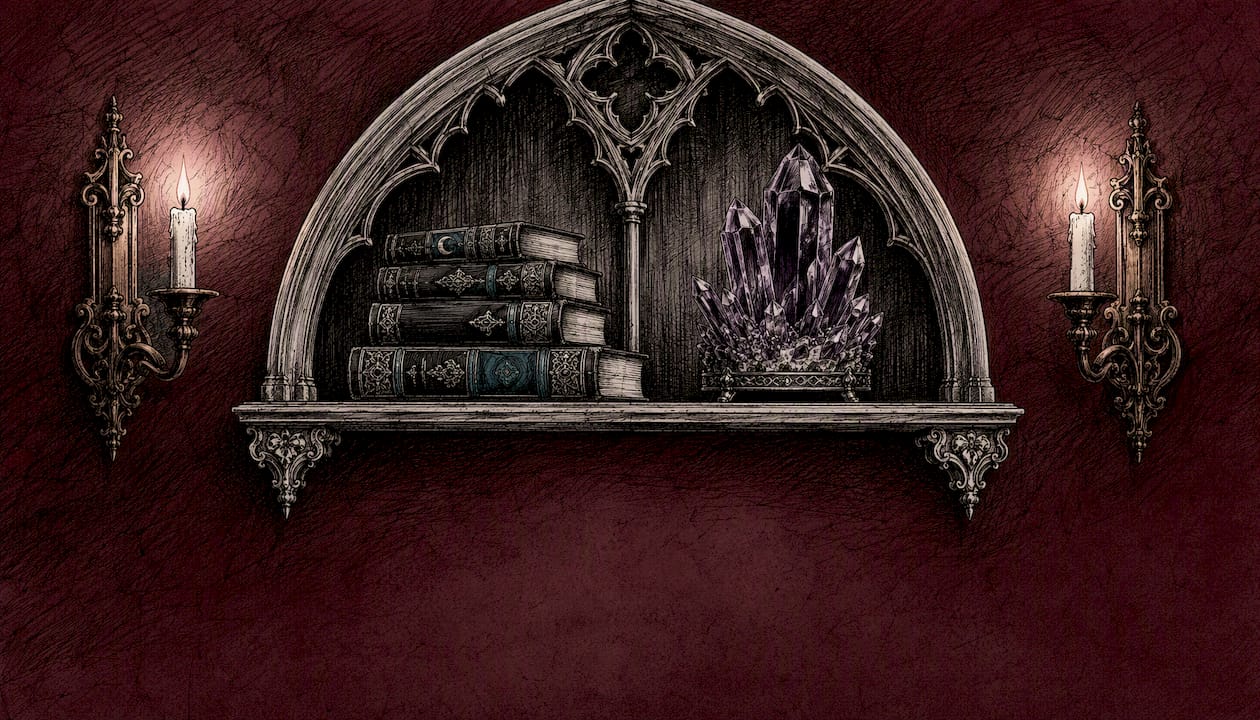
One styling combination that consistently works: a Gothic arch shelf at eye level, flanked by a pair of brass wall sconces, with a cluster of dark-hued books stacked flat on the left and a tall amethyst cluster on the right. The warm brass light against the matte-black arch is the kind of contrast that makes the whole wall feel considered rather than assembled. Pair it with a gothic home decor guide to build the rest of the room around it.
Goth.Market’s curated gothic shelf collection is worth your time
Goth.Market is built specifically for buyers who want gothic home accessories sourced from independent makers, not a dark-painted shelf from a warehouse catalog. Every listing goes through the curation checklist above: authentic motifs, declared specs, seller transparency, and clear return terms.

What that means for you: you get product detail shots that show finish quality and bracket hardware, seller bios that tell you whether a piece is handmade or small-batch, and shipping and return policies visible before checkout. No guessing whether “gothic” means a pointed arch or just a black finish.
Browse the Goth and filter by shelf style, material, or price range to find the right piece for your wall.
Sources
- Gothic Wall Decor: Transform Your Space with Dark, Dramatic Elegance - Homecraftedsolutions
- Gothic Arch Wooden Wall Shelf Set
- Goth Art: Gothic Wall Art & Punk Canvas Prints | iCanvas
- Gothic Canvas Wall Art | Gothic Wall Art on Canvas – Tailored Canvases
FAQ
What are the best gothic wall shelf styles for beginners?
Gothic arch shelves are the best starting point. They ship as ready-to-hang sets, come in engineered wood at accessible price points ($60–$150), and the pointed arch silhouette reads as unmistakably gothic without requiring any additional styling to look intentional. A trio of matte-black arch shelves arranged in a cluster gives you immediate visual impact. Coffin-shaped shelves are a close second for buyers who want a witchy rather than Victorian aesthetic — they’re typically lighter and easier to mount.
How much weight can a gothic wall shelf hold?
Weight capacity depends on both the shelf material and the mounting method. A stud-mounted shelf with 2.5-inch wood screws can hold substantial weight per mount point. Toggle bolts in drywall handle 30–50 pounds per bolt. Standard plastic anchors are rated for light loads and are not appropriate for loaded gothic shelves.
Do gothic wall shelves come with mounting hardware?
Some do, many don’t. This is one of the most important questions to ask before purchasing. Curated listings on Goth.Market specify whether mounting hardware is included and what type. For shelves that don’t include hardware, you’ll need screws sized to the bracket holes, a stud finder, a level, and either wood screws (for stud mounting) or toggle bolts rated for your shelf’s weight (for drywall). Budget $15–$30 for hardware if it’s not included.
How do you build a gothic gallery wall around shelves?
Plan one oversized anchor piece — a large canvas or ornate mirror — and arrange smaller shelves, frames, and decorative objects around it. Gothic gallery walls work best when you mix a shelf with two or three framed prints at varying sizes and at least one reflective surface (a mirror or metallic frame). Ready-to-hang gothic canvas art from sources like iCanvas shortens setup time. Keep the arrangement asymmetrical; perfectly symmetrical gallery walls read as contemporary, not gothic.
What’s the difference between gothic, Victorian, and dark-academic shelf styles?
Gothic shelves emphasize architectural motifs: pointed arches, tracery, and strong vertical lines. Victorian shelves are more ornate, with scrollwork, gilding, and heavier carved molding — they feel formal and maximalist. Dark-academic shelves lean toward aged wood, leather-bound books, and brass accents without necessarily using gothic arch shapes. All three overlap, and many buyers mix elements from each. The Goth covers the distinctions in more detail.
How do you prevent a gothic shelf finish from chipping or fading?
Match your cleaning method to the material: dry microfiber for painted MDF, compressed air for carved resin tracery, paste wax for iron brackets. Avoid damp cloths on painted MDF edges, which cause swelling and paint lifting. Keep shelves away from direct heating vents, which dry out wood and crack paint at joints. For touch-ups, use a matching matte craft paint (Folk Art or DecoArt) and seal with a matte varnish. Always test any new cleaning product on an inconspicuous area first, especially on distressed or antiqued finishes.
Can gothic wall shelves work in small rooms or apartments?
Yes, and they often work better in small rooms than large ones because the vertical emphasis of gothic arch shapes draws the eye upward, making ceilings feel higher. In a small apartment, a single Gothic arch shelf set at eye level with a compact display (two or three items maximum) reads as a deliberate design choice rather than clutter. Stick to shelves under 12 inches wide in tight spaces, and choose a floating or keyhole-mount design to minimize visible hardware.
Where is the best place to buy gothic wall shelves in the U.S.?
Goth.Market is the strongest option for buyers who want authentic gothic motifs, clear specs, and independent maker sourcing. Listings include dimensions, declared weight capacity, seller bios, and return policies — the information you need to buy and install confidently. For complementary wall art to build out a gothic gallery wall, ready-to-hang options are available from iCanvas and Great Big Canvas. For bespoke or made-to-order pieces, independent makers on specialty platforms offer the most unique options, though lead times run 2–6 weeks.