

Gothic Figurines: Curator Rules to Buy, Spot, and Style for Collectors
Gothic figurines are sculpted decor pieces built around dark, macabre, or romantic imagery, from skeletal lovers to raven-perched skulls, cast in resin, ceramic, or metal. If you’re shopping for one, prioritize material quality and scale before style, and start your search with curated sellers or independent artisans rather than generic bulk listings. The sections below cover the common styles, where to buy, how to vet a piece, and how to display it once it arrives.
TL;DR:
- Most gothic figurines are made from resin, ceramic, or metal, with resin being the most common mid-range choice that balances detail and cost.
- Buyer should verify material details, approximate size, and craftsmanship quality through clear photos, maker signatures, and seller communication before purchasing.
- Proper display involves grouping in vignettes of varying heights, using props like apothecary jars, and adjusting lighting to enhance texture and detail.
- Authentic vintage pieces usually feature maker marks, weight differences, and age-related glaze crackling, unlike modern reproductions with uniform finishes.
- Independent creators on curated platforms like Goth.Market offer small runs and direct communication, making them preferable for unique, high-quality figurines.
Table of Contents
- What styles and materials do gothic figurines come in?
- Where can you buy gothic figurines?
- How do you choose the right gothic figurine for your space?
- How should you display and care for gothic figurines?
- What does a curator actually look for in a gothic figurine?
- Why do gothic figurines exist as a category at all?
- What do common gothic motifs actually symbolize?
- How do you tell if a vintage gothic figurine is authentic?
- How do you work gothic figurines into different design styles?
- What draws collectors to gothic figurines, and where should you start?
- How does Goth.Market help you find curated gothic figurines?
- Where can you learn more about gothic decor and styling?
- Sources
- FAQ
What styles and materials do gothic figurines come in?
Most gothic figurines fall into a handful of recurring themes, and recognizing them helps you shop with intention instead of grabbing the first skull you see. Skeletal couples locked in an embrace, hooded plague doctors, dark fairies with tattered wings, ravens perched on tomes, and jars or vials meant to evoke apothecary alchemy all show up constantly across the category. Some pieces lean romantic and Victorian, with lace detailing and rose motifs; others go straight for horror, with exposed bone and weathered stone textures.
Material is where price and durability actually get decided. Here’s what you’re choosing between:
- Resin and polyresin: The most common material for mid-range figurines. It holds fine detail well, from lace trim to individual finger bones, and specialty brands like Nemesis Now build entire product lines around cast polyresin because it balances detail against manufacturing cost.
- Ceramic and porcelain: Heavier, more fragile, and typically pricier, but the glaze finish gives colors a depth that resin can’t quite match. Older or antique pieces are more likely to be ceramic.
- Metal (pewter or bronze finish): Used for smaller accent pieces or figurines meant to look aged and weathered, since metal patinas convincingly over time.
- 3D-printed kits: A newer, budget category. Detail can be excellent on a good printer, but layer lines are sometimes visible on close inspection, and paint is usually applied by the buyer, not the maker.
Size matters more than most first-time buyers expect. A 4 to 6 inch figurine works as a shelf accent or part of a grouped vignette. Anything over 10 inches starts functioning as a room’s focal point and should be chosen with that role in mind, not tucked into a crowded curio cabinet where its scale gets lost.
Finish quality is the other variable worth learning to spot. Hand-painted pieces show subtle variation, brushstroke texture, and shading that factory-sprayed pieces don’t. A gothic fairy figurine listing that specifies “hand-finished” or names a designer is signaling a different tier of craftsmanship than a generic factory-painted casting, and that distinction typically shows up in the price.
Where can you buy gothic figurines?
Three channels dominate the gothic figurine market, and each one trades convenience for something else. Large marketplaces like Amazon carry enormous selection and aggressive pricing, but quality control varies wildly from one seller to the next, and product photos don’t always match what arrives. Specialty retailers curate tighter collections around a consistent aesthetic and usually list material, dimensions, and packaging up front. Independent artists and small studios offer the most customization, including commissions, limited runs, and one-of-a-kind pieces, but shipping times and stock are less predictable.
Here’s a practical sequence for evaluating any listing before you commit:
- Check the photos for close-ups, not just a hero shot. Blurry or single-angle photography on a $60+ piece is a warning sign.
- Confirm the material is stated explicitly. “Resin” or “polyresin” should appear in the description, not just implied by the product category.
- Read the dimensions in inches or centimeters, and hold a tape measure to your shelf before buying. Photos routinely make figurines look larger than they are.
- Look for edition numbers or maker signatures if the listing calls the piece limited or collectible.
- Check the seller’s return policy and review history before checkout, especially for anything shipping from overseas.
If any of that information is missing, message the seller directly. A responsive independent creator will usually send extra photos, confirm exact weight and packaging, or explain provenance on a vintage-style piece within a day or two. Slow or vague replies are worth noting before you spend real money.
Pro Tip: Ask the seller for a photo of the figurine’s base and underside specifically. Maker’s marks, edition stamps, and manufacturing flaws almost always show up there first, and sellers rarely photograph that angle unless you ask.
How do you choose the right gothic figurine for your space?
Work through purpose before you fall for a photo. A figurine bought as a statement centerpiece needs different qualities than one meant to fill a gap on a crowded bookshelf, and buyers who skip this step end up with pieces that look wrong once they’re actually home.
Run through this checklist before adding anything to your cart:
- Purpose: Is this a focal piece, a supporting accent, or a gift?
- Scale: Measure your shelf, altar, or display space in inches, then compare against the listed dimensions, not just the thumbnail.
- Material: Match the material to the setting. Resin holds up better near windows; ceramic reads more elevated on a formal display.
- Finish: Hand-painted detail versus a flat, uniform factory spray.
- Price and collectibility: Is this mass-produced, or a limited run with an edition number?
- Maker signature or stamp: A visible signature or studio mark on the base is a good sign of intentional craftsmanship.
- Condition: For anything secondhand or vintage, check for hairline cracks, chipped paint, or repairs.
- Display fit: Does the color palette and pose work with what’s already on that shelf?
Before you check out, ask the seller three things: how the piece is packaged for shipping, whether they can send a close-up photo of any visible flaws, and whether a certificate or numbering accompanies limited editions. A seller who hesitates on any of those questions is telling you something.
Red flags worth walking away from: no dimensions listed anywhere, stock photos that don’t match the actual product photos, and no visible return policy. On the flip side, clear sizing in the description, a stated return window, and a maker’s mark or signature on the base are all reassurance signals that the seller knows their own product.
How should you display and care for gothic figurines?
Grouping almost always beats isolation. A single figurine on an empty shelf can look accidental, but three or four pieces of varying height, arranged around a central taller piece, reads as an intentional vignette. Pair figurines with complementary props: antique apothecary jars, which were originally used to store herbs and powders and now work beautifully as sculptural filler, along with candles, small books, or dried botanicals.
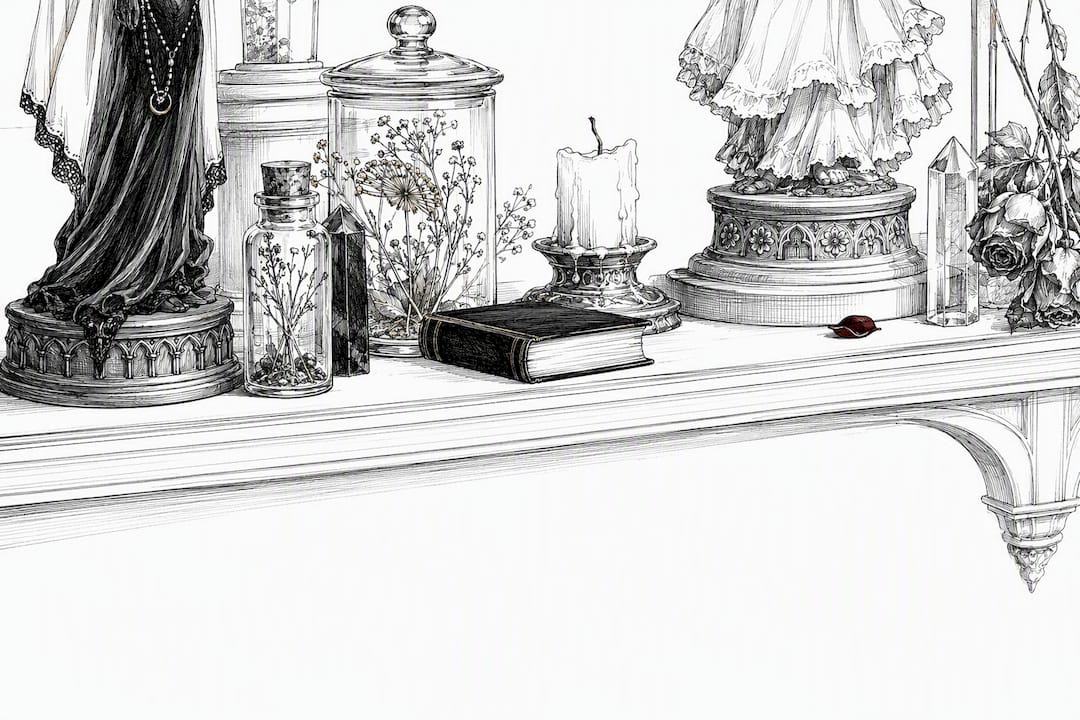
If antiques are out of budget, a dollar store DIY apothecary jar project gets you a similar look for a fraction of the cost, and styling guides built around apothecary jars offer more vignette ideas than most people think to try. Apothecary jars in general are flexible enough to double as vases or general display containers between seasonal refreshes, which makes them a smart prop to keep around year-round.
Lighting changes how a figurine reads more than almost anything else. Direct sun fades painted resin and ceramic glaze over months, so keep pieces away from south-facing windows. Warm LED accent lighting, angled from slightly above or the side, throws shadows into carved detail and makes texture pop in a way flat overhead light never will.
Care basics by material:
- Resin/polyresin: Dust with a soft, dry brush or microfiber cloth; avoid harsh cleaners, which can dull the finish.
- Ceramic/porcelain: A barely damp cloth works for surface dust; avoid soaking painted areas.
- Metal: Occasional dry dusting; avoid moisture, which encourages tarnish on unsealed finishes.
- Bases and stability: Use museum wax or a small adhesive dot under lightweight pieces on shelves prone to vibration.
Pro Tip: When packing a figurine for storage or a move, wrap protruding elements like wings, fingers, and horns separately in extra tissue before boxing. Those thin extensions break first, and they’re almost always what snaps during a move.
What does a curator actually look for in a gothic figurine?
Curation, done right, isn’t about picking whatever looks dark and calling it done. On a platform like Goth, priority goes to pieces with a clear point of view, made by someone who cares about the craft, not just volume output. That usually means smaller production runs, visible hand-finishing, and a maker willing to talk about their process.
There’s a real difference between handmade detail and mass production, and it’s usually visible within seconds if you know where to look. Mass-produced resin castings show uniform paint application and identical mold lines across every unit. Handmade or small-batch pieces show tiny inconsistencies: slightly varied brushstrokes, unique weathering, small asymmetries that a machine wouldn’t introduce. Neither is inherently wrong, but they’re priced and valued differently, and a buyer should know which one they’re getting.
Limited editions are worth the premium when the numbering is real and traceable, not just a marketing label slapped on an open run. A piece numbered 12 of 50, with a maker who can confirm that count, holds value differently than a “limited edition” of unknown quantity.
A curated marketplace that prioritizes independent creators means better communication before you buy, unique packaging that reflects the maker’s care, and small production runs instead of warehouse overstock. That’s the entire point of buying from people instead of just buying products.
Buyers working with independent creators should expect a bit more back-and-forth than a one-click marketplace order, and that’s a feature, not a delay.
Why do gothic figurines exist as a category at all?
Gothic imagery in sculpture traces back centuries further than most collectors realize, rooted in medieval church carvings, memento mori art, and Victorian mourning culture, all of which used skeletal and macabre imagery to confront mortality directly rather than hide from it. Gargoyles and grotesques on cathedral architecture were functional rainwater diverters that doubled as warnings and protective symbols, and that dual purpose (ornamental and symbolic) is the direct ancestor of today’s decorative gothic figurine.
The 19th-century Gothic Revival movement pulled that medieval imagery into home decor for the first time, and Victorian mourning culture’s obsession with death, memory, and ornate memorial objects pushed skulls, ravens, and funerary motifs into everyday collectible objects rather than strictly religious or architectural ones.
Modern gothic figurines inherit both threads: the romantic, ornate Victorian sensibility, and the older medieval fascination with mortality and the supernatural. That’s part of why the category resists a single look. A Victorian mourning angel and a snarling gargoyle both count as “gothic,” even though they read completely differently on a shelf. Collectors drawn to the aesthetic aren’t chasing shock value; they’re engaging with a centuries-long visual language about death, beauty, and the uncanny that mainstream decor has mostly avoided.
What do common gothic motifs actually symbolize?
Skulls are the most literal motif in the category, standing in for mortality and impermanence, a visual echo of the memento mori tradition that reminded viewers life is temporary. Ravens carry a different weight: intelligence, omens, and a long folkloric association with death and the boundary between worlds, pulling heavily from Norse and Celtic mythology.
Roses paired with thorns or skeletal hands are a deliberate contrast: beauty and decay occupying the same object, a visual shorthand for romance that acknowledges its own mortality rather than pretending it away. Plague doctor figures, with their beaked masks, reference a specific historical horror (Renaissance-era medicine attempting to fight the Black Death) and have been absorbed into gothic decor as symbols of dread and the failure of human control over disease and death.
Candles and dripping wax motifs point toward ritual and the passage of time. Apothecary bottles and jars, often shown alongside skulls or herbs, reference old-world alchemy and the historically blurry line between medicine, poison, and magic. Bats and moths symbolize the nocturnal and the transformative, tied to old folklore about creatures that move between light and dark. Knowing these references changes how you shop: a buyer chasing “spooky” and a buyer chasing “romantic mortality” want genuinely different pieces, even within the same broad category.
How do you tell if a vintage gothic figurine is authentic?
Start with the base. Genuine vintage and antique pieces almost always carry maker’s marks, foundry stamps, or hand-inscribed signatures, while modern reproductions frequently skip this step or fake it poorly with a printed sticker instead of an actual stamp. Weight is another tell: older ceramic and metal pieces tend to be denser than modern lightweight resin reproductions trying to mimic the same look.
Examine the paint and glaze under strong light. Age shows up as fine crackling in ceramic glaze, slight color fading consistent across the whole piece, or oxidation patterns on metal that look organic rather than sprayed on for effect. A “distressed” finish that looks suspiciously uniform is usually a modern piece faking age rather than a genuinely old one.
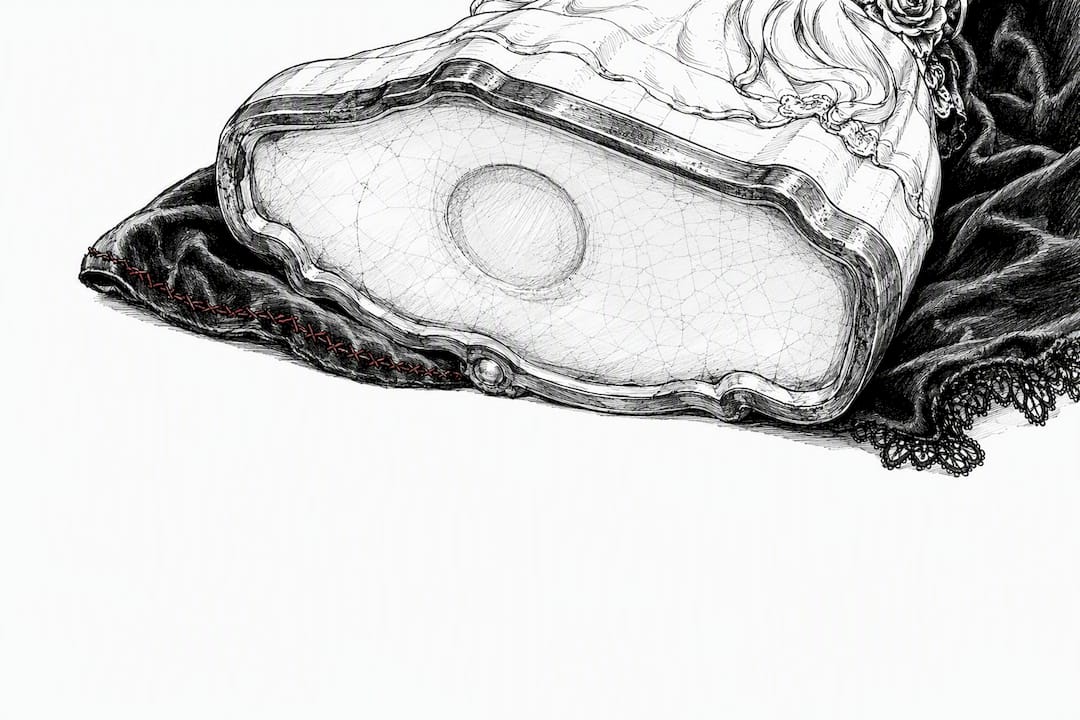
Provenance documentation matters more than most casual buyers expect. A seller who can point to purchase history, a prior estate sale, or an appraisal adds real credibility that a vague “vintage-style” listing can’t match. When in doubt, ask directly: request a photo of the maker’s mark, ask when and where the piece was acquired, and compare the stated material against known manufacturing techniques from that era. Antique dealers who specialize in decorative objects, including apothecary and Gothic-script pieces, are a useful benchmark for what genuine period detail actually looks like against a modern imitation.
How do you work gothic figurines into different design styles?
Gothic figurines don’t require an all-black room to work. In a minimalist space, a single dark statement piece against clean white or gray surroundings creates deliberate contrast, and less genuinely reads as more here. Overcrowding a minimalist shelf with multiple figurines undercuts the effect you’re going for.
In a maximalist or eclectic room already layered with pattern and color, gothic figurines slot in as one texture among many; group them with candles, books, and botanicals rather than isolating them, since a single dark piece can get visually lost in a busy space. Traditional or Victorian-leaning interiors are the most natural fit, since ornate figurines echo existing crown molding, dark wood furniture, and rich upholstery already in the room.
Modern industrial spaces benefit from metal-finish figurines that pick up on exposed pipe fixtures and concrete textures already present. A cohesive gothic decorating approach usually starts with one anchor piece per room, then builds outward with smaller accents, rather than buying five figurines at once and arranging them after the fact. That sequencing avoids the scattershot look that undermines an otherwise strong collection, and a gothic decor checklist can help you figure out what else the room needs before you add another figurine to the mix.
What draws collectors to gothic figurines, and where should you start?
There’s something almost defiant about choosing decor that most home stores won’t stock. Gothic figurines let you build a space that reflects an aesthetic mainstream retail has largely ignored, and that scarcity is part of the appeal for a lot of collectors. It’s not about shock value. It’s about a visual language, mortality, romance, the uncanny, that most interior design content simply skips over.
If you’re new to this, don’t buy five small pieces at once. Pick one shelf, mantel, or altar space, and buy a single statement piece first. Live with it for a few weeks before building outward. That approach tells you what scale and tone actually work in your specific room, instead of guessing from photos.
One practical habit worth adopting immediately: check listed dimensions and shipping protection details before every purchase, not just the first one. A gorgeous 14 inch resin piece with no packaging information is a real risk in transit, and that’s a lesson better learned from research than from a broken figurine on your doorstep.
— Rey
How does Goth.Market help you find curated gothic figurines?
Goth.Market is built for exactly the situation this guide walks through: finding a genuinely unique piece instead of scrolling past the same mass-produced listings on a giant marketplace. Because the platform connects buyers directly with independent creators, you get maker communication, small production runs, and packaging that reflects actual care, not warehouse overstock repackaged a hundred times over.

The site typically offers filters to narrow by category and aesthetic, allowing searches within figurines and collectibles instead of unrelated categories. Many listings are connected to creators, providing opportunities to inquire about materials, dimensions, or custom commissions before purchase, aligning with recommended vetting practices. Independent makers sometimes offer limited runs and unique pieces that are less likely to be duplicated widely on other sites. If you’re ready to find a figurine with real provenance behind it, Goth and start with one piece for that shelf you’ve been planning.
Where can you learn more about gothic decor and styling?
A few sources are worth bookmarking beyond this guide. Antik Brooklyn’s apothecary jar listings show what genuine antique detail looks like on hand-painted ceramic pieces. Nemesis Now’s product pages are a solid reference for how specialty retailers document material and packaging on themed figurines. For budget styling, A Hundred Affections’ DIY apothecary jar tutorial and Driven by Decor’s apothecary jar styling ideas both offer practical, low-cost ways to build out a display. Follow individual maker and creator pages directly when you find a piece you love; that’s usually the fastest way to see more of their work before it sells out.
Sources
- Antique Italian ceramic apothecary jar — Antik Brooklyn
- Decorating with apothecary jars — Driven by Decor
FAQ
What Are Some Famous Gothic Statues?
Notre Dame’s gargoyles and grotesques rank among the most recognized gothic sculptural works, alongside Victorian-era mourning angels found in cemeteries across Europe and the United States. In collectible decor, pieces referencing memento mori imagery, skeletal figures, and Gothic Revival architecture draw the most direct inspiration from these historical originals.
What Kind of Figurines Are Worth Money?
Value usually comes down to limited production numbers, verified maker signatures, hand-painted detail, and genuine age for vintage pieces. A resin figurine mass-produced by the thousands rarely appreciates, while a signed, numbered piece from a recognized independent creator or an authenticated antique can hold or increase in value over time.
What Are Some Good Gothic Gift Ideas?
A mid-sized hand-painted resin figurine (skeletal couple, dark fairy, or raven motif) makes a strong gift because it’s substantial enough to feel special without requiring a huge display commitment. Pairing it with a smaller apothecary-style jar or candle as a set adds thoughtfulness without pushing the total price too high.
What Are Some Examples of Famous Gothic Art Pieces?
Beyond architectural gargoyles, Victorian mourning art, memento mori paintings, and Gothic Revival sculpture all count as foundational reference points. Contemporary gothic figurines borrow visual cues directly from these traditions, particularly the mix of ornate detail and mortality-focused imagery.
How Much Should You Expect to Pay for a Quality Gothic Figurine?
Prices vary widely by material and maker, but factory-cast resin pieces from specialty retailers typically sit at the lower end of the mid-range, while hand-painted, small-batch, or antique pieces command a premium tied to labor and scarcity. Always compare the listed material and finish quality, not just the price tag, before judging whether something is a fair deal.
Can You Display Gothic Figurines Outdoors?
Most resin and polyresin figurines aren’t built for sustained outdoor exposure and will fade or crack under UV and moisture over time. Metal or stone pieces specifically rated for garden use hold up better, but always check the listing for outdoor suitability before placing anything permanently outside.
How Do You Know If a Gothic Figurine Is Handmade or Factory-Produced?
Look closely at paint application and mold lines. Handmade or small-batch pieces show slight inconsistencies in brushwork and finish, while factory-produced figurines display uniform paint and identical seams across every unit of the same design. Listings that name an individual designer or studio, rather than just a generic product code, are more likely handmade.