

Make a Defensible Certificate of Authenticity for Artists & Sellers
A certificate of authenticity is a signed document that confirms an artist made a specific work and records the facts that identify it: title, date, medium, dimensions, and edition number. Galleries, auction houses, and individual artists issue them, and collectors expect one for original works, limited editions, and any high-value piece. You can absolutely write your own, as long as it follows the field standards professional sellers use.
TL;DR:
- A certificate of authenticity must include detailed specifics such as artist’s full name, work title, year, dimensions, medium, edition number, unique identifier, photo, signature, issuer details, and a plain-language authenticity statement.
- Verifying a COA requires matching the serial number and photo to the physical artwork and confirming the issuer’s identity through independent contact, not just trusting the printed information.
- Digital and blockchain-based COAs offer enhanced security, but they depend on a trusted verification process, signed signatures, and a reliable issuer ledger to prevent forgery.
- Consistent record-keeping, including a master ledger and secure storage of physical and digital certificates, is essential for protecting provenance and resale value.
- Fraud risk increases if certificates lack signatures, serial numbers, or contact details, or if they are sold separately from the artwork without proper verification.
Table of Contents
- What Is a Certificate of Authenticity for Artwork?
- What Should a COA Include? A Field-by-Field Checklist
- How Do I Create and Issue a COA? Step by Step
- Where Can I Find Reliable COA Templates?
- How Can a Buyer or Seller Verify a COA Is Legitimate?
- What Legal Risks Come With Issuing a COA?
- How Should Artists Track and Store COA Records?
- What Other Industries Use Certificates of Authenticity?
- How Does a COA Affect an Item’s Value and Resale Potential?
- What Are Digital Certificates and Blockchain-Based Authentication?
- How Do You Handle a Dispute Over a COA’s Authenticity?
- Why Consistent COA Practice Matters for Niche Collectors
- Sources
- FAQ
What Is a Certificate of Authenticity for Artwork?
A certificate of authenticity, often shortened to COA, is a signed statement that a named artist created a specific piece. It’s not the same as a receipt, which just proves a sale happened, and it’s not an appraisal, which estimates market value. Appraisers actually rely on the COA as supporting evidence when they set a valuation, so the two documents work together rather than replacing each other.
COAs show up in a few formats:
- Printed paper certificates on letterhead, often with a raised seal or embossed stamp
- Small stickers or tags applied directly to the back of a print or sculpture base
- Digital certificates, including PDF documents with verified signatures or NFT-linked metadata
Collectors expect a COA for gallery-represented artists, limited-edition prints, and any original piece of significant value. Below that price point, informal buyers rarely ask, but issuing one anyway builds the kind of paper trail that protects resale value later.
What Should a COA Include? A Field-by-Field Checklist
A COA that skips fields is a COA nobody trusts. The standard checklist used across art-industry guides covers these essentials, and a document missing more than one or two of them starts to look improvised rather than professional.
Required fields:
- Artist’s full legal name (not just a signature or stage name)
- Title of the work
- Year completed
- Dimensions (height by width, and depth for sculpture)
- Medium and materials (oil on canvas, archival pigment print, mixed media, etc.)
- Edition number, if the piece is part of a limited run (e.g., “12/50”)
- A unique identifier or serial number tied to that specific piece
- A high-resolution photo of the work, ideally showing any signature on the piece itself
- A short statement of authenticity in plain language
- Signature and date, hand-signed or backed by a verified digital signature
- Issuer name, credentials, and current contact information
Optional but valuable fields:
- Provenance notes (prior owners, exhibition history)
- Publication history if the work has appeared in a catalog or press
- Conservation or care instructions
- A QR code or link to a digital verification page
Pro Tip: Photograph the signature and any inventory mark on the physical artwork itself, then include that photo on the certificate. Buyers and future appraisers use it to confirm the certificate actually matches the piece in front of them, not a similar one.
Anti-forgery measures matter more than most first-time sellers realize. A unique serial number, a matched high-resolution image, and a verified signature method turn a COA from a formality into something a forger can’t easily replicate.
How Do I Create and Issue a COA? Step by Step
Building your own certificate is straightforward once you have the facts pinned down. Here’s the sequence that keeps the process consistent from one sale to the next:
- Gather and verify the details. Confirm title, year, dimensions, and medium against the actual piece, not your memory of it. Take a high-resolution photo under even lighting.
- Assign a unique identifier. Use a simple sequential system (your initials plus a number, like “AR014”) so every certificate you’ve ever issued has a traceable code.
- Write the statement of authenticity. Keep it short and factual: who made it, when, and confirmation that it’s an original or a specific numbered edition.
- Sign and date it. A hand signature works fine for physical certificates. For digital COAs, a verified digital signature adds a layer of accountability a typed name doesn’t.
- Deliver it with the artwork. Package the certificate so it travels with the piece, whether that’s tucked into a sleeve taped to the back of a framed work or emailed as a PDF alongside a shipping confirmation.
- Keep a master copy. File a duplicate, physical or digital, before the original ever leaves your hands.
For production, a PDF paired with a printed copy on quality letterhead covers most cases. Heavier paper stock (around 32 lb or higher) feels more substantial and resists creasing in transit. Whatever numbering system you choose, maintain it in a single master ledger, whether that’s a spreadsheet or an encrypted cloud folder, so you can always answer “is this real?” with a quick lookup instead of a guess.
Where Can I Find Reliable COA Templates?
A good template has four things: every required field with clear labels, a clean layout that doesn’t bury the statement of authenticity in decoration, a dedicated signature line, and a placeholder for the artwork photo. Skip anything that crams text into a single dense paragraph or leaves out a contact line for the issuer.
- Check that the template includes a serial number field, not just a title and date
- Confirm there’s room for a full-size or thumbnail photo, not just a text description
- Look for a clear signature and date block near the bottom, not buried in fine print
A short sample statement you can adapt: “I, [artist name], certify that the work titled ‘[title]’, created in [year], medium [medium], dimensions [dimensions], is an original work by my hand. This certificate bears identifier [number] and corresponds exclusively to this piece.”
Customize the layout with your logo or letterhead, but resist the urge to soften the factual claims. Branding is fine; vague wording on authorship is not.
How Can a Buyer or Seller Verify a COA Is Legitimate?
Verification comes down to matching the paper to the piece and confirming the issuer actually exists. Start by confirming the issuer’s identity and contact information independently, don’t just trust what’s printed on the certificate itself. Then check that the photo and serial number on the COA match the physical work in hand.
- Cross-reference the identifier against the issuer’s own provenance ledger, if one is accessible
- Ask for corroborating paperwork like original invoices or gallery sale records
- Test any QR code or digital signature link to confirm it resolves to a real verification page
- Contact the named issuer directly rather than relying solely on a phone number printed on the certificate
Mismatched serial numbers between a certificate and the item it’s supposed to accompany are one of the most common failures in authenticity verification, and it’s a red flag worth walking away from every time.
Red flags to watch for: generic fill-in-the-blank COAs with no serial number, missing signatures or contact details, unsigned or undated certificates, and certificates sold separately from the artwork on auction sites. Many certificates circulating on general consumer auction platforms are fraudulent. Authentic ones typically come from the creator, a representing gallery, or a reputable appraiser, not a third party with no traceable connection to the piece. When the stakes are high enough, a third-party forensic authentication or professional appraisal is worth the cost before money changes hands. Resources on oddities collecting ethics cover more of the common scam patterns buyers run into.
What Legal Risks Come With Issuing a COA?
Signing a certificate isn’t just paperwork, it’s a statement you may be held to. Under commercial law, a COA can function as an express warranty, meaning you’re legally on the hook if you certify facts you can’t actually back up. Don’t state an edition size, a completion date, or a medium you haven’t personally verified.
Some states impose specific disclosure requirements for prints and multiples, so if you’re selling limited editions, check your state’s rules before finalizing your certificate wording. Practical protective language limits claims about future investment value (“this certificate makes no representation about future resale value”) without watering down the factual statements about authorship and materials. Don’t try to disclaim the facts themselves; disclaim speculation about the market instead.
How Should Artists Track and Store COA Records?
Every certificate you issue should have a twin entry in a master ledger: certificate number, buyer name, sale date, and a saved copy of the image and document itself, backed up in more than one place. When a piece resells, encourage the new owner to notify you so you can log the ownership transfer and keep the provenance chain intact.
- Store paper certificates in acid-free sleeves to prevent yellowing and damage over time
- Keep digital files in encrypted cloud storage with automatic backups
- Update your ledger immediately after each sale, not in a batch weeks later
- Cross-reference certificate numbers with your inventory or print run records
Buyers researching artist’s proof editions run into this exact issue: a certificate with no matching ledger entry anywhere is functionally unverifiable.
What Other Industries Use Certificates of Authenticity?
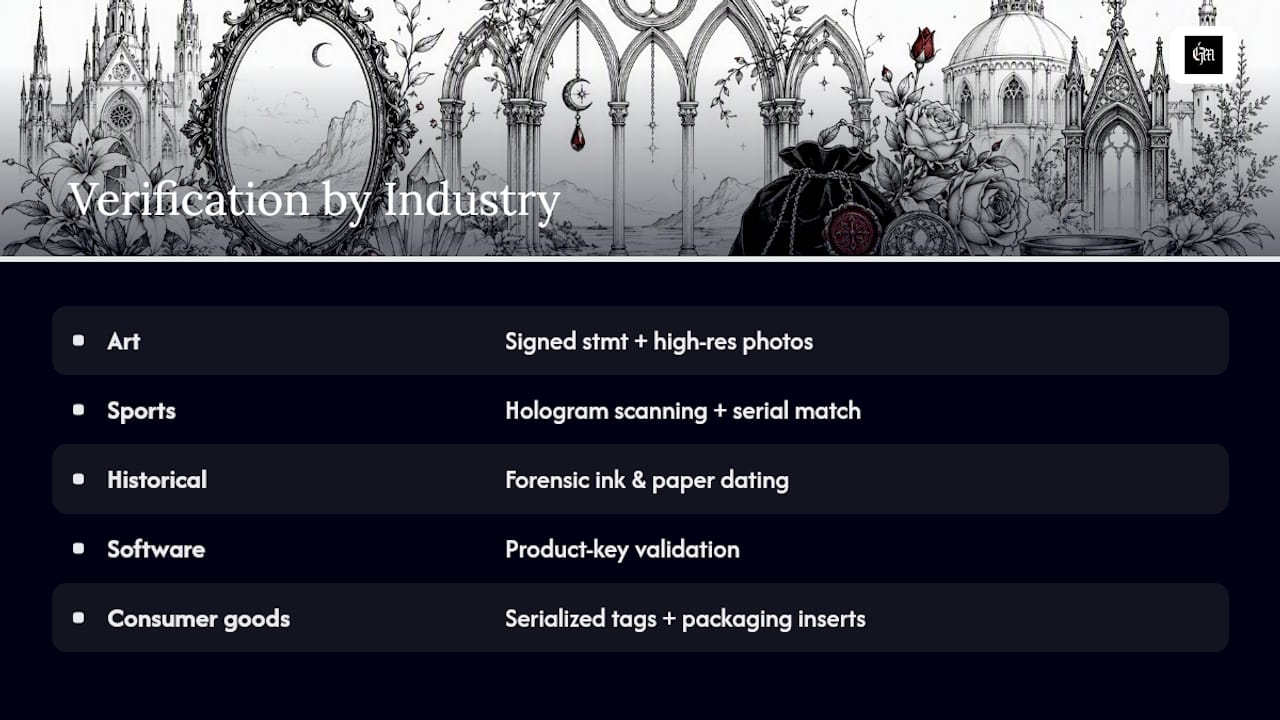
Art isn’t the only field where a signed certificate carries weight, though the standards shift depending on what’s being certified. Sports memorabilia relies heavily on matched serial numbers and hologram stickers tied to a specific autograph session, and buyers checking a signed jersey or ball look for the same identifier-matching discipline artists use for prints. Guides on authenticating rare sports memorabilia walk through exactly what that verification chain looks like in practice.
Historical documents and manuscripts use a different certification model, often involving forensic ink and paper dating rather than a simple signed statement. Software licensing uses “certificates of authenticity” in a completely different sense: a physical or digital label confirming a legitimate, non-pirated copy of a program, tied to a product key rather than provenance. Consumer goods, particularly luxury items and collectibles, use serialized tags and matching packaging inserts.
The common thread across every version is the same: a unique identifier, a traceable issuer, and a way to match the document to the specific physical item. What differs is the verification method, hologram scanning for memorabilia, ink dating for documents, product-key validation for software, and signed statements paired with high-resolution photos for art. Sellers moving between categories should never assume a template from one industry covers the legal or practical requirements of another.
How Does a COA Affect an Item’s Value and Resale Potential?
A missing certificate doesn’t just complicate a sale, it can knock a meaningful chunk off what a buyer is willing to pay, because the burden of proving authenticity shifts entirely onto them. A well-prepared COA strengthens provenance, helps guard against forgery claims down the line, and directly supports resale, insurance appraisals, and exhibition loan requests down the road, according to art-market preparation guidance.
Insurance is an underappreciated angle here. Insurers typically want documentation before covering a piece at its full claimed value, and a COA paired with an appraisal is often the baseline they ask for. Without one, a collector insuring a piece may find themselves covered only at a fraction of what they paid.
Resale works the same way. A buyer purchasing a piece secondhand wants to see an unbroken paper trail: the original COA, the original invoice, and ideally a record of any prior ownership transfers. Each gap in that chain is a reason for a buyer to negotiate the price down or walk away entirely. For limited editions specifically, a matching edition number on the COA and the physical piece is often the single detail a serious buyer checks first, because it’s the easiest forgery to catch and the easiest one to get right.
Sellers who treat COAs as an afterthought are, in effect, discounting their own future sales before they happen.
What Are Digital Certificates and Blockchain-Based Authentication?
Digital COAs have moved well past a simple PDF attachment. Formal standards now exist for verifying document authenticity, including certification programs like FIDO Alliance’s DocAuth framework, which outlines tiers of automated testing for how reliably a document can be verified as genuine.
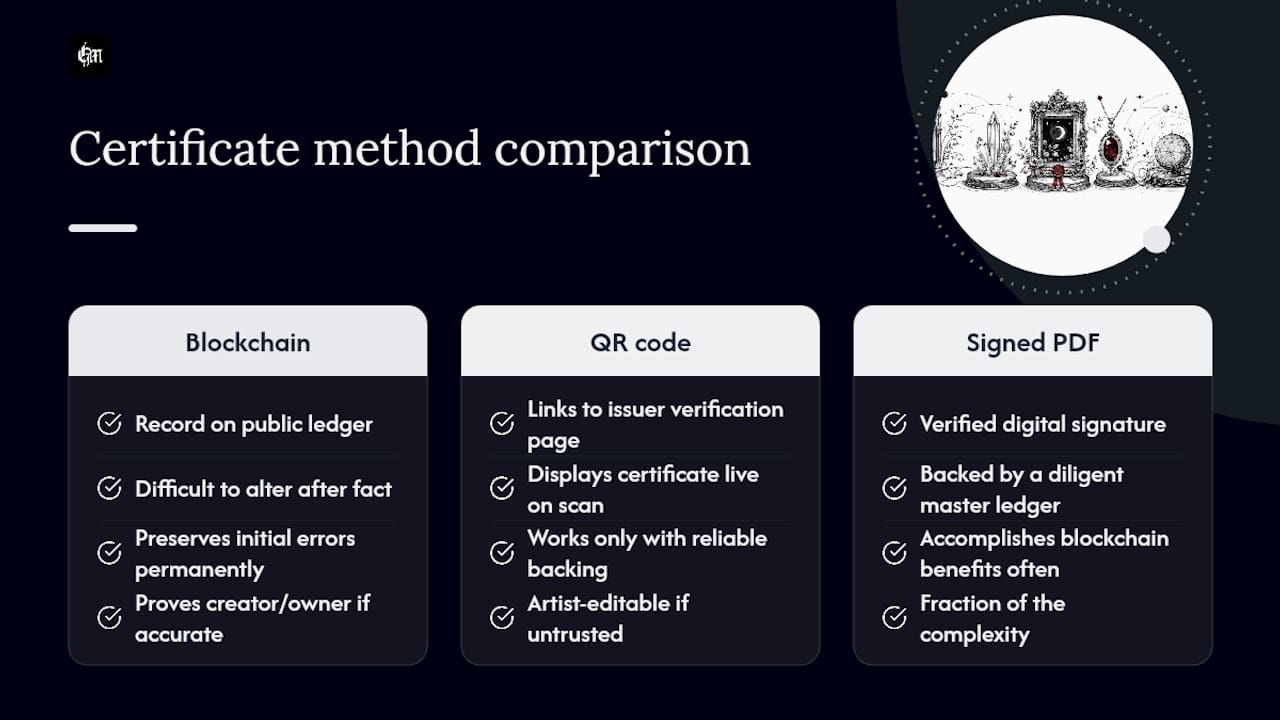
Blockchain-linked certificates, often tied to NFTs, record ownership and provenance on a public ledger that’s difficult to alter after the fact. For digital art especially, this solves a real problem: proving who created a file first and who owns it now. The catch is that a blockchain record only proves what was entered into it. If the original minting information was inaccurate or the artist’s identity wasn’t independently verified at that point, the blockchain just preserves the error permanently instead of fixing anything.
QR codes linking to a verification page offer a lighter-weight middle ground. A buyer scans the code, lands on a page hosted by the issuer, and sees the certificate details displayed live. This only works if that verification page is backed by a reliable issuer ledger or a trusted third party, a QR code linking to a page the artist could edit at will doesn’t add much credibility over a printed certificate. The strongest digital setups combine a signed PDF, a unique identifier, and a verification link hosted somewhere the artist can’t quietly alter after a sale.
For most independent artists, a verified digital signature on a PDF plus a diligent master ledger accomplishes almost everything a blockchain certificate does, at a fraction of the complexity.
How Do You Handle a Dispute Over a COA’s Authenticity?
Start by pulling every piece of corroborating documentation you have: the original invoice, prior communication with the buyer, your master ledger entry, and the high-resolution reference photo tied to that certificate number. Most disputes get resolved once both sides compare the serial number on the disputed certificate against the issuer’s own records.
If the dispute centers on whether you, as the artist, actually issued a certificate, respond quickly and in writing, referencing your ledger entry and the original sale date. Silence or a delayed response reads as evasiveness even when the certificate is genuine. If a buyer claims the piece doesn’t match the certificate’s description, request clear photos of the piece and its identifying marks before making any judgment.
For disputes you can’t resolve directly, a third-party appraiser or forensic document examiner can provide an independent opinion, which carries more weight than either party’s word alone. Keep in mind that a COA you issued can create legal exposure if it made claims you can’t support, so document every certification decision at the time you make it, not retroactively when a dispute lands on your desk. Buyers and sellers browsing dark art collecting resources will find that disputes almost always trace back to a documentation gap that existed from the start, not a genuinely ambiguous case.
Why Consistent COA Practice Matters for Niche Collectors
The gothic and alternative art market runs on trust between independent creators and buyers who often can’t inspect a piece in person before buying. A consistent COA practice, same fields, same numbering system, same ledger, every single time, does more for a working artist’s reputation than any single sale ever will. Buyers in niche subcultures talk to each other, and a seller known for sloppy or missing documentation gets remembered.
Marketplace guides for collectors reflect this same standard: match the identifier, check the signature, verify the issuer. If you’re just starting out, the fastest fix is the simplest one: number every piece you sell starting today, even retroactively for recent sales, and keep that ledger updated before you ever ship the next piece.
— Rey
Sources
- Certificate of authenticity template: what to include - LegalClarity
- How to Prepare a Certificate of Authenticity - AGI Fine Art
- Certificate of authenticity — Wikipedia
- Certificate of Analysis (COA): Required Fields, How to Verify One, and When It Isn’t Enough - CASRAI
FAQ
Can You Create Your Own Certificate of Authenticity?
Yes. Artists routinely write and issue their own COAs, as long as the document includes the standard fields: full name, title, date, medium, dimensions, a statement of authenticity, a signature, and contact information. There’s no licensing requirement to issue one for your own work.
How Do I Get a COA for My Product?
For artwork you didn’t make yourself, ask the seller or gallery directly for a signed certificate at the time of purchase. If none exists, request one in writing, referencing the specific piece, before finalizing the sale, since certificates issued after the fact carry less weight.
How Do I Know if a COA Is Legit?
Confirm the issuer’s identity independently, check that the photo and serial number match the physical piece, and look for a signature, date, and working contact information. A certificate with none of those elements, or one sold separately from the artwork, is a strong warning sign.
Who Can Issue a Certificate of Authenticity?
The artist themselves, a gallery representing that artist, or a qualified independent appraiser can issue a COA. Certificates from unrelated third parties with no documented connection to the artist or the piece carry little credibility.
What’s the Difference Between a COA and an Appraisal?
A COA confirms who made a piece and records its physical details; an appraisal estimates market value and typically relies on the COA as supporting evidence. You often need both for insurance or resale purposes, not one or the other.
Do Digital Prints or Editions Need a COA?
Yes, limited-edition prints benefit from a COA just as much as originals, with the edition number (like “8/25”) clearly recorded alongside the standard fields. Buyers of prints specifically check that the edition number on the certificate matches the number printed on the piece itself, a detail covered in more depth in guides on art print editions.
What Happens if a COA Turns Out to Be False?
The issuer can face legal liability for making false statements, since a COA can function as an express warranty about the facts it certifies. Buyers who discover a fraudulent certificate should document the discrepancy and pursue the issue with the issuer, a consumer protection agency, or legal counsel depending on the value involved.