

Dark Art Collecting Checklist: Your Complete Guide
TL;DR:
- A dark art collecting checklist helps identify authentic, meaningful pieces rooted in tradition and symbolism. It emphasizes evaluating provenance, materials, display, and emotional resonance for long-term impact. Building and caring for a collection requires patience, proper framing, thematic grouping, and thorough documentation.
A dark art collecting checklist is a structured set of criteria that helps collectors identify, purchase, and care for authentic pieces in the macabre, gothic, and eerie art genres. The best collections in this niche share one quality: depth over shock. Works that draw on memento mori traditions, mythological symbolism, and subcultural unease hold their power far longer than pieces chosen for surface-level impact alone. This guide gives you a practical, step-by-step framework for building a collection that means something, whether you are just starting out or refining an established assemblage of dark themed art pieces.
1. What belongs on your dark art collecting checklist

The foundation of any serious checklist is the ability to distinguish meaningful dark art from mass-produced novelty. Expert curators note that works engaging memento mori or mythological themes offer sustained personal resonance, while shock-only pieces fade quickly. That distinction is the single most important filter you can apply.
Authentic dark art carries layered meaning. A skull painting can reference Baroque vanitas traditions, Día de los Muertos iconography, or contemporary existentialist commentary. The surface image is the entry point, not the destination. When you evaluate a piece, ask what tradition or idea it is in conversation with.
Use this checklist as your starting filter:
- Artistic literacy: Does the work demonstrate knowledge of dark art traditions such as Gothic Romanticism, Symbolism, or horror surrealism?
- Layered meaning: Does the piece reward extended looking, or does it exhaust its impact in seconds?
- Artist reputation: Does the artist have exhibition history, institutional endorsement, or a documented body of work?
- Provenance: Is there written documentation of the work’s origin, ownership history, and authenticity?
- Emotional resonance: Does the piece create a specific, sustained feeling rather than a generic “creepy” reaction?
Pro Tip: Search the artist’s name alongside gallery names or exhibition titles. An artist with zero exhibition history is not automatically less worthy, but you should understand why before you buy.
Collectors who recognize the difference between shock value and deeply meaningful work, which often draws on literature, mythology, and subcultural unease, build collections with far greater long-term impact.
2. How to evaluate a piece before you buy
Practical evaluation separates collectors from impulse buyers. A multi-step checklist produces higher satisfaction and more meaningful collections. The goal is to slow down the acquisition process enough to make a considered decision.
Start with materials. Understanding oil, gouache, and mixed media is key to avoiding common mistakes and ensuring technical longevity. Oil on canvas behaves differently over decades than gouache on paper. Ask the gallery or artist directly what materials were used and how they age.
Follow these steps for every potential purchase:
- Request the edition details. For prints and photographs, ask for the edition number and total edition size in writing. A piece numbered 3/10 carries different market implications than 3/500.
- Assess scale in context. Measure your intended display wall before you fall in love with a piece. A work that commands a gallery wall can disappear in a domestic setting, or overwhelm a small room.
- Verify gallery transparency. Reputable galleries provide artist bios, exhibition records, and clear return policies. Reluctance to share this information is a warning sign.
- Check for written provenance. Provenance and edition details significantly impact value and authenticity, especially for photographic and limited edition works. Get it in writing before you pay.
- Evaluate condition carefully. Look for foxing, cracking, fading, or restoration work. Ask directly whether any restoration has been done.
- Compare prices across contexts. A piece priced far below market rate for a known artist warrants scrutiny. A piece priced far above it warrants the same.
Pro Tip: If you are buying online, request high-resolution detail photographs of the corners, edges, and any textured surfaces. These reveal condition issues that wide shots conceal.
3. How to display dark art for maximum impact
Display is where collecting macabre art diverges most sharply from conventional art collecting. Dark art requires specialized curation strategies due to its thematic intensity and atmospheric demands. A piece that looks powerful in a white-cube gallery can lose all presence against a pale domestic wall, or conversely, vanish into a dark one.
Directional lighting and appropriate framing enhance dark artworks against dark walls or moody interiors. Warm directional spotlights create drama. Diffuse overhead lighting flattens it. The choice of light source is as much a curatorial decision as the choice of frame.
| Display element | Best practice | Common mistake |
|---|---|---|
| Lighting | Directional warm spotlight at 30° angle | Flat overhead fluorescent light |
| Framing | Weighted frame with UV-protective glazing | Thin metal frame with no UV protection |
| Wall color | Deep charcoal, forest green, or matte black | Bright white (washes out dark tones) |
| Spacing | Minimum 6 inches between pieces | Crowding pieces into a salon-style grid |
| Mat color | Black, deep gray, or ivory | Bright white mat (creates visual disconnect) |
Archival framing matters more for dark art than collectors often realize. Archival framing protocols recommend UV-protective glazing as mandatory for works on paper. Eerie art collecting tips often focus on aesthetics, but preservation is the longer game.
Consider these display principles:
- Breathing room: Give each piece enough wall space to hold its own visual weight. Crowding reduces impact.
- Thematic grouping: Cluster works by theme or mood rather than by size or color alone. A collection of pieces exploring mortality reads more powerfully as a group than scattered across unrelated rooms.
- Eye-level placement: Center most works at 57–60 inches from the floor, the standard museum hang height. Dark art placed too high loses its psychological pull.
A meaningful collection is as much about how artworks relate to one another visually and conceptually as about individual acquisition. Thematic coherence is not a luxury. It is the difference between a collection and a room full of art.
4. How to maintain and grow your collection responsibly
Documentation is the most neglected part of collecting macabre art. Keeping a journal with purchase details is a recommended practice among serious collectors. Record the artist’s name, the title, the date of purchase, the price paid, the seller, and any provenance documents you received. Do this for every piece, every time.
Condition monitoring protects your investment. Check pieces seasonally for signs of fading, cracking, or moisture damage. Humidity above 60% damages paper-based works. Direct sunlight accelerates fading even through standard glass. These are not abstract risks. They are the most common causes of collection damage.
- Environment: Maintain stable temperature (65–70°F) and humidity (45–55%) in display areas.
- Handling: Always use clean cotton gloves when handling unframed works. Skin oils transfer and cause long-term damage.
- Insurance: Document your collection with photographs and appraisals for insurance purposes. Update records when you acquire new pieces.
- Market awareness: Track the artists in your collection without becoming reactive to short-term price movements. Quality holds value over time.
Patient collecting leads to more meaningful, well-rounded dark art assemblages with deeper personal impact. Resist the urge to fill every wall quickly. Allow time between acquisitions to refine your taste and understand what you already own.
Supporting emerging artists alongside established ones builds a more interesting collection and often a more financially rewarding one. An emerging artist with a strong conceptual foundation and exhibition momentum is a better long-term bet than a well-known name producing work on autopilot. Goth connects collectors with independent creators working in gothic, occult, and macabre traditions, making it a practical resource for discovering new dark art before it becomes widely recognized.
Key takeaways
A dark art collection built on authenticity, thematic depth, and proper care will outlast any collection assembled on shock value alone.
| Point | Details |
|---|---|
| Prioritize depth over shock | Evaluate whether a piece engages art history, mythology, or subcultural meaning before buying. |
| Document every acquisition | Record artist, provenance, price, and condition notes for every piece at the time of purchase. |
| Frame and light with intention | Use UV-protective glazing and directional warm lighting to preserve and present dark art correctly. |
| Build thematic coherence | Group works by mood or theme so the collection reads as a whole, not a random accumulation. |
| Collect patiently | Allow time between purchases to refine taste and avoid acquisitions driven by impulse. |
What I have learned from living with dark art
A personal perspective from Rey
The first piece of dark art I bought made me uncomfortable for about three months. Not in a bad way. In the way that good art is supposed to. It was a small oil painting of a figure half-dissolved into shadow, and I kept finding new things in it depending on the light and my mood. That is the quality I now look for before anything else.
Most collectors I have spoken with describe a similar arc. The initial attraction is often visceral, almost instinctive. But the pieces that stay meaningful are the ones that reward patience. The ones that change slightly as you change. A piece that exhausts its mystery in a week is decoration. A piece that keeps asking questions is a collection.
The biggest mistake I see new collectors make is buying for atmosphere rather than for art. A room full of skulls and ravens can feel cohesive on day one and hollow by year two. The collections that hold up are the ones where each piece carries its own weight conceptually, not just visually. That requires slowing down, researching the artist, and asking hard questions before you commit.
Goth has made it easier to find artists working at that level, independent creators who are genuinely embedded in gothic and macabre traditions rather than producing surface-level aesthetics for a trend. That matters. The platform’s curatorial focus on dark art curation reflects the same values this checklist is built on.
— Rey
Where to find dark art worth collecting
Goth is a curated marketplace built specifically for collectors and enthusiasts of gothic, occult, and macabre art. Independent artists and vendors on the platform work within traditions that align directly with the criteria in this guide.
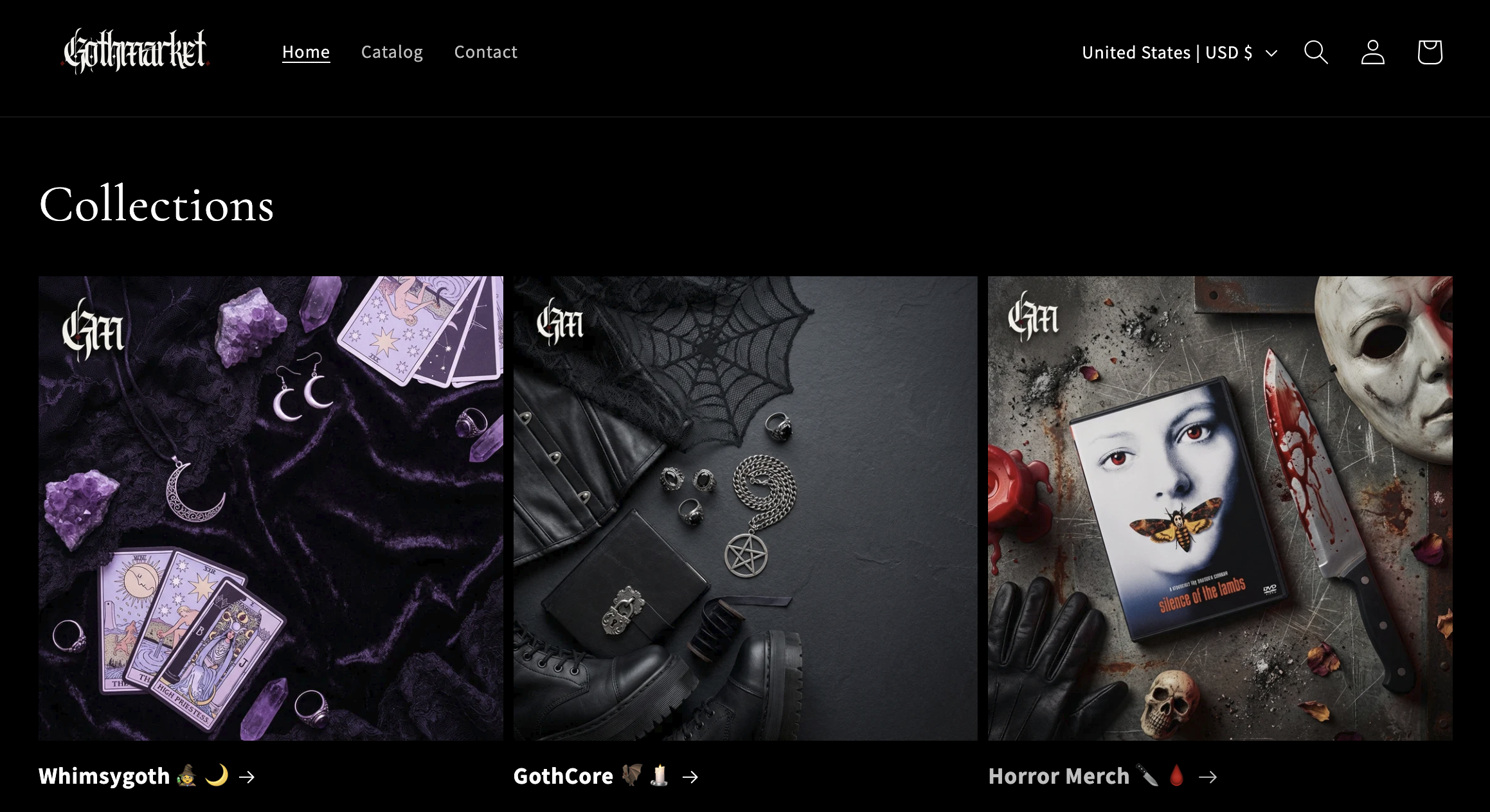
Whether you are building your first collection or adding to an established one, Goth offers a focused selection of dark themed art pieces that go beyond mass-market aesthetics. The platform also supports new collectors with guides and resources for understanding what makes a piece worth owning. If you are ready to apply this checklist to real acquisitions, Goth is a practical place to start looking. For collectors just getting started, the tips for new collectors on the platform offer a grounded introduction to the process.
FAQ
What is a dark art collecting checklist?
A dark art collecting checklist is a structured set of criteria covering authenticity, provenance, materials, display, and documentation. It helps collectors make deliberate acquisitions rather than impulsive ones driven by shock value.
How do I know if a dark art piece is authentic?
Request written provenance, exhibition history, and edition details from the seller. Reputable galleries and artists provide this documentation without hesitation.
What framing is best for dark art?
Archival framing with UV-protective glazing is the standard for works on paper. Weighted frames in dark tones complement the aesthetic while protecting the work from light damage.
How should I light dark art on dark walls?
Use directional warm spotlights positioned at roughly a 30° angle to the artwork. This creates contrast and depth without washing out the piece or letting it disappear into the wall.
How often should I review my dark art collection?
Check pieces seasonally for condition issues such as fading, cracking, or moisture damage. Update your documentation records whenever you acquire, sell, or have a piece appraised.