

4,000 Years of Ankh Meaning, From Hieroglyphs to Gothic Jewelry
The ankh is an ancient Egyptian symbol that primarily means “life” or “to live,” composed of a looped cross shape that ancient scribes used as a hieroglyph long before anyone wore it as jewelry. It worked as a triliteral sign, written Ꜥ-n-ḫ, standing in for a cluster of Egyptian words tied to living, breath, and sustenance. Centuries later, Coptic Christians reshaped it into the crux ansata, and today it shows up on necklaces, in gothic wardrobes, and in neopagan altars, each context adding its own layer of meaning on top of the original one.
TL;DR:
- The ankh originated as a hieroglyph representing the consonant cluster Ꜥ-n-ḫ, with linguistic links to words for life, breath, and abundance used across over a thousand years of Egyptian history.
- In art and religion, the ankh was primarily a symbol of life, often depicted in gods’ hands or in funerary scenes to signify vitality, protection, and the continuation of existence.
- It was adapted into the Christian crux ansata by Coptic Christians to symbolize resurrection and salvation, though this regional reuse did not replace its original meaning nor become universal in Christianity.
- Modern jewelry and fashion use the ankh to symbolize life, spirituality, or gothic aesthetics, with interpretations highly dependent on individual context, and it is widely accessible in various materials including everyday person-grade supplies.
- The symbol’s broad historical and cultural range means its meaning is layered and fluid, so understanding its linguistic, religious, and cultural history enhances appreciation without assuming a single definitive significance.
Table of Contents
- What Are the Origins and Linguistic Role of the Ankh?
- How Was the Ankh Used in Egyptian Art and Religion?
- How Did the Ankh Function as a Hieroglyph and in Everyday Objects?
- How Did Coptic Christianity Adapt the Ankh?
- What Does the Ankh Mean in Modern Culture and Fashion?
- How Does the Ankh Show Up in Curated Gothic and Occult Jewelry?
- What Should You Actually Take Away From the Ankh’s History?
- Where Can You Browse Curated Ankh and Occult Jewelry?
- Sources
- FAQ
What Are the Origins and Linguistic Role of the Ankh?
The ankh started as a piece of writing, not a piece of art. In the Egyptian script, it functioned as a triliteral sign representing the consonant sequence Ꜥ-n-ḫ, one of several hundred hieroglyphs that carried a fixed sound value rather than a single fixed picture-meaning. Scribes dropped it into words the way you’d use a stamp for a recurring syllable cluster, and that phonetic flexibility is exactly why it turns up in such a wide range of Egyptian vocabulary.
That same consonant root eventually survived the collapse of hieroglyphic writing itself. By late antiquity, the sound had drifted into Coptic, the last living stage of the Egyptian language, as the word ⲱⲛϩ, pronounced roughly “on.” A hieroglyph carved on temple walls around 2600 BCE and a word spoken in Coptic liturgy two and a half thousand years later share the same linguistic backbone.
The sign’s semantic reach went well beyond a single translation. Egyptologists have traced its appearance in several distinct word groups:
- Words meaning “to live” or “life” itself, the core and most frequent use.
- The word for “mirror,” likely chosen for the visual echo between a hand mirror’s handle and reflective disc and the ankh’s own loop and crossbar.
- Terms connected to floral bouquets and offerings, tying the sign to abundance and renewal rather than survival alone.
- Royal and divine epithets where “living” modifies a king’s or god’s name, marking vitality as an attribute of status.
Archaeologically, the sign is old. It shows up in Early Dynastic material and becomes a standard fixture by the Middle Kingdom, appearing on stelae, amulets, and temple reliefs across a span of well over a thousand years. That longevity is unusual even by Egyptian standards, where plenty of symbols rose and fell in popularity within a few dynasties. The ankh never really went out of fashion for the length of pharaonic history.
How Was the Ankh Used in Egyptian Art and Religion?
In religious art, the ankh almost never stands alone. It appears gripped in the hand of a god, extended toward a king’s nose or lips in a gesture that reads as literally giving life. The Metropolitan Museum of Art’s collection includes ceremonial objects shaped like the ankh, some combined with royal cartouches, underscoring how tightly the sign was bound to kingship and divine favor rather than functioning as generic decoration.
That life-giving gesture shows up in a few recurring scenes:
- A deity, often Isis, Osiris, or Amun, holds an ankh to a pharaoh’s face, symbolically transferring life force during coronation or ritual scenes.
- Funerary art repeats the same gesture toward the deceased, with the ankh acting as a promise of continued existence in the afterlife rather than a memorial to a life ended.
- Streams of ankh signs sometimes replace or accompany water symbols in purification and libation scenes, linking the sign to breath and water as literal life-sustaining elements.
- Ankhs were placed directly in sarcophagi and burial goods, a practical, physical bid to secure life beyond death rather than a purely symbolic gesture.
That water and breath connection is one of the more overlooked layers of the symbol. The National Park Service’s summary on the ankh notes its role in rituals where it stood in for life-giving elements, and its consistent placement in tombs as a device meant to work, not just to symbolize.
The ankh rarely traveled alone in another sense, too. It routinely appears alongside the djed pillar, standing for stability, and the was scepter, standing for dominion or power. The Met’s catalogue includes objects showing ankh, djed, and was signs resting together on a neb basket, a formulaic grouping that shows up repeatedly in royal and festival contexts. Read together, the three signs form something like a compressed prayer: life, stability, and power, offered as a set rather than piecemeal. That triad appears often enough in New Year and jubilee festival imagery that Egyptologists treat it as a standard blessing formula, not a coincidental pairing.
How Did the Ankh Function as a Hieroglyph and in Everyday Objects?
Beyond temple walls, the ankh did ordinary linguistic work. Scribes used it inside full words the way any consonant sign gets used, which is part of why its range extends past a one-word gloss of “life.” A word for a bouquet of flowers, a term for a mirror, several forms of “to live” and “living,” all leaned on the same three consonants.
That range matters because it shows the ankh wasn’t reserved for grand religious statements. It was a working piece of a functional writing system, appearing in mundane administrative texts as readily as in royal inscriptions.
The object itself had just as wide a range in physical form. Archaeological finds include small model ankhs in materials well below the value of royal metalwork:
- Faience, a glazed ceramic material, produced in quantity and used for amulets placed with ordinary burials.
- Wood, carved and sometimes painted, found in household and funerary contexts alike.
- Bronze and other metals, reserved more often for higher status objects and temple equipment.
The Met’s model ankh entry is a good illustration of this range: a modest faience piece, not a jeweled showpiece, made for exactly the kind of everyday ritual use that never makes it into popular imagination of ancient Egypt. That material spread tells you something concrete: the ankh wasn’t gatekept by wealth. A farmer’s family and a royal household could both plausibly own one, just in very different materials.
How Did Coptic Christianity Adapt the Ankh?
Coptic Christians in Egypt adapted the ankh into what scholars call the crux ansata, a looped cross used to represent resurrection and salvation. This adaptation dates to late antiquity, as Christianity spread through Egypt and local communities folded existing visual language into the new religion rather than discarding it outright.
The reasoning behind that reuse was practical as much as theological. A population already fluent in reading the ankh as a symbol of life had an easier bridge into a Christian message centered on resurrection and eternal life. Reusing familiar iconography, rather than importing something wholly foreign, made conversion visually and culturally continuous instead of a clean break.
A few points are worth holding onto here:
- The crux ansata is a regional, Egyptian Christian phenomenon, not a symbol adopted across the wider Christian world.
- It never displaced the standard Latin cross as the dominant Christian emblem outside of Egypt and Coptic communities specifically.
- Museum scholarship treats it as one example of localized cultural continuity, and not evidence that the ankh carries an inherent or universal Christian meaning.
That distinction gets lost online fairly often, where “ankh vs cross” gets framed as though the two symbols are direct historical rivals. They’re related through one specific regional adaptation, not through any broader theological throughline.
What Does the Ankh Mean in Modern Culture and Fashion?
Ankh jewelry today draws on the symbol’s ancient reputation for representing life, but the meaning attached to an ankh pendant now depends heavily on who’s wearing it and why. There’s no single modern authority governing what the symbol has to mean, which is part of what makes it flexible and part of what makes it easy to misuse.
A few of the main threads in contemporary use:
- Personal and spiritual identity. Wearers often choose an ankh necklace to signal a connection to ancient Egyptian heritage, spirituality, or a general affinity for the concept of vitality and continuity.
- Gothic and alternative fashion. The symbol’s association with mortality, resurrection, and the afterlife maps unusually well onto gothic aesthetics, which frequently draw on themes of immortality and the boundary between life and death. That dual resonance, ancient weight paired with death-adjacent imagery, is a large part of why the ankh became a recurring motif in gothic style rather than a passing trend.
- Neopagan and New Age reinterpretation. Some practitioners read the ankh through frameworks tied to Egyptian revivalism, others connect it loosely to fertility or duality symbolism. Scholarly summaries note that interpretations vary, including theories linking it to a union of opposites or to the so called not of Isis, without any of these readings being definitive or official.
- General fashion statement. Plenty of people wear an ankh pendant simply because they like the shape, with no deeper symbolic claim attached at all, and that’s a legitimate use too.
The honest answer to “what does the ankh symbolize” in a spiritual sense is that it depends entirely on context, and no single tradition today owns the definitive interpretation. That ambiguity isn’t a flaw in the symbol. It’s a byproduct of a sign that’s been in continuous, evolving use for roughly four thousand years.
Pro Tip: If you’re drawn to an ankh pendant for its historical weight rather than pure aesthetics, take a few minutes to learn the Egyptian context behind it before wearing it. You don’t need a lecture’s worth of knowledge, just enough to answer the “what does that mean” question with something more substantial than “it’s Egyptian.”
How Does the Ankh Show Up in Curated Gothic and Occult Jewelry?
Marketplaces built around gothic and occult aesthetics tend to carry ankh pieces in a handful of recurring styles: oxidized metal necklaces with a weathered, aged finish, faience-inspired reproductions that nod directly to the museum pieces the symbol comes from, and hand pendants where the ankh sits alongside other occult motifs like moons or serpents.

Buyers in this space usually aren’t picking an ankh at random. The appeal tends to sit at the intersection of symbolic resonance, life and death themes rendered concretely, and a look that fits a broader dark aesthetic wardrobe rather than clashing with it.
A few notes worth keeping in mind while browsing:
- Independent jewelry makers frequently work in mixed metals and reclaimed materials, which produces more variation than mass-market versions of the same shape.
- Pairing an ankh with other Egyptian-adjacent or occult symbols is common but not required; plenty of pieces let the ankh stand alone.
- If historical accuracy matters to you, look for listings that mention the symbolism behind occult jewelry pieces directly, rather than generic product descriptions.
What Should You Actually Take Away From the Ankh’s History?
The biggest misread of the ankh isn’t in the ancient scholarship. It’s in the modern habit of collapsing four thousand years of shifting use into one tidy sentence, usually “it means eternal life,” and stopping there. That’s not wrong exactly, but it flattens a symbol that meant something slightly different to a Middle Kingdom scribe, a Coptic Christian in late antiquity, and a goth teenager buying their first pendant in a mall shop in 1994.
What the record actually supports is narrower and more interesting: a working hieroglyph with real linguistic range, a religious symbol tightly bound to kingship and the afterlife, and a much later, geographically specific Christian reuse that never became universal. Conventional wisdom skips past that middle part, the linguistic and everyday use, in favor of the more dramatic temple imagery.
If you’re drawn to the symbol now, prioritize understanding that range before you commit to a single meaning for yourself. You don’t owe anyone a doctoral thesis on Egyptian grammar to wear an ankh. But knowing it was a mirror and a bouquet just as often as it was a god’s gift to a pharaoh makes the symbol richer, not less personal.
— Rey
Where Can You Browse Curated Ankh and Occult Jewelry?
If the history above has you looking for a piece of your own, Goth is built around exactly this kind of curated, independent-creator sourcing rather than mass-market stock. The marketplace emphasizes hard-to-find pieces from independent creators, so an ankh pendant here is more likely to be a one-off design than a warehouse repeat.
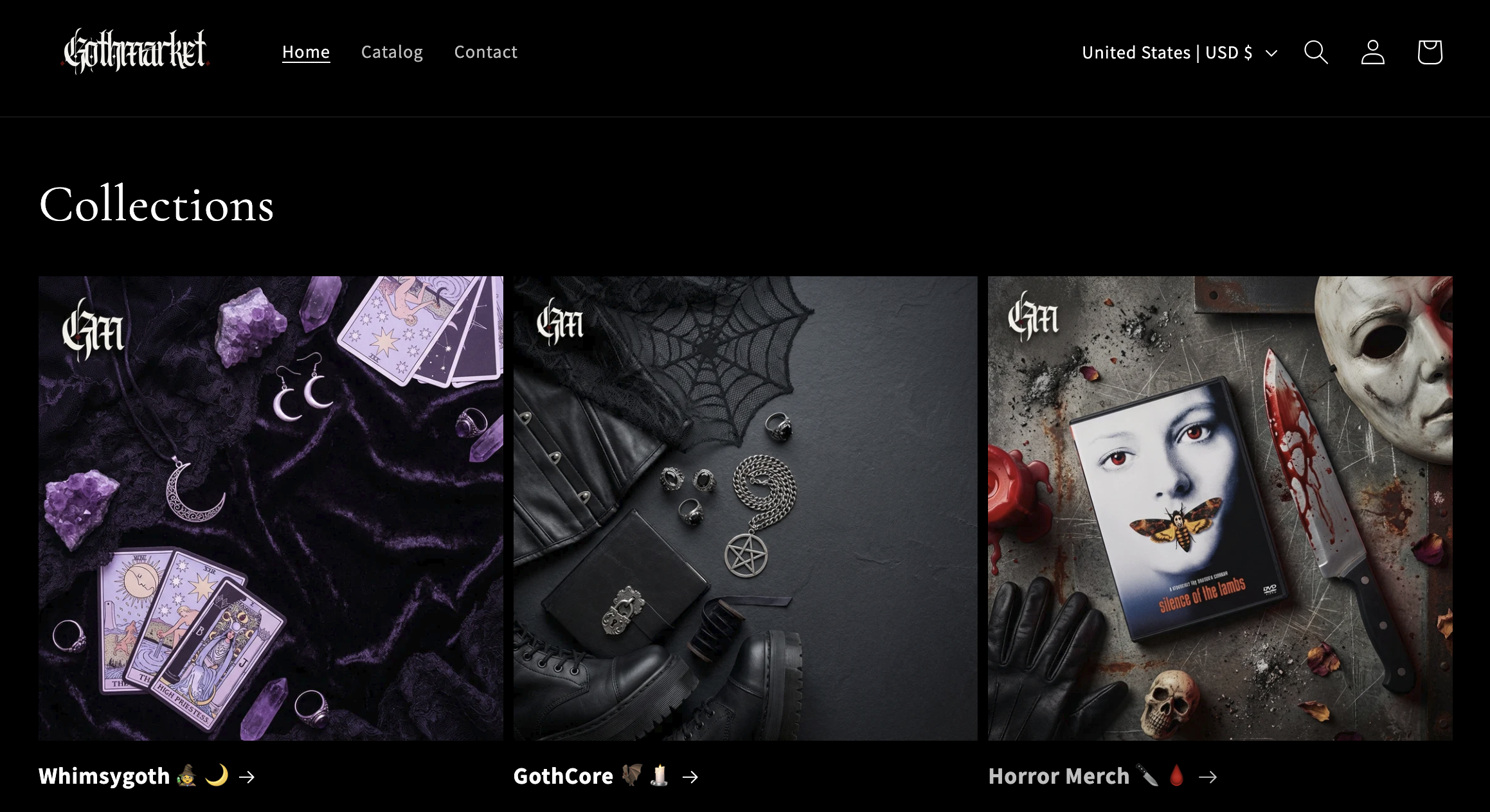
The GothCore 🦇 🕯️ collection is the natural starting point for classic gothic ankh necklaces and darker metalwork. If you’re after something softer or more whimsical, with occult motifs styled in a lighter, dreamier register, the Whimsigoth 🧙♀️ 🌙 collection tends to carry that tone. And if you’d rather browse broadly across styles and materials without committing to one aesthetic, Curated Finds rounds up distinctive pieces from across the marketplace’s independent sellers. Start with whichever collection matches the style you were picturing while reading, and browse from there.
Sources
- Ankh — Wikipedia
- Ceremonial Implement in the Shape of an Ankh — The Metropolitan Museum of Art
- ANKH - Egyptian Symbol of Life — NPS (African Burial Ground)
FAQ
Is It Okay to Wear an Ankh?
Yes, wearing an ankh is generally considered acceptable, since it’s a widely recognized historical symbol rather than a closed religious practice restricted to one living community. It carries the most weight when worn with at least a basic understanding of its Egyptian origins and its meaning of “life,” rather than as an arbitrary decorative shape. Plenty of people also wear it purely for its look, which isn’t disrespectful either.
What Does the Ankh Protect You From?
The ankh isn’t documented in ancient sources as a protective amulet in the way symbols like the Eye of Horus were used. Its core association is with granting or sustaining life rather than warding off harm, particularly in funerary contexts where it appears in scenes of gods offering life to the deceased. Modern wearers sometimes attribute protective qualities to it, but that reading comes from personal or neopagan interpretation, not from Egyptian religious tradition.
What Does Ankh Mean in Christianity?
In mainstream global Christianity, the ankh has no established meaning at all. Its Christian connection exists specifically through the crux ansata, a variant adapted by Coptic Christians in Egypt during late antiquity to represent resurrection and salvation. That adaptation was regional, so treating the ankh as a general Christian symbol misrepresents how narrowly it was actually used.
Why Do Goths Wear Ankhs?
The ankh’s imagery of life, death, and rebirth lines up closely with gothic fashion’s recurring themes of mortality and immortality. It also carries a striking, ancient visual weight that fits well alongside dark, historically inflected aesthetics common in gothic subcultural style. For many wearers it’s both a style choice and a nod to a symbol with real historical depth behind it.
What Does the Ankh Symbolize Beyond “Life”?
Beyond its core meaning of “life,” the ankh shows up in words for mirrors and floral bouquets, linking it to reflection and abundance as secondary associations. It’s also closely tied to breath and water in ritual scenes, and frequently appears with the djed and was symbols to form a combined message of life, stability, and power. No single word fully captures that range, which is part of why the symbol has stayed flexible across so many centuries.
What’s the Difference Between an Ankh and a Cross?
The ankh predates the Christian cross by thousands of years and originated as an Egyptian hieroglyph for “life,” not as a religious execution device turned salvation symbol. The two only connect directly through the crux ansata, the Coptic Christian adaptation of the ankh shape. Outside that specific historical link, they come from entirely separate traditions with different core meanings.
How Much Does Ankh Jewelry Typically Cost?
Prices for ankh jewelry vary widely depending on materials, maker, and design complexity, from simple metal pendants to more elaborate handcrafted pieces. Current listings and pricing for ankh and other occult jewelry pieces are available directly on the Goth marketplace, where independent creators set their own prices.
Can I Wear an Ankh if I’m Not Egyptian or Practicing Egyptian Spirituality?
Yes, the ankh isn’t a restricted or closed symbol tied to a single living cultural or religious group today. It’s treated broadly as a historical and aesthetic symbol available for general use, similar to how other ancient iconography gets worn across cultures. Learning its background before wearing it, rather than assuming a meaning, is the more respectful approach either way.