

Gothic Product Photography Setup: A Seller's Guide
TL;DR:
- A gothic product photography setup emphasizes mood through high-contrast lighting, negative fill, and minimal props. It relies on controlled lighting, documented settings, and deliberate styling to produce consistent, authentic images. Proper preparation and restraint elevate product images from generic to compelling brand statements.
A gothic product photography setup is a repeatable, high-contrast lighting and staging system that prioritizes mood and a single visual priority while keeping product details readable for ecommerce shoppers. The goal: a hero image that feels mysterious and intentional, not just dark for the sake of it.
TL;DR checklist before your first shoot:
- Single directional key light at 45–90°
- Black foam boards or flags for negative fill
- Textured dark background (velvet, distressed wood, or black seamless paper)
- One prop type only (candlestick, antique book, or similar)
- Camera on a tripod, white balance locked to a fixed Kelvin value
- Document tape marks and light-to-product distances before you shoot
Product pages with high-quality photography convert at rates 20–30% higher than those with amateur images. That gap is even wider in niche markets like gothic fashion, where generic flat lighting signals a brand that doesn’t understand its own aesthetic.
Pro Tip: Reference Goth.Market’s styling guides alongside your shoot checklist. Knowing what makes a garment or accessory authentically gothic helps you choose which detail to emphasize before you ever touch a light.
Table of Contents
- What gear do you actually need for gothic product photography?
- How do you set up gothic product photography step by step?
- How do styling and composition sell a gothic product?
- Three mini-setup recipes for common gothic products
- How do you make gothic images consistent and export-ready?
- What editing priorities preserve mood without misleading shoppers?
- Key Takeaways
- Where to find gothic props and curated pieces for your next shoot
What gear do you actually need for gothic product photography?
Gothic photography techniques reward controlled light over expensive hardware. The modifier matters more than the camera body.
Budget paths:
- Under $100 (minimum viable kit): Smartphone (recent iPhone or Android flagship in Pro/Manual mode), a single LED panel, and two black foam boards for negative fill. Add a $20 tripod phone mount.
- $100–$2,000+ (pro path): Price increases as you add a dedicated LED panel with adjustable color temperature, a full-size tripod, a small softbox or grid attachment, a roll of black seamless paper, a mirrorless camera body, a strobe with a softbox or snoot, a macro or 85mm prime lens, and purpose-built black flags on articulating arms.
Core gear checklist:
- Camera or smartphone with manual exposure control
- Tripod (non-negotiable for consistency)
- Single directional light source (continuous LED or strobe)
- Modifier: grid, snoot, or small softbox
- Black foam boards or flags (two minimum)
- Background: black velvet fabric, distressed wood board, or black seamless paper
- Small props: candlestick, antique book, lace fabric, or a dark ceramic piece
- Lens: 50mm or 85mm prime for most products; 90–105mm macro for jewelry
What actually controls the gothic mood: modifiers and flags. A grid narrows your light beam; a snoot focuses it to a tight spot; black flags block ambient bounce so shadows stay deep and sculptural. Swapping a camera body brand changes almost nothing. Swapping a bare bulb for a gridded modifier changes everything.
Pro Tip: Before buying props, check your kitchen and shelves. Dark ceramic mugs, black linen napkins, and old hardcover books with worn spines all read as gothic on camera. Save the prop budget for a quality modifier.
How do you set up gothic product photography step by step?
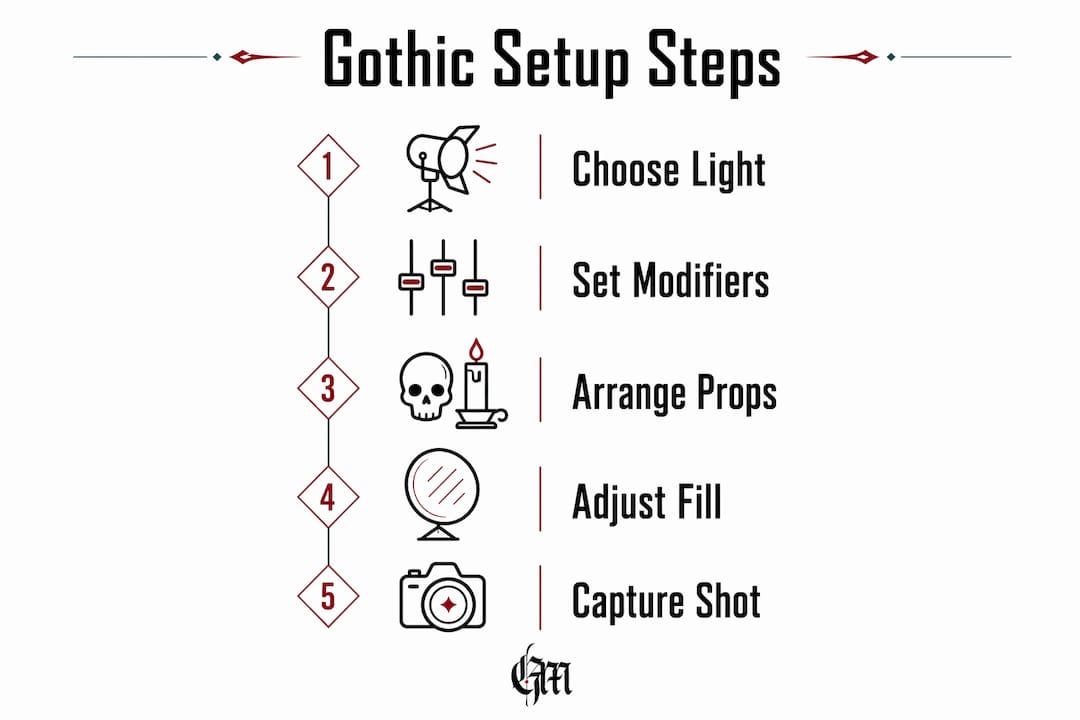
Dramatic lighting is a controlled system, not an accident. Start with one light, add control, and resist the urge to add a second source before the first is working.
Setup steps:
- Position your key light at 45–90° to the side of the product, slightly above product height. Steeper angles (closer to 90°) produce harder, more dramatic shadows.
- Set distance. Start with the light roughly 18–24 inches from the product. Move it farther to soften; closer to intensify.
- Place black flags. Set one black foam board on the shadow side of the product, 6–12 inches away. This is negative fill: it absorbs bounce light and deepens the shadow without underexposing the whole frame.
- Optional rim light. A second low-power light or a small LED strip behind the product creates a separation edge. Keep it at 10–20% of the key light’s power.
- Control the background. Keep the product at least 24 inches from the background to prevent unwanted shadow spill. Use a second black flag behind the product if the background picks up too much light.
- Mount camera on tripod at product height. Frame with the product filling 60–70% of the frame for ecommerce hero shots.
Recommended camera settings:
| Setting | Range | Notes |
|---|---|---|
| ISO | 100–105 | Keep low to minimize noise in dark areas |
| Aperture | f/4–f/5.6 (small items), f/5.6–f/7.1 (larger products) | Wider for jewelry detail; narrower for full garments |
| Shutter speed | slower shutter speeds (tripod) | Sync speed if using strobe |
| White balance | Fixed Kelvin (5000–5500K for LED) | Never use Auto WB across a catalog shoot |
| Focus | Manual or single-point AF | Manual preferred for macro and repeat shots |
Repeatability checklist:
- Tape marks on the floor for light stand, product position, and camera tripod legs
- Overhead reference photo of the full setup before shooting
- Written card: light-to-product distance, light power setting, modifier used
- One RAW reference file per product as a color baseline
Pro Tip: Not sure if you’ve killed too much fill? Hold a small white index card on the shadow side. If it brightens the product without washing out the shadow, you’ve found the floor. A weak LED on its lowest setting works the same way.
How do styling and composition sell a gothic product?
Pick one attribute to highlight before you touch a single prop. Texture, silhouette, or a label detail — choose one and style around it. Trying to show everything equally produces images that communicate nothing.
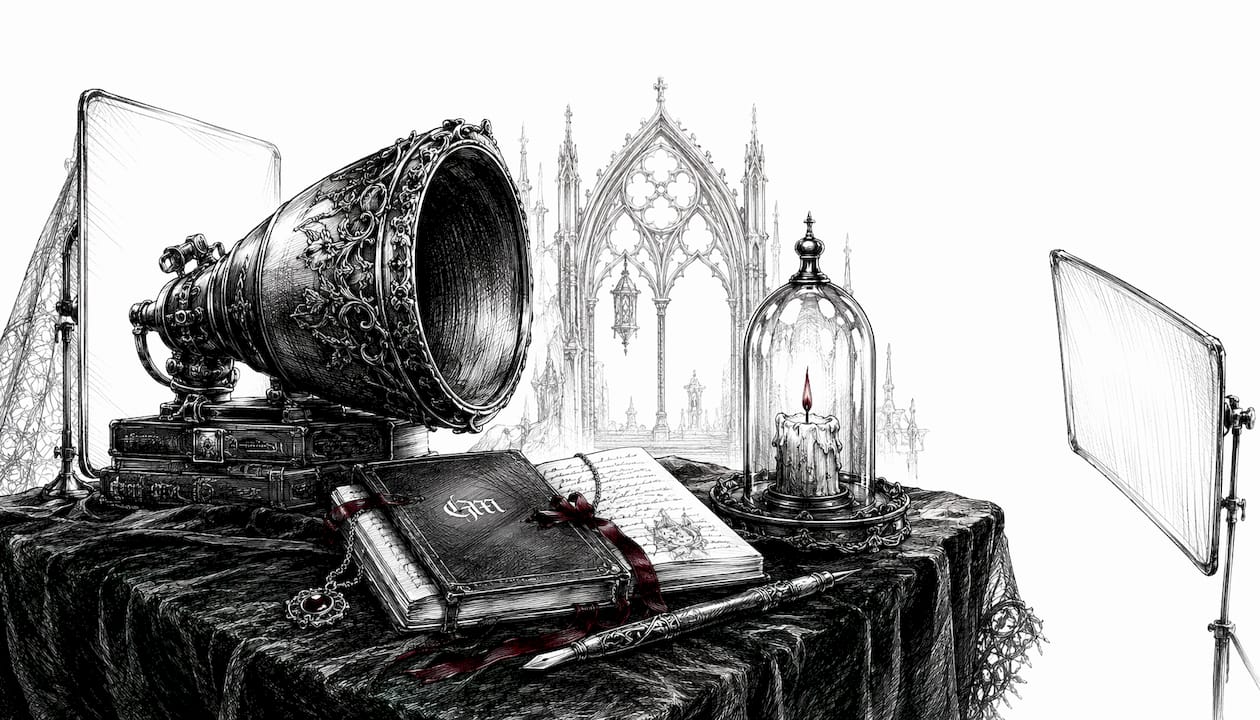
Gothic color palette: deep blacks, burgundies, muted navy, and desaturated metallics. The gothic aesthetic relies on dark, muted tones with props that carry historical or occult weight: candlesticks, antique books, religious symbols, and architectural references like small arched frames.
Prop and surface choices:
-
Velvet and lace for texture contrast against hard jewelry
-
Distressed wood for warmth without brightness
-
Antique books as height risers and mood anchors
-
Candlesticks (use LED candles; see safety notes below)
-
Minimal is almost always better: one or two props maximum
The single most common mistake in gothic product photography is over-propping. When the eye doesn’t know where to land, the product loses. One strong prop that echoes the product’s material or era beats five props that fight each other for attention. Restraint is what separates editorial from cluttered.
Composition by product type:
- Garments: Centered hero framing for silhouette; asymmetric negative-space layout for mood. Link to gothic fashion styling for attribute emphasis guidance.
- Jewelry: Tight crop on the key detail; velvet surface to eliminate reflections from the background.
- Boxed goods / accessories: Top-down flat-lay with one prop; keep at least 30% of the frame as dark negative space for thumbnail legibility.
Three mini-setup recipes for common gothic products
Start from the same core principle for every setup: directional key plus negative fill. Scale the modifier and distance to match the product.
| Setup | Key Light | Modifier | Negative Fill | Camera Distance | Focal Length |
|---|---|---|---|---|---|
| Jewelry macro | 45° side, 12 in. | Grid or snoot | Black card 4–6 in. from subject | 12–18 in. | 90–105mm macro |
| Garment silhouette | 90° side or slight rear | Large softbox | Black flag, shadow side | 4–6 ft. | 50mm or 85mm prime |
| Tabletop accessories | 60° side, 18–24 in. | Small softbox or grid | Black foam board | 24 in. | 50mm prime |
Notes by product type:
- Jewelry: Focused modifiers like grids or snoots outperform multi-light setups for small reflective items. Control spill first; add a polarizing filter over the lens if metal surfaces create hot spots.
- Garments: Push the key light toward 90° for silhouette emphasis. Use shadow symbolism intentionally: a hard shadow from lace fabric reads as texture, not error.
- Tabletop accessories: Layer props at different heights using book stacks or small risers. Depth adds dimension; keep the hero product at the highest point.
How do you make gothic images consistent and export-ready?
Documentation is the single most important repeatability tool. An artistic setup you can’t recreate is a liability for catalog shoots.
Shoot documentation checklist:
- Tape marks for every stand, product, and tripod leg
- Overhead reference photo before the first frame
- Written settings card (light distance, power, modifier, camera settings)
- One RAW reference file per product stored with the exported JPEGs
Export settings:
| Platform | File Type | Color Profile | Resolution | Max File Size |
|---|---|---|---|---|
| Shopify | JPEG or PNG | sRGB | — | 20 MB |
| Amazon (main image) | JPEG | sRGB | — | 10 MB |
| General ecommerce | JPEG | sRGB | — | Varies |
Alt-text templates:
- “Black lace corset on dark velvet background, gothic product photography”
- “Silver pentagram pendant on distressed wood, close-up detail shot”
Amazon’s main product image requires a white background. Use gothic hero images as supplementary lifestyle or collection shots, not the primary listing image.
Pro Tip: Export two versions of every file: one sRGB JPEG for web and one full-resolution TIFF or PNG as an archive. You’ll thank yourself when a marketplace changes its size requirements.
What editing priorities preserve mood without misleading shoppers?
Raise contrast and deepen shadows carefully, but always check product color against a RAW reference before exporting.
Processing steps:
- Set global exposure baseline: the product’s key detail should be visible without clipping highlights.
- Apply local contrast to the chosen attribute (texture, silhouette edge, or label).
- Selective sharpening on the focal point only; avoid sharpening dark background areas.
- Check label legibility at 100% zoom.
- Add a soft vignette (10–20% strength) to draw the eye inward.
Do not overdo: extreme color shifts that change product hue, over-darkening that hides material detail, or heavy compositing that misrepresents what the buyer receives. Gothic product imagery resonates because it feels authentic, not because it’s heavily manipulated.
Color accuracy tip: include a calibrated color checker card in at least one reference shot per session. Compare your edited export against the physical product under neutral light before publishing.
Pro Tip: If you’re grading toward a cooler, bluer tone for gothic mood, do it with a slight hue shift in the shadows only. Shifting the entire image blue will change how fabric colors read to buyers and generate returns.
Safety and prop notes
Safety checklist:
- Never use open flames near textiles; substitute LED candles for real ones
- Secure tall props (candlesticks, framed mirrors) with museum putty or a sandbag
- Keep liquids away from finished garments and paper backgrounds
- Test any smoke machine in a ventilated space before using near products
Legal and ethical reminders: always secure property and model releases for identifiable locations or people. Avoid using copyrighted artwork, logos, or branded imagery as props without permission. When using religious or cultural artifacts as props, consider substituting replicas or evocative textures to sidestep cultural sensitivity issues.
Key Takeaways
A gothic product photography setup works because it combines a single directional key light, intentional negative fill, and documented settings to produce dramatic, repeatable ecommerce images.
| Point | Details |
|---|---|
| Define the visual goal first | Choose one attribute (texture, silhouette, or label) to emphasize before placing a single light or prop. |
| Key light plus negative fill | Place the key at 45–90°, then use black foam boards to deepen shadows without underexposing the product. |
| Document everything | Tape marks, overhead reference shots, and a written settings card turn a one-time artistic setup into a repeatable catalog process. |
| Export for the platform | Use sRGB JPEGs sized to platform specs; reserve gothic hero images for supplementary slots where white backgrounds are required. |
| Goth.Market as a resource | Goth’s styling guides and curated product listings support both prop sourcing and attribute-emphasis decisions for gothic shoots. |
Why gothic imagery is worth the extra effort
Gothic product photography isn’t a niche indulgence. It’s a brand signal. Generic ecommerce lighting tells a shopper the seller doesn’t think about presentation. A moody, high-contrast image with a deliberate prop and a hard shadow tells them the opposite: that someone cared enough to build a world around the product.
The sellers who do this well on platforms like Goth.Market aren’t necessarily using expensive gear. They’re using restraint. One light, one prop, one attribute to highlight. The discipline of that constraint is what makes the image feel intentional rather than accidental. Goth’s blog resources offer styling and wardrobe guidance that translates directly into shoot decisions, and iterating on documented setups is how a single good shot becomes a consistent catalog.
Where to find gothic props and curated pieces for your next shoot
Sourcing the right props is half the battle. Goth.Market connects sellers and shoppers with independent creators offering gothic accessories and dark decor that double as staging pieces: velvet pouches, occult jewelry, dark ceramics, and textured fabrics that read beautifully on camera.
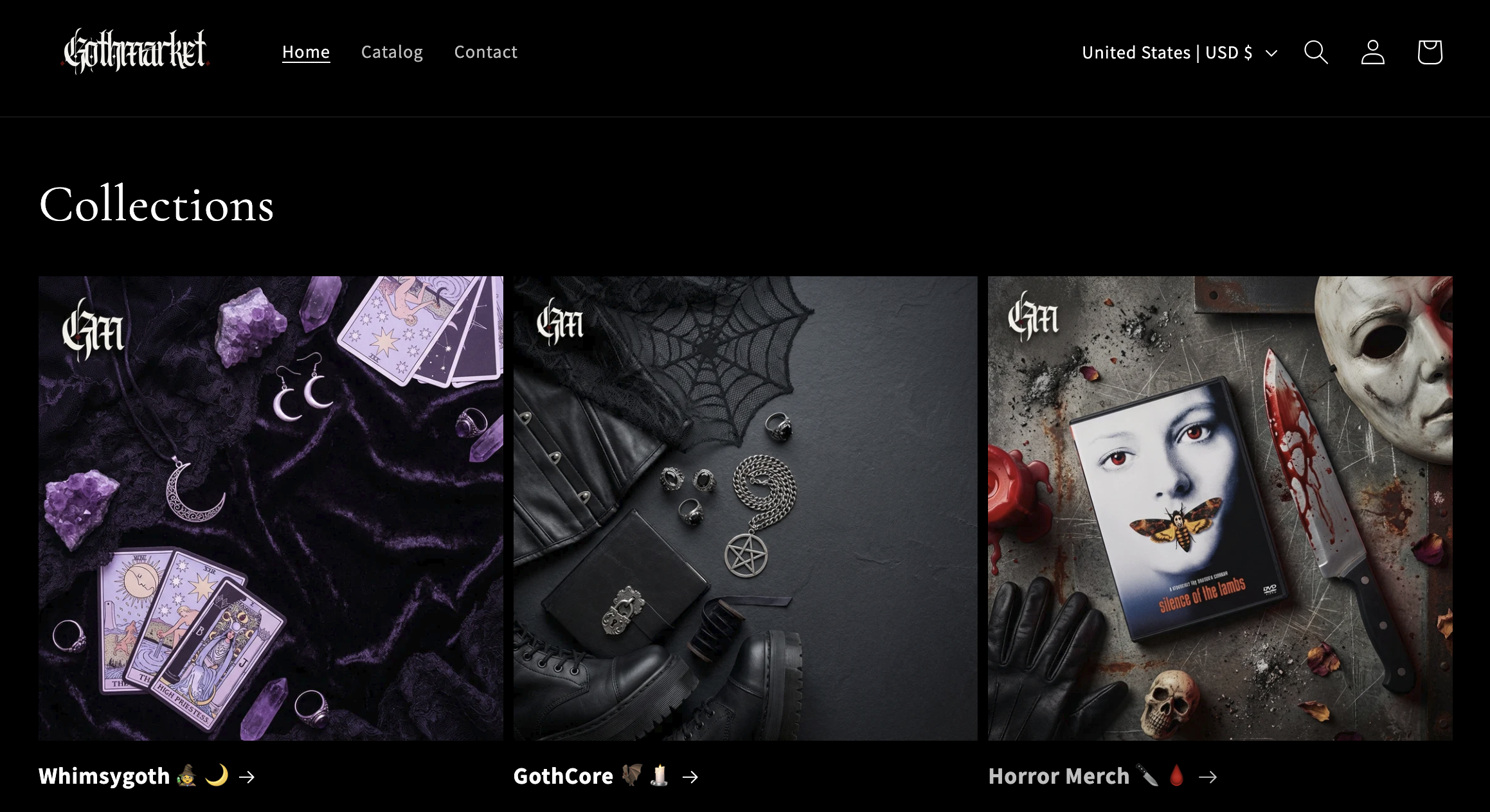
If budget is tight, household substitutes work: dark linen, old hardcovers, and black ceramic pieces from a thrift store get you 80% of the way there. When you’re ready to upgrade your staging, browse Goth’s curated marketplace for pieces that serve double duty as props and sellable inventory. Visit goth.market to start building your shoot kit.
Useful sources
Technical lighting and setup:
- Dramatic Lighting Photography for Products — core technique for directional key light, negative fill, and modifier selection
- Product Photography Setup Guide | FrameOnce — repeatability documentation and tape-mark workflow
- Product Photography Lighting Setup Guide | Tov Studio Photo — three-setup framework for small, dimensional, and lifestyle products
- How to Shoot Product Photography | GradePixel — step-by-step camera settings and angle guidance
Gothic styling and aesthetic:
- An Approach to Gothic Photography | Havana Times — palette and prop references for gothic visual language
- How Gothic Art Elements Transform Product Photography — staging surfaces and atmospheric prop guidance
- Gothic Photography | Albert Mora — visual storytelling and attribute-emphasis principles
Ecommerce export and conversion:
- Product Photography Setup Guide | ConversionStudio — conversion data and budget-path cost ranges