

Step by Step Gothic Home Decor for Dark Interiors
TL;DR:
- Gothic interiors are experiencing a resurgence, emphasizing layered textures, warm lighting, and intentional decor. Proper planning and restraint are essential to create a timeless, atmospheric space that balances darkness with warmth. Thoughtful layering, organic accents, and strategic lighting transform gothic designs from theatrical to sophisticated and personal.
Gothic interiors have never been more alive. The moody, theatrical aesthetic that once felt reserved for Victorian manor houses has found its way into modern apartments, urban lofts, and suburban homes with stunning results. But pulling off step by step gothic home decor without tipping into “haunted house” territory takes real strategy. This guide walks you through every phase of the process, from gathering your materials and mapping your layout, to layering textures, placing statement lighting, and editing your space to perfection. Whether you are starting from scratch or refining a room that is almost there, you will find practical steps and honest advice here.
Table of Contents
- Key takeaways
- Step by step gothic home decor: building your foundation
- Painting, layering textures, and placing furniture
- Incorporating gothic accents, artwork, and statement lighting
- Troubleshooting common gothic decorating challenges
- Living in your gothic space and evolving it over time
- My honest take on gothic decorating
- Find your gothic pieces at Goth
- FAQ
Key takeaways
| Point | Details |
|---|---|
| Plan before you buy | Lock in your layout, rug, and lighting plan before purchasing any gothic decor pieces. |
| Layer for depth | Combine dark paint, tactile textiles, and warm lighting to build drama without gloom. |
| Follow the 70/30 rule | Keep 70% of your room in a dominant tone and use 30% for contrast and personality. |
| Edit ruthlessly | Remove one item per surface after styling to prevent clutter and sharpen your vision. |
| Warm lighting is non-negotiable | Use 2700K to 3000K bulbs so dark colors glow rather than absorb all available light. |
Step by step gothic home decor: building your foundation
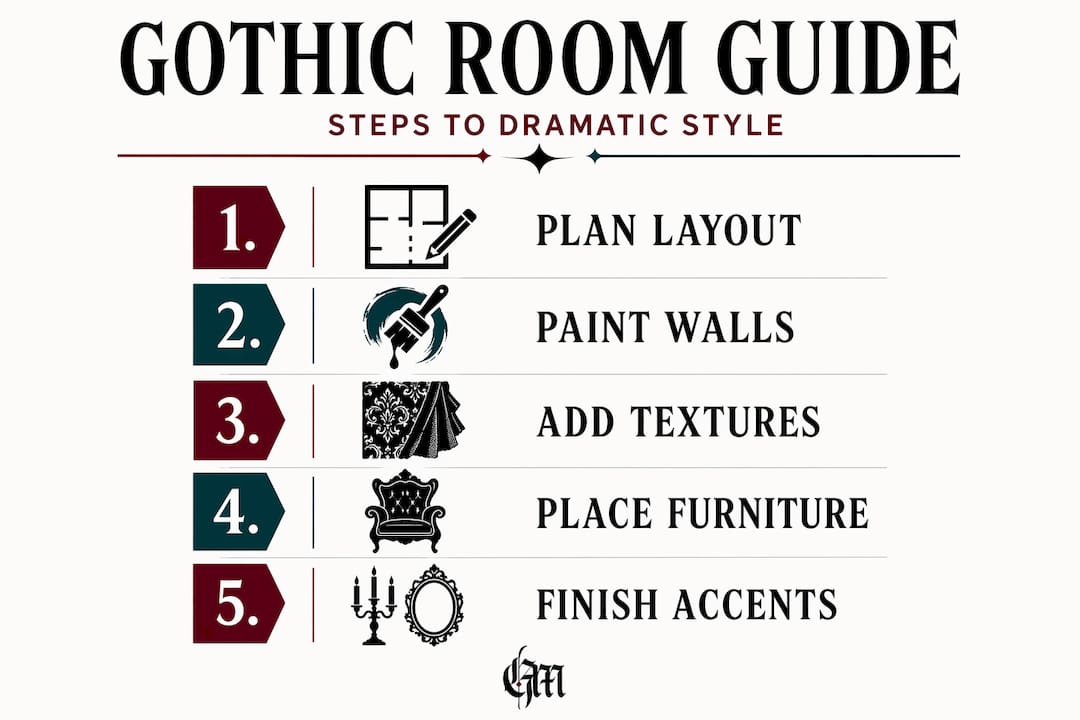
Before a single paint can opens or a velvet cushion gets placed, you need a plan. The most common mistake people make with gothic decorating is shopping first and planning second. That approach leads to mismatched pieces, crowded surfaces, and a room that feels more overwhelming than atmospheric.
Start by identifying the core gothic design elements your space will rely on. These fall into four categories:
- Color: Deep jewel tones, inkwell black, burgundy, forest green, and plum form the backbone of any gothic color palette.
- Texture: Velvet, brocade, jacquard, heavy linen, and textured rugs create the tactile richness that adds warmth and luxury to dark spaces.
- Lighting: Candelabras, chandeliers, sculptural floor lamps, and strategically placed wall sconces build layered, atmospheric light.
- Symbolic accents: Ravens, anatomical art, ornate mirrors, dried botanicals, and occult objects provide personality and narrative depth.
Once you know which elements you are working with, use painter’s tape to outline your furniture footprint on the floor. Walk the room as if you are using it. Does the sofa placement allow for easy movement? Does the rug anchor the seating area without blocking the flow to other zones? This step saves you from discovering expensive problems after the furniture arrives.
Pro Tip: Create a simple room diagram on graph paper with measurements before you move anything. Sketch in your planned furniture, rug, and lighting positions. It takes 20 minutes and prevents hours of rearranging later.
| Gothic essential | What to look for | Where to source |
|---|---|---|
| Paint color | Deep, matte finishes in black, burgundy, or forest green | Hardware and specialty paint stores |
| Textiles | Velvet, brocade, or heavy linen in rich tones | Fabric stores, vintage markets |
| Lighting | Warm-toned chandeliers, sculptural lamps, candelabras | Specialty lighting shops, indie makers |
| Symbolic accents | Ravens, mirrors, botanicals, occult objects | Gothic marketplaces, thrift stores |
Painting, layering textures, and placing furniture
With your layout mapped, you are ready to start the physical transformation. This is where modern gothic interiors move from concept to reality, and the order you work in matters more than most people realize.
Follow these steps in sequence:
- Paint first, always. Apply your chosen gothic wall color before any furniture or textiles enter the room. Deep colors require two to three coats for full saturation. Consider a matte or eggshell finish since flat surfaces enhance the moody quality of dark shades without creating glare.
- Lock your primary furniture placement. Following the painter’s tape layout you mapped in the planning phase, move your anchor pieces (sofa, bed, main table) into their final positions. Do not treat these as temporary. Commit.
- Lay the rug before the smaller furniture. The rug defines the zone. All other seating and accent pieces should relate back to it. A large, textured rug in charcoal, deep red, or patterned brocade sets the tone for everything placed on top.
- Layer your textiles. Start with larger throws and cushion covers in velvet or jacquard, then add contrasting materials like sheer lace or rough linen. The contrast between opulent and rough is what makes gothic interiors feel genuinely layered rather than simply dark.
- Install your lighting framework. Position your main overhead fixture (chandelier or pendant), then place floor lamps and table lamps. Use warm white bulbs at 2700K to 3000K throughout. This temperature range makes dark wall colors glow rather than swallow the light.
Balancing drama with warmth is the most underappreciated skill in gothic home styling tips. A room painted entirely in matte black with cold white lighting will feel clinical, not dramatic. The warmth comes from the combination of rich textiles, amber-toned light, and objects at varying heights.
Pro Tip: If you are working with an existing lighter sofa or bed frame, do not panic. Drape a dark, heavyweight throw across the back and add two oversized cushions in a contrasting gothic print. The textile layer does a surprising amount of visual work.
Incorporating gothic accents, artwork, and statement lighting
This is the step where your space stops looking like “a dark room” and starts looking like your gothic interior. Accents, art, and lighting are the layer that communicates character, and they deserve as much deliberate thought as the wall color.
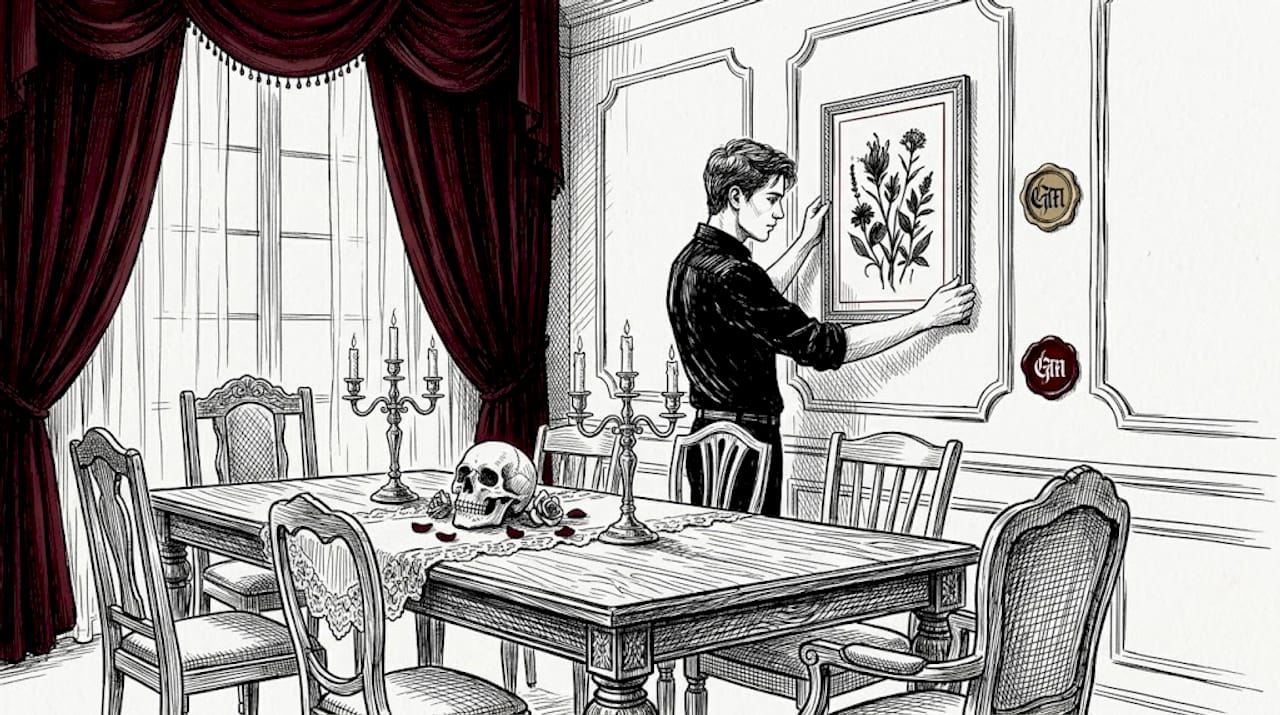
For artwork, gothic wall art works best when it creates tension between beauty and darkness. Think botanical illustrations of poisonous plants, anatomical sketches framed in ornate gilded frames, Pre-Raphaelite prints, or original pieces from independent gothic artists. Mix frame finishes deliberately. Black, aged gold, and dark wood all belong in the same room.
Statement lighting deserves a standalone conversation. A well-chosen gothic sculpture lamp does not just illuminate. It becomes a focal point that anchors the room’s identity. Position your statement light so it draws the eye toward a key feature, whether that is a dramatic wall, a bookshelf, or a vignette arrangement.
When building your accent vignettes, follow these principles:
- Use odd numbers. Groups of three or five objects feel balanced without looking symmetrical or stiff.
- Vary the heights. A tall candelabra next to a medium bowl of dried roses next to a small skull figure creates visual movement.
- Leave intentional negative space. Gothic styling is not about covering every surface. The empty space between objects gives each piece room to be seen.
- Incorporate organic elements. Dried botanicals, moss, dark feathers, and twisted branches add an organic texture that softens the hard edges of ornate furniture and metal accents.
Gothic Victorian interiors historically embraced symbolic objects like memento mori pieces, hourglasses, and ornate religious iconography. You do not need to replicate the Victorian era exactly. Borrowing the sensibility of using objects that carry narrative weight makes your space feel intentional rather than decorated.
Pro Tip: For a DIY accent piece that costs almost nothing, collect bare branches from outside, spray them matte black, and arrange them in a tall dark vase. Add a few fake ravens or hanging crystals. The result looks expensive and fits the gothic aesthetic without clichés.
Troubleshooting common gothic decorating challenges
Even with a solid plan, certain problems show up repeatedly. Knowing them in advance keeps you from having to start over.
The room feels gloomy, not dramatic. This almost always comes down to lighting. If your bulbs are too cool or your only light source is overhead, the space will feel oppressive rather than atmospheric. Add at least two warm-toned lamps at mid-height and one at low level (near the floor or on a low table).
The textures are fighting each other. Layering is a skill, and sometimes too many competing patterns create visual chaos. Step back and identify the dominant textile. Everything else should support it, not compete with it. A strong brocade sofa, for example, wants solid velvet cushions, not a second busy print.
“Applying the 70/30 visual rule means 70% of your room should read as the dominant tone or material, leaving just 30% for contrast or personality. This prevents the chaos that hits when every surface fights for equal attention.”
The accents feel cluttered. Apply the subtract-first approach by removing one item from each surface or grouping once you consider the room finished. You will almost always find the space looks stronger with that item gone.
The space works room by room but not together. If you are decorating multiple rooms, repeat one or two design elements (a specific color, a recurring motif like ravens or botanicals) across spaces to create cohesion without uniformity.
Living in your gothic space and evolving it over time
Here is something most step by step dark decor guides skip entirely. Once you finish decorating, do not make any new purchases for at least a week. Live in the space first. Sit in it at different times of day. Notice where the light falls at night. Notice which corners feel ignored and which surfaces attract clutter.
This observation period consistently reveals two or three changes that make a big difference, and it saves you from buying things you do not need. After that period, refine with purpose:
- Add a single new piece every few weeks rather than shopping in bulk. Gothic interiors reward slow accumulation over fast decorating.
- Swap textiles seasonally. Heavier brocade and wool in fall and winter, lighter lace and dark cotton in spring and summer.
- Let your collection of gothic accessories grow organically as you discover makers and artists whose work speaks to you.
- For small spaces or apartments, apply the gothic aesthetic to one room or one feature wall first. A bedroom is ideal since it is private, deeply personal, and does not need to function as a social space. Master the principles there before expanding.
Pro Tip: Handmade pieces are the fastest way to make your gothic space feel genuinely original. Check out handmade gothic decor options from independent creators. A single custom piece carries more personality than five mass-produced ones.
My honest take on gothic decorating
What I have learned from spending time in beautifully executed gothic spaces, and some disastrously executed ones, is that the hardest part of elegant gothic interior design is not choosing the dark paint or finding the right chandelier. The hardest part is resisting the urge to add too much.
Most people come to gothic decorating with years of suppressed aesthetic desire. They want the ravens, the velvet, the moody walls, the candlelight, the art, the skulls, and the botanicals all at once. And I completely understand that impulse. But the rooms that actually feel sophisticated rather than theatrical are the ones where someone made hard choices about restraint.
The other thing I have seen derail gothic interiors more than anything else is cold lighting. I cannot overstate how much a single strand of warm amber bulbs or a well-placed sculptural lamp transforms the same room that looked harsh and uninviting under a bright white overhead light. Lighting is not a finishing touch in gothic design. It is structural.
What I genuinely love about this aesthetic is how much history it carries. When you style with intention and layer Gothic Victorian drama with modern comfort, you are creating a space that feels timeless rather than trendy. That is rare in home decor. Most styles date themselves within five years. Gothic, done thoughtfully, only gets richer.
— Rey
Find your gothic pieces at Goth
If the steps in this guide have you excited to start sourcing, Goth has exactly the kind of curated pieces that make gothic interiors feel genuine rather than generic. You will not find mass-produced filler here.

Browse the gothic jewelry collection to find wearable pieces that extend your dark aesthetic beyond the walls, from occult rings to layered dark chains that complement your space as much as your wardrobe. For decor with a whimsical edge, the whimsygoth collection brings together handpicked accessories from independent creators who understand the aesthetic deeply. Goth connects you with artists and makers who are living this style, not just producing it for a market trend.
FAQ
What colors work best for gothic home decor?
Deep, rich shades like inkwell black, garnet, forest green, plum, and burgundy form the core gothic palette. Matte or eggshell finishes enhance the moody quality of these colors better than gloss does.
How do you decorate gothic style without it feeling oppressive?
The key is layering warm lighting at multiple heights alongside rich textiles like velvet and brocade. Using the 70/30 rule keeps the dominant dark tone balanced with enough contrast to prevent the space from feeling closed in.
What lighting temperature is best for gothic interiors?
Bulbs in the 2700K to 3000K range are ideal because they produce a warm amber tone that makes dark wall colors glow rather than absorb available light. Avoid cool white or daylight bulbs in gothic spaces.
Can you create a gothic interior in a small apartment?
Yes. Start with one room, ideally a bedroom, and apply the gothic principles there first. A feature wall in a deep color, layered textiles, and one statement lighting piece can completely transform even a small space without requiring major investment.
What are the most common mistakes in gothic home decorating?
Overcrowding surfaces, using cool white lighting, and skipping the planning phase before shopping are the three most frequent mistakes. Locking in your layout and lighting plan before purchasing decor prevents the majority of these problems.