

Learn 24 Runes in 3 Weeks: Beginner Rune Set Guide and Master Chart
A rune set almost always means the 24 Elder Futhark runes, the compact divination system that has anchored modern rune reading for decades. Start by getting a readable set, whether bought or handmade, and learn the symbols eight at a time, one ætt per study session. Meanings blend genuine historical evidence with centuries of added tradition, so a good beginner approach treats both layers honestly instead of pretending every meaning is equally ancient.
TL;DR:
- Most modern rune sets use the 24 Elder Futhark runes, arranged into three groups called ættir, and choosing a set with clear contrast improves readability.
- Well-attested meanings are grounded in medieval rune poems, reconstructed meanings are based on linguistics, and modern interpretations are added by diviners, so understanding the source of each meaning prevents misinterpretation.
- Beginners should focus on studying one ætt at a time over three weeks, using short daily exercises and practical hands-on carving or shaping to reinforce memorization.
- Single rune draws are ideal for daily questions, while three-rune spreads help explore past, present, and future, with context guiding interpretation.
- Reversals are a modern interpretive layer, and symmetrical runes can’t be physically reversed; decide on a reversal convention and stay consistent for clarity.
Table of Contents
- What Is a Rune Set Guide Supposed to Teach You First?
- What Are the 24 Elder Futhark Runes and What Do They Mean?
- How Do I Pick or Make a Rune Set?
- How Do I Read Runes? Layouts, Steps, and a Worked Example
- What Are Reversals, Merkstave Readings, and the Blank Rune?
- How Should a Beginner Practice? A Three-Week Plan
- Why the Master Chart Matters More Than the History Lesson
- Where to Find Beginner-Friendly Rune Sets and Divination Supplies
- Sources
- FAQ
What Is a Rune Set Guide Supposed to Teach You First?
A rune set guide should teach you what you’re actually holding before it teaches you what to do with it. The Elder Futhark is the oldest runic alphabet used across the Germanic-speaking world from roughly the 2nd to the 8th century AD, and it’s the version almost every modern diviner works from. It contains 24 characters split into three groups of eight, called ættir, a structure confirmed by the Kylver Stone, a Gotland artifact from around 400 AD that preserves an early sequential listing of the full runic row.
The word “rune” itself comes from the Proto-Germanic rūn, meaning “mystery” or “secret,” and that etymology matters more than trivia. Runes started as a writing system for names, memorials, and charms, not a fortune-telling deck. Their symbolic and quasi-magical use grew alongside the writing, and Odin sits at the center of that mythic tradition as the god who suffered to win the runes’ knowledge, according to Norse legend recorded in later sources.
Here’s the part most beginner guides skip: not every meaning you’ll read online carries the same weight of evidence.
- Well-attested meanings come from Old Norse and Old English rune poems, medieval texts that assign a word and a short verse to each rune name. Fehu (cattle, wealth) and Uruz (aurochs, vitality) fall here.
- Reconstructed meanings are educated extrapolations from linguistics and comparative mythology, applied where the poems are thin or missing.
- Modern additions are 20th and 21st century interpretive layers, added by diviners rather than found in any historical inscription.
Knowing which bucket a meaning falls into keeps you from treating a modern guess as ancient wisdom, or dismissing a solid poetic source as guesswork.
What Are the 24 Elder Futhark Runes and What Do They Mean?
Every Elder Futhark set breaks into three ættir, traditionally named for Freyr, Heimdall, and Tyr, each holding eight runes. The chart below gives you the glyph, the Anglicized name, a rough pronunciation cue, and a core meaning, with an evidence marker indicating confidence levels. Pronunciations are reconstructed approximations that vary by author, so treat these as workable guides, not the one true way to say them.
| Ætt | Rune | Name | Pronunciation | Core Meaning | Evidence |
|---|---|---|---|---|---|
| Freyr | ᚠ | Fehu | FAY-who | Cattle, wealth, new beginnings | Well attested |
| Freyr | ᚢ | Uruz | OO-rooz | Aurochs, vitality, raw strength | Well attested |
| Freyr | ᚦ | Thurisaz | THUR-ee-sahz | Thorn, conflict, protective force | Well attested |
| Freyr | ᚨ | Ansuz | AHN-sooz | Odin, breath, communication | Well attested |
| Freyr | ᚱ | Raidho | RYE-though | Journey, rhythm, right movement | Well attested |
| Freyr | ᚲ | Kenaz | KEN-ahz | Torch, creative fire, knowledge | Partly reconstructed |
| Freyr | ᚷ | Gebo | GAY-bo | Gift, exchange, reciprocity | Well attested |
| Freyr | ᚹ | Wunjo | WOON-yo | Joy, harmony, fellowship | Partly reconstructed |
| Heimdall | ᚺ | Hagalaz | HAH-gah-lahz | Hail, disruption, natural force | Well attested |
| Heimdall | ᚾ | Nauthiz | NOW-thees | Need, constraint, endurance | Well attested |
| Heimdall | ᛁ | Isa | EE-sah | Ice, stillness, pause | Well attested |
| Heimdall | ᛃ | Jera | YAIR-ah | Harvest, cycles, reward for patience | Well attested |
| Heimdall | ᛇ | Eihwaz | AY-wahz | Yew tree, resilience, transformation | Debated |
| Heimdall | ᛈ | Perthro | PAIR-throw | Fate, chance, hidden forces | Debated |
| Heimdall | ᛉ | Algiz | AHL-yeez | Protection, defense, higher connection | Partly reconstructed |
| Heimdall | ᛊ | Sowilo | SO-wee-lo | Sun, success, vital energy | Well attested |
| Tyr | ᛏ | Tiwaz | TEE-wahz | Tyr, justice, sacrifice for the right cause | Well attested |
| Tyr | ᛒ | Berkana | BER-kah-nah | Birch, growth, new life | Partly reconstructed |
| Tyr | ᛖ | Ehwaz | EH-wahz | Horse, partnership, trust | Partly reconstructed |
| Tyr | ᛗ | Mannaz | MAHN-nahz | Humanity, self, social order | Well attested |
| Tyr | ᛚ | Laguz | LAH-gooz | Water, intuition, the unknown | Partly reconstructed |
| Tyr | ᛜ | Ingwaz | ING-wahz | Ing, fertility, dormant potential | Debated |
| Tyr | ᛞ | Dagaz | DAH-gahz | Day, breakthrough, clarity | Partly reconstructed |
| Tyr | ᛟ | Othala | OH-thah-lah | Ancestral land, heritage, inheritance | Partly reconstructed |
This chart is the single most useful reference in this guide, according to how respected rune resources structure their own material: a compact table, followed by simple spreads, followed by one worked example. Skip the philology rabbit hole for now and come back to it once the shapes feel familiar.
How Do I Pick or Make a Rune Set?
Material changes how a set feels in your hands, and that matters more than most shopping guides admit. Wood runs light and warm, which makes it forgiving for long practice sessions and easy to carve yourself. Stone carries real weight and durability, at the cost of being harder to engrave precisely. Bone has an old, tactile authenticity that some readers find grounding, while glass and clay sets lean into aesthetics over practicality, since they chip and crack more easily.
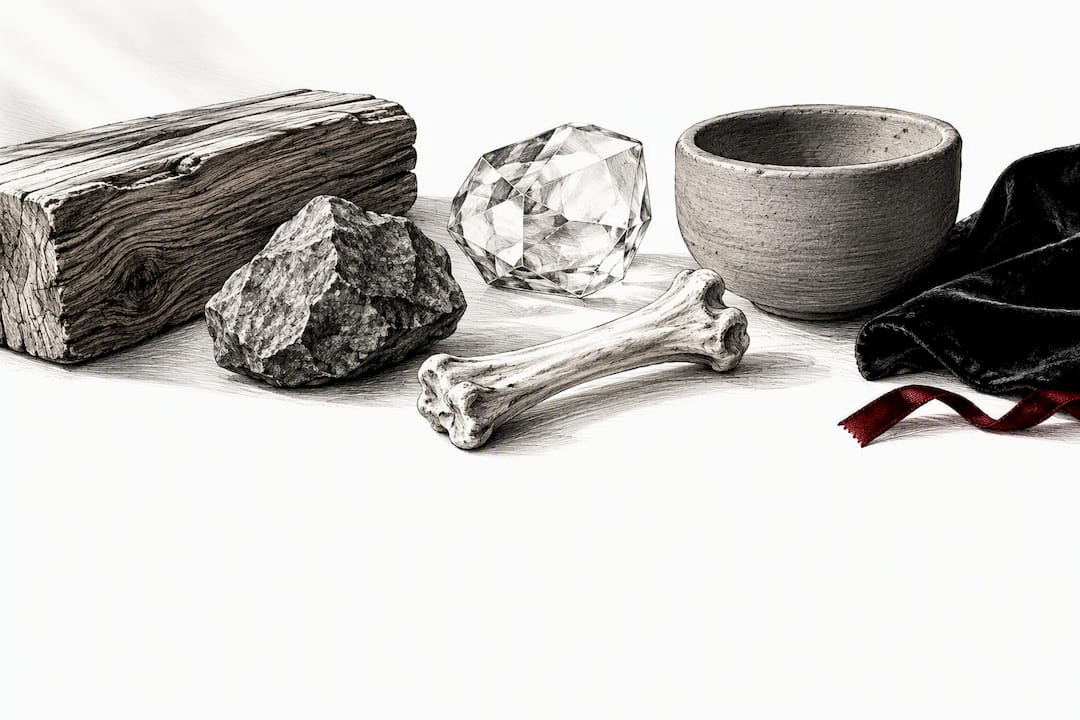
Readability beats beauty every time you sit down to actually read. Look for strong contrast between the glyph and the material, a consistent size across all 24 pieces, and shapes that stay unambiguous even in low light. A tiny, faint Ansuz that could pass for Thurisaz will cost you more confused readings than any amount of artistic flourish saves.
You’ll also need to decide on the blank rune. The historical Elder Futhark has 24 symbols, full stop, but many modern sets add a 25th blank piece representing “the unknown” or fate itself. Include it if that idea resonates with you; skip it if you’d rather stay closer to the historical 24. Either choice is legitimate, as long as you know which one you’re using.
- Artisan-made sets from independent creators tend to have better glyph consistency than mass-produced dollar-store versions.
- Carving or painting your own set doubles as a memorization exercise, since your hand learns the shapes as your eyes do.
- Store any set in a cloth pouch, keep wooden pieces away from standing water, and oil them occasionally to stop cracking.
Pro Tip: If you’re buying rather than carving, run your thumb over a few glyphs before committing. If you can’t tell two runes apart by touch in dim light, your future readings will suffer for it.
How Do I Read Runes? Layouts, Steps, and a Worked Example
Start with a single draw. It’s the simplest layout that exists: pull one rune, hold your question in mind, and read the meaning against your specific situation rather than in the abstract. A single draw works best for daily check-ins (“What should I focus on today?”) because it forces you to interpret one symbol deeply instead of juggling several.
Once single draws feel comfortable, move to a three-rune spread. Lay three runes left to right and assign them past, present, and future, or situation, advice, and outcome, whichever framing fits your question better.
- Frame a specific question before you draw, not a vague one.
- Draw three runes and lay them in order without peeking at meanings yet.
- Read each rune’s core meaning in its position first, then look at how the three interact as a story.
- Note any repeated themes (two runes pointing toward change, for instance) since repetition usually signals emphasis.
A five-rune cast adds a cross or line pattern and works well for bigger questions, like a career decision, where three positions feel too thin to capture the nuance.
Here’s a worked example. Suppose you draw Jera in a single-draw reading, asking about a stalled project. Jera’s core meaning is harvest and cycles, the reward that comes after patient, repeated effort. In context, that reading suggests the project isn’t stuck so much as still growing, and pushing for a shortcut now would work against its natural timing. The intuitive layer, the part no chart gives you, might be your own gut sense that you’ve been rushing a process that needs one more full cycle.
Keep a reading log. Writing down the question, the rune, and what actually happened afterward is how you build a personal reference that beats any published meaning list over time.
What Are Reversals, Merkstave Readings, and the Blank Rune?
Reversed, or “merkstave,” readings treat an upside-down rune as carrying a blocked or shadow version of its upright meaning. This convention feels traditional, but reversal readings are a modern interpretive layer, not an ancient practice; early inscriptions show no evidence anyone read runes as reversed.
Nine runes in the Elder Futhark are symmetrical and don’t physically flip at all, including Gebo and Isa. Practitioners handle those by reading contextual shadow meanings instead of relying on orientation.
The blank “Wyrd” rune has a specific, traceable origin: author Ralph Blum introduced it in 1983, and it never appears in any historical rune set. Both conventions are optional add ons, not requirements.
- Decide upfront whether you’ll read reversals at all, and stay consistent.
- Write your own conventions down so future readings stay comparable to past ones.
- Treat the blank rune as a personal choice, not a historical necessity.
How Should a Beginner Practice? A Three-Week Plan
Learning eight runes at a time, one ætt per stretch, is the most common recommendation for making the system manageable, and it maps cleanly onto three weeks.
- Week 1: Study the Freyr ætt (runes 1 through 8). Ten to fifteen minutes daily: flashcard recall plus one single-draw journal entry.
- Week 2: Move to the Heimdall ætt. Add a weekly three-rune reading using the same stable question each time, so you can compare how your interpretation sharpens.
- Week 3: Finish with the Tyr ætt, then review all 24 runes together with mixed flashcards.
Carving or shaping your own wooden or clay set during this stretch turns memorization into muscle memory. For crafting steps, Goth’s guide to making witchy accessories walks through the same kind of hands-on process, and its guide on using household items as tools is worth a look if you want to test the system before buying anything dedicated.
Why the Master Chart Matters More Than the History Lesson
Most rune content online front-loads a wall of philology and myth before it ever tells you how to draw a rune and read it. That order is backwards for a beginner. You learn runes the way you learn a language: recognize the shape, attach a meaning, use it in context, and let the deeper history fill in later once the basics are automatic.
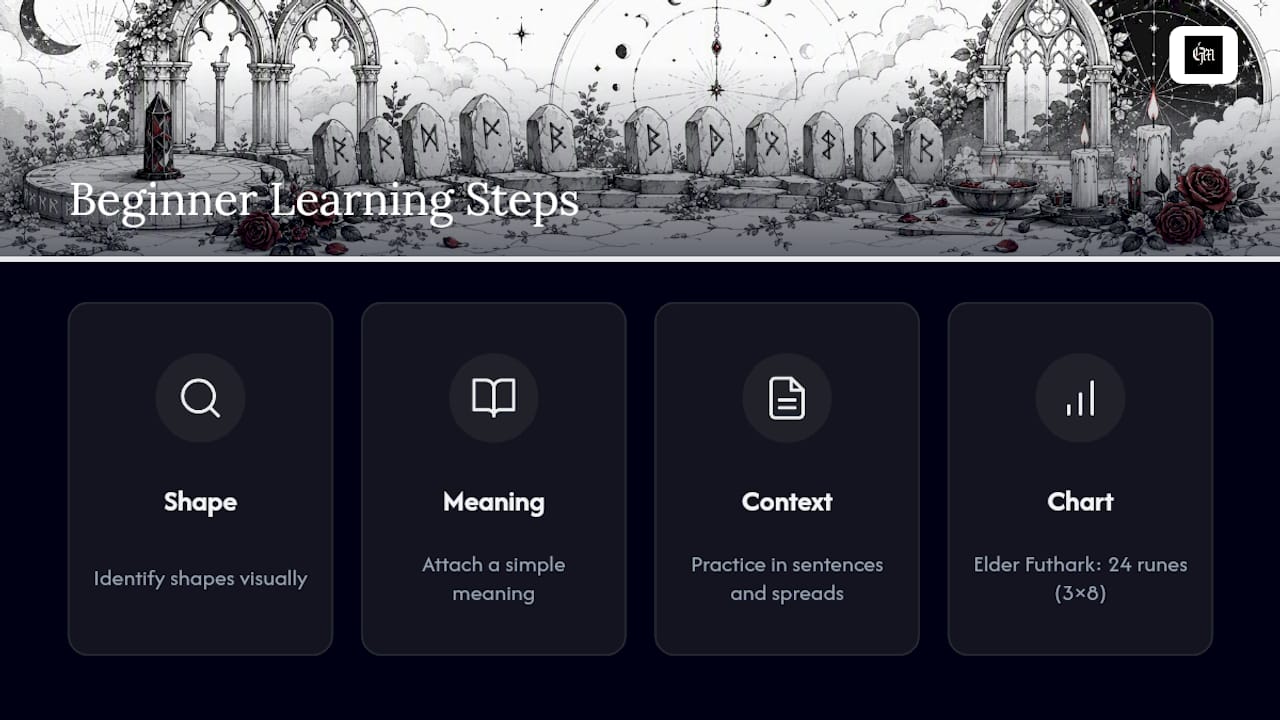
The overrated piece of conventional advice is the idea that you need to master Norse mythology before you can read runes honestly. You don’t. What you need is a set you can actually see clearly, a chart you trust enough to reference without embarrassment, and enough repetition that Fehu stops requiring a lookup. The historical texture, the Kylver Stone, the rune poems, the etymology, adds richness once you’re already reading. It’s not a prerequisite.
If I had to name the single biggest beginner mistake, it’s treating every online meaning as equally old. Some of what you’ll read is centuries deep. Some of it was invented in the 1980s. Knowing the difference is what separates a practiced reader from someone reciting a script.
— Rey
Where to Find Beginner-Friendly Rune Sets and Divination Supplies
Once you know what to look for, shopping for a rune set gets a lot faster. The marketplace features listings from independent makers rather than mass-market suppliers, focusing on sets built with attention to glyph clarity and material feel.
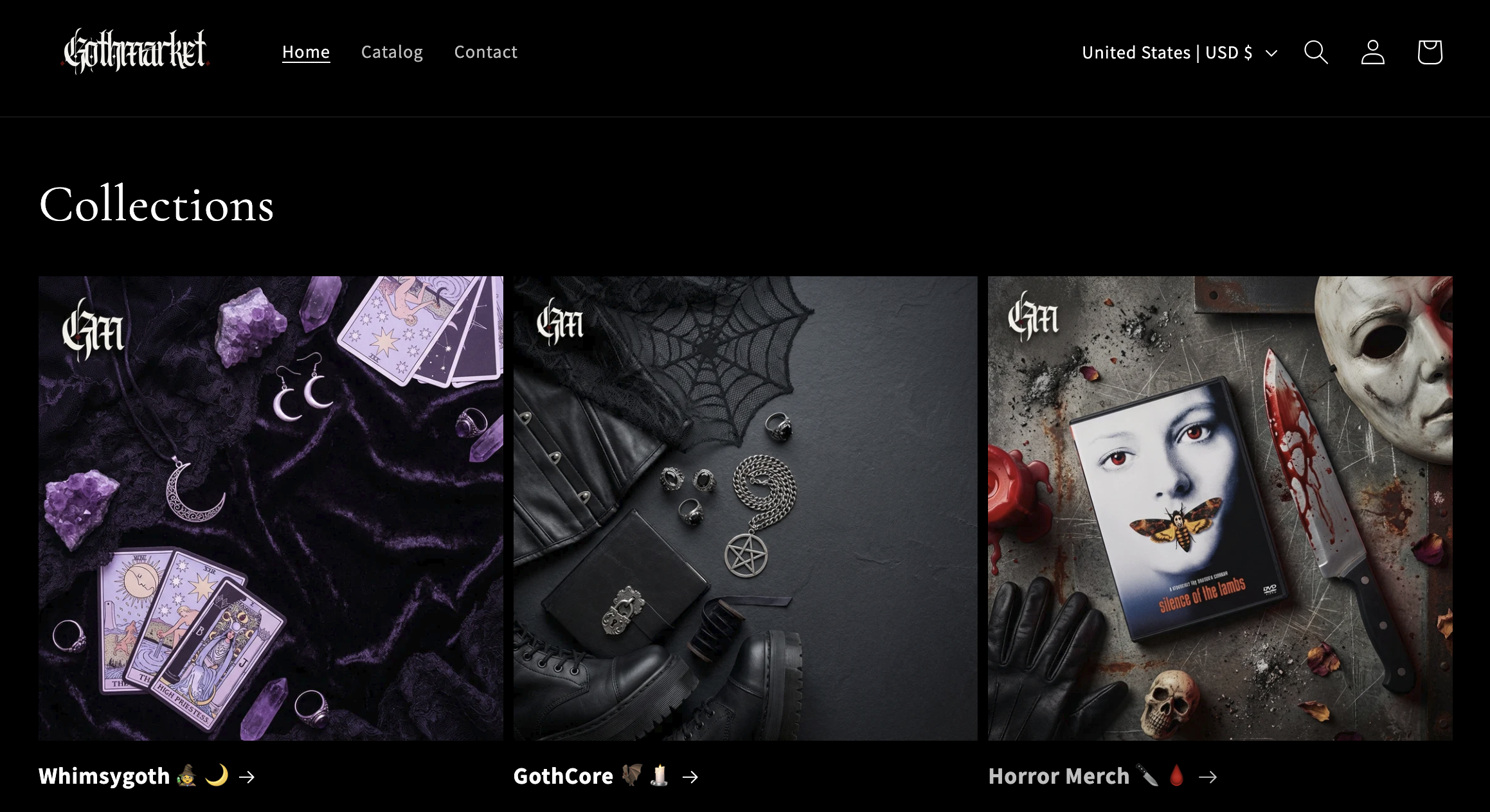
Start in the Curated Finds collection, which is the most likely spot to turn up complete rune sets and divination kits alongside pouches and small altar pieces. If you’re drawn to a softer, dreamier aesthetic for your practice space, the Whimsigoth collection leans that direction, while GothCore covers darker, more traditional occult styling if that fits your taste better.
On any product page, check the listed material first, then look for seller notes on glyph size and whether the set includes a guidebook or a blank rune. A seller who specifies “hand-carved, 1-inch tiles, no blank included” has already answered the readability questions this guide raised. Browse the collections, compare a couple of listings side by side, and add the set that feels right in your hand to your cart.
FAQ
What Is the Standard Number of Runes in a Rune Set?
The historical Elder Futhark contains 24 runes, split into three groups of eight called ættir. Many modern commercial sets add a 25th blank tile, often called the Wyrd rune, but that piece has no historical basis and traces to author Ralph Blum’s 1983 divination system.
Which Rune Meanings Are Historically Accurate vs. Modern Inventions?
Meanings for runes like Fehu, Uruz, and Sowilo rest on well-attested medieval rune poems, while others such as Perthro and Eihwaz remain genuinely debated among scholars. Reversed (merkstave) readings and the blank rune are both modern additions with no support in early inscriptions.
How Do I Choose Between Wood, Stone, and Bone Runes?
Wood is light, warm, and easy to carve, making it forgiving for daily practice and DIY projects. Stone offers durability and weight at the cost of being harder to engrave clearly, while bone gives an old, tactile feel that many readers find grounding. Pick based on how the material feels in your hand and how clearly the glyphs stand out, not just appearance.
How Long Does It Take to Learn All 24 Runes?
A common, workable pace is three weeks: one ætt of eight runes studied per week with short daily practice sessions. This mirrors the traditional grouping structure preserved on artifacts like the Kylver Stone, which lists the runes in that same sequential order.
What Is the Best Layout for a Beginner’s First Rune Reading?
Start with a single-rune draw for daily questions, since interpreting one symbol in context is easier than juggling multiple positions at once. Once that feels natural, move to a three-rune spread covering past, present, and future, or situation, advice, and outcome.
Do I Need to Include the Blank Rune in My Set?
No. The blank Wyrd rune is optional and was introduced in 1983, long after the historical 24-rune Elder Futhark was in use. Include it only if the concept of representing “the unknown” or fate appeals to your personal practice.
Where Can I Buy a Beginner-Friendly Rune Set?
Goth’s Curated Finds collection features rune sets and divination supplies from independent creators, letting you compare materials and seller notes before buying. Checking listed glyph size, material, and whether a guidebook is included will tell you if a set matches the readability standards a beginner actually needs.
Can Symmetrical Runes Be Read as Reversed?
Nine runes in the Elder Futhark are symmetrical and physically look the same upside down, so they can’t carry a literal reversed meaning. Practitioners typically handle these by reading a contextual “shadow” interpretation instead of relying on the rune’s orientation.