

Role of Ritual Tools: Symbolic Meaning and Practical Use
Ritual tools organize attention and extend a practitioner’s intentional work. They function as symbolic markers, practical implements, and social or identity anchors, all at once, and each role earns its place in actual practice rather than staying theoretical.
A symbolic marker turns an ordinary object into a stand-in for an element, deity, or intention. A practical implement does physical work: cutting, mixing, ringing, sweeping. A social or identity anchor signals belonging, whether that’s a coven’s shared symbols or a solitary practitioner’s personal altar setup.
- Symbolic: Represents an element, force, or deity within the ritual space.
- Practical/technical: Performs a physical action, from directing energy to lighting a candle.
- Cognitive: Serves as a focus point that narrows attention and reduces mental drift.
- Social/identity: Marks tradition, lineage, or personal practice to yourself and others.
Key Takeaways
Ritual tools work because they combine symbolic meaning, physical function, and a cognitive anchor that helps practitioners focus, and their effectiveness depends more on the user’s intention than the object’s price or pedigree.
| Point | Details |
|---|---|
| Ten core tools | Athame, wand, chalice, pentacle, besom, boline, cauldron, censer, bell, and candles each serve a distinct function. |
| Elemental mapping is flexible | Air, fire, water, and earth correspondences vary by tradition, so substitutions are normal. |
| Consecration matters more than cost | A simple five-step cleansing and blessing ritual makes any tool, expensive or improvised, ritual-ready. |
| Start small | Beginners can build a full practice around just three tools: a wand or athame, a chalice, and a candle. |
| Ethically sourced options exist | Goth.Market connects practitioners with independent makers who disclose materials and craft tools by hand. |
Table of Contents
- What Is the Role of Ritual Tools Like the Athame and Chalice?
- How Do Ritual Tools Connect to the Four Elements?
- How Are Ritual Tools Actually Used During a Ceremony?
- How Do You Choose, Consecrate, and Care for Ritual Tools?
- Why Do Physical Objects Matter in Ritual Practice?
- What Should Beginners Know Before Starting a Ritual Practice?
- Where Can You Find Ethically Made Ritual Tools?
- Sources
- FAQ
What Is the Role of Ritual Tools Like the Athame and Chalice?
Every practitioner eventually asks which tools actually matter and what each one is for. Here’s a working profile of the ten instruments you’ll see across Wiccan, pagan, and eclectic witchcraft, along with what they’re primarily used for.
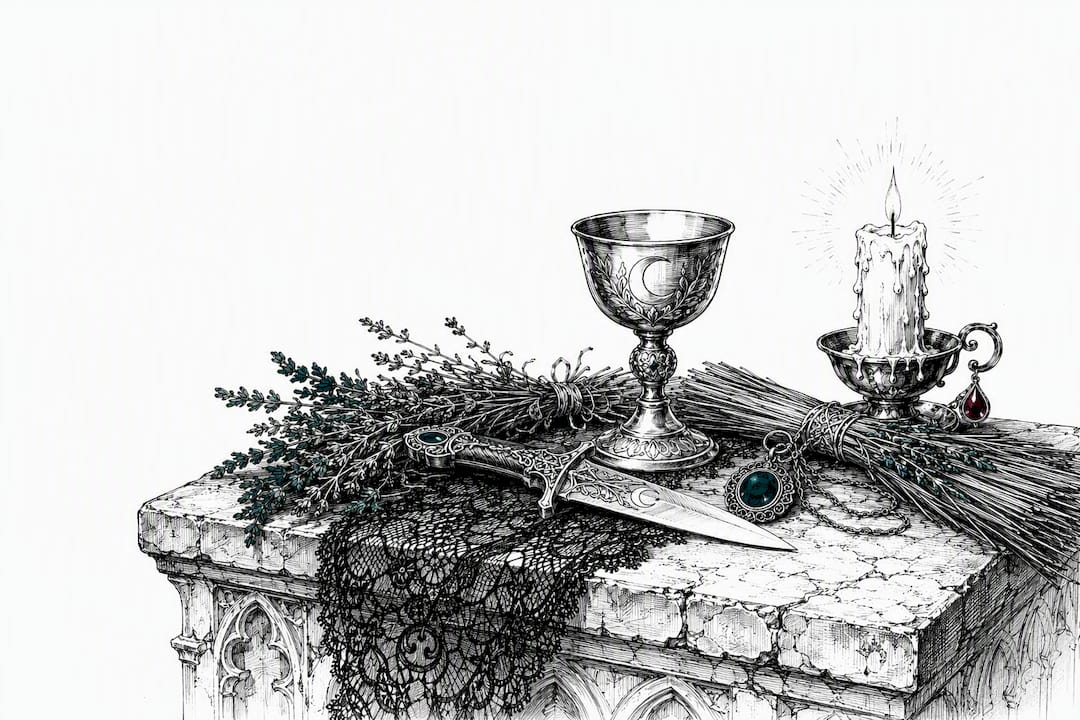
The athame is a ceremonial double-edged blade, typically black-handled, used to direct energy and cast the circle rather than to cut anything physical. The wand does similar directional work but carries a gentler, more inviting energy, often favored for invocation and blessing rather than banishing. The chalice (or goblet) holds water, wine, or another liquid and represents the water element, frequently used in the symbolic union of blade and cup known as the Great Rite. The pentacle, a flat disc engraved with a five-pointed star, serves as a paten for consecrating objects and food, and represents the earth element on the altar. The besom, or ritual broom, sweeps negative energy from a space before work begins, symbolically rather than literally cleaning. The boline is a practical, often white-handled or curved blade reserved for cutting herbs, cords, or carving candles, the physical counterpart to the athame’s symbolic function. The cauldron represents transformation and the womb of the Goddess, used for burning petitions, brewing herbal mixes, or scrying. A censer or incense thurible holds burning incense to represent air and to cleanse or consecrate a space. A bell marks the opening and closing of ritual phases with sound, calling attention and clearing lingering energy. Altar candles provide light, represent fire, and often mark the four quarters or the God and Goddess.
Athame vs. boline, quickly:
- Athame: ceremonial, symbolic, rarely sharpened, never used on physical material.
- Boline: functional, often sharp, used for actual cutting tasks like harvesting herbs or carving wax.
Pro Tip: A wand carved from a fallen branch or a butter knife repurposed as an athame works just as well as an expensive forged blade. What matters is intention, not price tag. And never use a kitchen knife interchangeably as a boline for cutting food after it’s touched ritual work. Keep dedicated tools for dedicated purposes, and skip open blades entirely if you’re working with kids or in a shared space.
How Do Ritual Tools Connect to the Four Elements?
Most traditions map tools to air, fire, water, and earth, though the exact assignments shift depending on who you learn from. This flexibility is normal. Correspondences are cultural conventions, not fixed laws, according to the broad overview of tool functions documented on Wikipedia.
- Air: wand, incense smoke, feathers. Use when invoking clarity or communication.
- Fire: athame, candles. Use for banishing, transformation, or willpower work.
- Water: chalice, a bowl of water. Use for emotional healing or scrying.
- Earth: pentacle, stones, salt. Use for grounding, prosperity, or stability work.
Some traditions swap the wand and athame’s elements entirely (fire for wand, air for athame). If a correspondence doesn’t feel right, a stone can stand in for a pentacle and a mug can stand in for a chalice.
How Are Ritual Tools Actually Used During a Ceremony?
Reading about tools only goes so far. Here’s a compact mini-ritual showing where each one appears.
- Cast the circle. Point the athame outward and walk the boundary clockwise, visualizing a line of light.
- Call the quarters. Light each altar candle in turn, naming air, fire, water, and earth as you go.
- Invoke intention. Raise the wand toward the center of the altar to direct focus toward your working.
- Make an offering. Pour water or wine into the chalice and set it at the altar’s center as a gesture of gratitude.
- Do the working. Burn a petition in the cauldron, or hold a stone from the pentacle while stating your intention aloud.
- Close the circle. Ring the bell once, then trace the boundary counterclockwise with the athame to release the space.
Before you light anything, check:
- Keep candles and incense away from curtains, hair, and paper.
- Crack a window or work near ventilation when burning incense indoors.
- Store blades safely, points down, away from children or pets.
- Check local fire codes or apartment lease rules before open flame.
How Do You Choose, Consecrate, and Care for Ritual Tools?
Buying tools should feel less like shopping and more like matching. Before purchasing, weigh these factors:
- Material: wood, stone, and metal each carry different weight and durability; pick what feels right in hand.
- Size: a wand or athame that’s too long for your grip will feel awkward every time you use it.
- Affordability: a $15 wooden wand consecrated with care outperforms an unused $200 ceremonial blade.
- Ethical sourcing: ask sellers where wood, crystal, or metal components come from.
- Resonance: if a tool doesn’t feel like “yours,” it likely won’t function well for you, a point long-time practitioners raise repeatedly when discussing why tools matter.
A basic consecration works for almost any tool:
- Cleanse the tool with salt water, smoke, or moonlight, depending on the material (skip water on wood or metal prone to rust).
- Hold the tool and state its intended purpose aloud, plainly and specifically.
- Pass it briefly through incense smoke to represent air, and near a candle flame for fire.
- Anoint it lightly with water or oil, then set it on a pentacle or earth-connected surface.
- Store it wrapped in cloth or in a dedicated box between uses.
Cleanse tools after heavy use, roughly once a month for regularly handled items, and recharge under a full moon when energy feels dull. Retire a tool respectfully when it breaks beyond repair or no longer resonates, returning natural materials to earth or repurposing metal parts rather than simply discarding them.
Pro Tip: When buying from an independent maker, ask directly where their wood, crystal, or metal comes from. Makers who answer specifically, naming a forest, quarry, or supplier, are usually the ones sourcing responsibly. For deeper guidance on personalizing pieces, see this beginner’s guide to starting a witchcraft practice and this breakdown of essential witchcraft supplies.
Why Do Physical Objects Matter in Ritual Practice?
Anthropologists studying ritual objects use a framework called “ritual technology,” which treats tools as techniques rather than pure symbols. The concept argues that ritual and utilitarian categories overlap constantly: a bowl used for scrying is both a mundane container and a sacred instrument, depending on context and use.
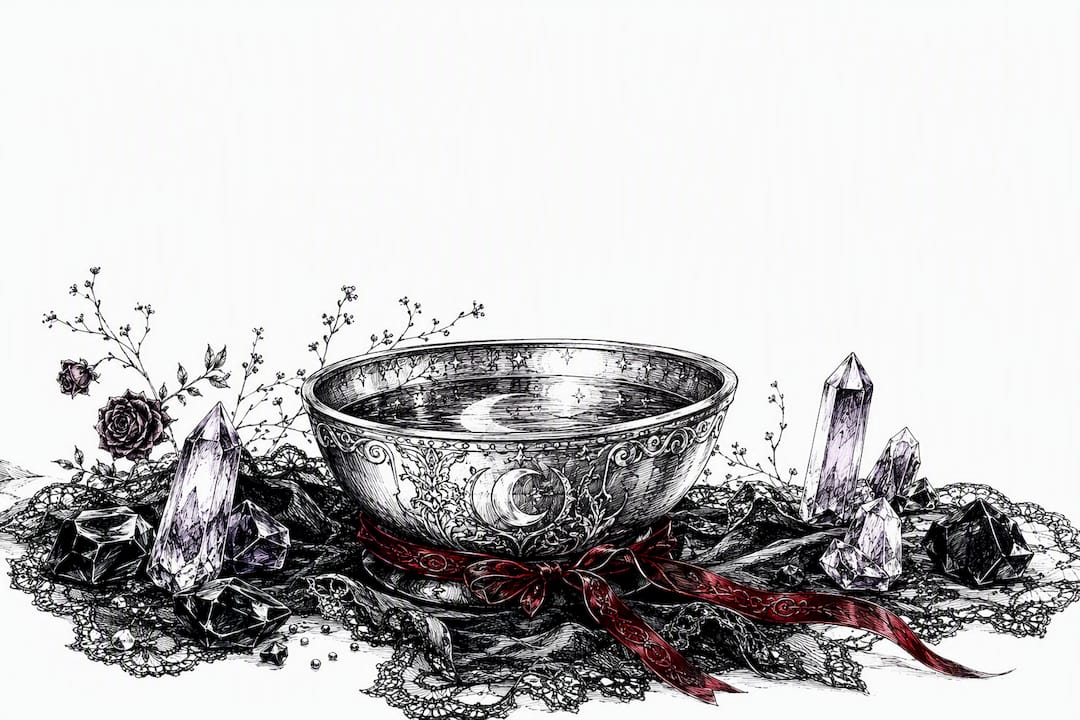
Archaeological work backs this up. Researchers have found that ritual artifacts develop life histories, gaining meaning through use, deposition, and passage between hands over time.
For modern practitioners, the takeaway is practical: choose durable, sensorially rich tools for high-stakes rituals, since the object’s texture, weight, and history become part of the ritual’s effect.
- Ritual tools and elemental correspondences overview
- Ritual technology framework
- Ritual artifacts as memory stores of cognitive habits
What Should Beginners Know Before Starting a Ritual Practice?
Tools don’t need to be expensive or perfectly matched to a tradition to work. What they need is a practitioner willing to engage with them consistently, using the same object enough times that it starts carrying weight. If a tool doesn’t click after a few uses, swap it out, no guilt required.
Start with three: a wand or athame for direction, a chalice for receiving, and a candle for fire. Learn one simple consecration, and build outward from there.
Where Can You Find Ethically Made Ritual Tools?
Sourcing tools that feel right and come from makers who disclose their materials shouldn’t require hours of searching across scattered shops. Goth.Market curates artisan-made ritual supplies from independent creators who specialize in dark, witchy, and occult aesthetics, so you’re browsing pieces built with intention rather than mass-produced stock.
Browsing the marketplace gives you a few concrete advantages over hunting through generic retailers:
- Vetted independent sellers who typically disclose materials and sourcing on request.
- Handmade options in wood, metal, and stone, built by artisans rather than factories.
- Beginner-friendly sets sized for a first altar without overbuying.
If you’re ready to start building a personal collection, browse witchcraft supplies for beginners or explore the full Goth catalog to find a tool that actually resonates before your next ritual.
Sources
- Magical tools in Wicca - Wikipedia
- Recognising ritual remains through the concept of ritual technology
- Rites of passage and other rituals in the life histories of objects — Cambridge Archaeological Journal
FAQ
What tools are used in rituals?
The most common tools are the athame, wand, chalice, pentacle, besom, boline, cauldron, censer, bell, and altar candles. Each represents an element or performs a specific action, like directing energy, holding offerings, or marking ritual boundaries.
What are the main functions of rituals?
Rituals mark transitions, focus intention, and reinforce identity or belonging within a tradition. Ritual tools support all three functions by giving practitioners physical objects to anchor abstract intentions during the ceremony.
What are the four components of a ritual?
Common frameworks describe a ritual as having an opening (casting the circle), an invocation (calling elements or deities), a working (the main intention or spell), and a closing (releasing the circle). Definitions vary by tradition, but most rituals follow this general arc.
Do I need expensive tools to practice witchcraft?
No. Practitioners widely agree that intention and consistent use matter more than cost. A handmade or improvised tool, consecrated properly, works as well as an expensive one.
How often should I cleanse my ritual tools?
Most practitioners cleanse tools monthly, or after particularly heavy or emotionally intense use. Recharging under a full moon is a common practice for restoring a tool’s energy between deeper cleansings.
Can I use a kitchen knife as an athame or boline?
A kitchen knife can work as a boline for practical cutting tasks, but avoid using ritual blades interchangeably with tools that touch food. Keep a dedicated blade for ceremonial work to maintain clear boundaries between symbolic and everyday use.
What’s the difference between an athame and a boline?
The athame is ceremonial and symbolic, used to direct energy rather than cut anything physical. The boline is a working blade, often curved or white-handled, reserved for cutting herbs, cords, or carving candle wax.
Where can I buy ethically sourced ritual tools?
Marketplaces that vet independent makers, like Goth, typically disclose sourcing details and offer handmade options across wood, metal, and stone. Asking a seller directly where materials come from is the most reliable way to confirm ethical sourcing.