

Dark Aesthetic Tips for Style, Decor, and Lifestyle
TL;DR:
- The dark aesthetic emphasizes atmosphere through texture, layered warm lighting, and intentional substyle choices. Achieving cohesion involves commitment, textured layering, and creating a sanctuary space that balances darkness with organic elements. Personal authenticity and deliberate curation are essential for a meaningful, grounded dark aesthetic lifestyle.
The dark aesthetic draws people in for a reason. It feels deliberate, atmospheric, and genuinely expressive in ways that mainstream design rarely achieves. But pulling it off takes more than painting your walls black and adding a few candles. The biggest challenge with dark aesthetic tips is knowing the difference between a moody, intentional environment and one that just feels heavy and unfinished. This article gives you specific, practical guidance across fashion, home decor, and lifestyle so you can build something that feels authentically yours, not like a Halloween prop.
Table of Contents
- Key takeaways
- 1. Understand what dark aesthetic actually means
- 2. Choose and commit to one dark substyle
- 3. Master texture and layering before anything else
- 4. Rethink your lighting completely
- 5. Build your dark fashion ideas around fabric first
- 6. Use dark aesthetic decor to create atmospheric interiors
- 7. Live the dark aesthetic as a mindset, not just a look
- 8. Compare the major dark aesthetic substyles before you commit
- My honest take on getting the dark aesthetic right
- Bring your dark aesthetic to life with Goth
- FAQ
Key takeaways
| Point | Details |
|---|---|
| Commit to one substyle | Choosing Gothic, Dark Academia, or Nu-Goth creates visual coherence and deeper impact than blending everything at once. |
| Lighting defines the mood | Use 3 to 4 warm, low-level light sources instead of harsh overhead lighting to keep dark spaces cozy instead of gloomy. |
| Texture carries the look | Velvet, leather, brass, and wood grain interact with light to prevent dark interiors and outfits from looking flat. |
| Living elements balance darkness | Greenery and natural materials provide organic contrast that keeps dark spaces from feeling oppressive or cold. |
| Authenticity over trend-chasing | The dark aesthetic serves as creative defiance against mainstream norms, so personal meaning matters more than what is currently popular. |
1. Understand what dark aesthetic actually means
The dark aesthetic is not about gloom. It is a visual language of contrast where every object earns its place through meaning, texture, or silhouette. Most people who struggle with how to achieve dark aesthetic do so because they mistake darkness for absence. They strip a room of color and wonder why it feels cold. They wear all black and wonder why it feels costumey.
The real goal is atmosphere. That means thinking about warmth, depth, and intention at every level. Whether you are building a look or a room, the question is always the same: does this element add something, or does it just fill space?
2. Choose and commit to one dark substyle
The dark aesthetic community consistently favors commitment to a single sub-branch over style fusion for the most visual impact. Mixing Gothic architecture with Dark Academia tweed and Nu-Goth streetwear in the same space or outfit creates visual noise, not mood.
Your substyle is your foundation. Once you pick one, every choice you make becomes easier because you have a filter. When something does not fit the filter, you leave it out. That discipline is what separates a cohesive dark aesthetic from a cluttered one.
Pro Tip: If you are unsure which substyle fits you, spend two weeks only pinning or saving images you genuinely love, then look at what they have in common. The pattern that emerges is usually your substyle.
3. Master texture and layering before anything else
Texture is where dark aesthetics live or die. Matte finishes across walls, textiles, and rugs create visual deadness when there is no contrast. The same principle applies in fashion. An all-matte black outfit reads as flat. The same outfit with a velvet jacket, leather boots, and a silk undershirt reads as intentional and complex.
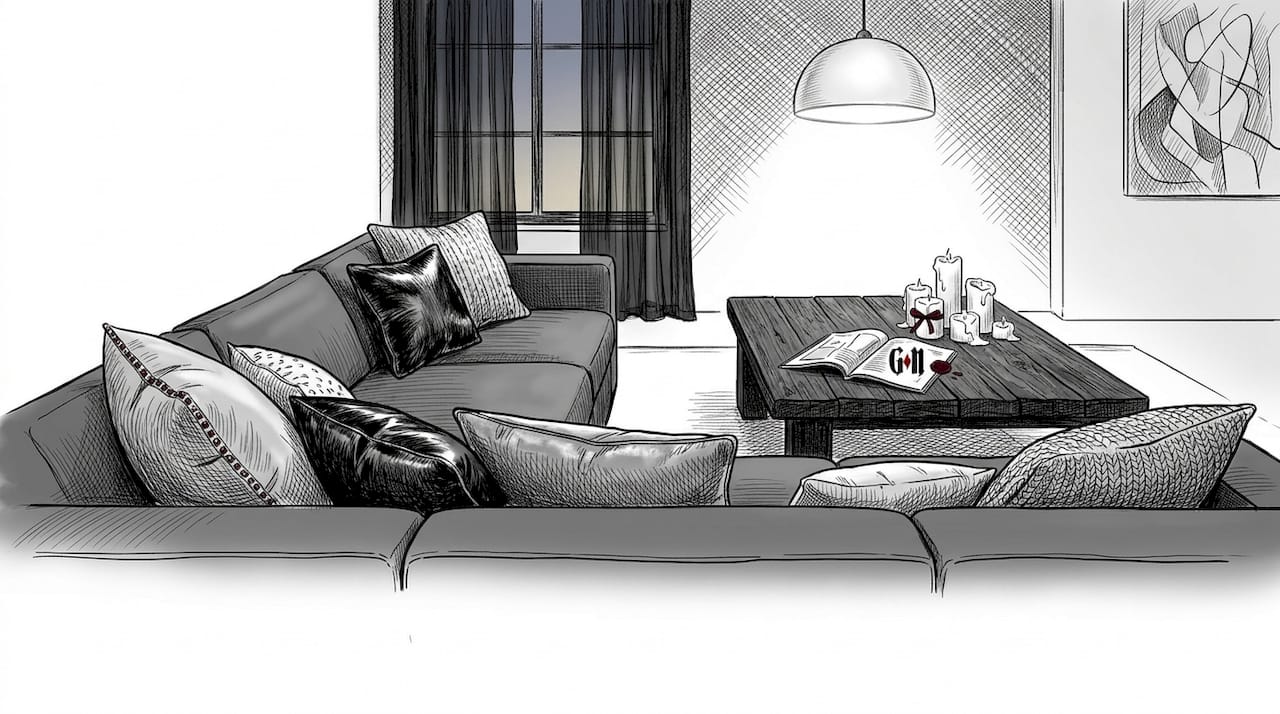
In dark aesthetic decor, vary your textures deliberately. Brass and stone reflect light differently than velvet and wood. When light from a candle or a warm lamp hits these surfaces, the room gains dimension. That dimension is what makes a space feel atmospheric instead of heavy.
4. Rethink your lighting completely
This is the single most underestimated element in dark aesthetic decor. Proper dark room lighting requires 3 to 4 separate low-level warm light sources instead of one overhead fixture. Use bulbs at 2700K or lower. Bulbs above 3000K read as cool and clinical against dark walls, which destroys the effect completely.
Think in layers: ambient light low to the ground, mid-level sources like table lamps and wall sconces, and accent lighting like candles or LED strips behind furniture. Dimmers on every source give you full control over the mood at different times of day. The lighting hierarchy you build here is what keeps a dark-painted room feeling like a sanctuary instead of a basement.
5. Build your dark fashion ideas around fabric first
Gothic aesthetic tips for fashion almost always start with color, but the smarter starting point is fabric. Dark aesthetic fashion blends matte and gloss fabrics, layers of velvet and leather, and statement jewelry to create emotional contrast. Here is how to put that into practice:
- Start with a base layer in matte black or deep charcoal: jersey, cotton, or structured wool all work.
- Add a mid-layer with texture: a velvet blazer, a lace cardigan, or a leather jacket changes the silhouette and the light response entirely.
- Choose one statement piece per outfit: a corset, a dramatic coat, or a sculptural bag. One statement is intentional. Three is chaotic.
- Layer jewelry with meaning: mix silver chains, resin pendants, and vintage pieces rather than buying a matching set. Mismatched layers read as collected, not coordinated.
- Mix traditional gothic elements with modern cuts: a Victorian collar on a minimalist dress, or lace sleeves under a structured blazer. This is where gothic aesthetic tips get interesting.
Pro Tip: Thrift stores and estate sales are your best source for pieces with actual history and texture. A genuine wool coat from the 1970s has more visual weight than any fast-fashion alternative, and it costs less.
6. Use dark aesthetic decor to create atmospheric interiors
Dark themed room ideas work best when you treat the room as a single composition rather than a collection of furniture. Here is a practical sequence for building a dark interior that feels cozy rather than gloomy:
- Choose your wall color with warm undertones. Charcoal, deep forest green, navy, and burgundy all read differently under warm light. Test a large sample at different times of day before committing.
- Paint your ceiling the same shade or one tone deeper. Painting ceilings darker than the walls creates an enveloping effect. White ceilings cut the atmosphere immediately.
- Install multiple light sources at different heights. No overhead fixtures as the primary source. Floor lamps, table lamps, sconces, and candles at different levels.
- Layer your textiles. Dark velvet curtains, a wool rug, linen throw pillows, and a faux fur blanket all absorb and reflect light differently.
- Add one or two living elements. Greenery provides organic contrast that keeps dark rooms from feeling sealed off from the natural world. A trailing pothos or a fiddle-leaf fig works well in dark corners.
- Mix eras and materials within the dark palette. Identical dark finishes across all furniture create a showroom feel, not a lived-in atmosphere. Mix different periods, materials, and finish levels.
Pro Tip: An affordable starting point for dark aesthetic decor is a single feature wall painted in charcoal or matte black. This one change gives you an immediate atmospheric anchor without repainting an entire room.
You can build on that with a gothic home decor checklist that covers the structural pieces you need before adding decorative layers.
| Decor element | What it adds |
|---|---|
| Dark walls with warm undertone | Depth and enclosure without coldness |
| Warm layered lighting | Coziness and dimension; prevents the gloomy flat look |
| Mixed textures: velvet, brass, wood | Light interaction that creates visual interest |
| Living greenery | Organic contrast; prevents the sealed, airless feel |
| Dark or matching ceiling | Full atmospheric envelopment; removes visual ceiling cut |
7. Live the dark aesthetic as a mindset, not just a look
Moody aesthetic inspiration that lasts is rooted in lifestyle, not just visual choices. Dark aesthetics serve as creative defiance against mainstream beauty and fashion norms. That means the mindset matters as much as the wardrobe.
Here are practices that support the aesthetic beyond what you wear or where you live:
- Curate your personal objects intentionally. Every object in a dark aesthetic space should have a reason to exist, whether that is meaning, beauty, or history. If you cannot articulate why something is there, it probably should not be.
- Read and listen within the aesthetic. Gothic literature, dark ambient music, and atmospheric film all reinforce the internal world that makes a dark aesthetic feel real rather than performative.
- Collect slowly. Resist the impulse to buy everything at once. A space or wardrobe built over time has narrative depth that an overnight transformation never achieves.
- Avoid trend-chasing. The dark aesthetic has been around for decades and will outlast any social media cycle. When you chase trends inside the aesthetic, you dilute what makes it powerful.
- Balance theatricality with wearability. The most effective dark aesthetic practitioners know when to lean into full drama and when to pull back to something livable. You do not need to perform the aesthetic every day to live it authentically.
Understanding how intentional curation shapes personal identity is something Goth explores directly in its piece on curated gothic self-expression.
8. Compare the major dark aesthetic substyles before you commit
Choosing your direction is easier when you understand what makes each substyle distinct. This is not about limiting yourself. It is about building fluency in one visual language before you start mixing.
| Substyle | Core elements | Emotional tone |
|---|---|---|
| Traditional Gothic | Ecclesiastical architecture, lace, crosses, velvet, dramatic silhouettes | Romantic, ceremonial, theatrical |
| Dark Academia | Tweed, antique books, candlelight, dark florals, aged wood | Intellectual, melancholy, contemplative |
| Nu-Goth | Minimalist black layering, occult symbols, streetwear cuts | Modern, edgy, understated |
| Castlecore | Stone textures, medieval motifs, heavy tapestries, iron accents | Mythic, grounded, immersive |
| Whimsy Goth | Pastel accents on dark base, celestial themes, playful motifs | Whimsical, soft, approachable |
The key difference between these substyles is not just visual. It is emotional. Dark Academia is contemplative and rooted in scholarship. Castlecore is immersive and mythic. Nu-Goth is cooler and more urban. Each one asks something different from the person living inside it.
Pick the one that matches your actual emotional reality, not the one that looks best in photographs. A substyle you live in every day has to feel like home, not like a costume.
My honest take on getting the dark aesthetic right
What I have seen time and again is that people underestimate how much lighting and texture do, and overestimate how much color does. They paint everything black, put in one overhead bulb, and wonder why the room feels like a parking garage. Color is the starting point, but it is not the solution.
In my experience, the spaces and wardrobes that genuinely nail the dark aesthetic share one quality: intentionality. Nothing is there by accident. Every texture, every light source, every piece of jewelry tells you something about the person who chose it. That is what separates rooms that feel grounded and protected from rooms that just feel dim.
I would also push back on the idea that the dark aesthetic is inherently difficult to live with. When you get the lighting right, when you add the greenery and the textures, it becomes one of the most comfortable and emotionally supportive environments you can create. The mistake people make is treating it as a statement instead of a sanctuary. Build it for yourself first. The visual impact follows naturally from that.
— Rey
Bring your dark aesthetic to life with Goth

If you are ready to move from inspiration to actual pieces, Goth is where dark aesthetic practitioners shop with intention. The platform connects you with independent creators selling work you will not find in any mainstream retailer. For fashion, the gothic jewelry collection covers everything from heavy silver statement rings to layered occult pendants that anchor any dark outfit. If your aesthetic leans toward the mystical and playful, the Whimsy Goth collection blends dark and whimsical with real craft behind every piece. For wall art that makes an immediate atmospheric statement, the monochrome skull canvas from CaliCuration is the kind of focal point a dark room needs.
FAQ
What are the best dark aesthetic tips for beginners?
Start with one substyle, commit to warm layered lighting, and add texture before adding more dark color. A single feature wall in charcoal plus a few low-level warm lamps transforms a space faster than any other combination.
How do I achieve a dark aesthetic without it looking gloomy?
Dark rooms feel grounded when you include warm lighting, varied textures, and at least one living element like a plant. Gloom comes from flatness and single cold light sources, not from dark color itself.
What is the difference between Gothic and Nu-Goth aesthetics?
Traditional Gothic leans into ecclesiastical motifs, lace, velvet, and theatrical silhouettes. Nu-Goth strips that back to minimalist black layering with modern streetwear cuts and occult symbolism in a much quieter register.
How do dark aesthetic tips apply to fashion specifically?
Dark fashion ideas center on fabric contrast first: pair matte and glossy textures, layer structured and soft pieces, and use statement accessories with personal meaning rather than matching sets. One dramatic element per outfit keeps the look intentional.
Can dark aesthetic decor work in small spaces?
Yes. Painting a ceiling the same shade as the walls or deeper actually prevents the closed-in feeling. Combined with warm layered lighting and mirrors to reflect that light, small dark rooms feel enveloping rather than cramped.